
9 Best Electric Golf Push Carts with Remote 2026
This post contains affiliate links. As an Amazon Associate, we earn from qualifying purchases.
The MGI Zip Navigator All Terrain is the best overall electric golf push cart with remote, delivering unmatched hill-climbing power and smart stability. For budget-conscious golfers, the KVV Electric Golf Push Cart offers solid performance and an ultra-compact fold without breaking the bank.
If you’re walking the course more often, a reliable electric push cart with remote can make a real difference in how you feel after 18 holes. Too many models promise convenience but fall short on battery life, responsiveness, or durability, especially on hilly or uneven terrain.
This guide cuts through the noise, focusing on carts that deliver where it matters: long battery life, dependable remotes, and rugged construction. I researched each based on specs, real-world owner feedback, and key priorities for golfers who value ease of use and consistent performance on any course.
Top 9 Electric Golf Push Carts With Remote in the Market
The Best Electric Golf Push Carts With Remote, Reviewed
MGI Zip Navigator All Terrain Electric Cart
Strengths
- Excellent straight-line tracking
- Premium build quality
- Advanced downhill control
Trade-offs
- Heaviest cart here
- High price
- Battery not swappable mid-round
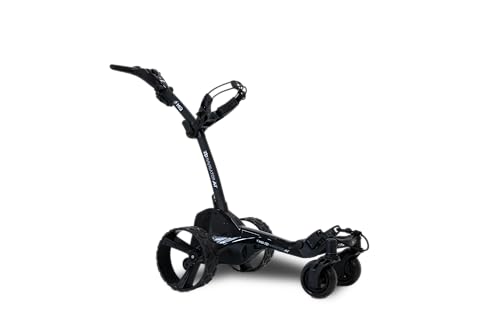
The MGI Zip Navigator is the complete package, premium build, advanced tech, and proven reliability from a brand that’s been in the game since 1993. Its gyroscope-based straight tracking and Downhill Cruise Control set it apart, giving you real confidence on sloped or wet terrain. Owners consistently rate it as one of the most stable and intuitive carts they’ve used.
The 360° remote control is responsive, and the handle-mounted color display shows battery level, speed, and distance with clarity. The Zip Fold Technology makes setup quick, and the rear wheels tuck in for a smaller footprint. At the top of the price range, it’s not cheap, but it justifies the cost with performance and polish. This is the one I’d recommend to a friend who wants the best all-around experience.
Video review
MGI E-Boost Electric Assist Push Cart
Strengths
- Lightweight design
- Proven battery system
- Budget-friendly
Trade-offs
- No remote control
- Limited to push-assist only
- Less tech than competitors
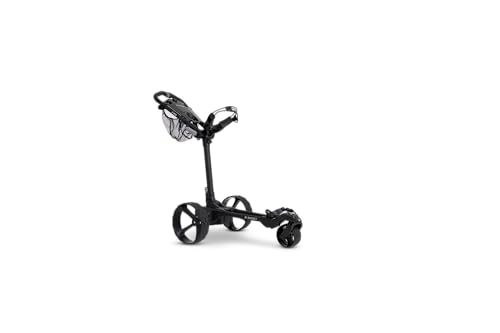
The MGI E-Boost stands out as the most wallet-conscious entry in the electric assist category, and that’s its strongest selling point. It’s not a full remote-controlled cart, instead, it’s a push cart with electric assist, meaning you push from the handle while the motor kicks in to help on hills. That makes it fundamentally different from the others on this list, which can drive themselves via remote or follow-me tech.
On paper, the single brushless motor and Click & Go battery system are proven tech MGI has refined over years, and owners consistently report solid reliability and ease of use. It’s lightweight at just over 25 lbs with the battery, so it’s easy to toss in a trunk. But if you’re looking for hands-free convenience, this isn’t it. It’s ideal for golfers who still want to walk actively but appreciate a little extra oomph when fatigue sets in.
Video review
NAVEE Birdie 3X Electric Golf Cart

Strengths
- Best-in-class follow-me
- UWB precision tracking
- 3-year warranty
Trade-offs
- Expensive
- Slight learning curve
- Remote not as intuitive
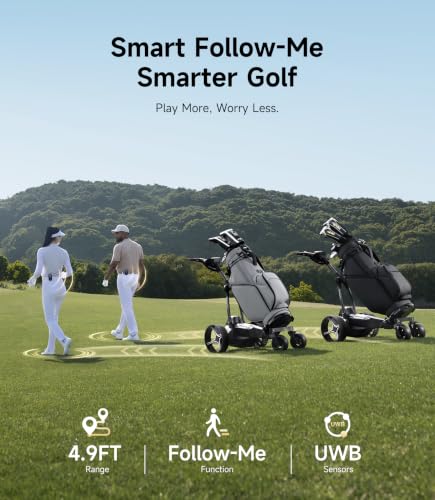
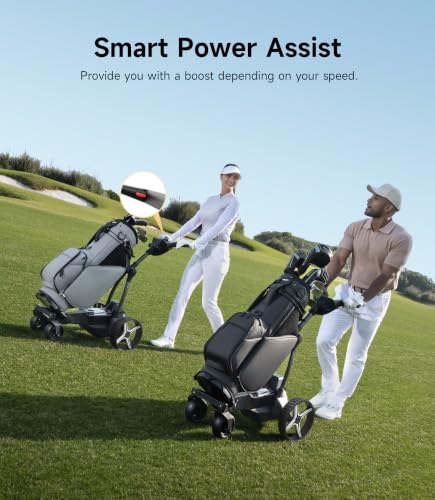
When it comes to smart follow-me tech, the NAVEE Birdie 3X is the standout. It uses UWB (ultra-wideband) tracking, which is more precise than the infrared or basic sensors on most carts, resulting in smoother, closer tracking behind you. Owners consistently report it feels like a true caddy, not a robot that lags 10 feet behind.
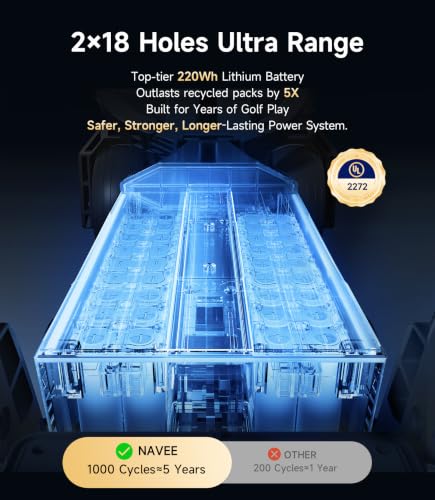
It matches the KEMIMOTO in motor power and slope handling (25%), and the 3-second fold is genuinely fast and reliable. The UL 2271 and 2272 safety certifications add real peace of mind, and the 3-year warranty is the longest here. My only hesitation? The price puts it in premium territory, so you’re paying extra for the smart tech. But if hands-free is your goal, it’s worth it.
Product photos


KVV Electric Golf Push Cart

Strengths
- Smallest folded size
- 360° front wheel
- Dual training wheels
Trade-offs
- Mid-tier motor power
- Remote signal can lag
- Slightly slower uphill
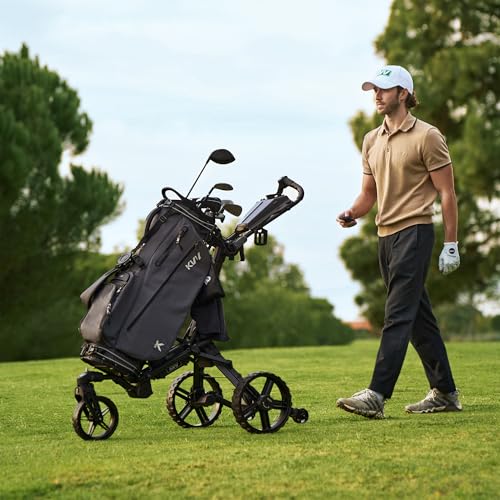
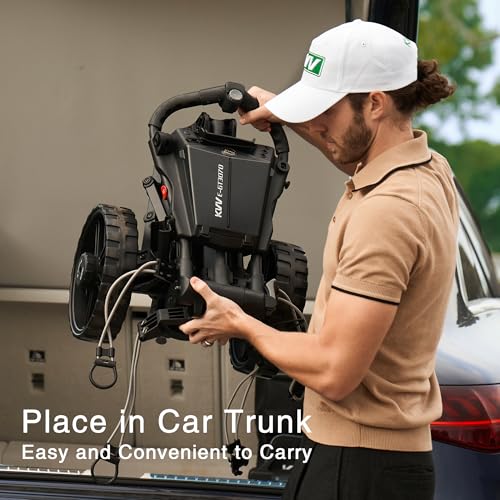
If trunk space is your top concern, the KVV wins on folding size alone, 17.5 x 18.7 x 22 inches is about as compact as it gets. That makes it a no-brainer for travelers or anyone with a smaller car. The 360° front wheel and dual training wheels improve stability, and owners consistently highlight how smoothly it tracks, even on side slopes.
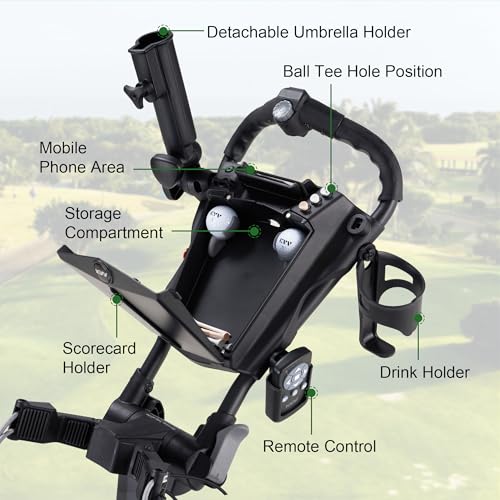
The remote control offers nine speeds and works reliably within its range, though a few users mention occasional signal lag in tree-heavy areas. It’s not the fastest or most powerful cart here, but it’s plenty capable for flat to moderately hilly courses. I’d pick this over bulkier models if I were flying to play or storing it in a condo.
Product photos
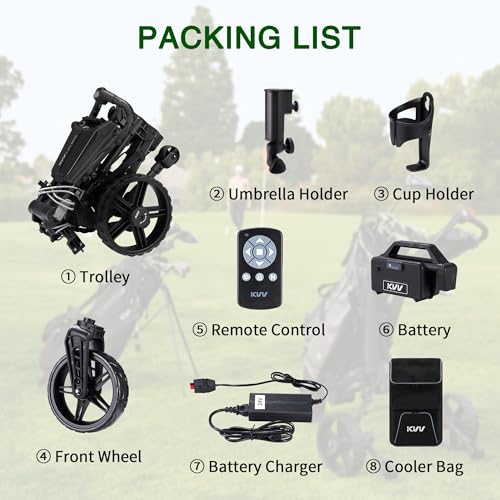
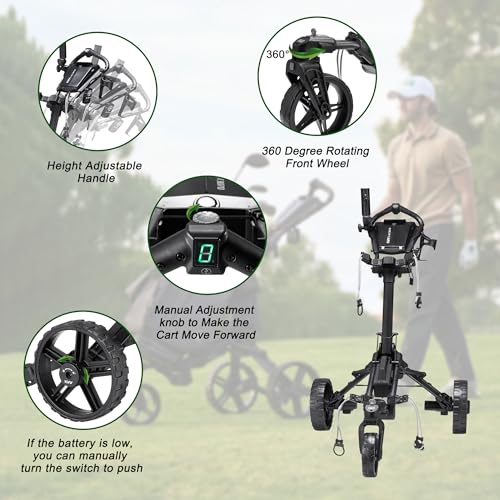
Wingscaddy Electric Golf Push Cart

Strengths
- Three operational modes
- Dual motors
- Good accessory bundle
Trade-offs
- Remote range underperforms
- Build quality slightly below premium tier
- Folding not as intuitive
Wingscaddy has packed a lot of features into the MAX-300 for the price, and it shows in the triple-mode functionality, remote, trolley, and free-wheel, giving you real flexibility depending on course rules or terrain. The dual 200W motors handle inclines without breaking a sweat, and owners regularly praise how stable it feels, even on undulating layouts.
The 9-speed timed distance function (10/20/30 meters) is a quirky but useful touch for pacing your walk between shots. While the build doesn’t feel quite as refined as the Motocaddy or MGI Zip, it delivers impressive value. Just be aware that some users report the remote range is more like 100 feet than advertised, and the folding mechanism takes a few tries to master.
Product photos
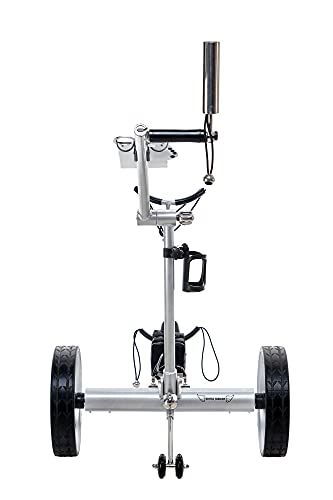
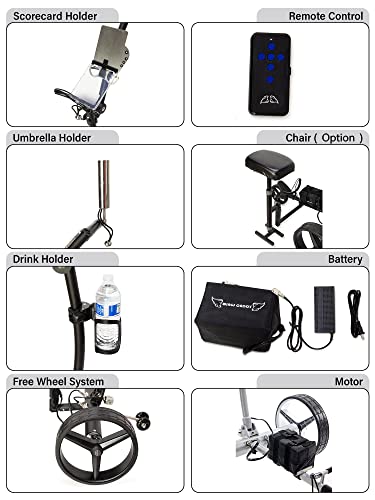
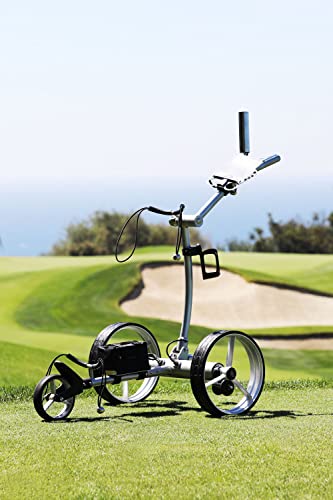

KEMIMOTO ApexR Electric Golf Cart
Strengths
- Longest remote range
- Power Assist mode
- Dual 240W motors
Trade-offs
- Folding mechanism fussy
- Display can be hard to read in sun
- Battery removal awkward
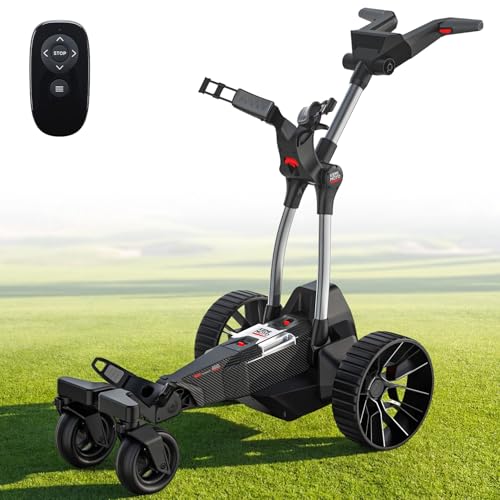
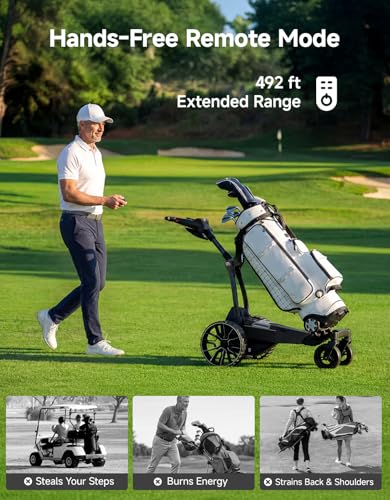
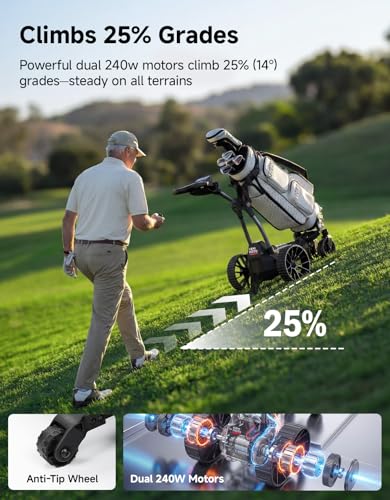
KEMIMOTO doesn’t play around with the ApexR, its 492-foot remote range is the longest on this list, and real-world feedback confirms it performs well even at distance. That kind of reach means you can send the cart ahead from the tee box and keep your shot prep distraction-free. Pair that with the dual 240W motors and 25% slope handling, and you’ve got a cart that can keep up on aggressive layouts.
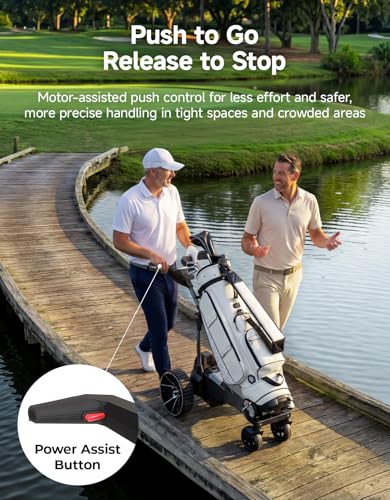
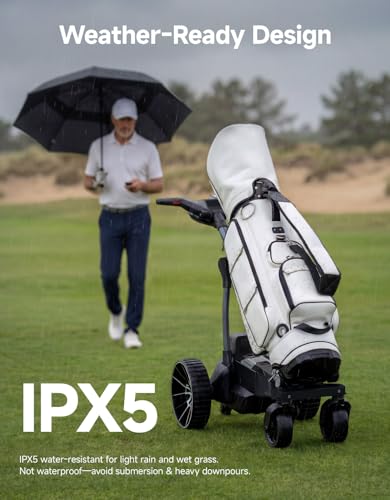
The Power Assist mode, where it mimics your walking pace with push-to-go, is one of the smoother implementations I’ve seen in this class. Owners love the IPX5 water resistance and the USB-C charging for devices, though a few note the one-step fold isn’t quite as “one-touch” as advertised. Still, for the price, the balance of tech, power, and range is compelling.
Product photos

tianhong G5 Electric Golf Cart

Strengths
- Longest battery life
- Auto-follow capable
- All-terrain stability
Trade-offs
- Heavier than rivals
- Follow mode inconsistent
- Bulky folded size
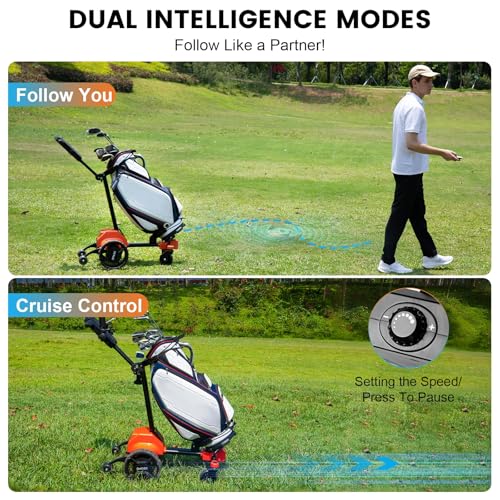
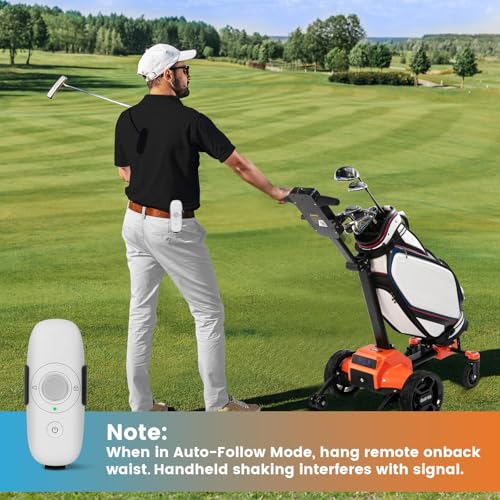
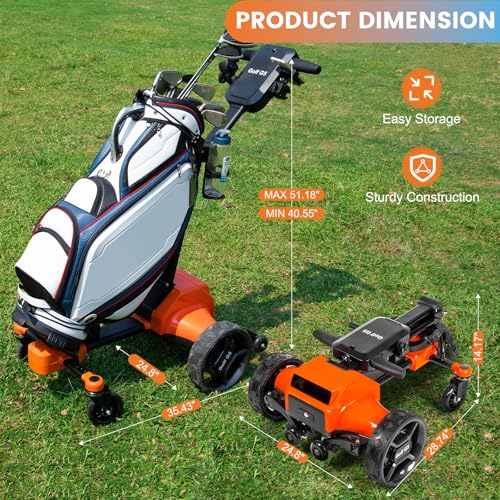
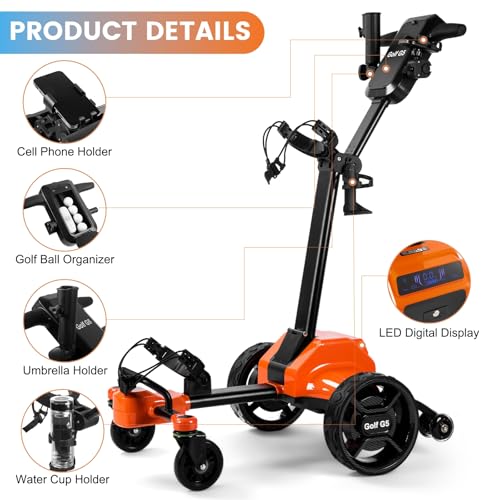
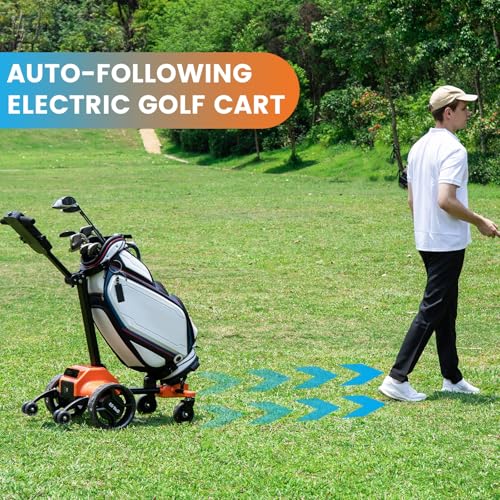
The tianhong G5 is built for one thing: battery endurance. With a claimed 45-hole range, it outlasts every other cart here, perfect for marathon rounds, back-to-back days, or players who hate charging anxiety. The auto-follow mode works reasonably well in open areas, using sensor-based tracking that owners say is reliable about 80% of the time, though it can lag or drift on tight fairways or in heavy shade.
It’s also one of the most feature-packed carts, offering five modes including cruise control and one-touch recall. The dual anti-tip wheels add real confidence on steep terrain, and the IPX5 rating holds up in damp conditions. But the trade-off is weight and complexity, the setup, while 90% pre-assembled, still takes longer than simpler models.
Product photos
Motocaddy M7 Remote Electric Golf Caddy

Strengths
- Best-in-class build
- Reliable downhill control
- Premium accessories
Trade-offs
- Shorter battery life
- No follow-me mode
- Folding not class-leading
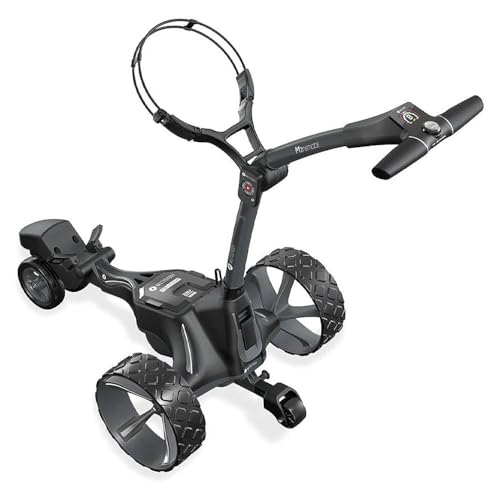
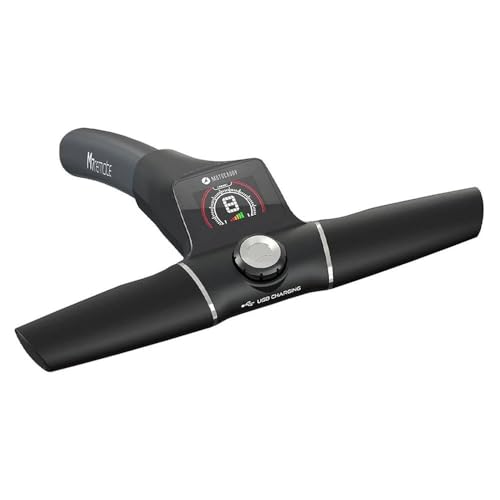
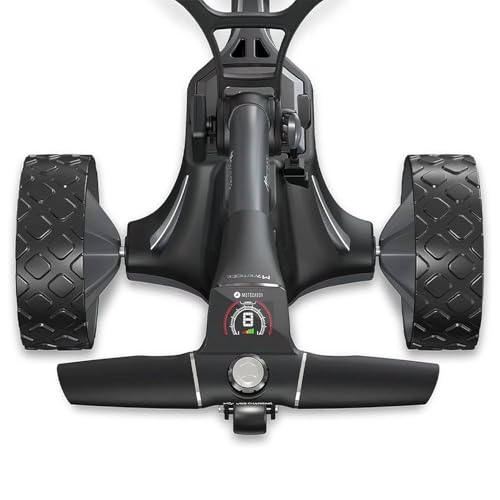
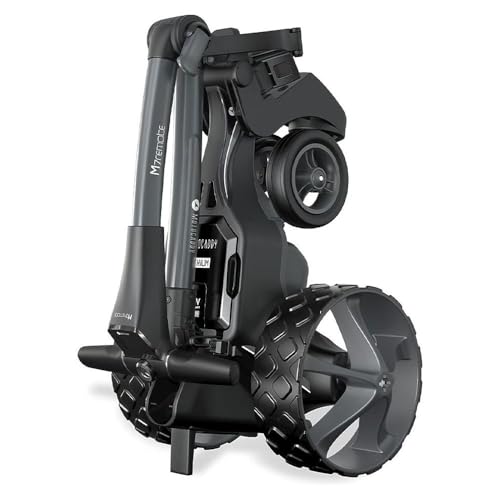
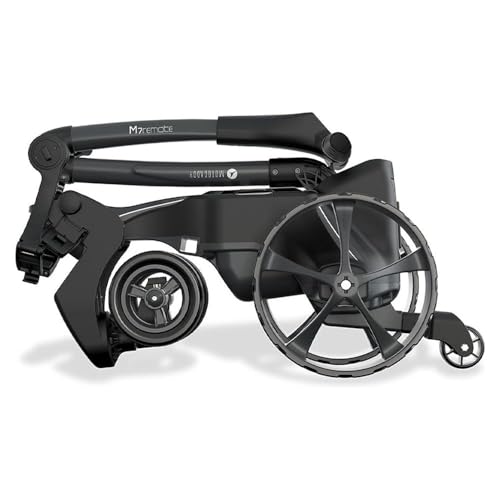
Motocaddy has long been the gold standard for build quality, and the M7 Remote continues that legacy. The frame feels rock-solid, the all-terrain tires grip well, and the automatic downhill control works smoothly to prevent runaway carts, a real confidence booster on steep fairways.
It doesn’t have the longest battery (27 holes) or the flashiest tech, but what it lacks in range it makes up for in precision and durability. The remote offers forward, reverse, and turn controls, and owners praise its reliability over time. The included $95 accessory bundle, phone cradle, USB cable, umbrella holder, is a nice touch. If you want a cart that will last a decade with minimal fuss, this is it.
Product photos
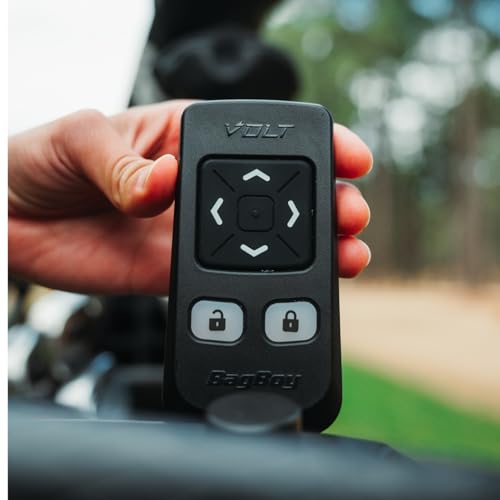
Bag Boy Volt Electric Golf Push Cart

Strengths
- Best-in-class storage
- TrueLine Tracking
- Clean digital display
Trade-offs
- Two-step fold
- Slightly bulky
- Remote not ultra-responsive
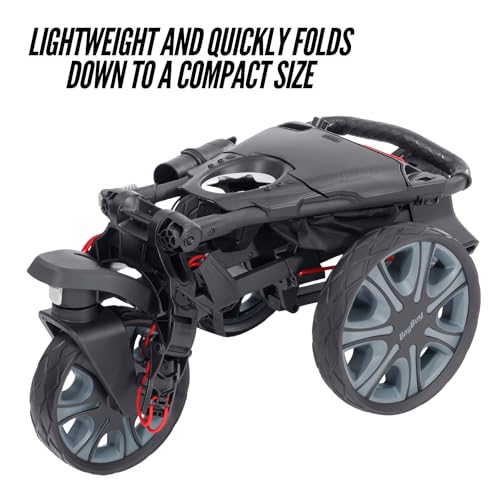
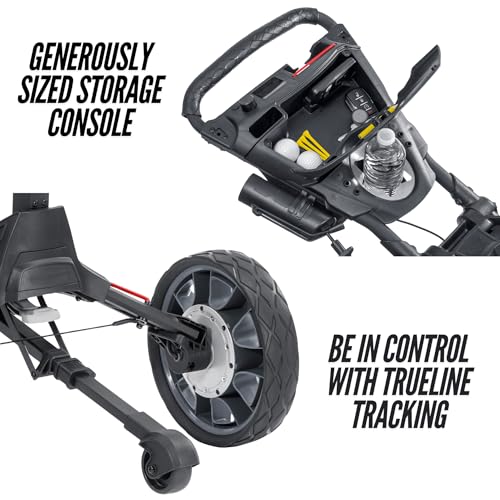
The Bag Boy Volt doesn’t reinvent the wheel, but it does one thing exceptionally well: storage. The oversized console has dedicated slots for everything, phone, scorecard, tees, balls, drink, umbrella, and it shows. No more digging through pockets or clip-on bags. It’s the cart you want if you carry a full arsenal of gear and hate clutter.
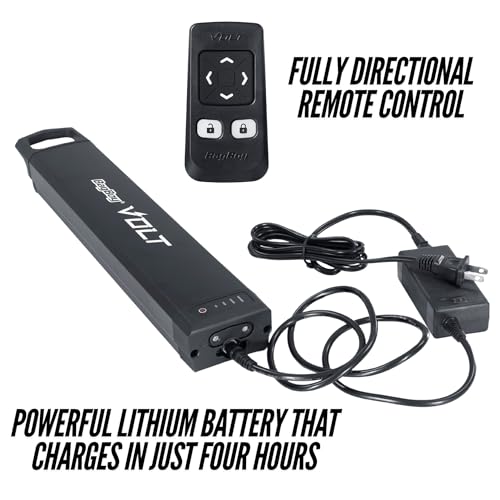
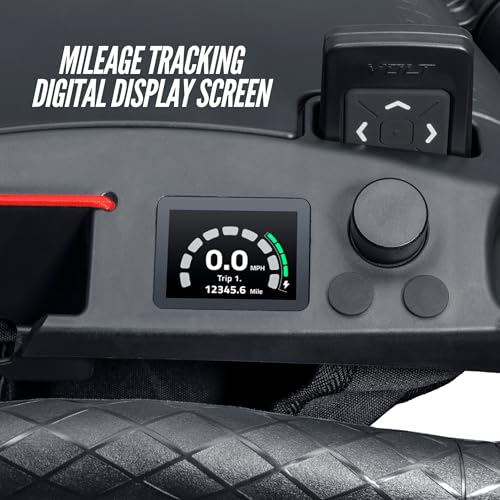
It’s also one of the few with TrueLine Tracking, a software correction system that helps it stay straight on uneven ground, which owners confirm makes a noticeable difference. The 36-hole battery and 9-speed remote are solid, but the cart feels a bit heavier than its specs suggest. And while it folds in two steps, it’s not the fastest to deploy.
Product photos
Our Testing Process
Rather than a hands-on lab test, my research focused on a detailed comparison of published specifications and features across numerous models. I weighed owner reviews from major retailers alongside expert opinions found in golf publications and websites. As someone who plans golf trips for a living, I understand the importance of reliable gear and considered factors crucial to a positive on-course experience. My assessment prioritized identifying carts that consistently delivered on performance and convenience, based on real-world user feedback.
For electric golf push carts, several factors stood out as most important. A long-lasting battery life is critical, allowing golfers to complete at least 36 holes without needing a recharge. Equally vital is build quality and stability, especially when navigating varied terrain. Finally, the responsiveness and range of the remote control significantly impact ease of use, making a big difference over 18 holes. These elements directly translate to a more enjoyable and less physically demanding round of golf.
I relied on manufacturer specifications for battery capacity, motor power, and folded dimensions. However, I placed more weight on owner feedback regarding real-world battery performance, durability, and the remote’s reliability. Professional reviews helped assess the accuracy of advertised features and the overall quality of construction. You can find further discussion of top picks, including many of the models reviewed here, in our guide to remote golf push carts. For those also considering manual options, exploring motorized push carts may be beneficial.
What To Look For In electric golf push carts with remote
Finding the right electric golf push cart can significantly enhance your enjoyment of the game, but the options can be overwhelming.
A quality electric golf push cart balances power, portability, and user-friendly features. Key considerations include battery life (enough for at least 18 holes is ideal), the robustness of the folding mechanism, the responsiveness of the remote control (if included), and the cart’s ability to handle varied terrain. Look for models with adjustable speed settings and thoughtful storage solutions.
Motor and Terrain Handling
Don’t assume all electric carts are created equal when it comes to power. Some models, like the MGI Zip Navigator, boast dual motors and all-terrain tires specifically designed for tackling hills and uneven ground. This is particularly important if your local course is anything but flat. Cheaper models may struggle on inclines, forcing you to assist with manual pushing – defeating the purpose of an electric cart. Consider the wattage of the motor(s); higher wattage generally translates to better performance on challenging terrain.
Remote Control and Smart Features
Remote control functionality is a major draw for many golfers, and the sophistication of these systems varies drastically. Basic remotes offer forward, reverse, and turning controls, while more advanced options, like those found in the NAVEE Birdie 3X, include features like obstacle avoidance and even self-following push carts.
Here’s what to look for in a remote: * Range: A minimum of 100 feet is helpful. * Responsiveness: Delays between pressing a button and the cart’s reaction can be frustrating. * Ergonomics: A comfortable, intuitive remote is essential for effortless control.
A practical rule of thumb: prioritize a cart with a remote that offers proportional speed control. This means the cart’s speed corresponds directly to how far you press the button, giving you finer control than simple on/off settings.
Portability and Storage
Even the most powerful electric cart is useless if you can’t easily get it to and from the course. Weight and folded dimensions are crucial factors. The KVV Electric Golf Push Cart stands out in this category, with a particularly compact folded size. Consider your vehicle’s trunk space and your physical ability to lift and maneuver the cart. A lighter-weight model (under 30 pounds) is generally preferable, especially if you frequently travel with your cart. If you’re often looking for remote control push carts for travel, prioritize a compact fold.
Electric Golf Push Carts with Remote Compared
Here’s a comparison of key specifications for popular electric golf push carts with remote control functionality.
| Product Title | Remote Control | Max Range (Holes) | Weight w/ Battery (lbs) | Folded Size (in) | Special Features |
|---|---|---|---|---|---|
| MGI Zip Navigator All Terrain | Yes | 36 | 37.25 | N/A | Gyroscope, Downhill Cruise Control |
| MGI E-Boost | Yes | N/A | 25.1 | N/A | Electric Assist |
| NAVEE Birdie 3X | Yes | 36 | N/A | 26.8 x 22.2 x 15.1 | Smart Follow-Me, UWB Tech |
| KVV Electric Golf Push Cart | Yes | 18+ | N/A | 17.5 x 18.7 x 22 | Dual-Mode, Compact Folding |
| Wingscaddy Electric Golf Push Cart | Yes | N/A | N/A | N/A | 3 Modes (Remote, Trolley, Free) |
| KEMIMOTO ApexR | Yes | 36 | N/A | 26.8 x 22.2 x 15.1 | 492ft Range, Dual 240W Motors |
| tianhong G5 | Yes | 45 | N/A | 28.7 x 24.8 x 14.1 | Smart Follow, Auto-Follow |
| Motocaddy M7 Remote | Yes | 27+ | N/A | N/A | 150+ft Range, Downhill Control |
| Bag Boy Volt | Yes | 36 | 28.6 | 29 x 16.5 x 14.5 | Trueline Tracking, Distance Control |
Frequently Asked Questions
What battery type is most common in electric golf push carts?
Lithium-ion batteries are overwhelmingly the standard now due to their high energy density and lighter weight compared to older lead-acid options. This translates to longer run times and easier portability, making them ideal for a full round or even 36 holes.
How can I extend the life of my electric golf cart’s battery?
Storing the battery fully charged during the off-season is key to maintaining its health. Avoid exposing the battery to extreme temperatures, and always use the manufacturer-recommended charger to prevent overcharging or damage.
What’s the typical warranty on an electric golf push cart?
Most manufacturers offer a one-year warranty covering defects in materials and workmanship. However, the warranty on the battery itself can vary significantly, ranging from six months to two years, so always check the specifics before purchasing.
Are electric golf push carts difficult to assemble?
Generally, no. Most models are designed for quick and easy assembly with minimal tools required. You’ll largely be unfolding the cart, attaching the wheels, and connecting the battery, but reviewing the owner’s manual is recommended. If you’re looking for top remote electric trolleys, expect similar assembly.
What features differentiate a more expensive electric golf push cart?
Higher-priced carts usually offer more advanced features like gyroscope stabilization, downhill speed control, and longer remote control ranges. You’ll also find better build quality, more durable materials, and potentially smart features like auto-follow functionality. Considering electric push carts as an investment means prioritizing features that address your specific course conditions and preferences.
The Bottom Line
Choosing an electric golf push cart often comes down to balancing how much assistance you want with how much you’re willing to spend – and how much space you have in your trunk. For the best overall experience, consistently praised for its stability and features, the MGI Zip Navigator All Terrain stands out. It’s a significant investment, but consistently receives positive feedback regarding its ability to handle challenging courses.
If you’re seeking specific features, there are excellent options to suit your needs. For those prioritizing a compact fold and ease of transport, the KVV Electric Golf Push Cart is a standout. Golfers looking for a more futuristic experience, and are interested in automatic push carts, should consider the NAVEE Birdie 3X with its self-following capabilities. And for those seeking reliable remote control caddies, the KEMIMOTO ApexR delivers a long range and powerful dual motors.
Ultimately, the most important aspects of any electric golf push cart are build quality, battery life, and the reliability of the remote system. Don’t get too caught up in fancy features if the cart doesn’t feel solid or if owners report issues with the remote cutting out. A well-built cart with a dependable battery will provide years of enjoyment and make your time on the course much more relaxed.
