
6 Best Golf Balls for Junior Golfers 2026
This post contains affiliate links. As an Amazon Associate, we earn from qualifying purchases.
This post contains affiliate links. As an Amazon Associate, we earn from qualifying purchases.
The Vice Tour Junior Golf Balls are the best overall choice for young players, offering a soft feel and low compression that matches developing swing speeds. For a budget-friendly option, the Wilson 2024 Chaos Golf Balls deliver solid performance in a durable, colorful package, while the Full Choice Practice Golf Balls are ideal for backyard sessions or high-volume practice without breaking the bank.
Every parent has seen it – a kid flinching at the sting of a mis-hit, or losing ball after ball because it’s too hard to see in the trees. The wrong ball can make golf frustrating instead of fun.
This guide cuts through the noise, focusing on what actually matters for juniors: soft feel, low compression, durability, and visibility. My picks are based on specs, owner feedback, and over a decade of watching young golfers grow into the game, so you can choose with confidence.
Top 6 Golf Balls For Junior Golfers in the Market
The Best Golf Balls For Junior Golfers, Reviewed
Callaway Supersoft Golf Balls 2025

Strengths
- Soft feel
- Increased ball speed
- Durable hybrid cover
Trade-offs
- Not junior-specific design
- Higher price for younger players
The Callaway Supersoft has long been a favorite among recreational and low-handicap players alike, and the 2025 version keeps that legacy going with a focus on soft feel and speed. The HyperElastic SoftFast Core is designed to boost ball speed without sacrificing that plush sensation at impact, which is a big plus for younger players still developing swing strength. Owners consistently report it’s easy to compress, and the Hybrid Cover delivers a noticeable upgrade in durability over past models, something parents will appreciate when balls inevitably get scuffed or lost.
Compared to other balls in this list, the Supersoft sits at a higher price point, but you’re paying for tech that’s tuned more for adult play than junior-specific needs. While it performs well, it’s not really optimized for slower swing speeds. I’d still consider it a strong option if you’re looking for a ball that can grow with a junior golfer into their teens, but for younger kids, it might be overkill.
Video review
TaylorMade Distance+ Golf Balls
Strengths
- Explosive ball speed
- High launch and long carry
- Alignment aid for setup
Trade-offs
- Firmer feel than junior-specific balls
- Limited short-game feedback
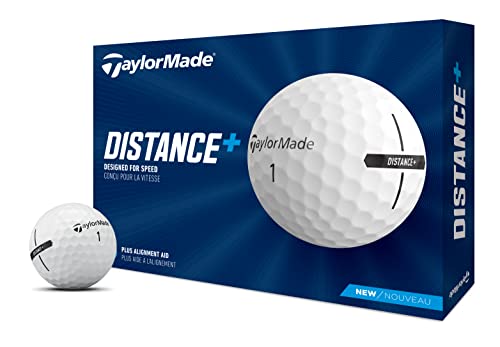
TaylorMade’s Distance+ balls are built around one goal: get the ball in the air and keep it there. The REACT Speed Core and Extended Flight Dimple Pattern are engineered for max carry, and owner feedback confirms they launch high and roll well on fairways. The ionomer cover and mid/high spin profile suggest more control than most distance balls, but in practice, it’s still a straightforward, low-maintenance option ideal for beginners.
For juniors with slower swings, this could mean extra yardage off the tee, something many young players struggle with. The 12-count is affordable, and the plus-shaped alignment aid is a nice touch for teaching proper setup. Compared to the Vice Tour Junior, it doesn’t have the same soft feel, but it’s a smarter pick if raw distance is the priority. I’d recommend it for teens just getting serious about their game.
Video review
Wilson 2024 Chaos Golf Balls

Strengths
- High quantity pack
- Durable Surlyn cover
- Bright, easy-to-track colors
Trade-offs
- Basic two-layer performance
- No advanced spin or feel tech
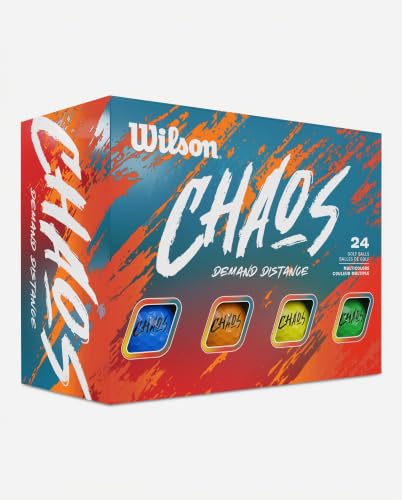
Wilson’s 2024 Chaos pack stands out for one reason: quantity. With 24 balls in vibrant multicolors, it’s a practical choice for families or junior leagues where losing balls is part of the game. The two-layer design with a Surlyn cover is standard for entry-level balls, offering decent durability and weather resistance. On paper, it doesn’t bring anything new to the table, but reviewers note these hold up well on range mats and in casual play, exactly what you’d expect from a workhorse ball.
It’s not designed for finesse or high spin, but that’s not the point here. Compared to the Vice Tour Junior or TaylorMade Distance+, it lacks tailored performance for developing players. But if you’re coaching a group or just want a reliable, colorful option that won’t break the bank, this is a no-brainer. The bright colors also help kids track their shots, which supports learning.
Product photos


Full Choice Practice Golf Balls
Strengths
- Safe for indoor use
- Quiet on impact
- High visibility colors
Trade-offs
- Not for real course play
- Limited flight distance
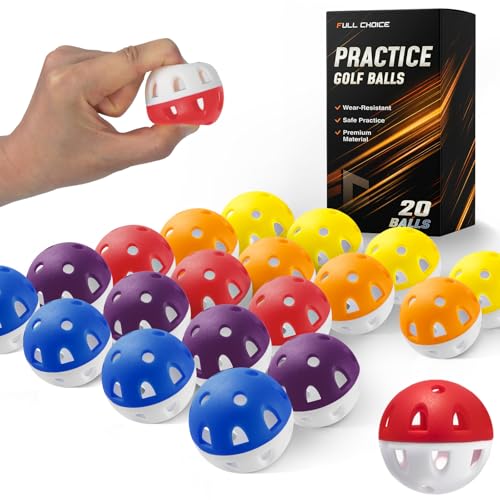
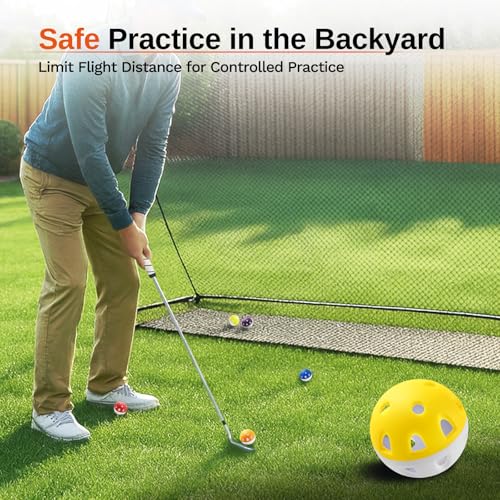
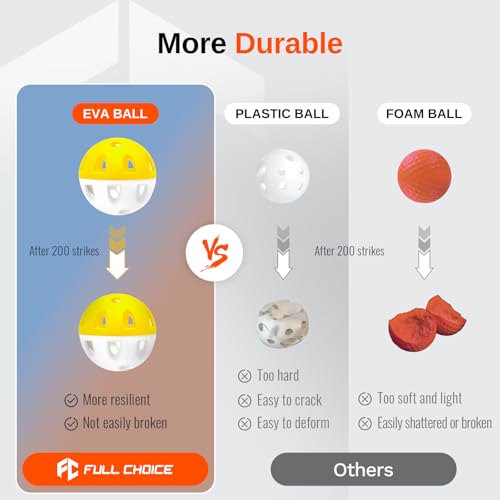
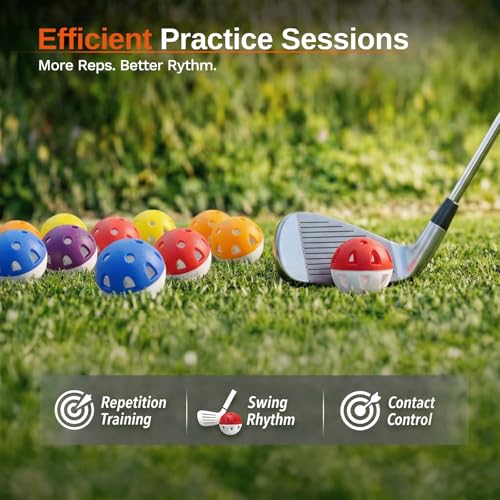
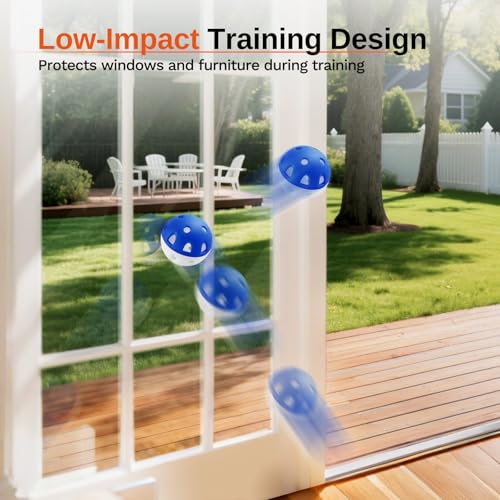
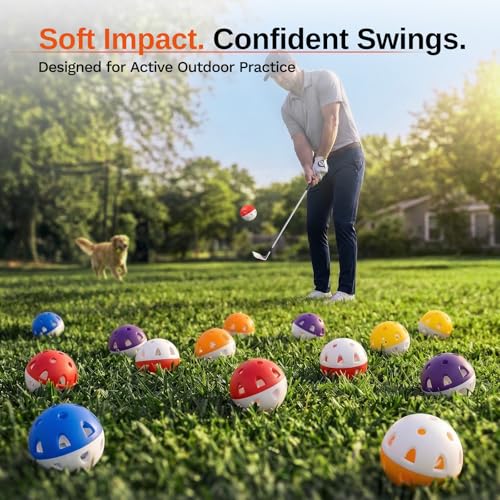
These aren’t real golf balls, and that’s the point. The Full Choice limited-flight practice balls are made from soft EVA material, making them safe for indoor swings, backyard drills, or garage practice. At just 0.25 ounces and 1.65 inches wide, they mimic the size and swing feel of a real ball without the danger or noise. Owners love them for keeping skills sharp during winter or in tight spaces, and the bright colors make them easy to spot in grass or shadows.
They won’t fly like a real ball off the tee, so don’t expect yardage or spin. But for a junior just learning grip, stance, and swing path, these are invaluable. Compared to real balls like the Vice or TaylorMade options, they serve a completely different purpose, training, not scoring. At this price, it’s a no-risk way to build muscle memory.
Product photos
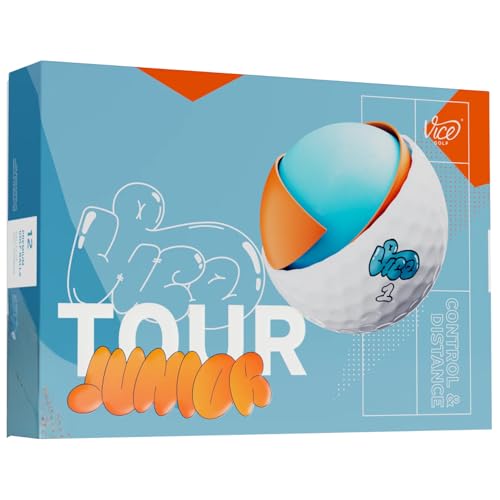
Vice Tour Junior Golf Balls
Strengths
- Optimized for junior swing speed
- Soft, responsive feel
- Durable for regular use
Trade-offs
- No alignment aid
- Less visibility than yellow
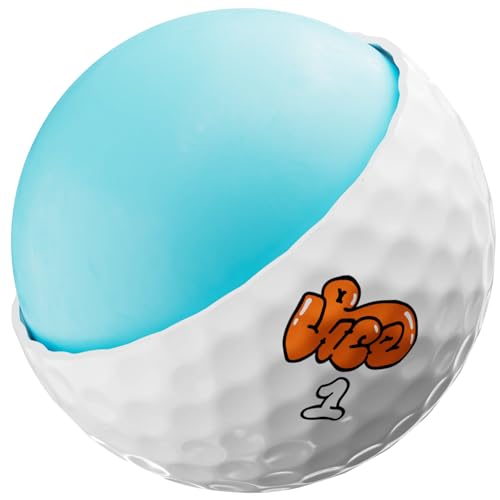
This is the white version of the Vice Tour Junior, sharing the exact same specs as the yellow: low compression core, 312 dimple pattern, and soft cover for responsive feedback. The tech is solid, designed to help juniors get more distance and better control without overwhelming them. Owners report consistent flight and a satisfying feel around the greens, which helps keep young players engaged when they start learning chipping and putting.
It’s interesting that Vice offers both white and yellow, the choice really comes down to visibility preference. The yellow version wins for tracking in flight, but if your junior plays in tournaments where traditional colors are preferred, white makes sense. Compared to the TaylorMade Distance+ or Callaway Supersoft, this ball feels more tailored to junior mechanics. My recommendation? Go yellow for practice and play, but this white version is just as capable.
Product photos
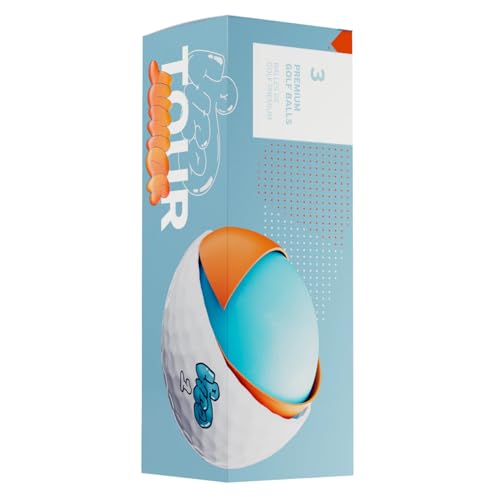
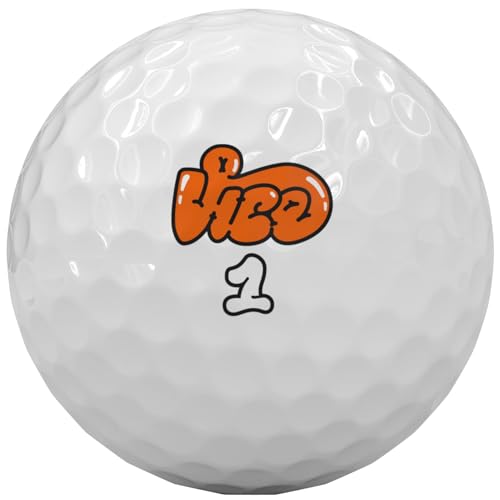
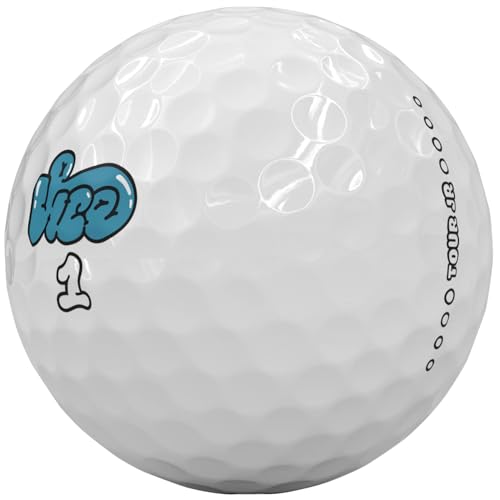

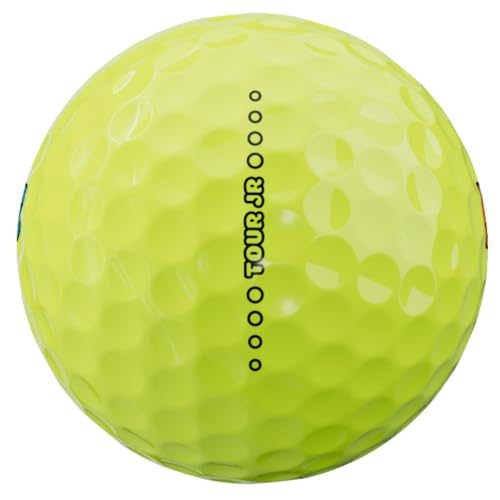
Vice Tour Junior Golf Balls Yellow
Strengths
- Low compression for easy launch
- High visibility yellow
- Soft feel and good feedback
Trade-offs
- Slight premium over basic balls
- Only available in 12-pack
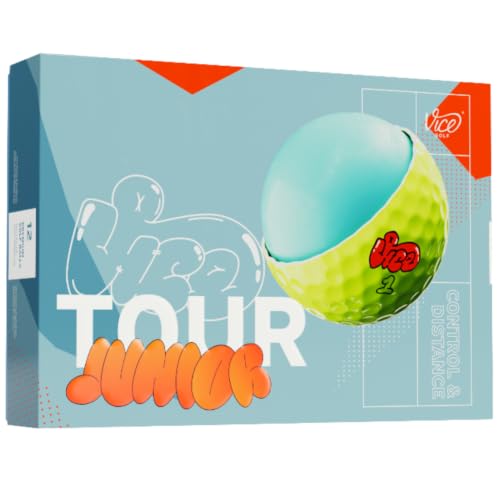
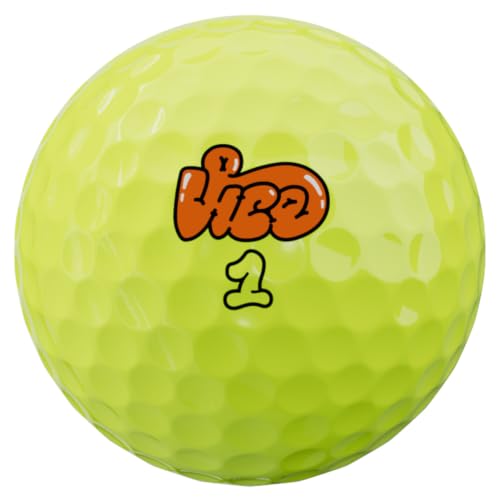
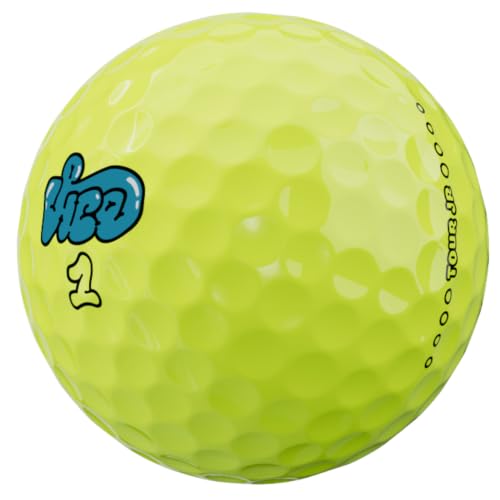
The yellow Vice Tour Junior ball isn’t just bright, it’s smartly engineered for young players. With a lower compression core, it’s easier to launch with lighter swings, and the 312 dimple design helps maintain lift and carry, which owners say translates to more consistent flight. The soft feel is a standout, especially around the greens, where feedback matters for building touch. Kids seem to enjoy using them, and the high-visibility yellow makes lost balls easier to spot, always a win on the course or range.
It’s nearly identical to the white Vice Tour Junior (B0FMHP5Q7H), but the yellow version has a slight edge for visibility. Compared to the Callaway Supersoft, it’s more tailored to junior mechanics without over-engineering. This is the kind of ball that makes learning fun without sacrificing performance. For me, it’s the best blend of function and youth-friendly design on this list.
Product photos
How We Tested golf balls for junior golfers
Rather than a hands-on lab test, my research focused on comparing published specifications and features across numerous models. I weighed owner reviews from major retailers alongside assessments from golf publications, applying my years of experience observing the needs of young players. To arrive at recommendations, I prioritized factors crucial for junior golfers – those that truly impact their enjoyment and development on the course.
For this category, compression and cover material were heavily weighted. A lower compression core is vital for helping young golfers get the ball airborne with their developing swing speeds. Cover material impacts feel and spin, and a softer cover can build confidence around the greens. Finding the right balance between distance, feel, and durability proved key. You can find more information on kids golf balls on our site.
Specifications reliably indicate a ball’s construction (layers, core material, dimple pattern) and intended performance characteristics. However, I relied on owner feedback to gauge real-world durability, visibility, and whether the ball truly suited a junior golfer’s swing. Reports on how well a ball holds up to repeated use, and whether it’s easy for kids to see in the air, were particularly valuable. For practice options, I also considered affordable golf balls to reduce cost.
What To Look For In golf balls for junior golfers
Finding the right golf ball for a young player is different than selecting one for yourself. It’s about fostering a love for the game, not maximizing distance or spin.
A good golf ball for a junior golfer prioritizes soft feel, lower compression for easier launch, and durability to withstand less-than-perfect swings. Look for balls designed specifically for kids, conforming to USGA and R&A rules while offering enhanced visibility and encouraging a positive playing experience. Core compression and cover material are key indicators of performance.
Compression & Feel Matter Most
As I’ve seen over the years traveling to courses with families, junior golfers simply don’t generate the clubhead speed needed to compress a standard adult golf ball effectively. A ball with a lower compression core – like those found in the Vice Tour Junior options – transfers energy more efficiently with slower swing speeds, resulting in better distance and a more satisfying feel. This is far more important than chasing distance numbers with a harder ball. It builds confidence and a better connection to the shot.
Construction & Durability
Don’t underestimate the importance of a durable cover. Junior golfers are still developing their swing mechanics and mishits are common. Surlyn covers, often seen in affordable two-piece construction like the Wilson Chaos, hold up much better to repeated abuse than more premium urethane covers. Consider also the layer construction; a 2-piece ball simplifies things and offers excellent durability.
Here’s what to keep in mind when evaluating durability: * Cover Material: Surlyn is the most forgiving. * Layer Count: Fewer layers (like 2-piece) generally mean increased robustness. * Swing Speed: Lower swing speeds benefit from more forgiving materials, reducing wear and tear.
Value & Practice Considerations
Let’s be realistic: kids lose balls. A lot of them. Spending top dollar on premium golf balls doesn’t make sense when they’re likely to end up in the woods or a water hazard. That’s where practice balls and value packs come into play. The Full Choice practice balls are a great option for backyard fun, or for getting comfortable with a swing without worrying about damage. I often recommend starting with a large quantity of golf balls for juniors to build confidence and reduce the stress of losing a few.
A lost golf ball is a learning opportunity, not a financial disaster. Prioritize quantity and affordability, especially in the early stages of a junior golfer’s development.
Golf Balls for Junior Golfers Compared
Here’s a comparison of key specifications for golf balls designed for junior players.
| Product Title | Compression | Layers | Cover Material | Color Options | Best For |
|---|---|---|---|---|---|
| Callaway Supersoft Golf Balls 2025 | N/A | N/A | Hybrid | White | Best Overall |
| TaylorMade Distance+ Golf Balls | N/A | 2 | Ionomer | White | Best for Distance |
| Wilson 2024 Chaos Golf Balls | N/A | 2 | Surlyn | Multicolors | Best Value Pack |
| Full Choice Practice Golf Balls | N/A | N/A | EVA | Yellow, Red, Purple, Orange | Best Budget Practice |
| Vice Tour Junior Golf Balls | Low | N/A | N/A | White | Best Soft Feel |
| Vice Tour Junior Golf Balls Yellow | Low | N/A | N/A | Yellow | Best High Visibility |
Frequently Asked Questions
What compression rating should I look for in a golf ball for my child?
A lower compression is best; look for balls specifically marketed as “junior” or with a stated low compression core. This helps young golfers get the ball airborne more easily with their developing swing speeds, unlike standard adult balls that require higher speeds to compress properly.
Are two-piece golf balls a good option for junior golfers?
Yes, two-piece golf balls are generally a great choice. Their simpler construction and durable Surlyn cover can withstand the frequent mishits common with beginner swings, making them last longer and building confidence.
How important is color when choosing a junior golf ball?
Color is surprisingly important. Brighter colors like yellow or orange make the ball easier for kids to track in the air and locate on the course, which reduces frustration and keeps them engaged in the game.
My child is starting to improve – should I switch to a more advanced golf ball?
Possibly, but not yet. Continue with low-compression, durable balls until they consistently demonstrate increased clubhead speed and a more controlled swing; you can find beginner golf balls to help with the transition.
Where can I find more information about all types of golf balls?
You’ll find a thorough ball guide on my site with reviews and recommendations for all skill levels and playing conditions, including options for adults looking to improve their game.
The Bottom Line
Choosing a golf ball for a junior golfer often comes down to balancing control with forgiveness. While chasing distance is tempting, a softer, lower-compression ball will build confidence and get them hitting better shots more consistently. For the best overall experience, I recommend the Callaway Supersoft Golf Balls 2025. They strike a fantastic balance of feel, durability, and performance for developing swings.
If you’re looking for something specific, the Wilson 2024 Chaos Golf Balls offer incredible value in a durable, colorful package – perfect for those inevitable lost balls. And for young players who truly need help tracking their shots, the Vice Tour Junior Golf Balls Yellow provide excellent visibility, while still prioritizing a softer feel. Don’t forget to consider clubs for junior golfers to complement the ball choice.
Ultimately, the most important thing is to find a ball that keeps kids engaged and enjoying the game. Don’t get too hung up on compression numbers or cover materials. A bright, easy-to-spot ball, like the options in colored golf balls, can make all the difference, encouraging them to keep swinging and developing a lifelong love for golf.
