
9 Best Golf Balls for Kids 2026
This post contains affiliate links. As an Amazon Associate, we earn from qualifying purchases.
This post contains affiliate links. As an Amazon Associate, we earn from qualifying purchases.
The Joyberg Practice Golf Balls are the best overall choice for kids, offering durability and bright colors that help with tracking. For older or more advanced juniors, the Wilson 2024 Chaos Golf Balls deliver solid performance, while the D-Xam Foam Golf Balls are a smart pick for safe, affordable backyard practice.
Getting kids into golf means meeting them where they are, both physically and mentally. Standard golf balls are too hard, too hard to see, and too easy to lose, which can turn practice into frustration. I’ve spent years helping families plan golf trips, and one thing is clear: the right equipment makes a huge difference in keeping young players engaged.
This guide cuts through the noise by focusing on real-world usability, what actually works for kids based on specs, feedback, and practical needs like visibility, durability, and swing speed. We looked at materials, size, and design to find balls that support learning without breaking the bank.
Top 9 Golf Balls For Kids in the Market
The Best Golf Balls For Kids, Reviewed
Joyberg Practice Golf Balls 24 Pack
Strengths
- Durable plastic build
- Realistic swing feedback
- Bright, easy to spot
Trade-offs
- Not USGA conforming
- Short carry distance
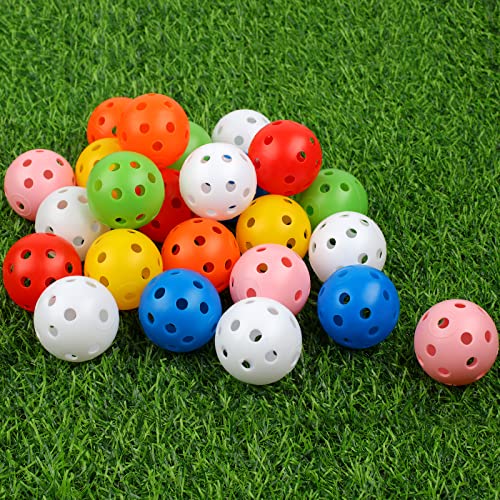
These plastic limited-flight balls strike the best balance between durability, realism, and affordability, which is why I consider them the overall pick for most families. The 42mm hollow design with 26 symmetrical holes helps stabilize flight without going too far, making them ideal for backyard chipping or full swing practice without risk.
Owners report they resist cracking even after repeated iron shots, and the multicolor mix (six shades) makes rotation drills or games easy to organize. Compared to foam balls, these feel more like real golf balls in hand and off the club, without the fragility of actual golf balls. For a kid transitioning from foam to real play, this is the right middle ground.
Video review
Wilson 2024 Chaos Golf Balls

Strengths
- Surlyn cover
- Durable construction
- Consistent flight
Trade-offs
- Not ideal for very young beginners
- Limited short-game feedback
The Wilson 2024 Chaos Golf Balls stand out in the junior performance category thanks to their Surlyn cover and two-piece construction, which is a solid combo for durability and consistent flight. On paper, this build is more suited to older kids with faster swing speeds who are starting to take the game seriously and need a ball that won’t scuff easily after a few range sessions. Owners consistently report these hold up well on cart paths and hardpan lies, not something you can say about most novelty or foam balls.
Compared to basic practice balls, the Chaos delivers a more authentic feel at impact, and the multicolor pack makes it easy to distinguish practice rounds or play fun games on the range. While it’s not a tour-level ball by any means, for a kid moving from plastic to real golf balls, this is a smart transitional pick.
Video review
D-Xam Foam Golf Balls Bulk
Strengths
- Extremely affordable
- Safe for indoors
- Realistic flight
Trade-offs
- Short carry distance
- Not for real course play
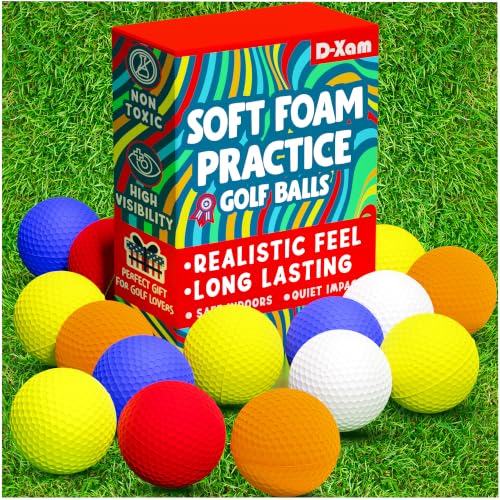
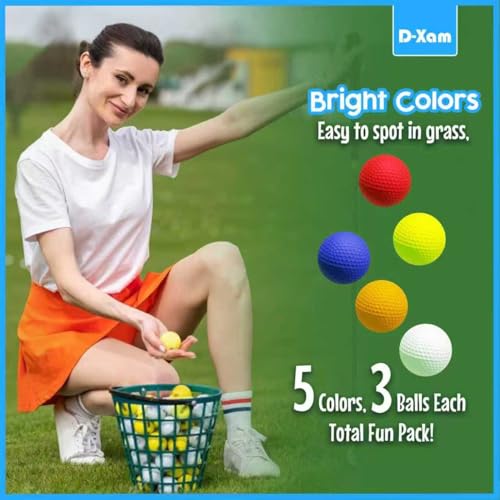
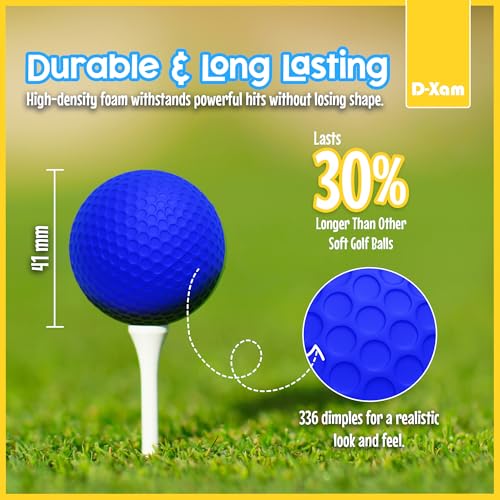
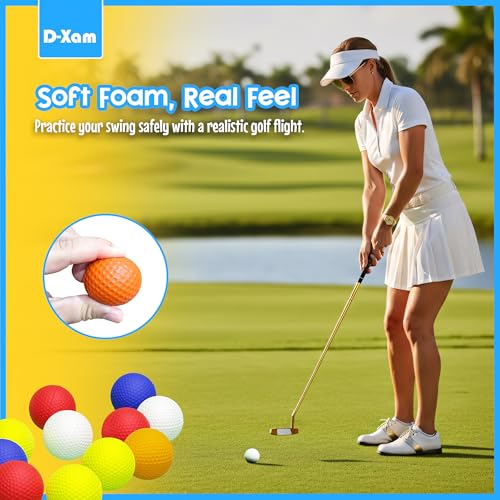
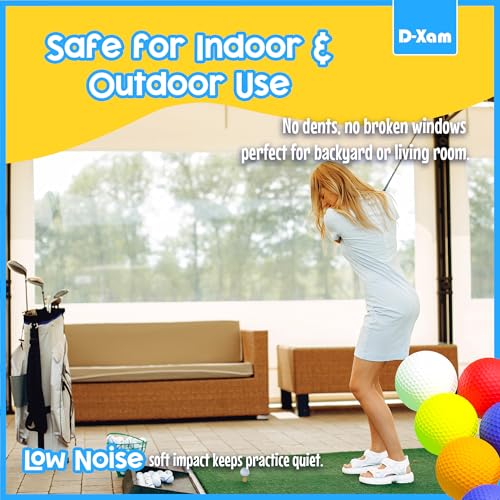
At less than $6 for a pack, these foam practice balls offer unbeatable value for frequent or indoor use. They’re made from soft polyurethane, so they compress on impact like a real ball, a detail many owners highlight when describing the satisfying ‘pop’ off the club. The 41mm size and 7.8g weight make them safe around furniture and pets, which is a big win for parents.
The dimpled surface maintains consistent spin, helping kids learn how their swing affects ball flight, even if distance is limited. Compared to other foam balls, these seem to last longer under repeated use, likely due to the dent-resistant material. For sheer cost-per-use, it’s hard to beat this set.
Product photos
Guirnd 20 Pack Foam Golf Balls

Strengths
- Safe for indoors
- Realistic flight
- Bright colors
Trade-offs
- Short flight range
- Not for full swings
At under $10, these foam practice balls are a no-brainer for backyard use. They’re soft enough to avoid breaking windows or scaring pets, but the 41mm size and dimpled surface give a surprisingly realistic pop off the clubface. Reviewers consistently praise how well they mimic actual flight, not distance, but trajectory and spin, making them useful for swing drills.
The five bright colors are a smart touch, helping kids keep track of their shots on grass or pavement. While they don’t last forever under heavy iron strikes, they hold up better than most foam balls in this price range. For parents introducing golf at home, this pack delivers real value.
Product photos


THIODOON Glow in The Dark Golf Balls
Strengths
- Lights up on impact
- Long battery life
- Great visibility at night
Trade-offs
- Not for real swing training
- Plastic feel off the club
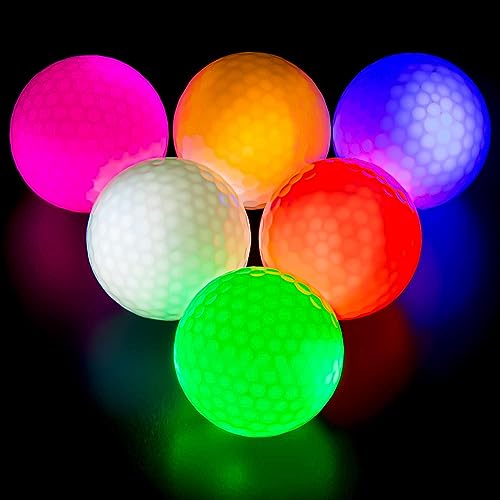
If you’re looking to make golf feel more like play, especially for kids, these LED glow balls deliver pure fun. They activate on impact and stay lit for 8 minutes, which reviewers say drastically cuts down on lost balls during night games. The 6-color set (red, green, blue, yellow, pink, white) adds a party-like vibe, and the fact that they work without a charger or UV light makes them genuinely convenient.
They’re not meant for distance or spin control, this isn’t a practice tool for skill development. But for family nights at the park, holiday gifts, or keeping younger kids engaged after sunset, they’re a hit. The battery life (300 activations) holds up well based on owner feedback, and the added glow tees in the updated version are a nice touch.
Product photos


Volvik Marvel Spider-Man Golf Balls

Strengths
- Eye-catching designs
- Good visibility
- Stable flight
Trade-offs
- Short durability on hard hits
- Not for advanced juniors
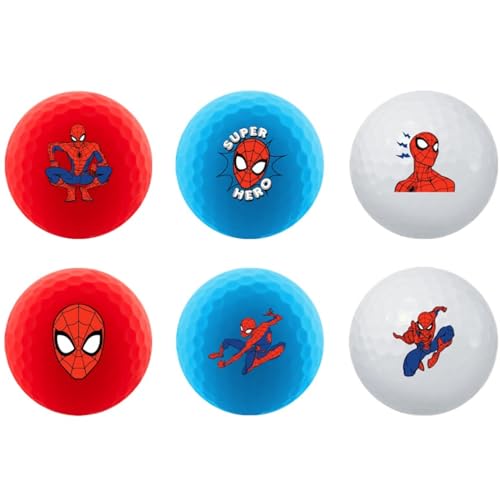
This 6-pack leans hard into the fun factor, and for young Marvel fans, that’s exactly the point. The Spider-Man graphics are officially licensed and wrap each ball with comic-style action, using a mix of matte and glossy finishes that catch the light well. Volvik’s Vimat core isn’t high-spin or tour-grade, but it’s stable and predictable, enough so that kids get a sense of real ball flight without frustration.
Owners say the bright reds and blues make them easy to track in the air and on the ground, which helps keep younger players engaged. Compared to other themed balls, these feel more collectible, and at a low price point, they’re easy to justify as a gift or tournament prize.
Product photos
Oji Moji Emoticon Golf Balls
Strengths
- Unique, fun designs
- Good durability
- Real course usable
Trade-offs
- Limited performance feedback
- Not for competitive play
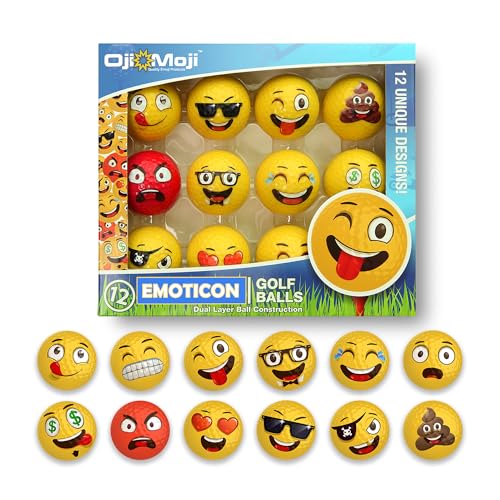
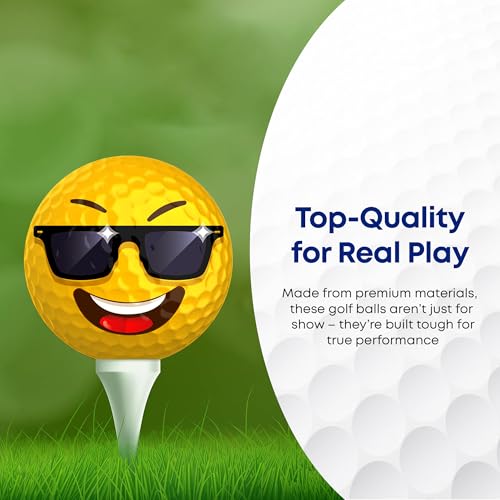
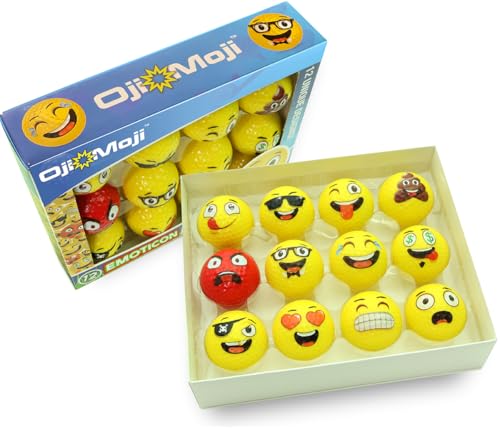
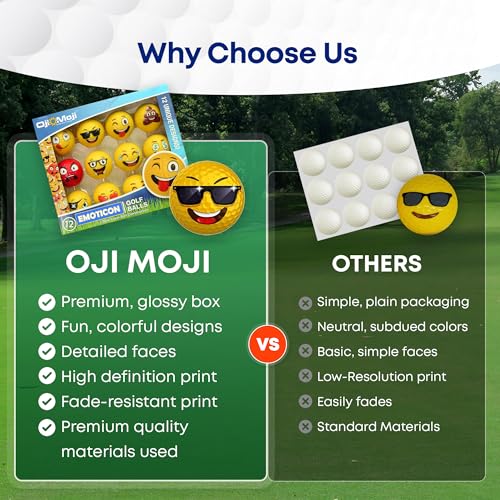
These are the kind of golf balls that spark joy before you even hit them. The emoticon designs, smiley faces, winks, tongue-out grins, are printed with crisp detail and actually hold up to real play, according to owners who’ve used them on short courses and driving ranges. The fact that they’re built with durable materials and perform decently for novelty balls says a lot.
While they won’t match the flight of a premium ball, they’re better than most gag gifts in this category. I’d pick these over plain colored balls for a junior golfer who’s more into the social side of the game. They’re also a standout gift, wrapped and handed over, they feel special, and that matters.
Product photos

Volvik Marvel Avengers Golf Balls
Strengths
- Hero-specific designs
- Stable flight
- Soft feel
Trade-offs
- Limited durability on hard hits
- Short supply per pack
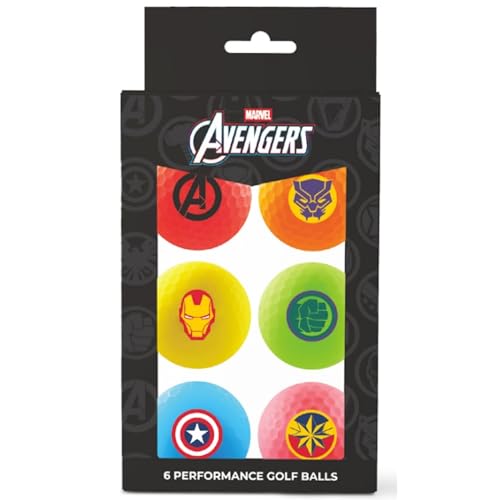
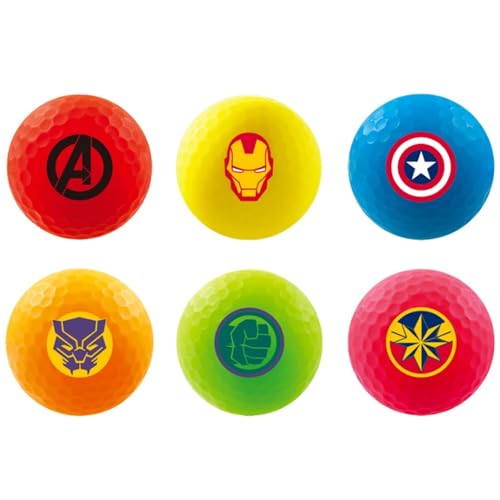
Like the Spider-Man set, these Avengers-themed balls are all about fun and fandom, but with a slight edge in performance thanks to Volvik’s Vimat technology. Each ball features a different hero (Iron Man, Black Panther, Captain America, Hulk) with bold, high-visibility matte finishes that are easy to track mid-flight.
The low-spin, stable flight makes them forgiving for casual junior players, and the soft feel is a plus for short-game practice. Owners appreciate that they don’t feel like toy balls, even if they’re used mostly for gifts or themed outings. If you’ve got a Marvel fan who’s starting to take golf seriously, this pack bridges the gap better than most novelty options.
Product photos
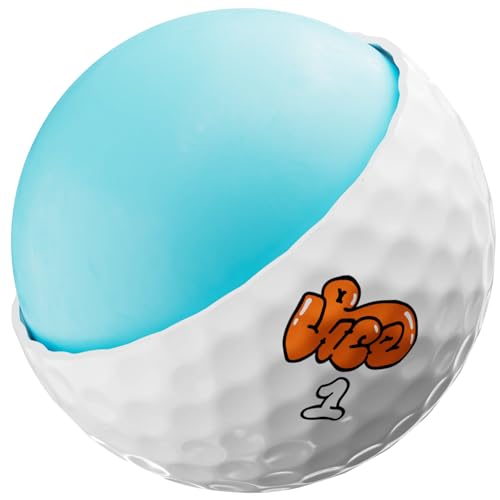
Vice Tour Junior Golf Balls
Strengths
- Low compression core
- Soft feel
- USGA conforming
Trade-offs
- Higher price than practice balls
- Not for indoor use
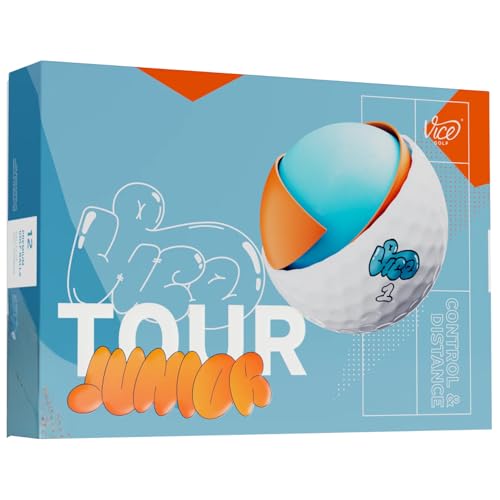
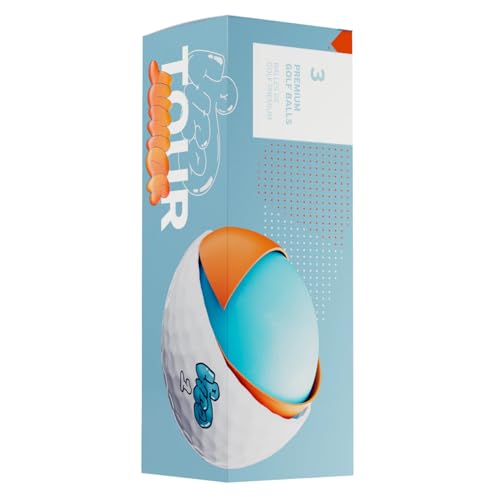
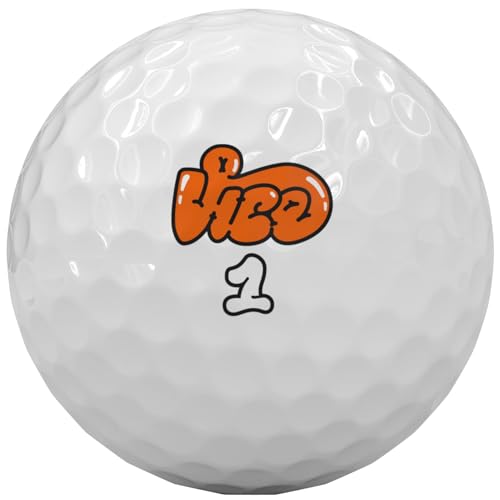
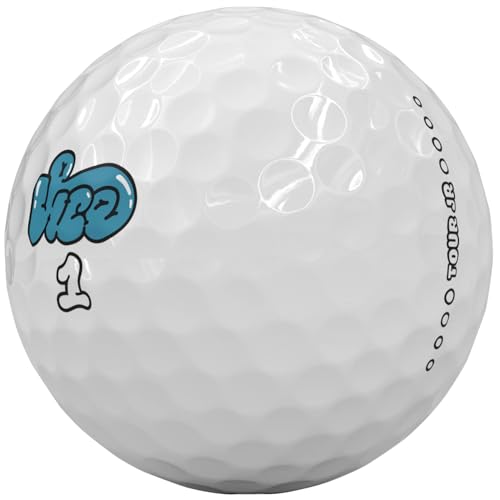
Vice built these with a lower compression core specifically for junior swings, meaning kids get more energy transfer even with slower clubhead speeds. The 312 dimple pattern adds lift, which helps younger players see their shots carry farther, a small thing, but it boosts confidence. The soft feel is also a win around the greens, where feedback matters most for learning.
While they’re priced higher than foam or novelty balls, these are actual conforming golf balls, so they can be used in junior tournaments. Owners say they hold up well and provide a more authentic experience than most kids’ balls. For parents investing in a child’s long-term interest in golf, this is the smarter buy.
Product photos

How We Chose These golf balls for kids
Rather than a hands-on lab test, this is a research-led comparison of published specifications and owner feedback. I assessed each golf ball option based on features like materials, size, and design, then weighed those against what golfers are saying about real-world performance and durability. We looked at a range of options – foam, plastic, and traditional construction – to cover different practice scenarios and skill levels. Finally, we ranked them based on how well they meet the needs of young players.
For golf balls geared toward kids, consistent visibility and appropriate durability are paramount. A ball that’s easily lost on the course or quickly damaged isn’t useful. We prioritized those with bright colors or unique designs that help with tracking, and materials that can withstand repeated hits, even with less-than-perfect swings. Finding ideal balls for kids meant focusing on these practical aspects.
Specifications reliably tell you about construction – core materials, number of layers, and cover type. However, owner reviews provided crucial insight into how those specs translate to actual feel and performance. We heavily favored balls with consistently positive feedback regarding durability and flight characteristics. Ultimately, we also looked for options that offered good value; sometimes the most expensive ball isn’t the best, and exploring affordable golf balls is important.
How To Choose The golf balls for kids
Picking the right golf balls for young players can make all the difference in their enjoyment of the game. It’s not simply about size; several factors contribute to a positive learning experience.
A good golf ball for a child prioritizes safety, visibility, and encourages proper swing development. Look for options that balance durability with a softer feel, and aren’t so expensive that losing a few feels devastating. Consider the child’s age and skill level – a beginner will benefit from a larger, softer ball, while a more advanced young golfer might appreciate something closer to a standard golf ball.
Size and Compression Matter
The size of the golf ball is the most obvious consideration, but compression is equally crucial. Standard golf balls are designed for adult swing speeds and can feel like rocks to a child. Lower compression balls compress more easily, meaning a young golfer can actually dent the ball on impact, transferring energy more efficiently and achieving better distance. For very young children just starting out, oversized plastic practice balls are a great option, gradually transitioning to smaller, softer balls as their strength and coordination develop. Don’t jump straight to standard-sized balls; it can discourage them.
Material and Durability
Kids aren’t known for their careful handling of equipment. Golf balls will get lost, scuffed, and generally abused. That’s why durability is paramount. Foam golf balls are popular for indoor and backyard practice, as they’re safe for furniture and won’t cause damage. Polyurethane practice balls offer a more realistic feel and better durability than foam, while still being softer than a standard Surlyn-covered ball. If you’re looking for something that will last, consider durable 2-piece construction which is known for its resilience.
Here’s what to keep in mind regarding durability: * Cheap foam balls wear out quickly. * Polyurethane is a good balance of feel and toughness. * Surlyn-covered balls are the most durable but can be too firm for beginners.
A lost golf ball is a learning opportunity, not a tragedy. Buying in bulk helps to offset the inevitable losses and keeps the focus on fun.
Visibility and Engagement
Golf can be frustrating, even for adults. Keeping a child engaged is essential. Brightly colored golf balls are much easier for kids (and parents!) to track, reducing frustration and maximizing practice time. Novelty designs – characters from their favorite movies or superheroes – can also add an extra layer of excitement. I’ve seen firsthand how a fun design can motivate a child to spend more time at the driving range. For options geared toward younger players, you can find a wealth of information on golf balls for juniors to help make the right selection. If you want to add a little extra fun, consider recommended balls for young players with fun themes.
Golf Balls for Kids Compared
Here’s a comparison of key specifications for various golf balls designed for children.
| Product Title | Best For | Material | Diameter (mm) | Number of Balls | Special Features |
|---|---|---|---|---|---|
| Joyberg Practice Golf Balls 24 Pack | Best Overall | Polyurethane | 42 | 24 | Hollow Design, Vivid Colors |
| Wilson 2024 Chaos Golf Balls | Best Performance for Older Kids | Surlyn | N/A | 24 | 2-Layer Construction |
| D-Xam Foam Golf Balls Bulk | Best Value for Practice | Polyurethane | 41 | N/A | Realistic Flight |
| Guirnd 20 Pack Foam Golf Balls | Best Budget Friendly | PU Rubber | 41 | 20 | Dimpled Texture |
| THIODOON Glow in The Dark Golf Balls | Best for Night Play | N/A | N/A | 6 | Glow-in-the-Dark |
| Volvik Marvel Spider-Man Golf Balls | Best Fun Design for Kids | N/A | N/A | 6 | Marvel Spider-Man Design |
| Oji Moji Emoticon Golf Balls | Best Novelty Gift | N/A | N/A | N/A | Emoticon Designs |
| Volvik Marvel Avengers Golf Balls | Best Superhero Theme | N/A | N/A | N/A | Marvel Avengers Design |
| Vice Tour Junior Golf Balls | Best Durable Plastic Practice Balls | N/A | N/A | N/A | Lower Compression Core |
Frequently Asked Questions
What size golf ball should I get for a 6-year-old?
A 40-42mm diameter golf ball is best for a 6-year-old(slightly smaller than standard). This size is easier for smaller hands to grip and swing, while still allowing them to develop a proper golf swing.
Are foam golf balls okay for use on a real golf course?
Foam golf balls are generally not suitable for a full round on a golf course. While they’re great for practice, their limited flight distance and lack of durability mean they won’t perform well in a typical playing environment.
How many golf balls should I buy for a child just starting out?
I recommend buying at least 36 golf balls initially. Kids lose balls frequently, and having a larger quantity removes the stress of losing a few and keeps the focus on learning and enjoyment.
What is the benefit of a lower compression golf ball for a junior golfer?
Lower compression golf balls are easier to compress on impact, which means a junior golfer with a slower swing speed can still get good distance. This helps build confidence and encourages proper swing development, as discussed in our best golf balls for beginner golfers.
Where can I find more information about choosing the right golf equipment for kids?
Beyond golf balls, our site has a thorough ball guide detailing various aspects of golf ball technology and how to select the best option for any player.
The Bottom Line
Choosing golf balls for kids often comes down to balancing control with convenience. You want something that helps them learn, but also won’t break the bank when inevitably lost. For the best overall experience, I recommend the Joyberg Practice Golf Balls 24 Pack. Their hollow design and vivid colors make them easy to track, and the polyurethane construction offers a good feel for developing swings.
If budget is a primary concern, the Guirnd 20 Pack Foam Golf Balls offer excellent value. For young players who are already showing some promise and are ready for something a little more advanced, the Wilson 2024 Chaos Golf Balls are a solid choice, providing a more realistic feel with their 2-piece construction. And if you’re searching for beginner golf balls, the Vice Tour Junior Golf Balls are worth a look for their durable plastic construction.
Ultimately, the most important thing is to get kids having fun with the game. Don’t get too hung up on compression ratings or cover materials; focus on finding brightly colored options that are easy to see and a size appropriate for their age and strength. A positive first experience is far more valuable than any technical specification.
