
7 Best Golf Caddies of 2026
This post contains affiliate links. As an Amazon Associate, we earn from qualifying purchases.
This post contains affiliate links. As an Amazon Associate, we earn from qualifying purchases.
The Caddytek CaddyCruiser ONE V8 4-Wheel is the best overall golf caddy for its rock-solid stability and smooth performance on any terrain, while the SereneLife Golf Push Pull Cart stands out as a top budget pick that doesn’t sacrifice essential features. For those who prioritize weight and tight maneuvering, the Caddytek CaddyLite One Swivel V8 is a strong three-wheel option.
If you’ve ever struggled with a wobbly cart on a sloped fairway or wasted time wrestling with a stubborn folding mechanism, you know how the wrong caddy can turn a great round into a hassle. As someone who’s planned golf trips across continents, I’ve seen firsthand how the right gear affects the experience.
This guide cuts through the noise by focusing on what actually matters: stability, portability, and real-world durability. I compared specs and dug into owner feedback to find models that deliver where it counts, so you can focus on the course, not your equipment.
Top 7 Golf Caddies in the Market
The Best Golf Caddies, Reviewed
Caddytek CaddyLite One Swivel V8

Strengths
- 360° swivel front wheel
- Wide 32″ wheelbase
- One-click folding
- Full accessory suite
- Smooth EVA wheels
Trade-offs
- Pricier than basic models
- Slightly wider folded size
- Not ideal for tiny trunks
If you’ve walked a tight, tree-lined course or tangled with sharp doglegs, you’ll appreciate the 360° swivel front wheel, owners consistently praise how effortlessly it turns, reducing strain on your arms and shoulders. With a wide 32-inch wheelbase and dual 11.5-inch EVA rear wheels, it’s one of the most stable three-wheel carts I’ve seen on paper, rivaling even some four-wheel models in balance.
It’s slightly heavier than the SereneLife but feels more premium, with thoughtful details like the magnetic pad, GPS mount, and cooler basket. The one-button folding system is fast and reliable, and the TPR grip handle locks securely at multiple heights. Among Caddytek’s lineup, this one strikes the best balance between agility, durability, and features, my recommendation for most serious walkers.
Video review
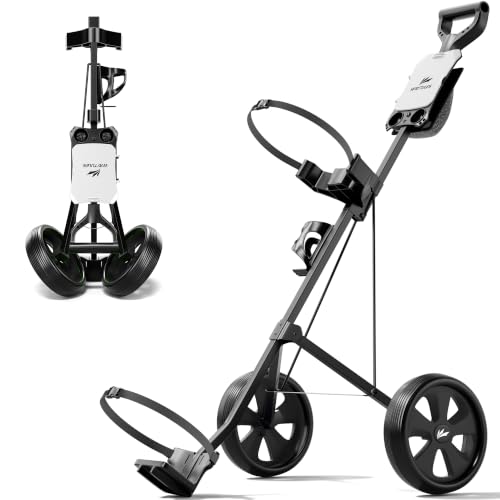
WAYTULES 2-Wheel Golf Pull Cart
Strengths
- Durable steel frame
- Low price point
- Simple folding design
- Adjustable web straps
- Fits most bags
Trade-offs
- Heavy for a 2-wheel cart
- No comfort grip
- No accessories
- Less stable on hills
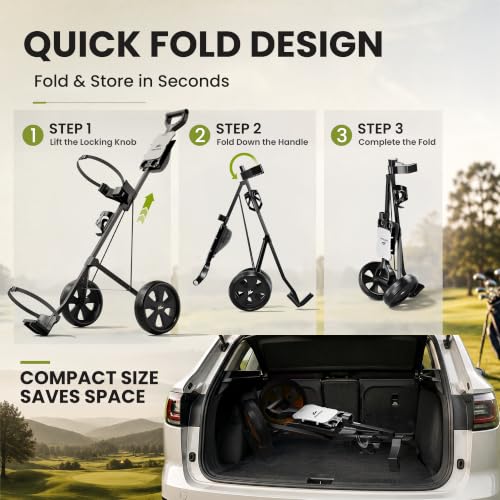
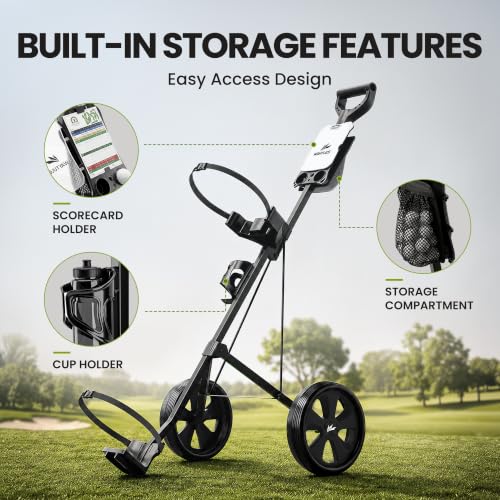
This is a no-nonsense, budget-first cart built around a durable steel frame, more rugged than aluminum in theory, but heavier in practice. At 2-wheel, it’s inherently less stable than three- or four-wheel designs, and owner feedback confirms it can wobble on uneven terrain or when loaded unevenly. Still, for flat, well-groomed courses, it gets the job done.
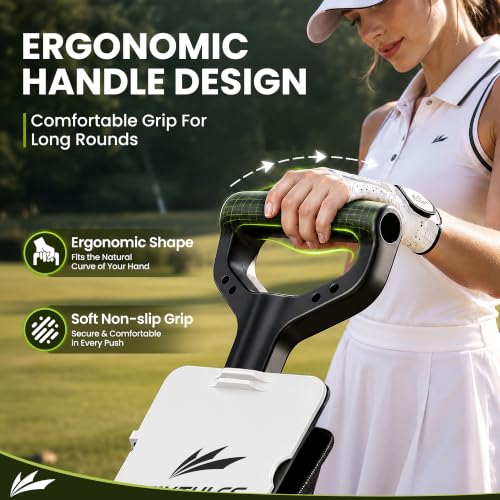
The plastic handle is functional but not comfortable over 18 holes, and there’s zero storage beyond the basic web straps. But for occasional players or those just starting out, it’s hard to beat the price. Compared to the SereneLife, it’s heavier and less refined, but it might last longer if you’re rough on gear. Just don’t expect smooth turns or hillside confidence.
Product photos


PRECISE Cruiser 3-Wheel Push Cart
Strengths
- Strong stabilizer rods
- Detachable storage bag
- Reliable foot brake
- Good value price
- Smooth folding design
Trade-offs
- Heavier than aluminum rivals
- Basic wheel specs
- No cooler basket
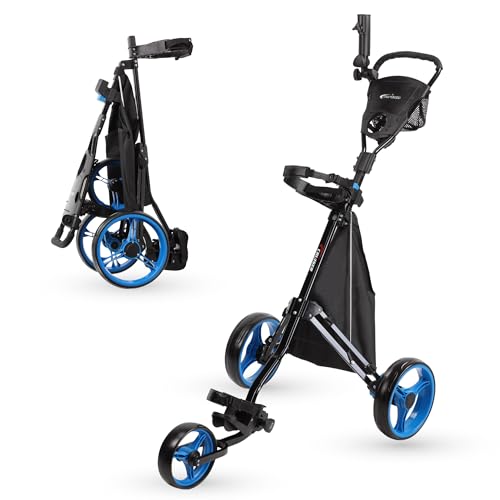
This feels like a value-engineered answer to higher-end Caddytek models, strong stabilizer rods give it impressive balance on uneven ground, and the foot brake locks solidly, which owners appreciate on sloped courses. At 99.99, it sits between budget and premium, and on paper, it delivers more than its price suggests.
The detachable storage bag is a smart touch, offering flexibility most carts don’t. The ergonomic handle adjusts well, and the folding mechanism is fast, though not quite as seamless as Caddytek’s one-click system. Compared to the SereneLife, it’s better equipped and more stable, but not as light. For the balance of price, performance, and features, it’s hard to beat.
Video review
SereneLife Golf Push Pull Cart
Strengths
- Lightweight at 10.78 lbs
- Adjustable padded handle
- Secure dual elastic straps
- Smooth rolling wheels
- Compact folded size
Trade-offs
- Basic wheel traction
- No accessory storage
- Less rigid folding joints
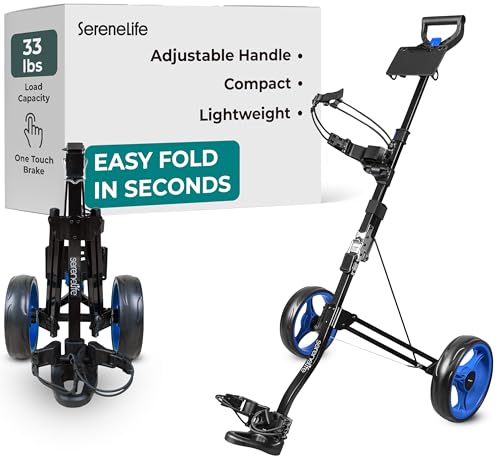
At under 11 pounds, this cart is one of the lightest full-featured models out there, and owners consistently report how easy it is to carry and maneuver, even on hilly layouts. The aluminum frame delivers on durability without adding heft, and the 9.5-inch rear wheels roll well on soft turf, though they can struggle slightly on wet or uneven ground compared to wider EVA tires on pricier models.
The adjustable TPE handle is a standout, offering real comfort over 18 holes, and the dual elastic straps keep bags stable, which is something many budget carts skimp on. On paper, it holds up to 33 lbs, which covers most cart and stand bags, but long-term reviewers note the folding mechanism feels a bit less rigid than premium competitors. Still, for the price, it punches above its weight.
Product photos


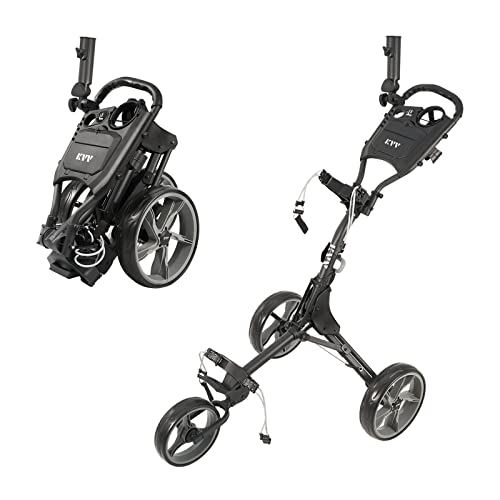
KVV 3 Wheel Foldable Golf Cart
Strengths
- Smallest folding size
- Ball bearing wheels
- Lightweight aluminum
- Adjustable TPE handle
- Umbrella holder included
Trade-offs
- No cooler or GPS mount
- Three-step folding
- Fewer storage options
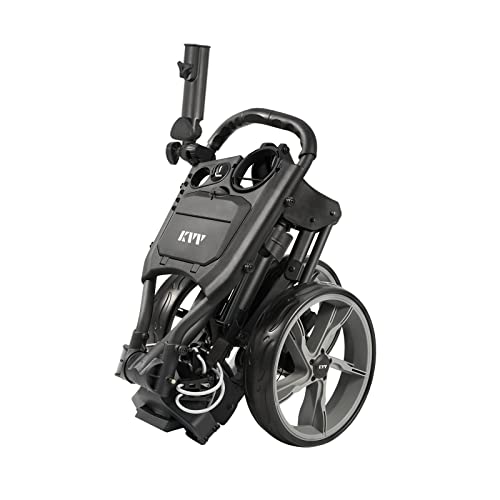
With a folded size nearly identical to the SereneLife but more features, this cart is a standout for travelers and trunk space hogs. The ball bearing wheels promise smoother rolling, and owners confirm they reduce resistance on long fairways. At 13.6 lbs, it’s not the lightest, but the aluminum frame feels sturdy, and the elastic straps work well with most bag types.
The height-adjustable TPE handle is comfortable, and the included umbrella holder adds real utility. Still, it lacks a cooler basket and GPS mount found on higher-end Caddytek models. The three-step fold is quick, but not quite as intuitive as one-click systems. I’d pick this if compact storage is your top priority and you still want decent features.
Product photos



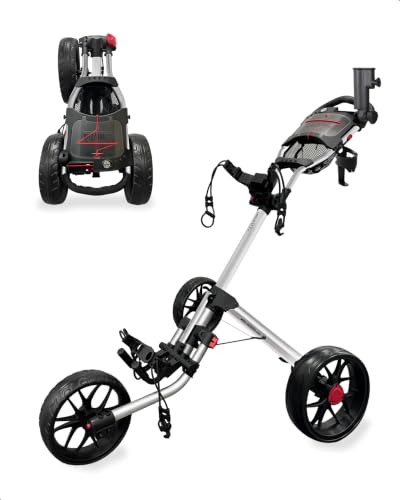
Caddytek CaddyLite 15.3 V2
Strengths
- Lightweight at 14.35 lbs
- Quad-fold compact design
- EVA wheels for traction
- Foot brake included
- Durable aluminum frame
Trade-offs
- No cooler basket
- Narrower wheelbase
- Less agile turning
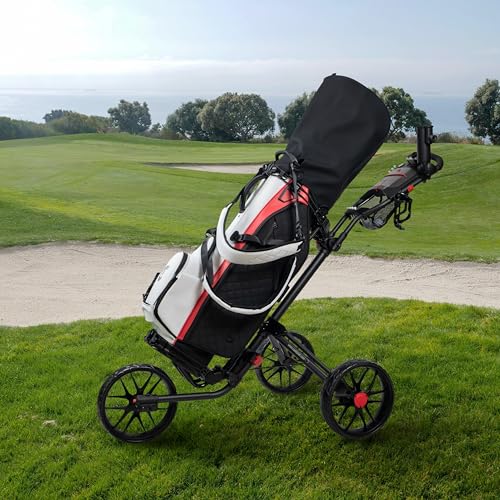
At 14.35 lbs with a quad-fold design, this cart is built for golfers who walk round after round and don’t want to fight setup or storage. The 11.5-inch EVA wheels and 28-inch wheelbase deliver solid stability, though it doesn’t turn as sharply as the Swivel V8. Owners note it tracks well on soft turf and side slopes, making it a strong pick for all-season use.
It lacks a cooler basket, which is a step down from other Caddytek models, but still includes a mesh net, drink holder, and magnetic pad. The foot brake is reliable, and the TPR grip handle adjusts smoothly. I’d recommend this over the CaddyCruiser if you want lighter weight and faster folding, but it’s not as agile as the Swivel V8. A smart buy for endurance-focused walkers.
Product photos


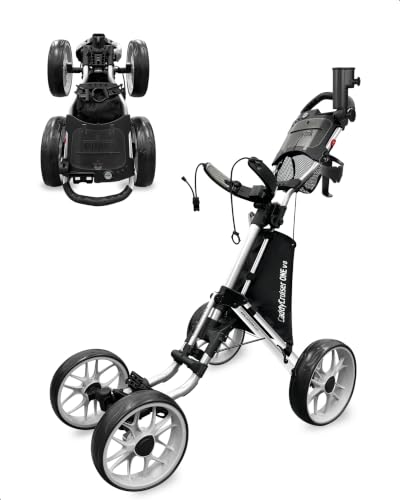
Caddytek CaddyCruiser ONE V8 4-Wheel
Strengths
- Four-wheel stability
- One-click folding
- Foot brake for slopes
- Cooler basket included
- Full accessory suite
Trade-offs
- Heavier than 3-wheel rivals
- Slightly bulkier fold
- Higher price point
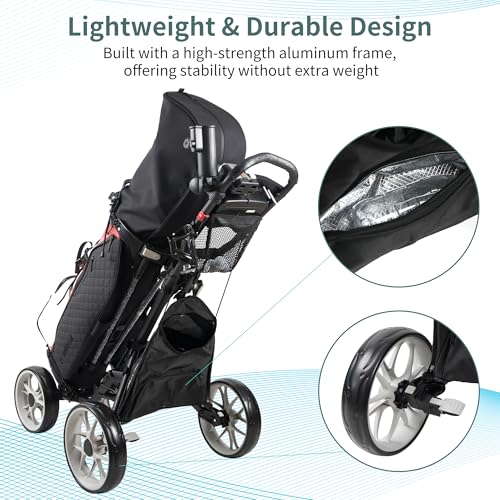
This is one of the most accessorized push carts in its class, and owners love how everything from the cooler basket to the magnetic steel pad keeps gear organized and within reach. The four-wheel design stands out, it gives a noticeably steadier platform than three-wheel models, reducing sway on side slopes, though it adds a bit of weight at 16.9 lbs.
The 11.5-inch EVA rear wheels deliver strong traction, and the foot brake works reliably on inclines. Compared to other Caddytek models, this one trades some portability for storage and stability. The one-click folding system is fast and intuitive, and the aluminum frame feels durable over repeated use. I’d pick this if you walk a lot of hilly or windy courses and want extra confidence in bag security and balance.
Product photos


How We Evaluated golf caddies
My approach to evaluating golf caddies involved a thorough comparison of published specifications and features across numerous models. I then weighed owner reviews from major retailers alongside expert opinions found in golf publications and websites. As someone who plans golf trips for a living, I understand the importance of reliable equipment that can handle diverse course conditions and travel demands. This isn’t a hands-on test of each caddy, but rather a research-led comparison against criteria important to golfers.
For golf caddies, stability and ease of use were the most heavily weighted factors. A caddy that struggles on uneven terrain or is difficult to fold and store quickly becomes a hindrance, not a help. Durability also played a significant role; a lightweight cart is great, but not if it feels flimsy or likely to break down mid-round. Ultimately, I prioritized caddies able to withstand regular use and offer consistent performance.
Specifications reliably communicate build materials and dimensions, helpful for understanding weight and folded size. However, I found owner feedback to be critical for assessing real-world performance – issues with wheel quality, brake effectiveness, and handle comfort often only surface through user experience. For those seeking motorized assistance, exploring options like remote control caddies can also be a good fit. Many golfers also prefer the added stability of four-wheel push carts.
How To Pick The Right golf caddies
Finding the right golf caddy can dramatically improve your enjoyment on the course, shifting the focus from fatigue to your game.
A quality golf caddy prioritizes stability, ease of use, and durability. Look for features like a robust frame (aluminum is preferred for weight savings), smooth-rolling wheels, a comfortable and adjustable handle, and a reliable braking system. Consider storage options and how easily the caddy folds for transport and storage.
Wheel Configuration
The number of wheels is the first major decision. Three-wheel models excel in maneuverability, allowing for tight turns and easy navigation around obstacles. However, they can feel less stable on uneven terrain or when carrying a heavy bag. Four-wheel caddies offer superior stability, particularly on hills and softer ground, but sacrifice some agility. If you frequently play courses with varied conditions, a four-wheel model might be the better choice. If you prefer a more nimble experience and generally play on well-maintained courses, exploring three-wheel push carts is a good idea.
Foldability & Portability
Don’t underestimate the importance of a compact fold. A caddy that’s a pain to get into your car or store in your garage won’t get used as often. Look for models with quick-folding mechanisms (one-click or quad-fold are common) and check the folded dimensions – especially if you have limited storage space. Weight is also a factor. While a heavier caddy might be more stable, a lighter one will be easier to maneuver and transport.
Here’s what to consider when thinking about portability: * Weight: Under 15 pounds is generally considered lightweight. * Folded Size: Smaller is better, especially for smaller car trunks. * Folding Mechanism: One-click folding is fastest, but quad-fold can be more compact.
Features and Accessories
Beyond the core functionality, consider what extras will enhance your experience. Many caddies now include features like built-in coolers, umbrella holders, phone/GPS mounts, and storage compartments for tees, balls, and scorecards. These accessories can streamline your game and keep everything you need within easy reach. However, don’t pay for features you won’t use. If you’re already considering upgrading to a motorized option, exploring reviews of electric caddies might be beneficial, as they often include many of these features as standard.
A well-maintained golf caddy should last for years. Prioritize quality construction and look for models with warranties. Don’t be afraid to spend a little more upfront for a caddy that will hold up to regular use.
Golf Caddies Compared
Here’s a comparison of key specifications for popular golf caddies to help you choose the right one.
| Product Name | Wheels | Weight (lbs) | Folded Size (L x W x H in) | Handle Adjustment | Brake Type |
|---|---|---|---|---|---|
| Caddytek CaddyLite One Swivel V8 | 3 | N/A | N/A | Adjustable | Foot |
| WAYTULES 2-Wheel Golf Pull Cart | 2 | N/A | N/A | N/A | N/A |
| PRECISE Cruiser 3-Wheel Push Cart | 3 | N/A | N/A | Adjustable | Foot |
| SereneLife Golf Push Pull Cart | 3 | 10.78 | 19.1 x 14.6 x 22.8 | Adjustable | Foot |
| KVV 3 Wheel Foldable Golf Cart | 3 | 13.6 | 19.1 x 14.6 x 23.2 | Adjustable | Foot |
| Caddytek CaddyLite 15.3 V2 | 3 | 14.35 | N/A | Adjustable | Foot |
| Caddytek CaddyCruiser ONE V8 4-Wheel | 4 | 16.9 | N/A | Adjustable | Foot |
Frequently Asked Questions
What’s the main advantage of a four-wheel caddy over a three-wheel model?
Four-wheel caddies provide significantly more stability, especially on undulating terrain or soft ground, making them ideal for courses with challenging conditions. While three-wheel models offer greater maneuverability, the added stability of four wheels often outweighs that benefit for many golfers.
Are electric or robotic golf caddies worth the extra cost?
For golfers who consistently walk courses and experience fatigue, robotic golf caddies can be a worthwhile investment. They reduce physical strain and allow you to focus entirely on your game, though they come with a higher price tag and require charging.
What should I look for in a caddy’s braking system?
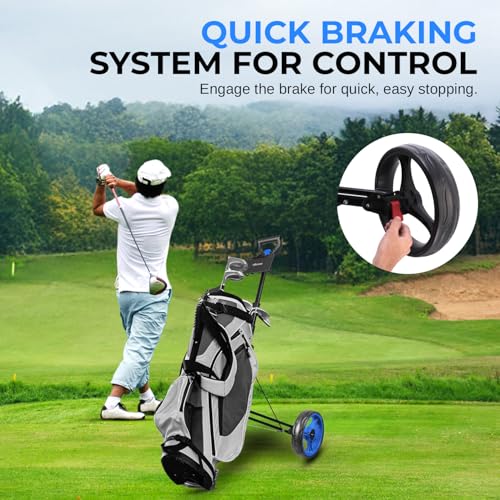
A reliable foot brake is essential for safety, particularly on hills. Look for brakes that engage firmly and hold the caddy securely in place, preventing unwanted rolling. Owner reviews often highlight issues with weak or ineffective brake systems, so pay close attention to feedback on this feature.
How important is the handle adjustment on a push cart?
Handle adjustability is crucial for comfort, allowing you to set the height to match your natural stance and prevent back strain. A wider range of adjustment options accommodates golfers of different heights, ensuring a more ergonomic experience on the course.
What kind of golf ball pairs well with using a push cart?
Using a push cart doesn’t specifically dictate the type of golf ball you should use, but many golfers appreciate the consistency of top-performing golf balls when focusing on their walking and strategy, rather than battling inconsistent ball flight.
The Bottom Line
Choosing a golf caddy ultimately comes down to balancing convenience with control. Do you want a lightweight, maneuverable cart that requires a bit more effort, or a more stable, feature-rich option that takes some of the strain off your back? For the best overall experience, especially if you walk regularly, the Caddytek CaddyCruiser ONE V8 4-Wheel strikes an excellent balance of stability, features, and portability.
However, specific needs call for specific carts. If budget is your primary concern, the WAYTULES 2-Wheel Golf Pull Cart offers a simple, functional solution. For those prioritizing agility and often playing on well-maintained courses, the Caddytek CaddyLite One Swivel V8 remains a popular choice, and if you carry a full set, you’ll want to consider pairing it with one of the 14-way golf bags to keep everything organized.
Ultimately, the best golf caddy isn’t about the latest gadgets or highest price tag. It’s about finding a reliable companion that lets you focus on what truly matters: enjoying your round and improving your game. Prioritize a sturdy frame, smooth-rolling wheels, and a comfortable handle – those fundamentals will deliver far more benefit than any extra feature.
