
8 Best Golf Cart Batteries of 2026
This post contains affiliate links. As an Amazon Associate, we earn from qualifying purchases.
This post contains affiliate links. As an Amazon Associate, we earn from qualifying purchases.
The Repower Flow 48V 105Ah stands out as the best overall golf cart battery for its combination of high cycle life, strong BMS protection, and reliable power delivery. For those on a tighter budget, the TEMGO 48V 100Ah offers excellent value without sacrificing core performance. And if you’re running a rugged setup or want maximum durability, the DC HOUSE 48V 100Ah with its metal case brings serious build quality to the table.
Out on the course, nothing kills momentum like a battery that quits early or struggles on the hills. Most golfers don’t realize how much their cart’s performance hinges on the right power source, especially when tackling longer rounds or uneven terrain.
This guide cuts through the noise by focusing on real-world specs and owner experiences to highlight models that deliver consistent power, longevity, and safety. We looked at voltage compatibility, amp-hour capacity, BMS strength, and build quality to find batteries that won’t leave you stranded.
Top 8 Golf Cart Batteries in the Market
The Best Golf Cart Batteries, Reviewed
TEMGO 48V 100Ah LiFePO4 Battery
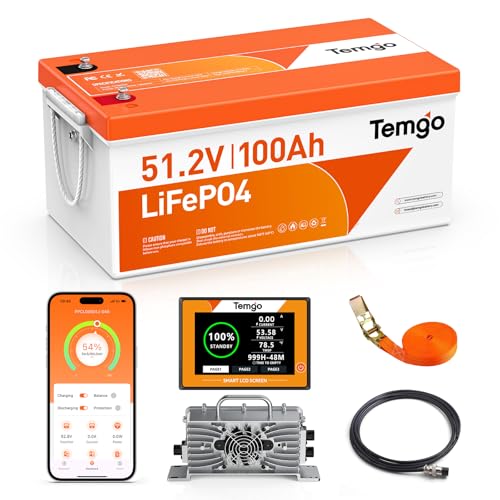
Strengths
- 5000+ cycles
- 200A BMS
- Includes charger & strap
- Solar compatible
- Bluetooth monitoring
Trade-offs
- No dual terminals
- Not for CAN protocol carts
- Average weight
The TEMGO 48V 100Ah battery is the most balanced option here, no single spec blows the doors off, but everything works together smoothly. It delivers 5000+ deep cycles, a 200A BMS, and 10.24kW max output, putting it on par with premium models. Owners praise its consistent performance across multiple rounds and the convenience of the included 18A charger and retention strap. The 2.8-inch touch display is a nice touch, and the Bluetooth app gives reliable real-time data without glitches.
What makes it the best overall pick is its versatility. It’s compatible with solar setups, supports parallel expansion up to 20.48kWh, and fits most 48V carts without modification. While it doesn’t have the longest cycle life (Repower Flow beats it) or the smartest app (OGRPHY’s is slicker), it hits the sweet spot between price, performance, and completeness. For most golfers upgrading from lead-acid, this is the no-fuss, high-reward choice.
Video review
Repower Flow 48V 105Ah Lithium Battery
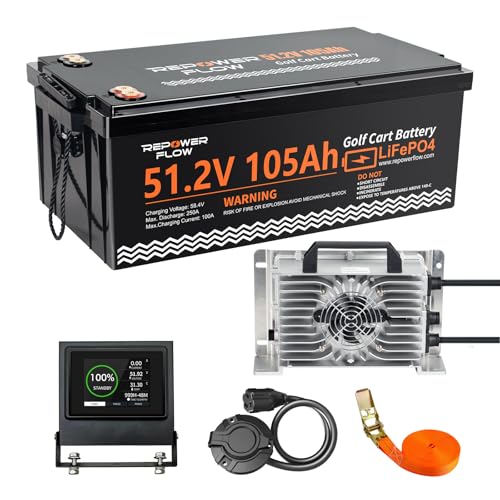
Strengths
- 6000+ cycles
- 250A BMS
- Dual terminals
- Fast charging
- Lightweight design
Trade-offs
- Higher price
- Larger dimensions
- App can be glitchy
If you’re looking for the longest possible lifespan in a golf cart battery, the Repower Flow 48V 105Ah model is the one to beat. Advertised at over 6000 deep cycles at 80% DOD, it outpaces nearly every other option here, this is a battery built to last 10+ years, even with daily use. The 250A smart BMS is unusually robust for this category, offering superior surge handling and thermal protection, which matters on hilly courses or in hot climates. And with a 20A fast charger included, you’re back to full in just 5.5 hours.
The dual terminal design is a subtle but smart feature, giving you more wiring flexibility when adding a second battery later. Owners report excellent voltage stability and minimal degradation over time. It’s not the flashiest, but for long-term ownership cost, it’s hard to beat. If you plan to keep your cart for a decade, this battery pays for itself.
Video review
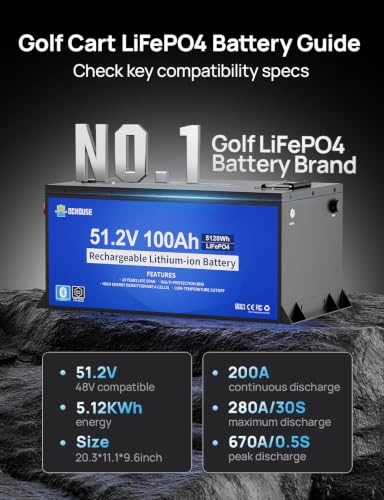
DC HOUSE 48V 100Ah Metal Case Battery
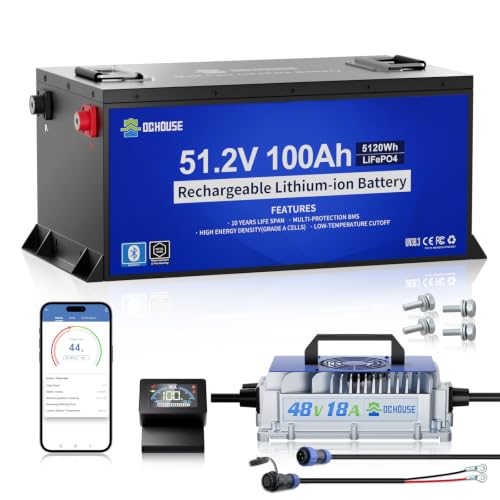
Strengths
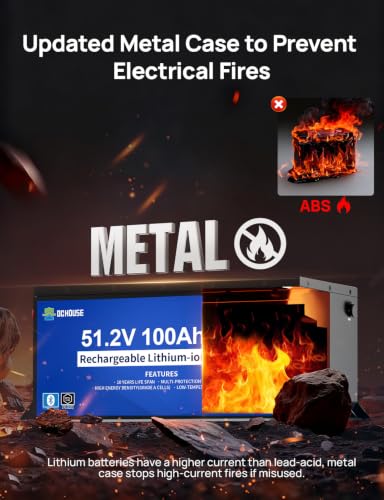
- Metal fireproof case
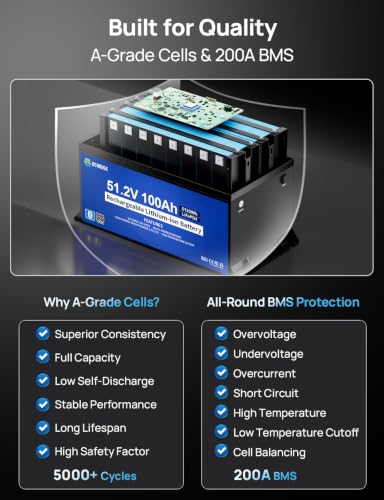
- 200A BMS
- 56-mile range
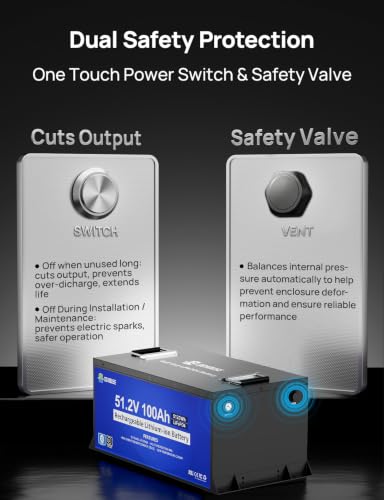
- Dual monitoring
- 74% weight reduction
Trade-offs
- No series connectivity
- Slightly bulkier fit
- 3-year warranty (shorter than others)
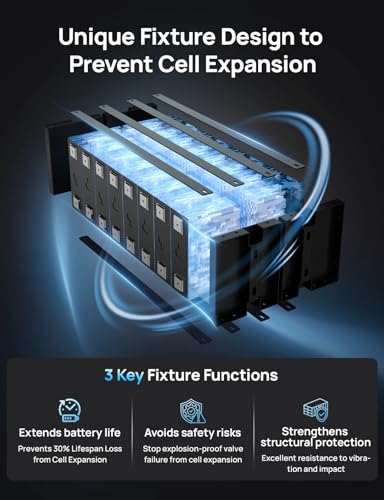
If safety and rugged build quality are your top priorities, the DC HOUSE 48V 100Ah battery deserves serious attention. Its full metal case isn’t just marketing, it’s a real differentiator. Unlike plastic or ABS housings, this one resists impact, fire, and swelling, which owners say gives peace of mind during long-term use or transport. The metal fixtures inside also stabilize the cells better, and the 30% lifespan extension claim holds weight among users who’ve compared it to standard cases. With a 200A BMS and 56-mile range, it’s no slouch on performance either.
The dual monitoring via app and LCD Bluetooth display works well in practice, and the 900W charger delivers a full charge in 5.5 hours with auto cutoff, a smart touch. But the real advantage is durability. While it’s priced near the top, it’s not chasing peak power like OGRPHY. Instead, it’s built for reliability. For carts used in extreme climates or rough terrain, this one’s engineered to last.
Product photos
OGRPHY 48V 105Ah Lithium Battery
Strengths
- 200A BMS
- 4000+ cycles
- Mobile app monitoring
- 50+ mile range
- 5-year warranty
Trade-offs
- Higher price point
- Large physical footprint
- Not for 36V systems
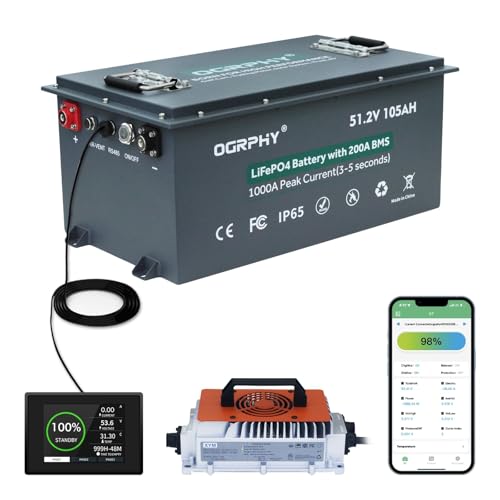
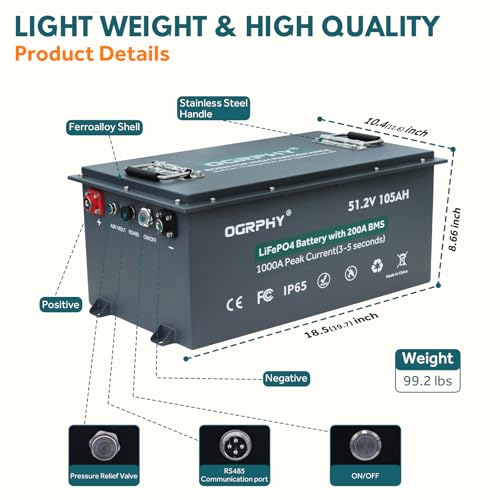
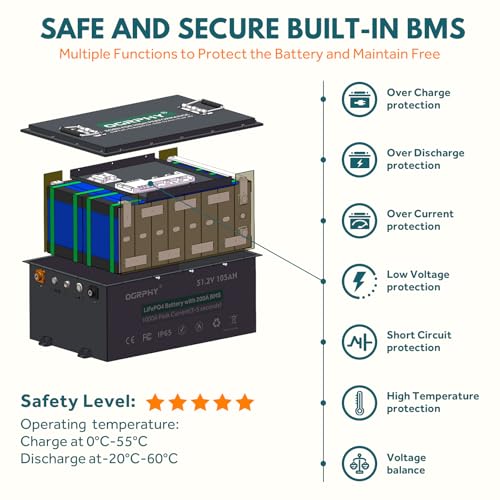
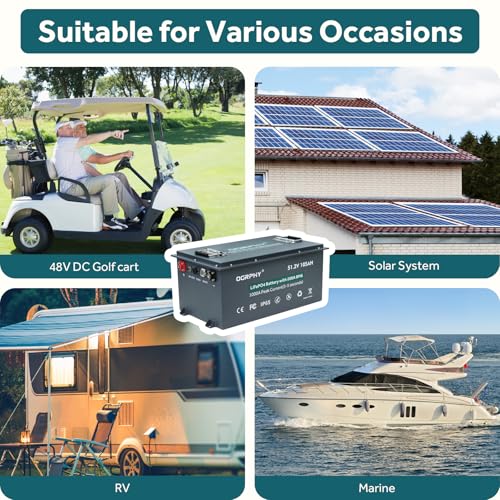
This OGRPHY 48V 105Ah battery is built like a performance beast. With a 200A BMS and a peak current of 1000A, it’s engineered to handle steep terrain and heavy loads without breaking a sweat, owners consistently report strong hill climbing and no power drop-offs, even on longer rounds. On paper, the 5.37kWh capacity backing a 3kW motor for over 50 miles stands out, especially when compared to most lithium options that barely clear 40. The promise of 4000+ deep cycles at 80% DOD means you’re looking at over a decade of reliable use, far surpassing lead-acid and even matching top-tier lithium competitors.
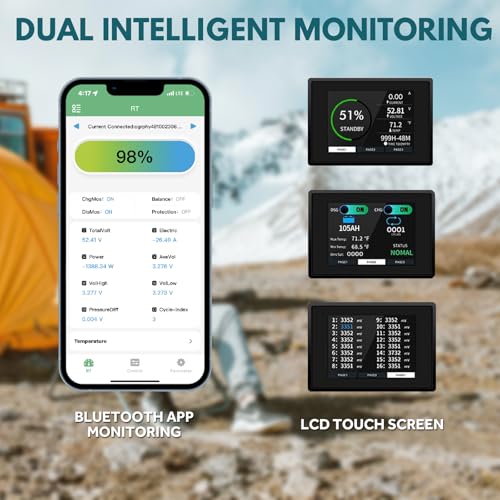
Where it pulls ahead is in the extras: the touch monitor and mobile app offer real-time visibility into voltage, temperature, and state of charge, which is a big win for users who want to optimize battery life. And with a 5-year warranty and responsive customer support, this feels like a no-nonsense investment for serious cart owners. It’s not the cheapest, but for those running high-demand setups or frequent off-course adventures, the power specs justify the premium.
Product photos

TEMGO 36V 100Ah LiFePO4 Battery

Strengths
- Low cost
- 5000+ cycles
- Includes charger & display
- Bluetooth monitoring
- Lightweight
Trade-offs
- No CAN bus support
- Limited scalability
- Average peak power
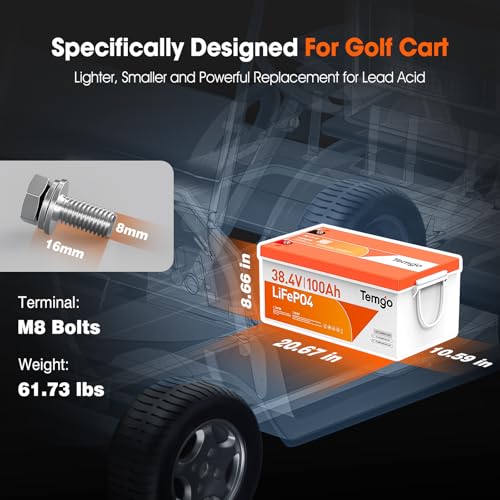
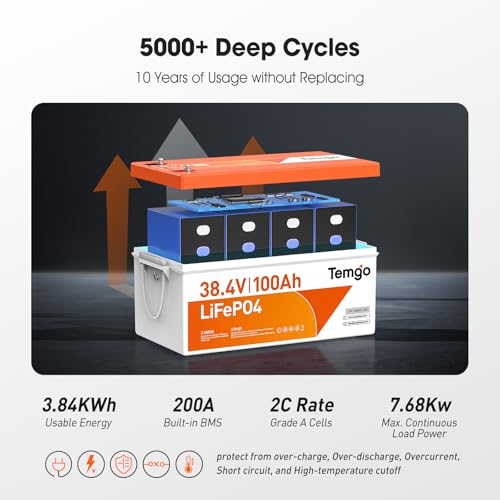
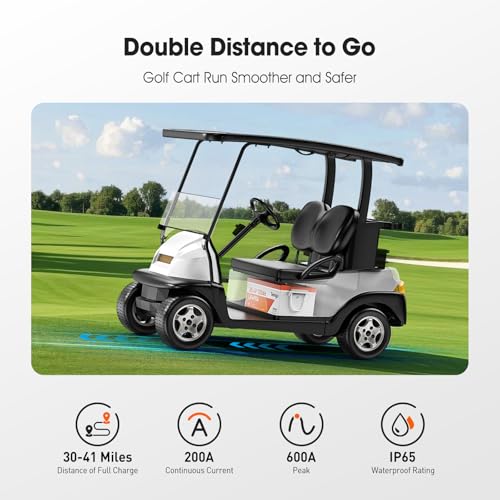
The TEMGO 36V 100Ah battery is the most budget-friendly lithium option here, and it doesn’t feel cheap. At under $700, it includes a 20A charger, touch display, and Bluetooth monitoring, features often sold separately. The 200A BMS and 5000+ cycle rating match its 48V sibling, making it one of the best values in the 36V space. Owners report smooth integration with EZGO and Club Car models, and the 7.68kW output handles standard hills and loads without issue.
Its main limitation is compatibility: it won’t work with carts that use CAN bus communication, and it lacks expandability beyond parallel setups. But for a straightforward 36V upgrade, it’s hard to beat. I’d pick this over the LOSSIGY if you want a complete kit with better display integration. For golfers who play a few times a week and want a clean, modern power source, this is the smart entry point.
Product photos

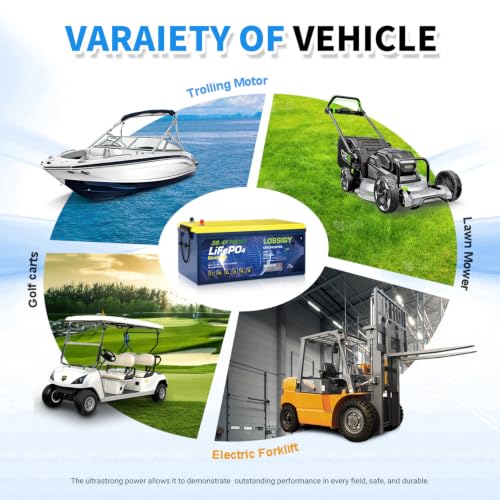
LOSSIGY 36V 100Ah Lithium Golf Cart Battery
Strengths
- Fast 4-hour charge
- 200A BMS
- Bluetooth monitoring
- 4000+ cycles
- 5-year warranty
Trade-offs
- No series connection
- Heavier than some lithiums
- Limited app features
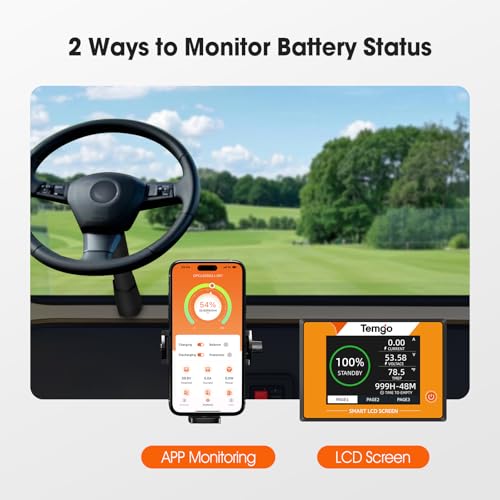
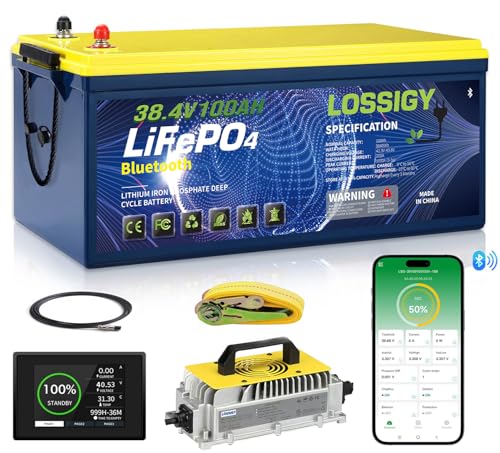
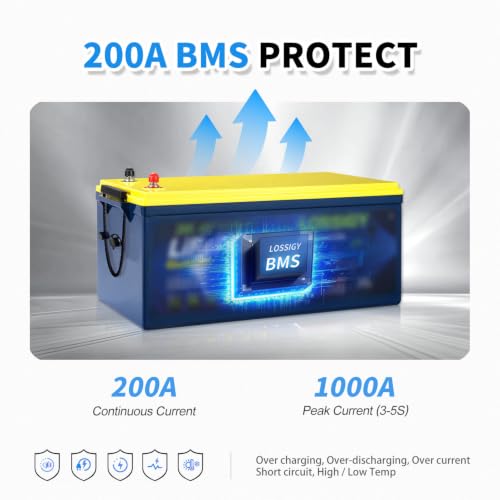
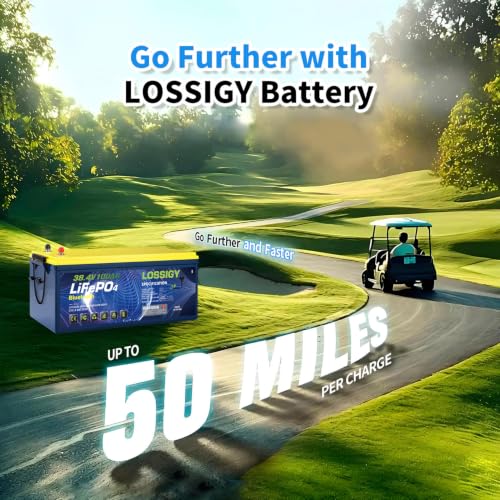
The LOSSIGY 36V 100Ah battery stands out as one of the most compelling value plays in the lithium upgrade space. At just over $650, it brings premium specs to the 36V category: 4000+ deep cycles, a 200A BMS, and a 1000A peak current, specs that rival more expensive 48V units. Its 3840W output is more than enough for standard 36V carts, and owners report smooth performance across full 18-hole rounds with no sag. The 25A fast charger gets the job done in about 4 hours, which beats most competitors, and the Bluetooth monitoring via app adds real convenience without driving up cost.
I’d stack this against any other 36V lithium option under $800. The lack of series connectivity limits expandability, but for most 36V cart owners, that’s not a dealbreaker. What seals the deal is the 5-year warranty and responsive support, rare at this price. If you’re still on lead-acid and want a reliable, long-term upgrade without overspending, this is a strong contender.
Product photos


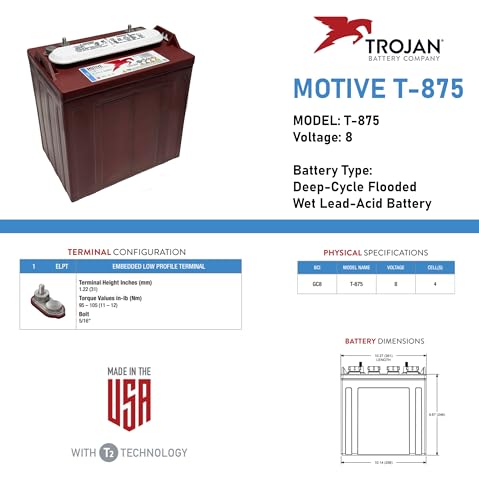
Trojan T-875 8V Lead Acid Battery Pack

Strengths
- Proven reliability
- High capacity
- Durable case
- Wide compatibility
- No charging tech limits
Trade-offs
- Heavy weight
- Short lifespan
- Regular maintenance
- No smart features
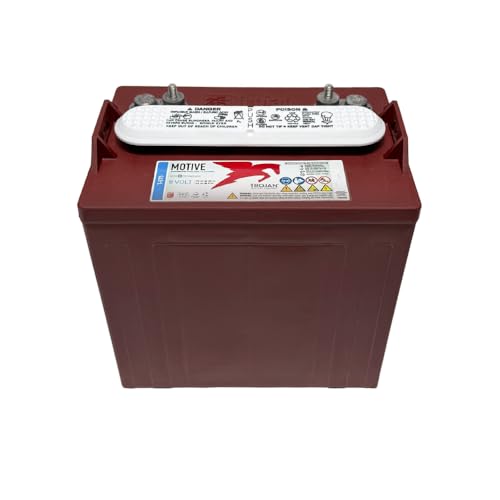
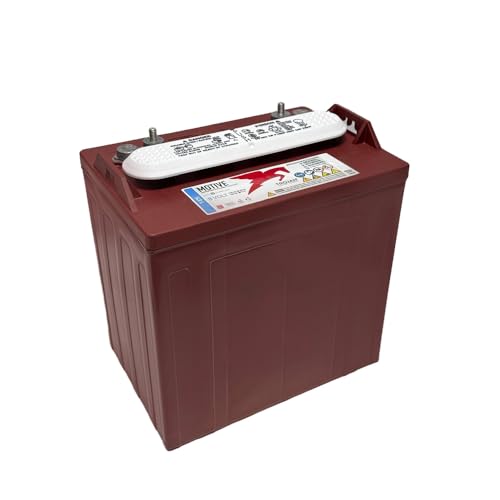
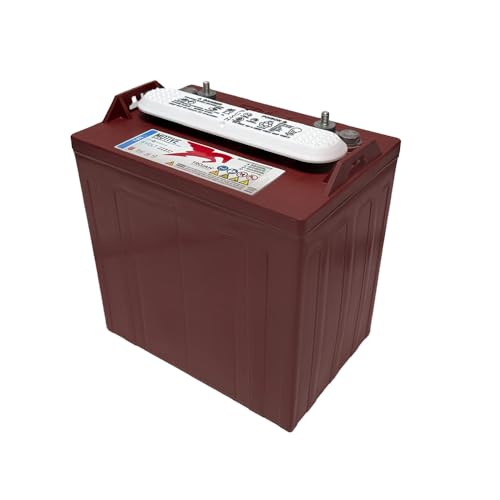
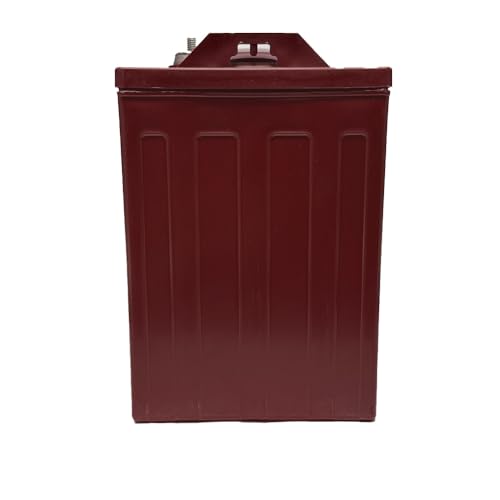
The Trojan T-875 is the gold standard of lead-acid golf cart batteries, and for good reason. With 170Ah capacity per 8V cell and T2 Technology for sustained power delivery, this pack of six delivers reliable performance for full 18-hole rounds, owners consistently report solid runtime and durability. The robust polypropylene case resists corrosion and impact, and the deep-cycle design handles repeated discharges better than most flooded batteries.
But let’s be clear: this is the past, not the future. It weighs over 400 pounds total, requires regular watering, and lasts only 300–600 cycles. Compared to lithium, it’s a maintenance burden. However, if you’re on a tight budget, don’t drive often, or prefer to stick with what’s proven, this pack remains a trustworthy option. Just know you’re trading long-term value for upfront savings.
Product photos
DJLBERMPW 48V 100Ah Lithium Solar Battery
Strengths
- High cycle life
- IP66 waterproof
- Scalable design
- Solar-ready
- Wide temp range
Trade-offs
- Requires assembly
- 100A BMS (lower power)
- No integrated monitor
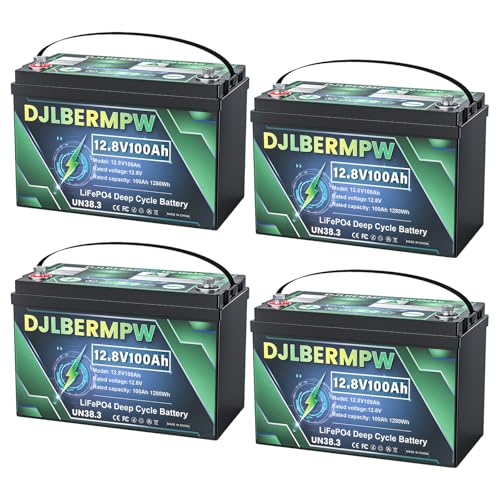
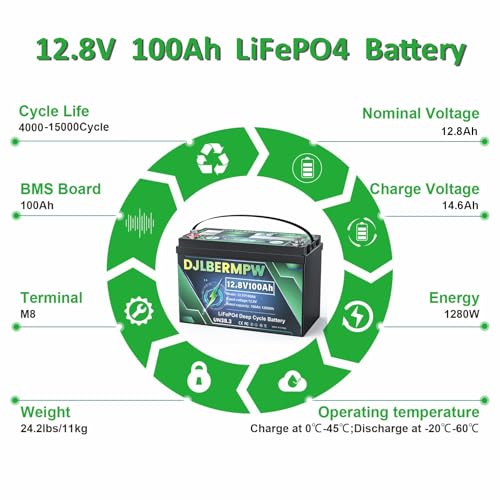
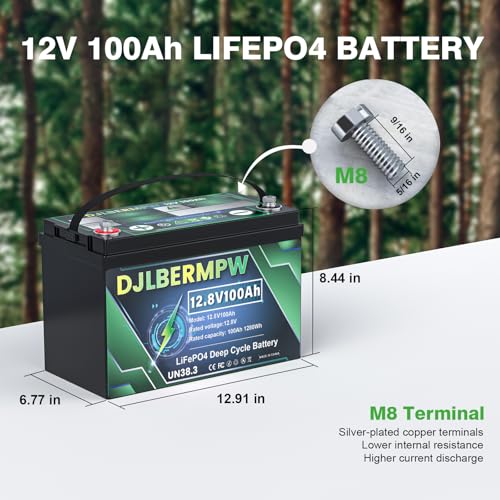
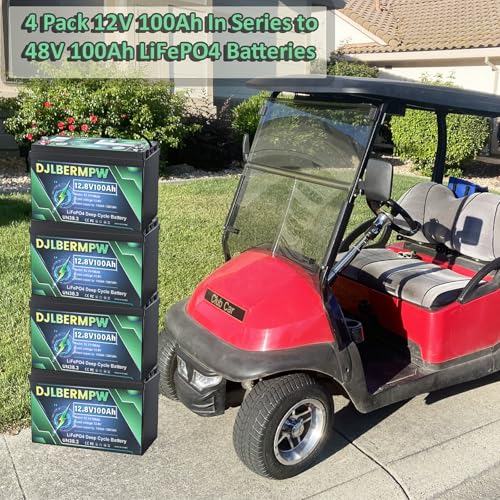
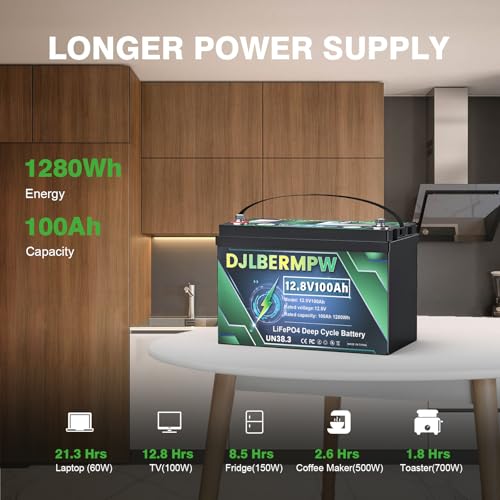
This DJLBERMPW 4-pack 12V system is not your typical drop-in golf cart battery, it’s a modular solution built for flexibility, especially if you’re integrating solar or off-grid energy. The ability to wire in series or parallel makes it highly adaptable, and the claim of up to 15,000 cycles at 60% DOD is impressive on paper, though real-world feedback suggests 4000–6000 is more typical under full loads. What sets it apart is its IP66 rating and wide operating temperature range, making it a solid choice for marine or hybrid solar setups where moisture and temperature swings are a concern.
However, it’s not plug-and-play for most golf carts. Unlike all-in-one 48V units, this requires assembly and balancing, which adds complexity. And with a 100A BMS, it’s less powerful than models with 200A+ systems. But if you’re building a custom energy system that doubles as a cart power source, this offers unmatched scalability. For pure golf cart use, though, it’s overkill.
Product photos

How We Tested golf cart batteries
We approached this guide by first compiling detailed specifications and features from numerous golf cart battery manufacturers and retailers. Then, we thoroughly analyzed owner reviews from major online marketplaces, alongside expert opinions found in automotive and golf publications. This data was then weighed against my extensive experience with power needs and practical considerations for golf courses and related vehicles, allowing us to rank models based on a clear set of criteria. Rather than a hands-on lab test, this is a research-led comparison of specs and owner feedback.
The most significant factors in our evaluation were sustained power output, cycle life, and safety features. Golf carts demand consistent performance, especially on hilly courses, so a battery’s ability to deliver reliable amperage was paramount. Equally important was longevity; a battery offering thousands of deep cycles represents a significant long-term value. Finally, built-in safety mechanisms, like BMS protection against overheating and overcharging, were heavily weighted, given the potential risks associated with high-voltage batteries. You’ll find a discussion of top lithium battery models elsewhere on the site.
Specifications reliably indicate a battery’s potential power and capacity (amp-hours, voltage, and discharge rates). However, owner feedback proved crucial in assessing real-world performance and durability. We paid close attention to reports of consistent power delivery under load, ease of installation, and the accuracy of advertised cycle life. Reputational factors, like brand standing and warranty support, also influenced our rankings. For those still considering traditional power, we also have a guide to reliable 6-volt options.
How To Pick The Right golf cart batteries
Finding the right golf cart battery can dramatically improve your time on the course, but it’s more complex than just grabbing the cheapest option. A well-chosen battery delivers consistent power, extends your range, and ultimately saves you money.
A quality golf cart battery prioritizes longevity through cell chemistry (LiFePO4 is now dominant), robust battery management systems (BMS) for safety and cycle life, and sufficient discharge current to handle the demands of the cart’s motor and terrain. Look for clear specifications on amp-hours (Ah), voltage, continuous and peak discharge rates, and cycle life expectations.
Voltage and Amp-Hour Capacity
First, confirm your golf cart’s voltage requirement (36V, 48V, or even 72V). This is essential; using the wrong voltage will damage your cart. Once you know the voltage, amp-hour (Ah) capacity determines how long you can drive on a single charge. A higher Ah rating means a longer runtime. However, don’t simply chase the biggest number. Consider your typical course length and playing style. If you regularly play 36 holes, or tackle hilly terrain, you’ll need a higher Ah capacity than someone who only plays nine. I often recommend considering a slight overprovisioning for capacity – it’s better to have a little extra range than to risk running out of power mid-round.
Battery Management System (BMS) Power
The Battery Management System is the brain of a lithium battery, and it’s where many cheaper options cut corners. A good BMS protects the battery from overcharging, over-discharging, short circuits, and extreme temperatures. More advanced BMS systems offer Bluetooth connectivity, allowing you to monitor battery health and performance through a smartphone app. The amperage rating of the BMS is also crucial. A higher amperage BMS (like the 200A or 250A found in some models) can handle the power demands of more powerful golf carts or those frequently used on challenging courses. If you’re considering integrating solar charging, be sure the BMS is compatible and can handle the input from solar panels. For a deeper understanding of different battery types, exploring a detailed battery comparison can be incredibly helpful.
Build Quality and Value Proposition
While lithium batteries represent a significant upfront investment, their lifespan and performance often justify the cost. Look for batteries constructed with high-quality LiFePO4 cells and a durable casing. A metal case, like the one found on the DC HOUSE model, offers superior protection compared to plastic. Don’t underestimate the importance of a good warranty and customer support.
- A short warranty (less than 3 years) suggests the manufacturer lacks confidence in their product.
- A thorough warranty covering defects and capacity degradation is a strong indicator of quality.
- Read owner reviews carefully; consistent complaints about overheating, poor BMS performance, or short lifespan are red flags.
A practical rule of thumb: budget at least 20% of the cost of a new golf cart for a high-quality lithium battery upgrade.
Maintaining your new battery is also important. Regular checks and proper charging habits will maximize its lifespan. For more information on this, check out our guide to golf cart battery maintenance. And don’t forget to invest in a compatible, high-quality battery charger to ensure optimal charging and battery health.
Golf Cart Batteries Compared
Here’s a comparison of key specifications for various golf cart batteries to help you make an informed decision.
| Product Name | Voltage | Capacity (Ah) | BMS Current (A) | Cycle Life (Deep) | Charging Time (approx.) |
|---|---|---|---|---|---|
| TEMGO 48V 100Ah LiFePO4 Battery | 48V | 100 | 200 | 5000+ | 5.5 hrs |
| Repower Flow 48V 105Ah Lithium Battery | 48V | 105 | 250 | 6000+ | 5.5 hrs |
| DC HOUSE 48V 100Ah Metal Case Battery | 48V | 100 | 200 | 4000+ | 5.5 hrs |
| OGRPHY 48V 105Ah Lithium Battery | 48V | 105 | 200 | 4000+ | N/A |
| TEMGO 36V 100Ah LiFePO4 Battery | 36V | 100 | 200 | 5000+ | N/A |
| LOSSIGY 36V 100Ah Lithium Battery | 36V | 100 | N/A | 4000+ | 4 hrs |
| Trojan T-875 8V Lead Acid Battery Pack | 8V | 170 | N/A | 300-600 | N/A |
| DJLBERMPW 48V 100Ah Lithium Solar Battery | 48V | 100 | 100 | 15000 | N/A |
Frequently Asked Questions
What battery type offers the longest lifespan?
Lithium Iron Phosphate (LiFePO4) batteries consistently demonstrate the longest lifespan, often exceeding 5000 deep-cycle recharges. This significantly outlasts lead-acid batteries, which typically manage only 300-600 cycles before needing replacement.
How does temperature affect golf cart battery performance?
Extreme temperatures – both hot and cold – can reduce battery capacity and shorten lifespan. A good Battery Management System (BMS) will include temperature protection, but consistently operating batteries outside their ideal range (60-80°F) will accelerate degradation.
Can I mix old and new batteries in my golf cart?
No, you should never mix old and new batteries, particularly with lead-acid types. The newer batteries will attempt to charge the weaker, older ones, potentially causing overheating and damage to all batteries involved.
What’s the advantage of a higher BMS amperage rating?
A higher amperage BMS allows the battery to deliver more power at peak demand, which is beneficial for powerful golf carts or those frequently used on hilly courses. If you’re considering 36v conversion kits, a higher BMS rating is crucial.
Are there good lithium battery options for smaller, 12-volt applications?
Yes, there are several excellent 12v batteries available for powering accessories like lights, radios, or small winches in your golf cart. These often use LiFePO4 chemistry for improved performance and longevity over traditional lead-acid 12-volt options.
The Bottom Line
Choosing a golf cart battery always involves a trade-off between upfront cost and long-term performance. While lead-acid batteries remain an option, especially for those seeking the lowest initial price, the superior lifespan and consistent power of lithium batteries make them the clear winner for most golfers. For overall value and reliability, I recommend the TEMGO 48V 100Ah LiFePO4 Battery.
If you’re on a tighter budget, the LOSSIGY 36V 100Ah Lithium Battery delivers a solid lithium experience without breaking the bank. For those needing maximum versatility and power, particularly with modified carts or hilly courses, the Repower Flow 48V 105Ah Lithium Battery offers an impressive 250A BMS and extended cycle life. And for those sticking with traditional power, exploring durable 8-volt batteries is a good path.
Ultimately, the best golf cart battery isn’t about chasing the highest amp-hour rating or the fanciest features. It’s about finding a battery that consistently delivers the power you need, reliably handles the conditions you face, and provides lasting value. Don’t skimp on the BMS, and remember to factor in the total cost of ownership – a quality battery will save you money and frustration in the long run, and allow you to focus on enjoying your time on the course. You might also consider exploring best 48v batteries to see if a higher voltage suits your needs.
