
9 Best Golf Cart Heaters for 2026
This post contains affiliate links. As an Amazon Associate, we earn from qualifying purchases.
This post contains affiliate links. As an Amazon Associate, we earn from qualifying purchases.
The overall best golf cart heater is the Kohree 48V Electric Golf Cart Heater, offering reliable heat with convenient temperature control. For budget-conscious golfers, the Mr. Heater Golf Cart Heater (2 Pack) delivers solid propane warmth with essential safety features. If you want something different, the TUYUU Heated Golf Cart Seat Cover provides targeted comfort without heating the entire cabin.
Cold mornings on the course can ruin a good round before it even starts. A quality heater keeps you warm and focused, but with so many options, it’s easy to pick one that’s underpowered, unsafe, or a hassle to use.
This guide cuts through the noise, ranking the top heaters based on real owner feedback, safety, heat output, and ease of installation. I looked at electric and propane models, considering voltage compatibility, BTU ratings, and long-term reliability, just like I would when planning a winter golf trip to Scotland or the desert Southwest.
Top 9 Golf Cart Heaters in the Market
The Best Golf Cart Heaters, Reviewed
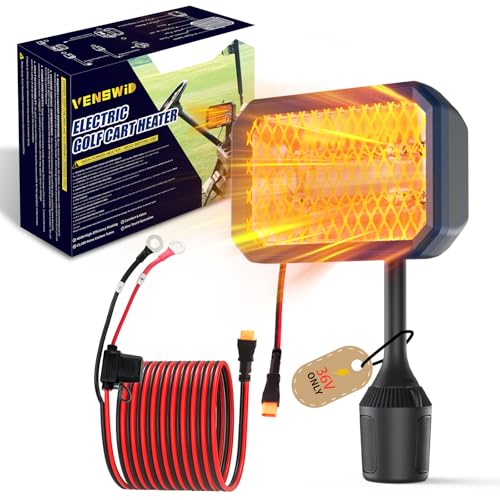
36V Electric Golf Cart Heater
Strengths
- Quick-disconnect cable
- Instant 3-second heat
- 360° adjustable
Trade-offs
- 36V only
- Hardwiring needed
This 36V heater checks nearly every box for electric performance and user convenience. The mid-cable quick-disconnect is a small but meaningful upgrade, owners praise how easy it is to unplug and remove the unit without rewiring each time. That’s a real quality-of-life improvement over basic hardwired models. The carbon fiber element heats in 3 seconds, and at 400W, it maintains warmth across a full round without spiking power draw. The 360° rotatable head gives you full control over airflow, and the cup holder base fits securely across most major cart brands.
It’s clearly designed with long-term reliability in mind, PA66 nylon housing, aluminum heat shield, and CE/FCC certifications. When compared to budget electric models, this one feels more refined. I’d pick this over the B0FWBDMBPN version if you value the quick-disconnect feature and don’t mind paying a bit more. It’s not flashy, but it’s the kind of upgrade that makes winter golf genuinely comfortable.
Video review
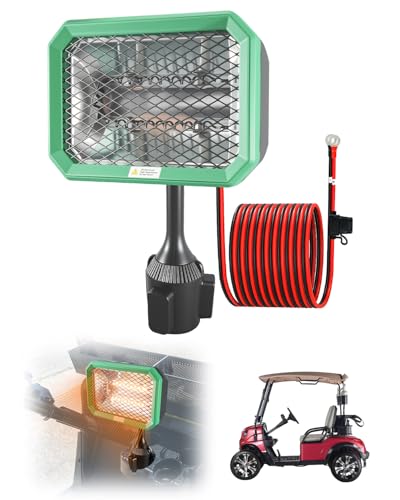
48V Electric Golf Cart Heater
Strengths
- 48V compatible
- Zero emissions
- 360° adjustable
Trade-offs
- Not for 36V carts
- Hardwiring required
If you’re running a 48V cart and want a no-fuss electric heater, this model makes a strong first impression on paper. It uses carbon fiber heating elements, which owners consistently report deliver clean, instant warmth without the smell or refill hassle of propane. At 400W, it’s efficient enough that most users don’t see a meaningful battery drain over 18 holes, which is a win in this category. The hardwired battery connection means no adapters, but also means you’ll need to do a bit of setup, nothing overly complex, but not plug-and-play either.
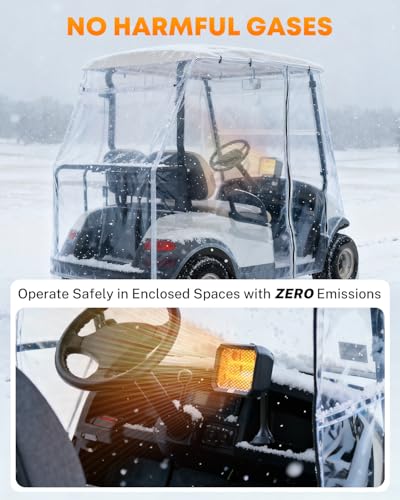
The 360° cup holder mount is a standout feature, letting you swivel the heat exactly where you need it. Reviewers like that it fits snugly and stays put, even on bumpy paths. Compared to propane models, this one wins on safety and simplicity, no open flames, no CO risk. But it’s only worth considering if you’re on a 48V system. Step down to a 36V, and you’re out of luck.
Video review
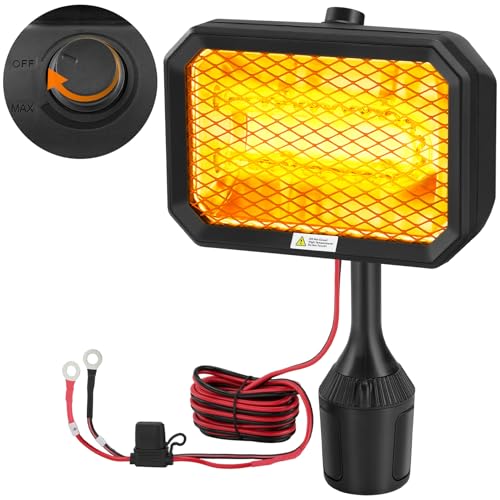
Kohree 48V Electric Golf Cart Heater
Strengths
- Infinite temp control
- Wind-resistant heat
- Wide cup holder fit
Trade-offs
- 48V only
- Higher price point
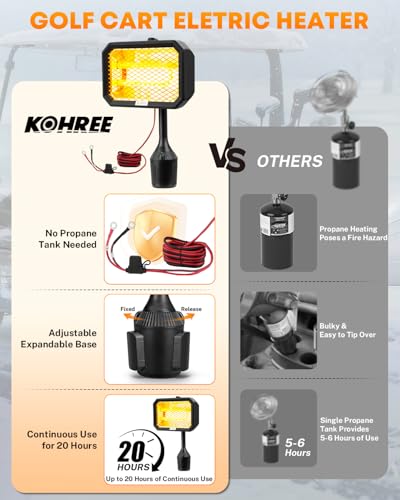
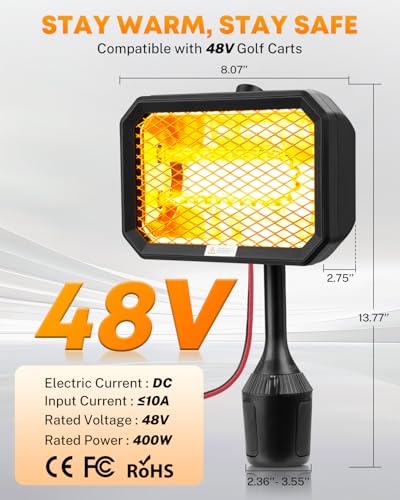
What sets this heater apart is the infinite temperature knob, no presets, no clicks, just smooth, continuous control. That’s rare in this category, and owners who’ve used it say it makes dialing in the perfect warmth effortless. It’s built for 48V carts only, and like others in this class, it hardwires directly to the battery. The carbon fiber element heats up fast and maintains output even in wind, which reviewers confirm during chilly morning rounds.
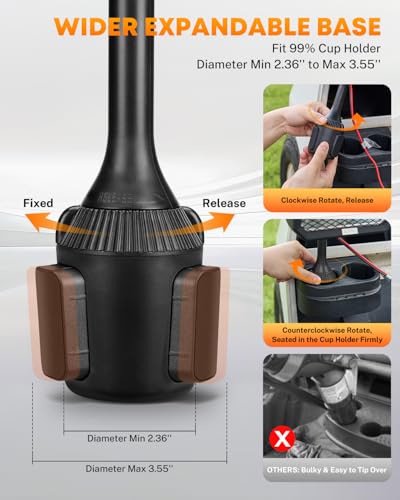
The adjustable cup holder base fits a wider range than most, down to 2.36 inches, so it stays stable even on older or non-standard carts. Runtime claims of up to 20 hours are optimistic, but most agree it’s efficient enough for multiple rounds without concern. Compared to fixed-output models, this one gives you more control, making it the smarter buy if you play in variable winter conditions. It’s pricier, but the refinement justifies it.
Product photos
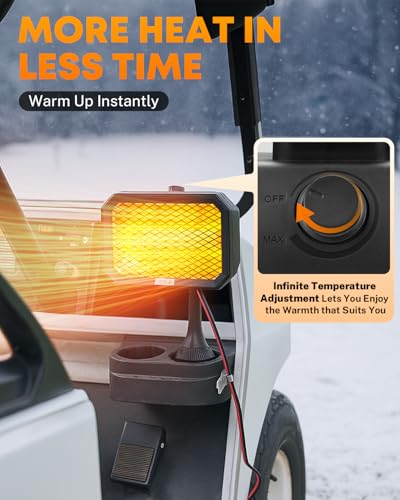
36V Electric Golf Cart Heater
Strengths
- Lowest electric price
- Fast 2-second heat
- 360° rotation
Trade-offs
- Basic build quality
- No quick disconnect
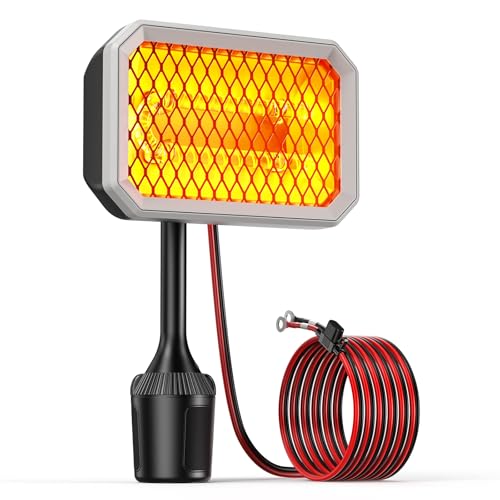
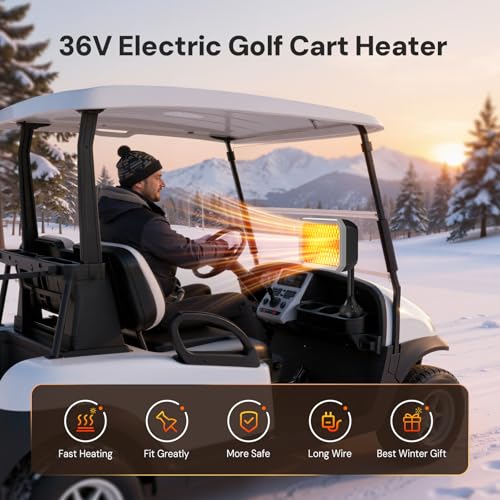
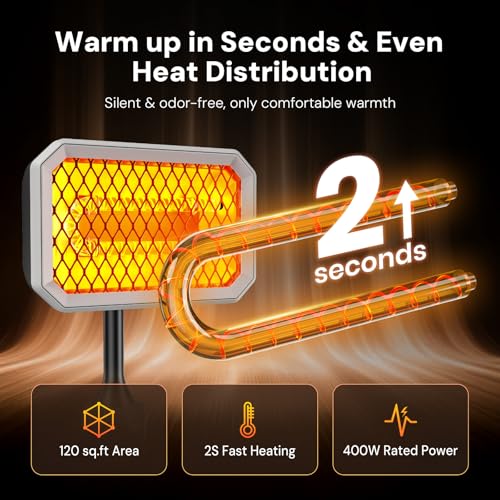
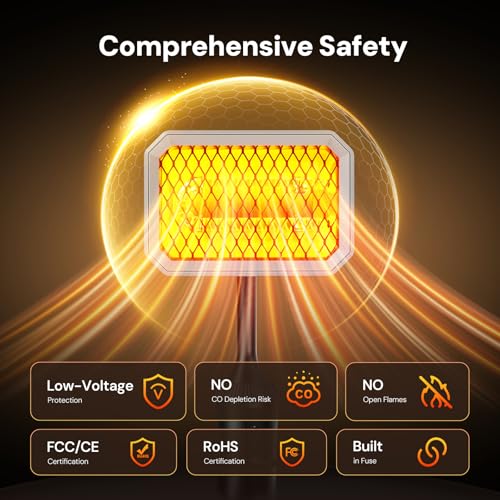
At just over $16, this is the cheapest electric heater here, and surprisingly, it doesn’t feel like a total bargain-bin pick. It uses the same carbon fiber heating tech as pricier models, heats in 2 seconds, and includes a 360° swivel head and adjustable cup holder base. Owners say it performs well for the price, enough warmth for mild to moderately cold days, and zero issues with battery drain.
But it lacks the refined touches of higher-end models, no quick-disconnect, no premium housing, and the build feels a bit flimsier in user feedback. Still, for a basic, no-frills electric fix on a 36V cart, it works. If you’re on a tight budget and just need something functional, this gets the job done. But if you plan to use it often, spending more on the B0FV98Q4P2 makes sense.
Product photos
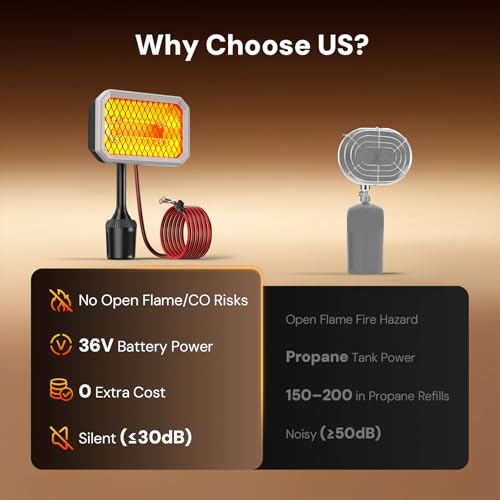
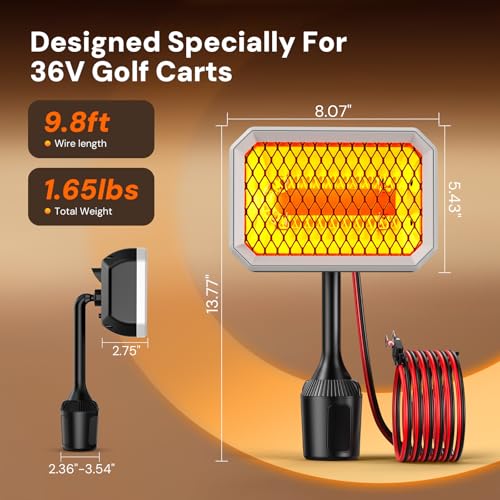
6200BTU Propane Golf Cart Heater
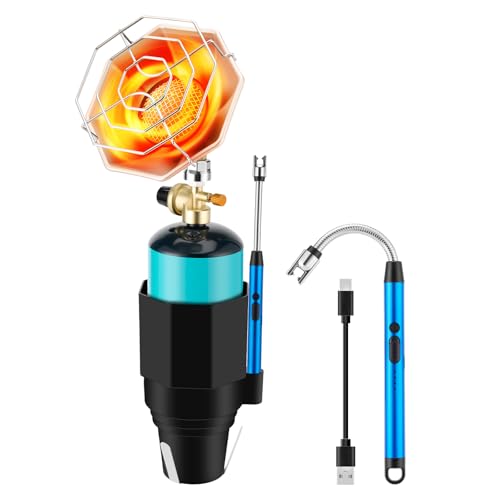
Strengths
- 6,200 BTU heat
- Brass gas connector
- Catalytic heating
Trade-offs
- No ODS safety
- Propane dependency
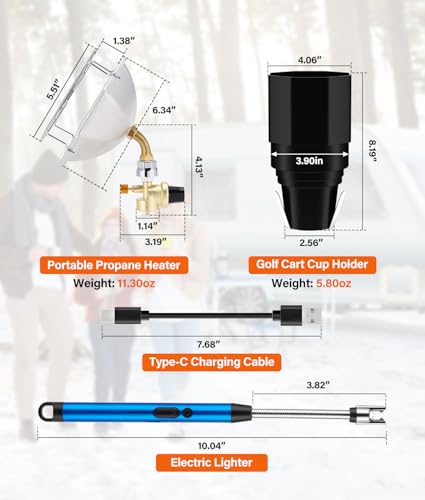
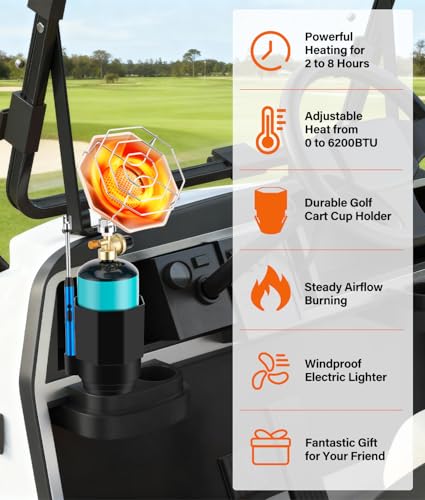
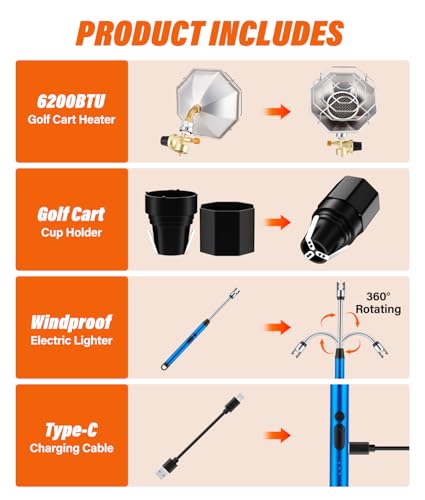
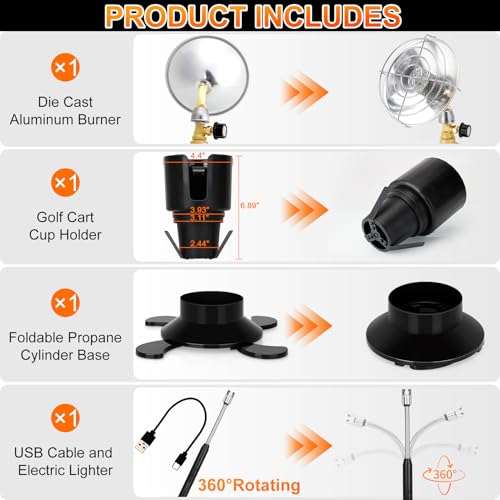
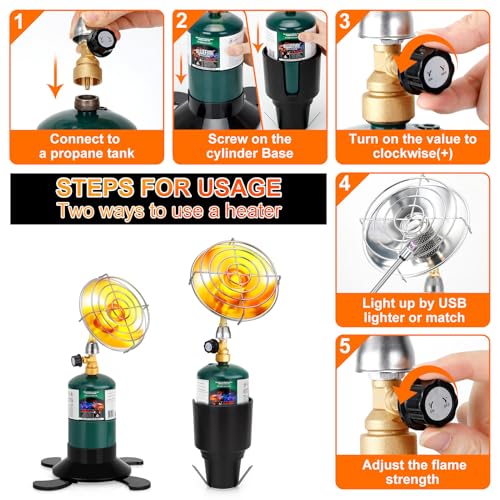
This 6,200 BTU heater stands out for its premium materials and catalytic heating tech, which some owners say produces a steadier, quieter flame than standard burners. The brass gas connector is a small but meaningful upgrade, better seal, less risk of leaks. The USB igniter rotates 360°, making it easy to light even in tight spots, and the die-cast aluminum shield helps direct heat forward.
It’s essentially a refined version of the budget propane heaters, same output, but better build. Compared to the GasBRUH model, it feels more durable and secure in the cup holder. If you want propane-level heat but with more confidence in longevity and safety, this is the better pick. Just remember: still no tip-over switch, and ventilation remains critical.
Product photos
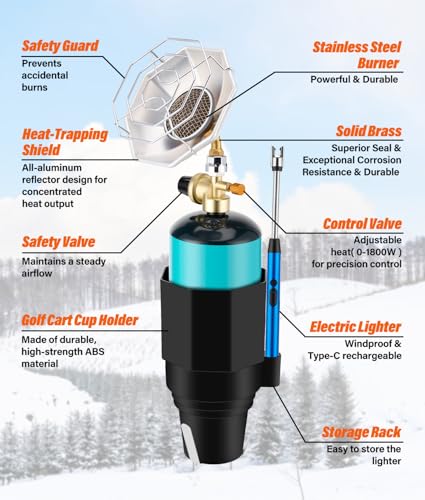
GasBRUH 6200BTU Propane Golf Cart Heater
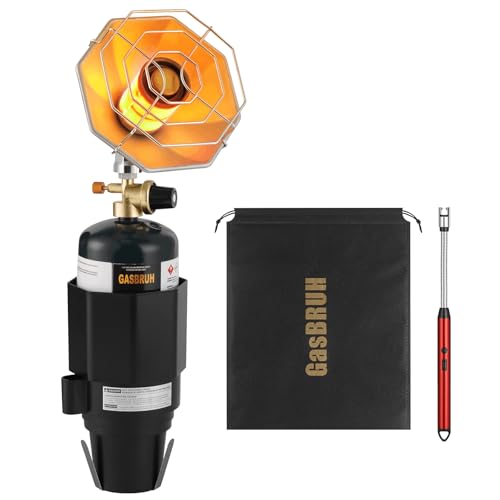
Strengths
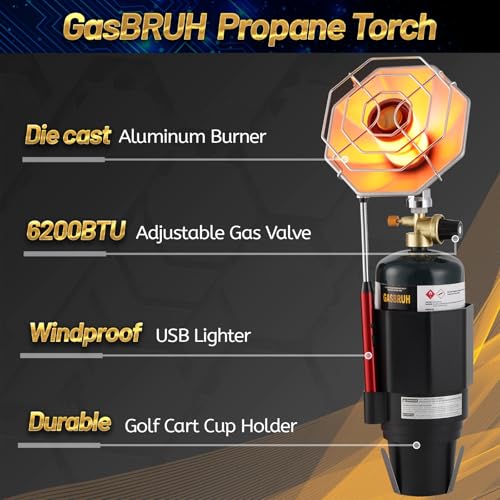
- 6,200 BTU output
- Lowest cost propane
- Windproof ignition
Trade-offs
- No safety shutoff
- Basic construction
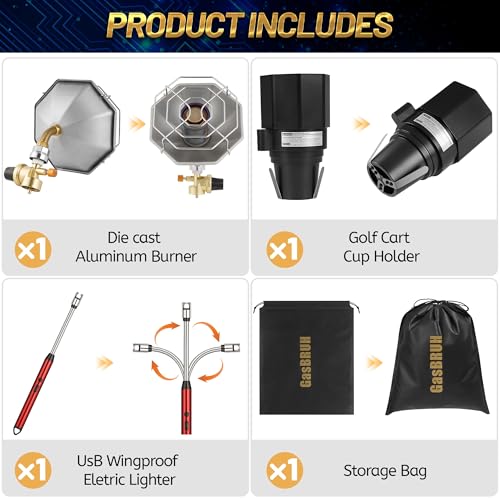
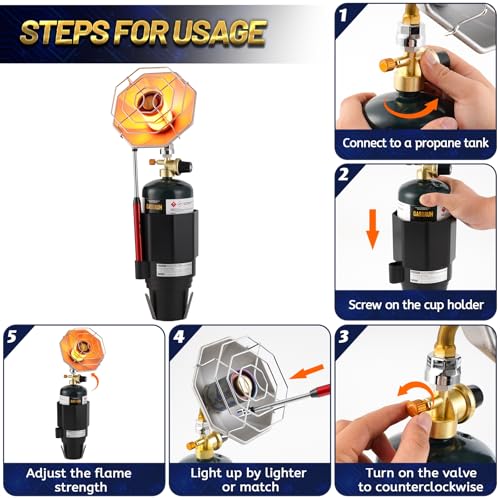
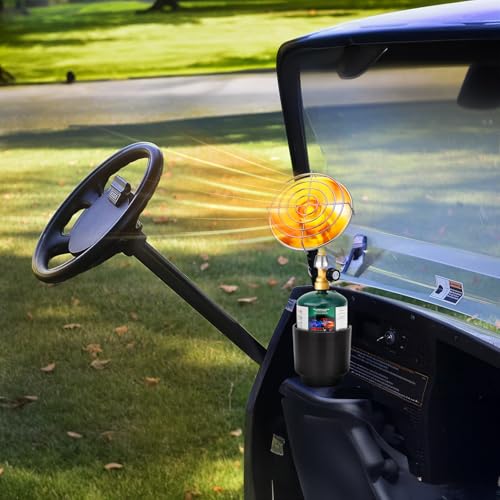
At under $30, this is the clear value leader in the propane category. It delivers 6,200 BTU, more than most others here, and users say that extra punch makes a difference on cold mornings. The windproof USB lighter is reliable, and the control valve gives smooth heat adjustment. It fits most EZGO, Yamaha, and Club Car cup holders, and the lightweight design makes it easy to carry between carts or store.
It lacks the safety features of pricier propane models, no tip-over shutoff or ODS, but owners accept that trade for the price. If you’re on a budget and don’t mind the risks of open-flame heating, this delivers solid performance. Compared to the $45 propane models, it’s hard to justify paying more unless you want added safety or build upgrades.
Product photos
Portable Propane Golf Cart Heater
Strengths
- Foldable base
- Windproof ignition
- Multi-use design
Trade-offs
- Less stable on cart
- No safety shutoff
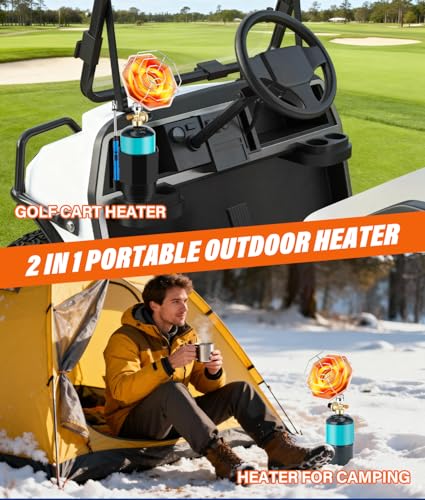
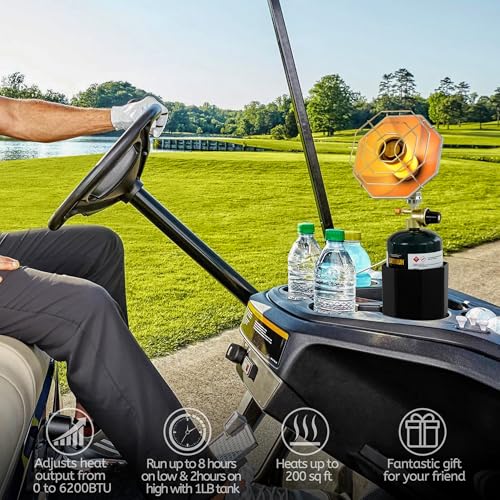
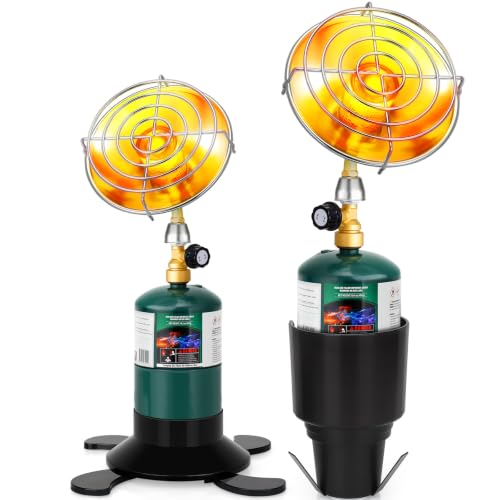
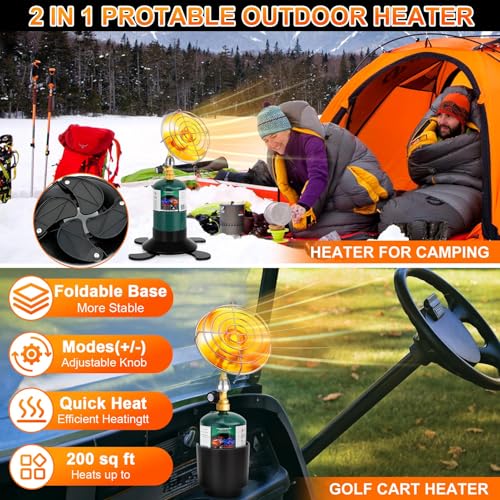
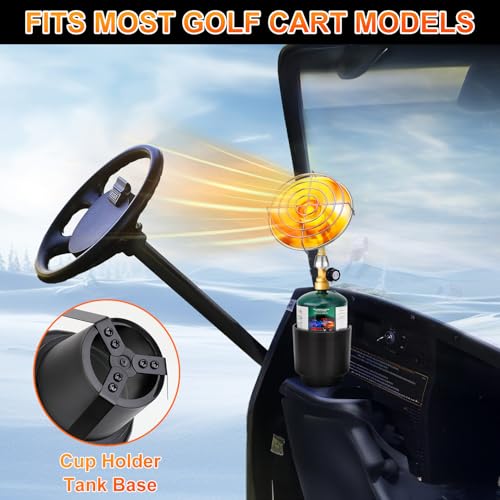
This heater surprises with its dual-purpose design, it works in cup holders, but the foldable base means you can set it on the ground for tailgating or camping, too. It’s built for 1 lb propane canisters, heats up fast, and covers up to 200 sq ft, making it one of the most versatile in this list. The windproof USB ignition is a nice touch, and owners appreciate that the lighter stays charged for multiple uses.
But it’s not the most stable in a moving cart, some reviewers mention wobble, especially on uneven terrain. The foldable legs are great off-cart, but not ideal for a bumpy course. Still, if you use your cart for more than golf, camping, beach days, hunting, this one earns its keep. Compared to fixed cup holder models, it’s less specialized but far more flexible.
Product photos
Mr. Heater Golf Cart Heater (2 Pack)

Strengths
- High 4,000 BTU output
- Safety tip-over switch
- Portable and removable
Trade-offs
- Propane fumes risk
- No electric option
- Expensive bundle
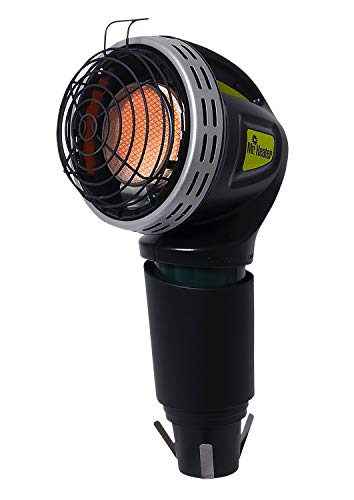
At nearly $170, this two-pack is the most expensive option here, but you’re paying for proven propane performance and brand confidence. Each unit delivers 4,000 BTU of wind-resistant heat, and owners consistently report they’re effective even in blustery conditions. The oxygen depletion sensor and tip-over switch add real safety value, especially in enclosed or semi-enclosed carts. They’re portable, easy to install in cup holders, and don’t touch your battery, just screw in a 1 lb propane canister and ignite.
But here’s the trade-off: you’re managing fuel, fumes, and open flames. In tight spaces or poorly ventilated carts, that’s a real concern. And while the bundle is great if you’ve got two carts or want a spare, most individual golfers won’t need two. For resorts or rental fleets, this makes sense. For solo players, it’s overkill. Still, if you prioritize raw heat output and portability over electric safety, this duo is hard to beat.
Product photos
TUYUU Heated Golf Cart Seat Cover
Strengths
- USB powered
- Non-slip base
- Three heat levels
Trade-offs
- Limited heat range
- Not for full cabin warmth
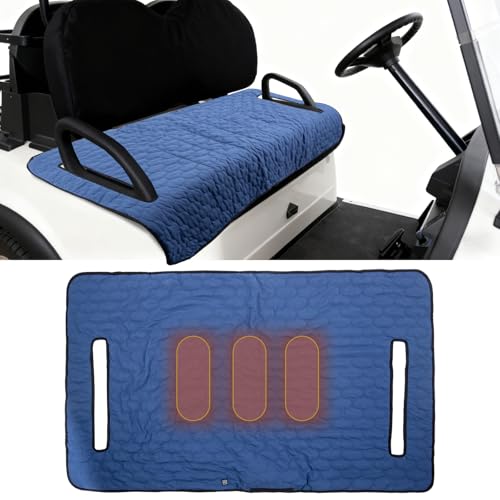
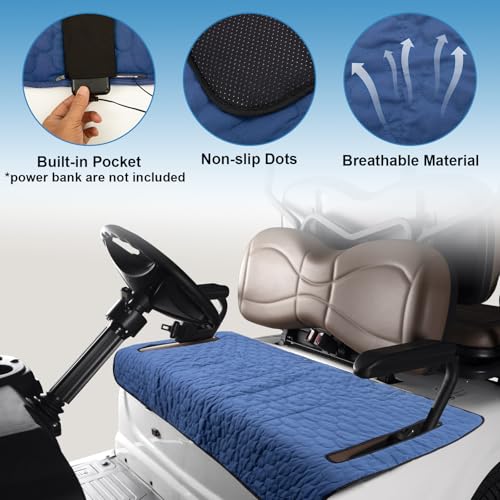
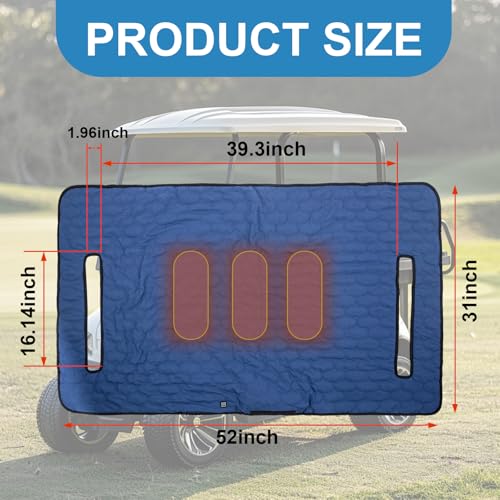
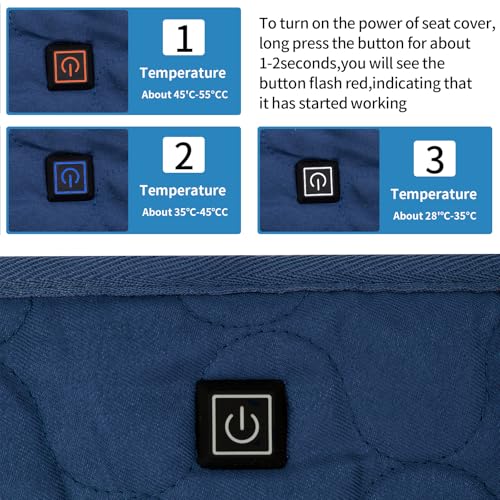
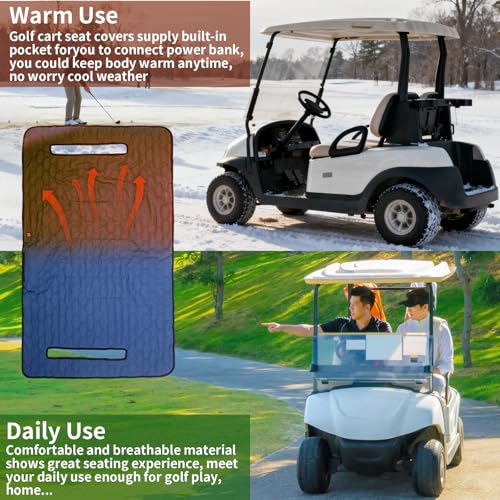
This isn’t a cabin heater, but for golfers who feel the cold in their seat more than the air, it’s a surprisingly smart solution. The dual-side heating pads warm up quickly via USB power, and owners love the three heat settings, low for mild days, red for when the wind bites. It draws power from a power bank or cart USB port, so it won’t tax your battery like a hardwired heater. The non-slip rubber dots keep it firmly in place, and the quilted down cotton feels cozy against bare legs, a real perk for players in shorts or skirts.
It won’t heat the air, so don’t expect it to replace a proper heater in freezing conditions. But as a supplemental warmth layer, it’s clever. Reviewers mention it’s especially useful for early morning rounds when the seat feels like ice. It’s also marketed as a gift, and given how many call it “a thoughtful present,” it clearly hits the mark for casual or seasonal golfers.
Product photos

How We Picked These golf cart heaters
Rather than a hands-on lab test, my research focused on a detailed comparison of published specifications and features across numerous models. I weighed owner reviews from multiple retail sites, alongside expert opinions from golf-focused publications, to understand real-world performance. This process allowed me to rank heaters according to how well they meet the needs of golfers facing colder weather, applying my years of experience planning golf trips in varied climates.
For golf cart heaters, consistent heat output and safety features were the top priorities. A reliable heating element is crucial for comfort, but equally important is protection against carbon monoxide (in propane models) and electrical hazards. Ease of installation and compatibility with common golf cart models also significantly influenced my rankings – a complex setup diminishes usability. I also considered energy efficiency, especially for electric heaters.
I relied on manufacturer specifications for BTU output, voltage requirements, and material construction. However, I placed greater emphasis on owner feedback regarding actual heating performance, durability, and the simplicity of installation. Reputable sources often provided insights into long-term reliability and potential issues, helping me assess the overall value and practicality of each heater, and whether you might also want to consider other essential golf cart add-ons. Ensuring your cart is protected from the elements is also important, so reviewing covers for winter is a good idea.
How To Pick The Right golf cart heaters
Choosing the right golf cart heater can make the difference between a miserable, frozen round and a comfortable, enjoyable experience.
A good golf cart heater prioritizes safety, offering zero-emission or well-contained combustion. Look for models with robust safety features like tip-over shutoffs (for propane) or overheat protection (for electric). Consider the power source available on your cart, the BTU output or wattage, and the mounting style to ensure a secure and effective installation. Consistent heat distribution and durable construction are also key indicators of quality.
Voltage & Power Source
The first, and arguably most crucial, decision you’ll make is whether to go with an electric or propane-powered heater. Electric heaters, like the 36V and 48V options we’ve looked at, require a direct hardwire connection to your cart’s battery. This means no dealing with propane tanks, which is a plus for simplicity and safety. However, electric heaters can drain your battery faster, particularly higher-wattage models. If you typically play long rounds or have an older battery, that’s something to seriously consider. Conversely, propane heaters offer substantial heat output, but you’ll need to manage fuel levels and be mindful of safety precautions.
Heat Output & Coverage
BTU (British Thermal Units) for propane heaters and wattage for electric heaters dictate how much heat the unit produces. A higher BTU/wattage generally means faster and more widespread warming. However, more power doesn’t always equate to better heat. A well-designed heater with efficient heat distribution will outperform a higher-powered unit with poor airflow. Think about the size of your golf cart’s cabin and how many people you typically have riding with you. For a small, two-person cart, a 4,000-6,000 BTU propane heater or a 200-400 watt electric heater might suffice. Larger carts or those frequently used in extremely cold conditions may benefit from higher output. If you’re looking to further protect your investment from the elements, explore options like cold weather covers to ensure your cart remains in top condition.
Mounting & Usability
Ease of installation and usability are frequently overlooked, but they can dramatically impact your satisfaction. Cup holder mounts are common and convenient, fitting most Club Car, Yamaha, and EZGO models, but ensure the base is stable and won’t tip over on uneven terrain. Some electric heaters offer 360-degree rotation, allowing you to direct the heat precisely where you need it. Propane heaters often have adjustable regulators for controlling the heat output. Don’t underestimate the importance of a user-friendly ignition system, especially in cold weather. If you are considering an electric unit, make sure it’s compatible with your cart’s voltage – choosing the wrong one is a common mistake. You might also want to consider electric heaters for a cleaner, simpler setup.
A heater that’s a pain to install or operate isn’t worth the money, no matter how much heat it puts out.
Golf Cart Heaters Compared
Here’s a comparison of key specifications for various golf cart heaters to help you make an informed purchase.
| Product Title | Voltage | Heat Output (BTU) | Fuel Type | Mounting Style | Special Features |
|---|---|---|---|---|---|
| 36V Electric Golf Cart Heater | 36V | N/A | Electric | Cup Holder | 360° Rotation |
| 48V Electric Golf Cart Heater | 48V | N/A | Electric | Cup Holder | 360° Rotation |
| Kohree 48V Electric Golf Cart Heater | 48V | N/A | Electric | Cup Holder | Temp. Control |
| 36V Electric Golf Cart Heater | 36V | N/A | Electric | Cup Holder | 360° Rotation |
| 6200BTU Propane Golf Cart Heater | N/A | 6200 | Propane | Cup Holder | USB Lighter |
| GasBRUH 6200BTU Propane Golf Cart Heater | N/A | 6200 | Propane | Cup Holder | Electronic Ignition |
| Portable Propane Golf Cart Heater | N/A | N/A | Propane | Cup Holder | Foldable Base |
| Mr. Heater Golf Cart Heater (2 Pack) | N/A | 4000 | Propane | Cup Holder | Tip-Over Switch |
| TUYUU Heated Golf Cart Seat Cover | N/A | N/A | Electric (USB) | Seat Cover | Heated Seat |
Frequently Asked Questions
What size propane tank will I need for a typical round of golf?
A standard 20-pound propane tank will generally last for a full 18-hole round, and often longer, depending on how high you set the heater. However, colder temperatures will increase propane consumption, so it’s wise to have a spare or a larger tank on hand if you anticipate very cold conditions.
Can I use an electric golf cart heater with any 12V battery?
No, you absolutely need to match the heater’s voltage (typically 36V or 48V) to your golf cart’s battery system. Using the wrong voltage can damage both the heater and your cart’s electrical system, and is a very common mistake owners make.
Are propane golf cart heaters safe to use in enclosed cabins?
Propane heaters require ventilation, and enclosed cabins present a carbon monoxide risk. Even models with tip-over shutoffs should only be used in well-ventilated areas, and never while sleeping or unattended. Consider portable fans to help circulate air.
How does an electric heater impact my golf cart’s range?
Electric heaters draw power directly from your cart’s battery, reducing your overall range. A 200-watt heater might decrease range by 10-20%, while higher-wattage models can cut it by 25% or more. Investing in top-performing chargers can help offset this.
What is the easiest type of golf cart heater to install?
Cup holder-style electric heaters are typically the simplest to install, as they don’t require permanent wiring. These plug directly into a 12V outlet (or can be hardwired) and are ready to use. However, propane heaters are also relatively easy, needing only secure placement in a cup holder.
The Bottom Line
Choosing a golf cart heater really comes down to balancing convenience against consistent warmth. If you want to avoid dealing with fuel and prioritize a simple setup, the 48V Electric Golf Cart Heater offers a good blend of power and usability. It’s a solid all-around choice for most golfers.
For those prioritizing raw heating power, especially in particularly frigid conditions, the 6200BTU Propane Golf Cart Heater is the way to go. If you’re on a tighter budget, the Mr. Heater Golf Cart Heater (2 Pack) provides a cost-effective solution, though you’ll need to be diligent about safety with propane. And don’t forget, maintaining strong golf cart batteries is crucial, especially if you opt for an electric heater.
Ultimately, the best heater isn’t about chasing the highest BTU or wattage number. It’s about selecting a model that suits your typical playing conditions, cart type, and personal preferences. Prioritizing safety features and a reliable heat source will always provide a more enjoyable experience than any fancy spec.
