
4 Best Golf Irons Ever (2026 Guide)
This post contains affiliate links. As an Amazon Associate, we earn from qualifying purchases.
This post contains affiliate links. As an Amazon Associate, we earn from qualifying purchases.
The TaylorMade SIM2 Max Irons stand out as the best overall choice, combining exceptional forgiveness and distance for most players. For those watching their budget, the Callaway Rogue ST Max OS delivers strong performance at a lower price, while the Callaway Apex AI300 offers the ideal blend of forged feel and cavity-back forgiveness for better players.
Most golfers struggle to find irons that match their actual game, not the game they wish they had. Too often, players chase looks or pro endorsements instead of what boosts consistency and confidence.
This guide cuts through the noise, ranking irons based on specs, real owner experiences, and what I’ve learned helping golfers choose gear for years. We focused on forgiveness, distance, and playability across skill levels, so you can pick a set that fits your swing and sticks with you on the course.
Top 4 Golf Irons Evers in the Market
The Best Golf Irons Evers, Reviewed
TaylorMade SIM2 Max Irons

Strengths
- High launch and long carry
- Excellent mishit protection
- Premium feel for a GI iron
Trade-offs
- Expensive full set
- Bulky head design
- Limited workability
This is the iron set that tries to do everything, and for most golfers, it actually pulls it off. The Cap Back Design with ultralight polymers lowers the CG dramatically, which translates to higher launch and longer carry, a combo owners rave about. The Thru-Slot Speed Pocket is still one of TaylorMade’s best innovations, maintaining ball speed on low strikes where many irons fail. Add in the ECHO Damping System, and you get a solid, forged-like feel despite the game-improvement focus.
Compared to the Callaway Rogue ST Max OS, the SIM2 Max feels more refined at impact and offers slightly better shot shaping control. It’s also more complete as a full set option. But that comes at a steep cost, this is easily the most expensive option here. Still, if you want one set that balances distance, forgiveness, and feel better than most, this is the smarter buy for the average player looking to upgrade their entire bag.
Video review
Callaway Rogue ST Max OS

Strengths
- High launch
- Excellent forgiveness
- Strong distance
Trade-offs
- Thicker topline may deter better players
- Less refined feel than forged options
If you’re a mid- to high-handicap golfer looking for maximum forgiveness without emptying your wallet, the Rogue ST Max OS deserves serious attention. On paper, it’s engineered to be Callaway’s fastest iron yet, and owners consistently report a noticeable boost in ball speed, even on off-center strikes. The combination of the A.I. Flash Face Cup and precision tungsten weighting (up to 49g) does its job, delivering high launch and stable flight, which helps less consistent swings find the fairway and hold greens.
The urethane microspheres pushed higher into the face improve sound and feel compared to previous models, though it still can’t match the feedback of a true forged iron. But for the price, that’s a fair trade. Compared to the TaylorMade SIM2 Max, it doesn’t have the same refined dampening system, but it holds its own in distance and forgiveness. I’d pick this over older super-game-improvement models any day.
Video review
Callaway Apex AI300 Iron

Strengths
- Great blend of feel and forgiveness
- Consistent spin rates
- Clean, compact look
Trade-offs
- Expensive per iron
- Requires good contact for best results
- Less distance than super game-improvement models
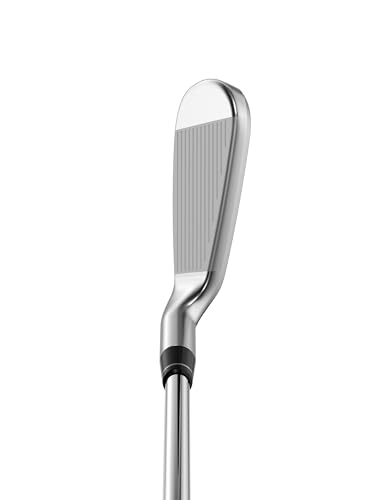
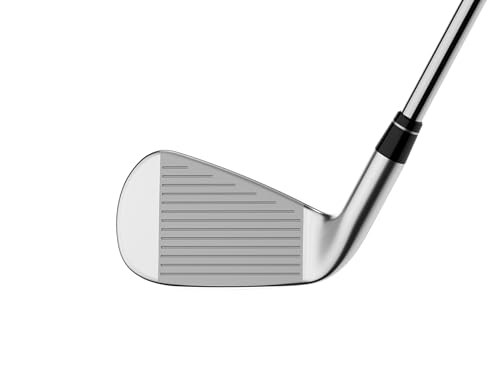
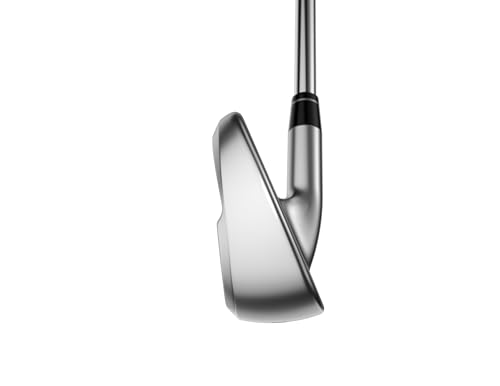
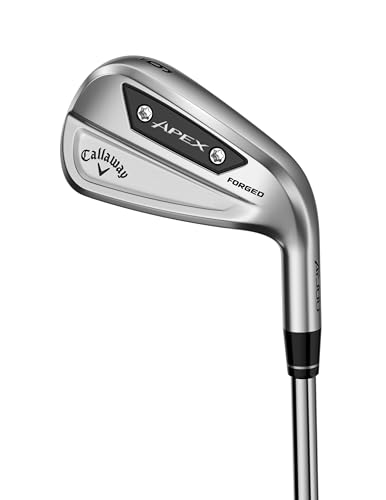
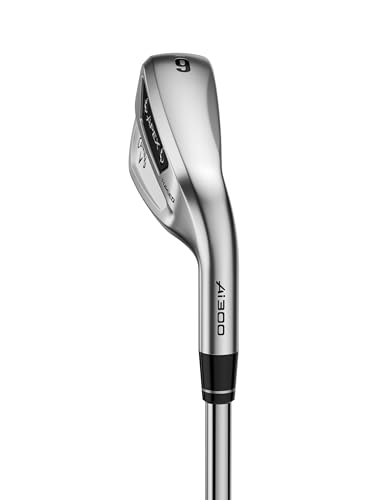
The AI300 sits just below the AI200 in Callaway’s forged lineup, but don’t mistake it for a downgrade in intent, it’s built for players who want tour-level precision with a touch more forgiveness. The forged cavity-back design delivers that satisfying click at impact, and the Ai Smart Face does a remarkable job smoothing out spin and speed across the face. Owners note tighter groupings, especially in the 6-iron to 9-iron range, which suggests the AI tuning really works.
Compared to the AI200, the difference is subtle, both use similar face tech and construction, but the AI300 feels slightly more stable on off-center hits, trading a bit of feedback for added consistency. Against the Rogue ST Max OS, it’s in a different league: more control, less raw power. I’d pick the AI300 over the AI200 if you’re a consistent ball striker who still wants help on the occasional miss.
Product photos
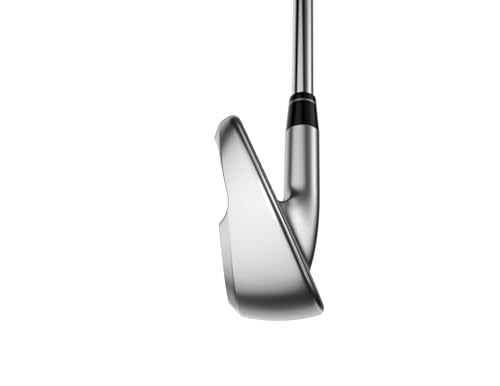
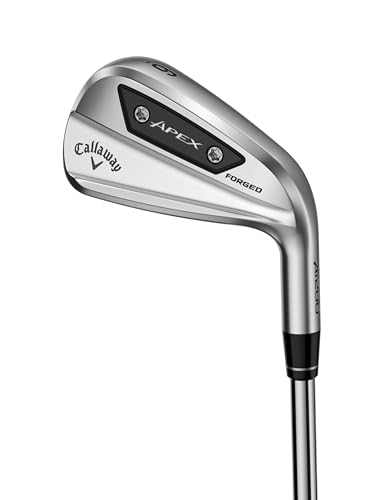
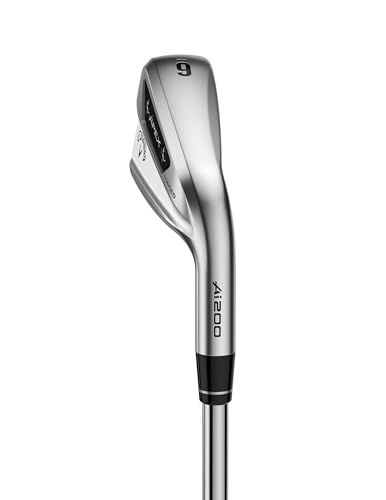
Callaway Apex AI200 Iron
Strengths
- Exceptional feel
- Tight dispersion
- Tour-ready look
Trade-offs
- Less forgiving on mis-hits
- Higher price per iron
- Harder to launch low
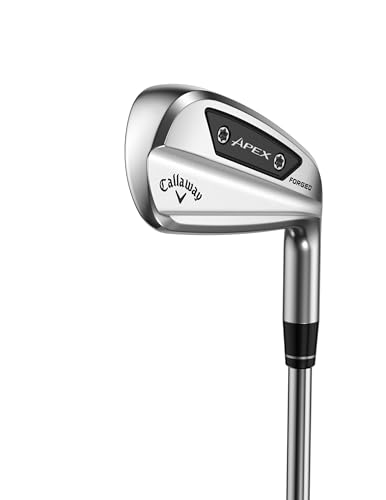
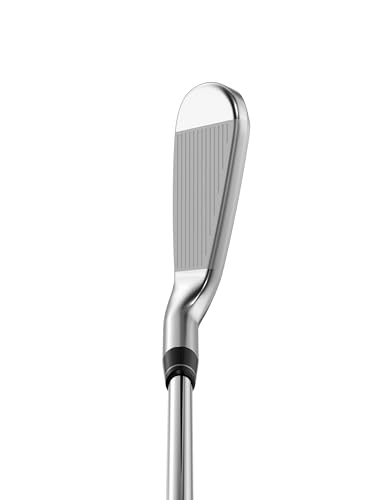
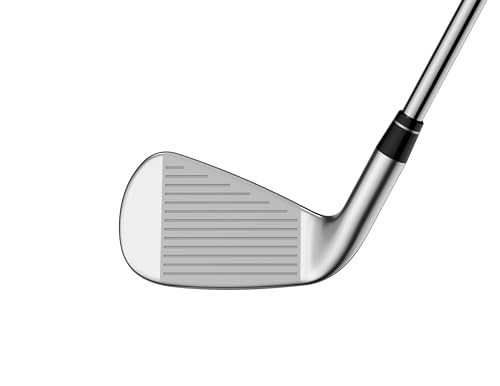
The Apex AI200 stands out as a rare blend of tour-inspired aesthetics and game-improvement tech, wrapped in a hollow-body forged construction. It’s clearly aimed at better players who want forgiveness without sacrificing feedback, and early owner reports confirm the forged 455 face delivers both ball speed and that crisp, responsive feel tour types crave. The Ai Smart Face, built using real swing data, tightens dispersion, a big win for consistency when attacking pins.
When stacked against the TaylorMade SIM2 Max, the AI200 feels more precise and controlled, though it doesn’t offer the same raw distance. It’s also a step ahead of the AI300 in responsiveness, despite similar tech. I’d recommend it over the AI300 for players who value feel as much as performance. That said, it’s not the easiest iron to launch from tight lies, so it demands a more reliable swing.
Product photos
How We Evaluated golf irons evers
Rather than a hands-on lab test, my research focused on a detailed comparison of published specifications and features across numerous models. I weighed owner reviews from major retailers alongside expert analysis from golf publications and websites. As someone who frequently advises on equipment for trips planned through [GolfWorldTrips.com/best-golf-club-irons/ iron clubs], I applied my understanding of how different iron characteristics suit various player abilities and preferences, ranking options against clear performance criteria.
For golf irons, forgiveness and distance were the primary factors guiding my recommendations. Players at most skill levels benefit from irons that minimize the impact of off-center hits, and modern construction techniques significantly impact ball speed. Feel is also important, but I prioritized consistent performance over subjective sensations, understanding that a solid strike feels good regardless of the specific material.
Specifications reliably indicate potential distance and launch characteristics(like face cup technology and CG placement). However, I heavily relied on owner feedback to gauge real-world consistency and durability. Reputation within the golf community also played a key role; brands consistently delivering quality products, like those offering excellent [GolfWorldTrips.com/best-golf-irons-blades/ blade irons], earned greater consideration.
How To Choose The golf irons evers
Choosing the right golf irons can dramatically improve your game, but it’s a surprisingly personal decision.
A quality set of golf irons balances distance, forgiveness, and feel. Key considerations include head design (blade, cavity back, or hybrid), shaft material and flex, grip size, and loft progression. Players should also assess their skill level and typical shot patterns to select irons that complement their swing characteristics and desired ball flight.
Understanding Iron Head Design
The head design is the biggest single factor in how an iron performs. Blades are notoriously difficult to hit consistently, demanding precise contact. Cavity backs, which offer perimeter weighting, are much more forgiving on off-center hits. Many modern irons, like the Callaway Apex AI300, blend these concepts with Ai Smart Face technology to maximize consistency. Don’t automatically assume a blade is “better”; it’s better if you can consistently hit the sweet spot. If you struggle with consistent contact, exploring cavity back irons is a smart move.
Shaft Flex and Material
Shaft flex is often overlooked, but it’s crucial for launching the ball correctly. A shaft that’s too stiff will feel boardy and deliver low launch, while one that’s too flexible will feel whippy and produce inconsistent results. Graphite shafts generally offer more distance and are easier to swing for slower swing speeds, while steel shafts provide more control and feedback. Consider your swing speed when selecting a shaft; a professional club fitting is the best way to determine the ideal flex for your game.
Here’s a quick guide to shaft flex considerations: * Beginner: More flexible (Ladies, Senior, or Regular) * Intermediate: Regular or Stiff * Advanced: Stiff, Extra Stiff, or even Tour Issue (demanding precise timing and strength) – these are often found in top irons.
Balancing Forgiveness with Feel
Forgiveness and feel are often at odds. Traditionally, more forgiving irons (like the TaylorMade SIM2 Max) sacrificed some feel, while better-player irons prioritized feedback. However, advancements in materials and construction techniques are blurring that line. The ECHO Damping System in the SIM2 Max, for instance, is designed to deliver a more forged-like feel despite its forgiving design.
A good rule of thumb is to prioritize forgiveness if your handicap is above 15. As your skill improves, you can gradually transition to irons that offer more feel and control.
I often recommend players explore a range of options and consider what feels best in their hands, even if it means looking beyond what’s currently trending among best iron sets.
Golf Irons Compared
Here’s a detailed comparison of the specifications for each iron set.
| Product Title | Best For | Face Material | Body Material | Weighting Type | Key Feature |
|---|---|---|---|---|---|
| TaylorMade SIM2 Max Irons | Best Overall | N/A | N/A | N/A | Cap Back Design |
| Callaway Rogue ST Max OS | Best Budget Friendly | 450 Steel | N/A | Tungsten | A.I. Designed Flash Face |
| Callaway Apex AI300 Iron | Best Forged Cavity-Back | Forged 455 | Forged | N/A | Ai Smart Face |
| Callaway Apex AI200 Iron | Best Hollow-Body Forged | Forged 455 | Forged | N/A | Ai Smart Face |
Frequently Asked Questions
What iron loft progression is best for most golfers?
Standard loft progression(4-iron through pitching wedge) typically ranges from 18 to 48 degrees, but many modern sets are creeping closer together. A tighter progression, say, 16 to 46 degrees, can help with distance control, while a wider progression offers more defined shot shapes.
Do graphite shafts really offer a significant distance advantage?
Yes, graphite shafts can add distance for golfers with slower swing speeds. Their lighter weight allows for a faster swing speed, translating to more ball speed and, ultimately, greater distance, generally around 5-10 yards compared to equivalent steel shafts.
Are forged irons noticeably softer feeling than cast irons?
Generally, forged irons provide a softer feel due to the manufacturing process, but modern cast irons are closing the gap. The ECHO Damping System found in some cast irons significantly improves feel, and the difference is becoming less pronounced for many players.
What’s the benefit of irons with tungsten weighting?
Tungsten is a very dense metal, allowing manufacturers to place weight strategically in the clubhead. This optimizes the center of gravity (CG) for higher launch, increased forgiveness, and improved stability on off-center hits.
Where can I find irons specifically designed for consistent contact, even with a less-than-perfect swing?
If you struggle with consistency, exploring single length irons can be a worthwhile pursuit. These sets aim to simplify the swing and promote a more repeatable motion, leading to more consistent contact.
The Bottom Line
Choosing golf irons always involves a trade-off between outright forgiveness and the nuanced feel preferred by more experienced players. After carefully reviewing specs and owner feedback, the TaylorMade SIM2 Max Irons emerge as the strongest overall pick – offering a compelling blend of distance, consistency, and a surprisingly pleasant feel for a forgiving design. These irons stand out for their ability to deliver solid performance across a wide range of swing types.
For golfers prioritizing value, the Callaway Rogue ST Max OS irons represent an excellent choice. Players seeking a more refined feel and workability, while still benefiting from cavity-back forgiveness, should consider the Callaway Apex AI300 Iron. And for those interested in exploring hybrid irons to fill gaps in their sets, the Apex AI200 offers a compelling hollow-body forged option.
Ultimately, the best irons aren’t about chasing the latest technology or the highest price tag. The fundamentals of a solid swing, proper club fitting, and consistent practice will always matter more than any individual iron’s specifications. Focus on finding a set that inspires confidence and helps you build a repeatable swing, and the lower scores will follow – especially if you’re looking for irons for consistency.
