
8 Best Hitting Strips for Golf Simulator 2026
This post contains affiliate links. As an Amazon Associate, we earn from qualifying purchases.
This post contains affiliate links. As an Amazon Associate, we earn from qualifying purchases.
The SIGPRO Softy Hitting Strip stands out as the best overall choice for golf simulator setups, delivering exceptional turf feel and joint protection. For those on a tighter budget, the Country Club Elite 10x30in Strip offers solid performance and real tee compatibility at a lower price point. If you need more room to work with, the XL Beaver Tail Hitting Strip provides excellent versatility with its larger size and durable construction.
Golfers setting up a home simulator often underestimate how much a poor hitting surface can affect both their game and their body. Over time, repeated impacts on a harsh or unyielding strip can lead to fatigue, discomfort, and even long-term joint issues.
This guide cuts through the noise by focusing on what actually matters, realistic turf feel, impact absorption, and durability, based on specs, owner feedback, and my experience evaluating simulator gear. These picks give you reliable performance without guesswork.
Top 8 Hitting Strips For Golf Simulator in the Market
The Best Hitting Strips For Golf Simulator, Reviewed
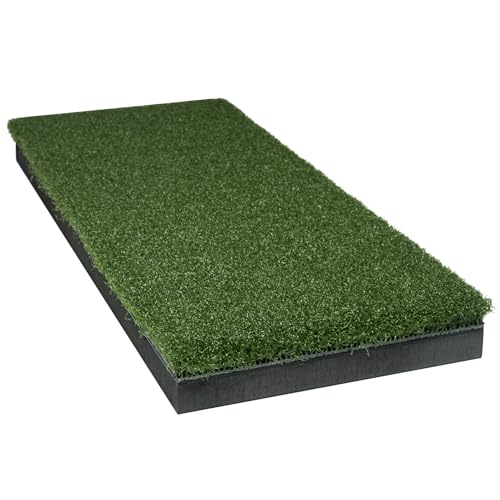
SIGPRO Softy Hitting Strip
Strengths
- Real tee capable
- Excellent joint protection
- Plush, realistic turf
Trade-offs
- Highest price
- Heavier than some
- Only fits SIGPRO mats
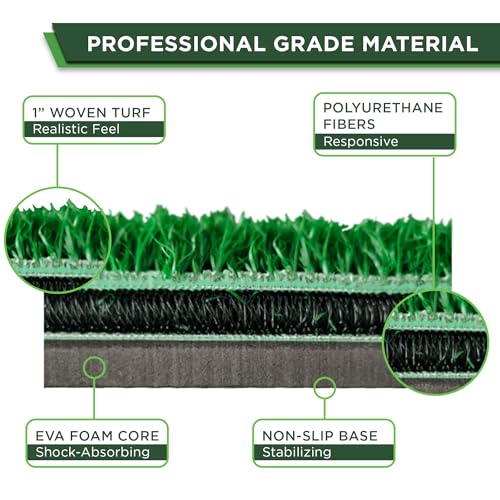
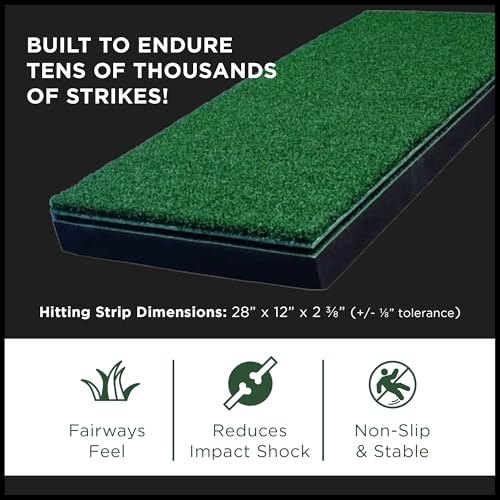
The SIGPRO Softy is, without question, the best all-around hitting strip for serious simulator users who want it all: real tee use, joint protection, and accurate feedback. The plush 1-inch Teeline turf feels incredibly close to real grass, and the thick foam base with compression slots absorbs impact beautifully, owners with recurring elbow or wrist pain consistently note how much easier it is on their body.
It’s also one of the few high-end strips that fully supports real tees, which is critical for driver work and launch monitor accuracy. While it’s the most expensive option here, its performance justifies the cost. Compared to the Preferred and 3D models, it strikes the ideal balance of softness, realism, and durability. For most dedicated golfers, this is the smarter buy.
Video review
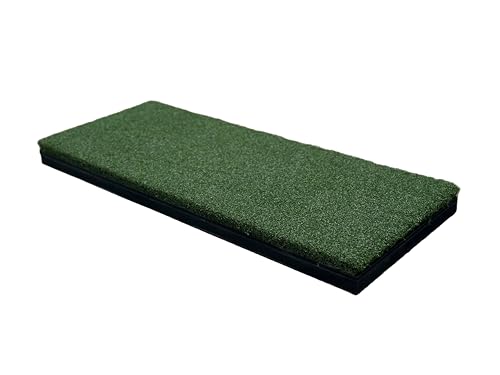
Beaver Tail 30x12in Hitting Strip
Strengths
- Realistic divot feel
- High-quality turf
- Fits most mats
Trade-offs
- No real tees
- Not as soft as plush models
- Limited size
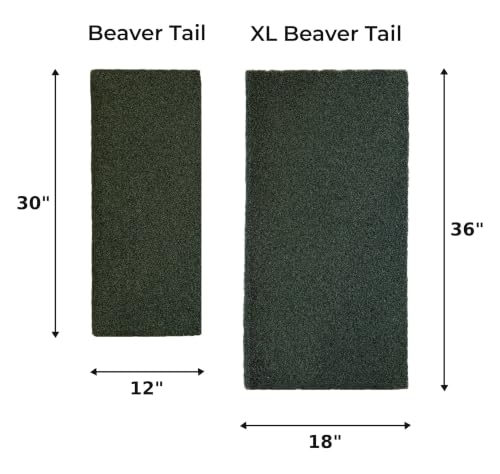
The standard Beaver Tail hits a sweet spot between realism and practicality. At 30″ x 12″, it fits most simulator cutouts, and owners love how the specialty foam compresses like real turf, giving that divot-like feel on well-struck shots. The turf is high quality, dense and grass-like, and it delivers clean feedback without beating up your body. It’s not the softest option out there, but it balances realism and joint protection better than most in its class.
Unlike some premium strips, it doesn’t support real tees, but that’s a common trade-off for enhanced foam layers. Compared to the XL version, this one is more space-efficient and easier to integrate into existing setups. For golfers who want a realistic, DIY-friendly surface without overspending, this is a strong contender. I’d pick it over generic mats any day.
Video review
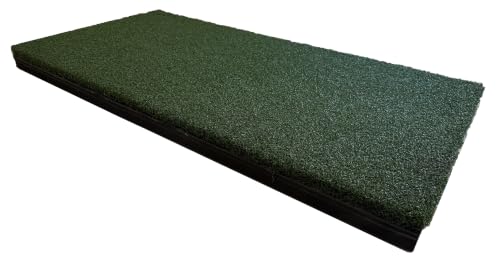
XL Beaver Tail Hitting Strip
Strengths
- Superior joint protection
- Large hitting area
- Realistic turf feel
Trade-offs
- No real tee capability
- Higher price point
- Not ideal for compact setups
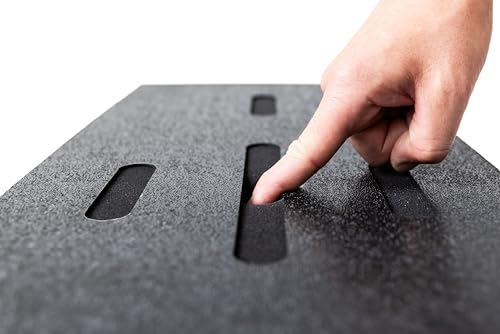
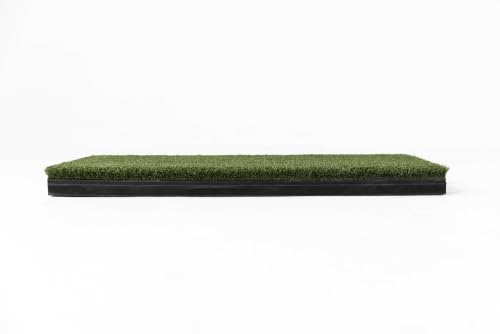
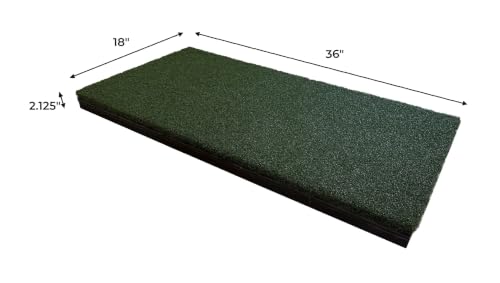
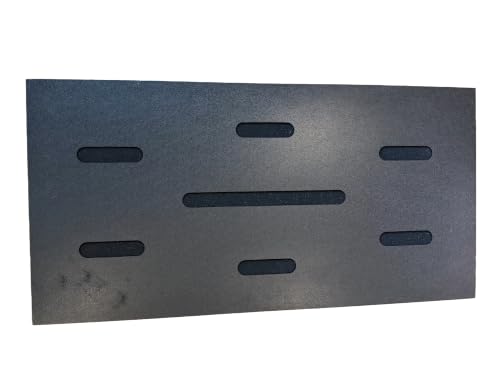
If joint protection is your top priority and you’re willing to invest in long-term comfort, the XL Beaver Tail is one of the most compelling options on the market. The thick specialty foam layer is engineered to compress like real turf, absorbing shock in a way that closely mimics taking a divot, owners with elbow or wrist sensitivities consistently praise how much better it feels than standard mats. The larger 36″ x 18″ size also gives you more room to spread out, which matters in DIY simulator builds where stance and alignment are critical.
It’s not the cheapest, but its build quality justifies the cost. The turf feels lush and realistic, and unlike some softer mats, it doesn’t deaden feedback too much. However, it doesn’t support real tees, which could be a dealbreaker for players who want that authentic driver setup. Compared to the standard Beaver Tail, this is the better pick if you have the space and want a more forgiving, full-swing-friendly surface.
Product photos
SIGPRO Preferred Hitting Strip
Strengths
- Real tee capable
- Joint-friendly design
- Cost-effective replacement
Trade-offs
- Firmer feel than premium strips
- Compatible only with SIGPRO mats
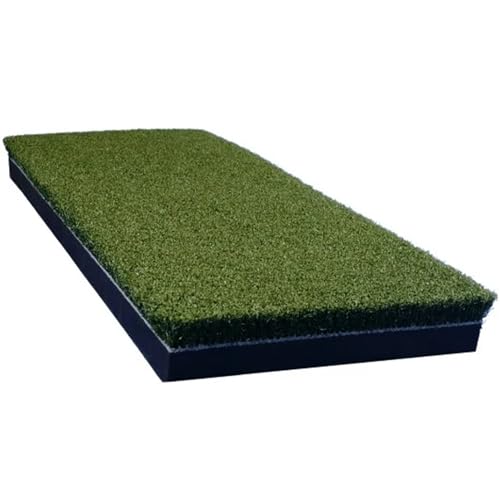
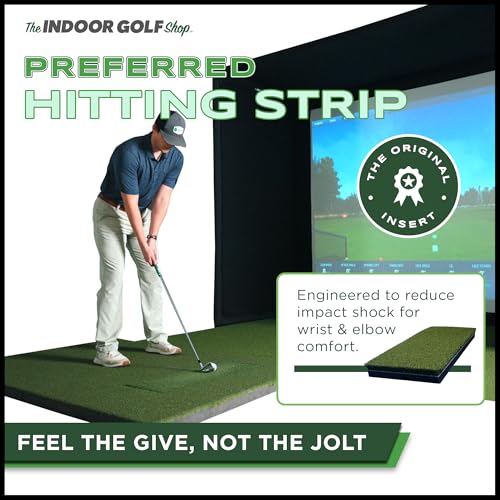
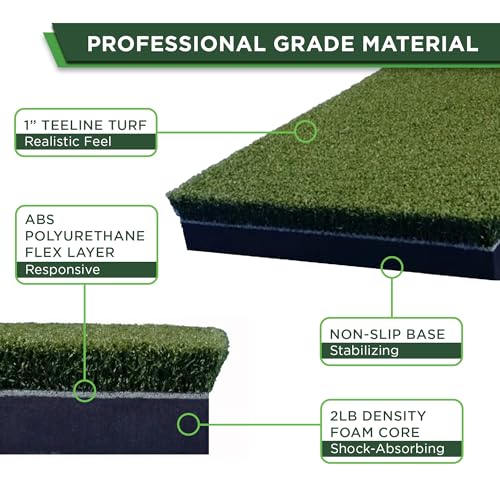
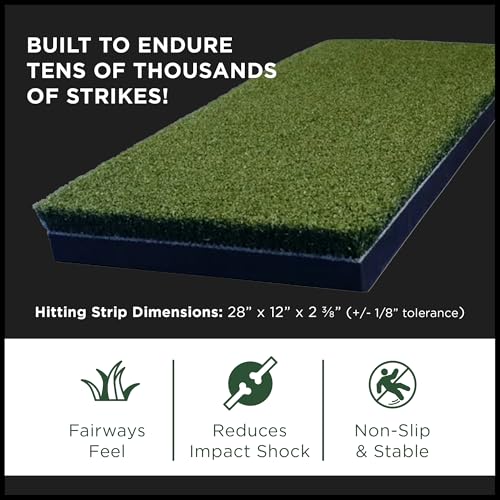
For golfers who want a no-frills, reliable hitting surface without breaking the bank, the SIGPRO Preferred Hitting Strip is a smart starting point. On paper, it delivers what it promises: a realistic fairway feel with Teeline turf that mimics grass and supports real tees, which is a big win for players serious about launch monitor accuracy. Owners consistently report clean ball launches and solid feedback on mishits, all while protecting joints thanks to the foam base and compression slots.
Compared to budget options, this strip stands out for its durability and compatibility with the SIGPRO Softy Mat system, making it a practical refresh for worn zones. While it doesn’t have the ultra-plush cushioning of higher-end models, it strikes a balance between firmness and forgiveness that works well for most swingers. I’d pick this over generic mats when you need dependable performance without overspending.
Product photos

Country Club Elite 10x30in Strip
Strengths
- Takes real tees
- Made in USA
- Good warranty
Trade-offs
- Firmer turf feel
- Less joint protection
- Turf wears faster than premium models
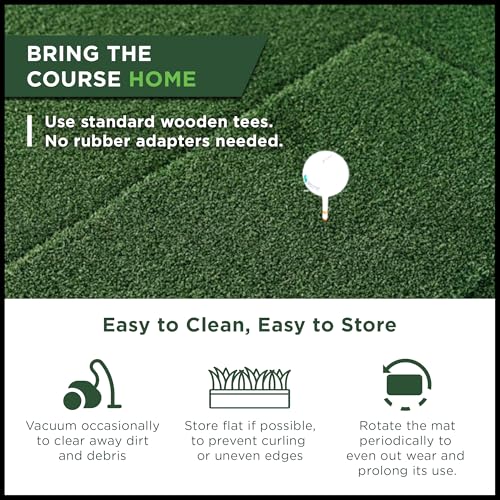
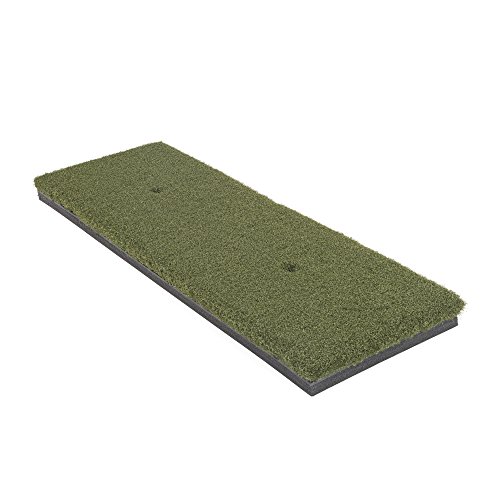
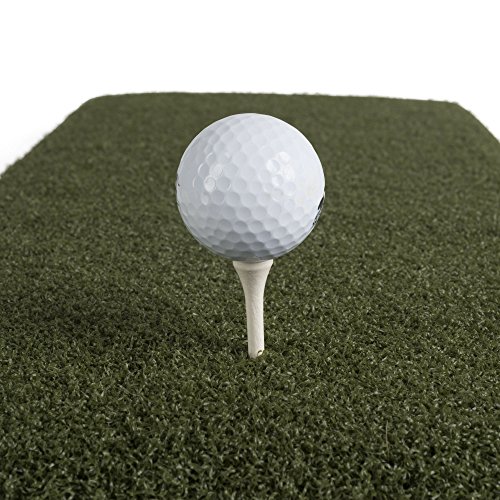
If you’re on a budget but still want to use real tees, the Country Club Elite is one of the few affordable options that delivers. The 10″x30″ format gives you room for ball placement and stance adjustments, and owners appreciate how the dense turf fibers allow the club to move through the surface naturally, helping identify fat shots. The included adjustable plastic tee is a nice bonus for indoor use.
It’s not as plush or joint-friendly as pricier models, and the turf isn’t quite as lush as Teeline or premium nylon, but for the price, it holds up well. Made in the USA and backed by a three-year warranty, it’s a solid value. Compared to other budget mats, this one stands out for tee versatility and build quality. I’d recommend it for casual players who want authenticity without spending hundreds.
Product photos


River Hill 30x12in Hitting Strip
Strengths
- Excellent shock absorption
- Soft foam base
- Fits most mats
Trade-offs
- No real tees allowed
- Turf less realistic than top models
- Minimal feedback on mishits
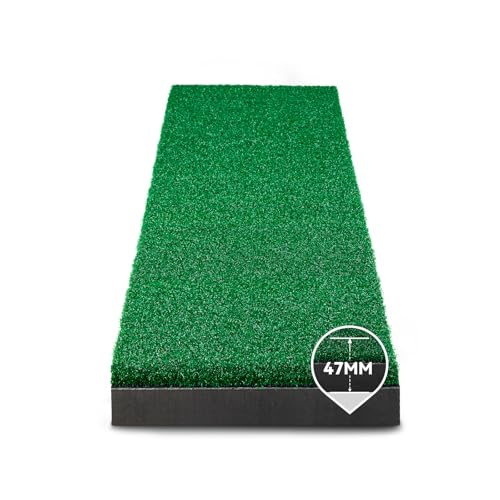
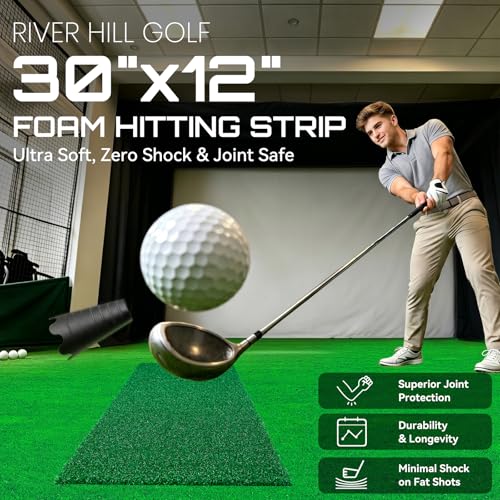
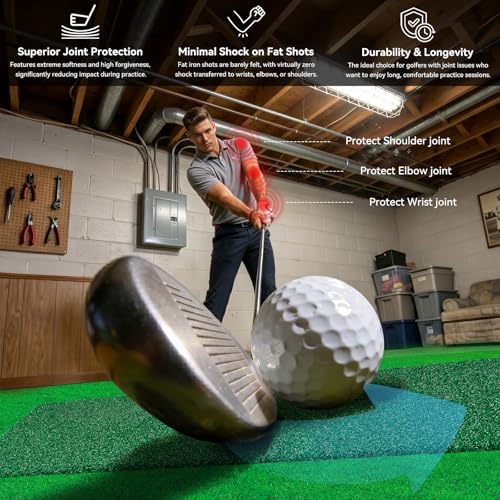
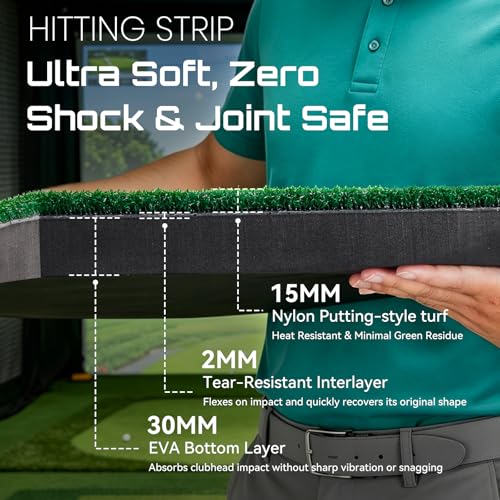
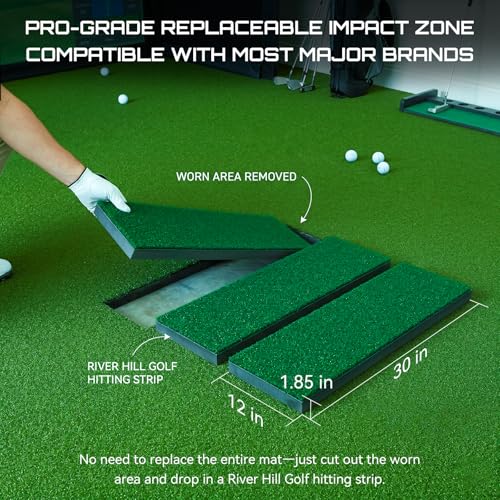
This River Hill hitting strip is built for one thing: maximum joint protection. With a 30mm high-density EVA foam base, it’s one of the softest inserts available, and owner feedback confirms it takes the sting out of fat shots better than most competitors. That makes it a standout choice for golfers with wrist, elbow, or shoulder pain who still want to practice regularly. The 15mm nylon turf provides decent feedback without being harsh, and it cuts easily to fit most major mat brands.
The trade-off? You can’t use real tees, only flexible plastic or rubber ones. That rules it out for players who want that authentic tee-up feel with their driver. But if comfort is essential and you’re mostly working on irons and fairway shots, this is a smart, cost-effective upgrade. Compared to the SIGPRO Softy, it’s less premium in turf quality but wins on pure cushioning.
Product photos

SIGPRO 3D Hitting Strip
Strengths
- Exceptional durability
- Great for commercial use
- Joint-friendly foam
Trade-offs
- No real tee capability
- Higher price
- Less soft than plush models
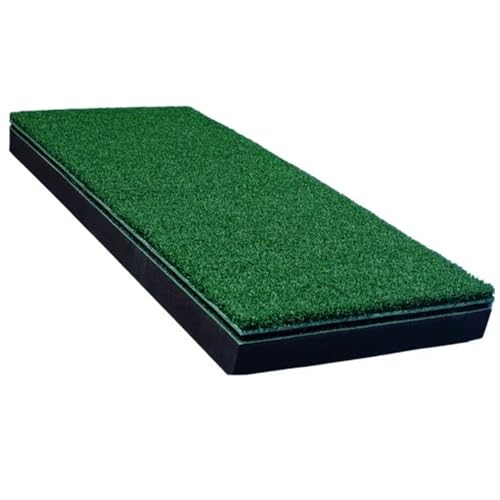
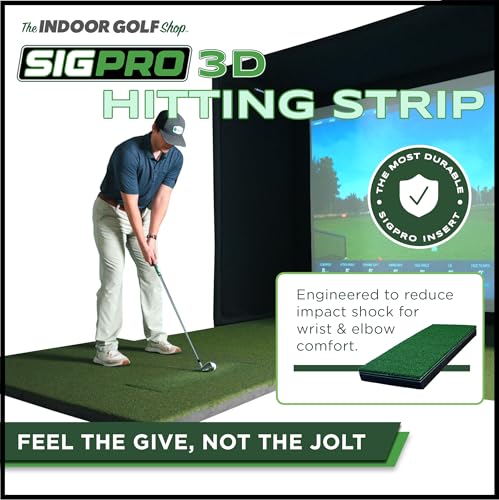
When durability is the main concern, especially in shared or commercial spaces, the SIGPRO 3D Hitting Strip is hard to beat. Designed for heavy use, its dense foam base and mid-foam layer combine stability with enough forgiveness to keep joints happy over hundreds of swings. Owners using this in pro shops and teaching studios report it holds up far longer than standard inserts, which is exactly what you’d expect from a mat developed for commercial environments.
The bright green woven turf looks sharp and resists wear, though it doesn’t support real tees, plastic or hybrid tees like the TeeClaw are required. That’s a compromise, but one that helps preserve the surface. Compared to the Preferred and Softy models, this is the one I’d choose for a high-traffic simulator bay where longevity trumps tee flexibility. It’s not the softest, but it’s built to last.
Product photos
Commercial Pro 1’X2′ Hitting Strip
Strengths
- Very affordable
- Durable for its class
- Indoor and outdoor use
Trade-offs
- Stiff turf feel
- Limited joint protection
- Short lifespan under heavy use
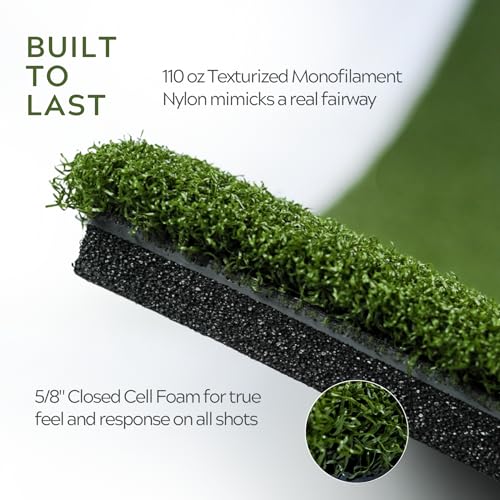
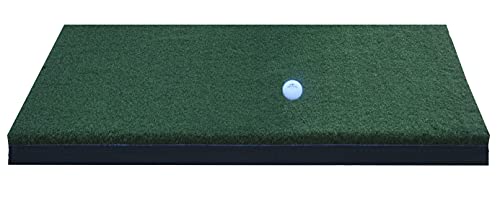
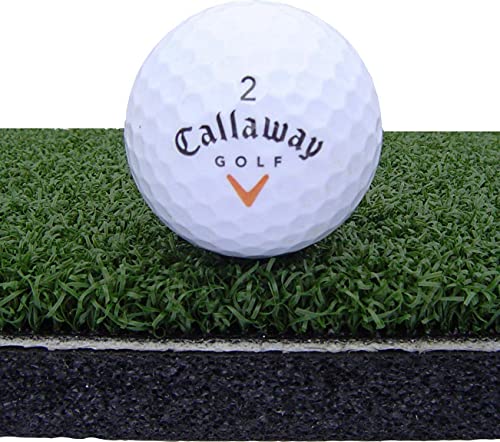
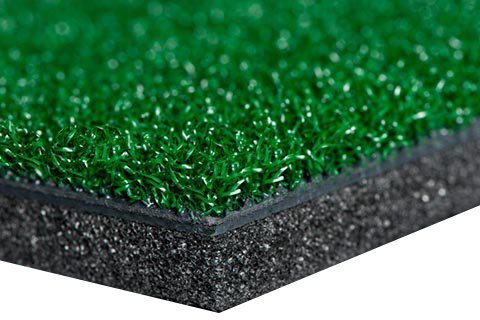
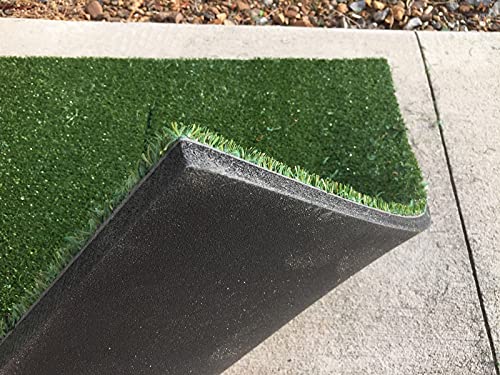
At this price, the Commercial Pro 1’x2′ strip is about as basic as it gets, but sometimes, that’s enough. For beginners or casual users setting up a first-time simulator in the garage, this little mat gets the job done. The 5/8″ foam backing helps reduce club shock, and the woven nylon turf holds up reasonably well to irons and drivers, according to owners. It’s lightweight and portable, which makes it easy to toss down and pick up.
But let’s be honest: it’s not going to mimic a fairway. The turf is short and stiff, feedback is limited, and serious simulator users will notice inconsistencies in ball flight data over time. Still, for the price, it’s a functional starter option. I’d recommend it only as a temporary solution or for light chipping and iron work, not for full-swing power sessions.
Product photos

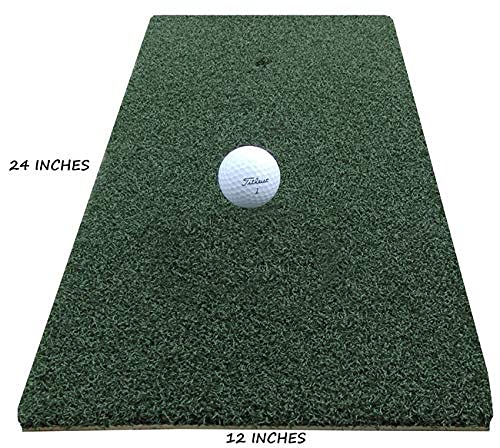
How We Chose These hitting strips for golf simulator
Rather than a hands-on lab test, my research focused on a detailed comparison of published specifications and features across numerous hitting strips. I weighed owner reviews from multiple retailers alongside expert opinions found in golf technology publications and forums. Applying my experience building and evaluating home golf setups, I ranked these strips against criteria important to serious players – feel, durability, and compatibility with launch monitor technology.
For golf simulator hitting strips, the most important factors are joint protection and realistic turf feel. A good strip needs to absorb impact to protect wrists and elbows, especially with frequent use. Equally vital is the turf itself; it must provide accurate feedback on strike quality without feeling artificial. Durability also matters, as replacing these strips can be a recurring expense, so a longer-lasting product offers better value.
Published specs reliably indicate the dimensions and materials used in construction (foam density, turf type, etc.). However, I placed greater emphasis on owner feedback regarding the “feel” of the strip – how well it simulates hitting real turf and how effectively it reduces vibration. Reputation and brand trust played a role too, especially when considering options from established companies offering a wider range of simulator accessories and related products. You can find more information on overall mat quality in our guide to the best hitting mats.
Choosing The Right hitting strips for golf simulator
Selecting the right hitting strip is crucial for a satisfying and accurate golf simulator experience.
A quality hitting strip should prioritize realistic turf feel, consistent performance under repeated use, and, importantly, joint protection. Look for strips with a durable turf face, a forgiving foam base, and construction details designed to absorb impact and minimize stress on the golfer’s body. Compatibility with launch monitors and tee types is also a key consideration.
Turf Realism & Feel
The quality of the turf is where a hitting strip truly separates itself from the pack. Don’t assume all “artificial turf” is created equal. Cheaper options often feel harsh and can alter your swing, while premium materials like the woven nylon found in the Commercial Pro or the Teeline turf used by SIGPRO offer a much more natural feel underfoot. Consider the type of feedback you prefer; some golfers like a firmer feel to simulate a crisp strike, while others prioritize a softer surface that mimics hitting off a well-maintained fairway.
Joint Protection & Impact Absorption
As someone who’s logged countless hours on the course and practicing, I can tell you that protecting your body is paramount. A hard hitting surface transmits shock directly to your joints, leading to fatigue and potential injury. Look for hitting strips with substantial foam backing, the River Hill strip’s 30mm EVA foam is a standout example, and features like compression slots (SIGPRO strips) that help dissipate impact. Here’s what to consider when assessing joint protection:
- A thicker foam base is good (generally 1 inch or more).
- Compression technology is better (allows for give during impact).
- A combination of foam density and compression slots is best, offering both cushioning and realistic feel, minimizing wear and tear on your body over extended practice sessions.
A sore elbow or wrist won’t improve your swing. Prioritize a hitting strip that absorbs shock and protects your joints, even if it means sacrificing a little bit of “crispness” in the impact feel.
Value, Size, and Setup Compatibility
Hitting strips range dramatically in price, and you don’t necessarily need to spend a fortune to get a good one. The Country Club Elite strip offers a budget-friendly option with real tee compatibility, while the XL Beaver Tail provides a larger hitting area for those who prefer more room. When choosing, think about how the strip will integrate with your existing setup. Are you replacing a worn section of an existing mat, or building a complete simulator bay? If you’re looking to upgrade your entire setup, you might also want to consider the top indoor mats to complement your new hitting strip. Don’t forget to check compatibility with your launch monitor and preferred tee type. If you’re researching golf hitting strips for the first time, it’s easy to get overwhelmed, but a clear understanding of your needs will guide you to the right choice.
Hitting Strips for Golf Simulator Compared
Here’s a comparison of key specifications for popular golf simulator hitting strips.
| Product Name | Dimensions (in) | Turf Type | Foam Thickness (in) | Real Tee Compatible | Joint Protection |
|---|---|---|---|---|---|
| SIGPRO Softy Hitting Strip | 28x12x2 5/8 | Teeline | N/A | Yes | Yes |
| Beaver Tail 30x12in Hitting Strip | 30x12x2.125 | High Quality | Thick | N/A | Yes |
| XL Beaver Tail Hitting Strip | 36×18 | High Quality | Thick | N/A | Yes |
| SIGPRO Preferred Hitting Strip | 28x12x2 3/8 | Teeline | N/A | Yes | Yes |
| Country Club Elite 10x30in Strip | 10×30 | Dense | N/A | Yes | N/A |
| River Hill 30x12in Hitting Strip | 30×12 | 15mm Nylon | 30mm | No | Yes |
| SIGPRO 3D Hitting Strip | N/A | Woven | N/A | Simulator Tees | Yes |
| Commercial Pro 1’X2′ Hitting Strip | 1×2 | Woven Nylon | 5/8 | N/A | N/A |
Frequently Asked Questions
What’s the lifespan of a typical golf simulator hitting strip?
Generally, a hitting strip will last between one and three years, depending on usage frequency and the quality of materials. Higher-end strips with durable turf and dense foam backing, like the River Hill, often exceed that range.
Can I replace just the hitting strip on my existing golf mat?
Yes, most hitting strips are designed to be replaceable sections of a larger mat. Ensure the new strip’s dimensions closely match the original for a flush fit, and consider using a strong adhesive for a secure bond.
Do hitting strips affect launch monitor accuracy?
A quality hitting strip shouldn’t significantly alter launch monitor readings. However, a strip with overly hard or soft turf can sometimes produce inconsistent data; strips utilizing Teeline turf, as seen in SIGPRO models, are known for reliable performance.
Are there hitting strips compatible with real golf tees?
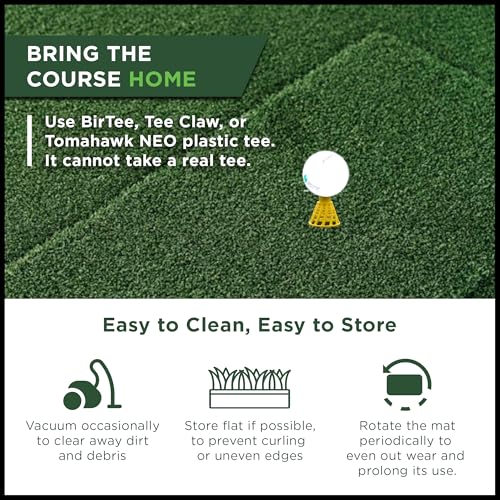
Several hitting strips, including the SIGPRO Softy and Preferred models, are specifically designed with real tee compatibility. If you prefer using traditional tees, this is a key feature to look for when selecting a strip.
Beyond joint protection, what other simulator accessories should I consider?
Alongside a quality hitting strip, investing in best home simulator mats and appropriate impact screens is crucial for a complete and safe simulator setup.
The Bottom Line
Choosing a hitting strip often comes down to balancing feel with long-term joint health. While a truly crisp strike is appealing, the SIGPRO Softy Hitting Strip stands out as the strongest overall choice, offering a superb blend of realistic turf, excellent joint protection, and compatibility with real tees – features that matter most for consistent practice.
For those on a tighter budget, the Country Club Elite 10x30in Strip delivers surprising value, especially if real tee compatibility is a must-have. And if you prioritize a larger hitting area and don’t mind sacrificing tee options, the XL Beaver Tail provides ample space for unrestricted swings. Don’t overlook the importance of pairing your new strip with quality golf simulator mats for a truly improved setup.
Ultimately, the perfect hitting strip isn’t about chasing the highest specs; it’s about finding what feels best for your swing and protects your body during extended use. Consistent impact, realistic feel, and a surface that minimizes stress on your joints will always trump any single feature. Investing in accurate launch monitors is a smart move too, as they’ll help you make the most of your practice time.
