
9 Best Golf Hitting Strips of 2026
This post contains affiliate links. As an Amazon Associate, we earn from qualifying purchases.
This post contains affiliate links. As an Amazon Associate, we earn from qualifying purchases.
The SIGPRO Softy Hitting Strip stands out as the best overall choice, combining superior joint protection and realistic turf feel, while the River Hill Replaceable Hitting Strip is a smart budget-friendly pick that doesn’t skimp on durability or performance. For those prioritizing long-term value and easy maintenance, the Country Club Elite strips offer excellent realism and consistent feedback.
As someone who’s spent years traveling the world to play top-tier courses, I know how important quality practice is, and how damaging poor indoor setups can be. Too many golfers sacrifice their joints on cheap mats that don’t absorb impact or give false feedback. That’s why I focused this guide on strips that deliver real-world performance without wrecking your body.
This guide breaks down the top options based on specs, owner feedback, and what actually matters in daily use: turf realism, shock absorption, and long-term value. I looked at how these strips hold up over time, how they feel under different clubs, and how easily they integrate into home or simulator setups.
Top 9 Golf Hitting Strips in the Market
The Best Golf Hitting Strips, Reviewed
SIGPRO Softy Hitting Strip
Strengths
- Exceptional joint protection
- Realistic grass feel
- Real tee capable
Trade-offs
- Highest price point
- Requires careful installation
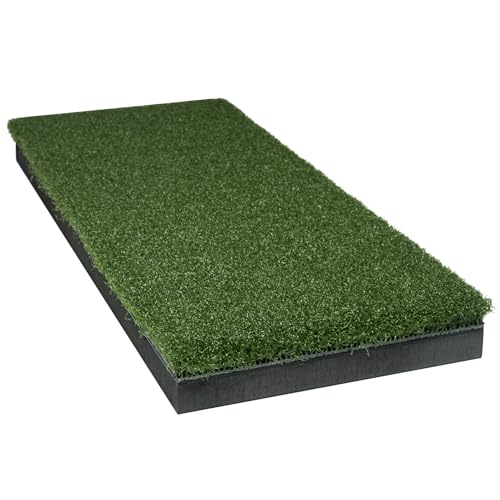
This is the gold standard. The Softy strip combines plush Teeline turf with a super-soft foam base and compression slots that make every swing feel natural and forgiving. It’s engineered for both feel and longevity, and owners consistently rate it among the most joint-friendly options that still deliver accurate feedback.
You can use real tees, it integrates smoothly with launch monitors, and the replaceable design means you can refresh your setup without replacing the whole mat. It’s expensive, but for serious golfers who practice daily, it’s the smarter buy long-term. My recommendation for those who want the best of both comfort and realism.
Video review
XL Beaver Tail Hitting Strip
Strengths
- Excellent joint protection
- Large hitting area
- Feels like real grass
Trade-offs
- Expensive
- Heavy for frequent moving
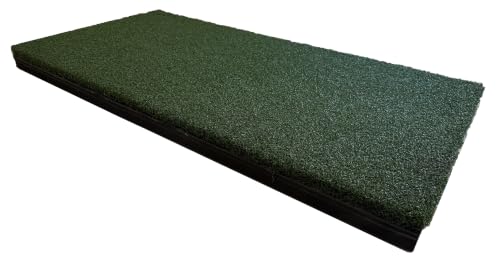
At this size and price, the XL Beaver Tail stands out for its impressive joint protection and realistic compression feel. The thick specialty foam layer is the key here, it mimics divot takeout and absorbs shock far better than rigid mats, which reviewers consistently praise for reducing elbow and shoulder strain. For golfers who practice daily or have existing joint concerns, this is a meaningful upgrade.
The 36″ x 18″ footprint gives you room to work, especially if you’re building a custom simulator bay. The turf feels lush and true to fairway conditions, and the DIY-friendly design doesn’t sacrifice performance. It’s not the cheapest, but for long-term use, it’s built to last.
Video review
Beaver Tail Hitting Strip
Strengths
- Realistic divot simulation
- Joint-friendly foam
- Fits standard cutouts
Trade-offs
- Premium price
- No real tee included
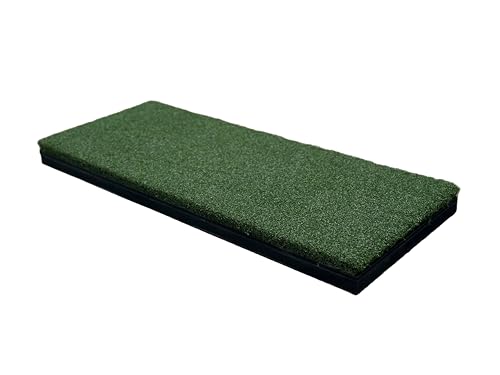
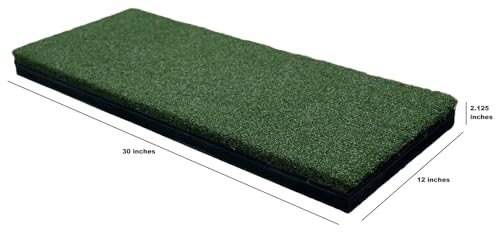
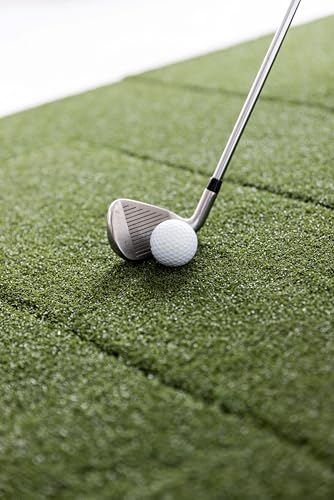
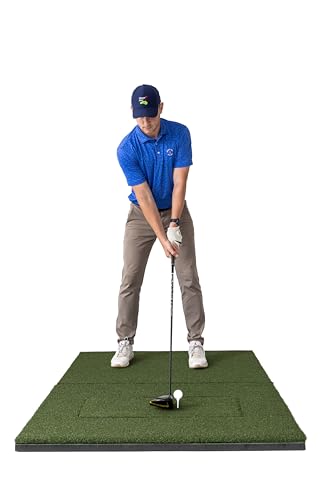
This is the standard Beaver Tail size, and it’s a favorite among DIY simulator builders for good reason. The specialty foam layer compresses like real turf, giving you that divot-like feedback without beating up your body. The 30×12 inch size fits most cutouts, and the high-quality turf feels consistent across strikes.
Owners say it’s one of the most realistic-feeling strips under $200. It’s not as large as the XL version, but for most home setups, it’s more than enough. I’d pick this over the Country Club Elite if joint protection is a priority.
Product photos
River Hill Replaceable Hitting Strip
Strengths
- Thickest foam layer
- Realistic turf
- Cut-to-fit design
Trade-offs
- Turf quality slightly below premium brands
- Installation requires trimming
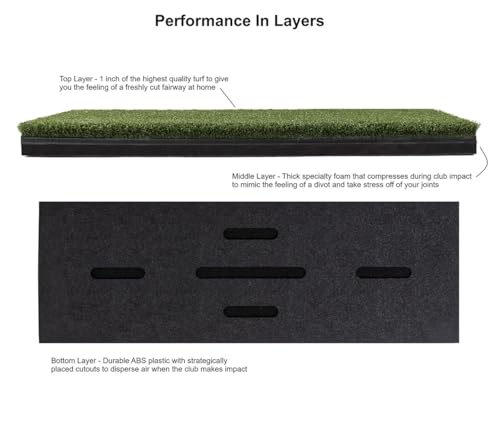
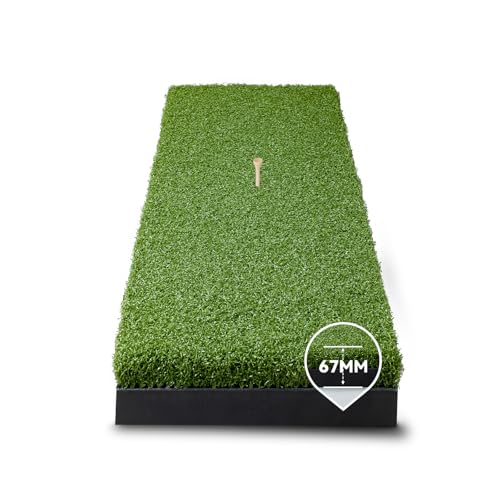
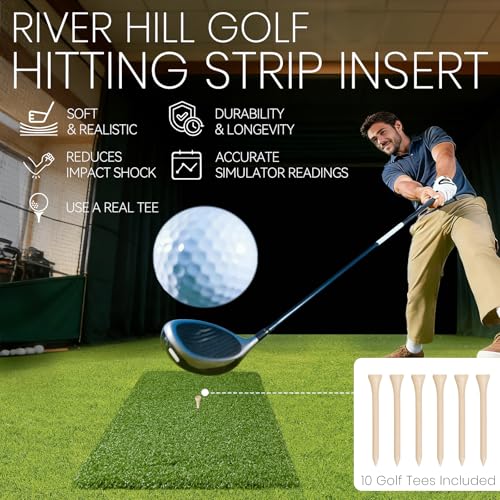
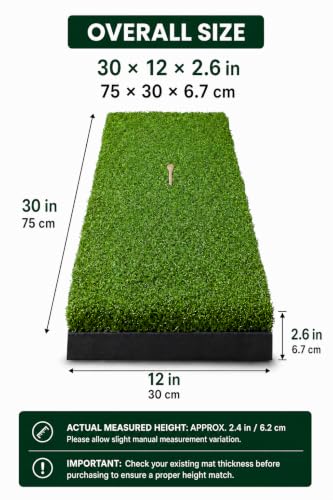
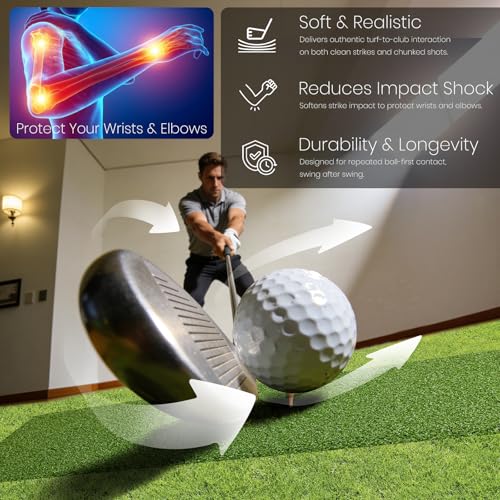
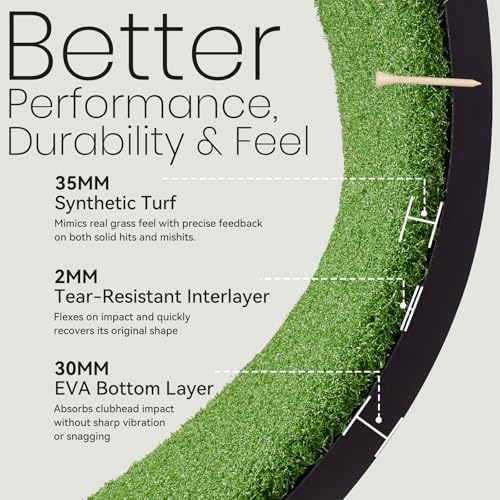
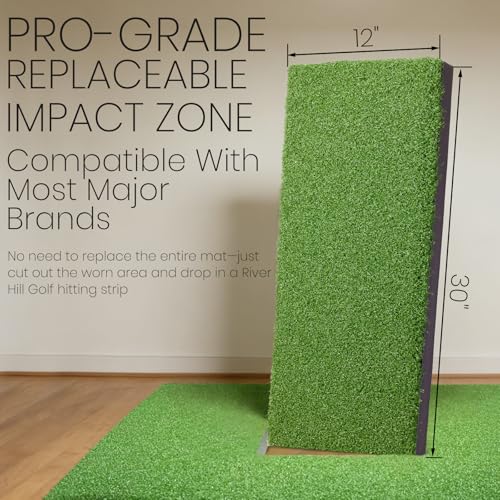
This River Hill hitting strip stands out for its 67mm thickness, the thickest here, which translates to serious shock absorption. On paper, that’s a win for joint protection, and owners confirm it feels forgiving on mishits while still providing clear feedback. The turf mimics fairway conditions well, and the ability to use real tees adds to its realism.
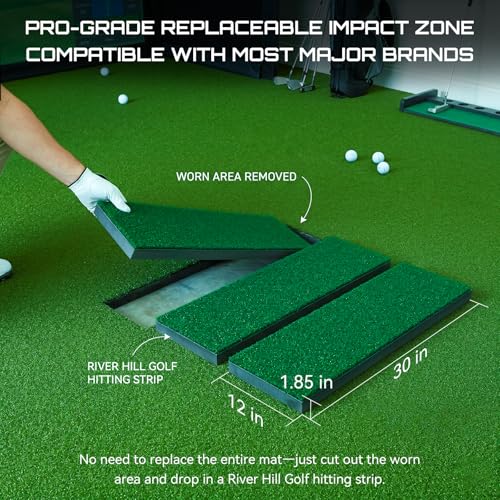
It’s designed as a cut-to-fit insert, so it’s ideal for refreshing older mats instead of replacing them. That makes it a high-value play, especially for long-term simulator owners. While the brand isn’t as well-known as SIGPRO or Beaver Tail, the specs and user feedback suggest it punches above its price point.
Product photos
SIGPRO Preferred Hitting Strip
Strengths
- Affordable
- Real tee capable
- Good simulator compatibility
Trade-offs
- Firmer feel than top models
- Turf less plush than premium options
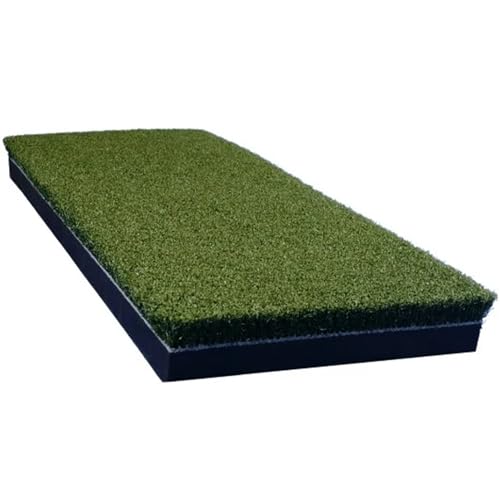
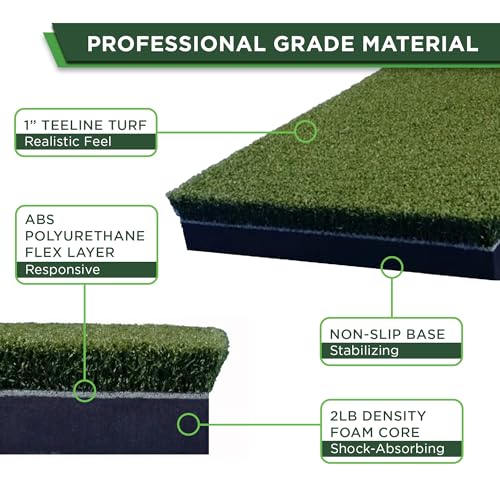
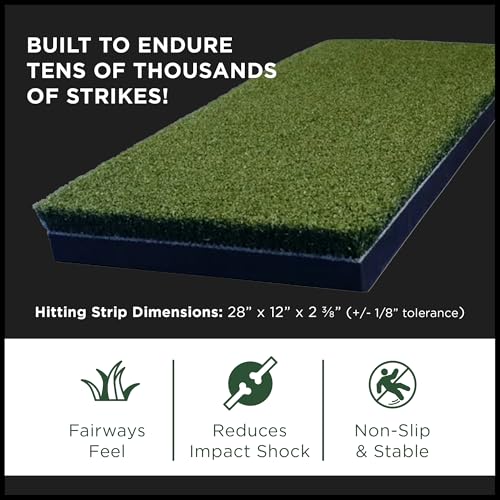
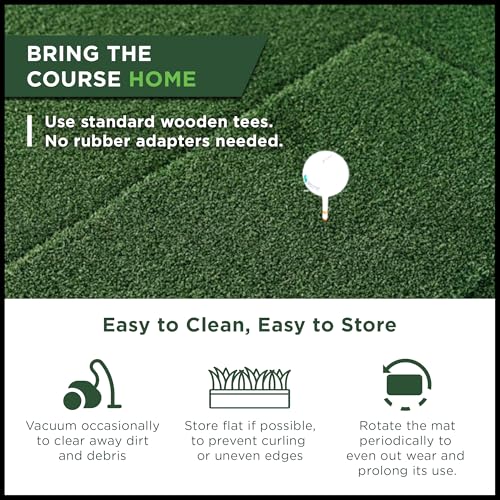
If you’re looking for a budget-friendly entry into premium-feel hitting strips, this SIGPRO model makes a strong case. It uses the same Teeline turf found in higher-end models, giving you a realistic grass-like experience with the benefit of real tee use. The 2 3/8″ thickness and foam base offer decent joint protection, though it’s firmer than the Softy version.
Owners appreciate that it’s replaceable and fits standard mat cutouts, making it a practical refresh for worn areas. It’s not the softest option, but for the price, it delivers surprising accuracy and feedback, especially important if you’re syncing with a launch monitor. I’d pick this over basic nylon mats any day.
Product photos

River Hill Joint Protection Strip
Strengths
- Excellent joint protection
- Soft, forgiving feel
- Minimal green residue
Trade-offs
- No real tees allowed
- Less realistic driver practice
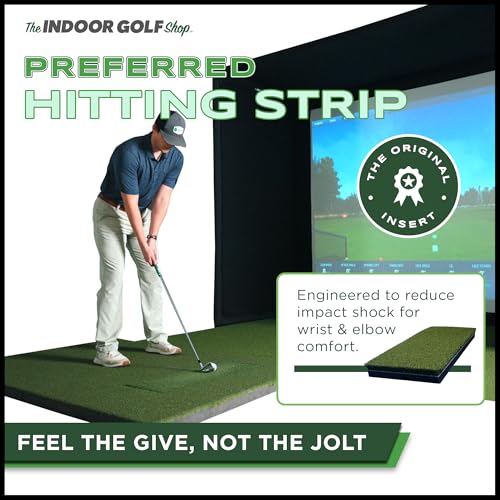
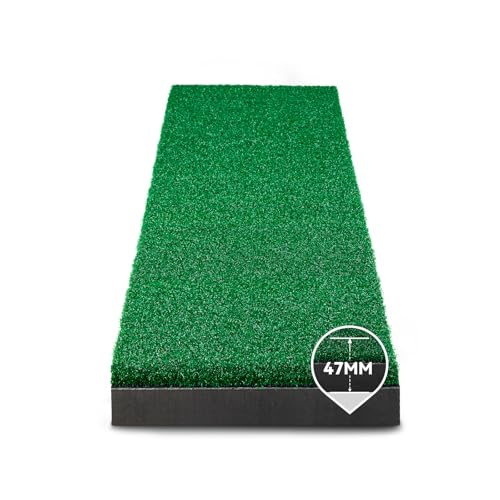
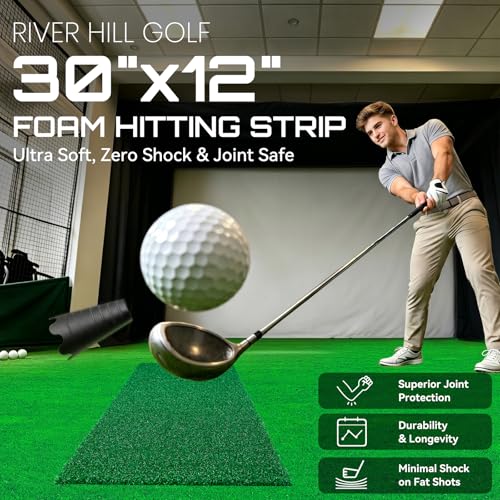
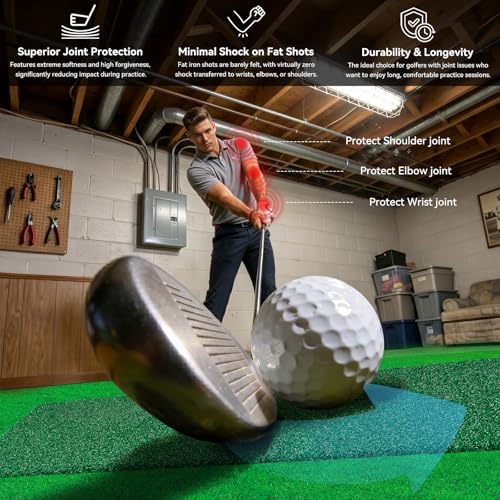
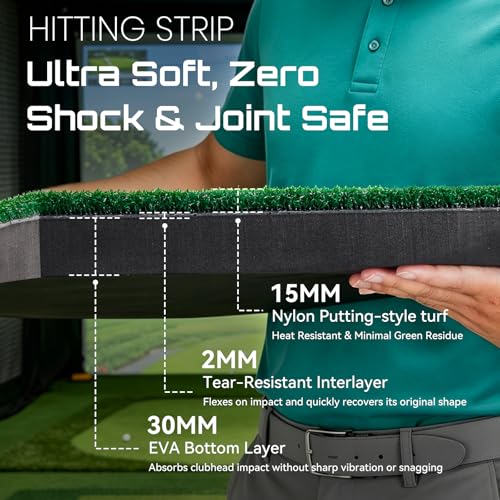
This River Hill model is tailored for golfers with joint issues who prioritize comfort over tee versatility. The 30mm EVA foam base is exceptionally soft, and owners consistently report less wrist and elbow pain after extended sessions. The nylon turf is durable and low-residue, which helps keep clubs clean.
But there’s a trade-off: it doesn’t support real tees. That’s a dealbreaker for many, especially those practicing driver launches. If you’re okay with plastic tees and want a forgiving surface for iron work, this is a smart pick. Otherwise, look elsewhere.
Product photos

Country Club Elite 10×30-Inch
Strengths
- Realistic turf feedback
- Accepts real tees
- Made in USA
Trade-offs
- Not ideal for sensitive joints
- Narrow width limits stance options
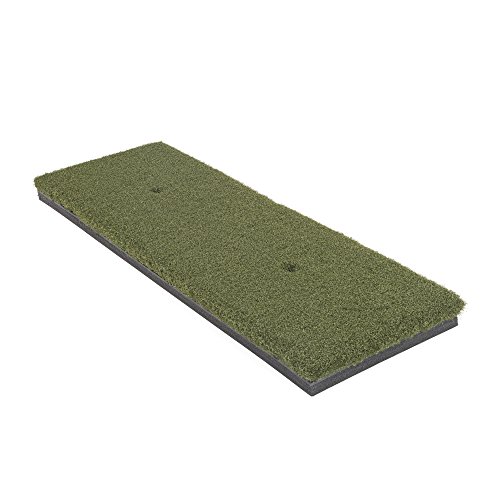
This hitting strip delivers a solid, realistic fairway feel thanks to its dense turf fibers and quality construction. On paper, it strikes a good balance between feedback and durability, letting you sense fat strikes without the jarring bounce of cheaper mats. Owners consistently report it integrates well into simulator setups or alongside stance mats, making it a smart upgrade for those refining their home practice area.
The ability to use real tees is a big plus, especially for golfers focused on driver work. It’s also made in the USA with a three-year warranty, which speaks to its reliability. While it’s not the softest option for joint protection, it holds up well under regular use.
Product photos


Country Club Elite 10×24-Inch

Strengths
- Space-saving design
- Realistic turf
- Made in USA
Trade-offs
- Limited length for ball placement
- Not ideal for wide stances
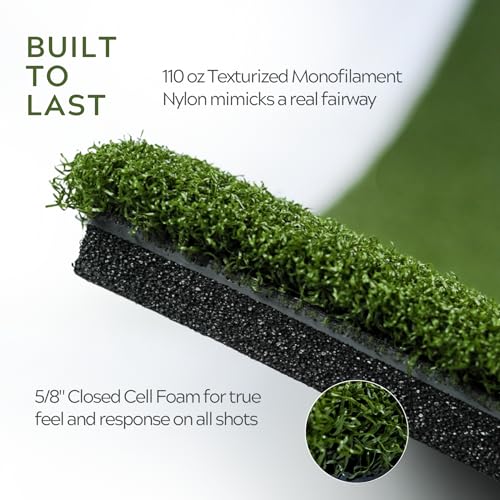
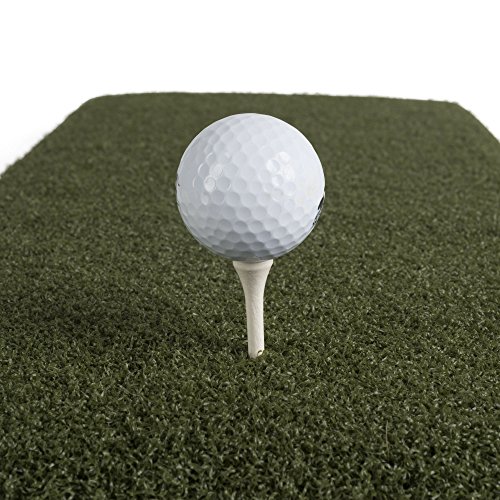
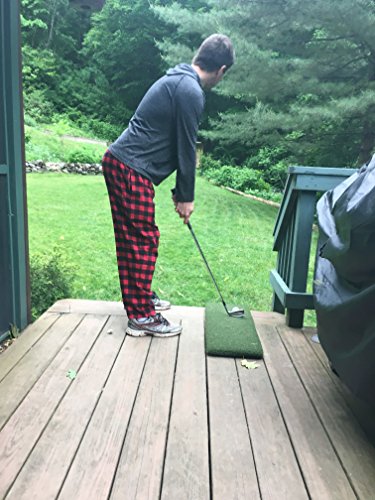
This compact version of the Country Club Elite line is ideal for tight spaces. At 10×24 inches, it’s shorter than most, but still delivers the same dense turf and realistic feedback. It’s a solid choice for smaller simulator enclosures or portable setups where space is limited.
Like its bigger sibling, it accepts real tees and is made in the USA with a three-year warranty. Owners say it holds up well, though the smaller footprint means less room for ball placement. If you’re tight on space, it’s a reliable pick, but don’t expect to take big divots.
Product photos

Commercial Pro 1’X2′ Strip
Strengths
- Low cost
- Durable construction
- Indoor/outdoor use
Trade-offs
- Too small for full swings
- No real tee capability
- Hard impact on joints
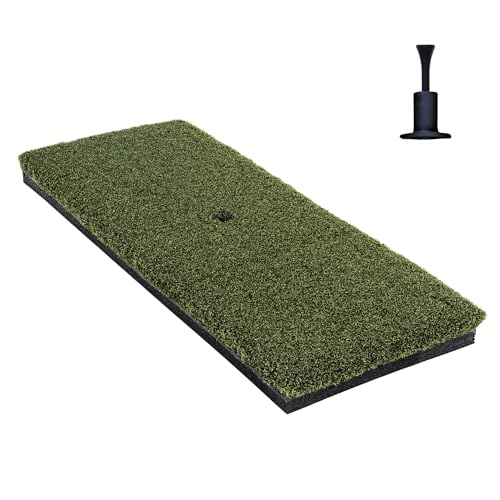
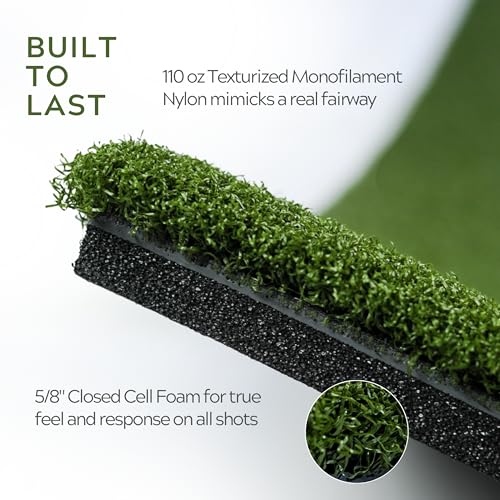
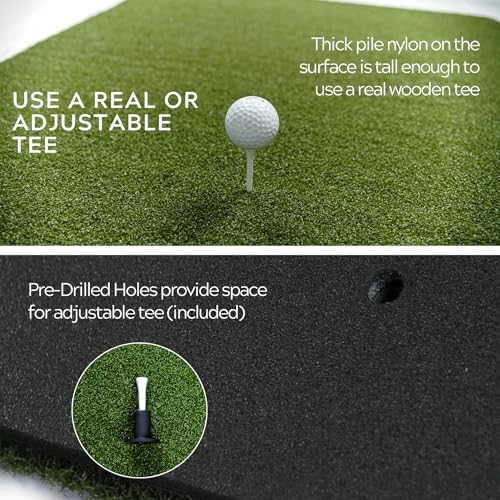
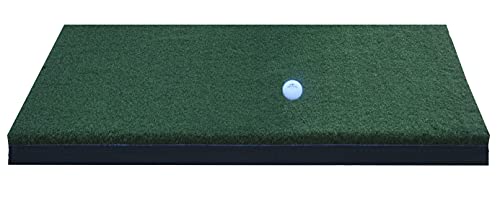
This is the bare-bones option, small, thin, and built for basic use. The 1/2″ nylon turf and 5/8″ foam backing keep it stable and durable, and it’s weather-resistant for outdoor use. But make no mistake: this isn’t for serious simulator players or anyone focused on realistic feedback.
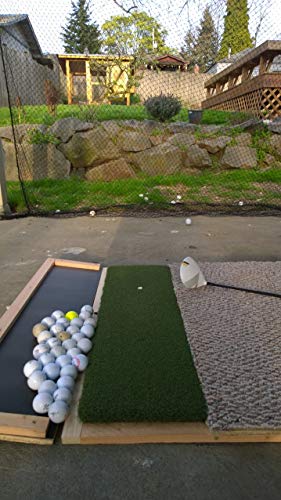
It’s fine for occasional chip or iron practice, but the size limits full swings, and the turf doesn’t allow real tees. Owners say it’s great as a travel mat or for kids, but it won’t stand up to daily driver use. At this price, it’s a functional starter, but don’t expect premium feel.
Product photos

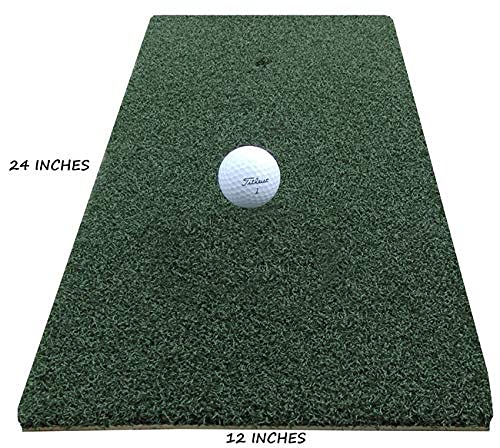
How We Picked These golf hitting strips
Rather than a hands-on lab test, my research focused on a detailed comparison of published specifications and features across numerous golf hitting strips. I weighed owner reviews from multiple retailers alongside expert opinions found in golf publications and simulator build communities. As someone who frequently designs golf travel itineraries, I understand the importance of realistic feel and durability when practicing – qualities I prioritized in this evaluation. My goal was to identify strips that deliver the most authentic practice experience.
For this category, joint protection and realistic turf feel were the most heavily weighted factors. A comfortable practice experience is crucial for consistent improvement, and a strip that doesn’t adequately absorb shock can quickly lead to discomfort and injury. Equally important is the ability to mimic a true fairway lie; this impacts accuracy and data reliability when used with launch monitors. Ultimately, the strips that best balanced these two aspects rose to the top.
Published specifications reliably indicate turf thickness, base foam density, and overall dimensions. However, owner feedback proved essential for assessing the feel of the strip under a variety of clubs and swing types. Reputation, particularly within the golf simulator community, also factored into my assessment; brands consistently praised for quality and durability received higher rankings. If you’re looking to complete your home setup, consider also reviewing our guide to the best home mats and practice nets.
What To Look For In golf hitting strips
Finding the right hitting strip can dramatically improve your indoor practice, and it’s not always about spending the most money.
A quality golf hitting strip balances realistic turf feel, joint protection, and durability. Key considerations include turf material (nylon is generally more durable than polypropylene), foam density (higher density absorbs more shock), and size relative to your swing and setup. Look for strips that accommodate real tees for authentic practice and offer easy replacement to extend the life of your overall setup.
Turf Realism & Feedback
The feel under your club is paramount. Don’t settle for a strip that feels like hitting into carpet. The goal is to simulate the compression you’d get from a real fairway lie. Premium options use dense nylon turf, like those found in the Country Club Elite strips, that allows your club to move through the surface, giving you feedback on divots and contact quality. Cheaper materials often provide a bouncy feel that masks mishits. Pay attention to whether the strip allows for the use of real tees; this is crucial for driver practice and replicating on-course conditions.
Joint Protection & Impact Absorption
As someone who’s spent years traveling to courses and swinging a club, I know how quickly impact shock can take its toll on your body. Look for strips with a substantial foam backing. The XL Beaver Tail Hitting Strip is specifically lauded for its thick layer of specialty foam, designed to compress on impact and minimize strain on your elbows and wrists. A strip that prioritizes joint protection isn’t just about comfort; it’s about preventing injuries and allowing you to practice longer.
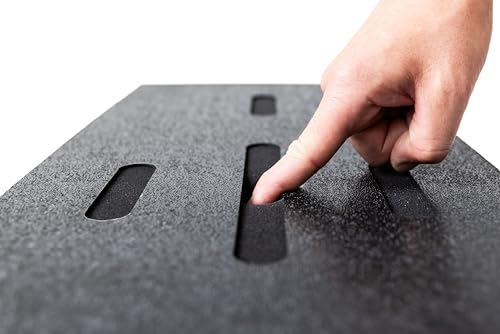
Here’s what to look for in impact absorption: * Foam Density: Lower density foam is softer, but offers less support. * Thickness: A thicker strip (over 1 inch) generally provides more shock absorption. * Compression Slots: Some strips (like the SIGPRO Softy) incorporate slots to further reduce impact and improve flex. This is especially helpful for golfers who tend to take a steep swing.
Always prioritize protecting your joints. A small investment in a shock-absorbing hitting strip can save you from costly medical bills down the line.
Value & Replaceability
One of the biggest advantages of a hitting strip over a full mat is its replaceability. When the surface wears down, you can swap it out without replacing the entire setup. The River Hill Replaceable Hitting Strip excels here, offering a cost-effective solution for maintaining consistent practice conditions. Consider the ease of replacement – can it be easily cut to fit your existing mat? If you’re building a golf simulator strips setup, this is especially important. Don’t overlook the long-term cost savings of choosing a strip that’s easy to maintain and replace. You can also find excellent quality indoor practice mats to complement your hitting strip.
Golf Hitting Strips Compared
Here’s a comparison of key specifications for popular golf hitting strips to help you choose the right one.
| Product Name | Dimensions (LxW) | Thickness | Turf Type | Joint Protection | Tee Use |
|---|---|---|---|---|---|
| SIGPRO Softy Hitting Strip | 28″ x 12″ | 2 5/8″ | Teeline | High | Yes |
| XL Beaver Tail Hitting Strip | 36″ x 18″ | N/A | N/A | High | N/A |
| Beaver Tail Hitting Strip | 30″ x 12″ | 2.125″ | N/A | Medium | N/A |
| River Hill Replaceable Strip | 30″ x 12″ | 2 5/8″ | Premium | Medium | Yes |
| SIGPRO Preferred Hitting Strip | 28″ x 12″ | 2 3/8″ | Teeline | Medium | Yes |
| River Hill Joint Prot. Strip | N/A | N/A | 15mm Nylon | Very High | No |
| Country Club Elite 10×30-Inch | 10″ x 30″ | N/A | Dense Fiber | N/A | Yes |
| Country Club Elite 10×24-Inch | 10″ x 24″ | N/A | Dense Fiber | N/A | Yes |
| Commercial Pro 1’X2′ Strip | 1′ x 2′ | 5/8″ | Woven Nylon | N/A | N/A |
Frequently Asked Questions
What’s the typical lifespan of a golf hitting strip?
Generally, a hitting strip will last between one and three years, depending on frequency of use and turf quality. Nylon turf options, like those found in simulator hitting mats, tend to be more durable than polypropylene and will extend the lifespan.
Can a hitting strip be used with all types of clubs?
Yes, most strips are designed to accommodate irons, wedges, and woods. However, frequent driver use, especially without a tee, can accelerate wear. Consider a strip specifically designed for tee use if you primarily practice with a driver.
Are hitting strips a good option if I have a limited practice space?
Absolutely. Hitting strips require significantly less space than a full golf mat, making them ideal for indoor practice in smaller areas like basements or garages. Their compact size doesn’t compromise the quality of your practice.
How important is the foam density in a hitting strip?
Foam density is very important; higher density foam (over 1 inch) provides better shock absorption, protecting your joints and allowing for longer practice sessions. Lower density foams can be comfortable initially, but offer less support over time.
Will a hitting strip accurately replicate a real fairway lie for data tracking?
A quality hitting strip with realistic turf, like Teeline, can provide a surprisingly accurate representation of a fairway lie. This is crucial if you’re using a launch monitor to track your swing data and improve your game with top-performing golf balls.
The Bottom Line
Choosing a golf hitting strip often comes down to balancing upfront cost with long-term comfort and realism. If you’re building a serious simulator setup or simply want the most authentic practice experience, the SIGPRO Softy Hitting Strip stands out. Its combination of realistic turf, excellent impact absorption, and tee compatibility make it a worthwhile investment for dedicated golfers.
For those on a tighter budget, or who prioritize ease of maintenance, the River Hill Replaceable Hitting Strip is a fantastic option. It delivers a good feel at a lower price point, and the replaceable surface offers excellent value over time. If joint protection is your primary concern, the River Hill Joint Prot. Strip is specifically designed with that in mind, offering maximum cushioning. And if you are also looking to upgrade your entire practice space, be sure to check out our guide to the best hitting mats.
Ultimately, the best hitting strip is the one that keeps you swinging comfortably and consistently. Don’t get too caught up in minor spec differences; focus on finding a strip with a realistic feel, adequate joint protection, and a durable surface that will hold up to regular use. Consider also reviewing our recommendations for outdoor hitting mats if you want to take your practice outside.
