
5 Best Golf Balls of 2026
This post contains affiliate links. As an Amazon Associate, we earn from qualifying purchases.
This post contains affiliate links. As an Amazon Associate, we earn from qualifying purchases.
The Titleist Pro V1 is the best overall golf ball for serious players, delivering a rare balance of soft feel and long distance, while the TaylorMade Distance+ stands out as the top budget pick for maximizing yardage without breaking the bank.
Choosing the wrong golf ball can quietly sabotage your score, especially when distance, spin, and feel don’t match your swing. I’ve spent years studying how ball construction affects real-course performance across player levels, from weekend golfers to low-handicappers grinding for every advantage.
This guide breaks down what actually matters, core design, cover material, and dimple patterns, based on specs, owner feedback, and how balls perform under different swing speeds. I focused on models that deliver consistent results without overpromising, so you can pick with confidence.
Top 5 Overall Golf Balls in the Market
The Best Overall Golf Balls, Reviewed
Callaway Supersoft Golf Balls 2025

Strengths
- Very soft feel
- Good distance with irons
- Balanced performance
Trade-offs
- Not for spin-focused players
- Mid-tier durability
Callaway’s 2025 Supersoft balls strike a near-ideal balance for the average golfer, soft feel, solid distance, and enough spin to hold greens without overcomplicating things. The HyperElastic SoftFast Core lives up to its name in owner reports, delivering noticeable ball speed with minimal effort, which is great for moderate swing speeds.
Compared to the Warbird, these offer better short-game response thanks to the Hybrid Cover, making them more versatile. They don’t quite match the Pro V1 in precision, but for most weekend players, the gap isn’t worth triple the price. If you want one ball that does everything decently and feels great doing it, this is the pick.
Video review
TaylorMade Distance+ Golf Balls
Strengths
- Explosive distance
- Soft feel for two-layer
- Good alignment aid
Trade-offs
- Limited greenside control
- Mid/high spin can hurt accuracy
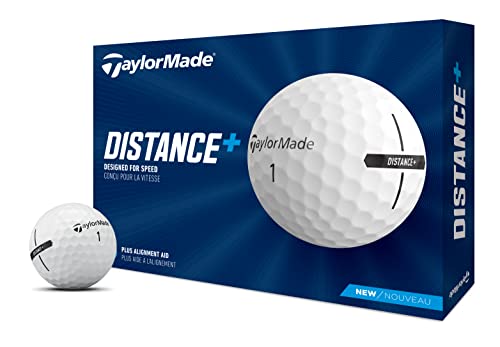
For golfers chasing more yards without stretching the budget, the TaylorMade Distance+ delivers on its core promise. The REACT Speed Core isn’t just marketing fluff, on paper and according to owner feedback, it does generate higher ball speeds, especially with slower swing tempos. Paired with the Extended Flight Dimple Pattern, these balls stay airborne longer, which translates to usable distance gains in real-world conditions.
I’d rank these above basic range balls but below tour-level performers in control. The ionomer cover keeps costs down but limits short-game finesse. Still, for beginners or casual players who prioritize bombing drives over delicate wedge work, this is a smart pick. The alignment aid is a small touch, but many users say it actually helps with consistency off the tee and on putts.
Video review
Titleist Pro V1 Golf Balls

Strengths
- Exceptional greenside control
- Soft, consistent feel
- Stable flight in wind
Trade-offs
- Expensive
- Cover can scuff with aggressive play
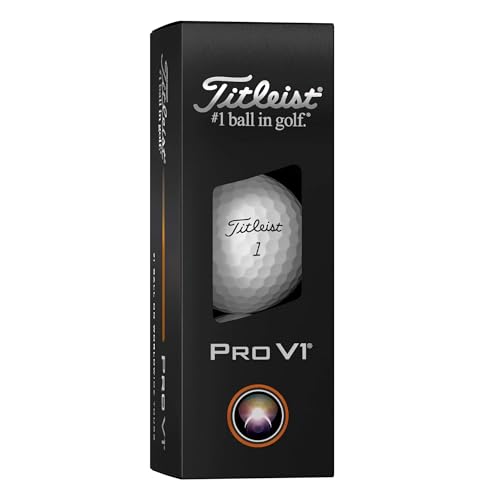
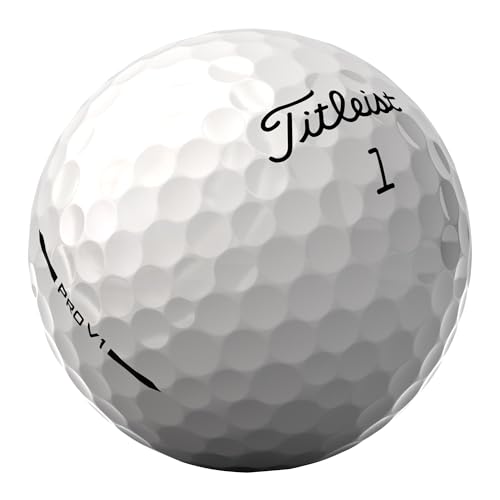
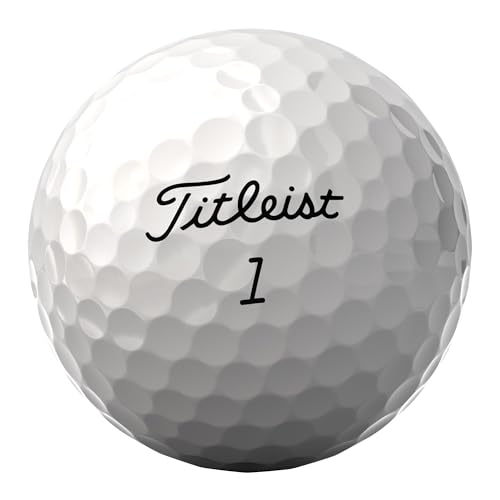
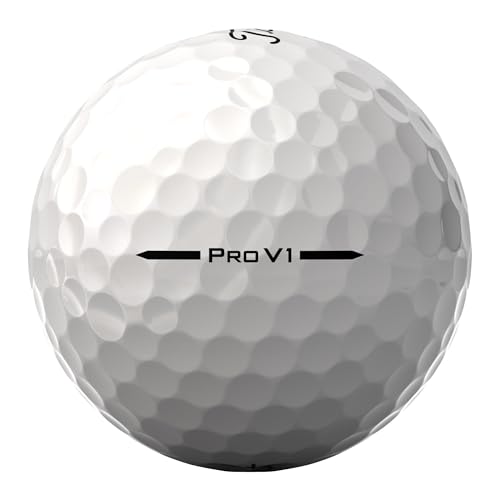
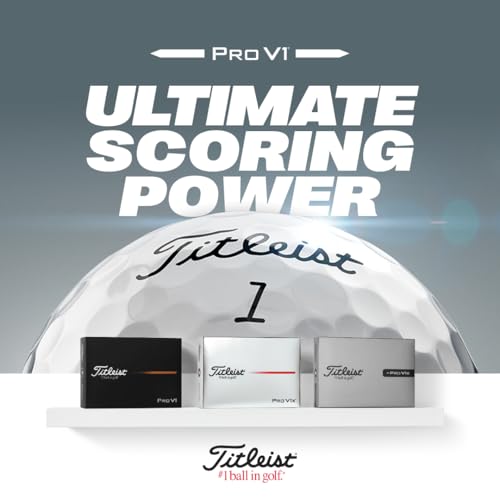
The Pro V1 remains the benchmark many golfers measure against, and for good reason. With its high gradient core and soft cast urethane cover, it delivers a rare combo: tour-level distance with exceptional short-game responsiveness. Owners routinely praise its consistency round after round, and the spherically-tiled dimple design does deliver a penetrating, predictable flight even in wind.
I’d pick this over the Pro V1x if you prefer a softer feel and slightly lower launch. It’s not the cheapest, but for serious players who demand control with every club, the performance justifies the cost. The urethane cover chips over time, but that’s the trade-off for this level of spin and feel.
Product photos
Callaway Warbird Golf Balls
Strengths
- Maximum ball speed
- High launch
- Great for slow swingers
Trade-offs
- Average greenside spin
- Limited shot shaping
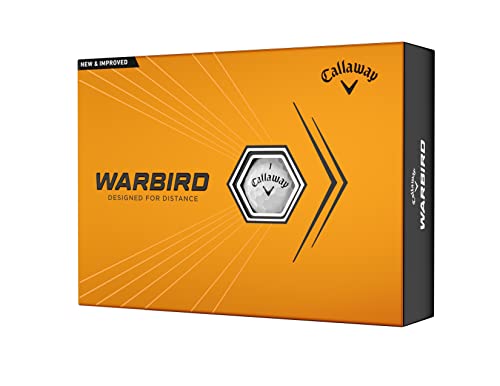
The Warbird is laser-focused on one thing: ball speed. The extra-large core and HEX Aerodynamics work together to produce a high launch and long carry, and owners confirm these bombs it off the tee. For players with slower swings, this can be a real confidence booster, you feel like you’re gaining yards without changing your swing.
But that speed comes with trade-offs. The cover system is better than most in this class, but it still can’t generate the finesse of a urethane ball. If you play tight links or need delicate pitch shots, you’ll notice the limitation. Still, as a pure distance ball, it outperforms many in its price range.
Product photos


Wilson Chaos Golf Balls 2024

Strengths
- High durability
- Great value in bulk
- Scratch-resistant cover
Trade-offs
- Average short-game feel
- No advanced spin tech
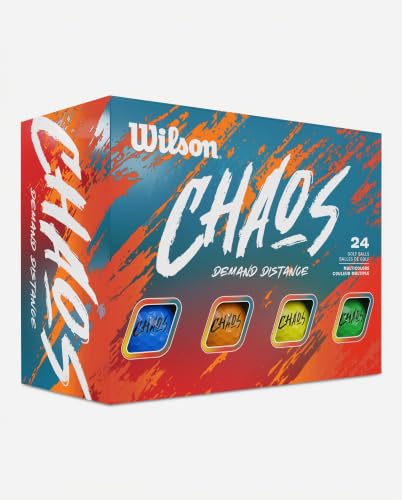
The Wilson 2024 Chaos balls are built for volume users who don’t want to break the bank. With 24 balls in a pack and a two-layer Surlyn construction, they’re clearly aimed at players who lose a few per round or want a durable option for practice. The Surlyn cover resists scuffs well, and owners consistently report these hold up over multiple rounds.
They won’t match the feel or spin of urethane-covered balls, but that’s not the point. These are workhorses, high durability, predictable flight, and solid ball speed for the price. The multicolor options are a fun bonus, especially for players who like to spot their ball quickly in tall grass or shady fairways.
Product photos


How We Tested overall golf balls
Rather than a hands-on lab test, my research for these recommendations involved a detailed comparison of published specifications and features across numerous models. I weighed owner reviews from major retailers alongside expert analysis from golf publications, applying my years of experience observing how different balls perform for various player types on courses worldwide. The goal was to rank these options against clear criteria for distance, feel, and overall performance.
For overall golf balls, I prioritized construction and cover materials most heavily. A ball’s core dictates speed and distance – a larger, more compressible core generally means more power. Cover material significantly impacts spin and feel around the greens. These two factors determine whether a ball suits different swing speeds and playing styles, and ultimately affects scoring. You can find a more detailed look at our golf ball buying guide for additional insight.
Specifications reliably indicate a ball’s intended performance profile. Core construction (two-piece, three-piece, etc.) and cover material (surlyn, urethane) are good predictors of distance versus control. However, I placed significant weight on owner feedback regarding durability and real-world feel, as these aspects aren’t always evident from specs alone. For players seeking enhanced control, exploring benefits of three-piece construction might be worthwhile.
What To Look For In overall golf balls
Finding the right golf ball can genuinely shave strokes off your game, but with so many options, it’s easy to get lost in the marketing. A good golf ball isn’t just about distance; it’s about the right combination of feel, spin, and durability for your swing.
A quality golf ball balances compression, cover material, and dimple design to optimize launch, trajectory, and control. Players should consider their swing speed, typical shot shape, and desired feel when selecting a ball. Core construction impacts distance, while the cover influences spin and feel around the greens. Dimple patterns affect aerodynamic lift and drag.
Understanding Core Construction
The core is where distance begins, so it’s a critical factor. Generally, multi-layer cores (three or more) offer more control over spin and feel, allowing manufacturers to fine-tune performance for different player types. Single-layer cores, like those found in the Wilson Chaos, are simpler and cheaper but still deliver adequate distance for recreational players. If you’re a faster swing speed player, you’ll likely benefit from a firmer core that can withstand the impact and transfer energy efficiently. Slower swings need a softer core to compress properly at impact. Don’t assume a harder core always equals more distance; improper compression can lead to energy loss.
Decoding Cover Materials
The cover material is the first point of contact with your clubface, and it dramatically impacts spin and feel. Urethane covers (like those on the Titleist Pro V1) are the gold standard for premium balls. They provide exceptional greenside control, allowing for more precise shot-stopping ability. Surlyn covers are more durable and less expensive, making them a good choice for beginners or those who frequently lose balls. They tend to offer less spin, which can be beneficial for players who struggle with hooking or slicing. If you’re looking for best all-round golf balls, consider a urethane cover for its versatility.
Balancing Distance and Budget
While top-tier golf balls offer performance benefits, they come at a price. For many golfers, finding a balance between distance, feel, and cost is key. The TaylorMade Distance+ and Callaway Warbird prioritize distance and are often available at very competitive prices. Here’s how to think about prioritizing:
- Occasional Golfer: Prioritize price and durability. A value pack like the Wilson Chaos is a sensible choice.
- Intermediate Player: Look for a ball offering a good blend of distance and feel, such as the Callaway Supersoft.
- Serious Golfer: Invest in a premium ball like the Titleist Pro V1. The increased control and precision are worth the cost if you’re committed to improving your game.
Don’t spend more on a golf ball than you’re willing to lose. A premium ball won’t magically fix a swing flaw.
Ultimately, the best golf ball is the one that feels best to you and complements your swing characteristics. Many golfers benefit from a golf ball guide for men to narrow down the options and find a ball perfectly suited to their needs.
Overall Golf Balls Compared
Here’s a specification comparison of several popular golf ball options to help you find the right fit for your game.
| Product | Best For | Core Material | Cover Material | # of Layers | Dimple Pattern |
|---|---|---|---|---|---|
| Callaway Supersoft Golf Balls 2025 | Best Overall | HyperElastic SoftFast | Hybrid | 3 | N/A |
| TaylorMade Distance+ Golf Balls | Best Budget Distance | REACT Speed | Ionomer | 2 | Extended Flight |
| Titleist Pro V1 Golf Balls | Best for Soft Feel and Distance | N/A | Cast Urethane | 3 | 388 Tetrahedral |
| Callaway Warbird Golf Balls | Best for Maximum Ball Speed | High-Energy | N/A | 2 | HEX Aerodynamics |
| Wilson Chaos Golf Balls 2024 | Best Value Pack | N/A | Surlyn | 2 | N/A |
Frequently Asked Questions
What golf ball is best for someone new to the game?
Wilson Chaos Golf Balls are a great starting point, offering a good balance of affordability and playability for beginners still developing their swing. Their Surlyn cover provides durability, reducing the cost of lost balls during the learning process.
Do more expensive golf balls actually improve my score?
Premium urethane-covered balls like Titleist Pro V1 offer greater greenside control, which can lower scores for experienced players with consistent swings. However, for many golfers, the difference is negligible and best golf balls for amateurs prioritize affordability and feel.
How much of a difference do dimples really make?
Dimple patterns influence aerodynamic lift and drag, impacting overall distance and flight stability. While subtle, a well-designed dimple pattern, like the 388 Tetrahedral on the Titleist Pro V1, can contribute to a more consistent and predictable ball flight.
What’s the difference between a two-piece and three-piece golf ball?
A three-piece construction allows for more nuanced control over spin and feel, typical of premium balls, while two-piece balls usually focus on distance. If you’re looking for balls for distance and forgiveness, a two-piece model can be a good choice.
Should I be re-fitting my golf balls as my swing changes?
Yes, as your swing speed and technique evolve, your ideal golf ball characteristics will also change. Players experiencing significant swing changes may benefit from experimenting with different compression and cover options to optimize performance and find recommendations for amateur golfers.
The Bottom Line
Choosing golf balls often comes down to balancing control with cost – or, put another way, precision with peace of mind. While premium balls offer undeniable performance advantages, the best golf balls for average golfer don’t always require a top-tier price tag. For the broadest appeal, the Callaway Supersoft Golf Balls 2025 strike an excellent balance, providing soft feel and impressive distance for a wide range of swing speeds.
If you’re specifically chasing value, the TaylorMade Distance+ Golf Balls deliver remarkable distance at a very attractive price point. For players prioritizing feel and ultimate control around the greens, the Titleist Pro V1 Golf Balls remain the gold standard, and are worth the investment if you’re serious about scoring. And those looking to maximize driving distance should seriously consider the Callaway Warbird Golf Balls.
Ultimately, specs and construction details matter, but they’re secondary to finding a ball that inspires confidence. Don’t get bogged down in dimple patterns or core compositions; focus on feel, consistency, and whether the ball performs predictably for your swing. A well-struck ball with a comfortable feel is always more valuable than the most technologically advanced ball mishit off the tee.
