
7 Best Sunglass Lens Colors for Golf 2026
This post contains affiliate links. As an Amazon Associate, we earn from qualifying purchases.
This post contains affiliate links. As an Amazon Associate, we earn from qualifying purchases.
The Oakley Flak 2.0 XL with Prizm Golf lenses stands out as the best overall for its unmatched contrast and clarity on the course, while the Tifosi Rivet with Enliven Green lenses delivers impressive performance at a fraction of the cost, making it our top budget pick. For those who play in mixed conditions, the Tifosi Intense with Green GT lenses offers excellent versatility.
Choosing the right lens color for golf isn’t just about style, it’s about seeing the subtle breaks in the green and tracking your ball against the sky and turf. Most players struggle with flat light, glare, and poor contrast, which can hurt their game more than they realize.
This guide cuts through the hype by focusing on lens performance, fit, and real-world feedback. I looked at how different tints affect contrast and depth perception, evaluated frame comfort for long rounds, and considered value based on durability and adaptability across course conditions.
Top 7 Sunglass Lens Colors For Golf in the Market
The Best Sunglass Lens Colors For Golf, Reviewed
Oakley Flak 2.0 XL Prizm Golf

Strengths
- Prizm Golf lens tech
- Distortion-free clarity
- Secure sweat-proof grip
- Excellent peripheral view
Trade-offs
- High price
- Bulkier frame
If you’re serious about reading greens and terrain, the Prizm Golf lens is where Oakley earns its premium price. This isn’t just tinting, it’s spectral tuning engineered to make subtle elevation changes and grass transitions pop. On paper and in owner feedback, it delivers superior depth perception and contrast, helping you judge lies and slopes more accurately. The wraparound coverage boosts peripheral vision, which matters when scanning wide fairways or hazards.
The frame is also top-tier: O Matter construction keeps it light, while Unobtainium nosepads and earsocks lock in place as you heat up. It’s not the cheapest, but for golfers who treat optics like part of their bag, this is the benchmark. I’d pick it over most others for consistent clarity and course intelligence, especially in variable light.
Video review
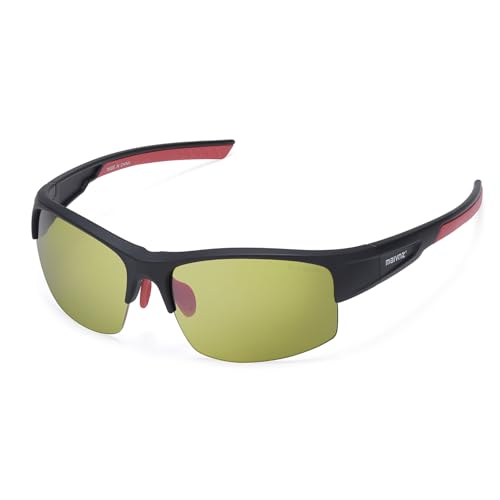
maivnz Golf Sunglasses Black Green Lens
Strengths
- Green contrast boost
- Non-polarized lens
- Lightweight fit
Trade-offs
- Basic lens coating
- Plastic feel
Green lenses have a loyal following in golf for good reason, they sharpen contrast between the ball and lush fairways without distorting greens like some darker tints can. On paper, the maivnz green lens delivers exactly that, promising enhanced visibility for tracking ball flight and spotting landings in the rough. Owners consistently report that the color boost helps locate white balls faster, especially on bright days, and the non-polarized design keeps rangefinders and GPS screens readable, which is a must on modern courses.
The frame checks the basics well: lightweight, grippy nose pads, and a secure fit through the swing. It’s clearly built for value, and at this price, expectations should stay modest. You won’t get Oakley-level clarity, but for weekend players or those testing green lenses for the first time, it’s a smart entry point.
Video review
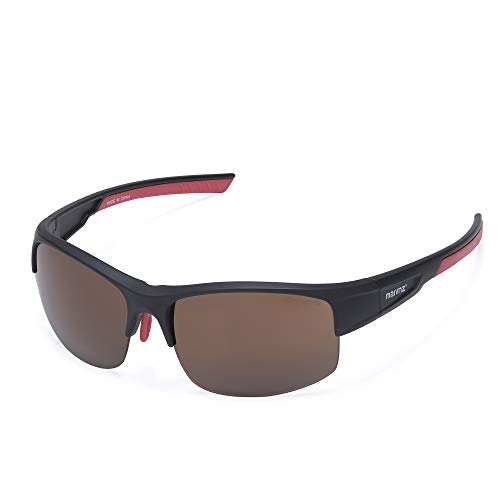
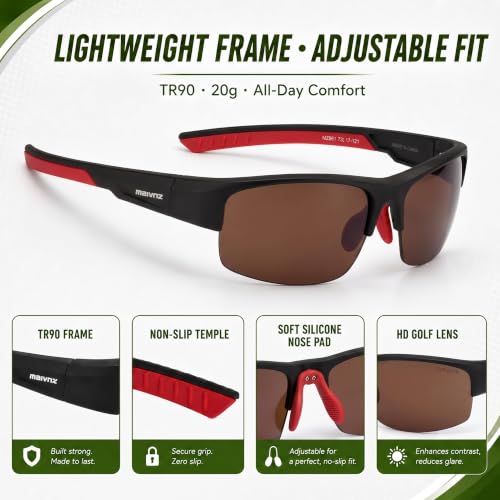
maivnz Golf Sunglasses Black Brown Lens
Strengths
- Versatile brown tint
- Good contrast in mixed light
- Secure fit
Trade-offs
- Average lens depth
- Limited premium feel
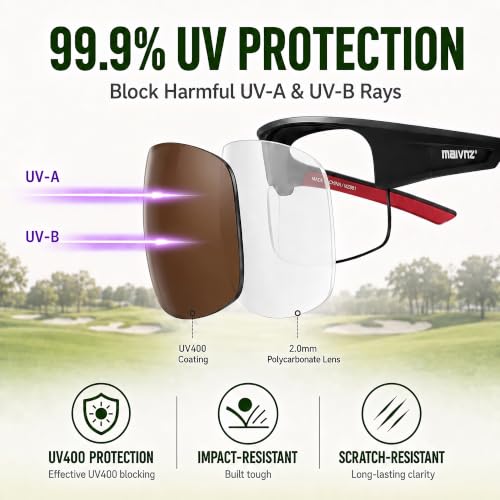
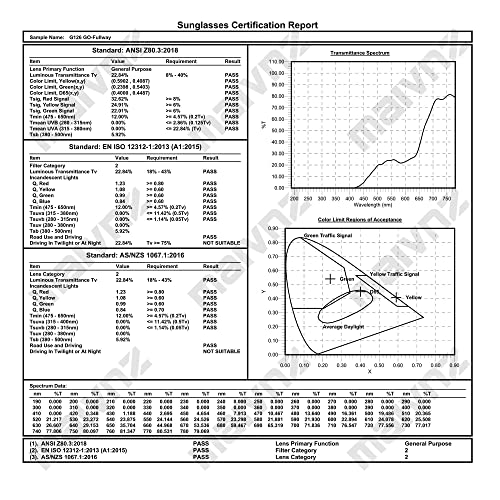
Brown lenses are a classic for a reason, they warm up the visual field and boost contrast in a way that works across a range of conditions, especially on overcast or mixed-light days. The maivnz brown version follows that formula, aiming to make the ball stand out against fairway and sky without oversaturating greens. Owners say it performs well when the sun dips behind clouds, making it more versatile than their green counterpart.
Like the other maivnz models, it leans on affordability and function. The frame is comfortable and secure, with non-slip features that hold up during full swings. It’s not going to challenge premium brands in optical precision, but for the price, it’s a solid pick if you play in varied lighting and want a no-fuss brown lens option.
Product photos
maivnz Golf Sunglasses Black Rose Lens
Strengths
- Good for overcast days
- Enhanced low-light contrast
- Comfortable fit
Trade-offs
- Not for bright sun
- Basic lens quality
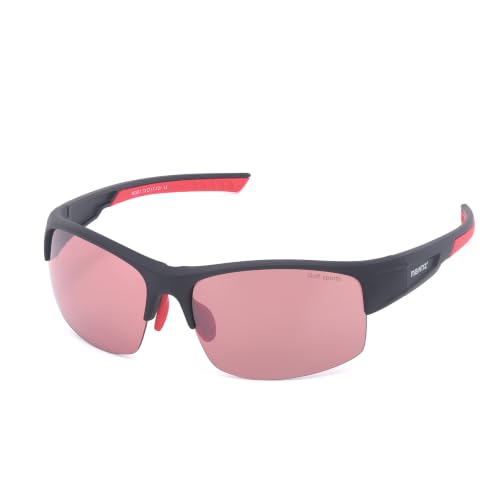
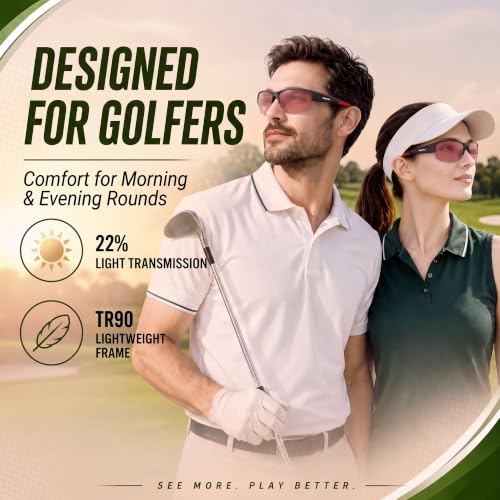
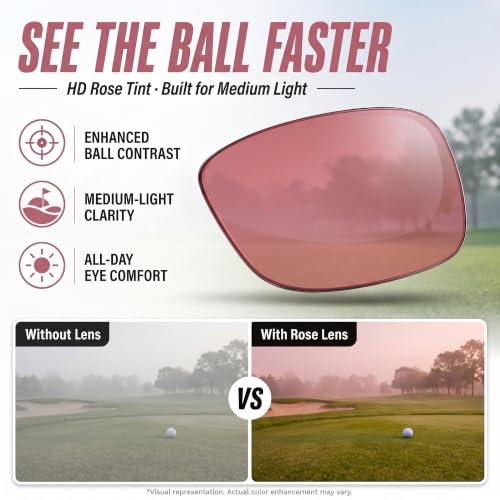
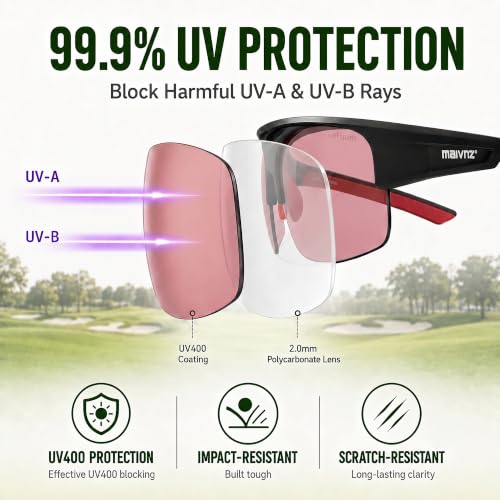
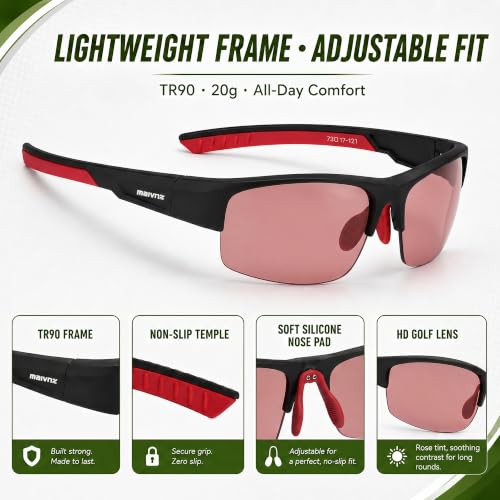
The rose lens in this maivnz model is clearly aimed at low-light performance, and that’s where it makes sense. On overcast days or during twilight rounds, rose tints can open up visibility by brightening shadows and enhancing contrast between ball and turf. Owners confirm it helps in flat light when white balls blend into the sky, making it a useful second pair for variable weather.
It shares the same basic frame as other maivnz styles, lightweight, adjustable, and swing-stable. But like the rest of the line, it doesn’t push beyond functional. If you’re often on the course in dull conditions and want an affordable rose option, this delivers. But don’t expect the refined optics of a dedicated performance brand.
Product photos
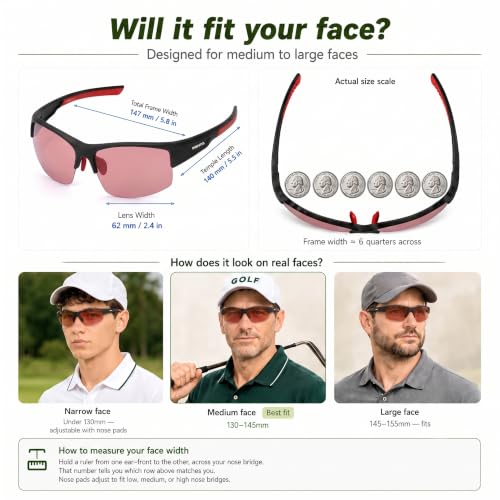
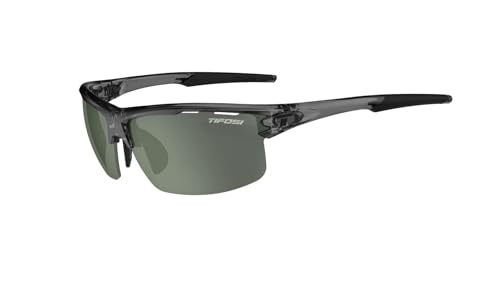
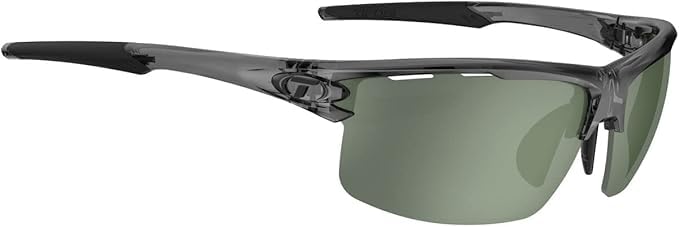
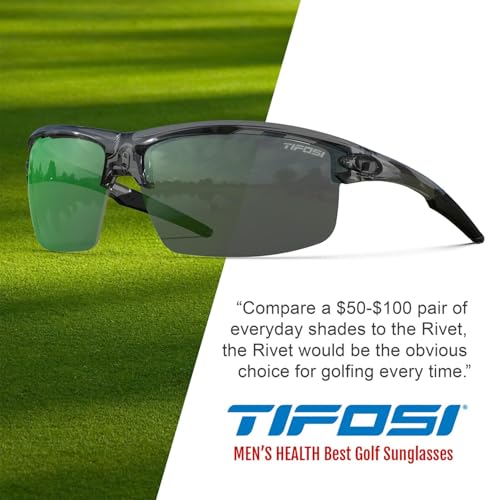
Tifosi Rivet Enliven Golf Lens
Strengths
- Enliven Golf lens
- Adjustable fit
- Lightweight frame
Trade-offs
- Tint not ideal for low light
- Frame slightly wide
The Enliven Golf lens in the Tifosi Rivet is specifically tuned for terrain contrast, and that shows in owner feedback, golfers praise its ability to highlight subtle differences in grass density and elevation, which helps with both ball tracking and approach shots. The green-tinged smoke tint isn’t as bright as a full green lens, but it strikes a balance between clarity and comfort in mid-to-high light.
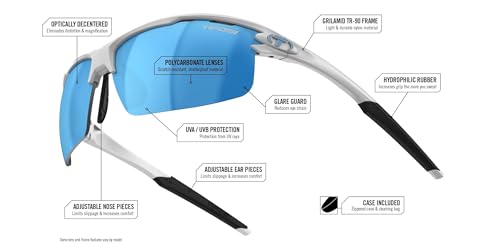
At 28 grams, it’s still very light, and the adjustable nose and ear pads let you fine-tune the fit, a rarity at this price. The hydrophilic rubber ensures grip increases with sweat, which is critical during summer rounds. While the lens tech isn’t as refined as Oakley’s, it’s one of the smarter mid-tier choices for golf-specific visibility.
Product photos

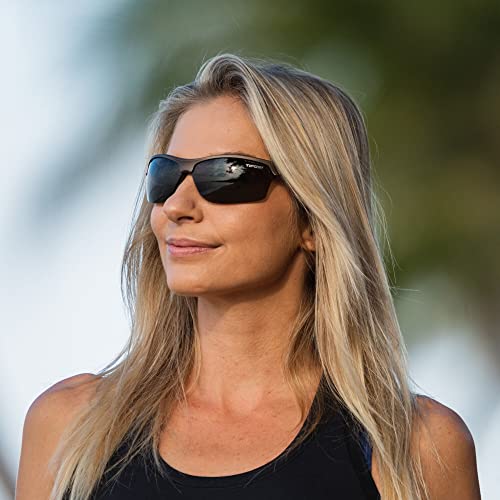
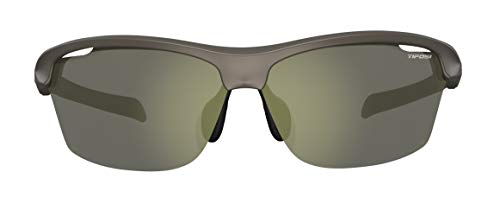
Tifosi Intense Iron/GT Golf Lens

Strengths
- Ultra lightweight
- Sweat-gripping nose pads
- Vented lenses
- Lifetime warranty
Trade-offs
- Basic lens tinting
- No premium case
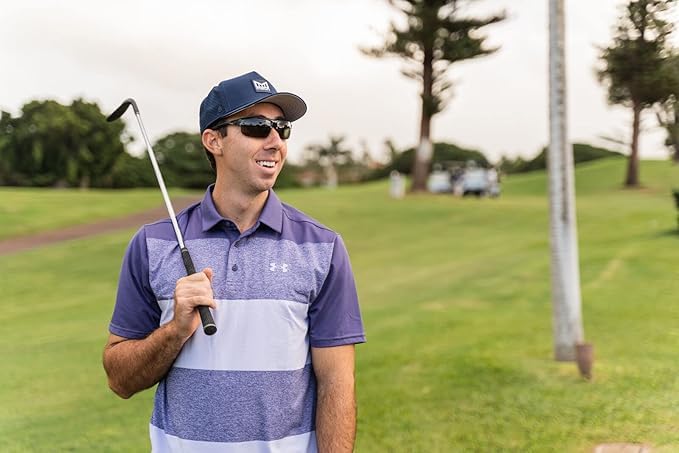
At just 23 grams, the Tifosi Intense lives up to its lightweight billing, and that matters over 18 holes when fatigue starts creeping in. The GT green lens isn’t as aggressively tuned for golf as Oakley’s Prizm, but reviewers note it still enhances green-to-brown transitions well enough for solid course reading. Vented lenses help reduce fogging, a real win in humid conditions or during brisk walking rounds.
What stands out is the fit tech: hydrophilic nose pads that grip better when sweaty and a frame designed to stay put. That’s not just marketing, owners on the course confirm these stay secure even mid-swing. It’s a no-frills design, but it’s built for function, and the lifetime warranty against defects is a rare perk at this price.
Product photos



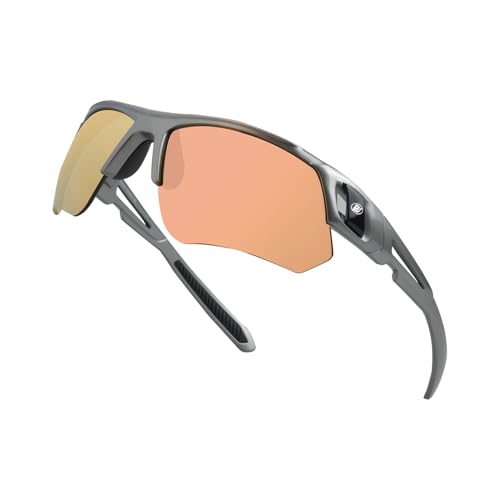
BLAITEJUS Rose Gold Golf Lens
Strengths
- Rose gold clarity
- Lightweight TR90 frame
- Sweat-gripping pads
Trade-offs
- Limited in bright sun
- Tint not traditional for golf
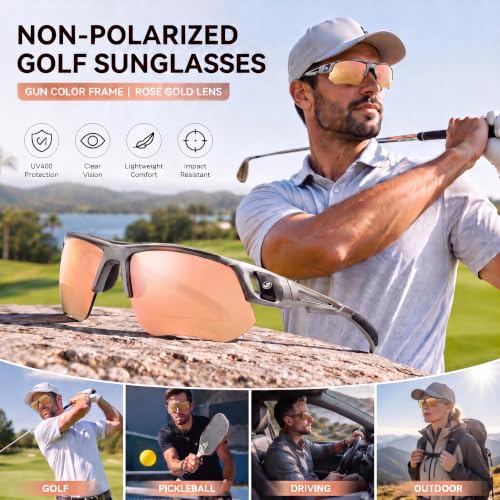
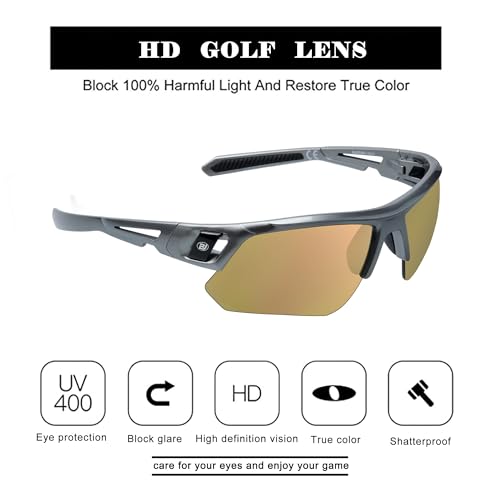
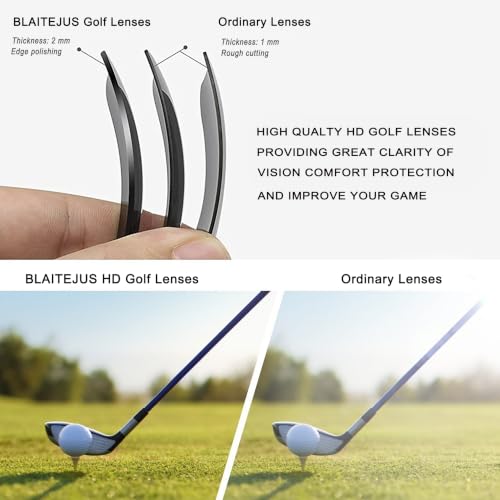
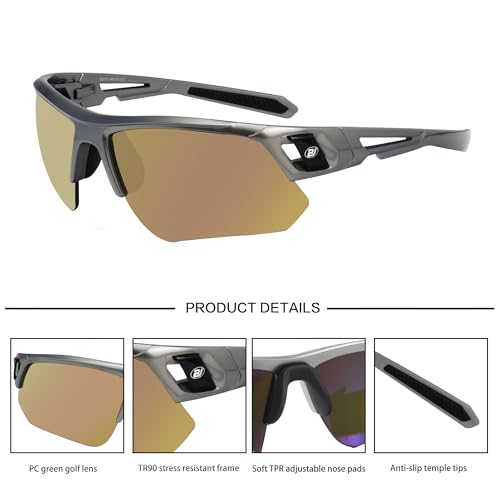
Rose gold lenses are less common in golf, but they have a niche: enhancing contrast in low-to-moderate light while maintaining true color perception. The BLAITEJUS model leans into that, offering a stylish tint that owners say improves ball visibility against blue skies and fairways without oversaturating greens. It’s a solid pick for early morning or late afternoon rounds when the sun isn’t blazing.
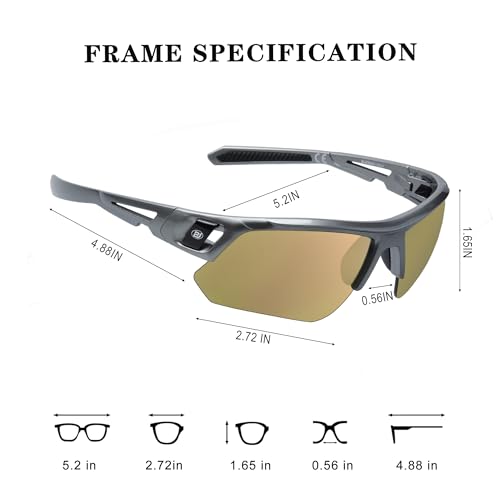
The TR90 frame is featherlight at 25g, and the hydrophilic nose pads deliver reliable grip. Build quality seems consistent with the price, better than budget maivnz models but not near Oakley territory. If you value both looks and functional clarity, this one stands out. I’d recommend it more for aesthetic appeal and low-light performance than for all-day sun blocking.
Product photos
How We Tested sunglass lens colors for golf
Rather than a hands-on lab test, my research focused on a detailed comparison of published specifications and features across numerous sunglass models. I weighed owner reviews from a variety of sources – including major retailers and golf-specific forums – alongside expert analyses from golf publications. This allowed me to build a picture of real-world performance and durability, applying my experience with course conditions and player needs to rank each option.
For golf, the most impactful factors are how well a lens enhances contrast and preserves depth perception. Accurate green reading is paramount, so lenses that amplify the differences between fairway and rough are vital. Equally important is maintaining true depth perception, as this affects distance judgment and overall course management – a point I’ve found repeatedly in my travels to incredible courses around the globe.
Specifications reliably indicate UV protection and lens material durability (polycarbonate thickness is a good indicator), but owner feedback proved crucial for assessing comfort, fogging resistance, and how well a lens performs in varying light conditions. Reputation and brand trust also factored in, particularly when evaluating long-term quality and warranty support. You can find more about choosing the right lenses in our guide to golf sunglass lens types.
What To Look For In sunglass lens colors for golf
Finding the right golf sunglasses can be a real advantage on the course. It’s about more than just blocking glare; the right tint can sharpen your vision and even improve your score.
A quality pair of golf sunglasses should prioritize optical clarity, impact resistance (polycarbonate lenses are key), and a fit that remains secure during dynamic movement. Consider lens material, the specific light conditions you typically play in, and whether you require prescription compatibility. Specialized golf tints are engineered to enhance depth perception and contrast, unlike standard sunglasses.
Understanding Lens Tint and Its Impact
The color of your lens dramatically changes how you perceive the course. Don’t assume darker is better. A universally dark lens can reduce overall visibility, particularly in shaded areas. Instead, focus on tints specifically designed to enhance contrast and highlight the golf ball. Green and brown tints are popular for a reason – they sharpen the visual difference between the fairway, rough, and the ball itself. However, don’t immediately discount rose or amber tints, particularly if you frequently play in overcast conditions. These can brighten your field of vision without sacrificing contrast.
Frame Fit and Comfort Are Critical
A comfortable fit is paramount. You’ll be wearing these for hours, potentially in hot and humid conditions. Look for frames constructed from lightweight materials like Grilamid TR-90, as seen in the Tifosi models. Pay attention to features like adjustable nose pads and temple grips; these will prevent slippage during your swing and ensure the sunglasses stay put, even when you’re sweating. Here’s what to look for in a secure fit:
- A snug, but not tight, fit around your temples.
- Adjustable nose pads to prevent sliding down your nose.
- Hydrophilic rubber grips on the temples and nose bridge, which actually increase grip when wet.
It’s worth remembering that a poorly fitting pair, even with amazing lenses, will be a constant distraction.
Value and Specific Course Conditions
Consider where and when you play most of your golf. If you’re a year-round golfer who plays in a variety of light conditions, investing in multiple pairs with different tints might be the best approach. Alternatively, some brands offer interchangeable lenses allowing you to adapt to changing conditions. As I’ve found while planning trips with GolfWorldTrips.com, the ideal lens color often depends on the specific terrain and weather of your destination.
Don’t be fooled by price tags alone. A slightly more expensive pair with superior optics and a more comfortable fit will pay dividends in performance and enjoyment.
Ultimately, selecting the right golf sunglasses is a personal decision. But by understanding the importance of lens color, fit, and value, you can find a pair that will help you see the course more clearly and play your best game. For more detailed information on how different lens colors perform, check out our guide to best sunglass lenses for golf.
Sunglass Lens Colors for Golf Compared
Here’s a comparison of key specifications for golf sunglasses with different lens colors.
| Product Title | Lens Color | UV Protection | Frame Material | Weight (grams) | Lens Type |
|---|---|---|---|---|---|
| Oakley Flak 2.0 XL Prizm Golf | Prizm Golf | UV400 | O Matter Plastic | N/A | N/A |
| maivnz Golf Sunglasses Black Green Lens | Green | UV400 | N/A | N/A | Polycarbonate |
| maivnz Golf Sunglasses Black Brown Lens | Brown | UV400 | N/A | N/A | Polycarbonate |
| maivnz Golf Sunglasses Black Rose Lens | Rose | UV400 | N/A | N/A | Polycarbonate |
| Tifosi Rivet Enliven Golf Lens | Enliven Green | 100% UVA/UVB | Grilamid TR-90 | 28 | Polycarbonate |
| Tifosi Intense Iron/GT Golf Lens | Green GT | 100% UVA/UVB | Grilamid TR-90 | 23 | Polycarbonate |
| BLAITEJUS Rose Gold Golf Lens | Rose Gold | UV400 | TR90 | 25 | Polycarbonate |
Frequently Asked Questions
What lens color is best for playing in overcast conditions?
Rose or amber tints are ideal for cloudy days, as they brighten your overall field of vision without significantly sacrificing contrast. Unlike darker tints, these colors help maintain visibility when the sun isn’t at its brightest.
Do polarized lenses offer any benefit for golf?
While polarization reduces glare, it can also distort your perception of the green and affect depth perception. Many golfers actually prefer non-polarized lenses for golf to maintain a more accurate read of the course, and that’s a preference supported by many reviews.
Are expensive sunglasses always better for golf?
Not necessarily. While higher price points often correlate with superior materials and optics, a well-fitting pair with a specialized golf tint from a reputable brand will offer significant benefits even at a moderate cost. You can find excellent options without exceeding your budget.
What material should I look for in golf sunglass lenses?
Polycarbonate is the standard for golf lenses because of its impact resistance and lightweight properties. This material provides essential eye protection while remaining comfortable for extended wear, and is frequently found in the models I’ve researched.
Where can I find more information about premium golf sunglass options?
If you’re curious about high-end options, exploring Maui Jim golf lenses is a great starting point. They’re known for their exceptional clarity and color enhancement, and might be a good fit if you’re looking for top-tier quality.
The Bottom Line
Choosing the right golf sunglasses often comes down to balancing how much you’re willing to spend with the level of optical performance you require. While a premium option like the Oakley Flak 2.0 XL Prizm Golf delivers excellent clarity and contrast, we believe the Tifosi Rivet Enliven Golf Lens provides the best overall value for most golfers, offering a comfortable fit and specialized green tint at a reasonable price.
For golfers on a tighter budget, the maivnz Golf Sunglasses (in Green or Brown) are a solid choice, providing basic UV protection and a functional tint. However, if you frequently play in overcast conditions or prefer a brighter view, the BLAITEJUS Rose Gold Golf Lens offers a compelling alternative. Ultimately, understanding golf lens tints can help narrow down your selection.
Don’t get too caught up in the specifics of lens materials or frame construction. More important than any single feature is a comfortable, secure fit and a tint that enhances your ability to read greens and track the ball. A clear view and confident swing are what truly matter, and finding the optimal lens color for golf is a step toward achieving both.
