
7 Best Sunglass Tints for Golf 2026
This post contains affiliate links. As an Amazon Associate, we earn from qualifying purchases.
This post contains affiliate links. As an Amazon Associate, we earn from qualifying purchases.
The Tifosi Navar FC with Green Enliven lenses stands out as the best overall choice for golf, delivering superior contrast and clarity in most conditions. For those watching their budget, the maivnz Golf Sunglasses in Rose or Green offer solid performance at a lower price point, though with fewer frame adjustments.
Choosing the right tint isn’t just about comfort, it’s about seeing the course the way it’s meant to be seen. Too many golfers wear sunglasses that dull contrast or distort colors, making it harder to track the ball or read greens. After comparing the field and analyzing owner feedback, I focused on tints that enhance visual precision without sacrificing protection or fit.
This guide breaks down the top-performing lens colors based on real-world use, course conditions, and optical science. We looked at how green, rose, and amber tints affect contrast and depth perception, which frame materials deliver all-day comfort, and what specs actually matter when you’re standing over a six-foot putt.
Top 7 Sunglass Tints For Golf in the Market
The Best Sunglass Tints For Golf, Reviewed
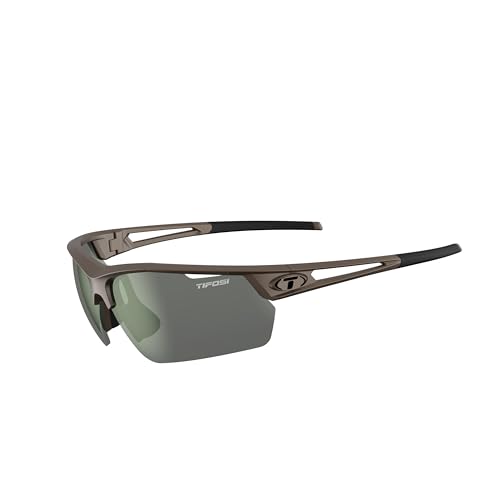
Tifosi Navar FC Golf Sunglasses
Strengths
- Golf-optimized green tint
- Non-polarized for device clarity
- Sweat-gripping pads
Trade-offs
- Higher price than budget picks
- Limited style options
The Enliven Golf lens in green is where this model stands out, engineered specifically for golf, with a 16% VLT that boosts contrast between fairway and ball without flattening terrain. Reviewers note the color enhancement helps with depth perception on undulating greens, and because it’s not polarized, your GPS and laser rangefinder stay readable. The shatterproof polycarbonate lens is optically decentered, reducing distortion at the periphery, something you’ll appreciate when scanning long fairways.
At 24g and built with Grilamid TR-90, the frame is both tough and comfortable for all-day wear. The hydrophilic nose and ear pads actually work, they grip better as you sweat, a real advantage in humid conditions. Compared to budget models, the Navar FC feels like a step up in both materials and optical intent.
Video review
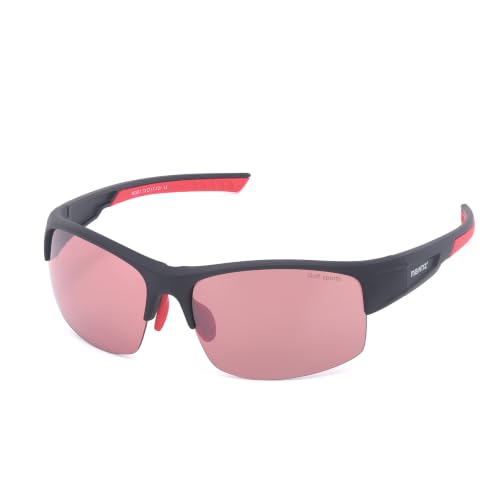
maivnz Golf Sunglasses Black Rose Lens
Strengths
- Excellent ball tracking
- Non-polarized for device use
- Secure adjustable fit
Trade-offs
- Tint less ideal for green reading
- Frame design basic
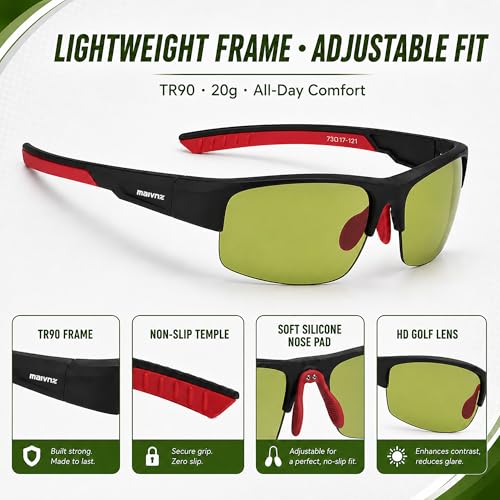
This model leans hard into being a golf ball finder, and the black rose tint is calibrated to amplify the contrast between white balls and green backgrounds. Owners consistently report spotting their ball faster in rough and on fairways, especially helpful for higher handicappers or aging eyes. The HD non-polarized lens avoids the LCD blackout issue, so your rangefinder stays functional, and depth perception remains intact.
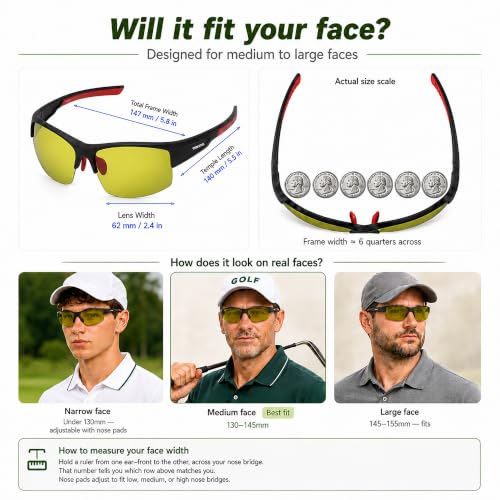
The 2.0mm polycarbonate lens is impact-resistant, and the adjustable silicone nose pads provide a secure fit. Compared to the green-tinted maivnz model, this one prioritizes ball tracking over green reading. If you lose balls often or play in varied light, this tint delivers real utility. It’s not the most stylish, but it’s one of the most functional for its intended job.
Video review
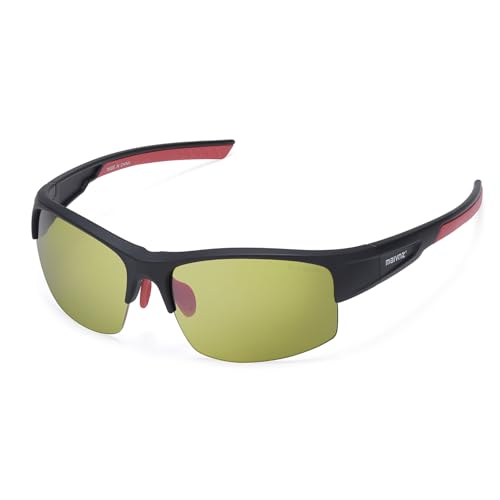
maivnz Golf Sunglasses Black Green Lens
Strengths
- Superior green contrast
- Non-polarized lens
- Durable lens construction
Trade-offs
- Less effective for ball tracking
- Frame lacks high-end feel
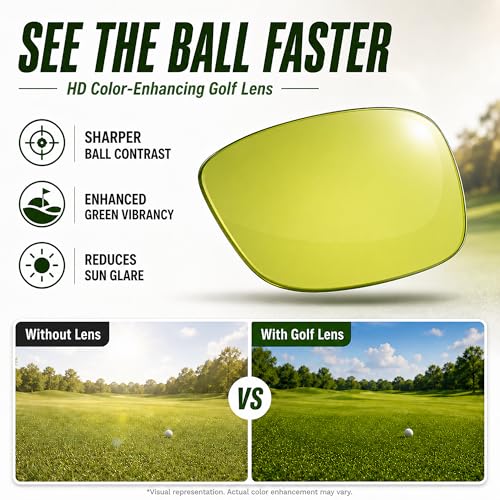
This version uses a black green tint specifically tuned for green reading, and that’s where it outshines its rose-tinted sibling. The lens enhances subtle variations in grass tone and shadow, helping you pick up break lines more easily, something low-handicappers and course tacticians will appreciate. Like the other maivnz model, it’s non-polarized, so your GPS and rangefinder stay clear, and the 2.0mm polycarbonate lens is impact-resistant for long-term use.
The fit is secure, with soft silicone pads that don’t slip, even after hours in the sun. Compared to the Tifosi Navar, it offers similar green-reading benefits at a lower price, though the frame feels a bit less premium. Still, for pure green analysis, this is one of the best-value options available.
Product photos

Lamicall Ultralight Polarized Sports Sunglasses

Strengths
- Ultra-lightweight
- Adjustable nose pads
- Anti-fog vents
Trade-offs
- Polarized lens limits device use
- Not golf-specific tint
- Average scratch resistance
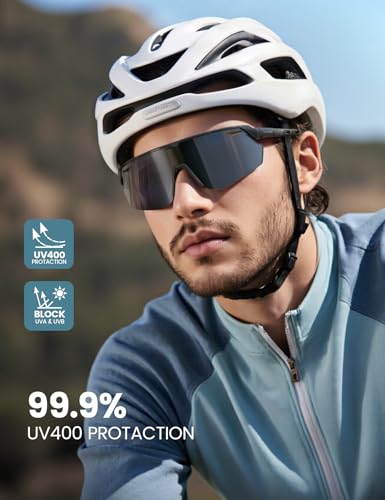
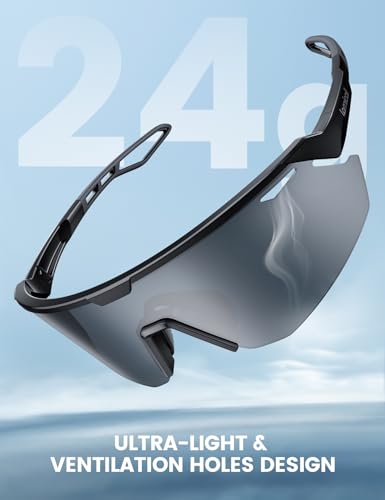
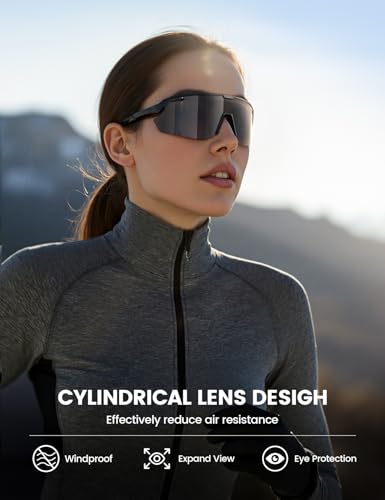
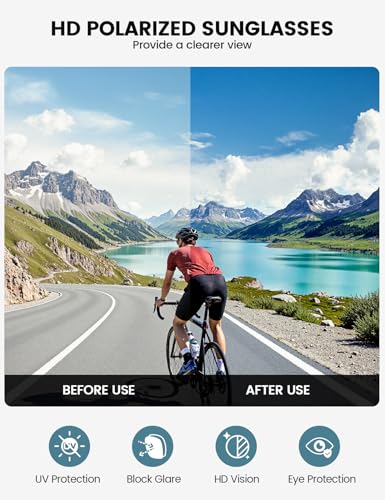
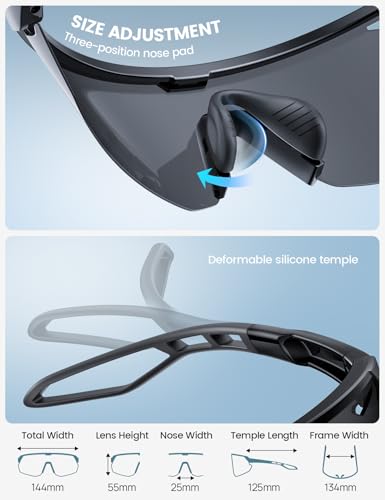
At just 24g, these are among the lightest full-coverage options in this group, and owners consistently report they forget they’re wearing them, important when you’re walking 18 holes. The TAC polarized lenses claim HD clarity and 99.9% UV400 protection, which on paper sounds solid, but here’s the catch: polarization can interfere with golf-specific devices like rangefinders and GPS screens, a downside serious players will want to consider.
The adjustable nose pads and silicone temples help with fit across face shapes, and the anti-fog vents are a practical touch for warmer rounds. While they’re marketed for golf, they’re really a general-purpose sports sunglass, fine for casual play, but not optimized for green reading or ball tracking like some dedicated models.
Product photos
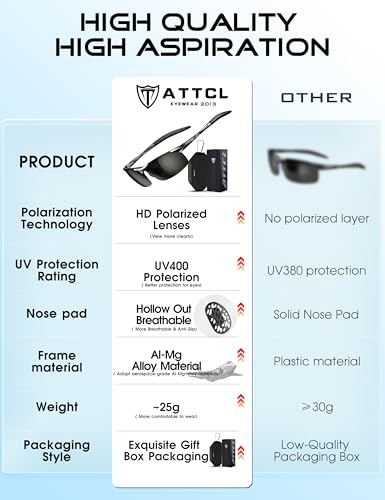
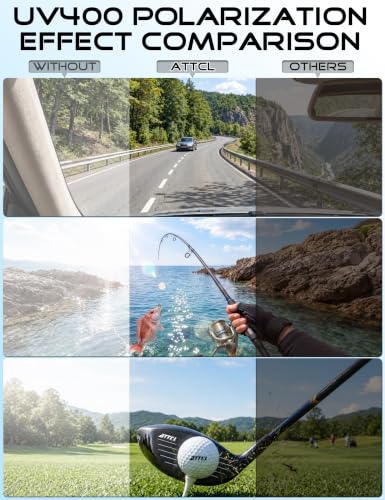
ATTCL Al-Mg Metal Golf Sunglasses
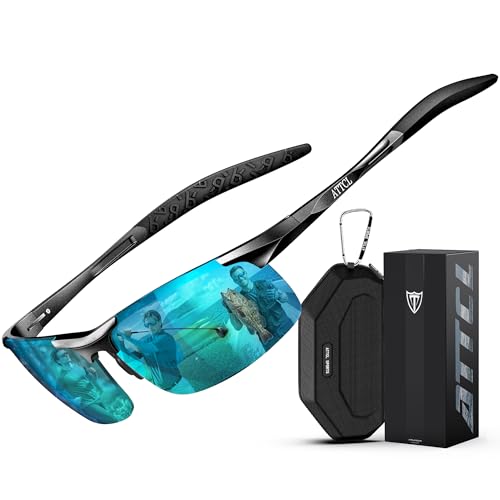
Strengths
- Highly durable metal frame
- Secure anti-slip fit
- Lightweight at 20g
Trade-offs
- Polarized lens hampers golf devices
- Not golf-specific tint
- Average optical enhancement
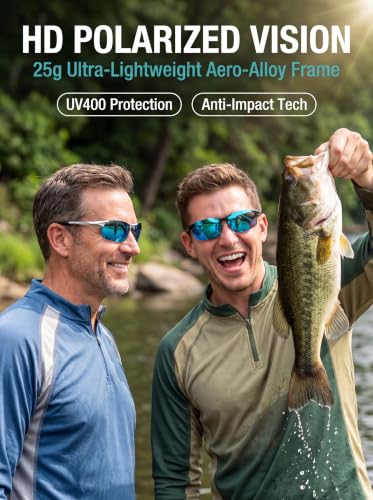
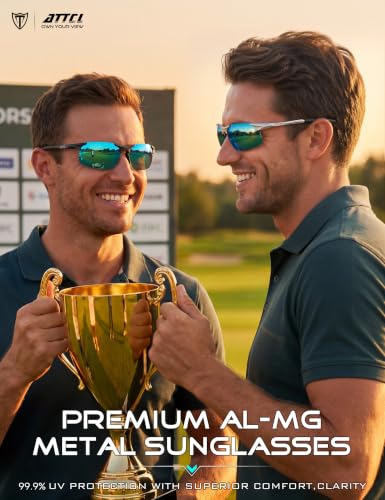
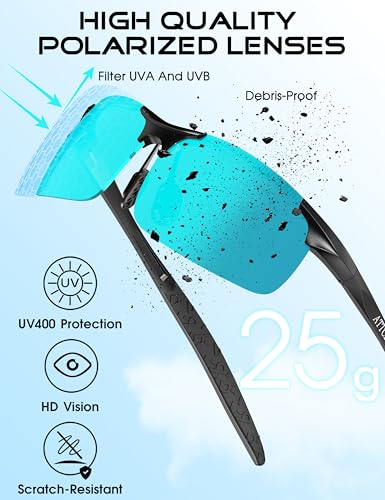
The Al-Mg alloy frame is the standout here, light at 20g but notably tough, and owners praise its resistance to bending or breaking, even after being sat on or dropped. The polarized TAC lenses offer solid glare reduction and UV400 protection, making them reliable for driving or fishing. But again, polarization limits their golf usefulness, especially if you use a digital rangefinder.
They’re designed for active use, with wrap-around coverage and anti-slip temples, so they stay put during a golf swing. But the lens tint isn’t optimized for green contrast or ball tracking, it’s more neutral. Compared to purpose-built golf models, these are better suited for multisport use. If durability is your top concern and you play golf casually, they make sense.
Product photos
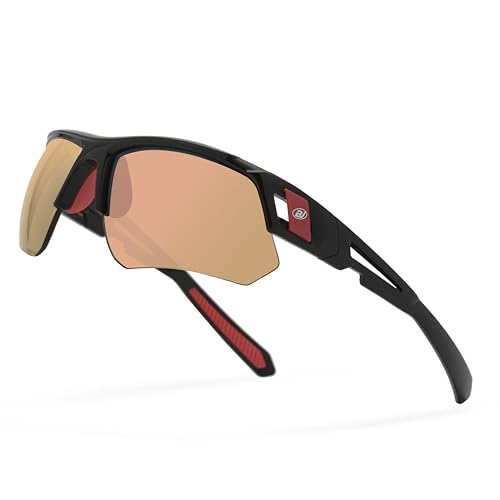
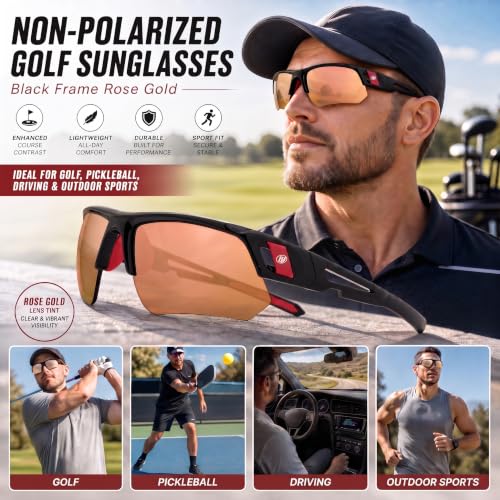
BLAITEJUS Rose Gold Golf Sunglasses
Strengths
- Stylish rose gold tint
- Non-polarized lens
- Durable 2.0mm lenses
Trade-offs
- Tint not golf-specialized
- Slightly heavier than leaders
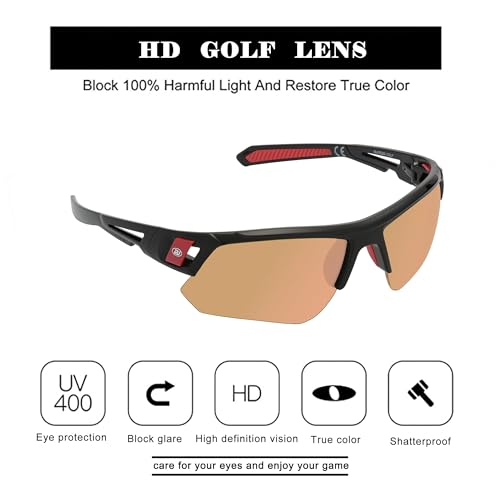
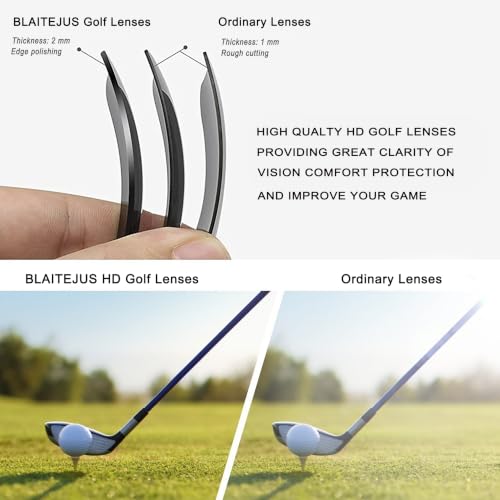
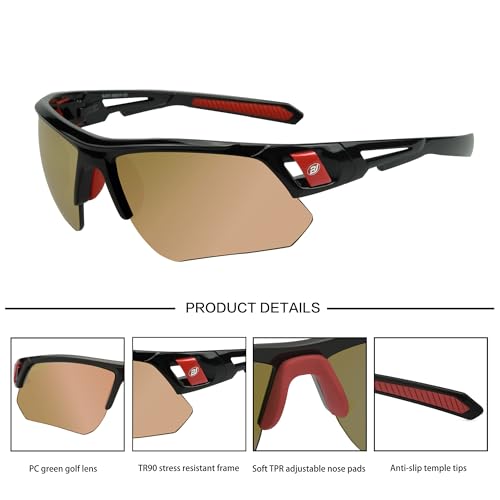
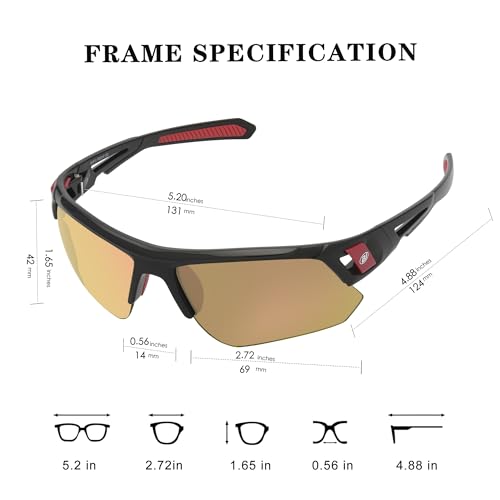
The rose gold tint here isn’t just for show, it’s designed to sharpen contrast in bright conditions, making white balls pop against green grass, and owners say it works well on sunny afternoons. These are non-polarized, which means no issues with rangefinders or scoreboards, and the 2.0mm polycarbonate lenses are thicker than average, suggesting better durability. The TR90 frame at 25g is comfortable, and the hydrophilic nose pads are a nice touch for sweaty rounds.
Where they shine is style-meets-function: the rose gold lens gives a modern look that transitions easily off the course. But unlike the Tifosi, the tint isn’t specifically tuned for green reading, it’s more about general contrast. It’s a solid middle ground between fashion and performance, but not the top pick for serious players chasing optical precision.
Product photos
KALIYADI Polarized Sunglasses Men
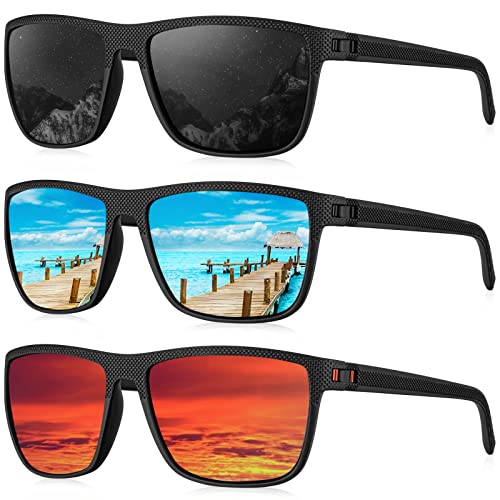
Strengths
- Extremely budget-friendly
- Three pairs included
- Classic style
Trade-offs
- Polarized not ideal for golf
- Basic lens tech
- Less secure fit
At under $17, this three-pack offers undeniable value, especially if you’re the type to lose or break sunglasses often. The polarized lenses cut glare well and restore true color, and the UV400 protection is standard across the set. But here’s the rub: polarization is a drawback on the golf course. It can distort your view of LCD screens and, more importantly, flatten depth perception, making it harder to judge green contours.
The rectangular metal frame feels a bit more fashion-forward than sporty, and while durable enough for casual wear, they’re not built for aggressive swings or humid rounds. Owners say one pair works fine as a backup or for driving, but not as a primary golf optic. For the price, it’s a decent everyday option, but not a golf-first choice.
Product photos


How We Picked These sunglass tints for golf
Rather than a hands-on lab test, my research involved a detailed comparison of published specifications and features across numerous models. I weighed owner reviews from major retailers alongside expert opinions found in golf publications and online gear reviews. As someone who plans countless golf trips, I applied my understanding of varying light conditions and course environments to assess which tints consistently rose to the top based on real-world feedback and established criteria for clarity, contrast, and eye protection.
For golf specifically, the most important factors quickly became lens tint and frame fit. A tint’s ability to enhance depth perception and ball visibility is paramount, and that’s why I focused on models offering specific golf-optimized colors. Equally crucial is a secure, comfortable fit that won’t distract during your swing – lightweight frames with adjustable elements scored highest. You’ll find details on optimal sunglass colors in a related guide I’ve written.
Specifications reliably indicate UV protection and lens material durability, while owner feedback proved invaluable for judging real-world performance. I paid close attention to comments about clarity, color distortion, and how well the tints performed in different lighting conditions. Understanding the nuances of golf lens types and their specific benefits – like contrast enhancement or glare reduction – allowed me to assess which sunglasses truly delivered on their promises.
How To Pick The Right sunglass tints for golf
Finding the right golf sunglasses is about more than just shielding your eyes from the sun; it’s about enhancing your performance on the course.
A quality pair of golf sunglasses will feature lenses specifically designed for the course, offering enhanced contrast and depth perception. Look for features like UV400 protection, lightweight frames made of materials like TR90 or Al-Mg alloy, and hydrophobic coatings to repel water and sweat. Consider lens materials like polycarbonate for impact resistance and clarity.
Lens Color is Paramount
When it comes to golf, the color of the lens is arguably the most important factor. Unlike everyday sunglasses, you want tints that enhance your vision of the golf ball and the green, not simply darken everything. While polarized lenses are popular, they can sometimes distort depth perception on the green, making accurate reading difficult. Instead, I generally recommend looking at specialized golf tints like green, rose, or amber. These colors boost contrast, helping you track the ball in flight and identify subtle breaks on the putting surface.
Frame Material and Fit Matter
Don’t underestimate the importance of a comfortable, secure fit. A lightweight frame won’t distract you during your swing, and features like hydrophilic nose pads and temple grips will prevent slippage, even when you’re sweating. TR90 is a fantastic material for this, offering both durability and flexibility. Here’s what I look for in a good frame:
- Weight: Under 25 grams is ideal for all-day wear.
- Adjustability: Nose pads and temple arms should offer some degree of adjustment.
- Coverage: A wraparound style provides the best protection from peripheral sunlight and wind.
Value and Added Features
You don’t have to spend a fortune to get quality golf sunglasses, but there are certain features that are worth paying a little extra for. Scratch-resistant coatings are a must, as are durable lens materials like polycarbonate. If you’re prone to fogging, look for vented lenses to promote airflow. Many brands now include accessories like hard cases and microfiber cleaning cloths, which are nice touches. Ultimately, finding optimal lens tints that fit your budget and meet your needs is key.
A good rule of thumb: if the sunglasses feel uncomfortable in the shop, they will feel worse after four hours on the course.
I often recommend considering a second pair of golf sunglasses if you frequently play in varying light conditions. Different tints can be beneficial depending on whether it’s a bright, sunny day or a cloudy afternoon.
Sunglass Tints for Golf Compared
This table provides a specification overview of various sunglass tints designed for golf to aid in product comparison.
| Product Title | Lens Color | UV Protection | Frame Material | Weight (grams) | Polarized |
|---|---|---|---|---|---|
| Tifosi Navar FC Golf Sunglasses | Green Enliven | 100% UVA/UVB | Grilamid TR-90 | 24 | No |
| maivnz Golf Sunglasses Black Rose | Rose | UV400 | N/A | N/A | No |
| maivnz Golf Sunglasses Black Green | Green | UV400 | N/A | N/A | No |
| Lamicall Ultralight Polarized Sports Sunglasses | Colorful | UV400 | TR90 | 24 | Yes |
| ATTCL Al-Mg Metal Golf Sunglasses | N/A | UV400 | Al-Mg Alloy | 20 | Yes |
| BLAITEJUS Rose Gold Golf Sunglasses | Rose Gold | UV400 | TR90 | 25 | No |
| KALIYADI Polarized Sunglasses Men | N/A | UV400 | N/A | N/A | Yes |
Frequently Asked Questions
What tint is best for overcast golf days?
Rose tints are ideal for overcast conditions because they brighten your vision and enhance contrast without being overly dark. They allow more light through while still providing UV protection, making it easier to track the ball against a gray sky.
Are polarized lenses truly detrimental to golf putting?
Yes, polarized lenses can sometimes interfere with accurately reading greens. The polarization filters out glare reflected off the grass, but it can also flatten depth perception, making it harder to judge subtle breaks.
How much should I expect to spend on good golf sunglasses?
A decent pair of golf sunglasses starts around $50, but expect to pay $100-$200 for models with specialized golf tints and higher-quality frames. Investing a bit more often gets you better UV protection, durability, and comfort features.
What frame material offers the best combination of lightness and durability?
TR90 is a standout material, offering an excellent balance of both. It’s incredibly lightweight for all-day comfort, yet highly durable and resistant to cracking, even in extreme temperatures, making it ideal for demanding golf courses. You can find more information about performance golf lenses on my site.
Is it really necessary to have different sunglasses for different light conditions?
While not strictly necessary, having multiple pairs optimized for various conditions can significantly improve your game. A lighter tint for overcast days and a darker tint for bright sunshine allows you to maintain optimal vision and contrast no matter the weather. Consider pairing them with quality golf pants for a complete performance outfit.
The Bottom Line
Choosing the right golf sunglasses often comes down to balancing how much you want to invest against the level of performance and specific features you require. For the best overall experience, combining clarity, comfort, and a golf-specific tint, I recommend the Tifosi Navar FC Golf Sunglasses. They consistently receive high marks for their Enliven Green lenses and lightweight fit – a combination that will help you stay focused on your game.
If you’re seeking a budget-friendly option without sacrificing key features, the maivnz Golf Sunglasses Black Rose are an excellent choice. For those prioritizing versatility and wanting a polarized option, the Lamicall Ultralight Polarized Sports Sunglasses offer a good all-around solution, though it’s worth remembering that polarization isn’t always ideal for reading greens. Ultimately, understanding your typical playing conditions will guide you to the best fit.
Beyond tint and frame material, remember that consistent vision is key. A comfortable fit and reliable UV protection are fundamental, and focusing on these elements will benefit your game far more than chasing the latest technology or a specific brand name. Don’t forget to consider selecting lens colors that are suited to your typical playing conditions, alongside choosing the right golf balls for your swing!
