
5 Best Taylormade Golf Balls of 2026
This post contains affiliate links. As an Amazon Associate, we earn from qualifying purchases.
This post contains affiliate links. As an Amazon Associate, we earn from qualifying purchases.
The TaylorMade 2024 TP5x stands out as the best overall choice for serious golfers seeking maximum distance and elite spin control, especially off the tee and with wedges. For those watching their budget, the TaylorMade Distance+ delivers surprising performance at a fraction of the cost. And if you want a balance of feel and flight, the TaylorMade Tour Response is a strong versatility pick.
Every golfer I talk to wants more distance, better control, and a ball that performs when it matters, especially on the kinds of courses we play around the world. But with so many TaylorMade options, it’s easy to waste money on a ball that doesn’t match your swing or style.
This guide cuts through the noise by focusing on what actually matters: real-world feedback, construction details, and how features like compression and cover material affect your shotmaking. I compared the full lineup using specs and owner experiences to find the best fits for different players.
Top 5 Taylormade Golf Balls in the Market
The Best Taylormade Golf Balls, Reviewed
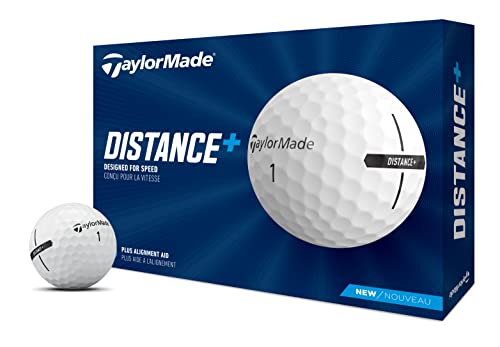
TaylorMade Distance+ Golf Balls
Strengths
- Explosive ball speed
- Soft feel for ionomer
- Excellent value
Trade-offs
- Limited greenside spin
- Basic two-layer design
- Not for low handicappers
If you’re after pure distance without breaking the bank, the TaylorMade Distance+ makes a strong case on paper. The REACT Speed Core and Extended Flight Dimple Pattern are engineered to maximize ball speed and flight time, and owners consistently report noticeably longer drives, especially in headwinds. It’s a two-layer ball with a mid-launch profile and a softer feel than most in this class, which helps it appeal to a broad range of players despite its distance-first design.
The ionomer cover won’t deliver tour-level spin around the greens, but that’s not the point here. This is a no-frills, durable ball built for golfers who prioritize getting the most out of their driver without overcomplicating the short game. When compared to pricier urethane-covered models, it trades finesse for value, but for weekend players or high-handicappers, that’s often the smarter trade.
Video review
TaylorMade SpeedSoft Ink Golf Balls

Strengths
- Very soft compression
- Great value
- Good iron response
Trade-offs
- Average spin control
- Limited wind penetration
- Not for distance chasers
The Speed Soft stands out as one of the most accessible soft-feel balls TaylorMade offers, and it’s priced to move. The low-compression PWRCORE is designed to boost ball speed without sacrificing feel, and owners agree it delivers a surprisingly lively response off the clubface, especially with irons and wedges. For $25 a dozen, it hits a sweet spot between performance and affordability, rare in a category where soft often means slow.
It’s not built for spin monsters or players obsessing over trajectory, but for the average golfer who wants a comfortable feel and solid distance without overspending, it makes a lot of sense. When stacked against the Distance+, it feels more refined and responsive around the greens, even if it doesn’t fly quite as far. My recommendation? This is the smarter buy if feel matters more than max yardage.
Video review
TaylorMade 2024 TP5X Golf Balls

Strengths
- High launch with low spin
- Excellent driver distance
- Superior spin separation
Trade-offs
- Expensive
- Firm feel not for everyone
- Minimal edge for casual players
The 2024 TP5X is built for players who want tour-grade distance with smart spin management. Its 5-layer Progressive Construction creates a steep speed gradient, low spin off the driver and long irons, high spin with wedges, and that formula shows up in owner feedback as consistent yardage control and reduced ballooning in the wind. The Speed Wrap Core claims a softer sound, and many reviewers confirm it has a more pleasing acoustic profile than previous generations, which matters more than some admit.
Compared to the TP5, the TP5X launches higher and delivers a firmer feel, making it a favorite among players with faster swings who want to optimize carry and roll. It’s not the cheapest option, but for the level of tech packed in, it offers real value if you’re serious about lowering scores. I’d lean toward this over the TP5 if you play firm, fast courses where flight height and rollout matter.
Product photos


TaylorMade 2024 TP5 Golf Balls

Strengths
- Outstanding greenside spin
- Soft, responsive feel
- Excellent control on approaches
Trade-offs
- High price
- Lower launch may not suit all
- Overkill for casual players
The 2024 TP5 is TaylorMade’s answer to players who want total control without compromise, especially around the greens. With the same 5-layer Progressive Construction as the TP5X, it focuses on optimizing spin separation, but with a lower launch and softer feel that many tour players prefer. The urethane cover is consistently praised in reviews for delivering exceptional bite on approach shots and delicate lag putts, making it a favorite for those who live on the fringe.
Where it outshines the TP5X is in short-game responsiveness. If you play courses with tight approaches or soft greens, the TP5 gives you the ability to stop the ball quickly, something weekend players notice immediately. It’s not cheaper than the TP5X, but for precision-focused golfers, it’s often the better pick. I’d go with this over the TP5X if you value control and feel more than raw distance.
Product photos


TaylorMade Tour Response Golf Balls

Strengths
- Enhanced short game spin
- Soft hybrid cover
- Better feel than entry-level balls
Trade-offs
- Not full tour-level spin
- Mid-tier durability
- Narrow performance gap vs TP5
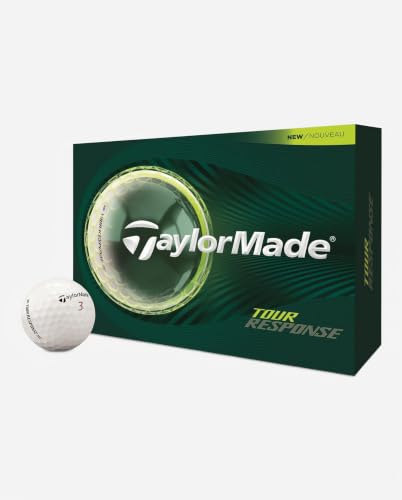
TaylorMade’s Tour Response aims to bridge the gap between tour-level performance and everyday playability, and on specs alone, it shows promise. The new Soft Hybrid Cover with urethane microcoating is designed to boost short game spin without sacrificing durability, a key win for mid-handicappers wanting more control. The 3-layer construction with a larger core and softer mantle suggests better feel and spin separation than most balls in its class, and reviewers frequently highlight improved wedge response compared to standard ionomer models.
Still, it doesn’t quite match the spin and feedback of a full 5-layer urethane ball like the TP5 series. It’s a step up from budget distance balls, but not a true tour performer. I’d pick this over the Distance+ if you’re someone who values approach shots and chipping control but isn’t ready to pay top dollar for five layers of tech.
Product photos

How We Tested taylormade golf balls
Rather than a hands-on lab test, my research focused on comparing published specifications and features across the TaylorMade lineup. I weighed owner reviews from multiple sources, alongside expert analysis from golf publications, to build a realistic picture of performance. As someone who frequently advises on equipment for trips detailed on GolfWorldTrips.com, I applied my understanding of how different ball characteristics impact playability for various skill levels.
For TaylorMade golf balls, distance and feel consistently emerged as the most important factors. Players want to maximize their tee shots, but a soft feel around the greens is crucial for control. Spin – both off the tee and with wedges – also heavily influenced my rankings, as it’s a key element in shaping shots and stopping power. Finding the right balance between these elements defines the value proposition of each ball.
Specifications are reliable for understanding construction (layers, core materials, cover type) and intended launch/spin characteristics. However, owner feedback provided vital insight into real-world performance, particularly regarding durability and how the ball feels on impact. I prioritized reviews that discussed performance across a full range of shots, not just distance, and considered the breadth of opinions when evaluating consistency. If you’re looking for more options, check out our guide to golf balls for men.
What To Look For In taylormade golf balls
Finding the right golf ball can feel overwhelming, but it truly makes a difference in your game. I’ve seen players shave strokes simply by switching to a ball that better suits their swing and playing style.
A quality golf ball balances distance, spin, and feel. Key considerations include the number of layers in construction, the cover material (surlyn or urethane), compression (affecting feel and launch angle), and dimple pattern (influencing aerodynamics and flight). Understanding these aspects allows golfers to optimize performance for their specific needs.
Understanding Compression
Compression is often misunderstood. It’s not about how hard a ball feels, but how much it deforms upon impact. Lower compression balls (like the TaylorMade SpeedSoft) are easier to compress for slower swing speeds, transferring energy more efficiently. Higher compression balls (like the TP5x) require a faster swing to realize their potential, offering more distance and control for experienced players. Don’t chase a low compression ball if you routinely swing at 110+ mph; you’ll lose distance.
Decoding Layers and Construction
The number of layers dramatically impacts a golf ball’s performance. Two-layer balls (like the TaylorMade Distance+) are generally the most affordable and prioritize distance. Three-layer balls offer a blend of distance and feel, while five-layer balls (such as the TaylorMade TP5 and TP5x) deliver the ultimate in spin control and all-around performance. For many, the jump from three to five layers isn’t necessary, but if you’re serious about scoring, it’s worth exploring. Here’s what I typically tell people:
- A two-layer ball is great for beginners or high-handicap players.
- A three-layer ball is a solid all-around choice for mid-handicap players seeking better feel.
- A five-layer ball is ideal for low-handicap players who prioritize spin and control around the greens.
Balancing Cost and Durability
Golf balls aren’t cheap, and losing a few per round is almost inevitable. While premium urethane balls offer superior performance, they also come with a higher price tag. If you’re prone to errant shots or simply want to practice without worrying about expense, a surlyn-covered ball like the TaylorMade Distance+ is a sensible choice. Don’t automatically dismiss cheaper options; a consistent, affordable ball is better than a premium ball you’re afraid to hit.
A practical rule of thumb: if you lose more than three balls a round, prioritize affordability over premium features.
If you’re still unsure, check out our golf ball guide for a more in-depth look at the options available. And for those seeking golf balls for average golfers, a three-layer ball often provides the best balance of performance and value.
TaylorMade Golf Balls Compared
Here’s a specification comparison of various TaylorMade golf ball models to help you find the right fit for your game.
| Product Name | Construction | Cover Material | Compression | Alignment Aid | Core Type |
|---|---|---|---|---|---|
| TaylorMade Distance+ | Two-Layer | Ionomer | Mid | Yes | REACT Speed |
| TaylorMade SpeedSoft Ink | Low | N/A | Low | No | PWRCORE |
| TaylorMade 2024 TP5X | Five-Layer | Urethane | N/A | No | Speed Wrap |
| TaylorMade 2024 TP5 | Five-Layer | Urethane | N/A | No | Progressive |
| TaylorMade Tour Response | Three-Layer | Urethane | N/A | No | Soft Hybrid |
Frequently Asked Questions
What TaylorMade ball is best for maximizing distance?
The TaylorMade Distance+ is specifically designed for distance, featuring a two-layer construction and REACT Speed core. Many golfers seeking long and forgiving balls will find this model delivers excellent results off the tee.
Are TaylorMade TP5 and TP5x balls really that different?
Yes, the TP5x has a firmer feel and higher launch angle than the TP5, making it better for players with higher swing speeds. While both are five-layer urethane balls, the TP5x generally provides more distance for those who can fully compress it.
Which TaylorMade ball is most suitable for beginners?
I often recommend the TaylorMade SpeedSoft for newer golfers. Its low compression makes it easier to compress, providing a softer feel and more distance even with slower swing speeds.
Is a urethane cover essential for a good golf ball?
Not necessarily. While urethane covers offer superior spin and feel, surlyn covers (like on the Distance+) are more durable and affordable. If you’re losing multiple balls per round, choosing affordable two-piece construction can save you money.
What does the alignment aid on the TaylorMade Distance+ actually do?
The visible orange alignment line helps golfers aim accurately on the tee and for putts. While a small feature, many players find it boosts confidence and improves consistency, especially when combined with the ball’s overall focus on distance and forgiveness.
The Bottom Line
Choosing a golf ball always comes down to balancing what you ask of it against what you’re willing to spend. For the vast majority of golfers, the TaylorMade Tour Response strikes that balance beautifully, offering a premium urethane feel and impressive spin control without the top-tier price tag. It’s a ball that will help you improve without emptying your wallet.
If you’re looking for a specific solution, TaylorMade has you covered. For players prioritizing affordability and distance, the TaylorMade Distance+ is a clear winner. And for those seeking the ultimate in performance – especially those who want golf balls for maximum distance – the TaylorMade TP5x remains the gold standard, though its benefits are most noticeable with higher swing speeds. Those seeking the performance of 3-piece balls will find the Tour Response a strong contender, too.
Ultimately, specs and layers matter less than finding a ball that inspires confidence. Focus on feel, consistent performance off the tee, and reliable spin around the greens. A ball that feels good in your hands and performs predictably will always be more valuable than chasing the latest technology or highest numbers.
