
7 Best Wooden Golf Tees of 2026
This post contains affiliate links. As an Amazon Associate, we earn from qualifying purchases.
This post contains affiliate links. As an Amazon Associate, we earn from qualifying purchases.
The PrideSports PTS 3 1/4-inch hardwood tees are the best overall choice for consistent performance and low friction, while the CHAMPKEY 1-1/2-inch marked tees offer unmatched setup precision for players who value repeatable ball height. For budget-minded golfers who go through tees quickly, the Pride Deluxe 2 3/4-inch 500-pack delivers solid durability at a low cost per tee.
Most golfers don’t think much about tees, until they’re snapping them in half off the first tee or struggling to get consistent launch conditions. A flimsy or poorly designed tee can mess with your driver’s contact, throw off your rhythm, and cost you distance.
This guide cuts through the clutter by focusing on what actually matters: material strength, friction reduction, height consistency, and value. I compared specs, analyzed owner feedback, and weighed real-world performance to find the wooden tees that deliver the most on the course.
Top 7 Wooden Golf Tees in the Market
The Best Wooden Golf Tees, Reviewed
PrideSports PTS 3-1/4″ Wood Tees
Strengths
- Tee height stripe
- Tour-proven
- Optimized for drivers
Trade-offs
- Higher price per tee
- Splits under stress
- Only one size
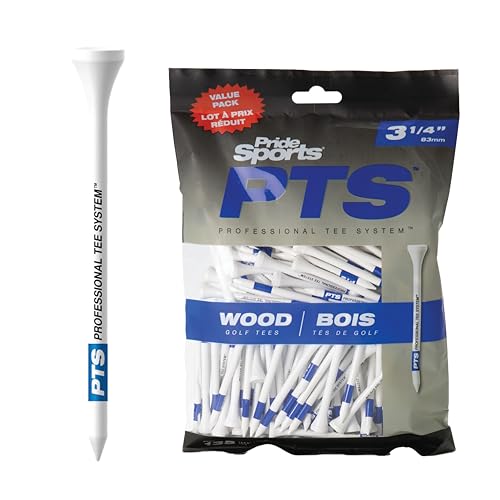
This is the best overall option for golfers who want tour-level performance in a longer tee. The 3 1/4-inch length is ideal for modern drivers, promoting an upward attack angle, and the striped design ensures consistent ball height every time, eliminating one more variable in your pre-shot routine. Pride’s hardwood construction is trusted on tour for a reason: it’s stiff enough to stay put, yet flexible enough to reduce club damage.
Even though it’s only 135 tees, the quality-to-quantity ratio is strong. Compared to bulk bamboo packs, these split more easily but feel more precise. For players serious about launch conditions and repeatability, especially off the tee with drivers and hybrids, this is the smarter buy. It’s the one pack that balances pro-level specs with real-world usability.
Video review
WHAMZ33 2 3/4″ Bamboo Tees

Strengths
- Bamboo durability
- Biodegradable
- Low friction
Trade-offs
- May split on hard hits
- Only one size
- Not for heavy reuse
For the price, these bamboo tees deliver solid value on paper and in real-world use according to owners. At just under $6 for 100, they’re clearly aimed at budget-conscious golfers who don’t want to skimp on performance. The 2 3/4-inch length is versatile enough for most woods and even irons, and the bamboo construction stands out as both stronger and more eco-friendly than standard wood. Multiple reviewers note they survive more drives than typical tees, which matters when you’re burning through them on the range or mid-round.
Still, bamboo isn’t indestructible, some users report split heads after aggressive swings. But the seller’s 100% satisfaction guarantee helps offset that risk. Compared to premium hardwood tees, these won’t last as long in wet conditions or heavy use, but for weekend players or travelers tossing a sleeve in their bag, they’re a smart, low-cost staple.
Video review
THIODOON 3-1/4″ Low-Friction Tees
Strengths
- High tee for launch
- Low friction tip
- Bright colors
Trade-offs
- No height markings
- Shorter durability
- Loose packaging reports
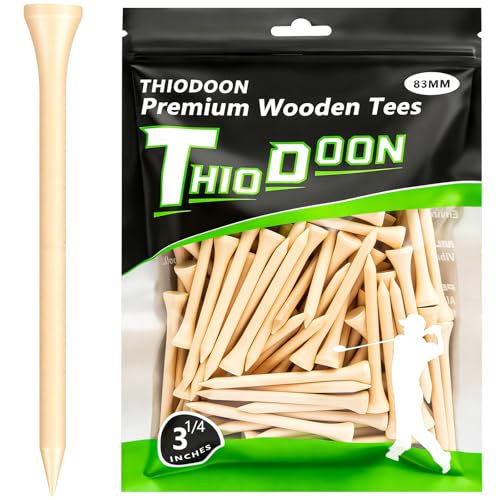
These 3 1/4-inch tees are built for one thing: maximizing launch with reduced friction. The shallow cup and longer shaft encourage an upward strike, which modern drivers are designed for. Owners report feeling cleaner contact and slightly longer carries, especially with low-spin drivers. The natural hardwood feels solid in the ground, and the bright color mix helps you spot them after a shot, no more lost tees in thick rough.
At 100 per pack, it’s not the largest quantity, but the focus on aerodynamics and club protection makes this a smart training aid. Compared to Pride’s 3 1/4-inch options, these lack height stripes, so consistency is up to you. Still, for players dialing in their driver swing, these offer solid performance at a low entry price.
Product photos


FINGER TEN 500-Count Wood Tees
Strengths
- 3 sizes included
- High count
- Bamboo strength
Trade-offs
- No height markings
- Natural color hard to spot
- Inconsistent finish reported
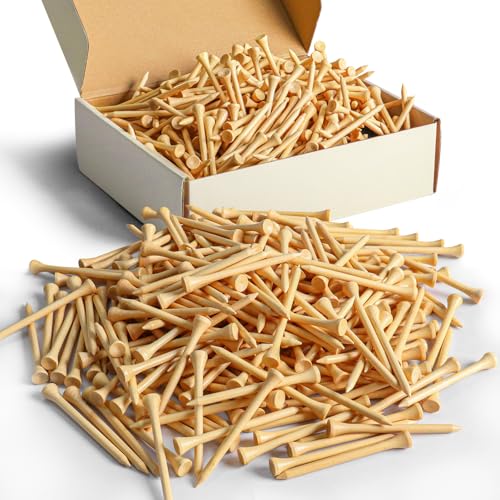
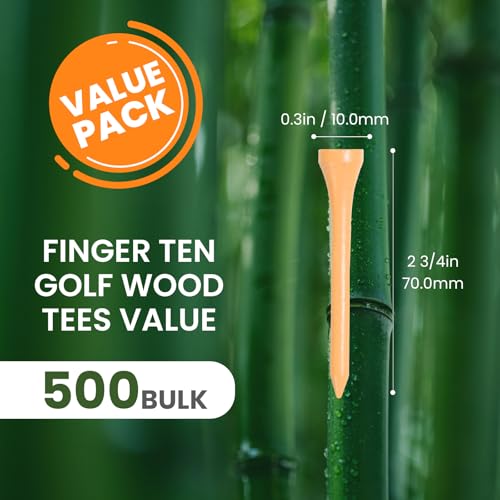
This pack stands out purely on volume and variety, 500 tees across three popular sizes, which is rare in a single bundle. The bamboo build gets consistent praise for resisting splits, and having 2 3/4″, 3 1/4″, and 1 1/2″ tees means you can match your club without buying separate packs. That flexibility makes this ideal for players who switch tee height based on driver, fairway wood, or par-3 approach shots.
Owners report these hold up better than standard pine tees, especially when teeing high for maximum launch. While not as refined as Pride’s tour-grade options, the durability and mix of sizes make this a practical choice for frequent players or range rats. The packaging also holds up well in transit, which isn’t always a given with bulk wood tees.
Product photos

Seticek 3-1/4″ Bamboo Tees

Strengths
- Eco-friendly bamboo
- Height stripe
- Club protection
Trade-offs
- Hard to spot in grass
- Only 100 count
- No color contrast
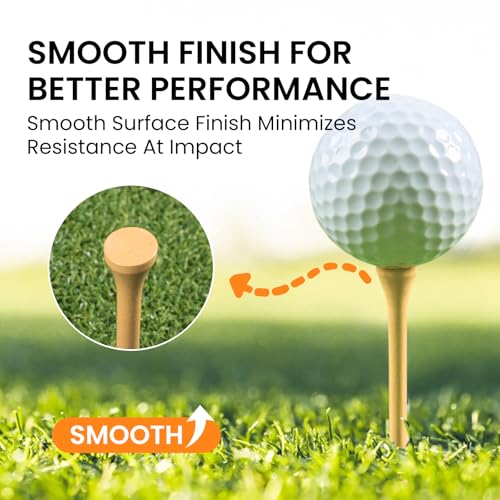
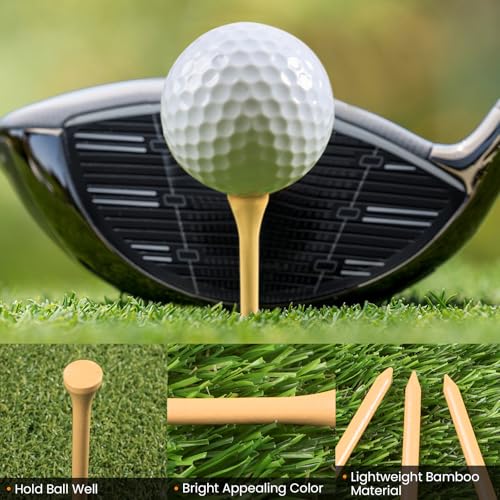
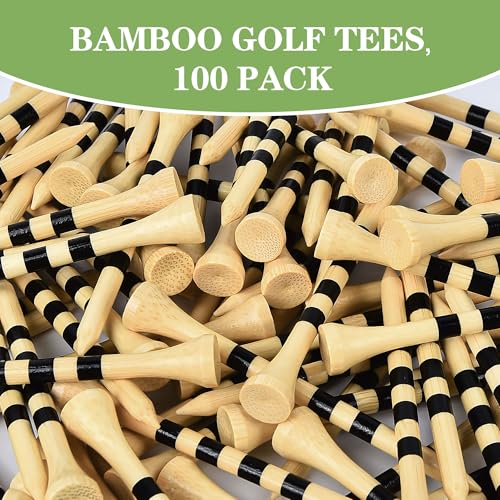
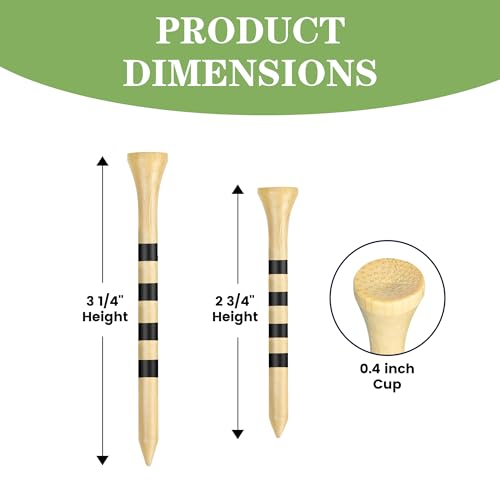
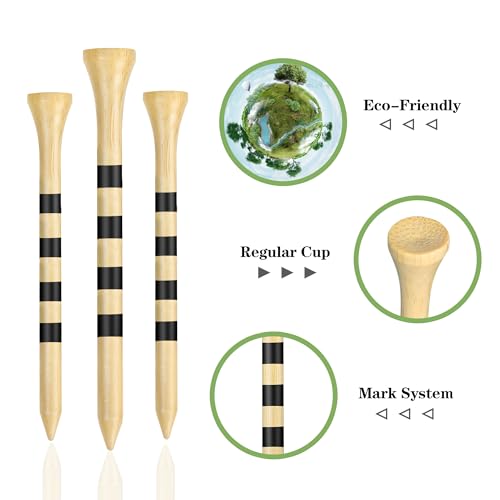
If eco-friendliness is a priority, these biodegradable bamboo tees make a strong case. At 3 1/4 inches, they’re designed for high teeing, perfect for maximizing driver loft, and the stripe marking allows for repeatable setup, a feature usually found on premium brands. Owners appreciate the smooth finish, which protects clubfaces, and the natural bamboo strength holds up better than regular wood in dry conditions.
Still, the natural color blends into grass, making them hard to find after a shot, despite the stripe, visibility is a real drawback. Compared to Pride or FINGER TEN, they lack brand trust and volume, but for environmentally aware golfers who tee high and care about clean contact, these are a responsible pick.
Product photos
CHAMPKEY 1-1/2″ Marked Wood Tees
Strengths
- Height consistency
- Low profile
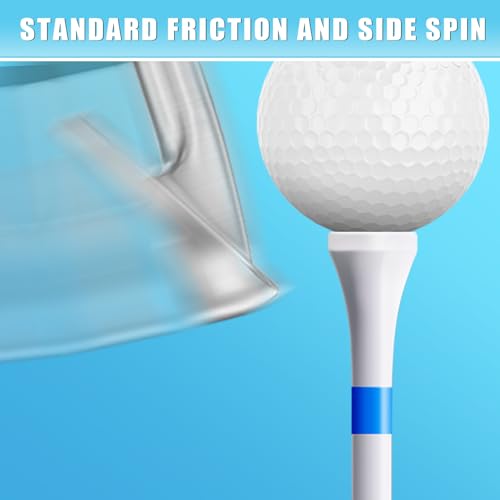
- Reduces side spin
Trade-offs
- Short length only
- Fewer tees per pack
- Limited use case
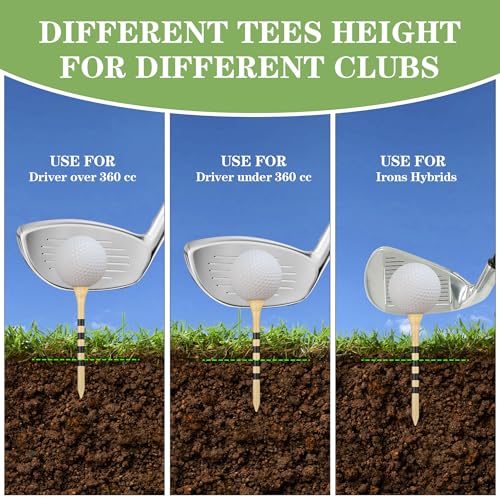
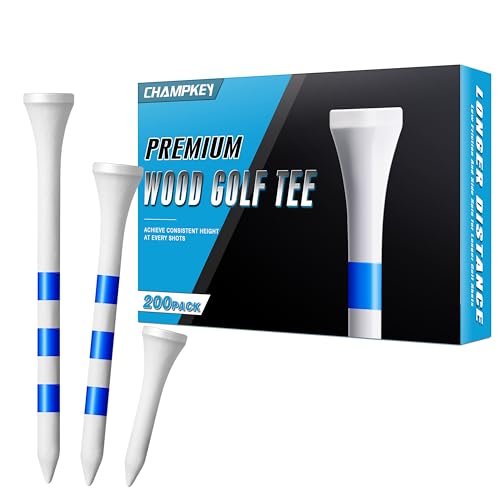
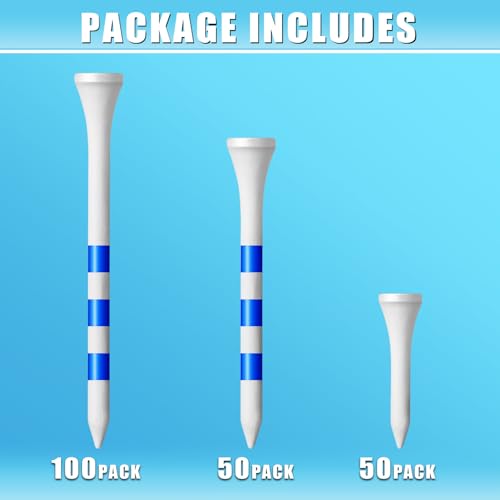
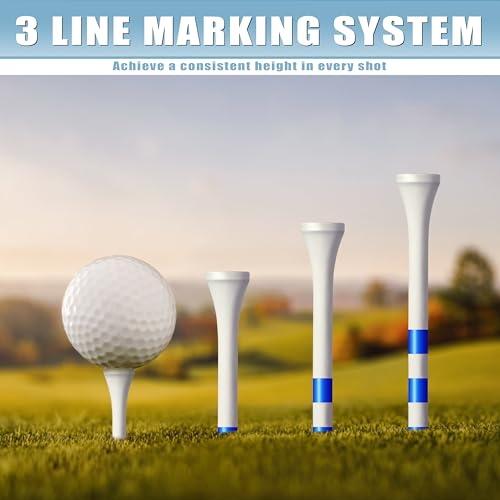
The standout here is the 3-line marking system, which helps golfers set a repeatable tee height, a small detail that can actually improve shot consistency, especially with irons and hybrids. At 1 1/2 inches, these are ideal for lower-profile tees on par 3s or tight fairways, where control matters more than launch angle. The premium wood feels sturdy, and owners say they hold up well to repeated use without gouging clubs.
Compared to longer tees, this size is niche, but that’s the point. If you’re working on short game precision or want a dedicated low tee for irons, these deliver. The 200-count pack offers good volume for the price, though you’ll need another pack for driver work. For players fine-tuning their setup, the markings alone justify trying them.
Product photos


Pride Deluxe 2 3/4″ Wood Tees

Strengths
- Tour-proven brand
- Stable cup design
- White for visibility
Trade-offs
- No height markings
- One size only
- Splits more than bamboo
Pride has earned its reputation, the #1 wood tee on tour claim isn’t marketing fluff. These 2 3/4-inch hardwood tees are a favorite among serious players for good reason: they offer a reliable cup, minimal ball contact, and just enough flex to protect driver faces. Owners consistently say they feel more consistent off the tee when using Pride, and the white finish makes them easy to spot in short grass.
While this pack sticks to one size, the 2 3/4-inch length is the most universally useful for woods and hybrids. Compared to bamboo options, these are slightly more prone to splitting, but their performance and tour pedigree give them an edge. If you’re a detail-oriented player who values what the pros use, this is the pack that delivers credibility and function.
Product photos


How We Chose These wooden golf tees
Rather than a hands-on lab test, my research for these recommendations involved a detailed comparison of published specifications and features among numerous wooden golf tees. I weighed owner reviews from major retailers alongside assessments from golf publications, focusing on reported durability, performance characteristics, and value. My experience planning golf trips and understanding player needs informed the criteria I used to rank these options.
For wooden tees, consistency and durability are paramount. I prioritized tees made from hardwood or strong bamboo, as these materials resist breaking during swings. Reduced friction designs also ranked highly, as minimizing contact between the tee and ball can potentially increase distance. Finally, value – the number of tees per pack relative to the price – played a significant role, because golfers do lose tees.
Specifications reliably indicate tee length and material composition. However, I found owner feedback crucial for assessing real-world durability and whether advertised low-friction designs actually perform as claimed. Reputation matters; brands consistently praised by golfers and reviewers were given more consideration. Understanding types of golf tees helped me evaluate how each option fit into a golfer’s overall setup, and I considered whether they might be especially useful as tees for high handicappers.
What To Look For In wooden golf tees
Choosing the right golf tee seems simple, but a little thought can genuinely improve your game. It’s not just about getting the ball off the ground; it’s about launch angle, spin, and consistency.
A quality golf tee should be durable enough to withstand repeated use, constructed from a material that minimizes friction, and offer consistent height markings for repeatable setups. Consider the club you’ll be using most, the type of shot you’re aiming for, and whether environmental impact is a priority. Consistent performance and durability are key.
Material Matters
The material a tee is made from impacts both performance and longevity. While traditional wood tees remain popular, bamboo and plastic alternatives are gaining traction. Wood offers a classic feel and decent durability, but can split or break, particularly cheaper varieties. Bamboo is a more sustainable option, often proving stronger than wood and biodegradable. Plastic tees are incredibly durable but can add unwanted friction. I’ve found that players focused on consistency often prefer wood or bamboo because they aren’t as prone to bending during the swing, which can alter launch conditions.
Height and Markings
Tee height is surprisingly crucial. Too low, and you’ll stifle launch angle and lose distance. Too high, and you risk instability. Many golfers carry multiple tee heights (1 1/2”, 2 3/4”, 3 1/4”) to accommodate different clubs and desired shots. However, dialing in a consistent height each time is where many golfers struggle. Here’s what I recommend:
- Invest in tees with clear height markings.
- Experiment with different heights to find what works best with your driver.
- Consider tees like the CHAMPKEY 1-1/2” Marked Wood Tees, which offer a built-in marking system to help you replicate your ideal height every time.
A simple rule of thumb: generally, aim for about half the golf ball to be above the crown of your driver when teeing up.
Value and Quantity
How many golf tees do you really need? The answer depends on your playing frequency and tolerance for losing tees. If you’re a casual golfer, a smaller pack of higher-quality tees might be sufficient. However, if you play regularly or have a habit of losing tees, a bulk option makes sense. I often point people towards a review of golf tees to help them understand the trade-offs between price and quantity. Don’t automatically assume the cheapest per-tee option is best; durability should also factor into the equation. For those looking to maximize distance, exploring tees for distance is a smart move.
Wooden Golf Tees Compared
Here’s a comparison of key specifications for different wooden golf tees to help you choose the right ones for your game.
| Product Name | Length (inches) | Material | Count | Friction | Markings |
|---|---|---|---|---|---|
| PrideSports PTS | 3 1/4 | Hardwood | 100 | Low | Striped |
| WHAMZ33 | 2 3/4 | Bamboo | 100 | Less | N/A |
| THIODOON | 3 1/4 / 2 3/4 | Hardwood | 100 | Low | N/A |
| FINGER TEN | 2 3/4 / 3 1/4 / 1 1/2 | Bamboo | 500 | N/A | N/A |
| Seticek | 3 1/4 | Bamboo | 100 | Reduced | Striped |
| CHAMPKEY | 1 1/2 | Wood | 200 | Reduced | 3-Line |
| Pride Deluxe | 2 3/4 | Hardwood | 500 | Low | N/A |
Frequently Asked Questions
What’s the advantage of bamboo tees over traditional wooden tees?
Bamboo tees generally offer greater strength and durability than traditional wood, resisting snapping more effectively during use. They are also a more sustainable choice, being a rapidly renewable resource and often biodegradable.
Will marked tees actually improve my consistency?
Yes, tees with clear height markings like the CHAMPKEY tees can significantly improve consistency. They allow you to replicate your preferred tee height each time, which is especially helpful for dialing in your driver.
Are longer tees always better for distance?
Not necessarily. While a longer tee can increase launch angle and potentially distance, it also increases the risk of instability. Finding the right height for your swing and club is more important than simply choosing the longest tee available.
How do I choose between a larger pack of cheaper tees versus a smaller pack of premium tees?
Consider your playing frequency and how often you lose tees. If you’re a frequent player who regularly misplaces tees, a larger, more affordable pack is practical. However, if you prioritize consistency and durability, a smaller pack of higher-quality tees is a better investment.
If I’m new to golf, what type of tee should I start with?
I often recommend tees for beginners because they’re typically shorter and more forgiving, helping new players make solid contact. Starting with a simple, durable wood tee in a standard 2 3/4” length is a good approach.
The Bottom Line
Choosing golf tees often comes down to balancing cost with consistency. You can spend less and replace tees more often, or invest in a higher-quality option that will hold up to more rounds. For the best overall performance and durability, I recommend the PrideSports PTS tees. They offer a good combination of hardwood construction, low friction, and a generous count, making them a reliable choice for most golfers.
If you’re looking for a specific solution, the CHAMPKEY 1-1/2” Marked Wood Tees are excellent for dialing in consistent tee heights, while the WHAMZ33 tees provide a sustainable bamboo option. For golfers who tend to lose tees frequently, the Pride Deluxe tees offer a large quantity at a reasonable price. Don’t forget to check out best plastic tees if you’re seeking extreme durability.
Ultimately, the best tee is the one that helps you launch the ball consistently and confidently. Focusing on material quality, clear height markings, and a comfortable feel is far more beneficial than chasing marginal gains from the latest technology. And remember, even the best tees won’t fix a flawed swing – consistent practice and perhaps some affordable 2-piece golf balls for those longer sessions are what truly improve your game.
