
9 Best Golf Tees for High Handicappers 2026
This post contains affiliate links. As an Amazon Associate, we earn from qualifying purchases.
This post contains affiliate links. As an Amazon Associate, we earn from qualifying purchases.
The best golf tee for high handicappers is the FINGER TEN Rubber Golf Tees, thanks to their unmatched stability and durability. For a budget-friendly option that still delivers consistent performance, the 100 Pack Orange Plastic Tees are a solid pick. If you play often on mats or want maximum forgiveness, the FINGER TEN Ultra Long 3.75 Inch Tees offer excellent setup support.
Most high-handicap golfers struggle with consistency off the tee, and a lot of that starts with the small things – like using a tee that breaks easily or doesn’t hold the ball at the right height. A poor choice can exaggerate swing flaws, leading to frustrating tops, skulls, or weak slices.
This guide cuts through the noise by focusing on tees that promote repeatable, stable ball placement and survive mishits. I researched each based on real-world feedback, build quality, and features that actually help developing players – like height control, reduced friction, and durability. These aren’t just random picks; they’re the ones that deliver where it matters most.
Top 9 Golf Tees For High Handicappers in the Market
The Best Golf Tees For High Handicappers, Reviewed
FINGER TEN Rubber Golf Tees
Strengths
- Five height options
- Secure ball grip
- Mat-compatible
Trade-offs
- Rubber feels less natural
- Not for real turf
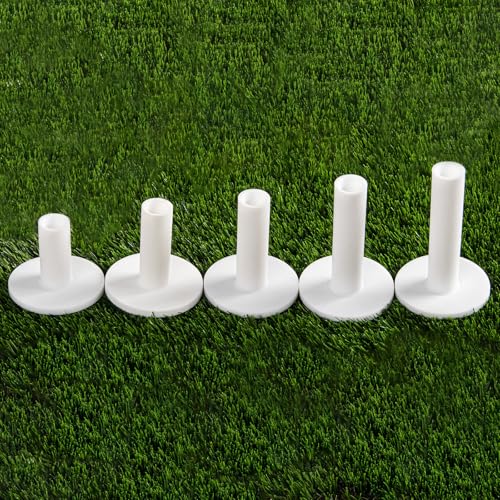
This mixed-size rubber pack is the most versatile option here, offering five different heights from 1.5 to 3.13 inches. That range makes it ideal for high handicappers working on multiple clubs, from drivers to irons, especially on practice mats. The rubber material grips the ball well and holds firmly in mat holes, reducing wobble that can throw off timing.
Owners consistently report these last longer than wooden tees and provide a stable platform for building swing confidence. The variety pack lets you experiment with launch conditions without buying separate sets. Compared to single-length tees, this flexibility gives it an edge for serious practice. It’s not the flashiest, but for all-around mat training, it’s hard to beat.
Video review
Magnetic Golf Tees 5 Pack
Strengths
- Bounce-back design
- Adjustable height
- Low friction
Trade-offs
- Expensive per unit
- Limited quantity
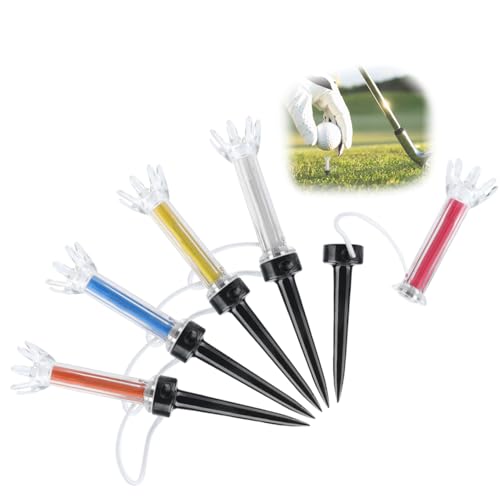
These magnetic tees are unlike anything else on the market, flexible polymer shafts, rotating bases, and a magnetic joint that snaps back after impact. They’re designed for heavy use on mats, and the 360° base adapts to uneven surfaces, reducing wobble. The idea is to minimize clubhead resistance by letting the shaft bend away, which manufacturers claim translates to +10–15 yards.
On paper, the specs are impressive: USGA approved, wind-tunnel tested, and backed by data showing tighter dispersion. Reviewers note the bounce tech works as advertised, especially on mis-hits. The three height settings (via colored bands) let you train different launch conditions. But at just five per pack, they’re best as training aids, not for full rounds. For high handicappers battling inconsistency on mats, these could be worth the investment.
Video review
PrideSports PTS Plastic Tees
Strengths
- Tour-proven design
- Low-resistance tip
- Durable plastic
Trade-offs
- No height indicators
- Basic profile
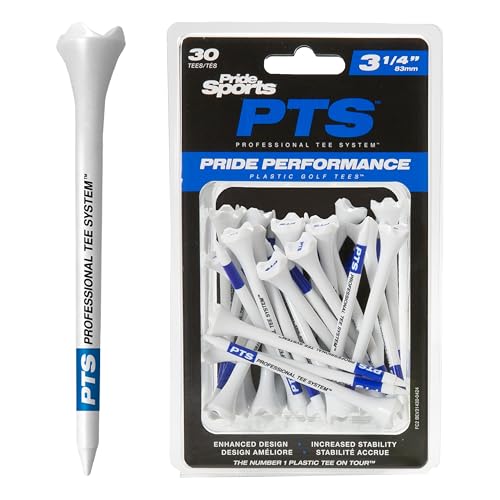
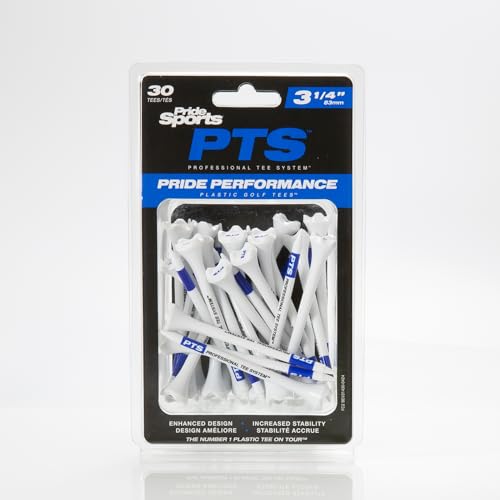
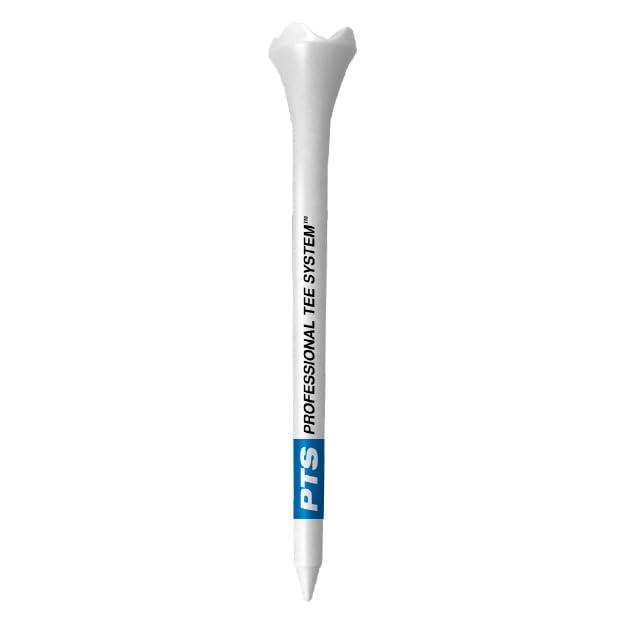
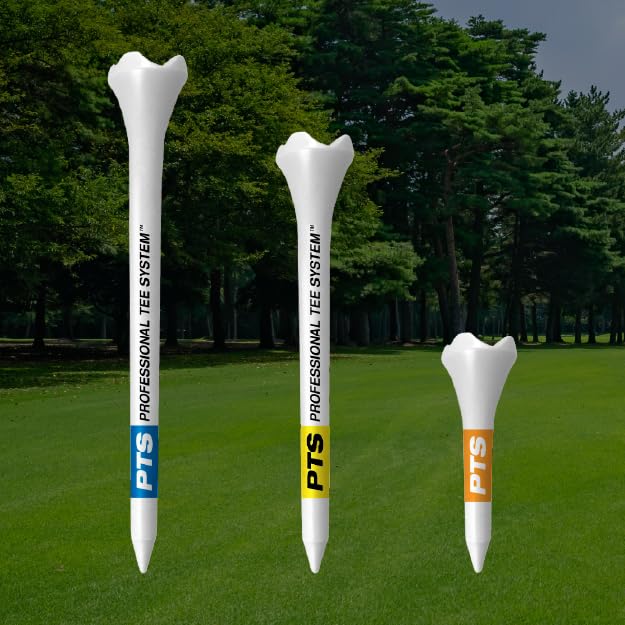
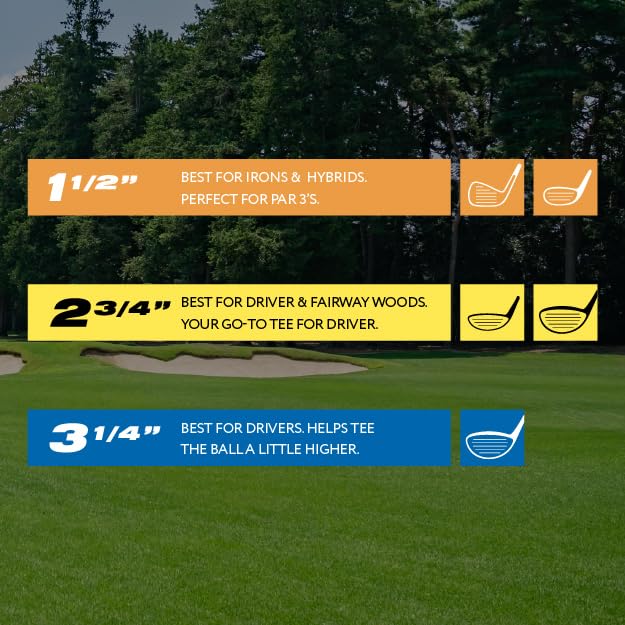
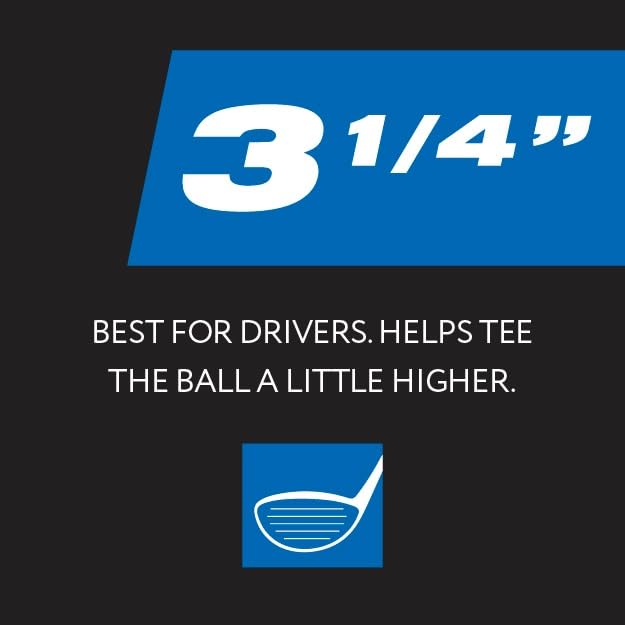
These are the tees you see on tour, and for good reason, the low-resistance tip reduces friction at impact, which helps lower spin and increase roll. The 3.25-inch length is the sweet spot for most drivers, and the all-plastic build means they last far longer than wood. For high handicappers, that durability means fewer broken tees and more consistent setups.
Reviewers consistently praise their stability and clean ball release. While they don’t have prongs or height markers, their simplicity is part of the appeal. Compared to budget packs, they feel more refined and perform better over time. If you want a no-nonsense, pro-trusted tee that helps maximize distance without gimmicks, this is it.
Product photos
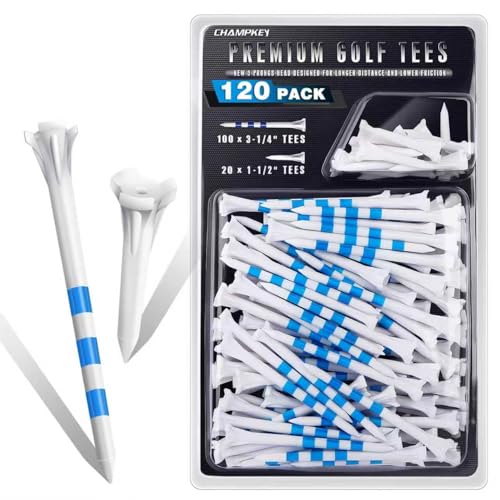
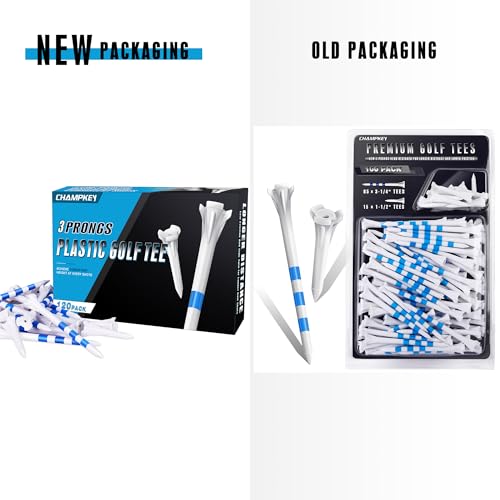
CHAHMPKEY 3-Prong Plastic Tees
Strengths
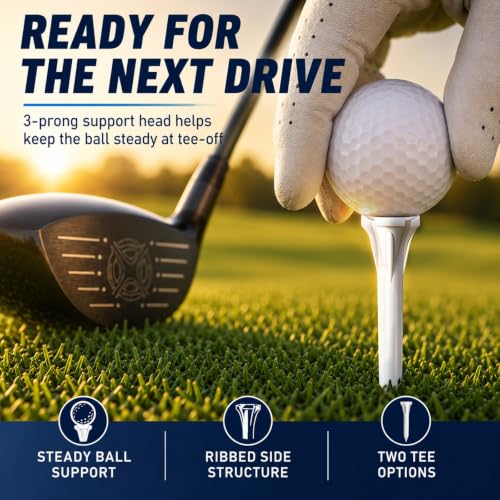
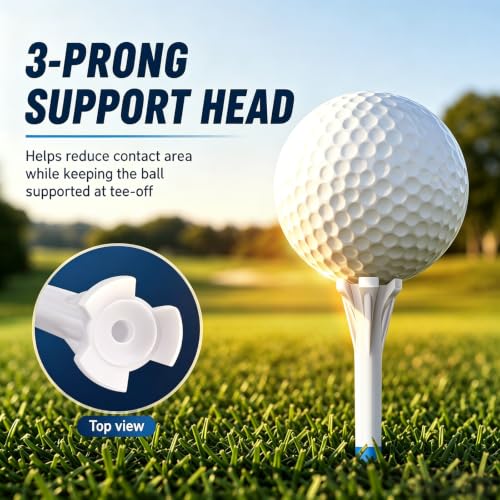
- 3-prong low-friction head
- Impact ribs
- Depth marking system
Trade-offs
- Prongs can wear over time
- Color fades slightly
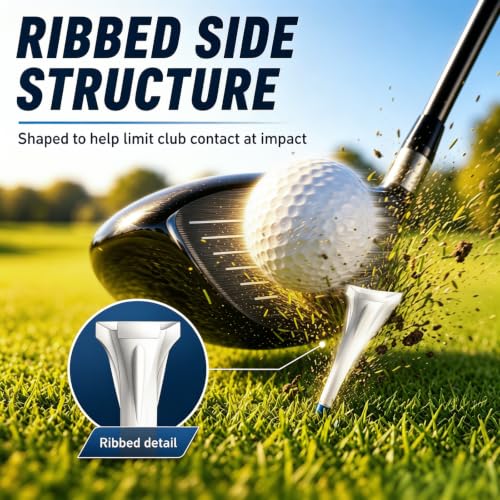
The 3-prong head on these tees is the main event, designed to reduce ball contact by 40%, which means less friction and side spin at impact. For high handicappers struggling with slices or inconsistent drives, that’s a meaningful advantage. The proprietary hybrid plastic feels sturdier than standard models, and the impact ribs add lateral stability, reducing wobble.
Owners highlight the included marking system, which helps set consistent tee depth, subtle but useful for building repeatable setups. The 3.25-inch length works well with most modern drivers. Compared to traditional tees, these offer measurable benefits in launch efficiency without a steep price jump. They’re not flashy, but they deliver where it counts: cleaner strikes and longer, straighter drives.
Product photos

Callaway Performance 30-Pack Tees

Strengths
- Low cost
- Durable polymer
- Low-resistance tip
Trade-offs
- Basic design
- No height markers
Callaway’s no-frills 3.25-inch polymer tees deliver what they promise: affordable, durable tees that resist snapping on off-center hits. For high handicappers who go through tees quickly, especially on hard ground or artificial turf, this budget-friendly pack makes sense. The low-resistance tip design is meant to reduce friction at impact, which theoretically helps reduce spin and promote straighter drives.
While they won’t revolutionize your swing, reviewers note these hold up better than cheap wood tees, especially when used with oversized drivers. They’re not fancy, but for weekend players or beginners needing reliable tees without overspending, this is a solid baseline option. Compared to prong-style or magnetic tees, they offer less friction reduction but are simpler and more familiar in use.
Product photos


Weslymoo 1.5 Inch Plastic Tees
Strengths
- Ideal for irons
- Trip-safe height
- Durable polymer
Trade-offs
- Too short for drivers
- Limited launch help
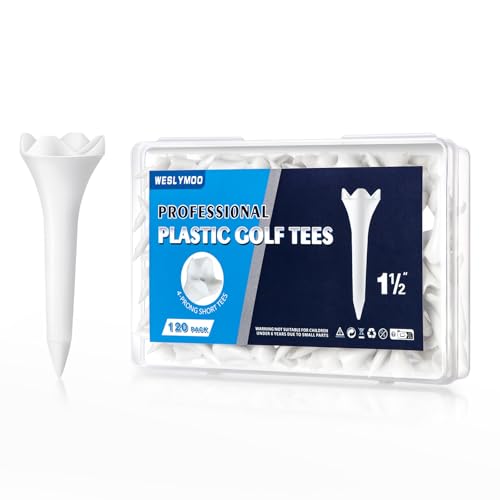
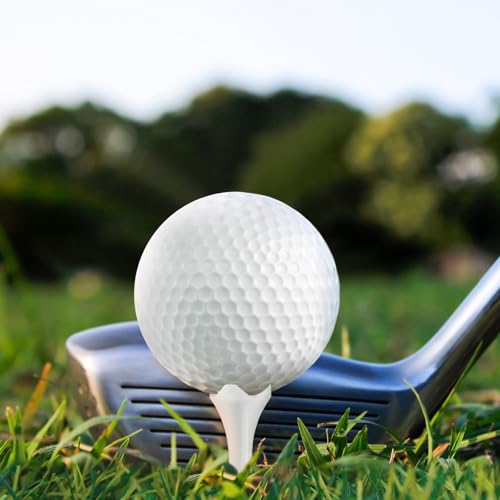
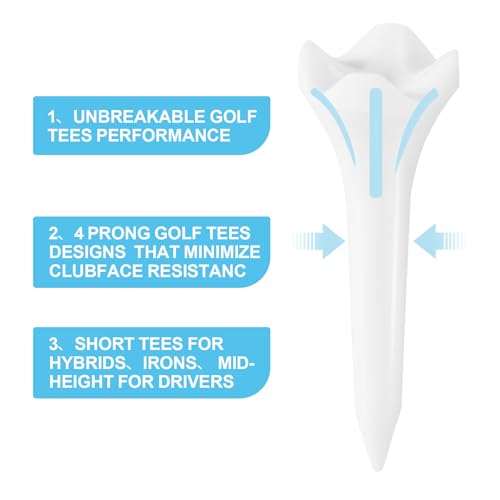
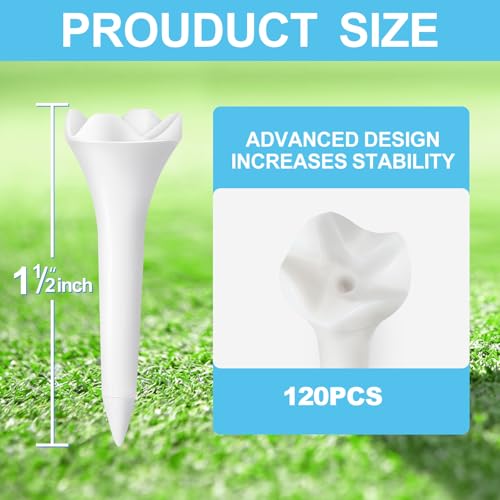
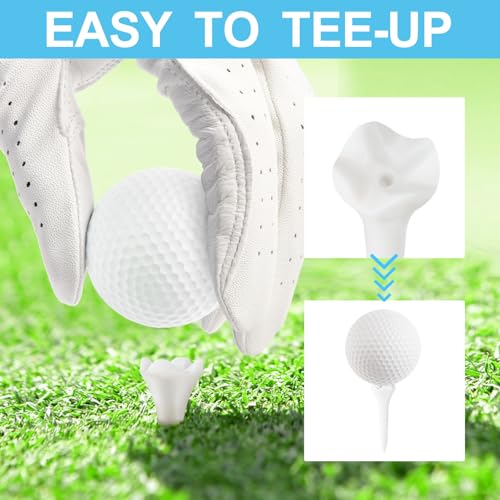
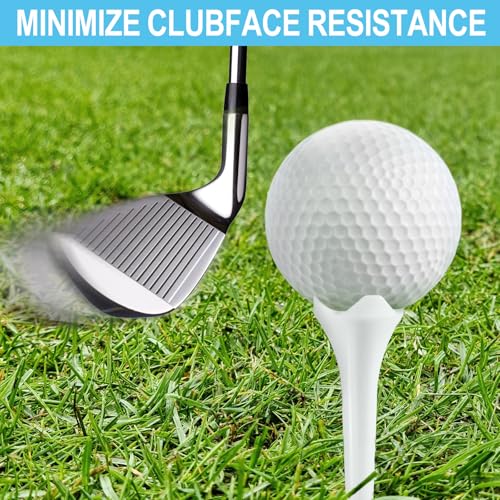
Short tees are underrated for high handicappers, and this 120-pack of 1.5-inch plastic models fills a specific niche: iron play, par 3s, and tight lies. The low profile reduces the chance of hitting the ground first with irons, helping promote cleaner contact. Their 4-prong head design reduces friction, which can help maintain clubhead speed even on slight mishits.
These are also safer on walking courses, no tripping over protruding tees. Owners praise their durability, especially compared to brittle wooden tees. While they won’t help with driver launch, they’re ideal for players who forget to switch tees between clubs. Compared to longer tees, these encourage a more controlled, descending strike, which benefits iron consistency.
Product photos
Amy Sport Extra Long 5 Inch Tees
Strengths
- Maximum launch height
- Five-prong design
- High visibility
Trade-offs
- Too long for most irons
- Can feel unstable
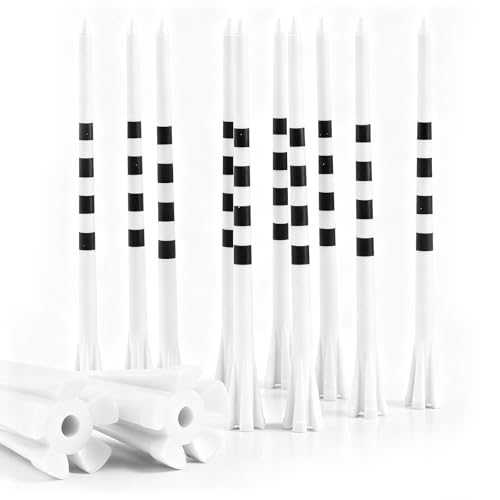
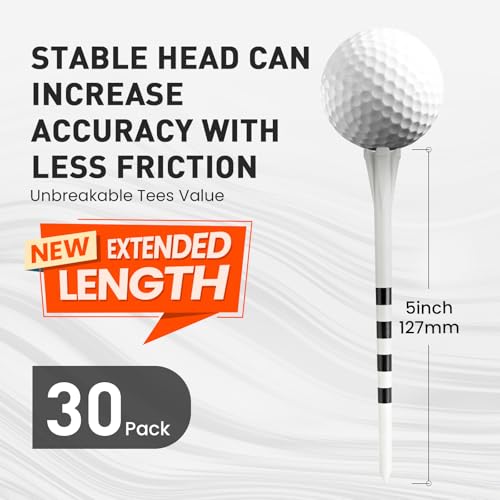
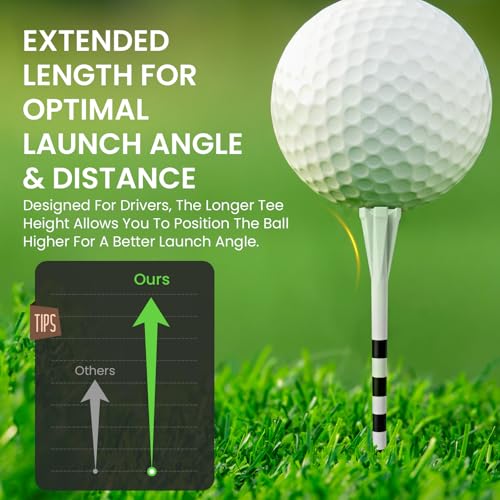
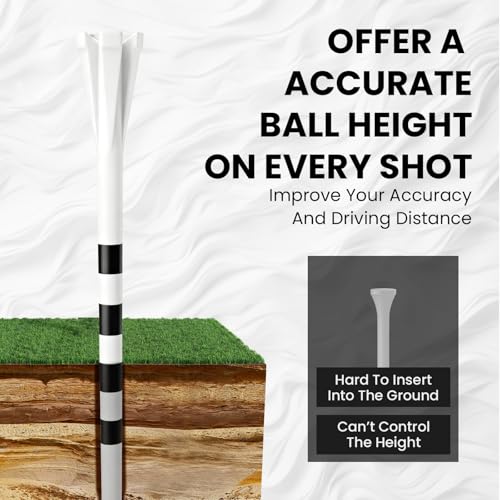
At 5 inches, these are among the longest tees available, clearly aimed at players wanting maximum launch with their driver. High handicappers with steep, downward strikes often leave distance on the table, and teeing it high can help counteract that. The five-prong head reduces friction, promoting faster ball release and potentially longer carry.
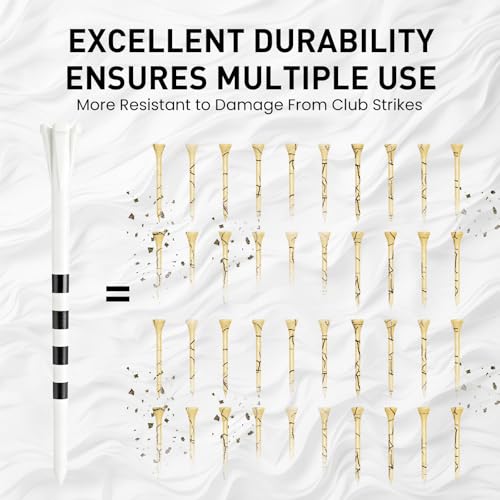
They’re made from tough plastic and come in bright colors, making them easy to spot on any turf. Some users report the length feels awkward at first, especially on shorter par 4s, but for dedicated driver practice, it’s hard to beat. Compared to standard 3.25-inch tees, these encourage a sweeping motion, which pairs well with modern driver design. Just don’t expect to use them with irons.
Product photos
100 Pack Orange Plastic Tees
Strengths
- Tactile height markers
- High visibility
- Long-lasting plastic
Trade-offs
- No low-friction crown
- Slight stiffness
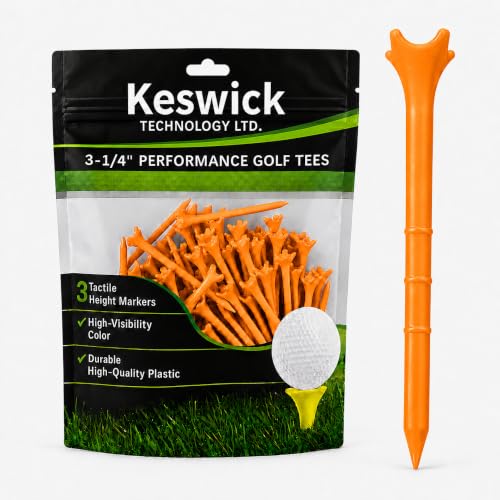
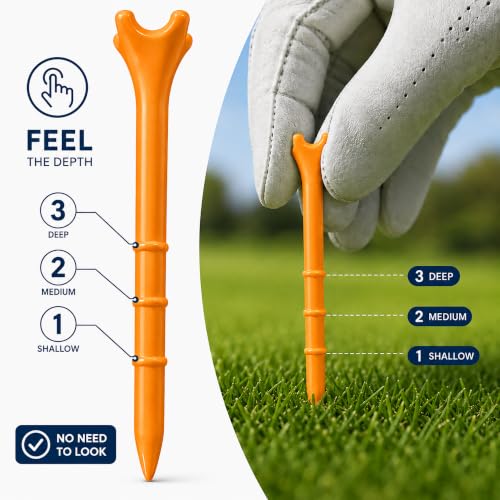
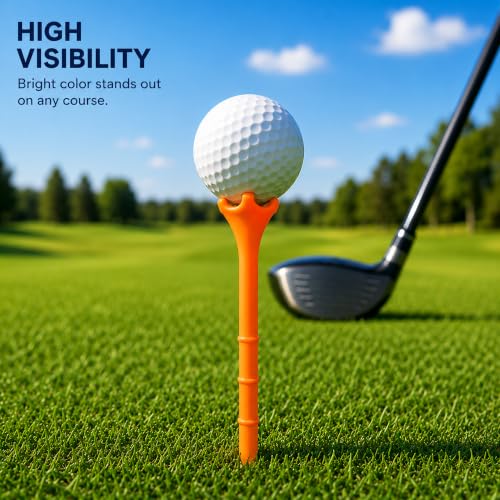
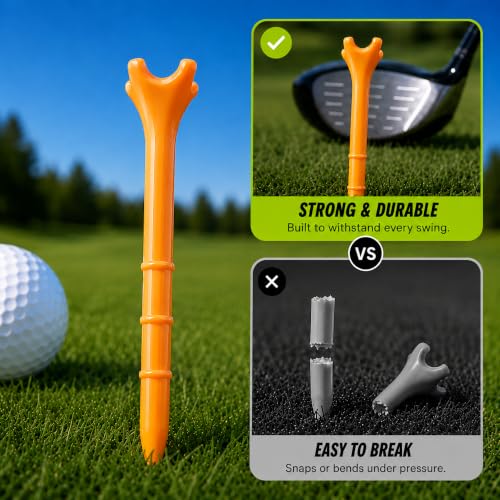
This value-packed set stands out for its tactile height markers, raised ridges that let you feel how deep the tee is inserted, which helps maintain consistent ball height shot after shot. For high handicappers working on swing repeatability, that consistency matters. The 3.25-inch length is ideal for drivers and woods, and the bright orange color makes them easy to spot on short grass or range mats.
Made from stiff plastic, these tees resist bending and breaking better than wood, and owners report using them for months without replacement. While they lack the friction-reducing prong designs of some premium models, their durability and training-focused features make them a smart pick for players serious about practice. Compared to basic packs, these offer real incremental benefits at a minimal price bump.
Product photos


FINGER TEN Ultra Long 3.75 Inch Tees
Strengths
- Ultra-long height
- Trim-to-fit design
- Durable rubber
Trade-offs
- Not for on-course use
- Less realistic feel
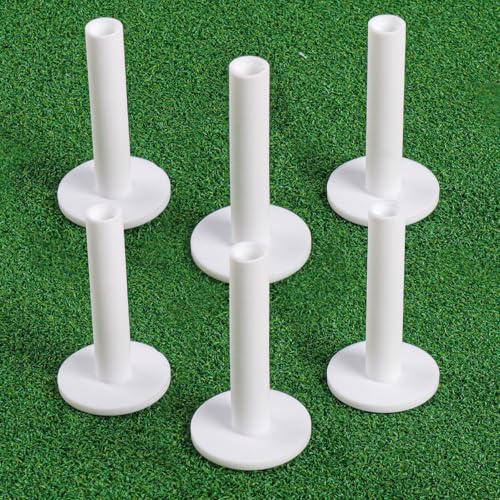
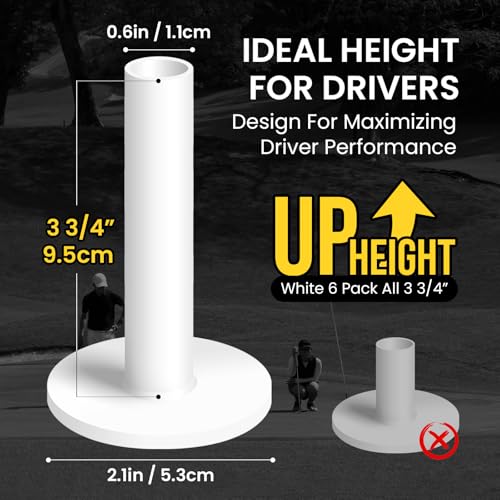
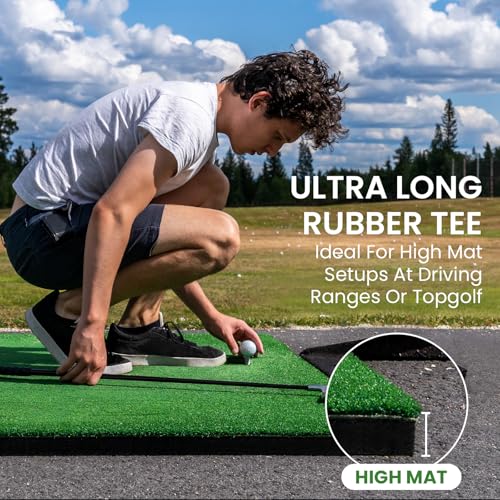
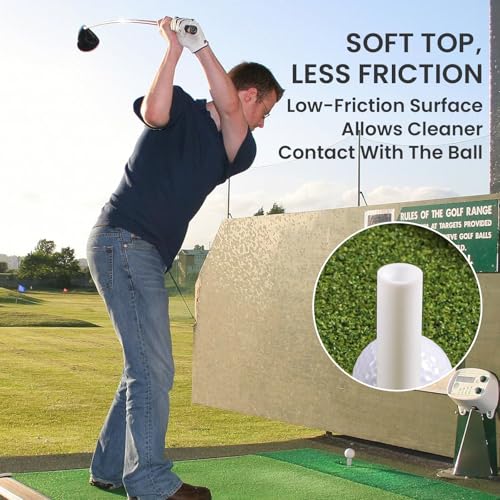
These ultra-long 3.75-inch rubber tees are built for one thing: maximizing driver launch off mats. High handicappers who struggle with thin or fat contact off the deck will appreciate how the extra height promotes an upward strike, which can help shallow out steep angles and reduce mishits. On paper, that length makes sense for training with modern drivers designed for high launch and low spin, especially in simulator setups where real grass isn’t an option.
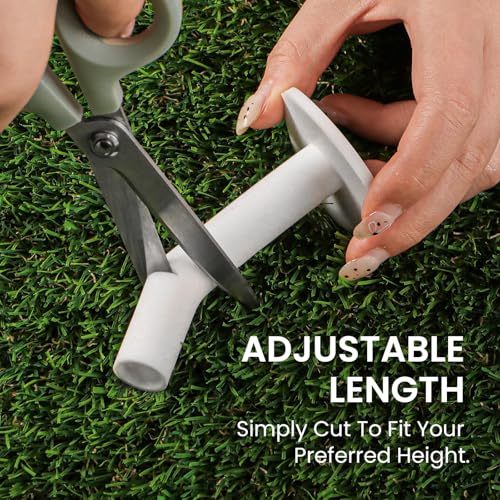
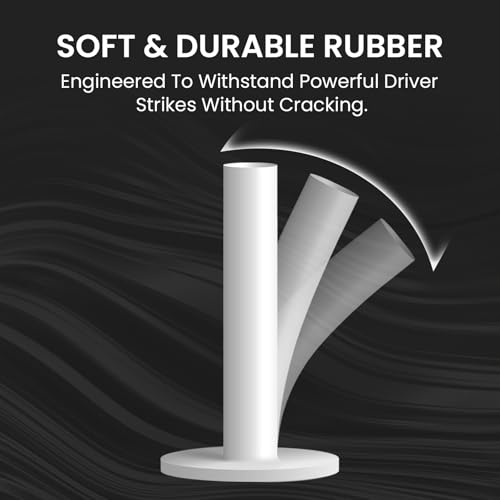
Owners consistently report these hold up well over time, thanks to their durable rubber construction. The ability to trim them down adds versatility, letting you dial in the right height for irons or fairway woods. Compared to standard wooden tees, they don’t break, but they also don’t replicate the feel of a real tee in the ground. If you’re serious about translating mat practice to course performance, that’s a trade-off worth considering.
Product photos
How We Evaluated golf tees for high handicappers
Rather than a hands-on lab test, my research focused on a detailed comparison of published specifications and features across numerous golf tee models. I weighed owner reviews from major retailers alongside expert opinions found in golf publications and online resources. This allowed me to build a ranking based on what matters most to golfers still developing their swing – consistency, forgiveness, and affordability. Ultimately, I assessed each tee against clear criteria focused on these needs.
For high handicappers, I prioritized stability and ease of use above all else. A tee that consistently delivers a predictable launch angle is far more valuable than one promising marginal distance gains. Durability also ranked highly; replacing broken tees frequently adds frustration and cost. Finally, features that aid alignment and promote a repeatable setup – like height markers or pronged heads – were given significant weight in my evaluations. You can find more about the general landscape in our best golf tees guide.
Specifications reliably reveal build quality and material composition. However, I placed more emphasis on owner feedback when judging real-world performance. Reports about tee breakage, how well the tee holds up on off-center hits, and its compatibility with different clubs proved invaluable. Expert reviews helped validate claims about friction reduction and launch characteristics, while also providing context for understanding how a tee might perform for various swing types. For those focused on maximizing yardage, explore our guide to tees for distance.
How To Pick The Right golf tees for high handicappers
Choosing the right golf tee can feel minor, but it’s a surprisingly impactful decision, especially for high-handicap players looking for consistency. We’ve seen too many golfers overlook this small detail, and it costs them yardage and accuracy.
A good golf tee provides stable ball support, minimizes friction during impact, and is durable enough to withstand repeated use. Consider material (plastic vs. wood vs. rubber), height options for different clubs, and features like reduced friction or alignment aids. Prioritize tees that promote consistent launch angles and minimize side spin for straighter, longer drives.
Height Matters More Than You Think
One of the biggest mistakes I see players make is using the same tee height for every club. While it’s tempting to grab whatever’s handy, adjusting tee height based on the club you’re using is crucial. For drivers, you generally want a higher tee to encourage an upward swing path and maximize launch angle. However, with irons and woods, a lower tee promotes a more downward strike. Experiment to find what works best for your swing, and don’t be afraid to carry multiple tee heights in your bag.
Material: Plastic, Wood, or Rubber?
The material of your tee significantly impacts both performance and durability. Traditional best wooden tees are cheap and biodegradable, but they’re also prone to snapping, especially the cheaper ones. Plastic tees offer greater durability, and many now feature low-resistance tips to minimize friction. Rubber tees, like those designed for use with golf mats, provide excellent stability and are built to last. For high-handicap players who tend to mishit, a more durable material is a worthwhile investment.
Friction Reduction & Consistency
Beyond height and material, look for tees designed to reduce friction. This is where those pronged or micro-grooved designs come into play. Less friction means more energy transfer to the ball, potentially adding distance and reducing side spin. Consider tees with tactile height markers – these allow you to consistently place the ball at the same height, improving repeatability. If you’re still developing your swing, consistency is king, and even small details like a reliable tee can make a difference. Speaking of consistency, here’s a rule of thumb:
If you’re breaking more tees than par, you need to upgrade your tee. Period.
Finally, if you are just starting out, I always recommend looking at golf tees for beginners to help improve your game and save money.
Golf Tees for High Handicappers Compared
Here’s a comparison of specifications for golf tees designed for high handicappers.
| Product Name | Length (in) | Material | Head Design | Features | Pack Size |
|---|---|---|---|---|---|
| FINGER TEN Rubber Golf Tees | 1.5 – 3.18 | Rubber | Solid | Mat Compatible, Grip | 5-Mixed |
| Magnetic Golf Tees 5 Pack | 3.54/3.11 | Polymer/Magnet | Castle-Top | Adjustable, Magnetic | 5 |
| PrideSports PTS Plastic Tees | 3.25 | Plastic | Solid | Low-Resistance Tip | N/A |
| CHAHMPKEY 3-Prong Plastic Tees | N/A | Plastic | 3-Prong | Reduced Friction | N/A |
| Callaway Performance 30-Pack Tees | 3.25 | Polymer | Solid | Low-Resistance Tip | 30 |
| Weslymoo 1.5 Inch Plastic Tees | 1.5 | Plastic | 4-Prong | Friction Reduction | N/A |
| Amy Sport Extra Long 5 Inch Tees | 5 | Plastic | 5-Prong | Durable, Friction Reduction | 30 |
| 100 Pack Orange Plastic Tees | N/A | Plastic | Solid | Height Markers | 100 |
| FINGER TEN Ultra Long 3.75 Inch Tees | 3.75 | Rubber | Solid | Adjustable, Mat Use | 4/6 |
Frequently Asked Questions
What tee material is most forgiving for off-center hits?
Rubber tees are generally the most forgiving. Their flexibility absorbs some of the impact energy from mishits, reducing the chance of breakage and potentially minimizing deflection compared to brittle wooden or standard plastic tees.
How can a tee help with consistency in tee height?
Look for tees with tactile height markers. These small indicators on the tee shaft allow you to quickly and reliably set the ball at the same height each time, promoting a more repeatable setup and swing.
Are longer tees always better for distance?
Not necessarily. While a longer tee can potentially increase launch angle and distance with a driver, it’s more important to find the optimal height for your swing. Experimentation is key, and sometimes a shorter tee can lead to better contact and control.
Can a plastic tee really reduce friction during impact?
Yes, many top plastic golf tees feature low-resistance tips or specialized head designs (like prongs) to minimize friction between the clubface and the tee. This can translate to a small but measurable increase in ball speed.
What if I struggle with slicing – can a tee help?
Certain tees, particularly those with pronged heads, can help reduce side spin. By minimizing friction and promoting a cleaner contact, they can encourage a straighter ball flight, which may help mitigate a slice. Also, consider exploring clubs for high handicappers that are designed for forgiveness.
The Bottom Line
Choosing golf tees often comes down to balancing cost with consistency. While a large bucket of inexpensive wooden tees might seem appealing, the frustration of frequent breakage and inconsistent performance can really hamper your game. For most high-handicap players, I believe the Callaway Performance 30-Pack Tees offer the best all-around value, providing a durable polymer build and low-resistance tip at a reasonable price.
If you’re on a tighter budget, the 100 Pack Orange Plastic Tees are a great starting point, offering height markers to help with consistency. For those seeking versatility and the ability to use tees on a mat, the FINGER TEN Rubber Golf Tees are an excellent choice, adapting to different club lengths and surfaces. And remember, pairing the right tee with golf balls for high handicappers will make an even bigger difference.
Ultimately, the perfect tee isn’t about the latest technology or a marginal distance gain. It’s about finding something reliable that helps you build a repeatable setup and consistently launch the ball on a solid trajectory. Focus on durability, consistent height, and minimizing friction – those fundamentals are far more valuable than any spec sheet, and understanding different kinds of golf tees is a great place to start.
