
Women’s Golf Tips for Beginners: The PGA Pro’s 3-Step Method
This post contains affiliate links. As an Amazon Associate, we earn from qualifying purchases.
This post contains affiliate links. As an Amazon Associate, we earn from qualifying purchases.
Golf tips for women beginners start with three essential actions: get a minimal set of clubs that actually fit your height and swing, spend 70% of your practice time on shots inside 100 yards, and learn the one-swing thought that stops over-swinging. The driver comes last, not first.**
That gap between “wanting to start” and “actually playing” is where most guides fail. They list equipment or offer swing theory without giving you a sequence you can execute this week. What follows is that sequence: the specific gear to buy first, the 30-minute practice block that works, and the on-course strategy that keeps rounds from feeling overwhelming.
Key Takeaways
- The label “women’s” on a golf club is a manufacturer’s guess about height and swing speed, not a guarantee of fit. A taller woman may need standard length; a stronger swinger may need a stiffer shaft.
- Your first full set should be a package set from brands like Callaway, Wilson, or Cobra. It’s a cost-effective way to start playing while you learn your own preferences.
- The most common power leak for beginners is an over-long backswing. Stop your hands at shoulder height in the backswing for cleaner contact and often more distance.
- Build your game from the green backward. Dedicate most of your early practice to putting, chipping, and full swings with a 7-iron or hybrid, not the driver.
- Your first few rounds should be on a par-3 or executive course, or just playing nine holes. Starting with a full 18-hole round is a fast track to frustration.
Step 1: Start With the Right (Minimal) Gear
Walk into any golf shop and the wall of clubs is intimidating. Fourteen types, half costing more than a weekend away. Let’s be clear about this: you need about half that to start, and you don’t need the most expensive half.
A complete women’s starter set from a reputable brand is the smartest first purchase. Brands like Callaway, Wilson, and Cobra make these sets for this exact moment. They include a driver, a couple of fairway woods or hybrids, a few irons (usually 6, 7, 8, 9), a pitching wedge, a sand wedge, and a putter, all in a matching bag. That’s it. You won’t play it forever, but it gets you playing while you answer the only question that matters: do you love this game?
Where this goes sideways: Buying a full set of individual, fitted clubs before your first round. It’s the most expensive way to discover golf isn’t for you. A package set is a low-risk entry ticket.
The “women’s” label on the box is a starting point, not a commandment. These clubs are generally shorter, lighter, and more flexible than the standard men’s equivalent. For many, that combination works. But the label is an assumption. A woman who is 5’11” may need standard length. A beginner with naturally good clubhead speed might want a firmer shaft than the typical women’s flex offers. Buy the club that fits you, not the one with the right word on the box. If you’re unsure, a beginner club recommendation from a pro shop can help navigate the basic specs.
Beyond the clubs, you need only three things immediately: 1. Balls. Buy the cheap ones. You will lose them—everyone does. The difference between a $25 dozen and a $90 dozen is meaningless until you’re hitting the ball consistently. Look for forgiving golf balls for beginners that offer a softer feel. 2. A Glove. This is a cheap upgrade that makes holding the club far more secure and comfortable. It’s worn on your lead hand (left hand for right-handed golfers). 3. Tees. A bag of standard 2.75-inch wooden tees is all you need.
You do not need golf shoes or specific golf attire for your first range sessions. Wear comfortable athletic clothes you can swing in. Save the investment in a proper women’s golf bag and shoes for when you’re committed to playing on the course regularly.
The 3-Step Practice Plan Every Beginner Can Follow
Practice is the key, but unstructured practice builds frustration. Here’s the truth nobody sells: beating ball after ball with your driver on the range is the least effective thing you can do. Good golf is built from the green backward.
I once believed playing more was the only way to improve. Then I tracked my students’ progress. The ones who showed up for focused, thirty-minute blocks three times a week gained more control in a month than the ones who just played weekly rounds. It wasn’t about volume; it was about a plan.
| Practice Segment | Time | Club(s) Used | Goal |
|---|---|---|---|
| Putting | 10 min | Putter | Develop a consistent stroke and learn speed control. |
| Chipping | 10 min | Pitching Wedge | Make clean contact and get the ball airborne reliably. |
| Full Swing | 10 min | 7-Iron | Build a repeatable motion with a middle-of-the-bag club. |
Putting (10 minutes): Don’t worry about making every putt. Spend five minutes rolling balls from 3 feet away, focusing on a smooth, pendulum stroke. The last five minutes, putt from 20-30 feet. Your goal here is to get the ball to finish within a 3-foot circle of the hole—speed control is everything.
Chipping (10 minutes): Use your pitching wedge. Place five balls just off the green. Your only thought: brush the grass. Don’t try to lift the ball; the loft on the club does that. Focus on a short, controlled backswing and accelerating through. Clean contact sounds like a soft thump.
Full Swing (10 minutes): Grab your 7-iron. This club is the perfect teacher—forgiving enough but demanding good technique. Hit ten shots with one simple goal: finish in balance. If you’re falling over after the swing, you’ve swung too hard. This is where you build the muscle memory for everything else.
Fix the 3 Most Common Swing Mistakes Before They Start
Most swing flaws for beginners aren’t complicated. They’re overreactions. You try to hit hard, so you swing too long. You want to be athletic, so you stand up straight. You grip for control, and you freeze your entire body. Strip it back.
1. The Over-Long Backswing (The Power Killer)
In an effort to generate power, most beginners take the club too far back. The arms keep going after the shoulders stop rotating, the club goes past parallel, and the entire sequence collapses. You actually lose power and consistency.
The Fix: The Shoulder-Height Checkpoint.
During your backswing, stop when your hands reach the height of your lead shoulder. For most women, this is the perfect top-of-backswing position. It might feel too short. It isn’t. This shorter lever creates a more controlled, powerful downswing. Practice this with your 7-iron, making half-swings where your only goal is to stop at that checkpoint. The contact will be cleaner and often longer.
2. “Reverse Posture” at Address
Many beginners set up too upright, with their rear end tucked under their torso. Instructors call this “reverse posture.” It locks your hips and makes a proper turn impossible, forcing you to swing only with your arms.
The Fix: The Hip Hinge.
Stand straight up, then push your rear end back as if you’re about to sit in a tall barstool. Keep your back straight and bend from the hips. Let your arms hang down naturally. That’s your athletic posture. You should feel tension in your hamstrings, not your lower back.
3. The Death Grip & Frozen Lower Body
A tight grip creates tension that shoots up your arms into your shoulders and back. A tense body can’t swing freely. This often pairs with a stagnant lower body—all arms, no weight shift.
The Fix: The Step-Through Drill.
Hit chip shots with your wedge. After you make contact, let your finish be a natural step forward with your back foot. This teaches your weight to move forward through the shot, which is the source of real power. As for the grip, hold the club firmly enough that it won’t fly away, but loosely enough that someone could tug it from your hands without a major struggle.
Your First Rounds: A Strategy, Not a Survival Test
Going to the course for the first time is the biggest hurdle. The etiquette feels like a secret code. The pace is intimidating. Here’s how to make it manageable.
First, do not start with an 18-hole round on a championship course. That is a recipe for a six-hour struggle and deciding golf isn’t for you. Start at the range to get comfortable making contact. Then, book a time at a par-3 course or an executive course (short holes, mostly par-3s and par-4s). Even just playing nine holes is a perfect start.
Golf etiquette exists to keep the game moving and enjoyable for everyone. The core rule is simple: keep pace with the group in front of you. Be ready to play when it’s your turn, take no more than one practice swing, and don’t spend five minutes looking for a lost ball.
When you play, use a simplified set. Only carry your driver, 7-iron, pitching wedge, and putter. This eliminates confusion over club selection and forces you to learn creativity. On a par-4, you might hit driver, then 7-iron, then chip with your wedge, then putt. That’s a solid plan.
If you feel rushed or anxious, remember that every single person on that course has been exactly where you are. Everyone topped their first shot. Everyone has had a disastrous hole. The best players in the world hit bad shots. Give yourself permission to be a beginner.
Equipment Deep Dive: What Actually Matters Right Now
 Once you’re hooked, you’ll start thinking about better gear. Knowing what to prioritize saves money and strokes.
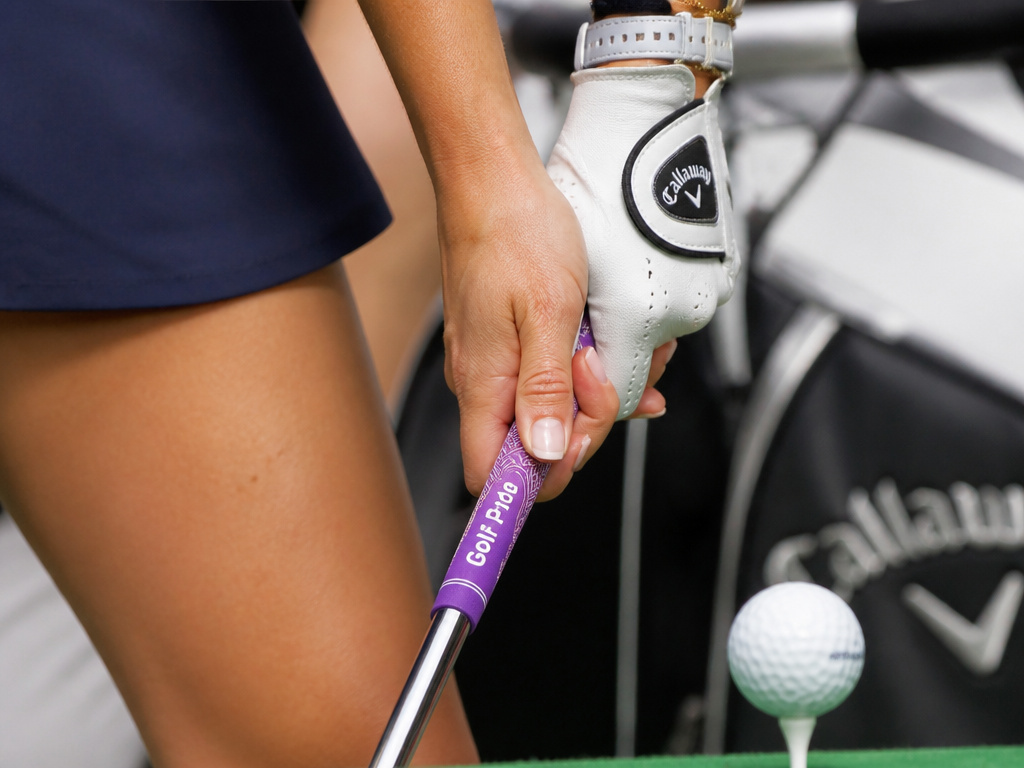
Clubs: Your package set is fine for a year or more. When you’re ready to upgrade, the first investment should be in a golf grip that fits your hand size. A proper grip is the only point of contact with the club; if it’s wrong, nothing else can be right. After that, consider adding a specialized sand wedge if your set only has a pitching wedge. The higher loft gets you out of bunkers and rough more easily.
Balls: Stick with inexpensive, two-piece construction balls designed for distance and durability. As your swing speed and consistency improve, you can explore softer, multi-layer balls. The best golf balls for you are the ones you don’t mind losing while you learn.
The Driver Myth: Beginners are often sold high-lofted drivers (13-15 degrees) to help get the ball airborne. This can create a pop-up, high-spin shot. A driver between 10.5 and 12 degrees is a better starting point for most. But honestly, your driver is the least important club in your bag for the first six months. Focus on the clubs you use every hole: the putter, the wedge, and the 7-iron.
Frequently Asked Questions
What should a woman wear for her first golf lesson?
Wear comfortable athletic clothing—a moisture-wicking top, athletic shorts or leggings, and sneakers. Avoid denim, restrictive tops, or any shoes you can’t swing in. Most courses require a collared shirt for on-course play, but that’s not necessary for a driving range lesson.
How many lessons should a beginner take?
Take two or three lessons upfront to establish the fundamentals: grip, posture, and alignment. After that, practice for a month to ingrain those feels, then take another lesson to check progress. This cycle is more effective than weekly lessons with no practice in between.
Is golf harder for women to learn?
No. Golf is equally challenging for everyone. The learning curve is based on coordination, patience, and practice, not gender. The average woman may generate less clubhead speed than the average man, but the fundamentals of a good swing and a good short game are identical.
Can I use men’s or boy’s golf clubs?
You can, but fit is critical. A standard men’s club is likely too long, too heavy, and too stiff. A boy’s club might be too short and too light. It’s possible a taller or stronger-swinging woman could fit into a men’s “senior” or “soft regular” flex club. The only way to know is to swing them. When in doubt, a women’s beginner set is the safer bet.
What’s the one thing I should practice most?
Your putting. It’s the great equalizer. You’ll use your putter on every single hole, often twice. Learning to control speed and start the ball on your intended line will save more strokes than any driver distance. Spend time on the practice green every time you go to the facility.
Before You Go
The barrier to starting golf is almost never the equipment. It’s the lack of a clear, simple first step. So here’s your first step: find a par-3 course or a driving range that rents clubs. Go once. Hit a small bucket of balls with a 7-iron, and spend ten minutes on the putting green. That’s it.
If you walk away wanting to do it again, you’re a golfer. Then, and only then, buy a starter golf set and book that first lesson. This game rewards simplicity and repetition, not complexity and constant change. Your journey starts with one solid shot. Go find it.
