
Golf’s Grounding Club in Bunker Rule: Key Do’s and Don’ts
This post contains affiliate links. As an Amazon Associate, we earn from qualifying purchases.
This post contains affiliate links. As an Amazon Associate, we earn from qualifying purchases.
You can ground your club in a bunker only under specific exceptions. The rule prohibits deliberately touching the sand to test conditions or touching it with your club in the area right in front of or behind the ball, or during a practice swing or backswing. Breaking this rule incurs a two-stroke penalty in stroke play or loss of hole in match play. The official R&A Rule 12.2b lists the exact exceptions where touching sand is allowed, such as when removing a loose impediment, taking your stance, or striking the sand in anger.
That last part sounds odd. Striking sand in anger is fine, but a gentle tap to gauge depth is a penalty. The rule isn’t about etiquette. It’s about preventing you from gaining information or improving your lie before the stroke. The line between legal and illegal is defined by intent and location.
What follows: the exact text from the governing bodies, the tournament incident that forced a clarification, and how to identify when a sandy area isn’t actually a bunker at all. By the end, you’ll know the three questions to ask before your club touches anything.
Key Takeaways
- The penalty applies only to deliberate touching to test conditions or touching sand in the area right in front of or behind the ball with your club before the stroke.
- You can remove loose impediments like leaves or stones, and any sand moved while doing so is fine. Leaning on your club to rest or balance is also legal.
- A ball embedded in the grass lip or face of a bunker is not considered in the bunker. You get free relief.
- Ungroomed, natural sandy areas outside a prepared bunker are part of the general area. You can ground your club there unless a local rule says otherwise.
- After your ball is out of the bunker, you can smooth sand or touch it without penalty, even if your next shot is from a different part of the course.
The One Rule That Defines “Grounding”
The modern rule is precise. It targets two specific actions that constitute a penalty.
First, you cannot deliberately touch the sand with your hand, club, rake, or any other object to test its condition. This means no patting, no scraping, no feeling for moisture or depth to learn information for your next stroke. Second, you cannot touch the sand with your club in the area right in front of or behind the ball. This restriction also covers making a practice swing that touches sand or letting your club touch sand during your backswing.
Where this goes sideways: A practice swing that grazes the sand six inches away from your ball is a penalty. The restriction zone is specifically “right in front of or right behind the ball,” not just the immediate inch. Miss that distinction and it’s two strokes.
The rule’s wording, from the official R&A Rule 12 on bunkers, is explicit. These are the only actions that draw a penalty under this section. Everything else is permitted unless it improves your conditions affecting the stroke under a different rule.
What You Can Always Do (The Exceptions)
The rule lists clear exceptions. You can touch sand when: * Placing your clubs, bag, or other equipment in the bunker. * Measuring, marking, lifting, or replacing your ball under another rule. * Leaning on a club to rest, stay balanced, or prevent a fall. * Digging in with your feet to take a stance. * Smoothing sand to care for the course after your ball is out of the bunker.
The most surprising exception is for anger. Striking the sand in frustration or anger does not result in a penalty, provided it’s not a disguised attempt to test the sand. The rule assumes a genuine outburst doesn’t give you useful information for your next stroke.
| Action in Bunker | Penalty? | Reason / Rule Reference |
|---|---|---|
| Club touches sand during practice swing near ball | Yes | Rule 12.2b(1) – Touching sand in area right in front/behind ball. |
| Raking sand to test firmness before stroke | Yes | Rule 12.2b(1) – Deliberately testing condition. |
| Kicking sand in anger after a bad shot | No | Rule 12.2b(2) – Exception for anger/frustration. |
| Leaning on club for balance while addressing ball | No | Rule 12.2b(2) – Explicitly allowed. |
| Sand moves while removing a stone (loose impediment) | No | Rule 12.2a – Reasonable movement while removing impediments. |
The Dustin Johnson Incident: When “Bunker” Isn’t Clear
In 2010, the PGA Championship at Whistling Straits delivered the most famous bunker ruling in modern golf. On the 72nd hole, Dustin Johnson grounded his club in what he thought was a trampled, sandy waste area. Officials ruled it was one of the course’s 1,000+ defined bunkers. The two-stroke penalty cost him a spot in the playoff.
The confusion was structural. Whistling Straits has vast, natural-looking sandy areas that are, by local rule, all considered bunkers unless specifically marked otherwise. Johnson, and many spectators, didn’t realize the spot was a prepared hazard. The incident forced every player to read the local rules sheet more carefully.
The part nobody mentions: The penalty wasn’t for grounding his club in a bunker. It was for failing to know the local rule that transformed a scruffy patch of sand into a penalty area. Your first move on any unfamiliar course should be to check the scorecard for such declarations.
This highlights the critical distinction: a bunker is a specially prepared area. A natural sandy waste area is part of the general area unless the committee says otherwise. At the 2024 U.S. Open at Pinehurst No. 2, the sandy wiregrass areas were explicitly not bunkers. Players could ground their clubs freely.
Is My Ball Actually in the Bunker?
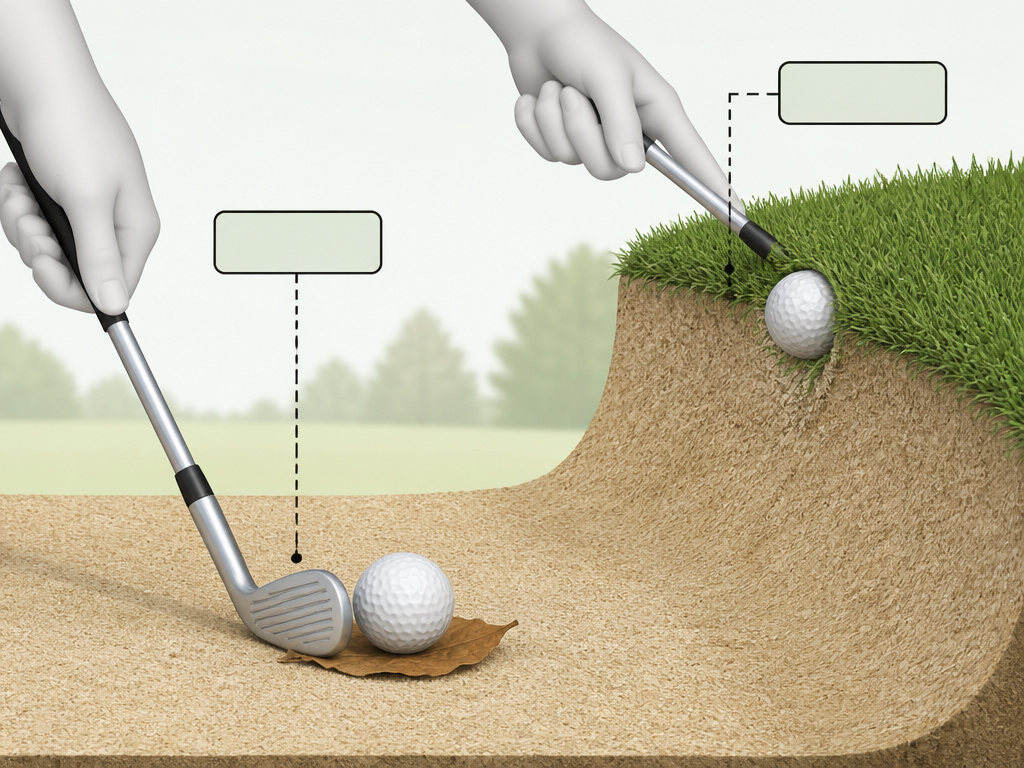
This question decides everything. According to the R&A bunker regulations, a ball is in a bunker only if any part of it touches sand on the ground inside the bunker’s edge. It can also be in if it sits on a loose impediment or movable obstruction that is itself touching sand inside the bunker.
The key exception is the lip. If your ball is embedded in the grass, soil, or stacked turf face of a bunker, it is not in the bunker. You are entitled to free relief for an embedded ball under Rule 16.3. This is a common escape hatch players miss.
- Ball on a leaf in the sand? In the bunker.
- Ball plugged in the grassy wall? Not in the bunker. Take relief.
This definition is why maintenance matters. The machinery that creates these prepared areas, like the Baroness SP160EB Electric Bunker Rake, is designed specifically for “leveling bunkers at golf courses.” Its 190 cm operating width and 2.5 kW motor are built to maintain the consistent sand depth and texture that defines a true hazard. When you see those perfect grooves, you know you’re in a governed space.
How to Play a Bunker Shot Without the Penalty
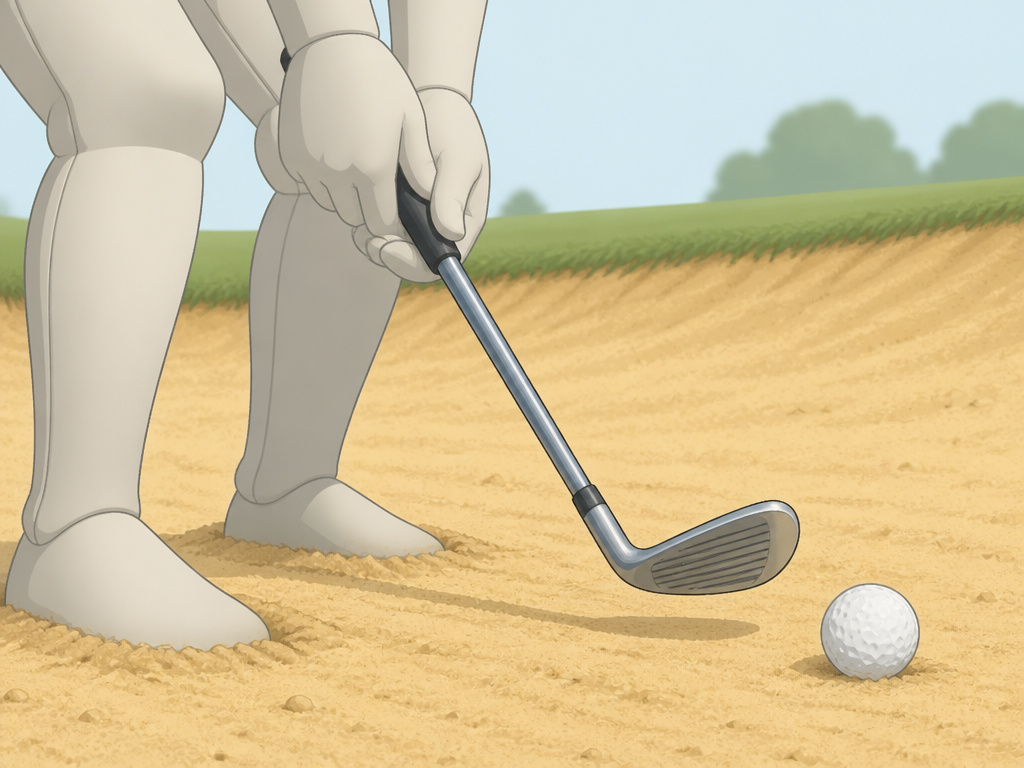
The procedure is about minimizing risk. Your pre-shot routine must avoid the two penalty zones: testing and the area around your ball.
First, take your stance. You are allowed to dig your feet in. This often moves sand, and that’s legal. It’s not testing; it’s taking a stance. Next, if there’s a twig or a stone near your ball, you can remove it. Use your hand or a club. If sand moves during the removal, that’s also legal under Rule 12.2a.
Now, the swing. Your practice swing must be taken well away from the ball, ensuring the clubhead doesn’t touch any sand. When you take the actual stroke, be mindful of your backswing. A low takeaway that scrapes the sand is a penalty. Pick the club up more steeply.
I prefer a wider stance for stability in bunkers. It locks my lower body and forces a steeper backswing automatically. That keeps the clubhead clear of the sand until the moment of impact. A shallow swing is for fairways, not sand.
After the shot, if your ball exits the bunker, the restrictions vanish. You can walk back in, smooth your footprints, and even take a practice swing that touches the sand. The rule only applies to the ball currently in the hazard.
Greenside vs. Fairway Bunker Rules
The grounding rule is identical for both. The practical application changes because the intended shot is different.
In a greenside bunker, you’re playing a splash shot. The club enters the sand behind the ball. The focus is on avoiding contact with the sand in the area behind the ball during your setup or practice swing. Even hovering the club close can be risky if you lose balance.
For a fairway bunker, you’re typically hitting a full shot, trying to pick the ball cleanly. The danger is touching the sand in front of the ball during your takeaway or downswing. The penalty is the same, but the failure point shifts. Choosing the right golf club sets for your game matters here; a club with too little bounce can dig and touch sand more easily on a fairway bunker shot.
| Bunker Type | Primary Risk for Grounding Penalty | Typical Club Selection |
|---|---|---|
| Greenside Bunker | Club touches sand behind the ball during setup or practice swing. | High-loft wedge (56°-60°) with ample bounce. |
| Fairway Bunker | Club touches sand in front of the ball during the takeaway or downswing. | Mid-iron (e.g., 7-iron) or hybrid with minimal bounce. |
The Tools That Maintain the Rule
The rule exists because bunkers are prepared hazards. Their consistency is maintained by specialized equipment. The Baroness SP160EB manual states its sole purpose is “leveling bunkers at golf courses.” Using it for anything else is dangerous and voids the warranty.
This specificity matters. The machine’s dimensions (230 cm long with blade, 190 cm wide) and its 2,400 rpm motor are engineered to create a uniform playing surface. That uniformity is what the grounding club in bunker rule is designed to protect. You’re not supposed to test it because the course staff has already defined it with tools like this.
When you’re selecting new gear, whether it’s golf club grips for better control in sand or golf club shafts for a more stable swing, remember that the rules assume a standard playing field. Your equipment should help you navigate the hazard, not manipulate it.
Frequently Asked Questions
Can you touch the sand in a bunker with your hand?
You can touch sand with your hand to remove a loose impediment like a leaf or stone, or to place a club. You cannot deliberately touch it to test the condition (e.g., feeling for wetness or depth). Leaning on your hand for balance is also permitted.
Is there a penalty if the club touches the sand on the backswing?
Yes. If your club touches the sand in the bunker during your backswing for the stroke, it is a penalty under Rule 12.2b. This is true even if it’s accidental. The rule prohibits touching sand with the club in the area right in front of or behind the ball during the backswing.
Can you smooth sand in a bunker after your shot?
Yes, but only after your ball is outside the bunker. Once the ball is out, you may smooth sand to care for the course without penalty. You can even do this if your next shot is from a different part of the course and the smoothed sand is on your line of play.
What if my ball is buried in the lip of the bunker?
If the ball is embedded in the grass, soil, or turf face (the lip) of the bunker, it is not considered to be in the bunker. You are allowed free relief for an embedded ball under Rule 16.3. This is a crucial exception that can save strokes.
Do the same rules apply in a waste bunker?
“Waste bunker” is not an official term. The area is either a prepared bunker (where grounding rules apply) or a sandy part of the general area (where they don’t). The status is always defined by the course committee, usually on the local rules sheet. Always check.
Before You Go
The rule is simpler than the fear around it. Don’t test the sand. Keep your club away from the sand around your ball before you swing. That’s the core. Everything else—leaning, digging in, clearing leaves—is legal. The real trouble starts when you don’t know the local landscape. Was that sandy patch declared a bunker? Is my ball actually in the hazard? Answer those first. Your golf club sets and your technique handle the rest. The rule just defines the sandbox you’re playing in. Play it as you find it, but don’t feel it first.
