
Your Guide on How to Hit a Punch Shot for Escaping Trouble
This post contains affiliate links. As an Amazon Associate, we earn from qualifying purchases.
This post contains affiliate links. As an Amazon Associate, we earn from qualifying purchases.
To hit a punch shot, play the ball back in your stance, set most of your weight on your front foot, and lean the shaft toward the target. Make a compact, three-quarter backswing and focus on a descending strike, finishing with your hands low and your chest over your front foot. This delofts the club, produces a low, penetrating ball flight, and is your best escape from trouble.
That setup isn’t a minor tweak. It’s a complete reconfiguration of your normal swing to solve one problem: getting the golf ball from point A to point B without hitting anything in between. Whether it’s tree limbs, heavy wind, or a tight pin with trouble long, the punch shot trades height for control. The rest of this guide walks through the five adjustments that make it work, the one club-selection mistake that burns players, and how to practice it so it’s ready when your tee shot isn’t.
Key Takeaways
- Play the ball two inches back of center and set 60-70% of your weight on your front foot at address. Your hands must be ahead of the ball.
- Make a three-quarter backswing and focus on a descending blow. A full follow-through adds height and spin, defeating the purpose.
- Choose a club with enough loft to clear the immediate obstacle but less loft than your normal club for the distance. A 7-iron punch often goes as far as a full 9-iron.
- The shot is about precision, not power. Swing with 70-80% of your normal effort to maintain control and clean contact.
- Practice punch shots to learn their unique carry-and-roll profile. A perfectly struck punch will roll out 30-50% farther than a standard shot with the same club.
What a Punch Shot Actually Is (And Isn’t)
A punch shot is a controlled, low-trajectory shot played with an abbreviated swing. Its primary purpose is to avoid obstacles—usually tree branches or strong wind—while maximizing roll upon landing. Some players call it a knockdown shot, but there’s a subtle distinction. A knockdown is often a full-swing shot played with a less-lofted club to lower trajectory into the wind. A punch shot is defined by its compact swing and deliberately low finish.
A punch shot is a partial shot, not a full swing. A common execution involves a backswing where the hands only reach shoulder-high and a follow-through that finishes with the hands again at shoulder height, with the clubhead staying low.
You see touring pros use this shot weekly. The reasons are specific: keeping the ball under the wind on a links course, hitting a low running chip from just off the green, or, most commonly, escaping from the trees after a wayward drive. It’s a shot born of necessity, not vanity. It won’t look pretty in a follow-through photo, but it will look great on your scorecard.
The 5-Step Punch Shot Setup
This is where the shot is made or broken before you even take the club back. Get these five things right, and the swing becomes almost automatic.
1. Ball Position: Back of Center
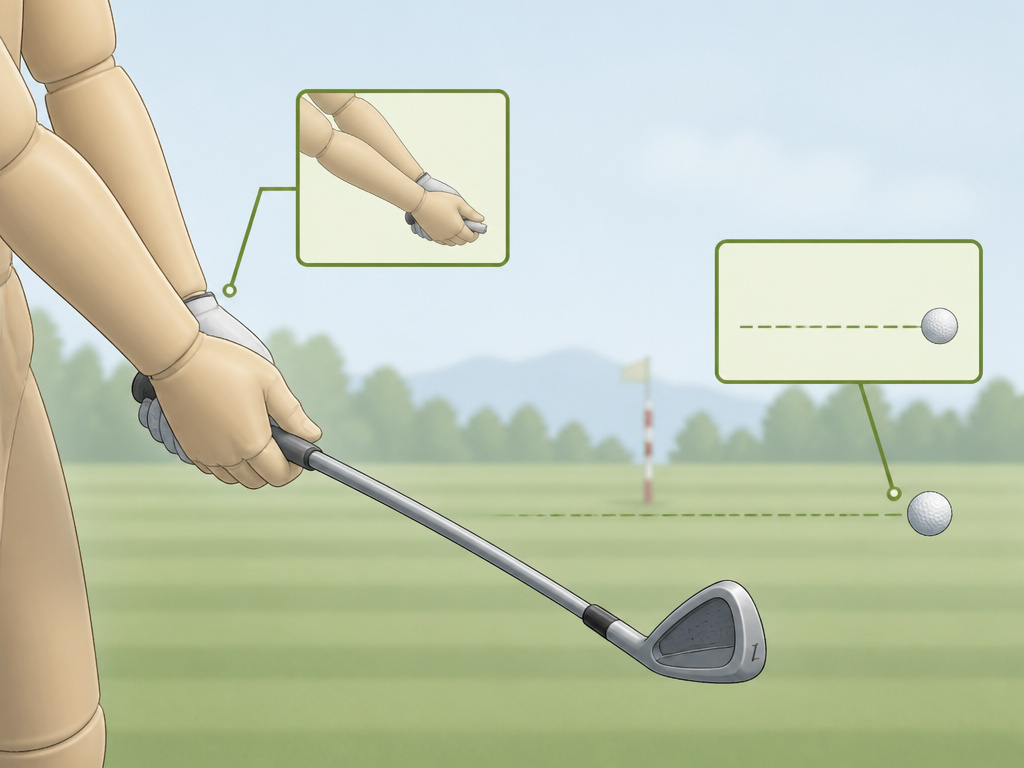
Move the ball back two to three inches from your normal position. For a right-handed golfer, that means the ball is closer to your right foot. This promotes the essential descending strike. Playing it forward invites a scoop and a high, weak flight.
2. Weight Distribution: Heavily Forward
Set 60-70% of your weight on your front foot at address. This isn’t a slight lean. You should feel anchored over that front leg. This preset forward weight prevents you from hanging back and helps drive the club down into the ball.
3. Hands: Ahead of the Ball
Your hands must be ahead of the ball at address, pressing the shaft toward the target. This forward press is what delofts the club. If your hands are even with the ball, you’ve added loft back.
4. Stance: Narrow and Athletic
Narrow your stance slightly. This encourages a more upright, compact swing and prevents excessive lower-body movement. Keep a slight flex in your knees.
5. Grip Pressure: Firm
Take your normal grip, but increase the pressure slightly in your last three fingers of the lead hand. This helps you control the clubface through impact, especially from thick rough.
| Setup Element | Punch Shot Adjustment | Why It Matters |
|---|---|---|
| Ball Position | 2-3 inches back of center | Forces a descending strike, lowers launch angle |
| Weight | 60-70% on front foot | Prevents hanging back, promotes downward strike |
| Hands | Ahead of ball, shaft leaning toward target | Delofts the club; a 7-iron acts like a 5-iron |
| Stance | Slightly narrower than normal | Creates a stable, compact swing arc |
| Grip | Slightly firmer pressure | Maintains clubface control from uneven lies |
Common mistake: Setting up with neutral weight and hands. If your weight is 50-50 at address, you will almost certainly shift back during the swing. The result is a fat shot or a high, spinning balloon that finds the very branch you were trying to avoid.
The Compact Swing: Backswing to Low Finish
The swing thought is “together and compact.” This isn’t a power move.
Start with a three-quarter backswing. Your hands should not go past shoulder height. The shorter backswing reduces the margin for error and makes clean contact more likely. On the downswing, focus on shifting even more weight onto your front foot. Your body should rotate through, but your arms and hands do not release fully.
Where this goes sideways: A full, high follow-through. Having a long, high finish adds height and spin every single time. It turns your punch into a standard shot.
The finish is the signature. Your follow-through should be abbreviated, with your hands finishing around chest height. The clubhead should finish at or below the height of your hands, with the toe pointing at the target. Think about getting your chest over your front foot. This “cut-off” finish ensures the club stays delofted and the ball stays down.
Practice this by hitting shots and holding your finish low to the ground for three seconds after impact. It builds the muscle memory.
Club Selection: It’s Not Just About Loft
This is the most misunderstood part of the punch shot. The goal is to choose the club with the greatest loft that will still safely launch below the trouble. You have a built-in delofting machine from your setup, so you often need more loft than you think.
Here’s the process: 1. Identify the lowest point of the obstacle (a tree branch, the wind level). 2. Visualize the low, penetrating trajectory you need. 3. Select a club you are confident can produce that trajectory from your punch setup.
A 7-iron is a great starting club for a standard punch. From 150 yards, a full 7-iron might fly 150 and stop. A 7-iron punch might carry 130 and roll out another 20 yards. You can hit this shot with any iron, from a 3-iron to a pitching wedge, giving you a wide range of distances. The beauty is in the variety.
I won’t recommend a punch shot from a severe downhill lie or uphill lie for a beginner. Those slopes already alter loft and trajectory dramatically. Master the standard punch from flat ground first.
The mistake is automatically grabbing a 4-iron. A delofted 4-iron from a punch setup produces a knuckleball that’s almost impossible to control. A delofted 9-iron is far more reliable. When you need to keep the ball extra low, like when playing a stinger off the tee, then you drop to the longer irons.
When to Use a Punch Shot (And When to Avoid It)
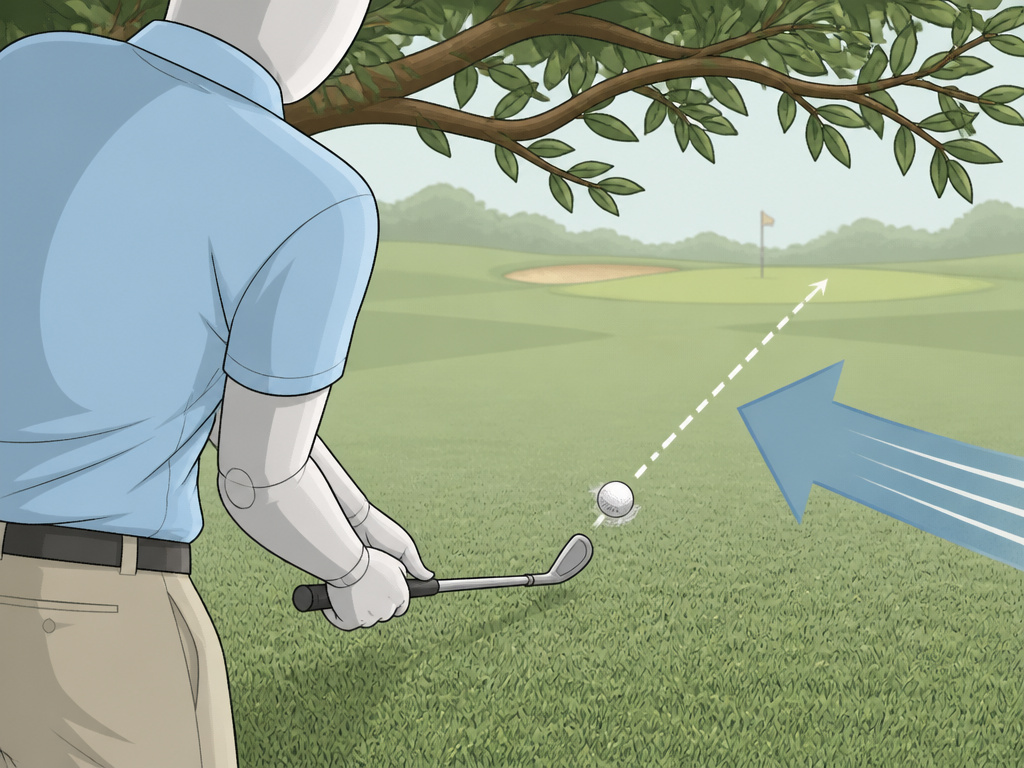
The punch shot is a tactical weapon. Its main uses are: * Escaping Trees: Your ball is under branches but you have a lane down the fairway. * Playing into the Wind: A strong headwind will balloon a normal shot. A punch bores through it. * Tight Pins with Trouble Long: When the green is shallow and bunkers guard the back, a punch shot lands soft and runs out. * Firm Conditions: On hard fairways, a punch will release toward the pin, whereas a high shot might spin back off the front.
It is not the right choice when: * You need to carry an obstacle (use a flop shot or learn how to hit over a tree). * The green is elevated and you need the ball to stop quickly. * You have a terrible lie in deep rough. The punch requires a relatively clean strike.
Knowing shot shaping helps, but the punch is often a straight ball. Its value is predictability. This makes it the perfect complement to a bump and run around the greens—both are low, running shots that prioritize control over height.
Practice Drills for Reliability
You cannot learn this shot on the 15th hole with a tree in your face. It needs range time.
The Low-Hold Drill: Hit ten punch shots with a mid-iron. After each shot, hold your abbreviated, low finish until the ball lands. This ingrains the feeling of a cut-off swing.
The Ladder Drill: Take your 7-iron. Hit a standard punch shot. Then, without changing your swing, hit punch shots with your 8, 9, and pitching wedge. Note how the carry distance changes slightly, but the roll-out changes significantly. This teaches you the distance profile.
The Wind Simulation: On a calm day, pretend you’re hitting into a 20mph wind. Practice punching your 7-iron the same distance you normally hit your 9-iron. This recalibrates your distance expectations.
Consistency here builds a safety net. It turns a potential double-bogey into a routine bogey or par. That’s how you shave strokes.
Frequently Asked Questions
What’s the difference between a punch shot and a knockdown shot?
Punch shot is defined by an abbreviated backswing and a deliberately low, cut-off follow-through. A knockdown shot is often a full swing with a less-lofted club, played primarily to lower trajectory into the wind. The punch is more about obstacle avoidance; the knockdown is about trajectory control.
Can you hit a punch shot with a wood or hybrid?
It’s possible but not recommended for most players. The low-lofted faces of woods and hybrids make it very difficult to keep the ball low enough. They are designed to launch the ball. Stick to irons, where you have more loft to work with and can better control the strike.
Why does my punch shot sometimes pop up?
Two reasons. First, your hands are not ahead of the ball at impact. You’re scooping, which adds loft. Second, you’re allowing your weight to shift back to your rear foot during the downswing. Re-check your setup: weight forward, hands forward.
How do I control the distance on a punch shot?
Control distance through club selection and swing length, not swing speed. For less distance, take a shorter backswing or use a more lofted club. For more distance, take a longer backswing (still within the three-quarter range) or use a less-lofted club. Trying to muscle it leads to a loss of control.
Should I use a punch shot from the rough?
Yes, but be cautious. The thick grass can grab the hosel and twist the clubface shut. Choose one more club than you normally would (e.g., a 6-iron instead of a 7-iron) and make an even more pronounced descending blow. Expect less backspin and more roll.
The Bottom Line
The punch shot is the golfer’s reset button. It’s the acknowledgment that the heroic shot isn’t there, and the smart play is to live another day. Master the setup—ball back, weight forward, hands ahead—and commit to the compact, low-finishing swing. Practice it with multiple clubs so you know exactly how it will react. When your drive inevitably finds the trees, you won’t feel trapped. You’ll have a reliable, low-trajectory escape shot ready to go. That confidence alone is worth five strokes a season.
