
A Golfer’s Guide on How to Hit a Reliable Bump and Run Shot
This post contains affiliate links. As an Amazon Associate, we earn from qualifying purchases.
This post contains affiliate links. As an Amazon Associate, we earn from qualifying purchases.
To hit a bump and run, play the ball back in your stance, position your weight forward, and use a putting stroke with a 7, 8, or 9-iron. The goal is a low, running shot that lands on the green and rolls out like a putt. This technique relies on minimal loft and a descending blow to produce low spin and predictable roll, making it the most reliable shot from 30 yards and in on firm ground.
Most golfers reach for a high-lofted wedge by default. That’s a mistake on tight lies and fast greens where a flop shot is a low-percentage gamble. The bump and run isn’t a fancy shot. It’s a percentage play that uses the ground as your friend, not an obstacle to carry.
What follows: the specific mechanics that make the ball run, the three-club rule for any distance inside 50 yards, the most common deceleration error, and how this shot saved a British Open.
Key Takeaways
- Use a 7, 8, or 9-iron, not a wedge. The lower loft launches the ball lower and starts it rolling sooner.
- Play the ball back in your stance, off your right instep (for right-handers). This de-lofts the club and ensures a descending strike.
- Make a putting stroke, not a wristy chip. Your shoulders and arms control the motion; your wrists stay quiet.
- The ball should land on the first third of the green. Let it run out the remaining two-thirds like a putt.
- This shot fails when you decelerate. Commit to a firm, accelerating stroke through the ball.
Why a Bump and Run Works
The physics are simple. A high-lofted wedge imparts backspin. On a firm, tight lie, that spin is unreliable—the club can slide under the ball or dig into the turf. A bump and run uses a less-lofted iron to minimize spin. The ball comes out low, with just enough lift to clear the fringe, then lands with topspin or neutral spin. Once it hits the green, it behaves like a putt.
A 2024 vehicle suspension study in the MS Copernicus journal found the optimal speed for traversing a rectangular speed bump was 25.4 km/h (15.78 mph) to maintain comfort and safety. The bump and run applies the same principle: you want just enough energy to clear the “bump” (the fringe) and then transition smoothly to the “run” (the green) without losing control.
This shot is predictable. You can read the green for roll as you would a long putt. It’s also forgiving. A slightly heavy or thin strike still gets the ball running somewhere near the hole. A mishit flop shot goes nowhere.
When to Use It (And When to Put the Wedge Away)
Use a bump and run when you have more green to work with than trouble. The ideal scenario is a lie just off the putting surface with 20 to 50 feet of green between you and the hole. It’s the default shot on links courses or any day the ground is firm and fast.
Skip this if: You’re in deep rough, have to carry a bunker right in front of the green, or the pin is cut on a downhill slope with no landing area. That’s a job for a flop shot.
The decision between a bump and run vs flop shot comes down to risk. The bump and run is low-risk, high-percentage. The flop shot is high-risk, high-reward. Most amateurs have the ratio backwards.
The Setup: It’s Not a Chip, It’s a Putt with an Iron
Your setup dictates the entire shot. Get this wrong and you’ll either blade it over the green or chunk it short.
Stance and Ball Position: Stand narrow, with your feet about as wide as your hips. Play the ball back—way back. For a right-handed golfer, it should be opposite your right instep, a good 4-6 inches behind center. This position de-lofts the club and encourages the downward strike you need.
Weight and Hands: Lean about 60% of your weight onto your front foot. Your hands must be ahead of the ball, pressing the shaft forward so the club’s grip points at your left thigh. This forward press is non-negotiable. It sets the angle of descent.
Posture and Grip: Use your standard putting grip. Choke down on the club an inch or two for better control. Your eyes should be over the ball, and your shoulders should feel level, not tilted.
| Setup Element | Bump and Run | Standard Chip Shot |
|---|---|---|
| Ball Position | Back foot instep | Middle of stance |
| Primary Club | 7, 8, 9-iron | Sand Wedge, Gap Wedge |
| Wrist Action | Quiet, firm | Hinged, soft |
| Intended Landing | First 1/3 of green | Close to the hole |
| Best For | Firm ground, lots of green | Soft conditions, carry over trouble |
Step-by-Step Technique
The motion is a pendulum. Think of your shoulders and arms as a triangle that rocks back and through.
1. Take Your Address. Set up as described above with your chosen iron. Pick a specific landing spot on the first third of the green. Don’t just aim at the hole.
2. The Backswing. Rotate your shoulders to take the club back low and slow. Your wrists should not hinge. The length of your backswing controls the distance. For a 20-yard shot, your hands might only go back to your right thigh.
3. The Downswing. Initiate the downswing with your front shoulder. Your weight stays forward. The key is to accelerate. The clubhead must be moving fastest after it strikes the ball, not before.
4. Impact and Follow-Through. Strike down and through the ball. You should feel a slight divot after impact, not before. The follow-through should mirror the length of your backswing. A short backswing, a short follow-through.
Common mistake: Decelerating into impact. This causes a fat or bladed shot every time. The feeling should be firm and assertive, like you’re striking a match with the back of the ball.
Why the acceleration matters: A decelerating clubhead allows the turf to grab the sole before it reaches the ball. You hit behind it. Accelerating ensures the club bottoms out in the right place and continues through the turf cleanly.
Club Selection: The 3-Club Rule
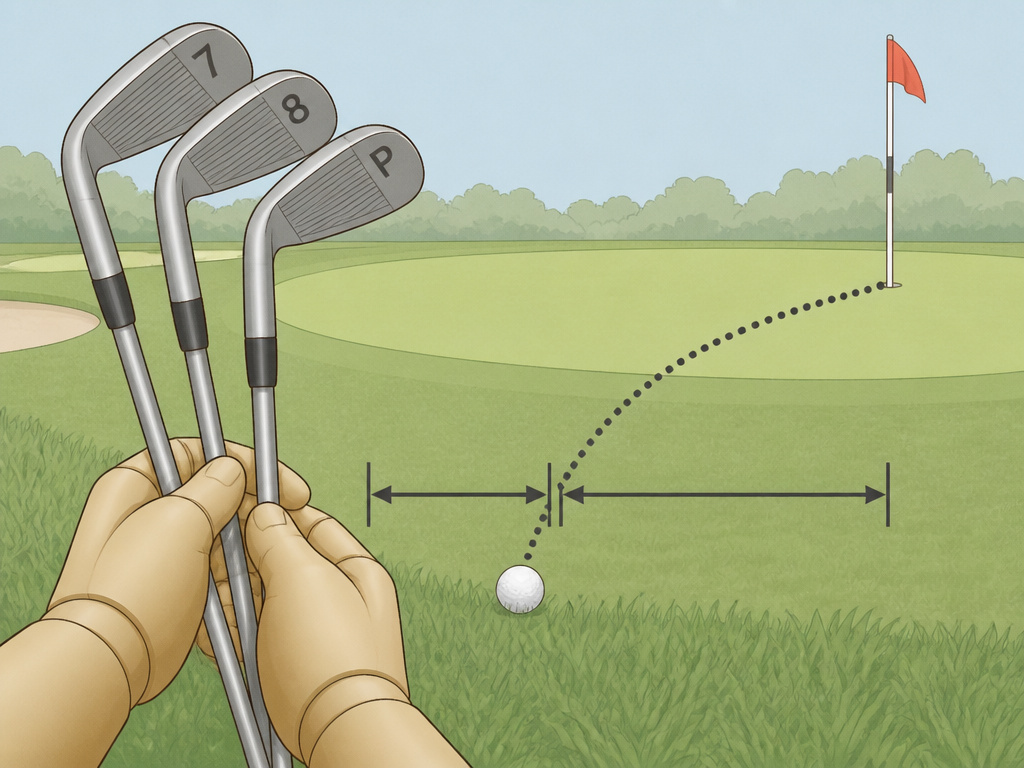
Forget using your sand wedge. The bump and run is played with mid-irons. Here’s a reliable system:
- 7-Iron: Use this for the longest bump and runs, from about 30-50 yards out. It will produce the lowest trajectory and the most roll. It’s excellent when you need to carry 10 yards of fringe and then roll 40 yards on the green.
- 8-Iron or 9-Iron: This is the standard choice for shots from 10-30 yards. It gives a slightly higher launch than a 7-iron for a touch more control on the landing.
- Pitching Wedge: Only use this if you have a very short amount of green to work with and need the ball to stop a bit quicker. It’s a hybrid between a chip and a true bump and run.
Some players even use a hybrid around the green for a super-low, running shot from a tight lie. The wide sole glides through the grass.
The best clubs for chipping aren’t always wedges. Having a system for your 7, 8, and 9-irons turns three clubs into one versatile short-game weapon.
| Distance to Hole | Recommended Club | Landing Zone | Roll Proportion |
|---|---|---|---|
| 40-50 yards | 7-iron | First 10 yards on green | 80% roll, 20% carry |
| 20-40 yards | 8-iron | First 8 yards on green | 70% roll, 30% carry |
| 10-20 yards | 9-iron | First 5 yards on green | 60% roll, 40% carry |
| Under 10 yards | Pitching Wedge | Just on green | 50/50 carry and roll |
The Most Common Errors (And How to Fix Them)
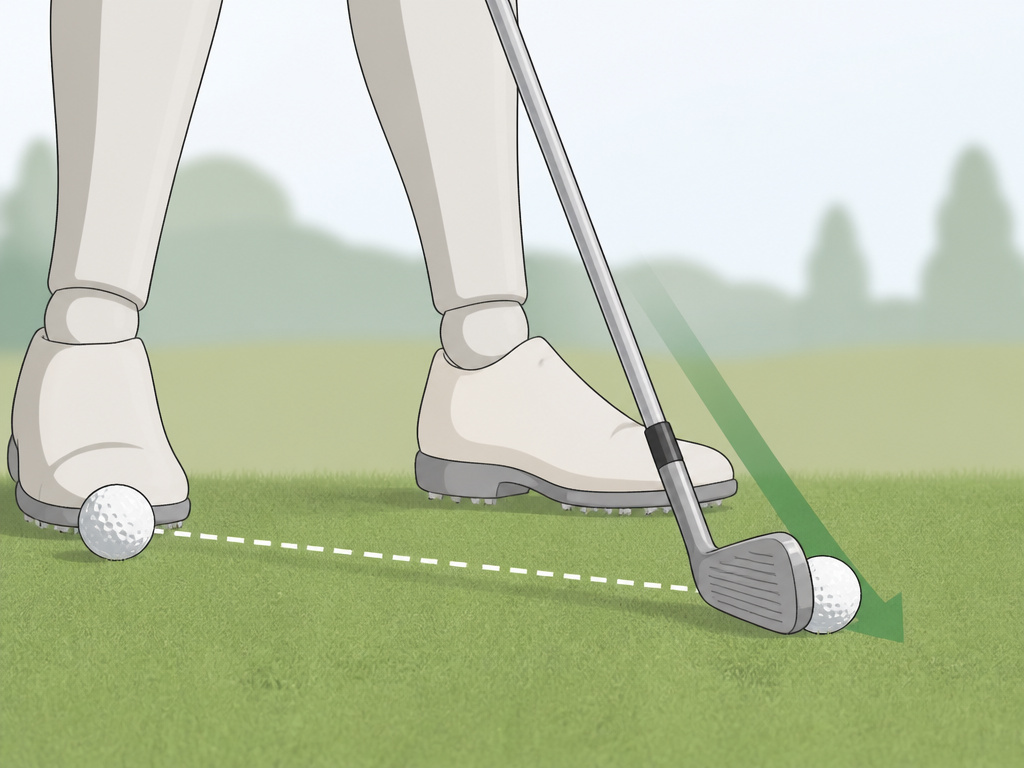
Error 1: Ball Position Too Far Forward. This adds loft, launches the ball high, and kills the running action. You’ll hit a weak, spinny shot that stops short. * Fix: Check that the ball is opposite the instep of your back foot. Place another ball there as a marker during practice.
Error 2: Wrist Hinge. Adding wrist action introduces variability and often leads to a scooping motion. The result is inconsistent contact and distance. * Fix: Practice the stroke with your trail hand’s thumb and forefinger off the club. This forces the shoulders to control the motion.
Error 3: Trying to Lift the Ball. This isn’t a pitch shot. You don’t need height. Trust the loft on the club to get the ball airborne. * Fix: Focus on a spot an inch in front of the ball and try to hit that spot. The ball will get up on its own.
These errors all stem from one thing: not trusting the shot. You have to believe that a firm, descending strike with an 8-iron will work. It does.
Bump and Run vs. Other Short Game Shots
Knowing when not to use this shot is as important as the technique itself.
Versus the Flop Shot: The flop shot is its opposite. It goes high, lands soft, and stops quickly. Use it when you have no green to work with or need to carry a hazard. The bump and run is for when you have plenty of green.
Versus the Standard Chip: A standard chip shot often uses a wedge and has more wrist hinge, producing a medium trajectory with some check. The bump and run is lower, uses less loft, and runs out more.
Versus the Punch Shot: The punch shot is a full-swing, low-trajectory shot for getting under wind from long range. The bump and run is a miniature version of it, but for around the green with a putting stroke.
Mastering these distinctions is what separates a functional short game from a creative one. It’s the kind of creative short game that made Seve Ballesteros a legend.
Practicing the Bump and Run
You don’t need a short-game area. Use this drill on the putting green.
The Ladder Drill: Take three balls and your 7, 8, and 9-iron. Pick a hole. With your 9-iron, try to land the ball just on the green and let it putt to the hole. Repeat with the 8-iron, aiming to land the same spot but notice how much farther it rolls. Finally, use the 7-iron. This teaches you the roll-out ratios for each club.
The Coin Drill: Place a coin 2 inches in front of your ball on the practice turf. Your goal is to strike the ball and then the coin. This trains the descending blow and ensures you aren’t scooping.
Practice in firm conditions whenever you can. That’s where this shot pays the biggest dividends. On soft, wet greens, the ball will check more, and you might need to use a more lofted club or a standard chipping technique.
Frequently Asked Questions
What’s the best club for a beginner to use for a bump and run?
Start with an 8-iron. It offers a good balance of loft and roll. It’s more forgiving than a 7-iron if you mis-hit it slightly thin, and it runs more predictably than a 9-iron. Once you’re comfortable, expand to the 7 and 9.
Can I hit a bump and run from the rough?
You can, but it’s less effective. The grass will grab the clubhead and slow it down, making consistent contact harder. The ball will also come out with more spin and less roll. From light rough, use one club more lofted than you normally would (e.g., a 9-iron instead of an 8). From deep rough, choose a different shot, like a partial wedge shot.
How do I judge the roll-out distance?
Use the same process as reading a long putt. Walk to your landing spot and look at the line from there to the hole. Is it uphill? Downhill? Grain? The ball will react like a putt after its first or second bounce. Your practice with the Ladder Drill will give you the feel for how much each club rolls.
Why does my bump and run keep going left (for a right-hander)?
This usually means your body is rotating too much through the shot, closing the clubface. Remember, this is a putting stroke. The rotation is in the shoulders, but the clubface should stay square to the target line. Focus on rocking your shoulders back and through while keeping the clubface looking at the target.
Should I use a putting grip for a bump and run?
Yes, absolutely. The standard reverse-overlap putting grip is perfect. It locks your wrists and promotes the one-piece shoulder rock you need. Choking down on the club also adds control.
Before You Go
The bump and run is the unsung hero of the short game. It won’t make highlight reels, but it will make pars. It turns a difficult touch shot into a simple, repeatable motion. The next time you’re just off the green with plenty of room, put the wedge back in the bag. Grab an 8-iron, set up with the ball off your back foot, and make a firm putting stroke.
Commit to the acceleration. Let the ball land and run. You’ll be surprised how often it ends up closer than a flop shot ever would. This is the shot that built British Open champions. It can shave three strokes off your round without any extra practice time—just smarter decisions.
