
The Rules of Order of Play and Honors on the Tee Explained
This post contains affiliate links. As an Amazon Associate, we earn from qualifying purchases.
This post contains affiliate links. As an Amazon Associate, we earn from qualifying purchases.
The order of play and honors on the tee is governed by Rule 6.4 of the USGA Rules of Golf. On the first hole, the honor is decided by the Committee’s draw, by agreement, or by a random method like a coin toss. On all subsequent holes, the player with the lowest score on the previous hole hits first. After tee shots, the player farthest from the hole plays next. Match play enforces this order strictly, while stroke play encourages “ready golf” for pace.
That distinction between match play and stroke play is the single most important piece of the puzzle. It changes the penalty from a lost hole to a simple suggestion. Getting it wrong in a match can cost you the hole before you even leave the tee box.
What follows: a breakdown of the honor system, the mechanics of order of play after the tee shot, and the specific situations where the rules bend, like when a pending ruling changes everything. We’ll also cover the one “ready golf” violation that still carries a two-stroke penalty.
Key Takeaways
- The honor (who tees off first) resets on every hole based on the previous hole’s score, not your total score for the round.
- In match play, playing out of turn lets your opponent cancel your stroke and make you replay it, unless you’ve both agreed to swap to save time.
- “Ready golf” is only a formal USGA encouragement in stroke play; in match play, it requires your opponent’s permission.
- If a timely ruling request from the previous hole is unresolved, the honor for the next tee is decided by agreement or random draw, the previous hole’s winner doesn’t automatically get it.
- Two players agreeing to play out of turn to gain an advantage in stroke play both receive a two-stroke penalty.
The Honor System: Who Hits First and Why
The honor is your right to play first from the teeing area. It’s a small reward for playing the previous hole well, and it’s defined in the USGA Rule 6 players edition. This isn’t just etiquette; in match play, it’s a rule with teeth.
The order of play from the teeing area depends on who has the honour. In match play, the order is fundamental; if you play out of turn, your opponent may cancel that stroke and make you play again.
For the first tee, with no scores to compare, the honor is set by the competition’s draw. No draw? Then it’s agreement or chance, flip a tee, toss a coin. In a casual weekend game, the player with the lowest handicap often goes first by unspoken agreement, but that’s tradition, not law.
Once the round is live, the system is straightforward. The player with the lowest gross score on the previous hole has the honor on the next tee. Tie that hole? The player who had the honor on the previous tee keeps it. The order doesn’t change until someone posts a lower score.
| Scenario on Previous Hole | Who Has Honor on Next Tee? |
|---|---|
| Player A scores 4, Player B scores 5 | Player A |
| Both players score 5 (tie) | Previous honor holder (Player A) |
| Four players: A-5, B-4, C-4, D-6 | Player B (wins tie-breaker by teeing off before C on the previous hole) |
The tie-breaker rule is where groups get tangled. If two players tie for the best score, you look back at who teed off first between them on the previous hole. That player keeps the honor. This maintains a consistent flow and avoids mid-group arguments.
Worth knowing before you start: Honors are always based on gross scores, even in a net handicap competition. Your net score might win you the match, but your gross score dictates the tee box order.
Playing Through the Hole: After the Tee Shot
Honors only matter for the first shot. The moment all balls are in play, a different rule takes over: the player farthest from the hole plays next. This is true for every shot until the ball is holed, whether you’re in the fairway, the rough, or a bunker.
This “away” rule exists for pace and fairness. It lets players closer to the hole prepare while the farther player hits, and it prevents anyone from gaining an advantage by hitting up on another player’s ball. The procedure is simple. Determine which ball is farthest, announce it, and that player hits. Repeat.
The complication comes with format. In match play, this order is still strict. If you hit when your opponent’s ball is farther away, they can cancel your stroke. You must then replay your shot from the original spot, with a penalty stroke. It’s a brutal rule designed to protect the contest.
In stroke play, there is no penalty for playing out of turn on the fairway or green. The USGA’s Ready Golf resource explicitly encourages playing ready golf, hitting when you are ready if it is safe and responsible, to improve the pace of play. The group’s goal is to finish efficiently, not to police sequence.
Match Play vs. Stroke Play: The Penalty Divide
This is the core. The same action, hitting out of turn, has wildly different consequences depending on your game’s format. Confusing them is a classic beginner mistake with immediate stakes.
In match play, order is a strategic element. Playing out of turn allows your opponent to cancel your stroke. They must do this promptly, before anyone else makes another stroke. If they cancel it, you replay from the original spot. It’s a powerful deterrent. * Exception: You and your opponent can agree to play out of turn to save time. This is the only safe way to speed up play in a match.
In stroke play, there is no penalty for playing out of turn. The rules “allow and encourage” ready golf. This is why you see weekend foursomes hitting when ready, not strictly by honors. Managing first tee nerves is hard enough without a strict sequence adding pressure.
Common mistake: Assuming “ready golf” means no rules. If two players in a stroke play competition agree to play out of turn to give one an advantage, like letting a player with a better angle go first, both players get the general penalty (two strokes). It’s the intent that matters.
The format dictates your freedom. Knowing whether you’re in a match or a stroke play event is the first step to playing correctly. For a deeper dive, our comparison of stroke play vs match play breaks down the strategic implications.
When the Rules Bend: Edge Cases and Exceptions
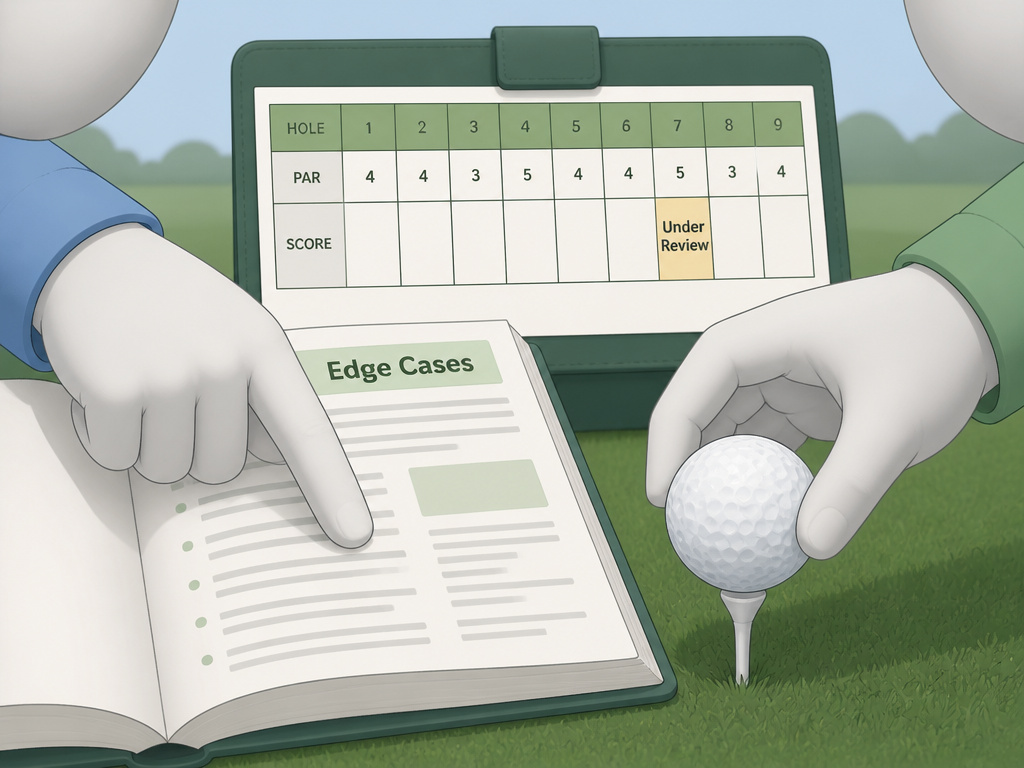
The system has built-in flexibility for real-world complications. These edge cases are in the rulebook for a reason, and they rescue you from unfair situations.
The Timely Ruling Request. Imagine you make a ruling request on the 18th green that could affect who won the hole. The committee hasn’t decided yet as you walk to the next tee. Who has the honor? The standard rule is suspended. The honor is decided by agreement or a random method. The previous hole’s outcome is officially in doubt, so it can’t set the order.
Playing Out of Turn for Safety or Convenience. The rules permit playing out of turn by agreement for safety (someone is in your line of fire), to save time (someone is searching for a ball), or for simple convenience. This applies in both formats. It’s common sense written into law.
Team Formats: Foursomes and Four-Ball. Order gets more complex here. * Foursomes (Alternate Shot): Partners hit one ball alternately from the teeing area. The order for the side is set on the first tee and alternates each hole. * Four-Ball: Each partner plays their own ball. The side’s order of play is flexible; partners can play in any order, as long as it’s not done to gain an unfair advantage. This allows for significant ready golf within the team.
Understanding these exceptions prevents you from being the person who insists on the letter of the law when the spirit clearly allows a faster, safer play. It’s part of good golf course etiquette.
Tools and Tips for Getting It Right
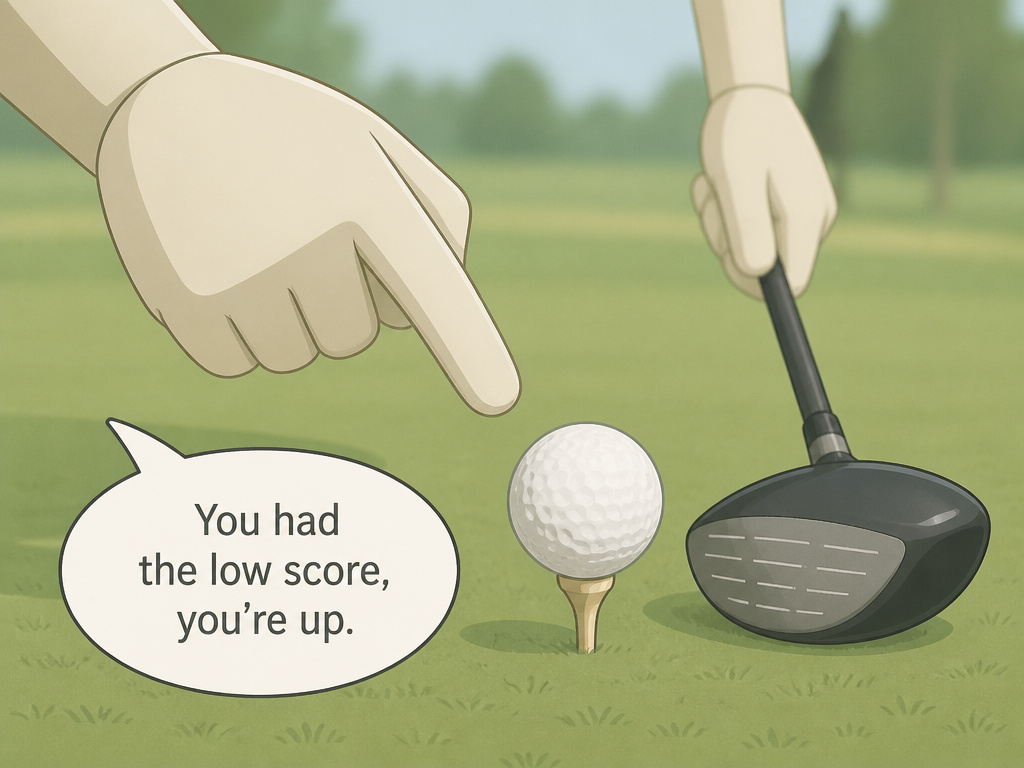
You don’t need a referee. A little awareness and a simple routine keep the order clear for everyone.
1. Announce the Honor on the Tee. Before anyone pulls a driver, state it plainly. “You had the low score, John, you’re up.” This eliminates the awkward “who’s away?” pause and reinforces the system for everyone, especially during a beginner’s round.
2. Use “Ready Golf” Wisely.
- In stroke play, if you’re ready and it’s safe, go ahead, especially if others are fumbling with gloves or yardage books.
- Always verbally offer. “Mind if I go while you’re figuring that out?” is better than just hitting.
- Never hit when someone is in your direct line or clearly about to play.
3. Know Your Tee. While not directly related to order, using the right golf tees for beginners or the correct tee height for your driver lets you play ready golf confidently. You’re not fiddling with equipment when it’s your turn.
4. Keep a Basic Order in Your Head. In a casual stroke play round, a loose honor system still helps. It’s not enforced, but it provides a default rhythm that keeps the group moving smoothly from shot to shot.
Frequently Asked Questions
What if we all tee off on the wrong hole?
You’ve played from outside the teeing area. In stroke play, it’s a two-stroke penalty, and you must correct the mistake by playing from the correct tee before teeing off on the next hole. In match play, there is no penalty, but your opponent may choose to cancel your stroke and make you play from the correct tee.
Does “away” always mean farthest from the hole, even on the green?
Yes. On the green, the player whose ball is farthest from the cup putts first. The only exception is in match play when you’ve conceded your opponent’s next stroke, then they are considered to have holed out and it’s your turn.
Can I refuse to let someone play ready golf if I have the honor?
In stroke play, technically yes. The rules state that if the player with the honor wants to play in order, the others should respect that. However, insisting on this in a casual round is a sure way to slow down play and annoy your group. Use the power sparingly.
Who hits first in a scramble format?
Scrambles use their own rules, not the official Rules of Golf. Typically, the team decides which of their players’ drives to use, and then all team members play their next shot from that spot. The order within the team is almost always “ready golf” from that point forward.
What’s the penalty for playing a wrong ball?
Different, but serious, rule. In stroke play, it’s a two-stroke penalty and you must correct the mistake by playing your original ball. In match play, you lose the hole. This is why always identifying your ball is critical.
The Bottom Line
Order of play and honors on the tee exist for two reasons: fairness in match play and efficiency in stroke play. The system is logical, you play well, you lead off. After that, the farthest ball goes next to keep things moving.
Memorize the penalty divide. In match play, order is sacred. In stroke play, ready golf is king. Apply common sense for safety and pace, and always clarify the format before the first tee shot. That knowledge alone will make your round smoother, faster, and more enjoyable for everyone in your group.
