
What Are the Four Major Championships in Golf? An Overview
This post contains affiliate links. As an Amazon Associate, we earn from qualifying purchases.
This post contains affiliate links. As an Amazon Associate, we earn from qualifying purchases.
The four major championships in golf are the Masters Tournament, the PGA Championship, the U.S. Open, and The Open Championship. Winning any of these four events defines a player’s legacy, grants a five-year PGA Tour exemption, and offers the sport’s most intense test of skill, nerve, and endurance. Since 2019, these tournaments have been played in a condensed 105-day window from April to July, creating a relentless sprint for the game’s highest honor.
That 105-day sprint changes everything. It turns the first half of the golf year into a pressure cooker where players have almost no time to recover from a bad week. A missed cut at the Masters in April means you’re already chasing the PGA Championship a month later. The rhythm is brutal, and it favors golfers who can peak on a tight, predictable schedule. This isn’t the leisurely major season of the past. It’s a modern test of consistency under fire.
What follows is a breakdown of each major’s identity, the specific torture each tournament inflicts, the playoff rules that decide ties, and the tiny details that separate a good major from a legendary one. By the end, you’ll know why a U.S. Open feels nothing like The Open, and why winning all four is a feat only six men have ever accomplished.
Key Takeaways
- The PGA Championship uses a three-hole aggregate playoff, the U.S. Open a two-hole aggregate, and The Open a four-hole aggregate before any go to sudden death. The Masters is sudden death from the first extra hole.
- In 2026, only 105 days separate the start of the Masters and the conclusion of The Open, creating an intensely condensed major season.
- The U.S. Open is almost never played on a par-72 course; it’s typically a par-70 or par-71 brute designed to punish any mistake.
- The Open Championship often features slower green speeds than normal tour stops, a deliberate adjustment to prevent wind from making the course unplayable.
- An underrated factor: the PGA Championship, often viewed as the “least glamorous” major, consistently boasts the strongest field based on the Official World Golf Ranking.
The Four Major Championships in Golf: A Quick Reference
Before we get into the details, here’s the overall situation. This table cuts through the history and gets to what each major actually does to a player.
| Major | Month | Organizer | Signature Test | Iconic Prize |
|---|---|---|---|---|
| The Masters | April | Augusta National Golf Club | Precision on Amen Corner (holes 11-13) and navigating lightning-fast, contoured greens. | The Green Jacket |
| PGA Championship | May | PGA of America | Handling the deepest, strongest field of the year on a classic American course. | The Wanamaker Trophy |
| U.S. Open | June | United States Golf Association (USGA) | Survival. Narrow fairways, punishing rough, and firm greens where par is a great score. | The U.S. Open Trophy |
| The Open Championship | July | The R&A | Creativity and ball control in unpredictable links conditions, wind, and deep pot bunkers. | The Claret Jug |
The PGA Championship’s three-hole aggregate playoff has been in place since 2000. If players remain tied after holes 16, 17, and 18, they proceed to a hole-by-hole sudden death format starting on the 18th, then 16, 17, and 18 repeated.
1. The Masters Tournament: Tradition’s Tightest Grip
The year doesn’t truly start until the ceremonial tee shots fly at Augusta National. This is the only major played on the same course every year, and that familiarity is a trap. Players know every slope, but that knowledge just amplifies the pressure. A miss by three yards instead of two can mean the difference between a birdie look and a chip back to the fairway.
The field is the smallest, usually under 100 players, and it’s an invitational. Past champions have a lifetime ticket, which is why you’ll see legends like Jack Nicklaus and Gary Player hitting opening tee shots decades after their wins. The cut is also the stingiest, set at the top 50 and ties.
Where this goes sideways: The 11th, 12th, and 13th holes. Amen Corner. More Sunday leads have died here than anywhere else in golf. The 12th, a 155-yard par-3 over Rae’s Creek, looks simple. With a swirling wind and a Sunday pin, it’s a heartbreaker. A bogey here feels like a double.
The sensory detail is the color. The azaleas and dogwoods are in perfect bloom, and the fairways look like green velvet. But that beauty is deceptive. The sub-air system under the greens can suck them dry overnight. A putt that looks dead straight at 8 AM can break two feet by noon. Good golf here should feel simple, but the course never lets it be.
2. The PGA Championship: The Pro’s Major
Don’t let the “least glamorous” tag fool you. The PGA Championship, run by the PGA of America, is the major for the working professional. There’s no amateur bracket. The field of 156 is packed because it includes nearly all the world’s top 100, plus 20 club professionals who qualify through their own tournament. This creates the statistically strongest field of the four majors year after year.
It moves around the country to classic American courses, often ones that demand power and precision. The winner lifts the massive Wanamaker Trophy, one of the heaviest in sports.
The playoff format is unique: a three-hole aggregate score on holes 16, 17, and 18. If still tied, it goes to sudden death. This format, in place since 2000, offers a slightly more complete test than a single sudden-death hole, rewarding a player who can string together a few good shots under the gun.
I learned the importance of a strong field early on. Early in my coaching, I’d design complex drills focusing on a single perfect swing. The players who succeeded weren’t the ones who executed that drill perfectly once. They were the ones who could repeat a good-enough move under different pressures, against different opponents, week after week. The PGA Championship is that test on the biggest scale. It’s not about one magical shot. It’s about beating 155 other guys who are all capable of winning.
3. The U.S. Open: The Brutalist Exam
 The United States Golf Association (USGA) doesn’t host a tournament. It administers an examination. The U.S. Open is famous for its “open” qualifying, where any amateur with a handicap index of 1.4 or better can try to play their way in. But once the tournament starts, the setup is merciless.
Common mistake: Thinking the U.S. Open is like a regular tour event. From 1992 to 2017, the tournament was not played on a single par-72 course. It’s almost always a par-70 or par-71 brute. The fairways are narrowed, the rough is grown to a punishing length, and the greens are rolled to concrete-like speeds. The winning score is often around even par.
The goal is simple: identify the most complete, mentally tough golfer. It’s a war of attrition. The two-hole aggregate playoff (another unique twist) fits this ethos. It’s not about one lucky shot; it’s about surviving two more of the hardest holes on the course.
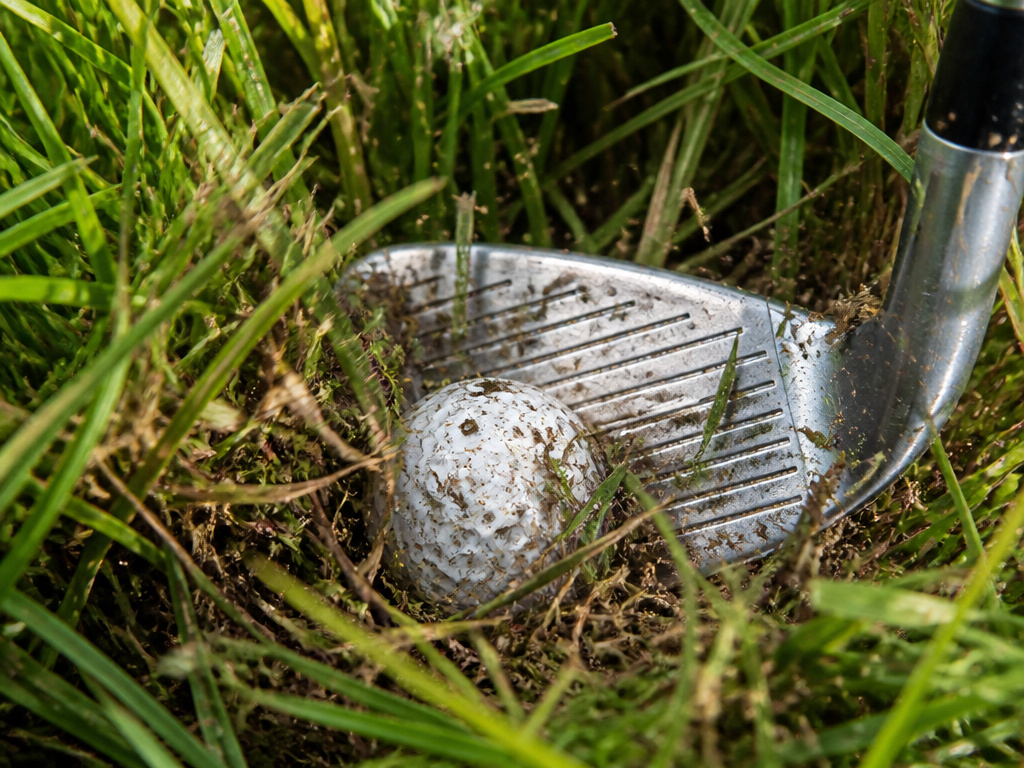
The sound of the U.S. Open is the thwack of thick rough. When a player misses a fairway, you don’t hear a gentle rustle. You hear a harsh, abrupt stop as the grass grabs the clubhead. The next shot is almost always a hack back to the fairway. It’s a punishing, visceral feedback loop.
4. The Open Championship: Golf’s Original Chaos
 The oldest major, first played in 1860, is a different game. Played on links courses in the UK, firm, fast land between the sea and farmland. The Open is governed by weather and creativity. The winner is crowned “Champion Golfer of the Year” and gets the Claret Jug.
Unlike the USGA, The R&A generally doesn’t “doctor” the course. The weather is the chief defense. This leads to a critical adaptation: the greens are often set up slower than a typical PGA Tour stop. Why? In 2015 at St. Andrews, high winds made balls oscillate on the ultra-fast greens, forcing long delays. Slow greens prevent the course from becoming unplayable in the wind.
The playoff is a four-hole aggregate, the longest of the majors, again emphasizing sustained performance over a single moment of luck.
The feel is gritty. You’re playing bump-and-runs with a 5-iron from 50 yards out. The pot bunkers are deep enough that you often have to play out sideways. The wind can switch from a helping breeze to a 30-mph crosswind in the time it takes to pull a club. It’s the ultimate test of feel and imagination, a stark contrast to the aerial target golf of the other three majors.
How a Tie is Broken: The Playoff Landscape
When two or more players finish 72 holes tied for the lead, the major isn’t over. Each tournament has its own distinct method for crowning a champion. This isn’t a minor detail, it changes late-Sunday strategy and has decided some of the sport’s most famous finishes.
| Major | Initial Playoff Format | If Still Tied |
|---|---|---|
| Masters | Sudden death (stroke play) | Continues alternating between the 18th and 10th holes. |
| PGA Championship | 3-hole aggregate (holes 16-18) | Sudden death starting on 18, then 16, 17, 18 repeated. |
| U.S. Open | 2-hole aggregate | Sudden death. |
| The Open | 4-hole aggregate | Sudden death. |
The variety here matters. A player known for clutch putting might prefer the Masters’ sudden death, where one great putt can win it. A grinder who excels at tough pars might want the PGA’s three-hole test. Understanding these golf playoffs is key to understanding the final-layer drama on Sunday afternoon.
The Grand Slam and the Modern Major Season
Winning one major is a career achievement. Winning all four, the Career Grand Slam, is a historic feat achieved by only six men: Gene Sarazen, Ben Hogan, Gary Player, Jack Nicklaus, Tiger Woods, and, as of 2025, Rory McIlroy. The pursuit of this slam drives narratives for years, as it did for Phil Mickelson (missing the U.S. Open) and now for players like Jordan Spieth (missing the PGA).
The modern schedule intensifies this chase. Since the PGA Championship moved to May in 2019, the four majors are now crammed into 105 days. This condensed timeline creates a relentless rhythm and means a player’s entire year can be made or broken by early summer. There’s an argument that it devalues the back half of the season, but it also means the golf world gets four epic showdowns in rapid succession.
This structure also directly impacts the Official World Golf Ranking. With so many ranking points concentrated in such a short window, a player who peaks during the major season can rocket up the list, securing starts in other elite events.
Frequently Asked Questions
What is the order of the four golf majors?
The majors are played in this order each year: The Masters (April), the PGA Championship (May), the U.S. Open (June), and The Open Championship (July). This sequence has been fixed since 2019.
Which major has the toughest course setup?
The U.S. Open is widely considered the toughest single test. The USGA intentionally sets up courses with narrow fairways, thick rough, and very fast greens with the goal of identifying the most complete and mentally resilient player. Winning scores are often around even par.
Do all the majors use the same playoff format?
No, each major has a distinct playoff format. The Masters uses immediate sudden death. The PGA uses a three-hole aggregate. The U.S. Open uses a two-hole aggregate. The Open uses a four-hole aggregate. All except the Masters use their aggregate format before going to sudden death if needed.
Why is the PGA Championship sometimes called the “fourth major”?
This is a lingering perception about prestige, not quality. The Masters has Augusta’s aura, the U.S. Open has its brutal reputation, and The Open has its ancient history. The PGA Championship is a pure championship for professionals without those specific historic hooks, though it consistently has the strongest field. Some fans and historians also recall when it was the season’s final major in August, a slot now filled by The Open.
How do players qualify for the majors?
Qualifications vary. The Masters is largely invitational. The PGA Championship invites top pros and club champions. The U.S. Open and The Open have “open” qualifying, where amateurs and pros can play their way in through local and final stages, alongside exemptions for top-ranked players. All use the world rankings as a key criteria.
The Bottom Line
The four majors are not just bigger tournaments. They are four different sports, each with its own language of punishment and reward. Augusta demands precision. The PGA demands depth. The U.S. Open demands survival. The Open demands creativity.
That condensed 105-day season from April to July turns them into a gauntlet. There’s no time for a mid-season slump. It rewards the player who can hold form under the brightest lights, month after month. So next time you tune in, listen for more than the cheers. Listen for the thwack of U.S. Open rough, look for the slow roll of an Open Championship putt, and watch how a three-hole aggregate playoff unfolds differently than sudden death. That’s where the real game is played.
