
Explained: How the Rough, Fringe, and Fairway Shape Shots
This post contains affiliate links. As an Amazon Associate, we earn from qualifying purchases.
This post contains affiliate links. As an Amazon Associate, we earn from qualifying purchases.
The rough, fringe, and fairway are the three primary playing surfaces between the tee and green. The fairway is the short-cut target zone for longer shots. The rough is the longer, penal grass surrounding it, and the fringe is the closely-mown collar encircling the putting green, serving as a transition area.
These aren’t just different lengths of grass. They are deliberate design and maintenance choices that dictate your strategy on every hole. The fairway is cut to a precise height, often between 0.4 and 0.6 inches, to provide a clean lie. The rough is grown longer, from 1.5 to 3 inches or more, to punish inaccuracy by reducing control and spin. The fringe, cut to a height between the fairway and green, forces a decision: putt, chip, or use a specialty wedge.
Getting this wrong costs strokes. A shot from the rough doesn’t just sit up; it sinks into a tangled mass that grabs the hosel and twists the clubface. The fringe isn’t just “almost the green”; its grain and slope can kill a running chip dead. This guide breaks down the specs, the strategy, and the shots each area demands.
Key Takeaways
- The fairway’s cut quality is defined by reel mower specs: a bedknife-to-reel clearance of 0.051 mm (0.002 inches) and a precise height of cut that creates predictable roll.
- Rough isn’t uniform. First cut (1.5-2″) allows a wood; second cut (3″+) often demands a hack-out with a wedge. The ball sits down, killing distance and accuracy.
- The fringe is a strategic buffer, not an accident. Its height and grain are maintained to challenge the “Texas wedge” and force a skilled short-game choice.
- Club selection changes completely off the fairway. From the rough, you lose 10-20% distance and need more loft. From the fringe, putting is often the highest-percentage play.
- Course management starts here. Aiming for the fat side of the fairway away from the rough is a basic rule that amateurs ignore every weekend.
What is the Fairway?
The fairway is the highway. It’s the manicured corridor that connects the tee box to the green, offering the best possible conditions for your approach shot.
A true fairway is cut by a specialized reel mower, like a John Deere 7500A E-Cut™ Hybrid or a Ransomes LF550™. These machines don’t have spinning blades. They use a spiraling reel of blades spinning against a fixed bedknife, scissoring the grass blades for a clean, consistent cut. The quality of this cut is governed by precise engineering specs.
According to the Turf-Tec International Golf Cut Quality Guide, the clearance between the reel and bedknife on a fairway mower is set to 0.051 mm (0.002 inches). The bedknife angle is typically 5 degrees. This tight tolerance is what produces a smooth, predictable surface that doesn’t grab or twist your clubhead at impact.
The result is what superintendents call “Frequency of Clip” (FOC). For an 11-blade reel on a mower traveling 8 km/h, the FOC is 0.69 mm. This means the grass is cut every 0.69 mm of forward travel, creating that distinctive striped pattern. You get a tight lie where the ball sits on top of the grass, not in it.
Why does this matter to your game? Because that clean lie allows for clean contact. You can strike the ball first, then the turf, compressing it for maximum distance and spin. You can hit a low stinger or a high fade with confidence. The fairway is the only place on the course where your fairway woods and long irons are designed to perform as intended. From anywhere else, you’re making a compromise.
| Fairway Characteristic | Spec / Typical Range | Impact on Your Shot |
|---|---|---|
| Height of Cut | 0.4 – 0.6 inches | Ball sits up; clean iron strikes possible. |
| Mower Type | 5-Gang Reel Mower | Creates uniform, striped surface with predictable roll. |
| Grass Type | Bentgrass, Bermudagrass | Influences firmness, grain, and how the ball releases. |
| Lie Quality | Tight, on the surface | Allows for ball-first contact, generating spin and control. |
The fairway is your target because it allows you to use your full bag. Missing it means dealing with the rough’s variables, which is a strategic defeat before you even take your next swing.
The Rough: The Strategic Penalty
The rough is the course’s defense. It exists to penalize poor tee shots and reward accuracy. It’s not just longer grass; it’s a tactical hazard that systematically removes options from your game.
There are usually two levels: the first cut (intermediate rough) and the primary rough. The first cut might be 1.5 to 2 inches tall, long enough to slow the clubhead and reduce spin, but often short enough to advance the ball with a fairway wood or long iron. The primary rough is where the real penalty begins. At 3 inches or more, the grass wraps around the ball and the clubhead.
Common mistake: Trying to hit a hero shot from deep rough with a low-lofted club. The grass will grab the hosel, close the face, and send a low bullet 50 yards left into deeper trouble. Every time.
The physics are simple. From a buried lie in thick rough, the grass impacts the ball before the clubface does. This kills ball speed, reduces backspin, and adds unpredictable sidespin. You can easily lose 20 yards of carry with a 7-iron. Your priority shifts from “attack the pin” to “recover to the fairway.”
Your toolkit changes here. This is where the techniques for thick rough become essential. 1. Club Up: Take more loft. A sand wedge or lob wedge is often the only club that can slice through the grass and get on the ball. 2. Grip Down & Steepen: Choke up for control and make a steeper, more vertical swing. You want to minimize the amount of grass between the ball and the clubface. 3. Accept the Outcome: You will have no spin. The ball will come out low and run. Plan for it. Aim for the fattest part of the green.
The rough is a question of risk versus reward. On a narrow hole with trouble on both sides, the smart play is often to leave the driver in the bag and hit a club that finds the fairway, even if it leaves a longer approach. The penalty for missing is too high.
The Fringe: The Short-Game Transition
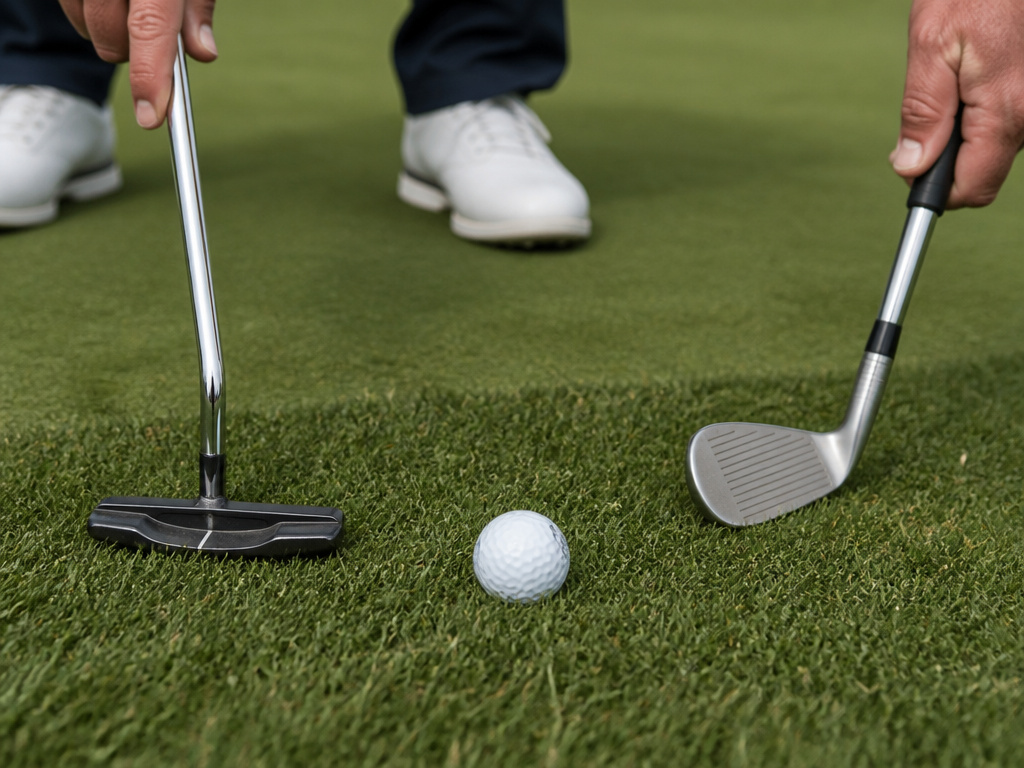
The fringe, or apron, is the short-mown collar that rings the putting green. It’s cut shorter than the fairway, often around 0.25 to 0.3 inches, but longer than the green itself. Its purpose is architectural and strategic.
Architecturally, it provides a visual and physical transition from the fairway to the green, preventing a harsh drop-off. Strategically, it’s a test. Do you putt from the fringe? Chip? Use a hybrid? The fringe’s grain and slight rise (“collar”) can stop a running chip dead, while a down-grain putt can get jumpy.
The best play depends on three things: the lie, the grain, and the amount of fringe to carry. * Putting: Often the safest choice. The ball will bounce more than on the green, so hit it firmer. If the grain is growing toward you, hit it even firmer. * Chipping: Use a low-bounce wedge or even an 8-iron for a bump-and-run if you have a clean lie and plenty of green to work with. * Specialty Shots: A wedge with higher bounce can struggle here if the turf is firm; the leading edge can skull the ball.
The fringe eliminates the easy option. It asks you to read more than just the break on the green; you have to read the grain and texture of the fringe itself. It’s a one-club-length area that separates a simple two-putt from a tricky up-and-down.
How Maintenance Defines Your Game
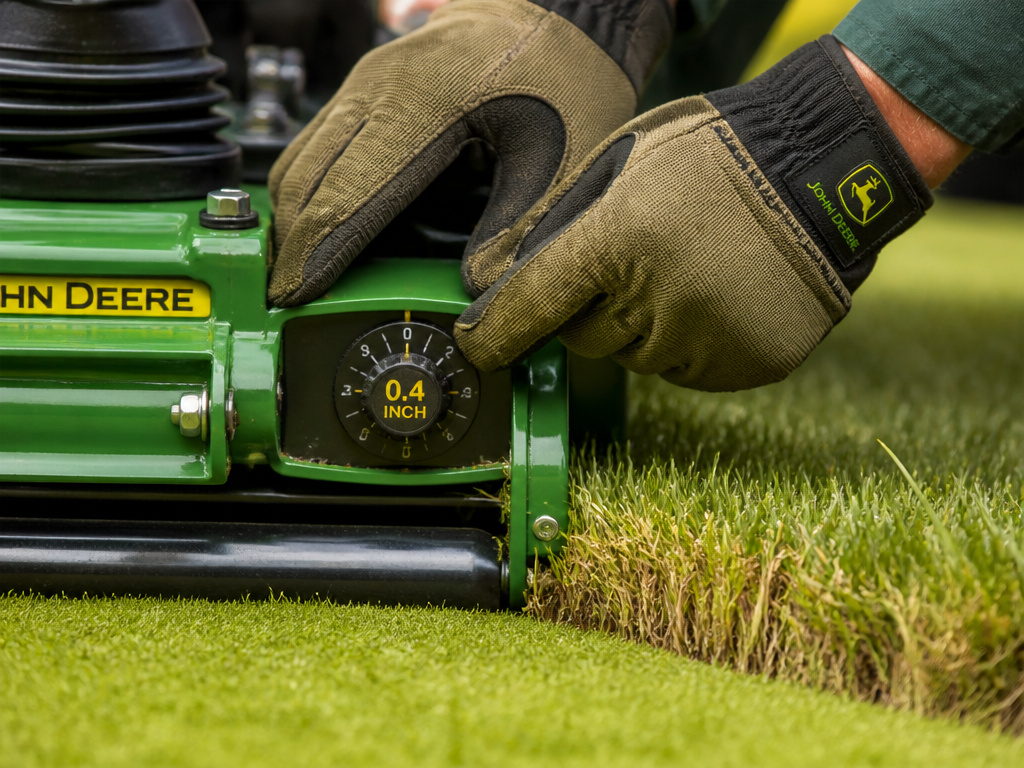
The conditions you play aren’t accidental. They are the result of specific maintenance practices using equipment with exact specifications.
The John Deere 7500A manual specifies a cutting height range of 2.0 – 28.5 mm (0.078 – 1.125 inches) for its fairway units. Superintendents dial in a specific height within that range based on season, grass type, and desired playability. Lower cuts (near 0.4″) make the fairway faster and firmer, rewarding precise ball-striking. Higher cuts (near 0.6″) are more forgiving.
For the rough, a rotary mower is typically used. It has a single spinning blade that tears and bruises the grass tip, leaving a ragged edge. This ragged edge creates more friction against your clubhead than the clean-cut fairway grass. The Jacobsen SLF530 manual emphasizes hydraulic system maintenance to keep these mowers running, because consistent rough height is key to fair, predictable penalties.
Where this goes sideways: A course that lets the first cut grow into the primary rough. Suddenly, a minor miss is punished as severely as a wild one, which removes the risk/rebalance from the hole design.
This maintenance directly affects your club selection. A firm, fast fairway cut at 0.4 inches might call for a fairway wood off the deck, as the ball will roll out. The same shot from a softer, higher-cut fairway might demand a hybrid that launches higher. Understanding that these are controlled variables, not random weather effects, helps you plan your round.
Club Selection & Strategy for Each Area
Your bag management changes the moment your ball leaves the fairway. Here’s the decision tree.
From the Fairway:
- Long Approach (200+ yds): Fairway wood or hybrid. You need the shallow angle of attack and the club design that assumes a perfect lie.
- Mid-Iron (150-200 yds): The appropriate iron. You can control trajectory and spin.
- Key Principle: Be aggressive. You’ve earned the right to attack the pin by finding the short grass.
From the Rough:
- First Cut: You can still use a mid-iron or hybrid, but expect less spin and more roll. Club choice may shift toward a fairway wood vs hybrid decision based on how much carry you need versus roll.
- Primary Rough: Loft is your friend. A pitching wedge or gap wedge for anything under 150 yards. For longer shots, a high-lofted hybrid might be the only “long” club that can get through the grass. The goal is advancement, not perfection.
- Buried Lie: Sand wedge. Play it back in your stance, hood the face slightly, and punch down on it. It’s a recovery shot, not a scoring shot.
From the Fringe:
- Putt if: The lie is good, the fringe is short, and the green is relatively flat between you and the hole.
- Chip if: You need to carry a longer stretch of fringe or there’s a significant slope you need to navigate.
- Use a hybrid/putter if: The ball is sitting down slightly but you have 20+ feet of green. A hybrid used like a putter can pop it over the first inch and get it rolling.
This is where knowledge of your own golf club types and their performance from different lies is critical. Practice these shots. Know how far your 9-iron carries from a clean fairway lie versus a fluffy lie in the first cut. That data is what turns a guess into a strategy.
Frequently Asked Questions
What’s the difference between the fringe and the fairway?
The fairway is cut longer (typically 0.4-0.6 inches) and is the primary target for tee shots. The fringe is cut shorter (0.25-0.3 inches) and specifically surrounds the green as a transition zone. The fairway is for full shots; the fringe is for short-game decisions.
Can you use a putter from the fringe?
Yes, and often you should. Putting from the fringe is usually the safest, most consistent option. The ball will hop slightly, so you need to hit it firmer than a putt from the same distance on the green. Read the grain of the fringe as it will affect the initial roll.
Why is hitting from the rough so hard?
Long grass gets between the clubface and the ball, reducing clubhead speed at impact and smothering the grooves’ ability to create spin. This results in significant distance loss, a lower ball flight, and no stopping power on the green. The clubhead can also twist, causing offline shots.
How do course managers control the rough height?
Superintendents use rotary mowers with adjustable height settings. They will often define a “first cut” (intermediate rough) and a “primary cut” (penalty rough) and mow them on different schedules or with different height settings to create graduated penalties.
Does the type of grass in the rough matter?
Absolutely. Bermuda rough is wiry and can grab the clubhead more, often leading to flyer lies that go farther than expected but with no spin. Bentgrass or ryegrass rough is softer and tends to wrap around the ball, killing distance. Knowing the grass helps you predict the shot outcome.
The Bottom Line
The fairway, rough, and fringe are the chessboard. Your clubs are the pieces. Good course management means knowing the rules of the board.
Aim for the fairway not because it’s the convention, but because it’s the only place your equipment works as designed. Respect the rough for what it is: a distance and control penalty that demands a conservative, lofted recovery. Read the fringe as a separate surface with its own grain and speed.
This all changes if you’re playing a links course where the “fringe” is tight, hard turf and the “rough” is gorse. In that case, the calculus is different, the ground game reigns. But for most parkland courses, the hierarchy is clear. Fairway first. Everything else is damage control. Spend your next practice session hitting ten shots from a perfect fairway lie, then ten from the rough. The difference in feel and result will teach you more than any article can. Then you’ll know exactly what you’re aiming for.
