
A Guide to the Scramble in Golf: Rules, Tactics, and Types
This post contains affiliate links. As an Amazon Associate, we earn from qualifying purchases.
This post contains affiliate links. As an Amazon Associate, we earn from qualifying purchases.
A golf scramble is a team stroke-play format where two to four partners all hit from the same selected location after each shot. The team picks the best tee shot, all players move their balls to within six inches of that spot (no nearer the hole), and the process repeats until the ball is holed, recording one score per hole.
The USGA codifies this as Rule 26.1, but tournament committees set the specifics. That’s why you’ll see variations like the Texas Scramble, which mandates each player’s drive be used a set number of times. Understanding the official placement rule, six inches off the green, one club-length on, is what separates a smooth round from a penalty.
What follows: the exact USGA placement and tee-shot rules most guides skip, the strategic order that wins tournaments, and the key differences between a scramble and formats like best ball.
Key Takeaways
- The official USGA Scramble rule (26.1) mandates playing from within six inches of the selected spot, with a minimum of six tee shots from each player in a four-person team.
- Strategy is everything: let the worst putter go last for a read, and never select a ball in a bunker unless you have no other option.
- A scramble uses one team score from a shared ball; best ball uses the lowest individual score from players playing their own balls throughout.
- Common variations include the Texas Scramble (drive minimums) and the “par is your partner” rule that sets a scoring floor to speed up play.
- Team handicaps, when used, are typically calculated by taking a percentage of each player’s handicap (e.g., 20% of A player, 15% of B player).
How a Scramble Actually Plays Out
Forget abstract definitions. A scramble unfolds as a series of team decisions, shot by shot. The rhythm is simple, but the choices matter.
All four players tee off. The team then walks forward to evaluate the results. The “best” shot isn’t always the longest. A ball 220 yards down the middle is usually better than one 250 yards in the thick rough behind a tree. You choose based on lie, angle, and the next shot you want to have.
Once chosen, mark that ball’s spot with a tee. This is your team’s “selected location.” Now, every other player picks up their ball and places it within the allowed distance. This is where most casual scrambles get the rule wrong.
The official USGA Rule 26.1b states the ball must be placed “within six inches of the selected location, no nearer the hole.” Many casual events use “one club-length” off the green, but the six-inch rule is the actual standard.
The team then decides the hitting order for the next shot. All four players hit from their placed balls. You again choose the best result, mark it, and everyone moves. This cycle continues until the ball is holed. Only that final score, say, a 4, goes on the team’s card.
The Core Rules: USGA Rule 26.1
While local tournaments can set their own guidelines, the United States Golf Association provides a formal framework in Rule 26.1. Treating this as the baseline keeps your team safe from disqualification.
The six-inch placement rule is non-negotiable. So is the requirement for each player to contribute off the tee. Rule 26.1e requires a side to select each partner’s tee shot at least six times in a standard four-person round. Fail to use someone’s drive six times, and your team is disqualified. This rule exists to prevent one long hitter from carrying the team entirely.
| Rule Area | USGA Rule 26.1 Standard | Common Casual Variation |
|---|---|---|
| Ball Placement (On Green) | Within 6 inches, no nearer hole. | Within 1 putter head (~4 inches). |
| Ball Placement (Off Green) | Within 6 inches, no nearer hole. | Within 1 club-length, same lie type. |
| Tee Shot Minimum | Each player’s drive used at least 6 times. | Often ignored in casual play. |
| Lie Improvement | Ball may be placed, not necessarily “as it lies.” | “Winter rules” – lift, clean, place anywhere. |
The rule also simplifies other parts of golf. You can clean your ball anytime. There’s no penalty for accidentally moving it. If your selected spot is in a bunker or penalty area, the whole team must play from that same type of hazard unless taking formal relief.
Where this goes sideways: Playing from the wrong place. If anyone plays from more than six inches from the marked spot, or from a better type of lie (e.g., fairway when the selected ball was in rough), the team incurs a penalty. In a serious tournament, that’s often two strokes.
Scramble Strategy: It’s About Order, Not Just Power
Raw distance helps, but scrambled are won by sequencing. The order your team hits each shot changes the information available and the pressure on each player.
Off the tee, let the most consistent, straight hitter go first. This gives the team a ball in play, reducing pressure on the big hitters who follow. The longest hitter should go last, free to swing aggressively knowing a safe ball is already out there.
On approach shots and around the green, reverse the order. Let the least confident player hit first. If they duff it, no harm, the better players still have a chance. The most skilled player in that particular situation should hit last, armed with the knowledge of how the previous shots reacted.
Putting is where order matters most. Your worst putter should never putt first. They provide no useful read for the team. 1. Send a confident lag-putter first to get the ball close and show the break. 2. Let your second-best putter go next, trying to make it. 3. Your best putter goes third, with two reads to work from. 4. The weakest putter goes last, ideally tapping in after the putt is already made.
I’ve seen teams with three 300-yard drivers lose to a squad of accurate seniors because the seniors managed the green complex. They knew when to take the safe 20-footer over the risky flop shot.
Never select a ball in a bunker as the best shot unless all shots are in bunkers. The risk of multiple players failing to escape is too high. Similarly, “grip it and rip it” is a fun motto, but on a tight par-4, the best shot is often the one in the short grass, not the one in the trees.
Scramble vs. Best Ball: The Critical Difference
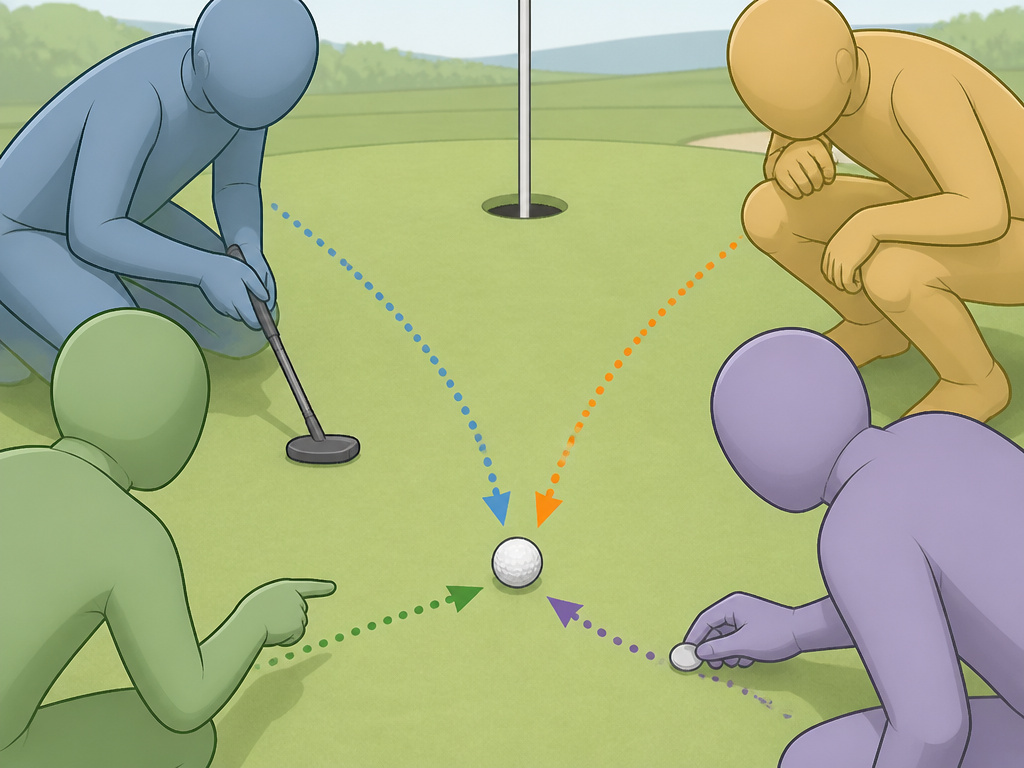 People use “scramble” and “best ball” interchangeably. They are not the same. Confusing them will get you strange looks on the first tee and ruin your team’s strategy.
A scramble is collaborative from start to finish. You build one score together, shot by shot. In best ball, each player plays their own ball for the entire hole. At the end, you take the lowest individual score on that hole for the team card. One is a shared journey; the other is parallel play.
| Aspect | Scramble | Best Ball (Four-Ball) |
|---|---|---|
| Play Style | All play from the same selected spot each shot. | Each player plays their own ball throughout the hole. |
| Team Score | One score per hole, from the shared ball. | The lowest individual score among teammates counts. |
| Strategy Focus | Shot selection, team order, and placement rules. | Individual play, managing your own game to post a score. |
| Best For | Charity events, beginners, fast and social rounds. | More competitive team events, like club championships. |
This distinction changes everything. In a scramble, a 25-handicapper can contribute one great putt and be a hero. In a best ball format, that same player must navigate the entire hole alone, and their score may never count. The best ball format is the standard for serious team match play, like the Ryder Cup’s four-ball sessions.
Common Scramble Variations and Local Rules
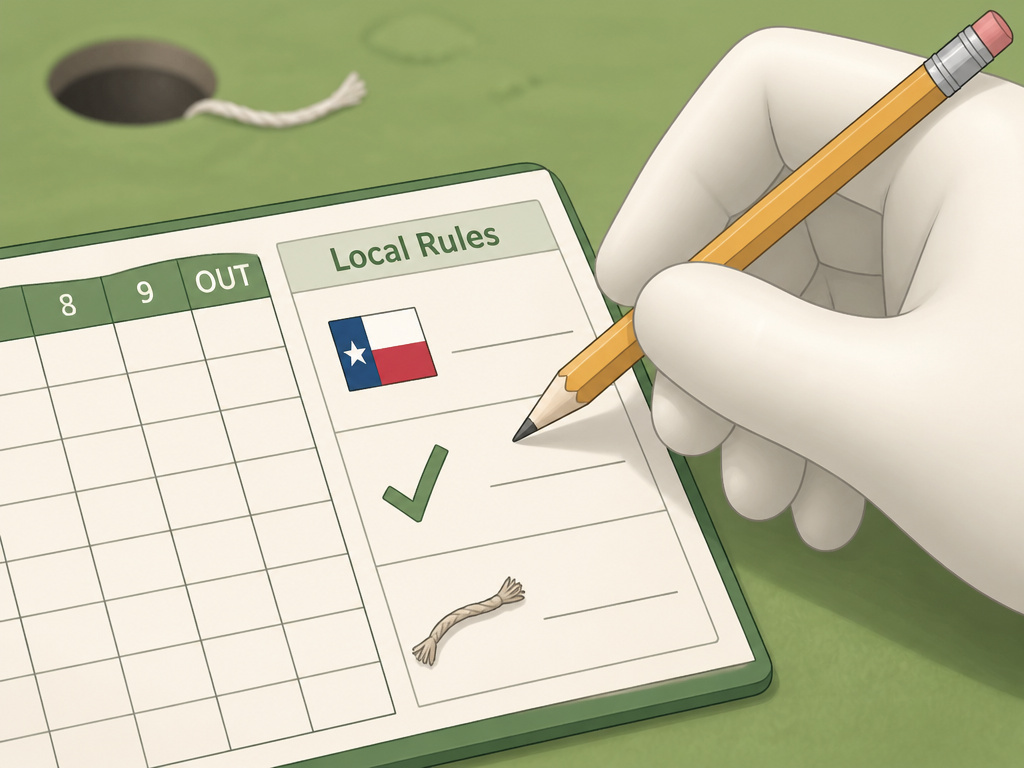 Because the USGA lets committees set rules, you’ll encounter twists. These variations aim to balance competition, ensure participation, or just add fun.
The Texas Scramble is the most structured variant. It adds one firm rule to the standard format: each player’s drive must be used a minimum number of times, usually four in an 18-hole round. This prevents a team of one pro and three novices from only using the pro’s tee shots. The popular Texas Scramble format ensures everyone contributes.
The “Par is Your Partner” Rule sets a scoring floor. If a team doesn’t make a birdie or better, they simply take a par on the hole. This speeds up play dramatically, teams won’t grind over a triple-bogey putt, and guarantees a decent team score. It’s common in charity outings focused on fun over fierce competition.
Handicaps are handled inconsistently. Many casual scrambles ignore them. When used, the most common calculation for a four-person team is: 20% of the A player’s course handicap, plus 15% of the B player’s, 10% of the C player’s, and 5% of the D player’s. Add those to get the team’s stroke allowance.
Fun Add-Ons: Mulligans (do-overs) are often sold for charity. The “string rule” gives each team a few feet of string; they can use it to measure putts they’ve missed, cutting off the length made, and count the putt as holed.
Equipment and Mindset for Scramble Success
Your gear choices shift in a team setting. You’re not playing a balanced round; you’re hunting for occasional moments of brilliance.
Off the tee, distance is premium. This is where golf balls for average golfers that reduce spin and maximize roll can help. For the second shot, having a player with a reliable 60-degree wedge for short-sided shots is a secret weapon. On the green, a consistent putter is worth more than a long driver.
The mindset is “no risk, no reward”, but with a safety net. Someone else has already hit. This frees you to play aggressively. Miss the green? Your partner might stick it close. This is the opposite of best ball tournaments where you must manage your own mistakes.
Common mistake: Trying to be the hero on every shot. If your partner has a 15-footer for birdie, your job on the next putt isn’t to slam it past the hole. It’s to lag it close to guarantee the par, giving them a free run at the birdie.
Communicate constantly. Discuss the best shot before anyone marks a ball. Decide the order as a team. The format is social by design, use that to your advantage.
Frequently Asked Questions
How many people are on a scramble team?
Teams are most commonly four players, which is standard for charity and corporate events. Two-person scrambles are also popular for casual play or more competitive tournaments. Three-person teams work but are less common.
What is a shotgun start in golf?
shotgun start is a tournament format where groups start on every hole simultaneously at a set time. It’s frequently used for scramble tournaments to ensure all teams start and finish at roughly the same time, making post-round scoring and events easier to manage.
Do you use handicaps in a scramble?
Often, no. Many charity scrambles are played “gross” (no handicaps). When handicaps are used, there’s no single official method. The most accepted formula takes a percentage of each player’s handicap (e.g., 20%/15%/10%/5% for an A-B-C-D team) and sums them for a team allowance.
Can you improve your lie in a scramble?
Yes, this is a standard allowance. When placing your ball within the allowed distance (six inches or one club-length), you can place it on a good lie. You can’t change the type of terrain (e.g., from rough to fairway), but you can ensure the ball is sitting up cleanly. Most scrambles play “lift, clean, and place” everywhere.
What’s the difference between scramble and shamble?
Shamble combines elements of scramble and best ball. All players tee off, and the team selects the best drive. From that spot, each player then plays their own ball for the remainder of the hole. The team score is the lowest individual score on that hole, like in best ball.
The Bottom Line
A golf scramble turns the individual game into a team sport. The official USGA rule gives you a six-inch circle and a tee-shot quota, but the real game is played between your team’s ears. Sequence your putts, avoid bunkers as the selected spot, and remember that the safe play often sets up the hero.
The format’s genius is its inclusivity. A beginner’s one pure shot can win a hole. That’s why it dominates charity events and casual rounds. Before your next one, clarify the local rules, especially the placement distance and any drive minimums like those in a Texas Scramble tournament format. Then, relax. It’s the one format where a bad shot simply disappears.
