
What Is a Skins Game in Golf? The Betting Format Explained
This post contains affiliate links. As an Amazon Associate, we earn from qualifying purchases.
This post contains affiliate links. As an Amazon Associate, we earn from qualifying purchases.
A skins game in golf is a head-to-head betting format where players compete for a set value, called a “skin,” on each individual hole. The lowest score wins the skin and its cash. If two or more players tie for the lowest score, the skin carries over to the next hole, stacking its value until someone wins a hole outright. This simple mechanic creates sudden-death tension on every tee.
That carryover is the engine. It turns a routine par into high drama when three holes’ worth of cash is waiting on the green. The format isn’t just for your Saturday foursome, it fueled a made-for-TV PGA Tour spectacle for 25 years, where a single hole could be worth $800,000.
What follows is the complete breakdown: how to run a game with your buddies, the wild history of the professional version, and the specific rule change that happened after one massive payout.
Key Takeaways
- The core rule is “win the hole, win the skin; tie the hole, carry it over.” This forces aggression on every shot when money is stacked.
- Handicaps are not just allowed but recommended for mixed-skill groups to keep the game competitive and fun for everyone.
- The professional Skins Game ran from 1983 to 2008 and was famous for huge, winner-take-all payouts on single holes.
- In 2001, a “validation” rule required the winner of a skin to also tie or win the next hole to collect. It was scrapped after Greg Norman won $800,000 with it.
- Modern versions like The Match and a new TMRW Golf League event have revived the skins format for television.
The Core Rules of a Skins Game
Forget stroke play totals. A skins game resets the stakes on every tee box. You agree on a value per skin, say $5, before the first hole. Player A makes a birdie, Players B, C, and D all make par. Player A wins the skin and collects $5 from each opponent, netting $15.
If two players tie with the lowest score, no one wins. That $5 skin carries over to the next hole. Now hole two is worth $10 ($5 for its own skin plus the $5 carryover). If that hole is also tied, the pot grows again. This continues until one player posts the sole low score.
A skins game is a match-play betting structure where each hole is a discrete contest for a monetary value. When a hole is halved, its value carries forward, increasing the pot for the following hole until a player wins a hole outright.
This is the basic, universal framework you’ll find in any Wikipedia entry on skins game format. The beauty is its simplicity and the pressure it creates. A player having a bad day can still win big if they snag a single birdie on a hole with three carryovers.
Setting the Stakes and Using Handicaps
You can keep it flat, $5 per skin all day, or get creative. Some groups use a progressive structure: $2 for holes 1-6, $5 for holes 7-12, $10 for holes 13-18. This mimics the escalating values used in the old PGA Tour Skins Game history.
Handicaps are not just fair; they’re essential if your group has a range of skills. Apply full handicaps. The 20-handicap gets a stroke on the 18 hardest holes, the 5-handicap gets a stroke on the 5 hardest. This levels the field and means everyone has a realistic chance to win skins, which is the whole point of a fun money game. It’s a different kind of pressure than standard stroke play, one that can sharpen your mental game under fluctuating stakes.
Where this goes sideways: Playing skins without handicaps in a mixed group. The lowest handicapper will win nearly every skin outright, the game ends by the 12th hole, and nobody has fun. Agree on the math before you tee off.
Variations: “Back It Up” and Doubling Carryovers
Two common twists add more risk and reward. The “Back It Up” rule lets a player who just won a skin declare they’re going for double or nothing on the next hole. If they win that next hole too, they collect double the value of both skins. If they lose, they get nothing for the first skin.
The high-roller move is to double the carryover value on ties instead of simply adding it. Start with $1 skins. Hole 1 ties, so hole 2 is worth $2. If hole 2 ties, hole 3 is worth $4, then $8, and so on. This can create a truly massive pot very quickly.
| Rule Variation | How It Works | Best For |
|---|---|---|
| Standard Carryover | Tied skin value adds to the next hole’s base value. | Most groups; predictable, gradual buildup. |
| Doubling Carryover | Tied skin value DOUBLES for the next hole. | High-stakes games; creates huge single-hole prizes fast. |
| “Back It Up” | Skin winner can risk their winnings to double them on the next hole. | Aggressive players; adds a layer of bluff and strategy. |
A Brief History of the Pro Skins Game
The format exploded into popular culture thanks to a televised event. The Skins Game, an unofficial PGA Tour event, ran from 1983 to 2008. It was a “silly season” highlight, featuring four legends like Jack Nicklaus, Arnold Palmer, Gary Player, and Tom Watson battling for six-figure sums per hole.
The TV production loved it. The carryover format guaranteed that viewers would stick around to see who would cash in on the growing pot. At its peak, it was a ratings hit. Fred Couples dominated, earning the nickname “Mr. Skins” by winning over $4.4 million in his appearances.
The money was structured in tiers. In its final years, the first six holes were worth $25,000 each, holes 7-12 were worth $50,000, and the final six holes were worth $70,000. A few carryovers could turn the 17th hole into a $500,000 prize.
The $800,000 Hole and the “Validation” Rule
In 2001, the organizers introduced a brutal twist called “validation.” If you won a hole outright, you didn’t get the money yet. You had to tie or win the next hole to “validate” and collect the skin from the previous hole. Fail to validate, and the skin carried over.
Only one player succeeded all weekend: Greg Norman. He won the 17th hole, then tied the 18th to validate. That allowed him to collect $800,000, the largest single skin in the event’s history. He then won a playoff for another $200,000, taking the entire $1 million purse. The rule was so punishing it was dropped the following year and never used again.
Demise and Revival
Ratings declined, sponsor LG pulled out in 2009, and the event was canceled. But the format was too good to die. The concept was revived in 2018 as The Match, a head-to-head exhibition that often uses a skins-like structure. In 2025, the TMRW Golf League announced a new Skins Game for Amazon Prime Video, proving the format’s enduring appeal for creating must-see TV moments.
How to Play Skins with Your Regular Group
You don’t need TV cameras. A skins game is the perfect way to add stakes to a casual round. Here’s the step-by-step setup.
- Agree on the Basics. Before anyone tees off, decide four things: the players (2, 3, or 4), the base value per skin, whether you’ll use handicaps, and if you want any variations like “Back It Up.”
- Apply Handicaps. Use the course’s stroke index to apply strokes. This is critical. It turns the long-hitting low handicapper’s birdie try into a match against the high handicapper’s net birdie. It makes every hole winnable for anyone.
- Tee Off and Record Scores. Play each hole normally. After the hole, identify the lowest net score. Remember, this is one of the best golf practice games for learning to handle pressure on short putts you must make.
- Determine the Skin Winner. If one player has the sole low net score, they win the skin. They collect the base value from every other player immediately. Pay as you go to keep the game lively.
- Handle Ties and Carryovers. If two or more players tie for the low net score, no skin is awarded. Announce the carryover. The value of that skin is added to the next hole’s base value. Mark a “C” on the scorecard.
- Settle Up at the End. If skins are left unpaid after 18 holes, meaning the final hole was tied, you have two options. You can call it a push and nobody wins the carryover pot, or (the more exciting choice) go to sudden death. Play extra holes until someone wins a hole outright and takes the entire remaining pot.
Common mistake: Not paying after each hole. Letting IOU’s pile up kills the momentum and the fun. The clink of coins or the tap of a payment app after a win is part of the game’s texture.
Skins Game Strategy: It’s Not Just Low Score Wins
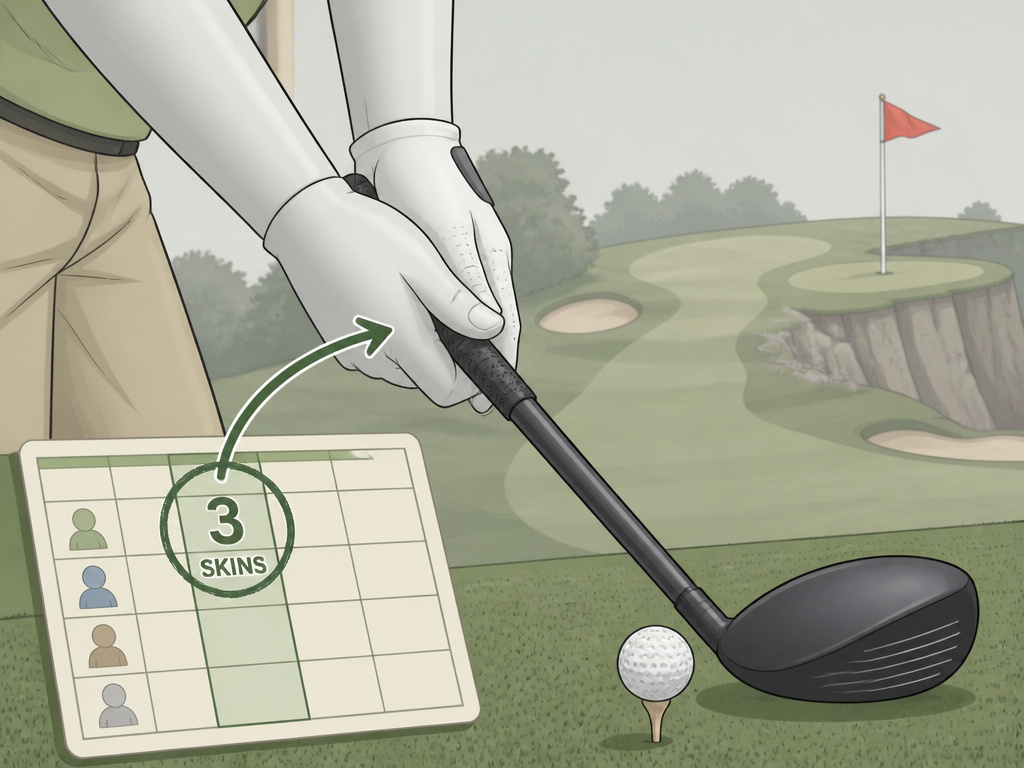
Stroke play strategy is about consistency. Skins strategy is about timing and aggression. When three holes’ worth of cash is on the line, your decision-making changes.
On a hole with no carryover, play smart. On a hole with two or three skins carried over, it’s time to attack. The potential reward outweighs the risk of a bogey. This might mean pulling driver on a tight par-4 or firing at a sucker pin. The format rewards this kind of calculated gamble, a skill that separates good players from winners in any golf mental strategies context.
You also have to know when to block. If you’re not in position to win the skin, your job is to try to force a tie. If your opponent is in the fairway and you’re in the trees, your goal isn’t a miracle birdie. It’s to make a par or bogey that might match theirs, forcing another carryover and living to fight another hole. This defensive, spoiler mindset is unique to skins.
Equipment for the Occasional Gambler
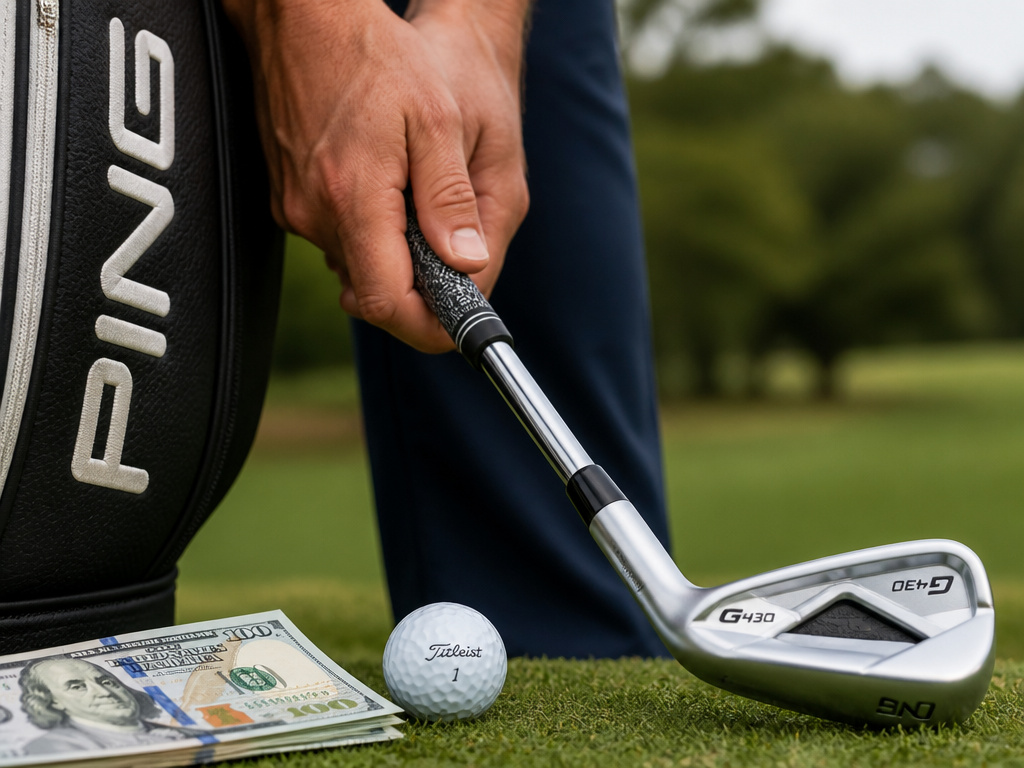
You don’t need special gear to play a skins game. You need clubs you can trust under pressure. For most amateur players, that means game improvement irons with a wide sole and a forgiving sweet spot. When you must hit the green with a carryover on the line, you want technology on your side.
The same logic applies to the rest of the bag. Forgiving clubs like high-MOI drivers and hybrids are skins-game assets. They help you find more fairways and greens, which gives you more chances to post that low score. Pair them with forgiving golf balls that reduce sidespin on off-center hits, and you’ve built a kit designed for consistency when the money is up.
If you’re new to the game and want to try skins, start with a complete beginner set. Brands like Callaway make excellent starter sets that include everything you need. As you improve, you might look into dedicated irons for amateurs that offer more control without sacrificing all the help.
Frequently Asked Questions
Can two people play a skins game?
Absolutely. A skins game works perfectly with two players. The rules are identical: win the hole, win the skin; tie the hole, carry it over. It becomes a pure match-play duel with escalating stakes.
What happens if the final hole is tied?
If the 18th hole is tied and a carryover exists, the skin(s) are not awarded. Your group must decide: split the carryover pot evenly, or go to sudden death. Sudden death is the traditional and more exciting resolution, play extra holes until someone wins a hole outright and claims all the unpaid skins.
Do pros still play skins games?
Not as a regular PGA Tour event, but the format is alive. Exhibitions like The Match (featuring stars like Tiger Woods, Phil Mickelson, and Rory McIlroy) often use a skins format. The TMRW Golf League has also announced a new Skins Game event for 2025, signaling a formal revival.
What’s the difference between skins and match play?
In standard match play, you win the hole and go 1-up. The match can end before the 18th hole if one player leads by more holes than remain. In skins, every hole has independent cash value, and the game always goes the full 18 holes (or more). You can lose the first 17 holes but win the 18th with a big carryover and end up with the most money.
Is a skins game good for beginners?
Yes, especially if handicaps are used. It allows a beginner to win a skin with a net birdie or par, even if they shot an 8. This instant reward is more engaging than waiting for a total score at the end. Using the right gear, like beginner irons or women’s beginner sets, makes it even more accessible.
The Bottom Line
A skins game turns every hole into a mini-tournament. The carryover rule builds natural drama, making par putts feel like major championship moments. It’s the best format for a friendly wager because it keeps everyone in the hunt until the very last putt.
Whether you’re playing for $5 skins with your buddies or watching pros battle for $800,000 on a single hole, the principle is the same: win the hole, win the prize. It’s simple, brutal, and endlessly entertaining. Give it a try on your next round. Just make sure you agree on the rules, and the handicaps, before you tee off.
