
What to Expect in Your First Golf Lesson | The Real Agenda
This post contains affiliate links. As an Amazon Associate, we earn from qualifying purchases.
This post contains affiliate links. As an Amazon Associate, we earn from qualifying purchases.
A golf lesson is a diagnostic appointment, not a one-hour repair shop. You should expect a coach to assess your current swing, identify one priority change, and give you a clear practice plan. The goal is to leave with less to think about, not with a perfect-looking final shot.
That gap between assessment and action is where most golfers get lost. They walk in wanting their slice fixed and walk out with three swing thoughts that contradict last month’s YouTube tip. A real lesson cuts through that noise.
What follows is the inside track: the six-step blueprint modern coaches use, the exact questions award-winning instructors ask, and how to communicate so you get a plan you can actually execute. By the end, you’ll know how to walk onto the lesson tee ready to show the truth, not hide it.
Key Takeaways
- Your first lesson is a diagnostic. The coach’s job is to identify the root cause of your ball flight, not just tweak the symptom you see.
- Arrive warmed up, but not exhausted. Hit a small bucket to loosen up, but save your energy and your “A” swing for the assessment.
- Describe your ball flight, not your swing theory. “My 7-iron starts left and stays left” is gold. “I’m coming over the top” assumes the cause and can send the coach down the wrong path.
- **Leave with one priority. You should have one clear movement to practice, one drill to reinforce it, and a way to know if you’re doing it right.
- Schedule your next session within a month. Improvement is a conversation, not a verdict. Without follow-up, your swing will drift back to its old patterns.
The 6-Step Lesson Blueprint (From Assessment to Plan)
Forget the vague idea of “working on your swing.” Modern instruction, especially at tech-forward centers like GOLFTEC, follows a structured sequence designed to replace guesswork with a measurable plan.
Step 1: The Interview & Goal Setting. Before you swing a club, a good coach will ask about your golf history, any physical limitations, and, most importantly, what you want to accomplish. As PGA National Teacher of the Year Hank Johnson notes, this partnership requires your honest feedback to produce results.
Step 2: The Swing Evaluation. This is the baseline. You’ll hit shots with a mid-iron while the coach observes. At facilities with advanced tech, this includes high-speed video from multiple angles (GOLFTEC calls this OPTIMOTION) and launch monitor data capturing club speed, ball speed, and spin rate.
Step 3: Diagnosis & Priority Identification. Here, the coach connects what they see and what the data says. The most important lesson point is often not the most visible swing flaw. The root might be a setup issue that creates the bad motion you’re trying to fix.
Step 4: Introduction of a Key Change. You’ll receive a simple cue or feel for the priority movement. The coach isn’t trying to rebuild your swing in an hour. They’re giving you one lever to pull.
Step 5: Guided Practice with a Drill. You’ll practice the change with the coach’s eyes on you. They’ll give you a specific drill to ingrain the feel. This turns information into something you can repeat.
Step 6: The Practice Plan & Next Steps. The lesson ends with a roadmap. What do you work on first? What should you ignore? When should you come back? Mike Bender, the 2009 PGA National Teacher of the Year, advises never going longer than a month between lessons.
This structure exists for a reason. It separates a professional evaluation from a well-meaning tip. Your job is to show up ready for step one.
How to Talk to Your Coach (So They Can Actually Help)
Communication breakdowns wreck more lessons than bad swings. Coaches aren’t mind readers. The information you provide frames their entire diagnosis.
Lead with evidence, not assumptions. Walk in with a clear description of your most common miss. “I lose my driver way right when I get nervous on the first tee” is actionable. “I need more lag” is a guess that may have nothing to do with your actual issue. This precision is as crucial as knowing proper golf course etiquette when you’re new.
Confess your constraints. Be upfront about how much you can practice. A correction that requires four range sessions a week is useless if you only have twenty minutes at home. Also, mention any old injuries. A coach can adapt a drill for a stiff back or a bad knee.
Don’t hide the ugly shot. When you hit a top, a chunk, or a wild block during the assessment, don’t apologize or immediately explain it. That miss often provides the clearest diagnostic clue. Let the coach see your pattern, not your curated highlight reel.
Where this goes sideways: Trying to impress your coach with your “good” swing. They need to see your on-course swing, the one under a bit of pressure. Manufacturing a pretty swing for the first five balls sends them down the wrong path, and you’ll leave with a fix for a problem you don’t actually have.
This is where your equipment matters. If you’re struggling with consistency, your amateur golf irons might be part of the story. A coach can spot when a club’s design is forcing a compensation. Don’t be surprised if they suggest a look at your gear down the line.
What Award-Winning Coaches Listen For
We have a rare insight here. A Golf Channel Academy roundtable with three National Teachers of the Year. Mike Bender (PGA, 2009), Hank Johnson (PGA, 2004), and Lynn Marriott (LPGA, 1992), reveals what elite coaches prioritize in a first session.
Their questions are telling. They want to know what makes you nervous on the course. They ask about your practice habits not to judge you, but to build a realistic plan. Lynn Marriott specifically talks about relieving students of “guilt” for not practicing enough, their job is to help you improve within your life.
The through-line is individualization. They are not applying a universal template.
| Coach’s Question | What They’re Really Diagnosing |
|---|---|
| “What would you like to accomplish?” | Your motivation & whether your goal is realistic for this session. |
| “What situations make you most nervous?” | The gap between your range swing and your on-course swing. |
| “How much can you practice between lessons?” | The complexity of the fix they can responsibly give you. |
| “Tell me about any old injuries.” | Your physical limits and how to work within them safely. |
Mike Bender’s answer to the most common post-lesson question, “When should I come back?”, is precise: it depends on your practice, but never longer than a month. Many of his long-term students take one lesson a month, using them as maintenance sessions to prevent their swings from drifting. This structured approach to improvement is similar to choosing the right gear, like selecting versatile golf balls that perform across different aspects of your game.
Your Prep Checklist: What to Do the Day Of
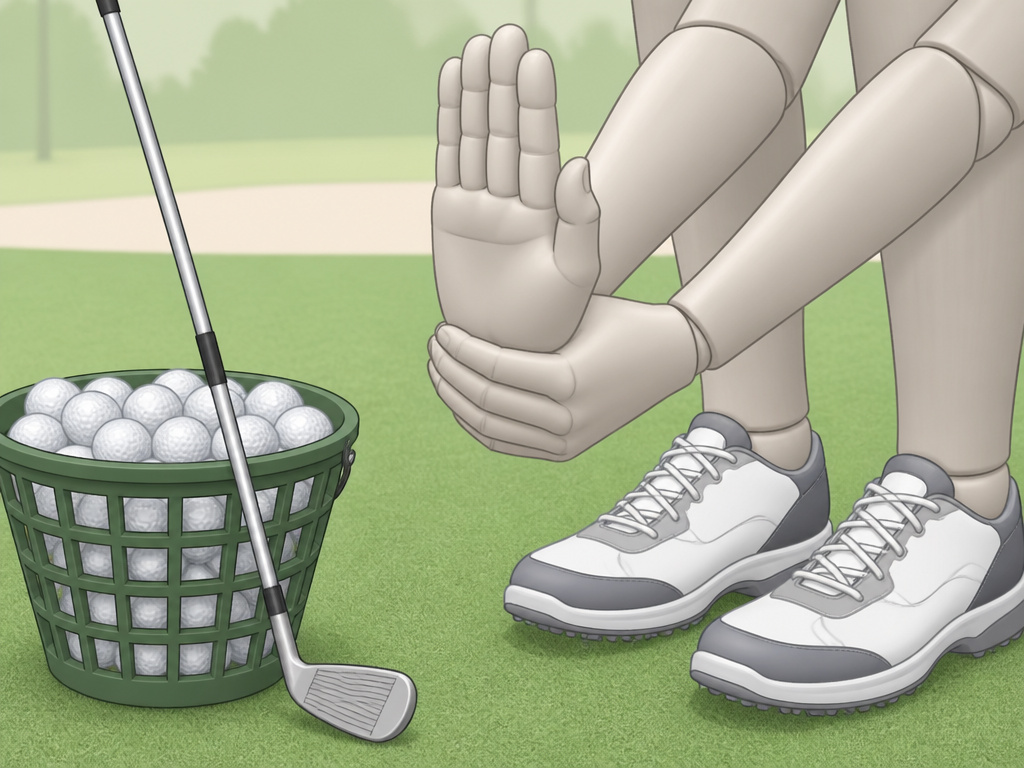 Showing up prepared is a sign of respect for your coach’s time and your own investment. It also gets you to the real work faster.
Physically: Arrive 15 minutes early. Do some dynamic stretches, arm circles, torso twists, hip rotations. Hit a small bucket of balls (20-30) to get warm. You want to be loose and ready to swing freely, not cold or already tired from hitting a hundred balls.
Mentally: Drop the expectation of instant perfection. Some techniques will feel strange because they’re different from what you’ve always done. That unfamiliar feeling is often the signal you’re on the right track. Your focus should be on understanding, not on hitting every shot pure.
Gear: Wear comfortable athletic clothing that lets you rotate. You don’t need golf shoes for a first lesson, but wear stable athletic shoes. Bring your own clubs if you have them. If you don’t, most facilities have loaners, just let them know beforehand. And bring water.
If you’re a parent getting a child started, the right gear is even more critical. Ill-fitting adult clubs will sabotage a kid’s development faster than any swing flaw. Ensure they have proper junior golf clubs that match their height and strength.
The One Swing Thought You Should Actually Keep
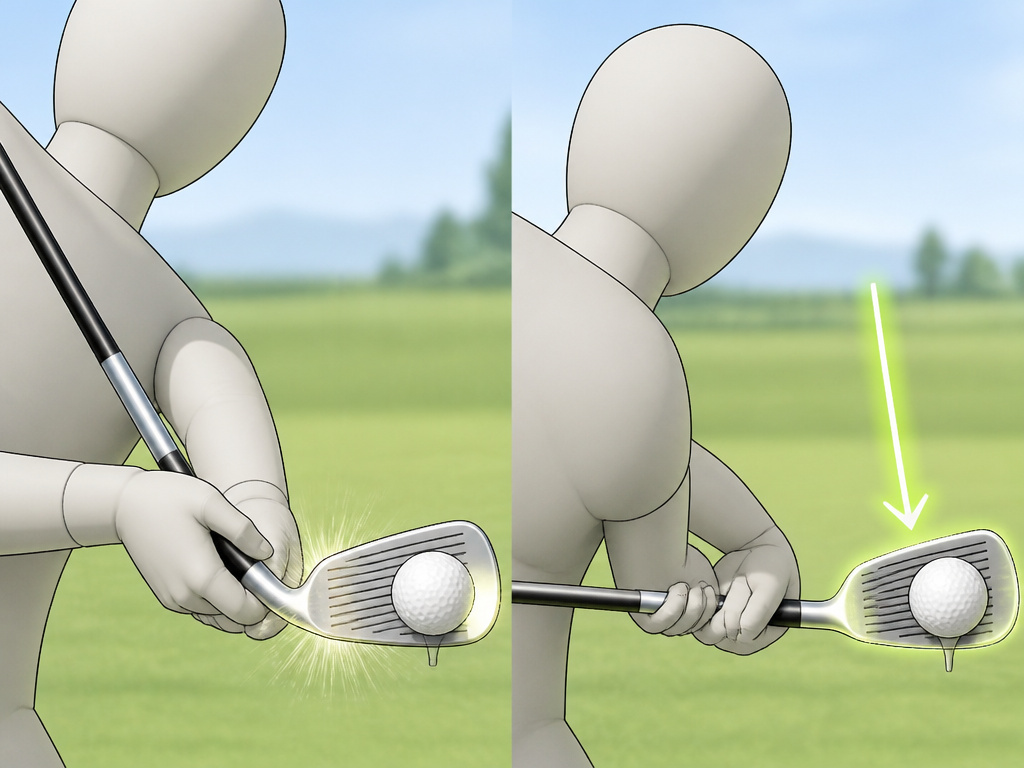 I used to believe there was one ideal model for every swing. Then I worked with a student who had a wildly unconventional action. His backswing was short, his follow-through was abbreviated, but he delivered the clubface square to the ball with incredible consistency. He scored in the 80s, round after round. He taught me that function, repeating a workable impact position, trumps perfect form every time.
Your coach’s priority should be giving you a move you can own. A clear, repeatable feel beats three textbook positions you can’t connect. This is why simple drills are so powerful. They bridge the gap between a technical idea and a physical sensation you can find on the course.
This principle applies to everything, from your full swing to your putting. It’s also why support gear, like the best golf shoes with arch support or a reliable ankle brace for golf, matters. They provide a stable foundation so your body can focus on the athletic motion, not on compensating for discomfort.
Frequently Asked Questions
What should I wear to my first golf lesson?
Wear comfortable athletic clothing, a polo shirt and shorts or pants that allow full rotation. Avoid jeans. Athletic shoes or golf shoes are fine. The goal is to move freely, not to look like a tour pro.
Do I need my own golf clubs?
Not necessarily. Most driving ranges and golf academies have rental sets you can use. If you own clubs, bring them. Your coach can tell you if they are generally suited to you, though a detailed club fitting is a separate process.
How long does a typical lesson last?
Most introductory or standard lessons run between 45 and 60 minutes. That’s enough time for assessment, instruction, and guided practice without overloading you with information.
Is it better to take a private or group lesson as a beginner?
For a pure diagnostic and personalized plan, a private lesson is superior. Group lessons are excellent for learning general fundamentals in a social, lower-pressure setting and are more affordable. Many golfers start with a group series to learn basics, then take a private lesson for targeted help.
What’s the one thing I should do right after the lesson?
Write down the one priority and the drill your coach gave you. Then, schedule your next session within 2-4 weeks. Improvement is a cycle of instruction, practice, and feedback. Letting too much time pass allows old habits to creep back in.
How many lessons will I need to see real improvement?
There’s no fixed number. Mike Bender’s model of one lesson per month is a strong framework for sustained improvement. Think of it as ongoing coaching, not a one-time fix. You might see a positive change in ball flight after one lesson, but owning the change takes focused practice over weeks.
Before You Go
Book the lesson. The golfers who wait until they’re utterly frustrated are the hardest to help, because they’ve often cemented compensations for years. An early diagnostic saves a mountain of future struggle.
When you go, take the single clearest piece of advice from this guide: describe your ball flight, not your swing theory. That sentence alone will make you a better student and get you a better plan.
Then, trust the process your coach lays out. Practice the one drill. Come back in a month. Good golf isn’t about finding a secret. It’s about following a simple map, one that a qualified coach can draw for you in that first hour.
