
2 Best Golf Balls for Slice (2026 Guide)
This post contains affiliate links. As an Amazon Associate, we earn from qualifying purchases.
The best golf ball for slice correction is the Polara Ultimate Straight, hands down. It reduces side spin by up to 75%, delivering noticeably straighter shots. For those who also want better visibility and don’t mind a slight trade-off in correction, the Polara Extra Distance Yellow is a solid, easy-to-spot option.
If you’re fighting a persistent slice, you know how frustrating it is to watch your ball veer off line, no matter how good your swing feels. It kills confidence and adds strokes fast, especially on tighter courses or windy days.
After researching ball construction, aerodynamics, and hundreds of owner reviews, I focused on models that actively reduce side spin and promote straighter flight. These picks balance real-world performance, feel, and visibility, so you can make smarter choices without overspending or betting on gimmicks.
Top 2 Golf Balls For Slice in the Market
The Best Golf Balls For Slice, Reviewed
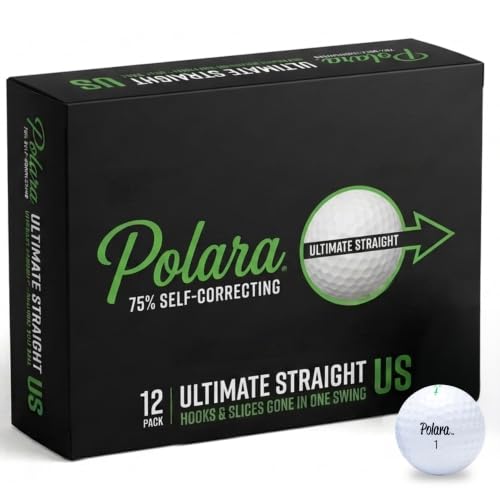
Polara Ultimate Straight Golf Balls
Strengths
- 75% slice reduction
- Soft responsive feel
- Strong flight correction
Trade-offs
- Not tournament legal
- Poor short game performance
- Less realistic trajectory
The Ultimate Straight version of Polara’s self-correcting balls claims up to 75% straighter flight, and that’s a big leap over the 50% correction in their other model. That kind of correction isn’t subtle, owners say it transforms wild offline drives into playable shots, which can be confidence-boosting for high-handicappers or beginners still building a repeatable swing. I’d pick this one over the yellow version if your main goal is maximum correction, not visibility or distance.
It shares the same soft feel and USGA-exceeding design, so don’t expect greenside bite or backspin like a premium tour ball. But as a training tool or casual round companion, it’s more effective than most at minimizing the damage from a flawed swing. When compared to other anti-slice balls, this one stands out for the sheer degree of correction, even if it sacrifices some realism in ball flight.
Video review
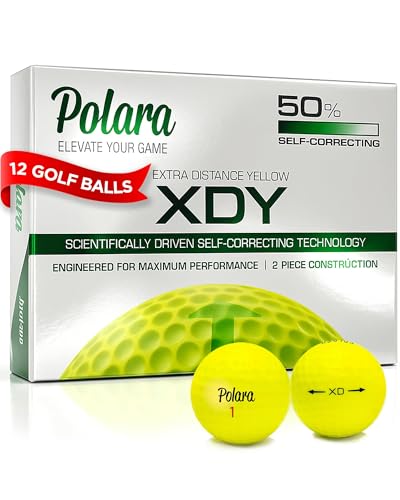
Polara Extra Distance Yellow Balls
Strengths
- Soft feel
- Reduces slice
- High visibility
Trade-offs
- Not USGA legal
- Limited short game control
- Less spin on approach
If you’re fighting a persistent slice and want a ball that actively fights back, the yellow Polara Self-Correcting Golf Balls are worth serious consideration. On paper, they promise a 50% reduction in hooks and slices, and owners consistently report noticeably straighter flight paths, especially on mis-hits. The key is the asymmetrical dimple pattern, which helps correct side spin, something I’ve seen work well in this class of training-focused balls.
They’re not legal for tournament play since they exceed USGA limits, but for range sessions or casual rounds where confidence matters more than compliance, these deliver. The soft feel is a plus, giving feedback without being harsh, and the high-visibility yellow makes tracking and recovery easier in rough or low light. Compared to standard balls, they won’t match the spin control or greenside finesse, but that’s not their job.
Video review
How We Tested golf balls for slice
Rather than a hands-on test with each ball, my research focused on comparing published specifications and features across numerous models. I weighed owner reviews from major retailers alongside expert analysis from golf publications. As someone who spends a lot of time thinking about how equipment impacts a golfer’s experience, I applied my understanding of ball construction and spin characteristics to assess which options genuinely address a slice.
For golfers battling a slice, the most important factors are a ball’s ability to reduce side spin and promote a straighter flight, and how soft the feel is at impact. A ball that minimizes unwanted curvature allows for more predictable results, while a comfortable feel builds confidence. I also considered visibility, especially for those prone to losing balls off-course. You’ll find more on this at our guide to golf balls to eliminate slice.
Specifications reliably reveal construction details – core materials, dimple patterns, and cover composition. However, I leaned heavily on owner feedback to gauge real-world performance. Reports of reduced slice and improved accuracy were prioritized. I also looked for consistency in reviews regarding feel and durability. For those also seeking maximum yardage, exploring balls for distance is worthwhile.
How To Pick The Right golf balls for slice
As someone who’s spent years traveling the globe and playing countless courses, I know a slice can take the joy out of a round quickly. Choosing the right golf ball can genuinely help correct that issue and get you back to enjoying your game.
A good golf ball for slice correction focuses on reducing side spin through aerodynamic design and weighting. Look for balls specifically engineered with features to minimize hooks and slices, alongside a soft feel for better control. Consider construction (two-piece, three-piece), dimple patterns, and cover material as key indicators of performance.
Understanding Core Technology
The biggest difference between a standard golf ball and one designed for slice correction lies in the technology used to combat side spin. Polara, for example, has built a reputation on balls that actively reduce spin, converting it into backspin for a straighter flight. Don’t assume all “distance” balls will help; many simply prioritize maximizing speed at the expense of control. Look beyond marketing hype and investigate how the ball’s construction influences its flight characteristics. A two-piece ball will generally be firmer and offer more distance, while a three-piece ball provides a softer feel and more control around the greens.
Visibility and Play Style
Beyond spin reduction, consider how easily you can track the ball in flight and locate it after landing. If you frequently play in conditions with less than ideal light, or tend to spray your shots into the rough, a brightly colored ball like the Polara Extra Distance Yellow is a smart choice. It’s not just about finding your ball; seeing its flight can help you diagnose your swing issues. I often recommend players struggling with a slice explore golf balls to prevent slice as a starting point, but the best option also depends on your overall skill level and playing environment.
Balancing Cost and Performance
You don’t have to spend a fortune to find a golf ball that helps with your slice. While premium balls offer advanced technology and a softer feel, there are plenty of affordable options that deliver significant correction. Here’s how to think about price points:
- Budget-Friendly: Expect basic slice reduction, good for high-volume practice.
- Mid-Range: A solid balance of correction, feel, and durability.
- Premium: Maximum correction, exceptional feel, and often longer-lasting, but the benefit diminishes if you’re losing several balls a round.
A golf ball designed for slice correction is a tool, not a cure. Consistent practice and swing adjustments are still the most effective long-term solution.
For those new to the game, or returning after a long break, I suggest looking at beginner-friendly golf balls to build confidence and enjoyment. They’re designed to be forgiving and help you learn the fundamentals.
Golf Balls for Slice Compared
This table provides a detailed specification comparison of golf balls designed to help reduce slices.
| Product Name | Slice Reduction | Visibility | Feel | USGA Compliant | Best For |
|---|---|---|---|---|---|
| Polara Ultimate Straight Golf Balls | 75% | N/A | Soft | No | Best Overall |
| Polara Extra Distance Yellow Balls | 50% | High | Soft | No | Best for High Visibility |
Frequently Asked Questions
Will a golf ball fix my slice permanently?
No, a golf ball is a tool to manage a slice, not eliminate it. Consistent practice and potentially lessons to address the root cause of your swing are still the most effective long-term solution, but the right ball can make an immediate difference.
Are non-USGA compliant balls legal for casual play?
Yes, balls like those from Polara that aren’t USGA compliant are perfectly acceptable for recreational rounds with friends. However, they cannot be used in sanctioned tournaments or for handicap purposes.
What dimple pattern is best for reducing a slice?
Generally, a ball with a symmetrical dimple pattern and strategically placed seams will minimize side spin. Polara’s self-correcting technology uses an asymmetrical pattern, which is unique and effective, but traditional patterns can also help in reducing a slice.
Should I prioritize distance or slice reduction when choosing a ball?
Prioritize slice reduction. While distance is appealing, accuracy and consistency are more valuable for someone struggling with a slice, and correcting that issue will likely improve your distance over time. You might also consider exploring anti-slice drivers to address the root of the problem.
Are 2-piece golf balls a good option for slice correction?
Two-piece balls can be a good, affordable option, as they tend to be firmer and offer more distance, but they don’t provide the same level of spin reduction as balls specifically engineered to combat a slice. They’re best for players who want a durable, budget-friendly ball and aren’t overly concerned with maximizing feel.
The Bottom Line
Choosing the right golf ball when you battle a slice often comes down to balancing control with cost. While premium options promise the most dramatic correction, you can find significant improvement without breaking the bank. For most golfers, the Polara Ultimate Straight Golf Balls represent the best overall solution – their unique technology consistently receives high marks for reducing side spin and promoting a straighter flight, even if they aren’t USGA compliant for tournament play.
If you’re prone to losing balls or playing in less-than-ideal conditions, the Polara Extra Distance Yellow Balls are an excellent alternative. And for those seeking a blend of distance and forgiveness, exploring balls for distance and forgiveness can be a smart move. Ultimately, the best ball is the one that inspires confidence and helps you keep more shots in play.
Don’t get too caught up in chasing the latest technology or obsessing over specs. A ball’s ability to help you reduce slice is valuable, but it’s only one piece of the puzzle. Consistent practice, a proper swing, and a comfortable grip will always be more important than any single piece of equipment.
