
PGA Championship History | From Match Play to Modern Major
This post contains affiliate links. As an Amazon Associate, we earn from qualifying purchases.
This post contains affiliate links. As an Amazon Associate, we earn from qualifying purchases.
The PGA Championship began in October 1916 as a match-play event, offering a $500 prize and a gold medal. It transitioned to the 72-hole stroke-play format used today in 1958 after the previous year’s tournament lost money, a change driven by television broadcasters wanting a more predictable final-day leaderboard.
That shift from match play to stroke play wasn’t just a rules update. It reshaped the entire character of the PGA of America’s flagship event, turning a week-long duel of endurance into a four-day test of consistent scoring under pressure. The history of this major is a story of adaptation—responding to war, economics, television, and the sheer growth of professional golf.
What follows is the tournament’s journey from a fall match-play contest to the second major of the year. The article details the trophy lost in a cellar, the five-time winner who dominated the early era, the financial reality that forced the modern format, and the controversial ruling that still defines its drama.
Key Takeaways
- The first PGA Championship in 1916 was a match-play event won by Jim Barnes for $500; the 2016 winner, Jimmy Walker, earned $1.8 million.
- The tournament’s iconic Wanamaker Trophy was lost for three years after Walter Hagen left it in a taxi, only to be found in a cellar.
- A financial loss in 1957 forced the permanent switch from match play to stroke play in 1958, aligning it with the other three major championships.
- Jack Nicklaus and Walter Hagen share the record with five PGA Championship victories, but Hagen’s all came in the match-play era.
- A critical ruling on the 72nd hole in 2010 cost Dustin Johnson a playoff spot, highlighting the major’s relentless pressure.
Founding and Early Match-Play Era (1916-1957)
The Professional Golfers’ Association of America formed in February 1916. By October, it held its first national championship at Siwanoy Country Club in Bronxville, New York. This quick turnaround set the stage for what would become one of golf’s four major championships.
Jim Barnes, an English professional, defeated Jock Hutchinson 1 up in the final. His prize was a diamond-studded gold medal and $500, donated by department store magnate Rodman Wanamaker. The trophy bearing Wanamaker’s name wouldn’t be ready until the following year.
The PGA Championship was originally a match play event in the early fall, but it varied from May to December. After World War II, the championship was usually in late May or late June, then moved to early July in 1953 and a few weeks later in 1954, with the finals played on Tuesday.
This format created a unique and grueling test. Finalists in the match-play era could play over 200 holes across seven days, a test of stamina as much as skill. The schedule was erratic, sometimes conflicting with The Open Championship and making transatlantic travel impossible for players.
The early years established the tournament’s first great champion: Walter Hagen. “The Haig” won five PGA Championships between 1921 and 1927, including a record four in a row. His flamboyant personality and match-play prowess defined the event’s character. Other legends like Gene Sarazen, Byron Nelson, and Ben Hogan also claimed multiple titles during this period, cementing the PGA’s status as a premier test.
The Wanamaker Trophy: A Story of Loss and Rediscovery
The trophy itself has a history as colorful as the champions who’ve held it. Rodman Wanamaker commissioned the 27-inch high, 27-pound silver trophy for the 1917 event. It quickly became one of the most coveted prizes in sports.
Walter Hagen, its most frequent early winner, was also responsible for its most famous misadventure. After one of his victories, Hagen left the actual trophy in the taxi cab he took from the celebration. It vanished for three years. The PGA of America, with Hagen’s successor Leo Diegel waiting to receive it, was forced to commission a duplicate.
The original trophy was discovered three years later in the cellar of a Detroit business that belonged to Hagen’s club manufacturer. That original now resides in the PGA Historical Center in Florida. Winners today receive the real trophy for a year, then a 90% scale replica to keep permanently. The trophy’s journey from a taxi to a cellar to a museum case mirrors the tournament’s own unplanned evolution.
The 1958 Pivot: Why Match Play Ended
The format that defined the PGA Championship for 41 years ended because of a simple, unglamorous reason: money. The 1957 event lost money. At the PGA’s meetings that November, the decision was made to switch to stroke play starting in 1958.
Network television broadcasters heavily influenced this change. They wanted a large group of recognizable stars in contention on Sunday for a dramatic finish. Match play, with its potential for early exits by top players and its sometimes-anticlimactic finals, didn’t deliver that guaranteed spectacle.
The first stroke-play PGA Championship was held at Llanerch Country Club in Pennsylvania. Dow Finsterwald won with a 72-hole total of 276. The standard four-day, 18-holes-per-day schedule we know today was locked in place. This move finally aligned the PGA with the format of the other three professional golf majors, creating the uniform modern major championship calendar.
| Era | Format | Typical Schedule | Key Champion |
|---|---|---|---|
| 1916-1957 | Match Play | Variable; finals often on Tuesday | Walter Hagen (5 wins) |
| 1958-Present | Stroke Play | 72 holes, Thursday–Sunday | Jack Nicklaus (5 wins) |
The change was immediate. It changed the championship from a test of head-to-head grit into a battle against the course and the field. This is the format that allowed Jack Nicklaus to build his record and modern stars to stage Sunday charges.
The Stroke-Play Era and Modern Champions
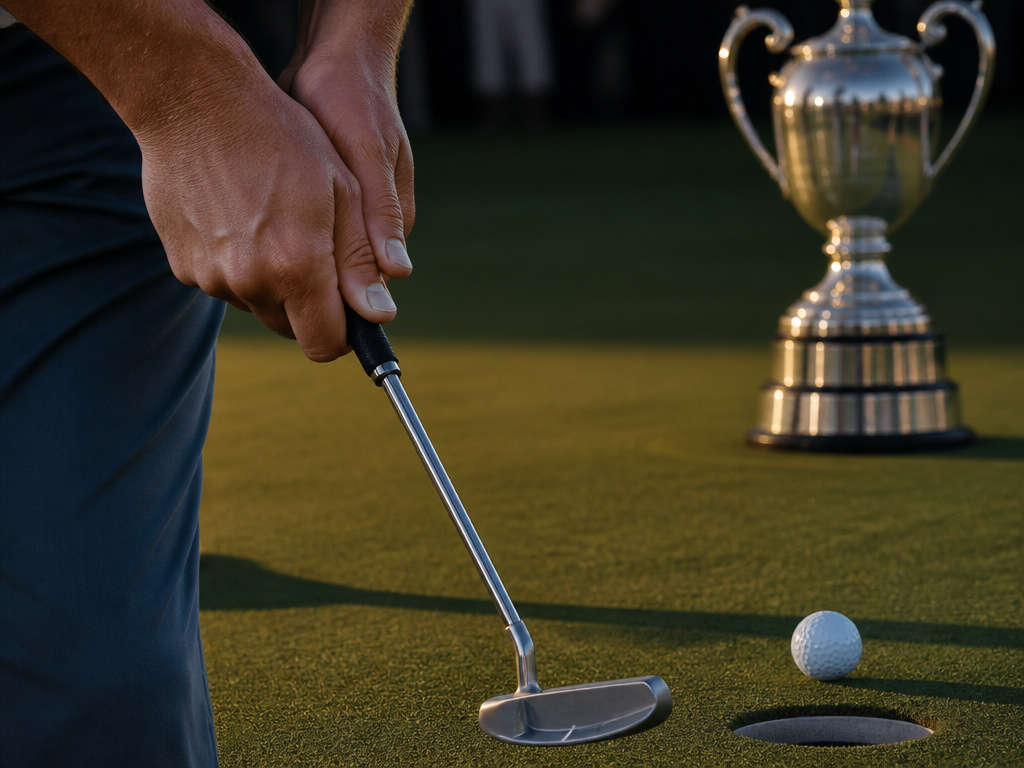 With the stroke-play format established, the PGA Championship began to build its modern legacy. It found a stable summer date, eventually settling in August for decades before moving to May in 2019. The list of winners reads like a who’s who of golf greatness, many of whom are featured in our look at golfers with the most major titles.
Jack Nicklaus stands atop the list alongside Hagen, winning five times between 1963 and 1980. His first victory in 1963 at Dallas Athletic Club completed the career Grand Slam at age 23. Tiger Woods won four of his majors at the PGA, including back-to-back victories in 2000 and 2007. The tournament has also been a stage for breakout stars and unforgettable moments, from John Daly’s “grip-it-and-rip-it” win in 1991 to Phil Mickelson’s historic victory at age 50 in 2021.
The championship has also shown a willingness to go to new, demanding courses. It has visited classic designs like Oakmont and Southern Hills, as well as modern tests like Kiawah Island’s Ocean Course and TPC Harding Park. This variety ensures the winner is a complete player, capable of handling different styles of architecture under major pressure.
Where this goes sideways: Underestimating the pressure of a major Sunday. The 72nd hole at the PGA Championship has broken hearts with brutal regularity, proving that the mental game is often the final hurdle.
The financial scale has changed dramatically. From Jim Barnes’s $500, the winner’s share grew to Vijay Singh’s then-record $1.125 million in 2004. By 2016, Jimmy Walker earned $1.8 million. This growth mirrors the tournament’s elevation into a global television property and a cornerstone of the professional golf calendar.
Inflection Points and Unforgettable Rules
Every major has moments that define its character. For the PGA Championship, two incidents bookend its modern history, illustrating how pressure and precision collide.
The first is the 1957 financial loss that triggered the format change. It’s a practical, behind-the-scenes moment that reshaped the event’s future. The second is a very public ruling from 2010 at Whistling Straits. On the 72nd hole, Dustin Johnson drove his ball into a sandy area littered with footprints. Thinking it was a waste area, he grounded his club. Rules officials later deemed it a bunker. The two-stroke penalty dropped him out of a playoff and into a tie for fifth.
That ruling underscored a brutal truth: in a major, every inch of the course is in play, and awareness is essential. It’s a lesson in the meticulous, sometimes cruel, nature of championship golf. These moments—the economic pivot and the rules drama—show that the PGA Championship’s history isn’t just about champions. It’s about the structures and stakes that make winning so difficult.
I learned a similar lesson about specifics the hard way early in my career. I once wasted a valuable lesson with a keen beginner by overcomplicating the goal. He just wanted to hit the ball straight and play a round without losing a dozen balls. I dove into teaching a complex draw shot, talking about clubface rotation and swing path. The session ended with him more confused than when he started. Good golf should feel less complicated the more you understand it. I now favor straightforward drills players can actually stick with, starting with the core goal. History is the same—the PGA Championship’s story is built on clear, consequential decisions, not vague ideals.
The PGA Championship in the Major Ecosystem
Where does the PGA Championship fit among the four majors? It’s the only one run by a body of club and teaching professionals (the PGA of America) rather than a governing body or a private club. It’s also the only major that does not automatically grant entry to the top 50 in the Official World Golf Ranking, though it commonly invites players in the top 100.
Its position on the calendar has shifted. For years it was the season’s final major, dubbed “Glory’s Last Shot.” The 2019 move to May made it the second major, following the Masters. This created a clearer flow to the golf season and gave the PGA a distinct identity earlier in the year.
Winning the PGA Championship grants a player a five-year exemption into the other three majors and The Players Championship, a five-year PGA Tour card, and a lifetime invitation to the PGA Championship itself. These are the tangible rewards that make it a career-defining victory, a key piece of the Grand Slam puzzle. For players like Brooks Koepka, whose game is built for the toughest tests, the PGA has been a cornerstone of his major championship success.
| Major Championship | First Held | Original Format | Unique Trait |
|---|---|---|---|
| The Open Championship | 1860 | Stroke Play | Oldest major; links golf |
| U.S. Open | 1895 | Stroke Play | Open qualification; brutal setup |
| Masters Tournament | 1934 | Stroke Play | Invitational; no fixed course |
| PGA Championship | 1916 | Match Play | Run by club professionals |
This table highlights how the PGA’s origin story is unique. Its evolution from a match-play event for working pros to a stroke-play major for the world’s elite encapsulates the growth of professional golf itself. You can explore the detailed journey of other legends who shaped these events, like Ben Hogan and his relentless approach, which defined an era all majors competed in.
Frequently Asked Questions
Has the PGA Championship always been stroke play?
No. For its first 41 editions (1916-1957), the PGA Championship was a match-play tournament. It switched to the 72-hole stroke-play format in 1958 after the 1957 event lost money and television networks pressured for a change to ensure star players were on screen Sunday.
Who has won the most PGA Championships?
Jack Nicklaus and Walter Hagen are tied with five victories each. However, all five of Hagen’s wins came during the match-play era. Nicklaus is the only player to win five times in the stroke-play format, with victories spanning from 1963 to 1980.
What is the Wanamaker Trophy?
The Wanamaker Trophy is the championship prize, named after Rodman Wanamaker, who helped fund the first tournament. The original trophy was lost by Walter Hagen in a taxi and found years later in a cellar. Winners now get a replica to keep; the original is displayed at the PGA Historical Center.
Why did the PGA Championship move to May?
The PGA Championship moved from August to May in 2019. This shift was part of a broader restructuring of the PGA Tour schedule to create a more condensed, dramatic season finale with the FedEx Cup Playoffs, and to establish a major championship in each month from April (Masters) to July (The Open).
What was the Dustin Johnson ruling in 2010?
On the final hole at Whistling Straits, Dustin Johnson grounded his club in a sandy area he thought was a waste area. Officials ruled it was a bunker. The resulting two-stroke penalty cost him a spot in the playoff, dropping him to a tie for fifth. The incident highlighted the extreme precision required in major championships.
Before You Go
The PGA Championship’s history is a lesson in adaptation. It survived world wars, changed its fundamental format for economic survival, and moved its date to secure its modern place. It rewards not just the game’s longest hitters or best putters, but its most resilient competitors—those who can handle history’s weight and Sunday’s pressure.
One threshold defines its legacy: 1958. Everything before it is a different tournament, a duel of endurance. Everything after is the modern major we know, a four-day grind where the last mistake often loses. The next time you watch it, look past the leaderboard. See the match-play ghosts in the early rounds and the stroke-play precision demanded at the finish. That layered history is what makes lifting the Wanamaker Trophy so significant.
