
Ben Hogan Practice Philosophy and Five Fundamentals Explained
This post contains affiliate links. As an Amazon Associate, we earn from qualifying purchases.
This post contains affiliate links. As an Amazon Associate, we earn from qualifying purchases.
Ben Hogan’s practice philosophy centered on relentless, deliberate repetition to ingrain his five fundamentals: a specific grip, a balanced stance and posture, a connected backswing, a lower-body-led downswing, and a synthesized whole. The goal was not to hit balls mindlessly but to reverse every natural instinct that produced a hook, building a swing that held up under major championship pressure. His 127-page 1957 book, Five Lessons: The Modern Fundamentals of Golf, codified this system for breaking 80.
That “reverse every natural instinct” clause is the entire point. Hogan wasn’t teaching a natural athletic motion. He was prescribing a corrective program for a specific fault, his own devastating hook, which he conquered through thousands of hours of structured work. The book is a report from the other side of that battle.
What follows is a breakdown of those five fundamentals, the deliberate practice method that brought them to life, and a clear-eyed look at what still works today versus what was tailored to one man’s unique problem and 1950s equipment.
Key Takeaways
- Hogan’s fundamentals were a corrective system for his hook, not a universal model for every golfer’s body type or swing tendency.
- The famous “pane of glass” swing plane works for some players but forces taller golfers below and shorter golfers above its rigid line.
- Modern biomechanics and grip research show most tour players use a stronger grip and later lower-body transition than Hogan advocated.
- True deliberate practice, not mindless repetition, is Hogan’s lasting legacy, every shot must have a target and a specific intention.
- The book’s greatest value is as a diagnostic checklist for when your own swing fails, not as a step-by-step construction manual.
What Are Ben Hogan’s Five Fundamentals?
The book breaks the swing into five sequential lessons. Think of them as layers, each dependent on the one before it. Skip the grip, and nothing that follows will work as intended.
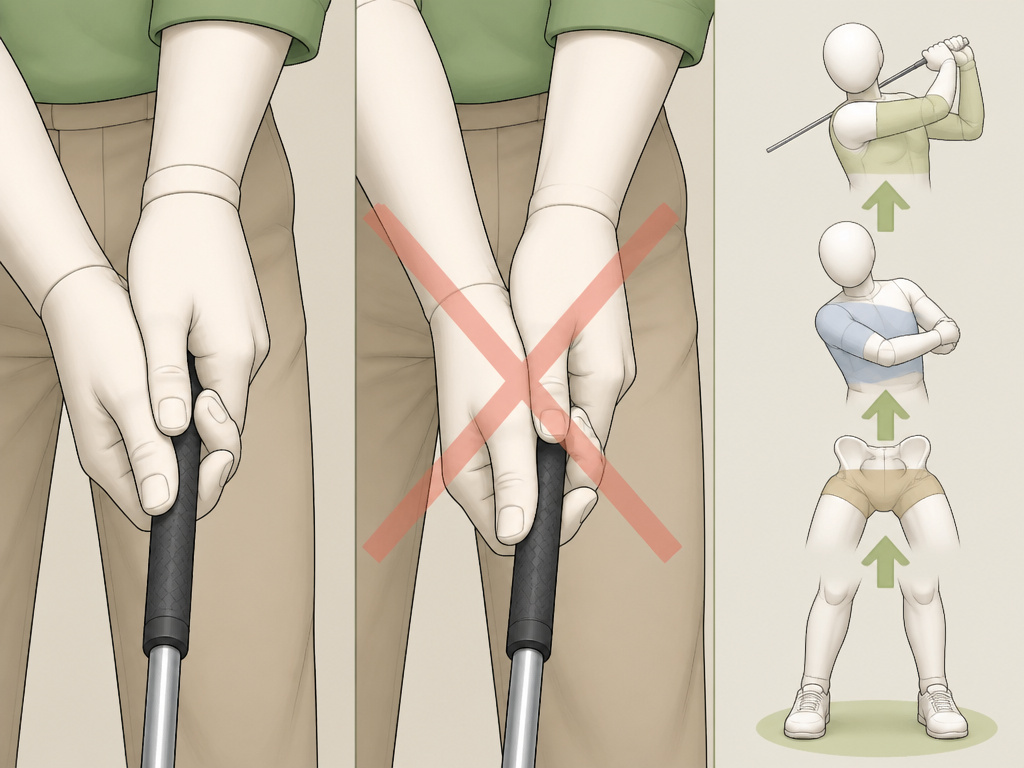
1. The Grip. Hogan saw the grip as the only connection to the club, the foundation of clubface control. He advocated a “neutral” grip that felt weak by today’s standards, with pressure focused in the last three fingers of the left hand and the middle two fingers of the right. This was his primary anti-hook lever.
2. Stance and Posture. This is the platform. Hogan prescribed a shoulder-width stance for a mid-iron, with the right foot square and the left foot flared open about 15 degrees to free the hips. He bent from the hips until his arms hung freely, chin up so the left shoulder could turn under it without restriction.
3. The First Part of the Swing (The Backswing). Hogan described a one-piece takeaway where the hands, arms, and shoulders started together, building coil around a stable lower body. The goal was to set the club on the correct plane, his famous “pane of glass” tilting from the ball through his shoulders.
4. The Second Part of the Swing (The Downswing). The downswing starts with the hips firing laterally and rotating, pulling the torso, then the arms, and finally the hands. The hands were passive until waist-high. This “kinematic sequence” of ground-up power transfer is the most universally accepted of his ideas today.
5. Summary and Review. The final lesson ties the system together and prescribes the practice method: slow, deliberate rehearsal of each fundamental in isolation before blending them into a full, smooth motion.
The grip is not one of many fundamentals; it is the foundation that enables the rest of a player’s movement and patterns to come in a swing. Without a proper grip at the start, every other fix is a temporary measure.
These weren’t just tips. They were a coherent technical system. When a student’s swing falls apart, the cause is almost always in one of these five links. Hogan’s book gives you the language to find it.
The “Secret” Was in the Dirt: Hogan’s Practice Philosophy
Hogan’s famous quote, “The secret is in the dirt,” is often misunderstood. It doesn’t mean just hitting a lot of balls. It means digging for answers through focused, diagnostic practice. He worked in short, deliberate blocks with a clear intention for every single shot.
His documented morning routine started with his feet close together, arms tight against his body, taking a backswing of only a few inches. He would gradually lengthen the swing a foot at a time, checking that each new position maintained the correct “close-to-the-body” connection. This was the opposite of beating drivers on the range.
This approach is the core of modern deliberate practice. Most amateur golfers don’t fail from a lack of practice. They fail because they practice in a way that reinforces their faults. A good effective practice session needs a target for every ball and a specific feel you’re checking.
| Hogan’s Deliberate Practice | Typical Amateur Practice |
|---|---|
| One specific swing thought per session | Trying three different tips in 30 minutes |
| Slow-motion rehearsal of positions | Only full-speed swings |
| Outcome focused on ball flight and feel | Outcome focused only on distance |
| Uses drills to isolate a fundamental | Hits the same club until it “feels right” |
| Ends when mental focus drops | Ends when the bucket is empty |
I favor straightforward drills players can actually stick with. The ‘tee gate’ drill for putting path is one I’ve used since my certification because it gives immediate visual feedback on stroke direction. That’s the Hogan model: a simple, repeatable test that tells you yes or no. You don’t need a trackman to know if the ball missed the gate.
Where Hogan’s Teachings Clash with Modern Golf
Sixty-plus years of sports science and equipment evolution have clarified where Hogan’s model was specific to him. Treating Five Lessons as gospel misses its true value.
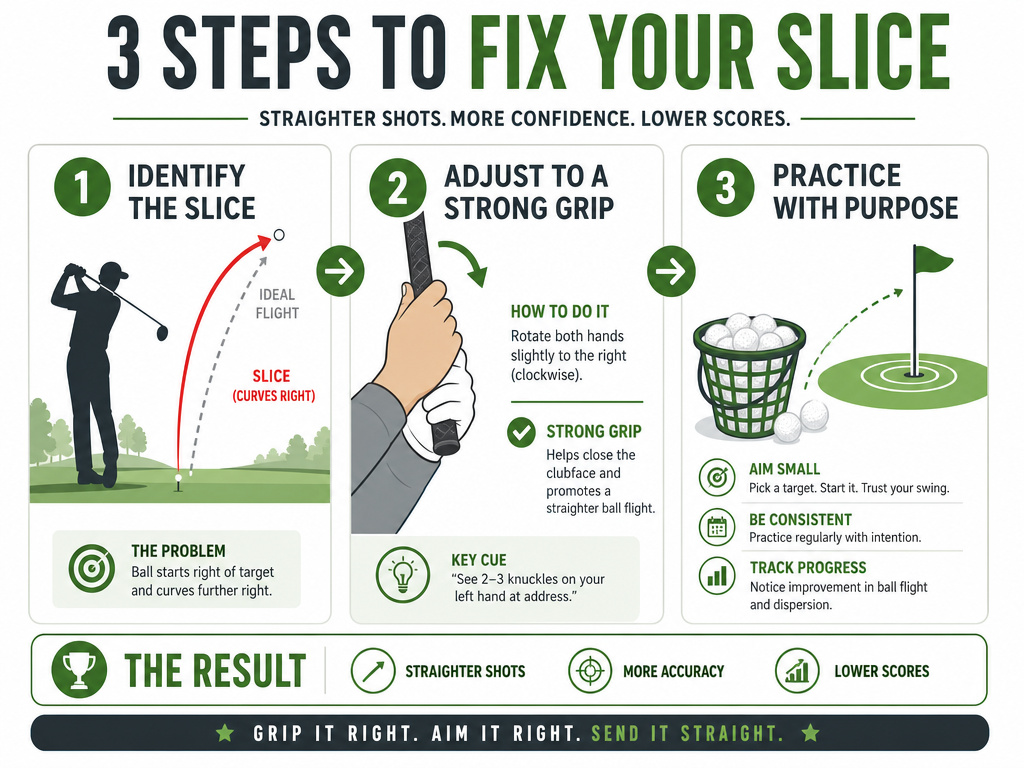
The Grip is Weaker Than Modern Standards. Hogan fought a hook. Most amateurs fight a slice. Dr. Ralph Mann’s research using motion capture found the average tour pro’s grip is stronger, with the “V”s pointing more toward the right shoulder. Giving a chronic slicer Hogan’s weak grip is a recipe for more slices.
The Swing Plane is Height-Dependent. Hogan’s “pane of glass” plane, a line from the ball through the shoulders, is a brilliant image. But it’s not a universal law. A 2021 analysis by the United States Golf Teachers Federation noted that shorter golfers tend to swing above that plane, taller golfers below it. The modern reference is often the shaft plane at address, which scales with the player.
The Downswing Transition is Earlier. Hogan advocated starting the downswing with the hips while the backswing was still completing. Modern tour players, with their faster swing speeds and more stable lower bodies, initiate the downswing later. Hogan’s ultra-early transition was part of his hook cure.
Where this goes sideways: Trying to copy Hogan’s exact swing if you’re over 6 feet tall or have a natural fade. His posture and plane were tailored to a 5’8″ frame with forearms built by years of ball-beating. You’ll fight your anatomy for months and likely injure your back.
The equipment gap matters, too. The book is based on the feel and behavior of 1950s steel shafts and balata balls. Modern graphite shafts and multilayer, firm-cover balls react differently. The principles of compression and face control remain, but the sensory feedback Hogan trained with is gone.
The Modern Verdict on Hogan’s Five Lessons
So is the book obsolete? No. It’s a classic, but you need to read it with the right filter.
What Still Works (The Principles):
- The Kinematic Sequence: The downswing starting from the ground up is biomechanically sound and taught at every level.
- Deliberate Practice: The philosophy of focused, intentional work over mindless repetition is the gold standard.
- The Diagnostic Framework: When your swing breaks down, checking grip, posture, and sequence will find the flaw 90% of the time.
- The Importance of Fundamentals: As the GOLFZON Leadbetter Education team notes, fundamentals aren’t the floor, they’re the ceiling. Tour players return to them constantly.
What’s Dated or Idiosyncratic (The Specifics):
- The weak grip for hookers.
- The rigid “pane of glass” plane for all body types.
- The extreme early hip transition.
- The book’s complete lack of discussion on how to actually learn the feels it describes.
The USGTF’s modern analysis sums it up: Hogan’s pivot concepts retain great value, but his grip and plane ideas are not one-size-fits-all. The book is less a construction manual and more a masterclass in problem-solving your own swing.
This is where a good structured range session separates itself from a bucket of wasted balls. Apply Hogan’s principles, one focus, slow rehearsal, but use modern knowledge to pick the right focus for your miss.
How to Use “Five Lessons” Today
Don’t read the book cover-to-cover and try to rebuild your swing. Use it as a reference tool. Here’s a practical, three-step method.
1. Diagnose Your Miss First.
Before you open the book, know your pattern. Are you blocking shots right? Hooking left? Hitting it thin? Your fault points to which fundamental has slipped. A slice often traces back to grip and posture. A hook might be from an over-active downswing with the hands.
2. Isolate the Fundamental with a Drill.
Go to the relevant lesson. If it’s posture, spend a session in front of a mirror, no ball, replicating Hogan’s setup. If it’s the downswing sequence, practice the “step drill” (starting the downswing by stepping your lead foot toward the target) to feel the hips leading. This is block practice, owning the move in a controlled setting.
3. Integrate with Deliberate Practice.
Once the feel is ingrained, take it to the range with a specific intention. “Today, I’m hitting 50 mid-irons focusing only on starting the downswing with my left hip.” Use practice golf balls that give honest feedback. This bridges the gap between drill and play.
| Your Goal | Relevant Hogan Lesson | Modern Adjustment |
|---|---|---|
| Stop slicing | Lesson 1: The Grip | Try a stronger grip (both “V”s toward right shoulder), not Hogan’s weaker one. |
| Improve ball-striking consistency | Lesson 2: Stance & Posture | Ensure chin is up and arms hang freely; verify with phone video. |
| Create more power | Lesson 4: The Downswing | Feel hips initiating, but don’t force the ultra-early Hogan transition. |
| General swing breakdown | Lesson 5: Summary | Use as a checklist: Grip -> Posture -> Backswing Plane -> Downswing Sequence. |
Better golf comes from simpler, repeatable movements. Hogan’s book is full of simple, repeatable ideas. The mistake is taking his personal corrections as universal laws. An academic sports science journal article might analyze his methods through the lens of deliberate practice theory, but your job is simpler: take the principle, adjust the spec for your game, and put in the focused work.
Frequently Asked Questions
Is Ben Hogan’s “Five Lessons” book good for beginners?
It’s a mixed bag. The clarity of the illustrations and the focus on fundamentals are excellent. However, a beginner lacks the context to understand which parts are universal and which were Hogan’s personal fixes. It’s better used as a secondary reference once a beginner has a basic swing and a consistent miss pattern, guided by a pro who can interpret it.
What was Ben Hogan’s “secret”?
Hogan’s “secret” was not a single move but his entire practice philosophy and anti-hook system. It was first detailed in a 1953 Golf Digest interview. It involved a specific, daily 20-minute routine of slow, incremental swing builds to ingrain the feels that kept the clubface square and prevented his hook. The “secret” was the relentless, diagnostic process of “digging it out of the dirt.”
How long are Ben Hogan’s “Five Lessons”?
The classic 1985 edition is 127 pages long. It’s a concise, densely packed manual. You can read it in an afternoon, but mastering its contents, as Hogan intended, requires a lifetime of practice.
Are Hogan’s fundamentals still relevant with modern equipment?
The core principles are still relevant, but the specific feels can differ. Modern equipment is more forgiving and generates different feedback. The concepts of a connected swing, a proper sequence, and a stable platform are timeless. However, trying to replicate the exact sensations Hogan felt with 1950s gear while using a modern driver is an exercise in frustration.
Can “Five Lessons” really help me break 80?
Hogan claimed any reasonably coordinated person who mastered his five fundamentals could break 80. The claim has weight because the system addresses the root causes of inconsistency: grip, setup, and sequence. If you have the athleticism and commit to the deliberate practice the book preaches, it provides a proven roadmap. It’s not a quick fix, but a blueprint for a repeatable swing.
Before You Go
Hogan’s Five Lessons endures not because it’s perfect, but because it’s profoundly honest. It’s the record of one man’s obsessive solution to his own golfing nightmare. The takeaway isn’t to swing like Ben Hogan. It’s to practice like him.
Get a copy of the Five Lessons digital archive. Read it for the philosophy and the framework. Then, take one fundamental, just one, and apply the Hogan method to it for a month. Use a mirror. Use slow motion. Use a practice net in your garage. Good golf should feel less complicated the more you understand it, and this book is a masterclass in cutting through the noise to find the signal in your own swing.
