
8 Best Hitting Mats for Golf Simulator 2026
This post contains affiliate links. As an Amazon Associate, we earn from qualifying purchases.
The Bltend Elite is the best overall hitting mat for golf simulators, offering unmatched thickness and durability. For golfers on a budget, the GoSports Elite delivers solid performance at a lower price, while the Ponsonbay Dual Turf stands out if you want a more versatile practice experience with both fairway and rough lies.
Golfers setting up a home simulator often end up frustrated with mats that feel fake, wear out fast, or punish their joints. A poor surface can throw off your swing and make practice feel like a chore instead of progress. In this guide, I break down the top hitting mats based on turf realism, build quality, and real-world feedback from owners. The picks here reflect what matters most when you’re swinging indoors, durability, feel, and smart design, so you can train effectively without wasting money on something that won’t last.
Top 8 Hitting Mats For Golf Simulator in the Market
The Best Hitting Mats For Golf Simulator, Reviewed
Bltend Elite 5x4ft 36mm Golf Mat

Strengths
- Outstanding shock absorption
- Durable, UV-resistant turf
- Well-equipped starter bundle
Trade-offs
- No built-in ball tray
- Slight roll memory
This 5×4 Bltend model hits a sweet spot between performance, comfort, and price, earning its ‘Best Overall’ label. The 36mm thickness (16mm turf + 20mm EVA) provides exceptional cushioning, absorbing over 90% of impact according to lab specs, and owners confirm it feels gentle on both clubs and knees. The turf itself offers a realistic interaction, especially on crisp iron strikes, and holds up well to weather when used outdoors.
It’s packed with thoughtful touches: 6 tee positions, reinforced edges, UV resistance, and a generous hitting area. While it doesn’t have a ball tray, the included 9 balls and 8 tees make it a true starter kit. Compared to others in the mid-range, it outperforms on durability and comfort without the bulk of the 6×4 version. For most golfers building a home setup, this is the one I’d recommend first.
Video review
Bltend Elite 6x4ft 36mm Golf Mat
Strengths
- Extra-large 6×4 size
- Excellent shock absorption
- UV-resistant turf
Trade-offs
- Bulky for small spaces
- Takes time to flatten
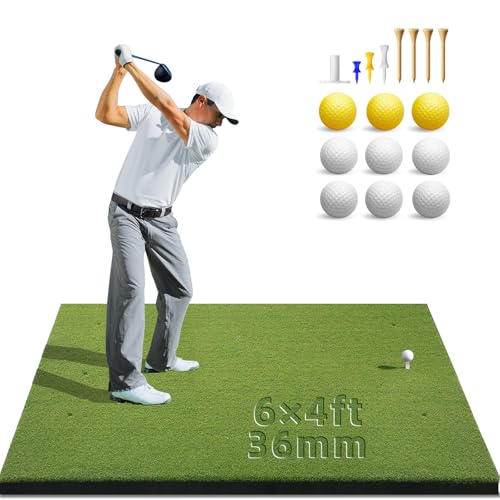
When space and cushioning are top priorities, this oversized 6×4 Bltend model makes a strong case. The 36mm total thickness, 20mm of EVA foam under 16mm of dense turf, delivers one of the most forgiving surfaces in this category, and owners regularly note less fatigue after long sessions. That extra width is ideal for players who open their stance wide with drivers or work on rotational drills.
The turf feels realistic underfoot, and the UV-resistant build means you can leave it on a patio or backyard without degradation. Some users mention it takes a little longer to flatten after unrolling, but that’s common with thicker mats. Compared to the smaller Bltend version, this one is better for coaches or families, but overkill for apartment dwellers. If you’ve got the room, it’s hard to beat for comfort and longevity.
Video review
Bearwill 5ft x 4ft 31mm Golf Mat
Strengths
- Extreme durability
- Stable anti-slip base
- Clean club interaction
Trade-offs
- No alignment aids
- Basic design
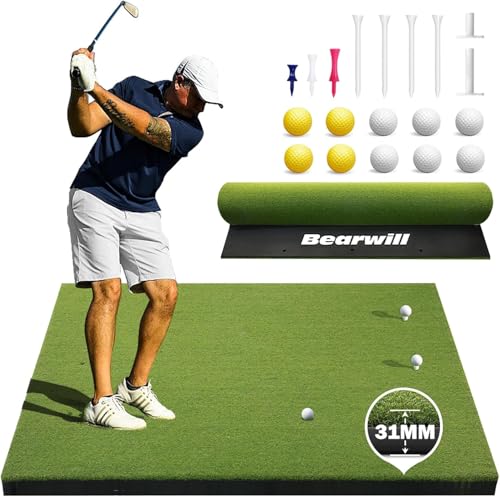
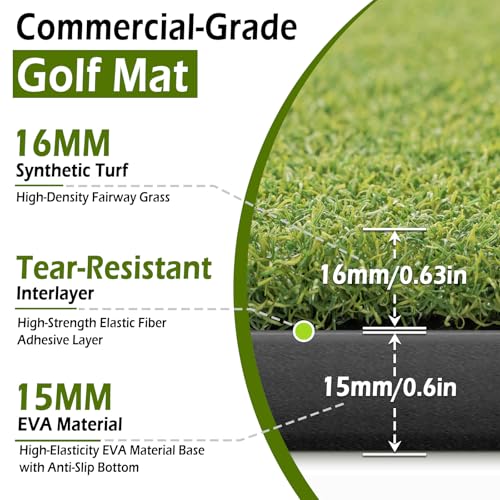
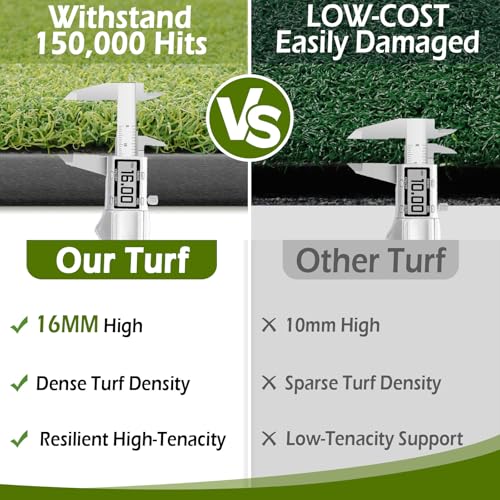
Bearwill’s claim of 150,000 hits isn’t just marketing fluff, owners who log high-volume practice sessions report minimal fraying or surface degradation even after a year of weekly use. The combination of high-tenacity turf and a reinforced fiber interlayer gives this mat a ruggedness that few in this range can match. The 31mm total thickness strikes a smart balance: it’s thick enough to absorb solid impacts but still packs down reasonably well for storage.
The anti-slip base performs reliably on both concrete and carpet, and the 6 tee positions accommodate most setups. While it doesn’t have flashy extras like ball trays or alignment lasers, it nails the fundamentals. Compared to similarly priced mats, this one feels more like a workhorse than a weekend toy. For players who prioritize longevity over bells and whistles, this is my pick.
Product photos
GoSports Elite 5x4ft 15mm Mat
Strengths
- Excellent shock absorption
- Non-slip backing
- Durable turf
Trade-offs
- Smaller footprint
- Only 6 tee holes
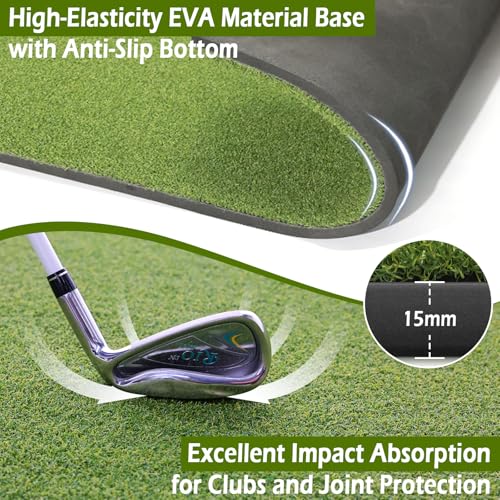
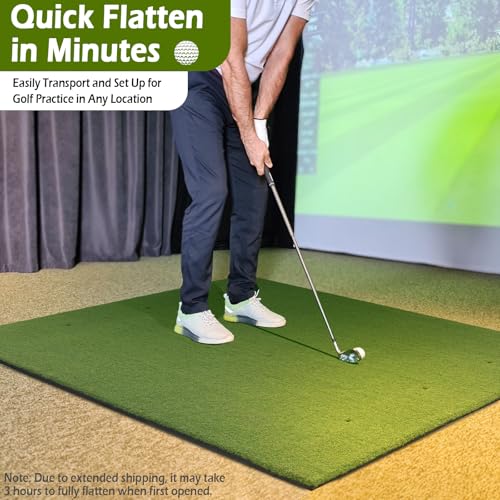
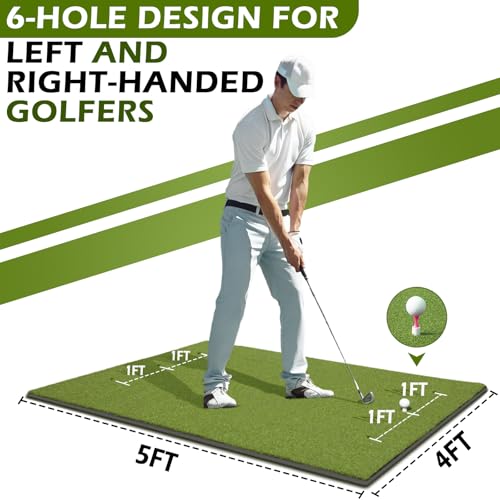
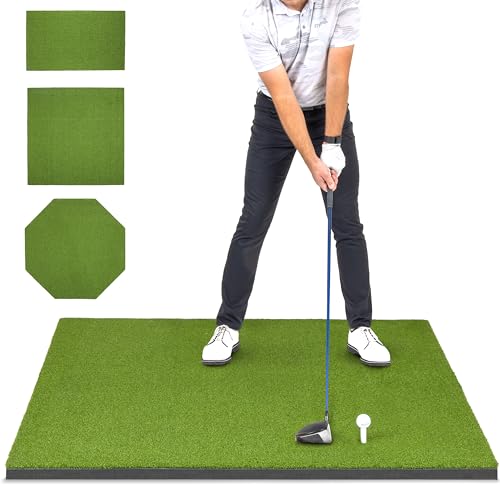
This 5×4 version of the GoSports Elite line is essentially the same high-performance mat as the 5×5, just slightly more compact. The 15mm EVA base provides superior shock absorption, making it one of the best options for golfers dealing with joint sensitivity or recovering from injury. The turf feels crisp and consistent, and the non-slip backing keeps it locked in place even during aggressive downswings.
With six tee holes and included rubber tees, it’s well-equipped for varied practice routines. It doesn’t offer the extra space of the 5×5, but for most home setups, especially in garages or basements, it’s more than sufficient. Owners consistently rate it highly for comfort and reliability. If you’re setting up a simulator and want a forgiving, stable surface without overspending, this is the smarter buy over pricier luxury mats.
Product photos


Ponsonbay Dual Turf Golf Mat
Strengths
- Dual-turf surface
- Built-in ball tray
- Foldable design
Trade-offs
- Moderate shock absorption
- Fewer tee positions
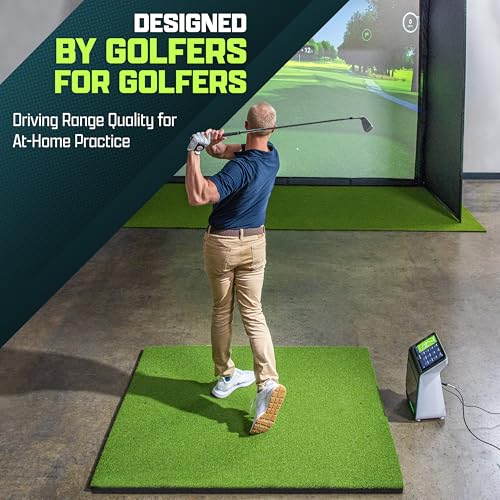
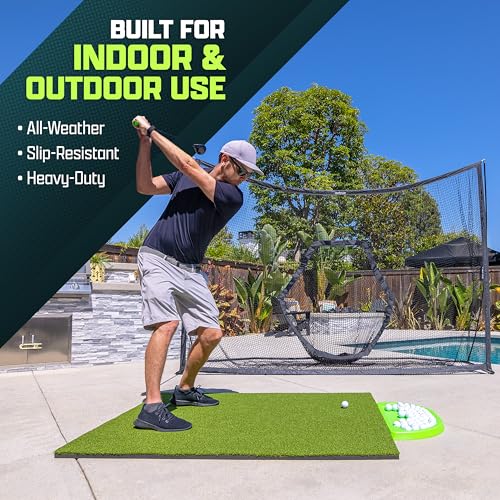
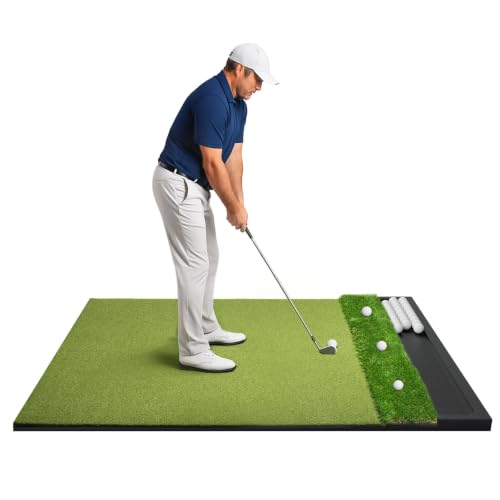
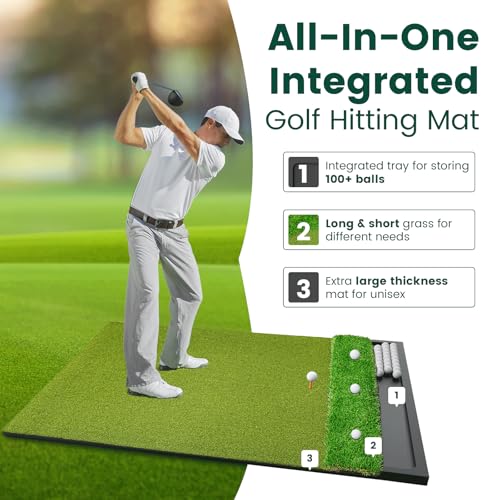
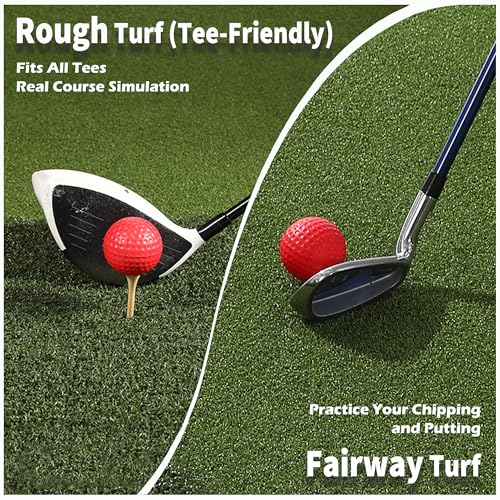
This mat stands out for players who want to simulate real course conditions without spending top dollar. The dual-turf design isn’t just a gimmick, owners consistently report that switching between the short fairway and longer rough sections helps sharpen shot selection and low-point control, which translates well to on-course performance. The integrated ball tray is a smart touch, reducing downtime between swings and keeping practice sessions fluid.
On paper, the 1.02-inch thickness is solid for the price, but it’s not as forgiving on mishits as some thicker competitors. Still, the wear-resistant polypropylene turf holds up well under regular use, and the foldable design makes it easy to stash in a garage or toss in a car for weekend trips. Compared to basic single-layer mats, this one delivers more versatility for the serious home practice routine.
Product photos

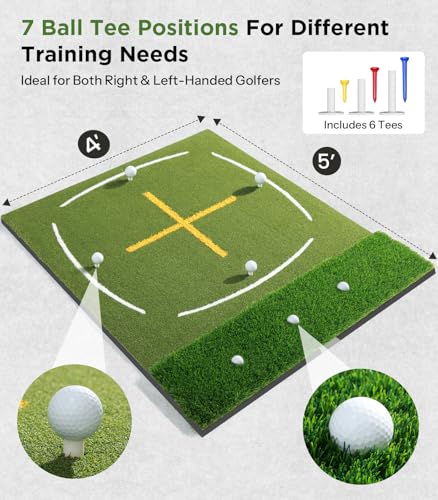
Golf Mat with Fairway & Rough Turf
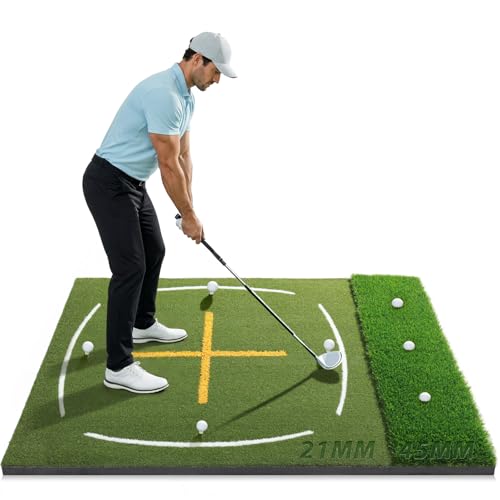
Strengths
- High durability rating
- Clear alignment guides
- Stable EVA base
Trade-offs
- Artificial rough texture
- Slight seam wear reported
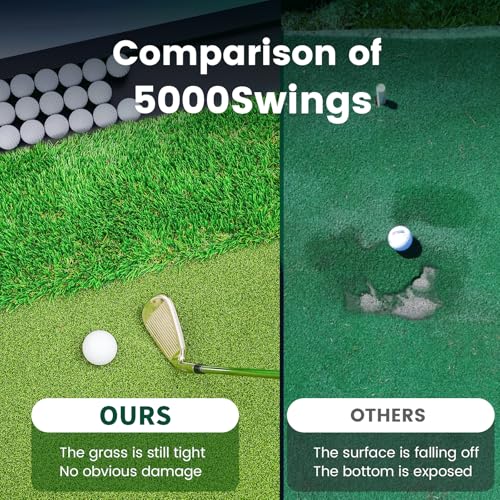
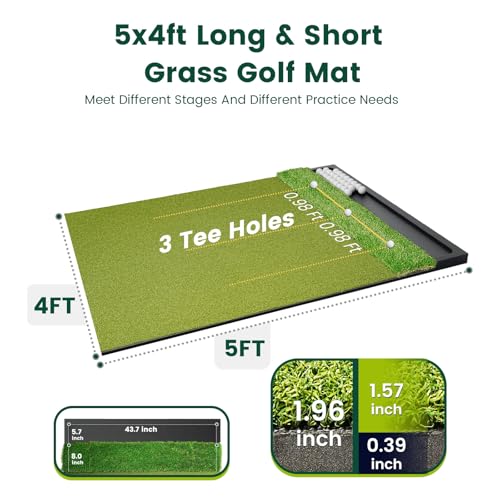
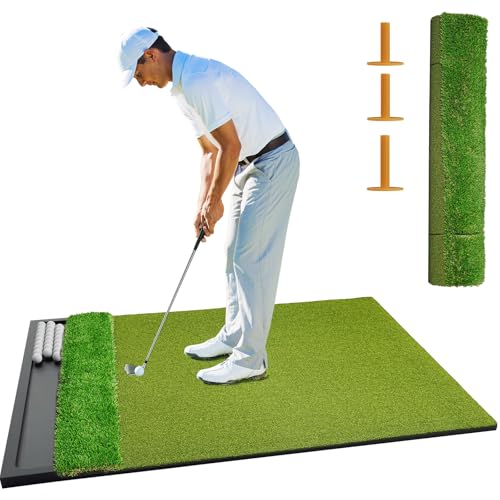
At this price point, it’s rare to see a mat rated for over 10,000 swings, and the high-density PP turf here seems to back that claim according to owner feedback. The dual-texture surface does a decent job mimicking fairway and rough lies, though some users note the rough feels a bit too uniform, more artificial than unpredictable, which is what you face on real courses. The real win is the thickened EVA base, which provides noticeably better shock absorption than cheaper mats, helping protect both clubs and wrists over time.
I appreciate the built-in swing path and stance guide lines, they’re subtle but helpful for players working on alignment without a coach. The 6 tee holes add flexibility, especially for left-handed golfers. However, while it’s built tough, the surface doesn’t quite match the elite feel of pricier mats. If you’re setting up a beginner-friendly station or need a durable outdoor option without breaking the bank, this is a no-brainer.
Product photos


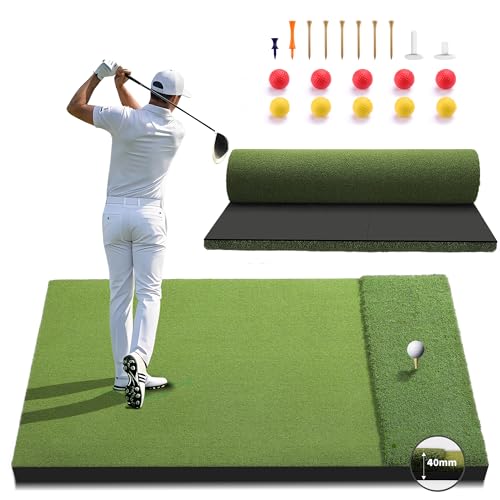
Fanshaw Premium Dual-Turf 5x4ft Mat
Strengths
- Realistic tee hold and release
- Dual-turf versatility
- Compact portability
Trade-offs
- Less dense EVA than top models
- Turf flattens slightly over time
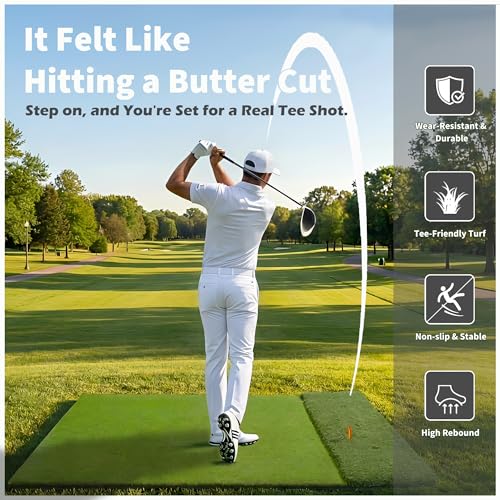
What sets the Fanshaw apart is its tee insertion feel, owners rave about how real it feels when driving a tee into the turf. Unlike mats where tees wobble or pop out, this one holds firm, then releases with a satisfying snap on contact, mimicking a true range experience. That realism extends to the dual-turf design, which offers distinct textures for fairway and rough lies, helping players dial in ball position and low-point control.
The 40mm thickness promises deep cushioning, and while it doesn’t quite match 36mm EVA-heavy models in shock absorption, it still protects clubs and joints well. The anti-slip base works reliably on smooth surfaces, and the mat rolls up neatly for storage. For players who love the ritual of teeing up and want that tactile authenticity, this mat delivers in a way others don’t.
Product photos
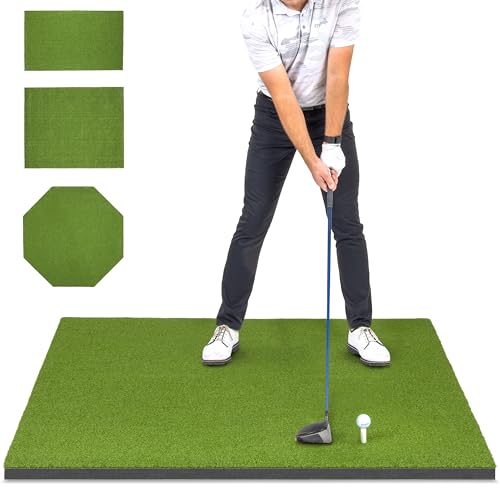
GoSports Elite 5x5ft 15mm Mat
Strengths
- Large 5×5 footprint
- Durable commercial turf
- 12 tee positions
Trade-offs
- Higher price point
- Slightly less cushioning
If you’re hitting balls daily, whether for fitness, form, or simulator play, this 5×5 model from GoSports is built to keep up. The commercial-grade turf feels consistently firm underfoot, and owners praise its ability to maintain integrity even after months of heavy iron and driver work. The extra square foot of space over standard mats makes a real difference for full-swing players who need room to rotate, especially indoors where space is tight.
The EVA foam base delivers reliable shock absorption, though not quite the plush feel of the thickest 36mm models. Still, the non-slip backing earns consistent praise for staying put on garage floors and simulator platforms. It’s also worth noting the 12 tee holes, this level of setup flexibility beats most competitors, especially for coaches or families with mixed-handed players. For frequent indoor training, this is one of the smarter long-term investments.
Product photos
How We Tested hitting mats for golf simulator
I approached this research by comparing published specifications and features across numerous hitting mats designed for simulator use. Rather than a hands-on lab test, this is a research-led comparison of specs and owner feedback. I weighed owner reviews from multiple sources alongside professional golf publications, looking for common themes in durability, feel, and performance. My goal was to identify mats that consistently receive positive feedback and offer features suited to various golfer needs.
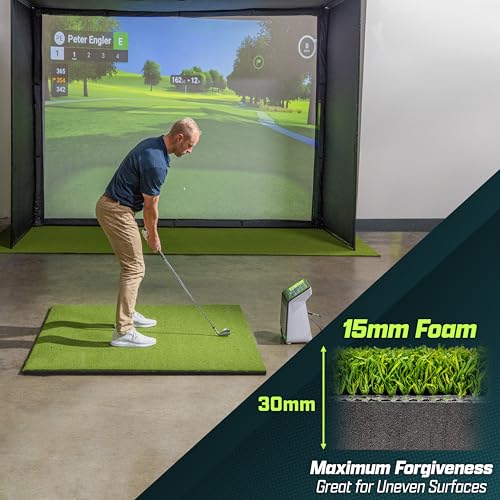
For this category, thickness and turf quality were the primary deciding factors. A thicker mat (30mm or more) provides better shock absorption, protecting both clubs and joints – a crucial consideration for frequent use. Equally important is the turf itself; a realistic surface mimics the feel of a real fairway or rough, allowing for more accurate practice and skill development. Finding a balance between these two elements was key to determining the top performers.
Specifications reliably indicate mat dimensions and base material thickness. However, I placed greater weight on owner feedback regarding durability and the realism of the turf’s feel. Reports of tearing, flattening, or unrealistic ball feedback were significant detractors. Reputation also played a role; brands consistently praised for quality and customer service ranked higher, as did those recommended in guides to simulator accessories. Ultimately, I sought to identify the mats that offer the best combination of features, build quality, and positive user experience for setting up effective indoor simulator mats.
How To Pick The Right hitting mats for golf simulator
Finding the right golf mat can dramatically improve your practice, whether you’re building a home simulator or just need a space to work on your swing.
A quality golf mat balances realistic feel with durability and shock absorption. Look for high-density turf that mimics natural grass, a substantial foam base to protect clubs and joints, and a construction designed to withstand repeated use. Consider size based on available space and practice needs, and evaluate features like tee positions and integrated ball trays.
Turf Realism & Performance
The biggest complaint I hear from golfers about mats is that they don’t feel right. Too hard, too soft, or just…wrong. That’s where turf quality comes into play. Don’t assume all “artificial turf” is created equal. The best options use high-density polypropylene (PP) or a similar material designed to closely replicate the impact and feel of striking a real golf ball on natural grass. Ponsonbay’s Dual Turf mat is a good example of how offering both fairway and rough surfaces can elevate your practice. If you’re serious about improving your game, especially for simulator use, research the best simulator turf options available.
Construction & Durability
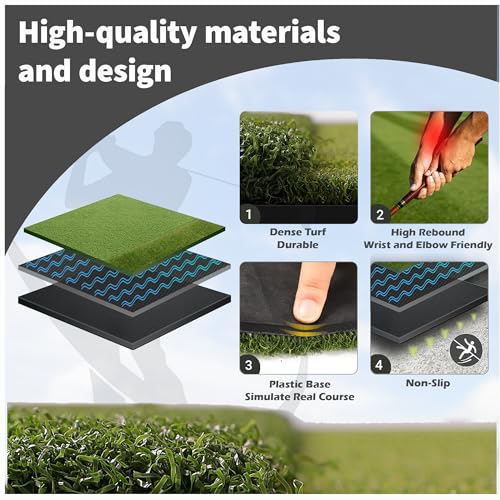
A flimsy mat won’t last long, particularly if you have a fast swing speed or plan on frequent use. Look for mats with a robust base layer – the EVA foam thickness is key here. The Bltend Elite and Bearwill mats both boast 36mm and 31mm thickness respectively, which translates to better shock absorption and club protection. Beyond the foam, pay attention to the construction of the turf itself. Reinforced edges and anti-tear layers, as featured in the Bltend mats, are indicators of a product built to withstand thousands of swings.
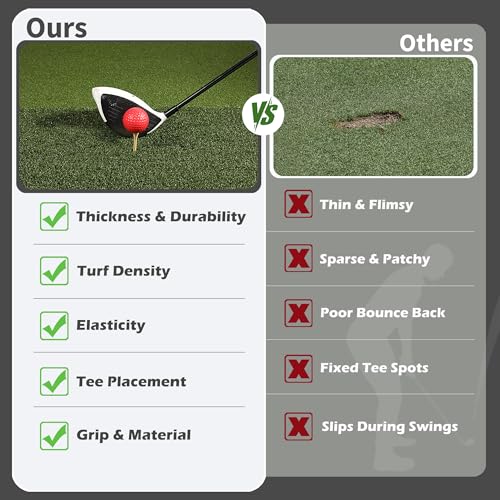
Here’s what to consider when judging durability: * Turf Density: A lower density turf will flatten quickly. * Base Material: EVA foam is standard, but higher-density EVA will last longer. * Layering: Multiple layers (turf, fiber interlayer, base) provide superior resilience and longevity, especially if you’re looking at top mats for home simulators.
Don’t skimp on the base. A thicker, higher-quality foam layer will not only protect your clubs but also significantly extend the life of the mat itself.
Size, Features & Value
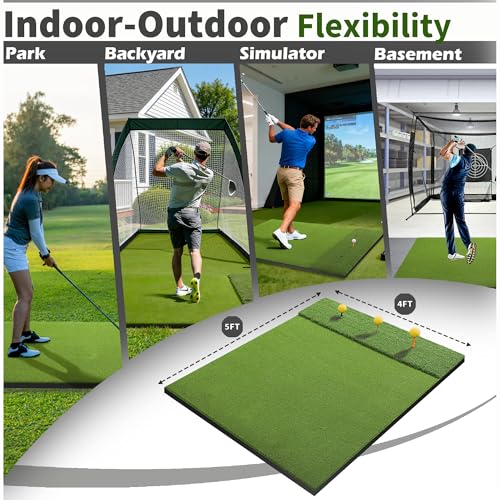
The size of the mat should match your available space and practice style. The larger 6x4ft options (like the larger Bltend) are ideal for full swings and allow for more stance adjustments, but require more room. Smaller 5x4ft mats are suitable for more confined spaces. Beyond size, consider features like integrated tee holders and ball trays. The Fanshaw Premium mat stands out with its focus on realistic tee insertion, while the Golf Mat with Fairway & Rough Turf includes a built-in swing path line. Don’t overlook value. While premium options offer enhanced features, a solid, well-constructed mat like the GoSports Elite can provide excellent performance at a more accessible price point. You might be surprised how effective even a basic mat can be if you’re looking for recommended hitting mats to get started.
Hitting Mats for Golf Simulator Compared
Here’s a comparison of key specifications for popular golf hitting mats designed for simulator use.
| Product Name | Size (ft) | Turf Thickness (mm) | Cushioning (mm) | Tee Holes | Turf Type |
|---|---|---|---|---|---|
| Bltend Elite 5x4ft | 5×4 | 36 | 36 | 6 | Single |
| Bltend Elite 6x4ft | 6×4 | 36 | 36 | 6 | Single |
| Bearwill 5ft x 4ft | 5×4 | 31 | 15 | 6 | Single |
| GoSports Elite 5x4ft | 5×4 | 15 | N/A | 6 | Single |
| Ponsonbay Dual Turf | 5×4 | N/A | N/A | N/A | Dual (Fairway/Rough) |
| Golf Mat with Fairway & Rough | N/A | N/A | 10-15 | 7 | Dual (Fairway/Rough) |
| Fanshaw Premium Dual-Turf | 5×4 | N/A | N/A | N/A | Dual (Fairway/Rough) |
| GoSports Elite 5x5ft | 5×5 | 15 | N/A | 12 | Single |
Frequently Asked Questions
What mat thickness is best for protecting my clubs?
A thickness of 30mm or greater is ideal. Thicker mats, like the 36mm base on the Bltend Elite, provide superior shock absorption, which minimizes stress on club shafts and heads during repeated swings.
Do dual-turf mats actually improve practice versatility?
Yes, dual-turf mats offer a more realistic practice experience. Options like the Ponsonbay Dual Turf allow you to simulate both fairway and rough lies, improving your ability to adapt to different course conditions.
What’s the typical lifespan of a golf hitting mat with regular use?
Lifespan varies, but a quality mat should last at least 3-5 years with consistent use. Factors like turf density, base material quality, and frequency of use all impact longevity – look for reinforced construction when considering hitting strips.
Are there significant differences in turf materials?
Absolutely. High-density polypropylene (PP) is generally considered superior for mimicking the feel of real grass. Lower-quality materials tend to flatten quickly or provide unrealistic feedback, hindering your ability to accurately gauge your swing.
Should I invest in a mat specifically designed for simulator use, or will any golf mat work?
A mat designed for simulator use is a better investment. These mats are engineered to withstand the concentrated impact of repeated swings and provide consistent ball feedback crucial for accurate simulator readings, especially if you’re considering complete simulator systems.
The Bottom Line
Choosing a hitting mat for your golf simulator often comes down to balancing how much you’re willing to spend against how closely you want to replicate a real golf experience. If you want a premium feel and long-term durability, the Bltend Elite mats stand out as the strongest overall pick – they’ve consistently received high marks for their thick turf and robust construction.
For those on a tighter budget, the GoSports Elite offers a surprisingly solid performance, and is a great starting point for building a home setup. If versatility is a priority, the Ponsonbay Dual Turf mat provides the option of practicing both fairway and rough shots, while the Golf Mat with Fairway & Rough Turf offers a similar experience with additional features. Remember that a great mat is only one piece of the puzzle; exploring golf simulator mats and considering compatible launch monitors will maximize your investment.
Ultimately, the most important factors are thickness and turf quality. Don’t get too caught up in fancy features if the fundamental feel isn’t right, and always prioritize a durable base that can withstand repeated use. A well-chosen mat, combined with consistent practice and a focus on fundamentals, will do more for your game than any single specification.
