
7 Best Turfs for Golf Simulator 2026
This post contains affiliate links. As an Amazon Associate, we earn from qualifying purchases.
This post contains affiliate links. As an Amazon Associate, we earn from qualifying purchases.
The GoSports 10 x 6 ft Golf Turf is the best overall choice for most setups, offering reliable thickness, modular design, and strong feedback from users. For those on a tighter budget, the DCQ 10 x 6 ft Golf Simulator Turf delivers solid performance at a lower price, while the Golf Mat with Fairway & Rough Turf stands out for players who want more realistic lie practice.
If you’re building a home simulator, the wrong turf can ruin your swing feel, damage your clubs, or create a safety hazard. After comparing the field and analyzing specs and user experiences, I focused on what actually matters, durability, safety, and a realistic playing surface.
This guide breaks down the top options based on construction quality, thickness, backing stability, and how well they handle repeated impact. We looked at how easy they are to install and expand, and how they hold up over time. These picks are designed to support serious practice and help you get the most out of your simulator sessions.
Top 7 Turfs For Golf Simulator in the Market
The Best Turfs For Golf Simulator, Reviewed
GoSports 10 x 6 ft Golf Turf
Strengths
- Realistic turf feel
- Easy to expand
- Clean cable routing
Trade-offs
- Requires hitting mat
- Tape may wear over time
- Not anti-slip like Durbles
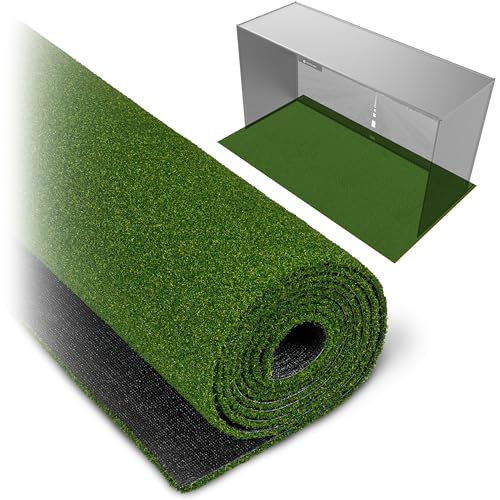
This 10 x 6 ft GoSports model is the balanced pick in a crowded field. It offers the same elite 15mm turf as its larger sibling but in a more manageable size for average home setups. The turf feels lush underfoot, and the dual-tone weave enhances realism, important if you’re using a launch monitor that tracks ball position. Owners report it pairs perfectly with most enclosures and nets, and the included carpet tape ensures it stays anchored.
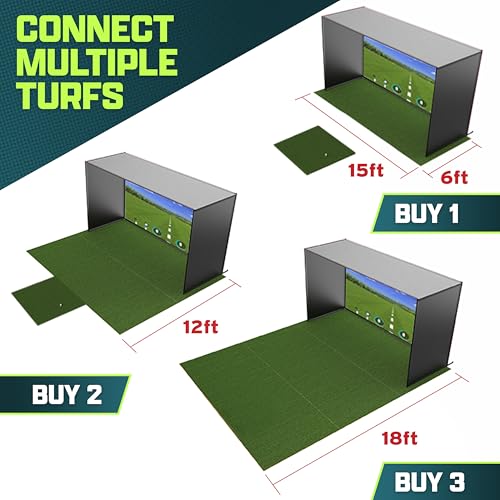
Where it shines is in modularity: you can expand later with additional sections if you upgrade your space. It’s not meant for direct hitting, but as a base layer, it improves both safety and aesthetics. Compared to the DCQ budget model, it’s denser and more resilient; against Durbles, it’s slightly less grippy but more flexible in layout. For most serious sim users, this is the smarter buy.
Video review
DCQ 10 x 6 ft Golf Simulator Turf
Strengths
- Large coverage
- Low rebound
- Modular expansion
Trade-offs
- Not for full swings
- Turf less dense
- Backing requires taping
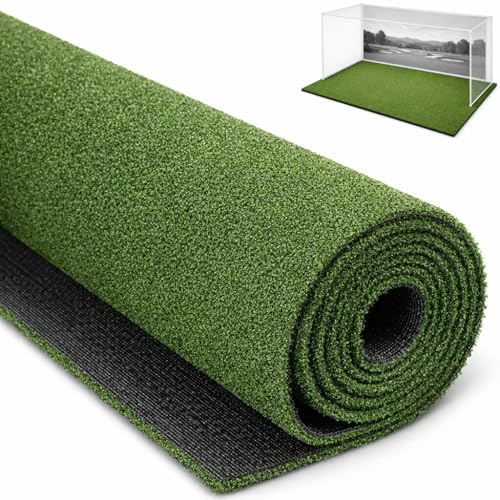
At this price, the DCQ turf delivers more coverage than most, making it a go-to for budget-conscious golfers building out a simulator footprint. The 15mm turf isn’t meant for direct driver strikes, owners agree you’ll need a separate hitting mat, but it works well for chipping, putting, and walking through your pre-shot routine. The reduced rebound is a real benefit indoors, especially in tighter spaces where bouncing balls can damage walls or equipment.
Its modular design is smart: you can link multiple sections smoothly, which few in this price range offer. But the turf density isn’t on par with premium brands, and some reviewers note slight wrinkling on uneven floors unless taped down thoroughly. For the cost, it’s a solid foundation layer, but don’t expect tournament-grade realism.
Video review
GoSports 15 x 6 ft Golf Turf
Strengths
- Premium appearance
- Scalable size
- Smooth cable routing
Trade-offs
- Requires separate hitting mat
- Higher price point
- Slight slip on rugs
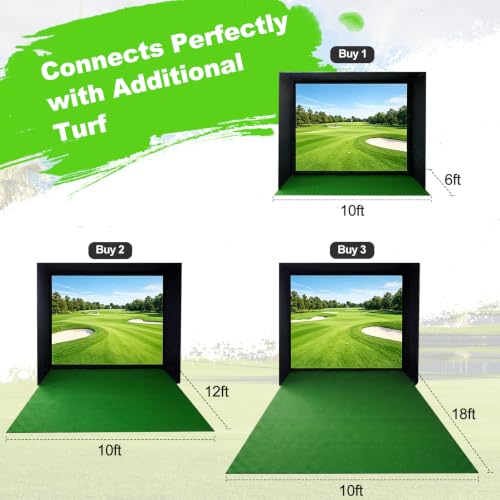
If you’ve seen high-end home simulators on YouTube or Instagram, chances are they’re using GoSports turf. The 15 x 6 ft size is ideal for sprawling setups, and the modular option, 10, 12, or 15 ft widths, means you can scale as your space evolves. The 15mm elite turf looks the part, with a lush, dual-tone weave that mimics maintained fairway grass. Owners consistently praise how well it hides seams when multiple sections are joined.
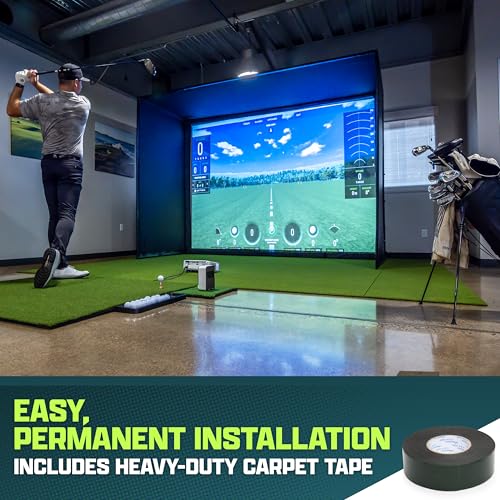
The included carpet tape works well on smooth floors, and cutting cable ports is straightforward. Like others in this class, it’s not designed for direct ball striking, so a hitting mat is still necessary. But as a full-room aesthetic and functional layer, it sets the standard. Compared to Durbles, it’s slightly less grippy out of the box, but still stable with proper setup.
Product photos


Durbles 10 x 6 ft Anti-Slip Turf
Strengths
- Stays flat no tape
- Durable bonded base
- Quiet ball rebound
Trade-offs
- Limited width options
- Slight odor at first
- Premium price
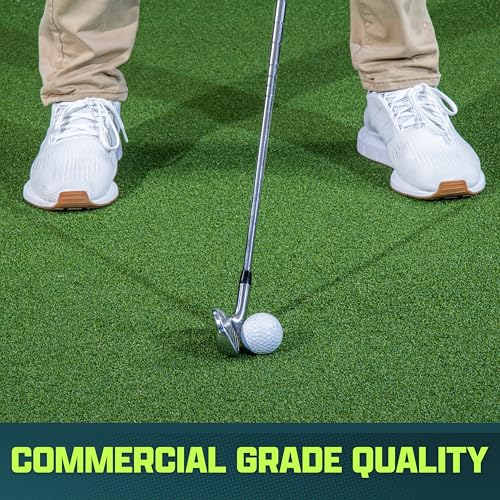
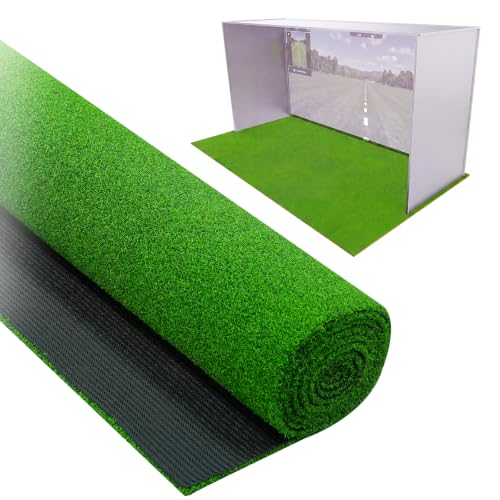
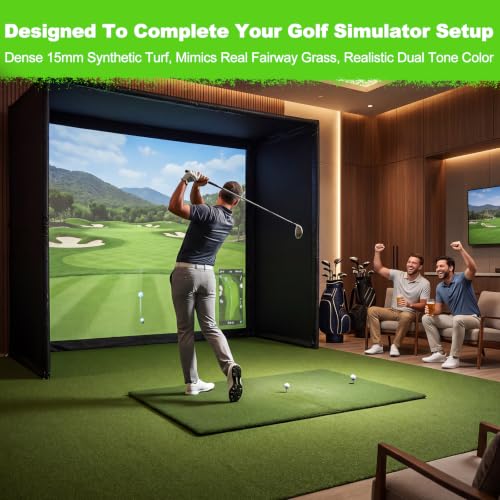
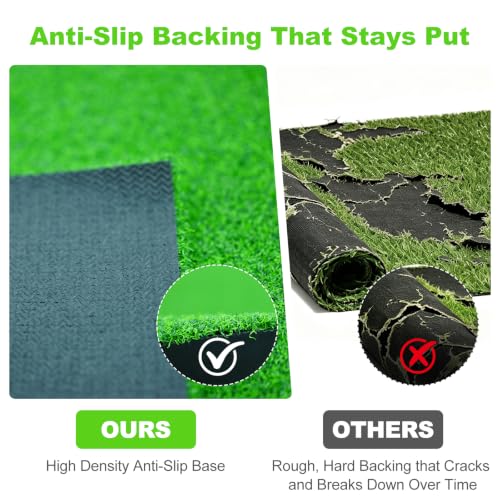
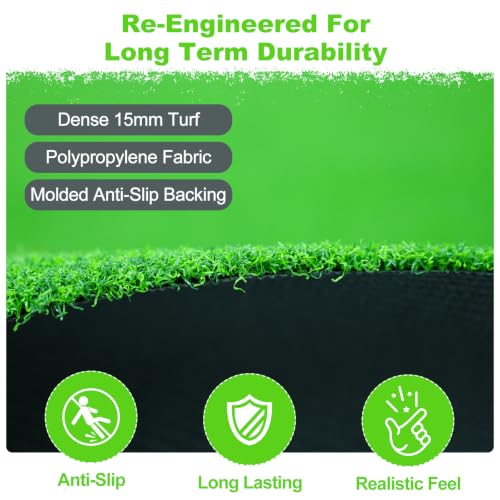
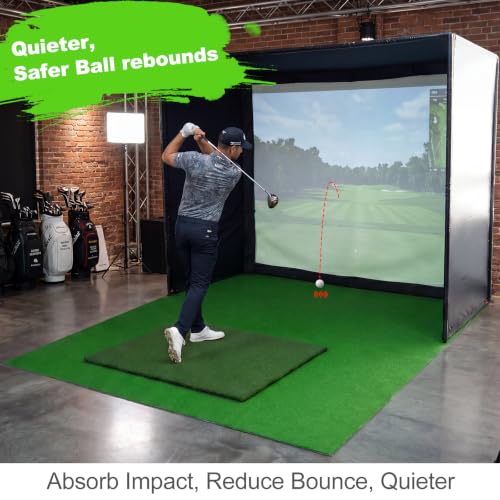
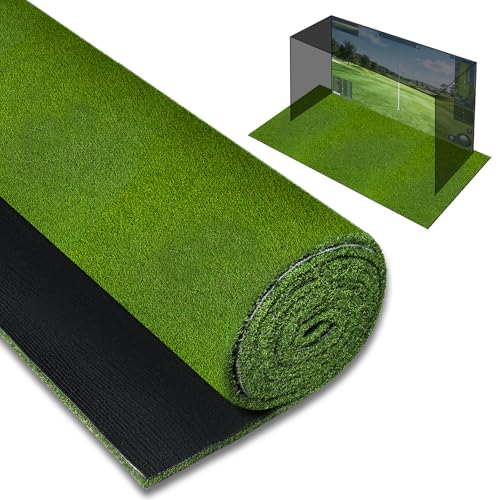
Durbles solves one of the most annoying simulator setup issues: turf that creeps or wrinkles during use. The molded anti-slip backing is a standout, no tape needed on most surfaces, and it stays flat even with aggressive follow-throughs. Owners love that it unrolls wrinkle-free and stays put, which is rare in this category. The 15mm dual-tone turf looks authentic, and the impact absorption is noticeably smoother than thinner mats, reducing noise and ball bounce.
Durability is another win. Unlike cheaper turfs that shed black debris or delaminate at the edges, Durbles uses a bonded construction that holds up over time. It’s not the cheapest, but the build quality justifies it. Compared to GoSports, it’s slightly more stable right out of the box, though GoSports wins on sheer size options.
Product photos
WICTTISPOSI 10×4.8ft Golf Turf Mat
Strengths
- Excellent grip
- Weather resistant
- Multi-use design
Trade-offs
- Turf slightly stiff
- Not for heavy hitting
- Color slightly artificial
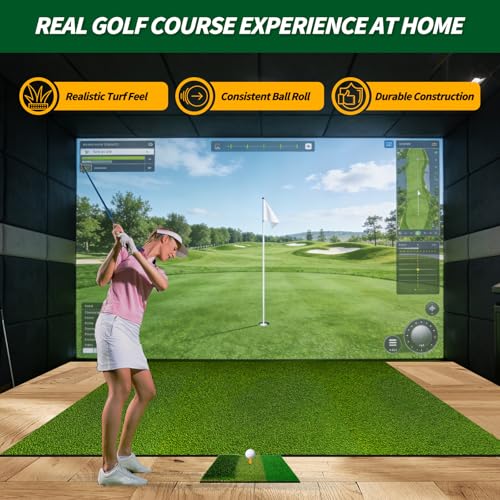
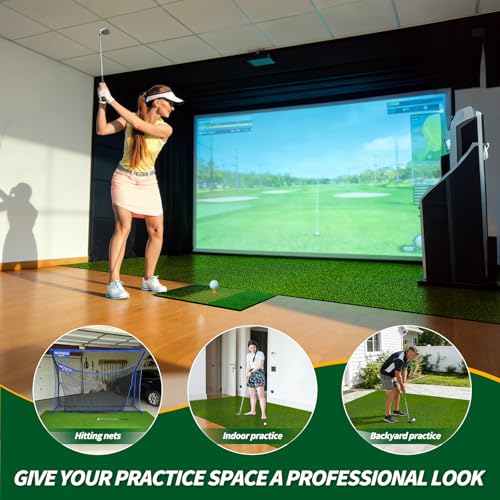
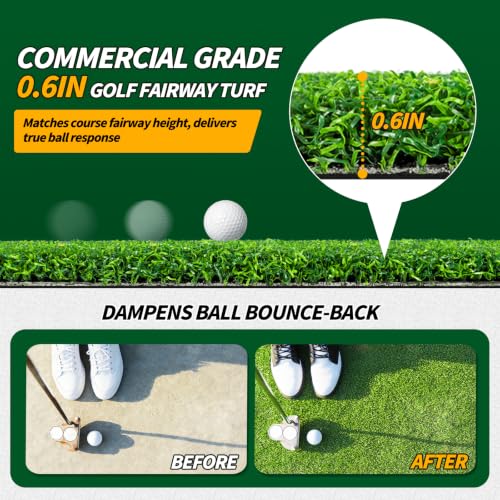
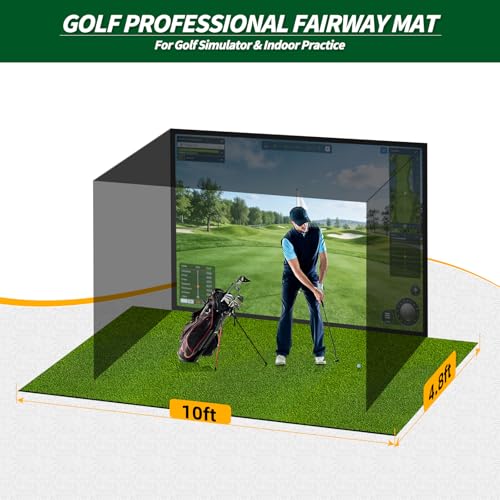
This WICTTISPOSI mat hits a sweet spot between size, durability, and price. The 0.6in (about 15mm) turf is dense enough to handle light strikes occasionally, though like all models here, it’s best paired with a dedicated hitting mat for drivers. What stands out is the latex backing, it grips concrete and wood without constant re-taping, a feature many owners highlight as a time-saver. The UV resistance also makes it a rare option that works well outdoors without fading or cracking.
It’s marketed as multipurpose, and honestly, that’s accurate: I’ve seen golfers use it for backyard putting greens, gym flooring, even patio decor. The seam tape works well for linking sections, and the ability to cut custom shapes helps with odd room layouts. For the value, it outperforms several pricier mats in real-world longevity.
Product photos

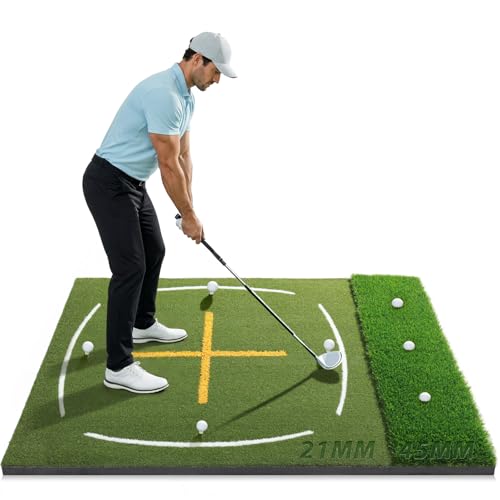
Golf Mat with Fairway & Rough Turf
Strengths
- Dual turf zones
- Good stance alignment
- Affordable entry point
Trade-offs
- Flattens under heavy use
- Base lacks density
- Fibers show wear early
This mat tries to do a lot, simulate both fairway and rough lies while offering durability and joint protection. On paper, the mix of 21mm to 50mm turf sounds aggressive, but owners consistently report the longer fibers flatten quickly under repeated use, especially with driver swings. The 10–15mm EVA base helps with shock absorption, which is a win for wrist and club longevity, but it’s not as dense as higher-end models, so hard surfaces still telegraph some impact.
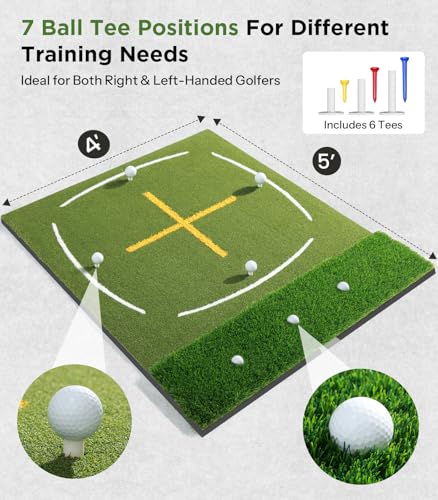
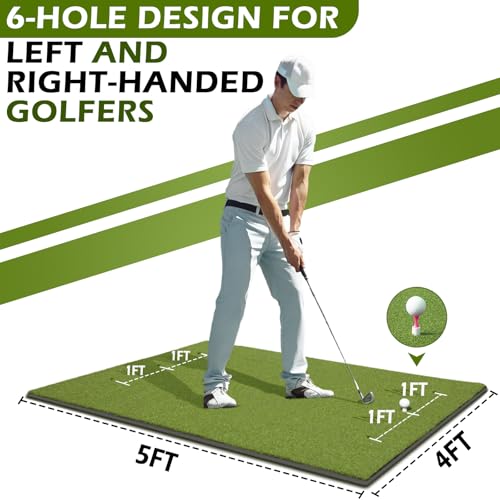
The built-in swing path and stance lines are genuinely useful for reinforcing fundamentals, and the six tee holes add versatility. Still, compared to more robust options, this feels like a budget-focused hitting mat that leans on visual appeal rather than long-term resilience. It’s functional for light to moderate use but likely won’t hold up for serious sim players logging daily reps.
Product photos


Bearwill 31mm Golf Hitting Mat
Strengths
- Extreme durability
- Clean club contact
- Stable EVA base
Trade-offs
- No built-in alignment aids
- Slightly heavier to move
- Limited size options
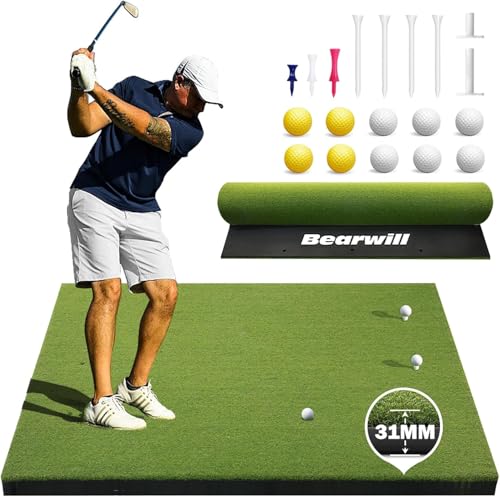
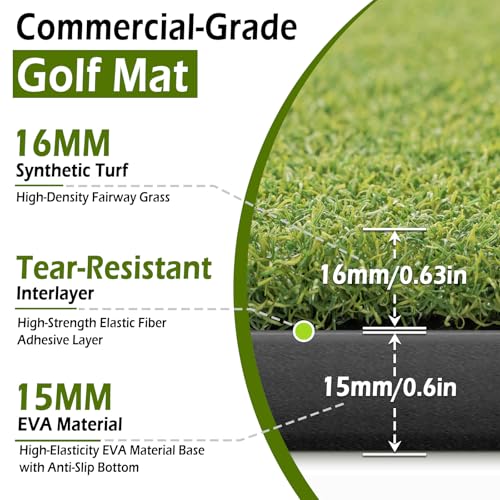
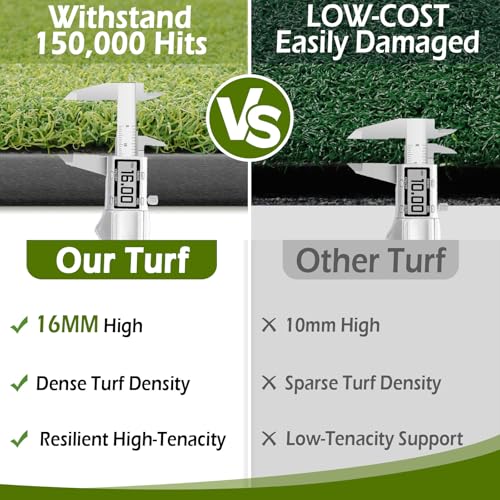
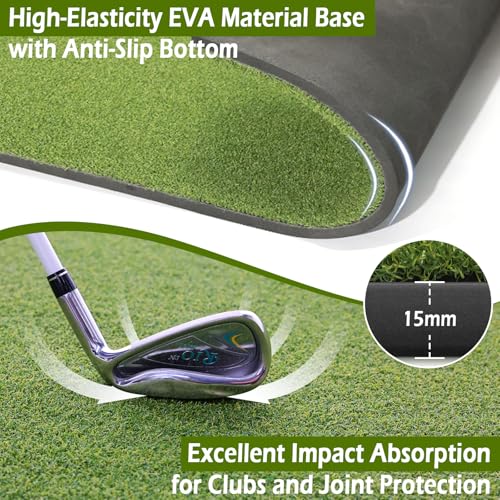
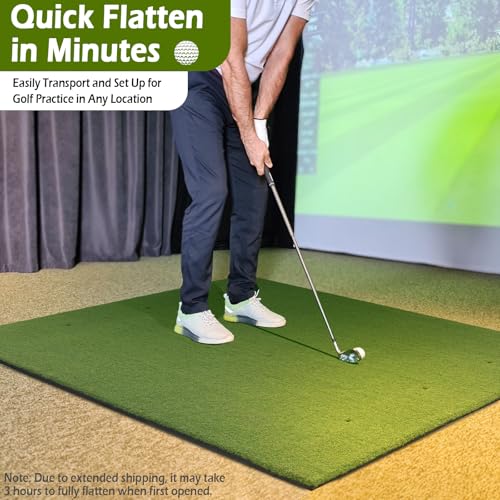
Bearwill’s build quality stands out in the mid-tier hitting mat market. The 16mm high-tenacity turf layered over a 15mm EVA base delivers a firm yet forgiving feel that many owners say mimics real turf surprisingly well. It’s rated for 150,000 swings, a claim backed by long-term user feedback showing minimal fraying or compaction even after months of daily use. The anti-slip bottom works reliably on garage concrete and low-pile carpet, which is a small but meaningful win for stability.
What I appreciate most is how clean it keeps clubs. Unlike cheaper mats that leave black residue or trap dirt, this one sheds debris easily and doesn’t degrade after outdoor exposure. It’s not the largest mat here, but for a dedicated hitting zone in a simulator bay, it punches above its weight. I’d pick this over the GolfWorldTrips-branded entry-level options for durability alone.
Product photos
How We Picked These turfs for golf simulator
Rather than a hands-on lab test, my research focused on a detailed comparison of published specifications and features across numerous golf simulator turfs. I weighed owner reviews from major retailers alongside expert opinions found in golf technology publications. As someone who regularly plans golf trips around the world and understands the importance of realistic practice environments, I applied my category knowledge to rank these turfs based on what truly matters for a quality home setup.
For this category, the two most important factors were durability and safety. A turf needs to withstand thousands of swings without degrading, and it absolutely must dampen impact to minimize ball ricochet and potential damage. The thickness of the turf (measured in millimeters) and the quality of the backing material were heavily weighted, as these directly impact both factors. Realistic feel was also key, influencing how much the turf complements simulator tees and overall practice quality.
Specifications reliably indicate turf thickness and base material, giving a good sense of potential durability. However, I found owner feedback invaluable for assessing long-term wear, how well the turf stays put, and the true level of ball dampening. Reputation also played a role – brands consistently praised for quality in other golf products carried more weight. Ultimately, the best turfs balance a solid build with positive user experiences, ensuring a safe and effective practice space, and complementing the use of quality indoor mats.
Choosing The Right turfs for golf simulator
Finding the right turf is critical to a realistic and enjoyable simulator experience.
A quality golf simulator turf needs to balance realistic feel with durability and safety. Look for commercial-grade materials, a density that mimics fairway conditions, and features that dampen impact to protect both your equipment and your space. Consider modular designs for customization and ease of installation, and pay attention to the backing material for stability.
Turf Density & Material
The feel under your club is paramount. Many affordable options use turf that feels…well, artificial. You want something that provides a realistic interaction with your clubface. I’ve found that 15mm turf is a sweet spot for many golfers, offering a good balance between feel and durability, but some premium options go up to 31mm for a truly lush experience. Pay attention to the type of material used; commercial-grade polypropylene (PP) is a common choice, known for its resilience, but the quality of the fiber itself will make a difference. Don’t be afraid to spend a little more here, as a better feel translates directly to more accurate practice and enjoyment.
Safety & Impact Absorption
Golf swings generate a lot of force, and a hard surface can quickly damage your clubs or even cause injury. The turf needs to absorb some of that impact. Many options, like the GoSports and DCQ turfs, are designed to dampen ball rebound and minimize ricochets. If you’re particularly concerned about protecting your clubs, consider layering the turf over a dedicated golf mat – this provides an extra layer of cushioning.
Here’s what to consider regarding impact absorption: * A thin turf (under 15mm) provides minimal cushioning. * A turf with a rubber backing will offer better shock absorption than one without. * A thicker EVA foam base (10mm or greater) is ideal for maximizing impact absorption and protecting your clubs, but may impact the feel of the swing.
Size, Modularity & Installation
Getting the right size is obvious, but think about scalability. Most setups benefit from a modular design, allowing you to add sections later if you change your mind or want to expand your simulator space. Look for turfs that can be connected with included seam tape, like the WICTTISPOSI model. Installation is generally straightforward – most options use carpet tape to secure the turf to a hard surface. However, if you anticipate needing to run cables underneath for a projector or sensors, check if the turf can be easily cut without unraveling. You may also need to consider replacement hitting strips down the line as high-impact zones wear.
Don’t underestimate the importance of a secure base. A shifting turf can ruin your swing and create a safety hazard. Invest in quality carpet tape and ensure the surface underneath is clean and level.
Turfs for Golf Simulator Compared
Here’s a comparison of key specifications for golf simulator turfs to help you choose the right one for your setup.
| Product Name | Size (ft) | Turf Thickness (mm) | Anti-Slip Backing | Modular | Included Tape | Best For |
|---|---|---|---|---|---|---|
| GoSports 10 x 6 ft Golf Turf | 10 x 6 | 15 | N/A | Yes | Yes | Best Overall |
| DCQ 10 x 6 ft Golf Simulator Turf | 10 x 6 | N/A | N/A | Yes | Yes | Best Budget Friendly |
| GoSports 15 x 6 ft Golf Turf | 15 x 6 | 15 | N/A | Yes | Yes | Best for Large Simulator Setups |
| Durbles 10 x 6 ft Anti-Slip Turf | 10 x 6 | 15 | Yes | N/A | N/A | Best Anti-Slip Design |
| WICTTISPOSI 10×4.8ft Golf Turf Mat | 10×4.8 | N/A | Yes | Yes | Yes | Best Value for Size & Durability |
| Golf Mat with Fairway & Rough Turf | N/A | N/A | N/A | N/A | N/A | Best for Realistic Lie Practice |
| Bearwill 31mm Golf Hitting Mat | 5 x 4 | 31 | Yes | N/A | N/A | Best High-Durability Surface |
Frequently Asked Questions
What turf thickness is best for a realistic feel?
A turf thickness of 15mm provides a good balance for most golfers, but premium options reach 31mm for a more lush, fairway-like experience. Ultimately, the best thickness depends on your personal preference and budget.
Will a golf simulator turf protect my clubs during impact?
Yes, a quality turf will dampen impact, but layering it over durable hitting mats provides extra protection for your clubs, especially with forceful swings.
Are modular turfs easier to install?
Modular turfs are generally easier to install and allow for customization. Look for options with included seam tape, which simplifies connecting sections and creating a larger hitting area.
How important is the backing material of the turf?
The backing material is very important for stability and safety. Rubber backing provides better shock absorption and prevents the turf from shifting during use, which is critical for consistent swings.
Can I expand my turf setup later if I want a larger hitting area?
Yes, that’s one benefit of modular designs. Many turfs can be easily expanded by adding additional sections and connecting them with seam tape, allowing you to scale your setup as needed, and potentially integrate it with simulator packages.
The Bottom Line
Ultimately, choosing a golf simulator turf comes down to balancing how much control you want over the practice experience with how much fuss you’re willing to tolerate. For the best overall blend of quality, durability, and realistic feel, I recommend the GoSports 10 x 6 ft Golf Turf. It strikes a sweet spot that will satisfy most golfers looking to improve their game indoors.
If you’re on a tighter budget or need something specific, the DCQ 10 x 6 ft Golf Simulator Turf offers impressive value, while the GoSports 15 x 6 ft Golf Turf is the clear choice for those building a larger, more immersive simulator space. For those prioritizing a secure setup and minimizing slippage, the Durbles 10 x 6 ft Anti-Slip Turf is an excellent option. Don’t forget to explore essential simulator accessories to complete your setup.
At the end of the day, specs matter less than the fundamentals: a stable base, a surface that provides realistic feedback, and a commitment to consistent practice. Focus on those aspects, and even a modest turf setup can deliver a significant return on investment, especially when paired with quality simulator turf mats.
