
7 Best Weighted Golf Swing Trainers of 2026
This post contains affiliate links. As an Amazon Associate, we earn from qualifying purchases.
The Orange Whip Golf Swing Trainer stands out as the best overall for building tempo and muscle memory, thanks to its proven counterbalanced design. If you’re watching your budget, the Golf Swing Trainer Aid 25.5″ delivers solid performance with adjustable weight, while the Goashpeaot 48″ is a strong pick for players focused on power and rhythm in a longer, flexible trainer.
Most golfers struggle with consistency, not because they lack effort, but because their swing mechanics are off and their tempo is rushed. A good weighted swing trainer shouldn’t just add resistance, it should help you feel the right movement and groove a repeatable motion. In this guide, I’ll walk you through the top options based on specs, owner feedback, and what actually works for improving swing plane, rhythm, and strength. These picks reflect what’s consistently praised by users and aligns with what I’ve seen deliver results across the training aid landscape.
Top 7 Weighted Golf Swing Trainers in the Market
The Best Weighted Golf Swing Trainers, Reviewed
Orange Whip Golf Swing Trainer

Strengths
- Patented counterbalance
- Superior build quality
- Trains full-body coordination
Trade-offs
- Bulky for travel
- Higher price point
The Orange Whip isn’t just popular, it’s foundational. On paper and in owner feedback, its 47-inch counterbalanced design delivers a uniquely smooth resistance that trains tempo, balance, and coordination in one flowing motion. The flexible shaft forces you to sync your arms, torso, and hips, which is exactly what separates decent swings from repeatable, athletic ones. I’ve seen countless instructors recommend this as the gold standard, and the consistency in reviews, especially from players fixing timing issues or regaining fluidity after injury, backs that up.
What sets it apart from cheaper alternatives is the feedback quality. When your swing wobbles or jerks, you feel it instantly in the tip. That real-time correction builds muscle memory better than static drills. It’s also built like a tool meant to last, with American craftsmanship and a 2-year warranty. Yes, it’s the most expensive here, but in this category, you’re paying for a system that actually changes movement patterns.
Video review
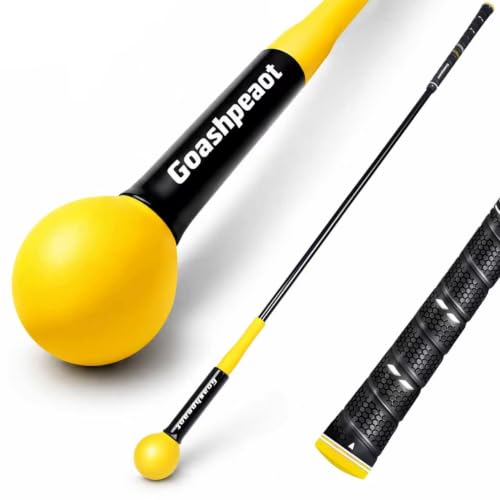
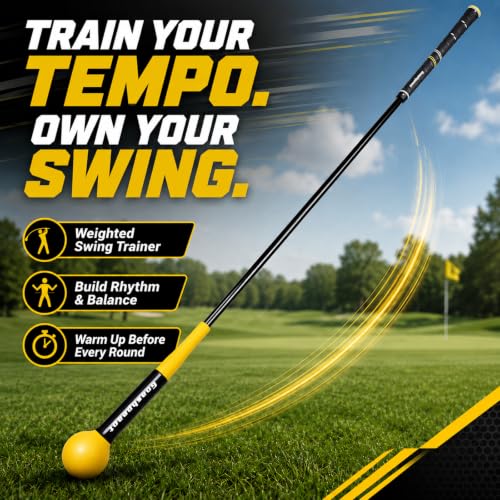
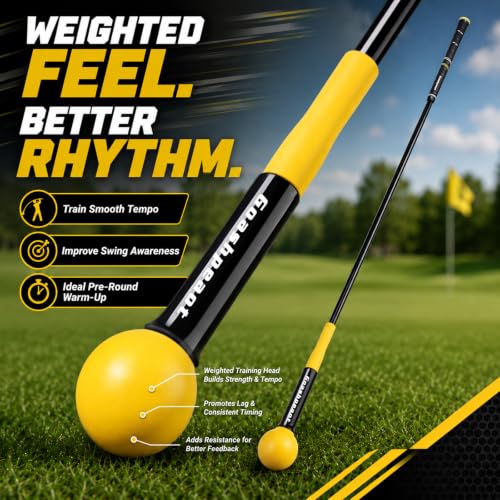
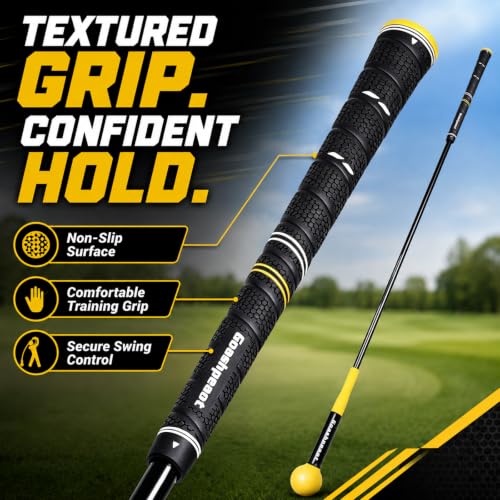
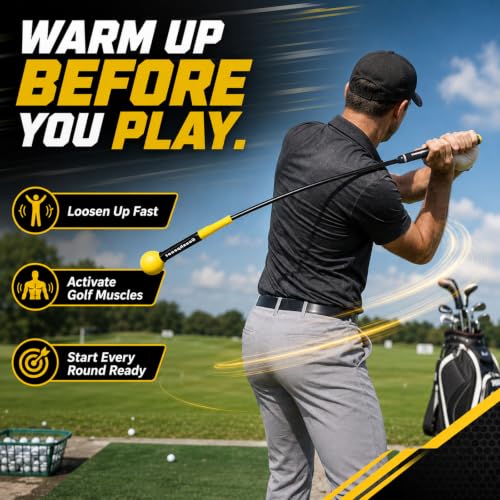
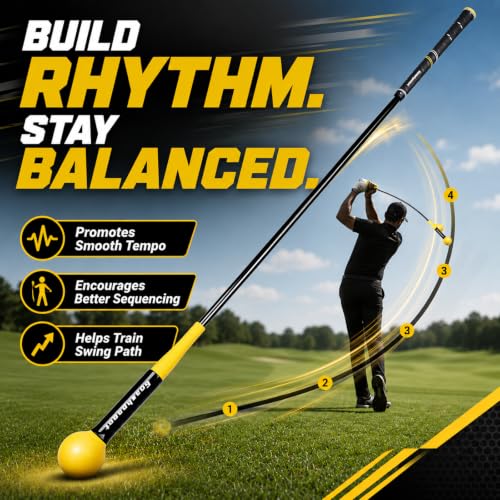
Goashpeaot 48″ Golf Swing Trainer
Strengths
- Aggressive shaft flex
- Promotes fast release
- Portable and lightweight
Trade-offs
- Build quality less robust
- Grip durability concerns
This 48-inch trainer clearly takes inspiration from the Orange Whip, but with a more aggressive flex profile that some owners say helps generate faster clubhead speed. The exaggerated lag during the backswing is noticeable on paper and in user reports, players working on power and release timing tend to respond well to it. At $35, it’s positioned as a mid-tier option with pro-level aspirations, and for that price, the length and flexibility deliver real benefits for building explosive, on-plane swings.
Where it falls short is in durability. While the shaft feels springy and responsive, there are more reports of tip wear or grip slippage compared to the American-made Orange Whip. Still, if you’re after a trainer that emphasizes power loading and release, this one does it well. I’d recommend it over the WENTCCION or Japard models for players focused on distance and tempo, but not as a long-term replacement for the original.
Product photos
Golf Swing Trainer Aid 25.5″

Strengths
- Low-cost entry
- Adjustable weight head
- Compact for indoor use
Trade-offs
- Inconsistent flex feel
- Basic build quality
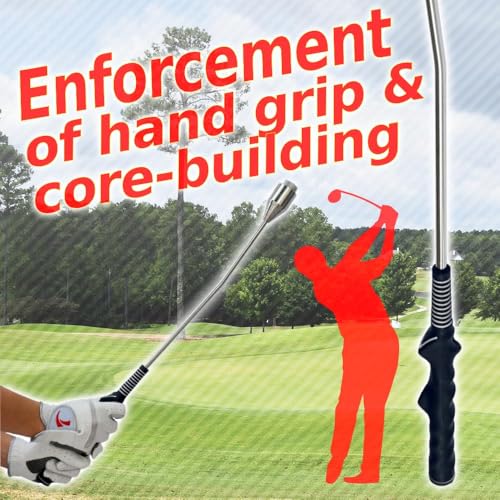
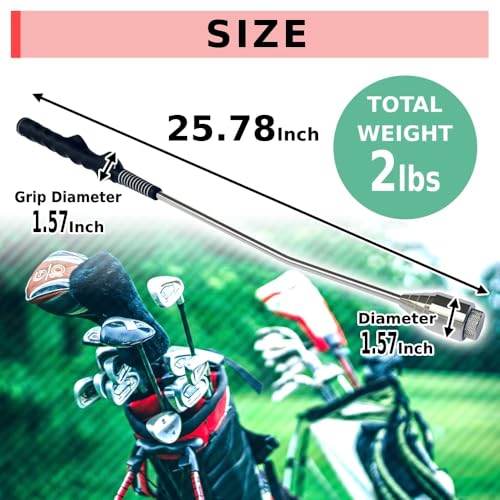
This is the bare-bones budget pick, functional, right-handed, and priced to sell. The 25.5-inch length and adjustable head make it usable for both iron and wood simulations, and the hand-shaped grip does help align fingers correctly, per owner comments. At under $30, it’s not going to replace serious training tools, but it’s adequate for occasional use at home or in small spaces.
The biggest downside? It lacks the refinement of even the Japard or WENTCCION models. The flex is inconsistent, and while it claims to build tempo, most feedback comes from grip pressure, not shaft response. Still, for a beginner who just needs to rehearse basics without breaking the bank, it gets the job done. I’d use it as a starter tool, then upgrade once swing goals become more specific.
Video review
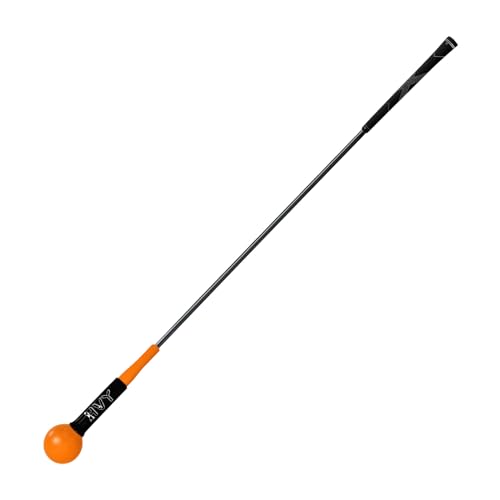
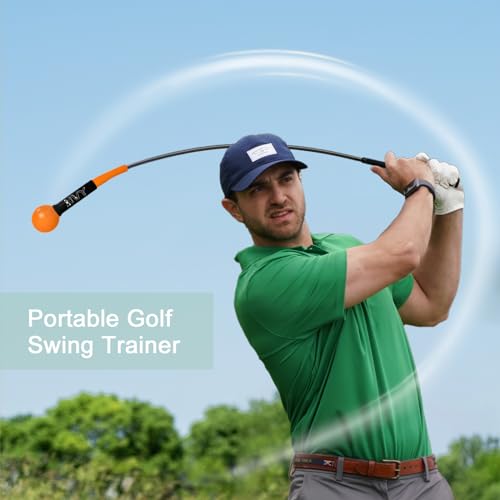
HVY 48″ Golf Swing Trainer
Strengths
- Builds lower-body power
- Forces proper sequencing
- Durable fiberglass shaft
Trade-offs
- Stiff flex may feel harsh
- Less fluid tempo feedback
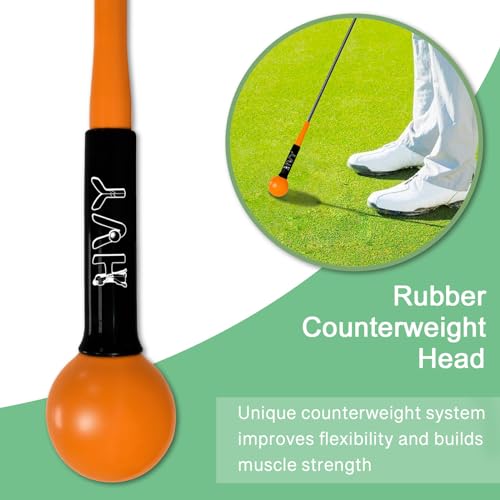
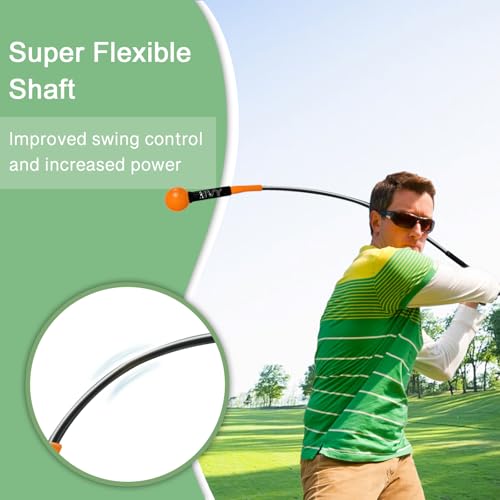
HVY leans hard into strength and flexibility, its fiberglass shaft is stiff enough to create real resistance, and the weighted head forces lower-body engagement, which owners say helps eliminate upper-body dominance. The 48-inch model is ideal for taller players or those serious about building power from the ground up. Feedback is immediate when you lose balance, making it effective for ingraining a flatter swing plane and reducing slices.
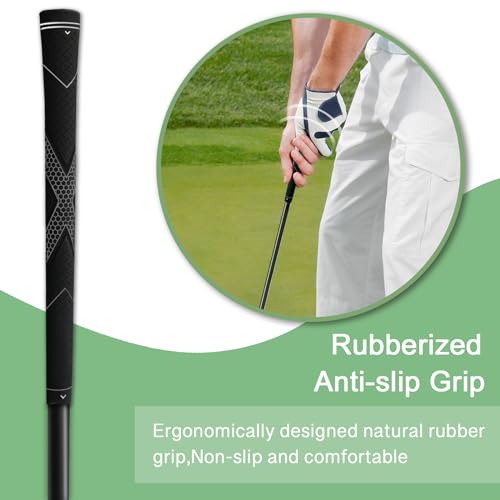
Compared to the Goashpeaot or Orange Whip, it feels more like a workout tool than a rhythm trainer. That’s a pro if you’re after physical conditioning, but a con if you just want a smooth warm-up stick. The rubber grip is solid, and the option to choose length based on height is a thoughtful touch rarely seen at this price. I’d pick this over others for off-season strength training or rehab work.
Product photos

WENTCCION Weighted Golf Swing Trainer
Strengths
- Compact and portable
- Adjustable club head
- Durable stainless steel
Trade-offs
- Limited full-swing training
- Less shaft flex for lag
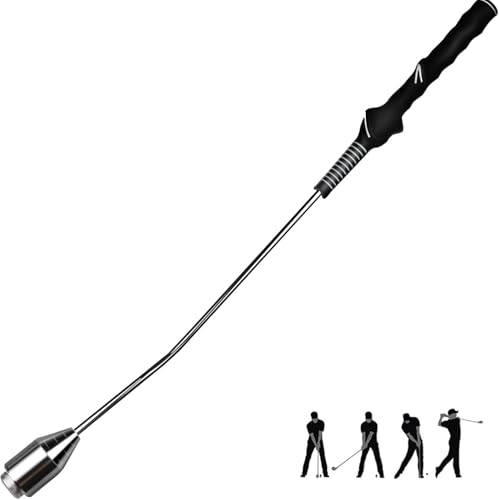
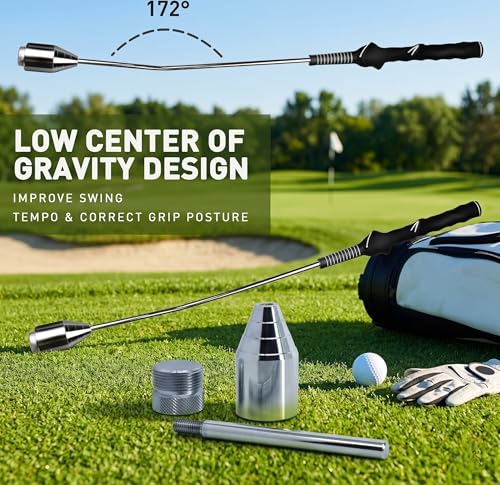
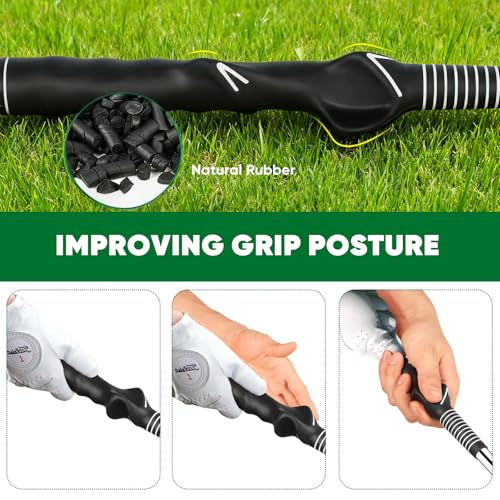
At this price, the WENTCCION delivers solid value for right-handed players who want resistance training without complexity. The 25.5-inch stainless steel shaft is short enough to use indoors, and the molded grip helps lock in hand position, owners consistently report it’s useful for reinforcing grip pressure and tempo during short sessions. The adjustable club head is a smart touch, letting you tweak weight for iron vs. wood simulations.
Compared to the Orange Whip or HVY trainers, it doesn’t train full swing sequencing as deeply, but it’s not trying to. It’s a focused tool: build rhythm, reinforce hand placement, and add resistance to rehearse mechanics. I’d pick this over other budget models because of the metal build, less flex than fiber-based trainers, but more durable. Just don’t expect the same level of feedback on weight transfer.
Product photos

Murray Golf Swing Weight Ring

Strengths
- Works with any club
- Scratch-resistant coating
- Inexpensive 2-pack
Trade-offs
- Minimal resistance
- No grip training
If you want to turn any club in your bag into a training aid, these weight rings are the easiest upgrade. Sliding one onto your driver or 7-iron adds just enough resistance to sharpen feel and tempo without altering your swing path. Owners love how simple they are, no new grip to learn, no extra gear to pack. The soft polymer coating actually works, too, with few reports of shaft scratches even after repeated use.
What makes this a standout is versatility. You’re not locked into a fixed trainer; you can use it with your actual clubs, which helps transfer training to real swings. Compared to full weighted clubs, it’s a smarter way to build muscle memory without overloading your joints. At under $10 for two, it’s the lowest-risk entry on this list. I’d use these during warm-ups or slow practice rounds to keep tempo sharp.
Product photos
Japard Adjustable Golf Swing Trainer
Strengths
- Excellent grip shaping
- Adjustable for iron/wood
- Good for wrist control
Trade-offs
- Short shaft limits swing arc
- Less feedback on balance
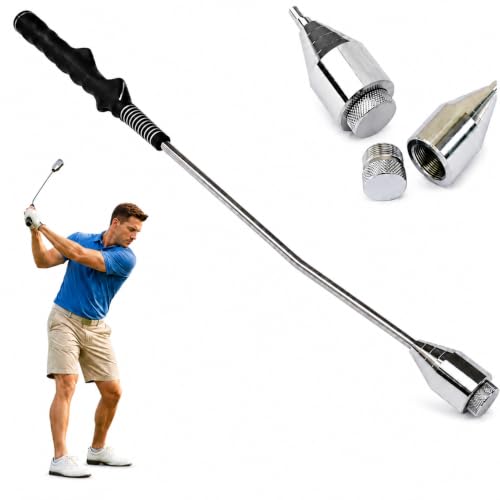
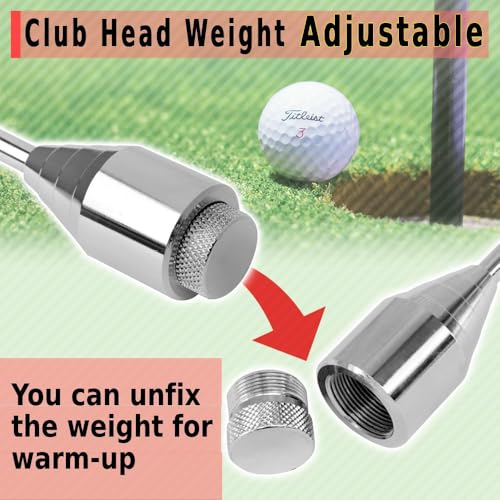
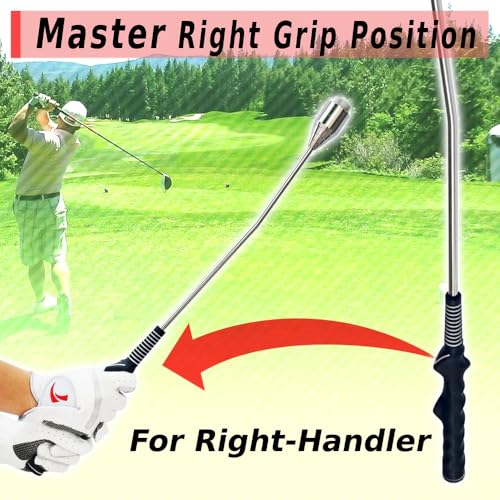
The Japard stands out for one reason: grip focus. The ergonomic right-hand mold is more defined than most, and owners say it helps lock in proper finger placement, especially useful for beginners fighting inconsistent contact. Combined with the adjustable head, it doubles as both a grip trainer and a light resistance club for tempo work. The rubberized grip stays put even during repetitive indoor swings, which is a small but meaningful detail.
It’s not the best for full-body sequencing like the Orange Whip, but if you’re struggling with hand dominance or flipping at impact, this one addresses that directly. The lighter price tag also makes it a safer bet than pricier models if you’re unsure where your swing breaks down. I’d pair this with video drills to reinforce neutral grip and wrist set, then move to a longer trainer once mechanics improve.
Product photos
How We Picked These weighted golf swing trainers
Rather than a hands-on lab test, my research focused on a detailed comparison of published specifications and features across numerous weighted golf swing trainers. I weighed owner reviews from major retailers alongside expert analyses found in golf publications and instructional websites. This allowed me to build a ranking based on what golfers are actually saying about performance and durability, combined with my own understanding of what constitutes effective swing training.
For this category, the factors that most heavily influenced my recommendations were a trainer’s ability to promote consistent tempo and swing plane, and its capacity to build muscle memory. A trainer that simply adds weight isn’t as valuable as one that actively guides the user toward a more efficient and repeatable swing. Correcting tempo is crucial for consistency, and that’s why you’ll see several trainers highlighted that excel in that area – I also looked at how well they aid in correcting common issues like an over-the-top swing.
Published specifications reliably indicate the physical characteristics – length, weight adjustability, materials – but the true value of these trainers is revealed through owner feedback. Specs tell you what a trainer is, but comments on feel, immediate impact on swing flaws, and long-term improvement help determine how well it performs. I also considered reputation; brands consistently praised for quality and innovation earned higher marks, and regularly referenced resources like our guide to the best training aids to confirm established opinions. Understanding the importance of rhythm, I also looked at the best golf tempo trainers to see which features translated well to weighted trainers.
How To Pick The Right weighted golf swing trainers
Finding the right weighted swing trainer can be a shortcut to a more consistent and powerful golf swing, but there’s a lot of variation in what these tools offer.
A truly effective weighted golf swing trainer isn’t just about adding weight to a club. It’s about intelligently distributing that weight to promote proper swing mechanics, enhance tempo, and build muscle memory. Look for designs that focus on counterbalancing, shaft flexibility, and feedback mechanisms to identify flaws in your technique. Consider whether you prioritize strength, tempo, or plane work when evaluating options.
Understanding Weight Distribution & Balance
The core function of a weighted trainer is to exaggerate movements, making flaws more apparent. But simply adding weight isn’t enough. The location of that weight is critical. Trainers like the Orange Whip use a counterbalanced design – weight concentrated in the head and sometimes the butt end – to encourage proper swing plane and tempo. This is a departure from simply adding weight to the head, which can encourage an over-the-top swing. Consider what feels most natural in your hands; some golfers prefer the feel of a more evenly distributed weight, while others benefit from the pronounced counterbalance.
Focusing on Tempo & Rhythm
Many golfers struggle with tempo, rushing their swings and losing power. Trainers like the Goashpeaot 48” are specifically designed to address this, employing a flexible shaft that encourages a smoother, more controlled backswing. This “lag” feeling is what tour professionals strive for, and a good trainer can help you develop the muscle memory to achieve it.
- A shorter trainer (under 30 inches) is often best for beginners or those primarily focused on wrist hinge and hand action.
- A mid-length trainer (30-40 inches) offers a balance between control and full-swing feel, useful for refining tempo and sequence.
- Longer trainers (40+ inches) are geared towards experienced players looking to maximize speed and power, but require more space and control.
To really dial in your rhythm, don’t just swing the trainer; record yourself and compare your motion to professional swings.
A smooth, controlled tempo is more important than raw power. Focus on feeling the weight move throughout your swing, not just swinging harder.
Value, Durability, & Specific Needs
The market is flooded with options, ranging from budget-friendly models to premium trainers. The WENTCCION Weighted Swing Trainer offers a good entry point, but don’t automatically dismiss higher-priced options. Durability is key; a trainer made with flimsy materials won’t last, and a broken trainer is useless. If you’re struggling with grip or wrist control, consider something like the Japard Adjustable Golf Swing Trainer, which is specifically designed to address those issues. Don’t overlook accessories either; something like the Murray Golf Swing Weight Ring can be a simple and effective addition to your existing clubs. For more detailed comparisons, you can explore a range of options in our guide to the best swing training aids. If you’re really struggling with your swing plane, you could also look at dedicated swing plane trainers to further refine your technique and correct swing plane aids.
Weighted Golf Swing Trainers Compared
Here’s a comparison of key specifications for popular weighted golf swing trainers to help you find the right fit.
| Product Title | Best For | Length (in.) | Weight (lbs) | Adjustable Weight | Grip (Hand) | Material |
|---|---|---|---|---|---|---|
| Orange Whip Golf Swing Trainer | Best Overall | N/A | N/A | No | N/A | N/A |
| Goashpeaot 48″ Golf Swing Trainer | Best for Tempo & Power | 48 | N/A | No | N/A | N/A |
| Golf Swing Trainer Aid 25.5″ | Best Budget Friendly | 25.5 | 2.1 / 1.84 | Yes | Shaped | Rubber |
| HVY 48″ Golf Swing Trainer | Best for Strength & Flex | 48 | N/A | No | N/A | Fiberglass |
| WENTCCION Weighted Golf Trainer | Best Value (Right-Handed) | 25.5 | N/A | Yes | Molded | Stainless Steel |
| Murray Golf Swing Weight Ring | Best Accessory | N/A | N/A | N/A | N/A | Polymer |
| Japard Adjustable Golf Trainer | Best for Grip & Wrist | N/A | N/A | Yes | Shaped | Rubber |
Frequently Asked Questions
What weight should I start with when using a weighted golf swing trainer?
Beginners should start with the lightest available weight and focus on smooth, controlled swings. Increasing the weight too quickly can reinforce bad habits, so prioritize developing proper form before adding resistance.
Can a weighted trainer really help my swing speed?
While weighted trainers primarily focus on tempo and technique, consistent use can indirectly improve swing speed. By improving your mechanics and building muscle memory, you may find you’re able to generate more power; explore dedicated swing speed trainers if speed is your main focus.
Are adjustable weight trainers better than fixed-weight models?
Adjustable weight trainers offer versatility, allowing you to gradually increase resistance as your strength and technique improve. However, some golfers prefer the consistency of a fixed weight, especially if they’re targeting a specific training goal like tempo development.
How important is the weight shift during use of these trainers?
Understanding the weight shift is critical, as these trainers exaggerate any imbalances. Focus on feeling the weight transfer from your back foot to your front foot throughout the swing – a proper weight shift is key to generating power and maintaining balance.
What’s the best way to incorporate a weighted trainer into my practice routine?
Use a weighted trainer for about 10-15 minutes during your practice session, focusing on slow, deliberate swings. Don’t overuse it, as it’s meant to supplement, not replace, regular practice with your actual clubs.
The Bottom Line
Choosing a weighted golf swing trainer often comes down to how much you value focused feedback versus overall feel. While options range widely in price and features, the Orange Whip Golf Swing Trainer consistently rises to the top as the best overall choice, offering a unique counterbalanced design that golfers at all levels find beneficial for improving tempo and swing plane. It’s an investment, certainly, but one that addresses the fundamental mechanics of a good swing.
For those on a tighter budget, or looking for a specific solution, there are excellent alternatives. The Golf Swing Trainer Aid 25.5″ provides adjustable weight and a shaped grip, making it a fantastic pick for beginners or those working on wrist action. And, if tempo is your biggest issue, the Goashpeaot 48” Golf Swing Trainer offers a flexible shaft designed to help you find a smoother, more powerful rhythm. For more information, check out our thorough trainer guide.
Ultimately, remember that no trainer can replace dedicated practice and professional instruction. The most important thing is to focus on building a swing that feels natural and repeatable, and to understand the fundamentals of grip, posture, and alignment. Don’t get caught up in chasing specs; instead, prioritize a tool that helps you develop a consistent and controlled motion – and for many, that starts with finding the right trainers for beginners.
