
Master Weight Shift in the Golf Swing: Two Proven Styles
This post contains affiliate links. As an Amazon Associate, we earn from qualifying purchases.
This post contains affiliate links. As an Amazon Associate, we earn from qualifying purchases.
A proper weight shift in the golf swing moves your center of pressure (CP) from between your feet at address, to your trail foot in the backswing, then forward during the downswing. Biomechanics research identifies two valid finishing styles: “Front Foot,” where weight finishes predominantly on the lead foot at impact, and “Reverse,” where weight recenters to a more balanced position. The style itself matters less than its efficient timing and its individual relationship to your clubhead speed.
Forget the one-size-fits-all dogma. The real gap between a powerful move and a weak one is determined by when your weight stops moving back and starts moving forward. Get that transition late, and you’re stuck.Get it early, and you lose the ground force that drives rotation.
What follows: a breakdown of the two weight shift styles proven in force-plate studies, the specific timing difference that separates skilled from unskilled players, and a field test to identify which pattern you actually use. By the end, you’ll know whether to chase a classic forward finish or work with a natural reverse move.
Key Takeaways
- Two distinct weight shift styles exist: “Front Foot” (weight finishes forward) and “Reverse” (weight recenters at impact). Both are used by players of all skill levels.
- Skilled golfers complete their weight transfer to the trail foot earlier in the backswing than less-skilled players. This sets up a forceful transition.
- The relationship between your Center of Pressure movement and club speed is individual. A larger CP range correlates with speed for Front Foot players; a rapid shift back correlates for Reverse players.
- Real-time feedback training, like using a balance board with visual cues, significantly improves shot distance and accuracy by making weight shift conscious.
- A reverse pivot, shifting weight to the lead foot in the backswing, is a true fault. A Reverse style weight shift is a legitimate, balanced finish pattern.
What Weight Shift Actually Means (It’s Not Just Your Feet)
We talk about weight shift like it’s a conscious decision to step on one foot. That’s the feel, not the mechanism. What you’re actually managing is your Center of Pressure, the point where the combined force from your feet meets the ground. Force plates measure this in studies.
Your CP starts between your feet at address. A good backswing shifts it toward your trail foot. The downswing then drives it forward. This concept is about creating ground force. When you push against the ground to start your downswing, the ground pushes back.That reaction force is what you use to rotate your pelvis and torso. A late or weak shift means you’re trying to generate power from your arms alone.
The skilled group completed the back swing weight transfer onto the trail foot before the top of the backswing, while the low skilled golfers were still engaged in the backswing weight transfer motion at the mid-backswing. This earlier shift creates the tension for a powerful stretch-shortening cycle.
This timing is everything. If your weight is still drifting back as your arms start down, your lower body can’t lead. The sequence breaks, and you’ll likely early extend or cast the club to make contact.
The Two Weight Shift Styles Science Found
Here’s where most instruction gets it wrong. For decades, the gospel said all good players finish with most weight on their front foot. Force-plate research from Victoria University paints a different picture. Analyzing 62 golfers, they found two clear Center of Pressure movement patterns.
| Style | CP Movement Pattern | Correlates With Club Speed When… | Typical Look |
|---|---|---|---|
| Front Foot | CP moves to front foot in downswing and stays there through impact. | CP has a larger overall range and moves rapidly forward in downswing. | Classic finish, belt buckle facing target, weight on front foot. |
| Reverse | CP moves forward in early downswing, then shifts back to a balanced position at impact. | CP is farther from the trail foot at late backswing and shifts rapidly back near impact. | Balanced, athletic finish, weight centered or slightly favoring trail side. |
Both patterns appear across all skill levels, from professionals to high handicappers. This means the Reverse style is a biomechanical alternative, not necessarily a technical error. The study’s key finding was individual specificity.For the five golfers analyzed in depth, all had a significant relationship between their CP parameters and club velocity, but the exact relationship was unique to each player.
So which one is right for you? It depends on your existing motion and how you create speed. A Front Foot player who suddenly tries to hold weight back will lose power. A Reverse player forced onto their front foot might lose balance and strike it fat. The goal is to optimize the style you naturally gravitate toward, not to force a textbook image that contradicts your mechanics.
Where this goes sideways: Calling a Reverse style weight shift a “reverse pivot.” They are not the same. A reverse pivot is a fault where weight shifts to the lead foot during the backswing. A Reverse style is a legitimate downswing pattern where weight recenters after moving forward.
How Skilled Golfers Shift Weight (The Data)
Let’s get specific. A peer-reviewed study compared 13 skilled golfers (mean handicap 0.8) to 17 low-skilled golfers (handicap 30.8). They used high-speed cameras and force plates. The differences weren’t about where they ended up, but how and when they moved.
Skilled players exhibited earlier trunk rotation paired with an earlier, more complete weight transfer to the trail foot during the backswing. Their Vertical Ground Reaction Force (VGRF) on the trail foot was already significant at the mid-backswing, then actually decreased slightly by the top. This shows their weight was already loaded and ready to go.
Low-skilled golfers, in contrast, were still increasing VGRF on their trail foot at the top of the backswing. Their weight was still moving back as the swing reached its apex. This late shift forces a rushed, inefficient transition. The downswing becomes an arm race against a stuck lower body.
The skilled group also showed a rapid weight transfer to the lead foot early in the downswing, paired with earlier pelvic rotation. This is the kinematic sequence in action: weight forward, then pelvis open, then torso, then arms, then club. When your weight shift timing is off, this sequence is the first thing to break, often leading to a casting motion.
How to Find Your Natural Weight Shift Pattern
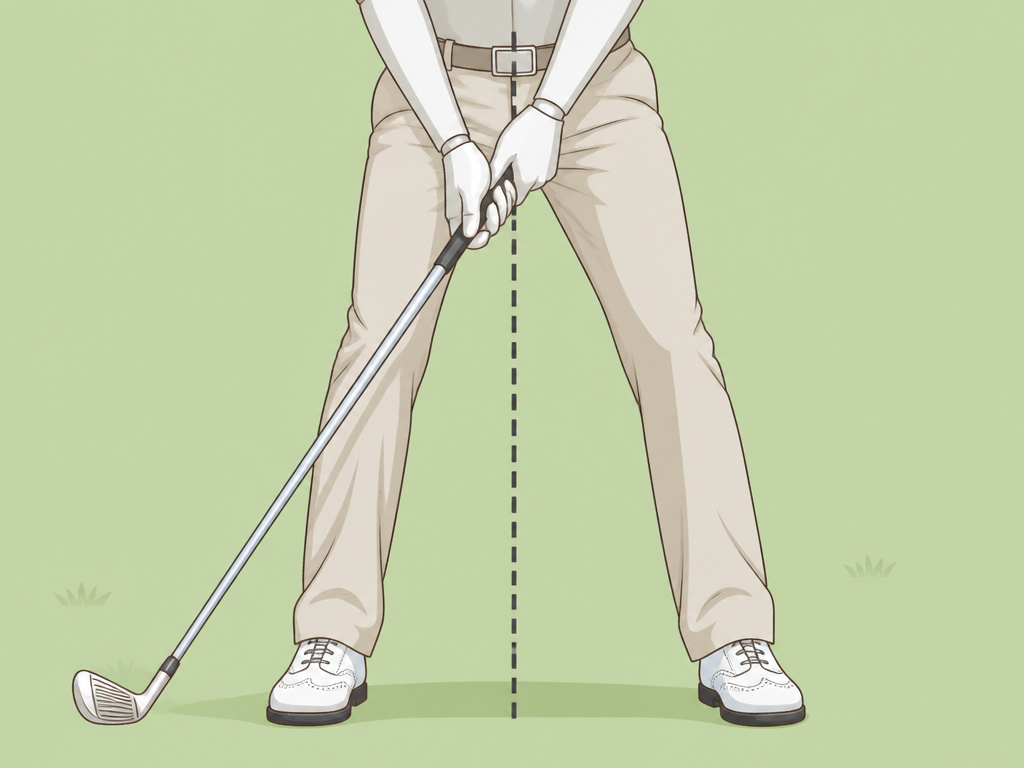
You don’t need a force plate. You need a smartphone and a sense of feel. This three-step audit will show you what you’re actually doing.
- Film Your Swing Face-On. Place your phone directly in front of you, in line with your hands at address. Hit a few 7-irons. Watch the replay in slow motion. Pause it at impact. Draw a mental line from your belt buckle straight down to the ground. Is it over your front foot, between your feet, or over your trail foot? This gives you a rough finish style.
- Do the Step Drill. Take your normal stance without a club. Make a backswing with your arms. Now, to start the downswing, literally step your lead foot forward and toward the target about 6 inches. Feel how your weight must move forward to allow that step. This drill ingrains the feeling of your lower body initiating the shift. It’s impossible to do this drill with a late shift.
- Use a Balance Board. If you have access to a Wii Balance Board or similar, it’s a game-changer. Stand on it and make slow-motion swings. The real-time feedback of your CP moving on a screen creates instant awareness. Studies show this type of training significantly improves shot distance and accuracy.
Your pattern might be messy. You might be a Front Foot swinger who doesn’t shift enough, or a Reverse swinger who shifts forward too early. That’s fine. Awareness is the first step to a consistent, powerful low point control.
Drills to Improve Your Weight Shift Timing
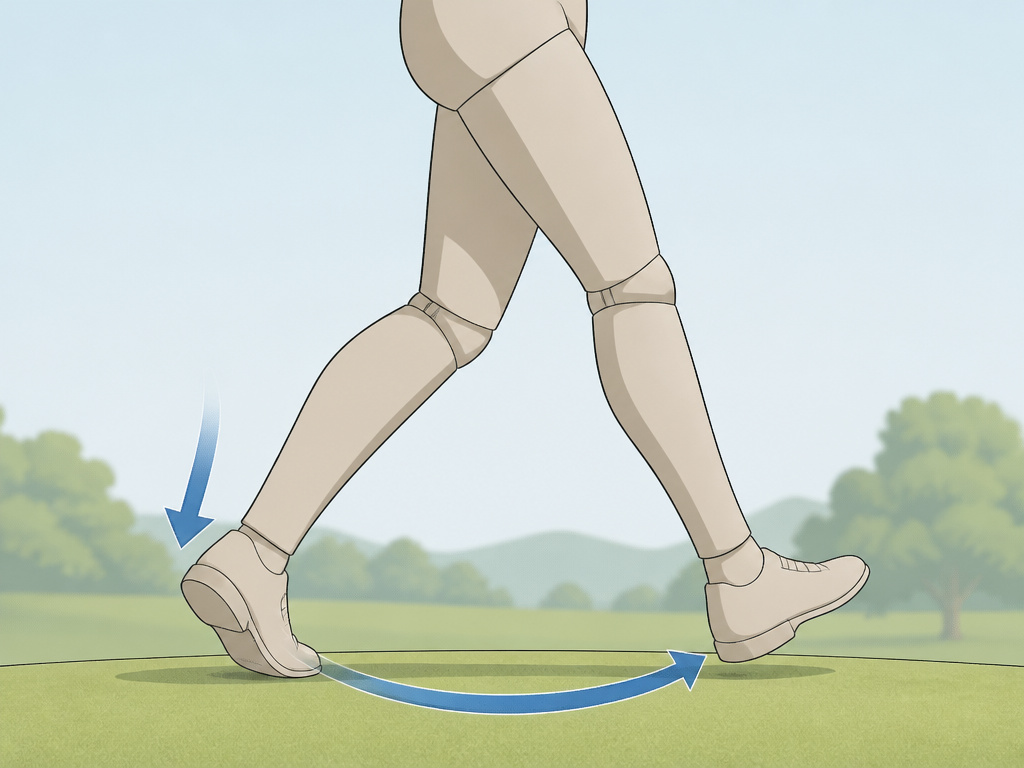
These drills target the specific failure points: a late backswing shift and a weak downswing transition.
The Toe-Up Drill (For Late Backswing Shift)
Take your 7-iron and set up normally. As you start your backswing, consciously let the weight roll to the outside of your trail foot. Feel your trail heel planted. A good checkpoint: when your hands are hip-high, you should be able to lift your lead toe off the ground without losing balance. If you can’t, your weight is still centered or on your lead foot. This drill fights the reverse pivot fault by emphasizing proper trail-side loading.
The Wall Drill (For Early Downswing Shift)
Stand with your lead foot about 12 inches from a wall, your lead side facing it. Make your backswing. To start the downswing, push your lead hip toward the wall. Don’t actually hit it, just initiate the move with your lower body. Feel your weight press into your lead foot as your hip moves. This isolates the feeling of using the ground to start the rotation, not your arms.
The Pump Drill (For Sequencing)
Take your driver and make a slow, three-quarter backswing. From the top, “pump” the club down about halfway, then back to the top, then through to a full finish. On that first pump down, focus only on shifting your weight to your lead foot. Let the arms follow passively. This builds the muscle memory of weight shift as the first move in the downswing sequence, which is crucial for maintaining lag and delivering power.
Common Weight Shift Faults and Fixes
Fault: Swaying
This is a lateral slide of your hips toward the target in the backswing, not a rotation. Your head moves several inches. It destroys your spine angle and makes returning to the ball a guess. * Fix: Practice swings with your head touching a wall. If you sway, you’ll lose contact. Focus on rotating your right hip behind you in the backswing, not sliding it toward the target.
Fault: Hanging Back
Your weight stays on your trail foot through impact. This often causes weak, high slices or fat shots as you try to scoop the ball. * Fix: The step drill is the best antidote. Also, feel like you’re posting up on a firm, straight lead leg through impact. Imagine throwing a ball sidearm, your weight finishes on your front foot.
Fault: Early Shift (Spinning Out)
You fire your hips open too aggressively at the start of the downswing, but your weight hasn’t fully moved forward. This causes an early extension, your hips thrust toward the ball, and thin or heeled shots. * Fix: Feel a “down and forward” move with your lead knee to start the downswing. The wall drill reinforces this. Your hips should rotate after they’ve moved forward.
Integrating a better weight shift directly improves your balanced finish. When your pressure moves efficiently, you can hold your finish position without falling backward or stumbling forward.
Frequently Asked Questions
Does weight shift change with different clubs?
Yes, but the principle doesn’t. With a driver, you might have a wider stance and a more pronounced upper body tilt away from the target. This can make the weight shift feel more dramatic. With a wedge, your stance is narrower and more weight starts forward. The shift is subtler, but it still must occur. The key is maintaining the same swing rhythm and transition timing regardless of the club in your hand.
I fight a reverse pivot. What’s the fastest correction?
The fastest fix is a setup adjustment. Place 60% of your weight on your trail foot at address. This pre-sets the load. From there, focus on rotating your shoulders and hips while maintaining that weight distribution in the backswing, not increasing it. Your downswing then becomes a move toward your lead side, not a desperate lunge to get off your back foot.
Can I have a good weight shift with limited flexibility?
Absolutely. A good weight shift is about pressure management, not a huge turn. If your torso rotation is limited, a efficient, timely shift becomes even more critical for generating power. You might naturally fit the Reverse style better, as it requires less extreme forward movement. Focus on the quality of the transition, not the size of the move.
How does weight shift relate to creating lag?
They are directly connected. Lag, the retained angle between your lead arm and the clubshaft, is a result of proper sequence. If your weight shifts forward first, your arms and hands can delay, creating lag. If your arms start down first (often because your weight is stuck), you cast the club, losing lag immediately. The weight shift is the trigger that allows lag to happen.
Are there training aids that help with weight shift?
Yes, but start with the free drills. If you want a tool, a pressure mat like the Blast Motion Golf Swing Trainer or even a simple balance board provides objective feedback. Avoid aids that physically restrict your movement; you want to train your feel, not be put in a cage.
The Bottom Line
Stop searching for the perfect weight shift finish. Look for an efficient one. The science is clear: you can power the ball from a centered position (Reverse style) or a forward one (Front Foot style). What you can’t do is load late or transition weakly.
Find your natural pattern with the face-on video audit. Then, hammer the timing with the step and wall drills. Your goal is to build a repeatable, athletic motion where your pressure moves in sync with your turn, not to look like a tour pro in a snapshot. That’s how you turn a weight shift from a confusing concept into a reliable source of power and solid contact.
