
9 Best Golf Swing Plane Trainers of 2026
This post contains affiliate links. As an Amazon Associate, we earn from qualifying purchases.
This post contains affiliate links. As an Amazon Associate, we earn from qualifying purchases.
The TrueGroove Swing Plane Trainer with Power Bar is our top pick for most golfers, delivering reliable feedback and posture training in one solid design. For a budget-friendly yet effective option, the SWING DOCTOR Adjustable Alignment Holder stands out, while the Orange Whip excels for tempo work and warm-ups.
Golfers often waste hours on the range without real progress because they can’t see or feel what’s going wrong with their swing path. A good plane trainer cuts through the guesswork by giving immediate feedback, helping you build consistency where it matters most.
Based on specs, owner experiences, and my years covering golf instruction tools, I focused on trainers that deliver durable, repeatable results across different skill levels and practice environments. This guide breaks down what actually works, and what to prioritize based on your swing goals.
Top 9 Golf Swing Plane Trainers in the Market
The Best Golf Swing Plane Trainers, Reviewed
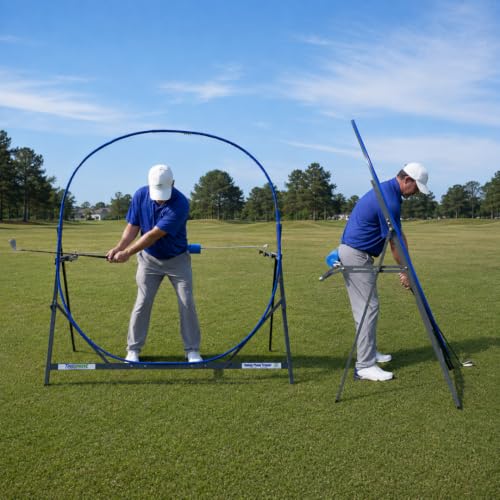
TrueGroove Swing Plane Trainer with Power Bar
Strengths
- Dual posture and plane training
- Fully adjustable for height
- Weatherproof for outdoor use
Trade-offs
- High price
- Complex setup
- Bulky for travel
This is the most technically ambitious plane trainer on the market, and on paper, it delivers something no other does: integrated posture and plane feedback in a single circular system. The Power Bar mechanism forces you into the correct spine angle and maintains it through the swing, which owners consistently report helps eliminate early extension and loss of posture, two common flaws that lead to inconsistent contact. For serious players who want to lock in both elements at once, this is a rare tool that addresses the full kinetic chain.
Still, at this price, expectations are sky-high. While the build quality and weatherproof design justify premium use at home or at a club, the complexity might intimidate beginners. Compared to simpler alignment-based trainers, it’s less about trial and error and more about enforced correctness, which works if you’re ready for it, but can feel rigid if you’re still exploring your swing. I’d pick this over others only if you’re committed to a repeatable, tour-style motion and want a trainer that doesn’t compromise on structure.
Video review
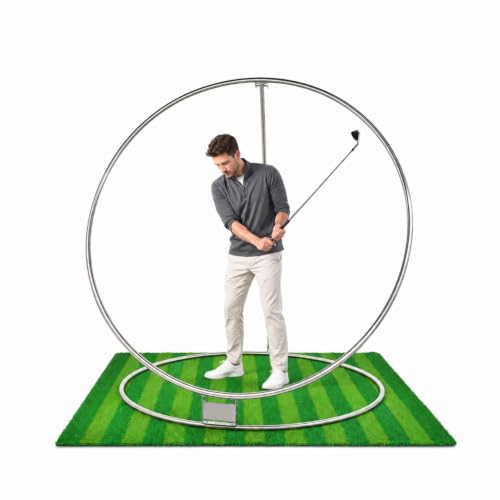
Adjustable Steel Golf Swing Plane Trainer
Strengths
- 18 adjustable swing planes
- Stainless steel frame
- Includes alignment mat
Trade-offs
- Large footprint
- Not portable
- High price
This is one of the few trainers designed specifically to ingrain full-swing muscle memory through repetition in a fixed path. With 18 adjustable angles, it lets you dial in the exact plane for each club, driver, irons, wedges, making it unusually versatile for a rigid trainer. The stainless steel frame feels bombproof, and the anti-tip design means it stays put even on uneven surfaces. Owners report using it daily at home to lock in a consistent takeaway and downswing path.
The included alignment mat is a thoughtful addition, standardizing stance and ball position so every rep counts. Compared to portable stick holders, this is a long-term investment in repetition. While it’s bulky and not travel-friendly, I’d pick it over others if your goal is to build a repeatable, mechanically sound swing through structured practice. It’s closest to what you’d see at a pro-level training facility.
Video review
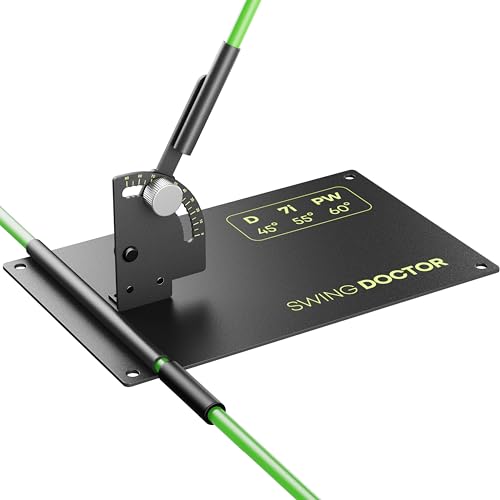
SWING DOCTOR Adjustable Alignment Holder
Strengths
- Affordable price
- Metal base for stability
- Folds for easy storage
Trade-offs
- No physical swing correction
- Basic visual guidance
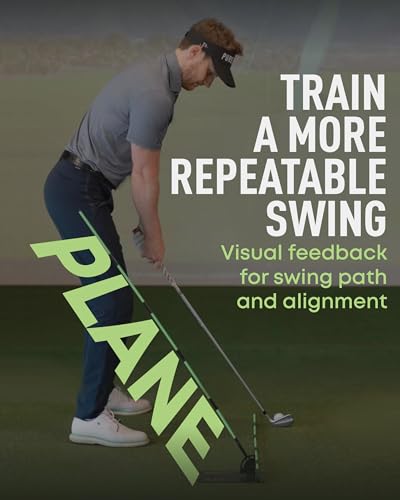
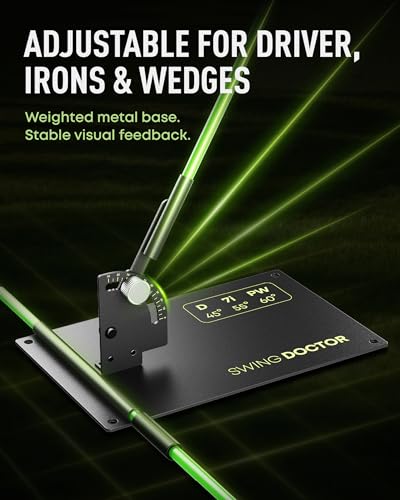
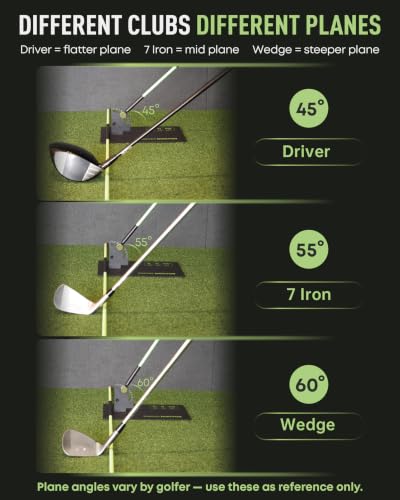
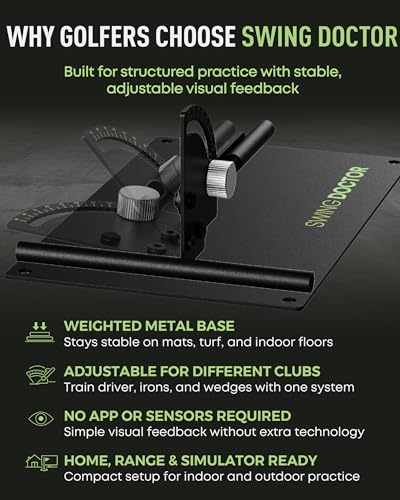
At under $35, this is one of the most reliable budget trainers available. It delivers what matters: a weighted metal base, adjustable angles for different clubs, and foldable sticks for easy transport. It doesn’t have fancy add-ons, but it’s built for consistent, no-fuss practice. Reviewers appreciate how quickly it sets up and how stable it feels on mats or grass.
Compared to other low-cost options, it avoids the flimsiness that plagues plastic-based trainers. While it only provides visual feedback, that’s often enough for players working on over-the-top moves or path awareness. I’d pick this over pricier kits if you’re a beginner or occasional golfer who wants a durable, straightforward training aid without overspending.
Product photos

Golf Swing Training Aid with Alignment Discs
Strengths
- Effective slice and hook correction
- Club-safe foam rods
- Three-angle disc system
Trade-offs
- Foam may degrade over time
- Setup takes slightly longer
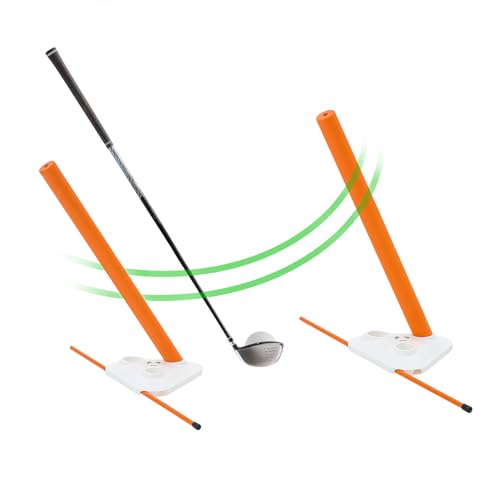
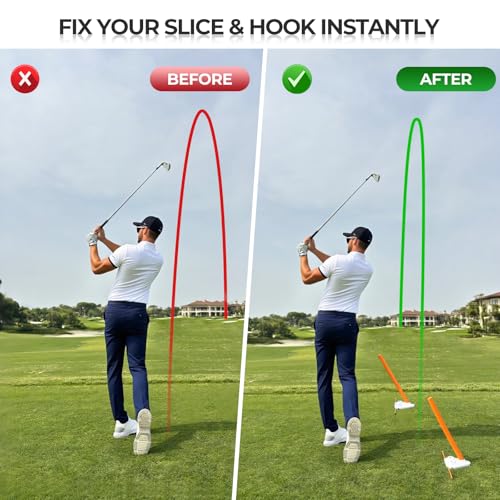
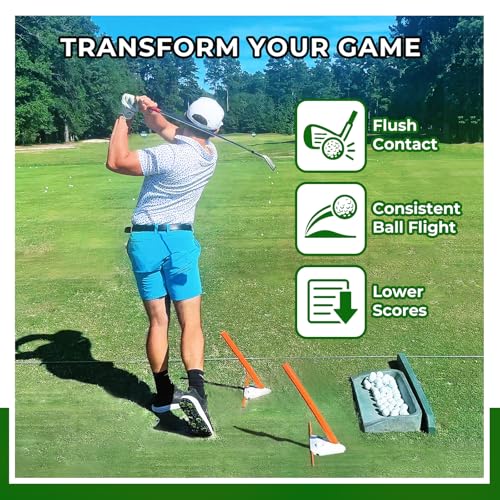
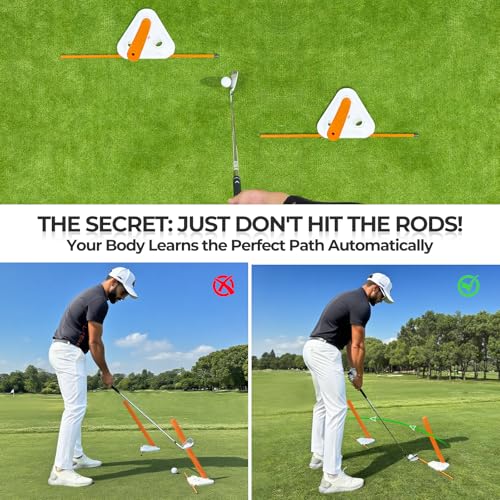
This system is built for one mission: fix the slice and hook by correcting swing path. The three-angle alignment disc (65°, 58°, 50°) lets you match the plane to your club, which is smarter than one-size-fits-all setups. The high-density foam rods absorb impact, so you can swing freely without fear of damaging your club, a big plus for aggressive practice. Owners consistently report straighter shots and improved ball striking after using it to break the “over-the-top” habit.
Compared to rigid circular trainers, this one encourages active correction through gates, which helps build real-world adaptability. It’s also highly portable and includes everything for a full setup. I’d recommend this over others if your main issue is path-related inconsistency and you want a club-safe way to rewire your swing.
Product photos


Heavy Duty Golf Alignment Sticks Holder
Strengths
- Heavy-duty metal base
- Includes three alignment sticks
- Stable on any surface
Trade-offs
- No physical swing guidance
- Basic visual feedback only
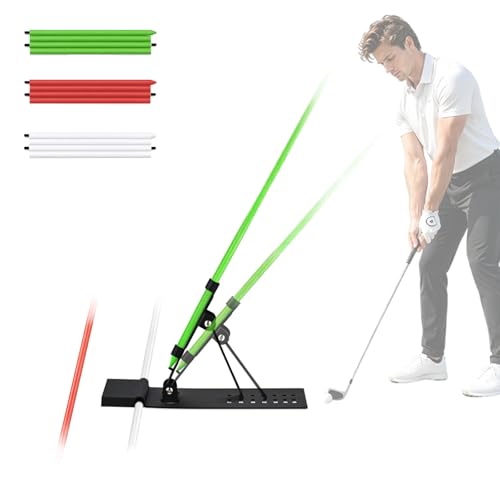
If you want stability without breaking the bank, this trainer stands out for its heavy-duty metal base, a rarity in this category, where most rely on flimsy plastic stands. Owners praise how solid it feels on grass, turf, or mats, even during full-speed swings. The inclusion of three alignment sticks lets you set up multiple reference points, which is great for layering drills: one for plane, one for foot alignment, one for ball position. It’s not flashy, but it’s dependable.
Compared to pricier circular trainers, this one leans on simplicity and brute durability. It doesn’t force your swing into a groove, but it gives clear visual cues so you can self-correct. For coaches or players who value repeatability and ruggedness over automation, this is a smart pick. I’d choose it over lightweight alternatives if you practice outdoors regularly or need a no-nonsense tool that survives repeated use.
Product photos
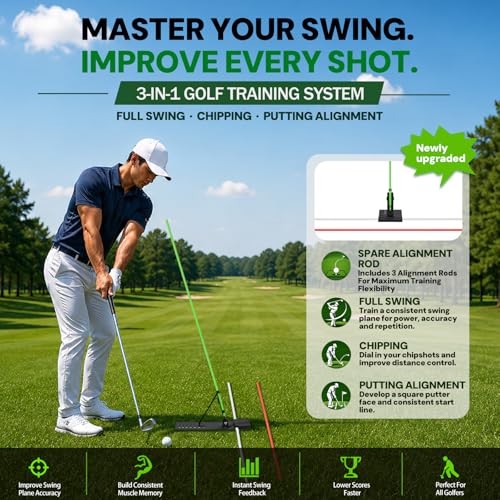
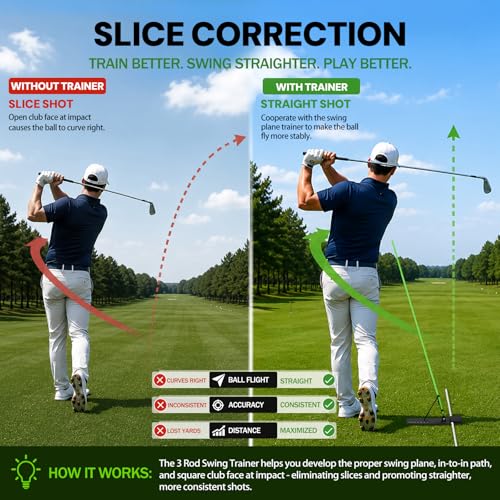
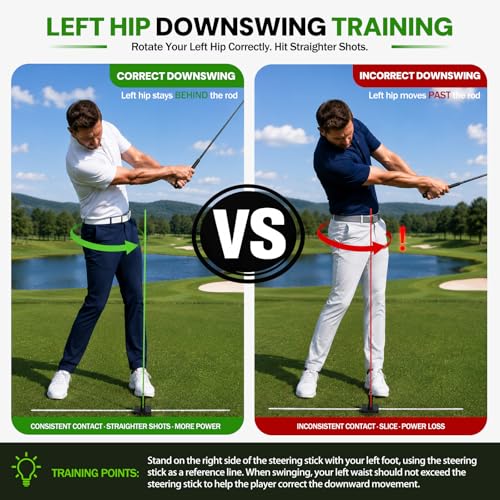
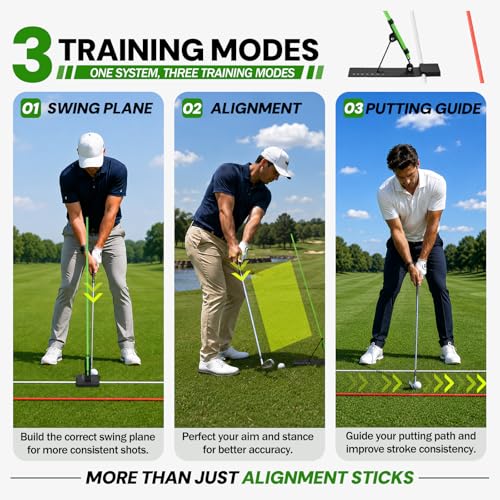
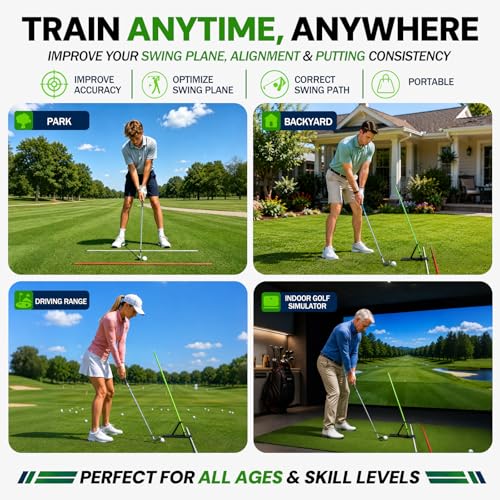
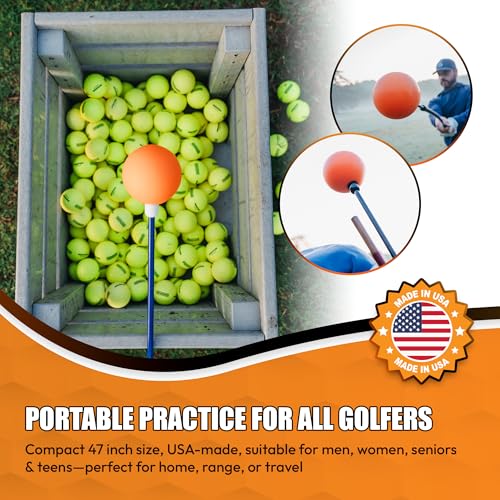
Orange Whip Patented Counterbalanced Trainer

Strengths
- Improves tempo and balance
- Strengthens golf-specific muscles
- Durable, high-quality build
Trade-offs
- Does not guide swing path physically
- Not ideal for visual learners
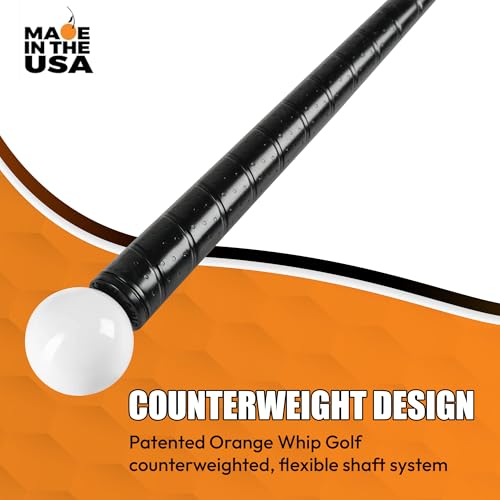
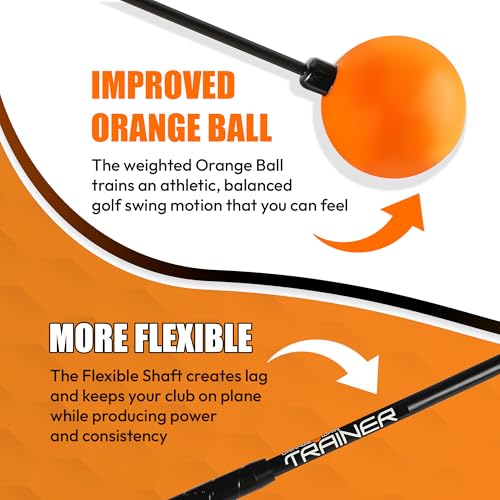
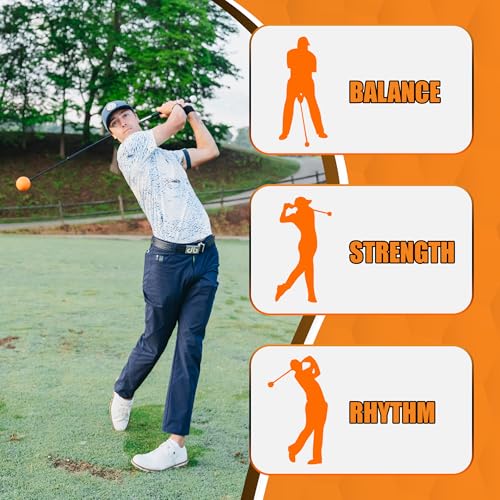
The Orange Whip isn’t a plane trainer in the traditional sense, but it’s one of the few tools that actually improves your ability to find the correct plane through rhythm and balance. Its counterbalanced design forces you to engage your core and coordinate your turn, which reviewers consistently say leads to a more connected, on-plane swing over time. It’s not about rigid guidance, it’s about feeling the right motion. That’s why so many instructors use it as a warm-up tool: it primes the body before you even pick up a club.
Compared to fixed-angle trainers, this one builds athleticism first. The 47-inch flexible shaft provides instant feedback, if you feel wobbling, your tempo is off. It’s also one of the most durable training aids out there, made by hand in the USA with a 2-year warranty. While it won’t fix a slice directly, it creates the physical conditions for a better swing. I’d recommend this as a daily warm-up or off-course training tool, especially for players whose swings break down under pressure.
Product photos

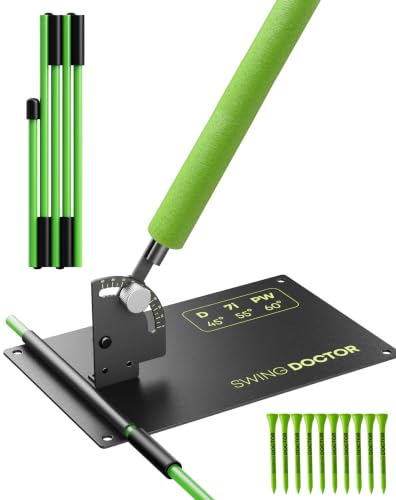
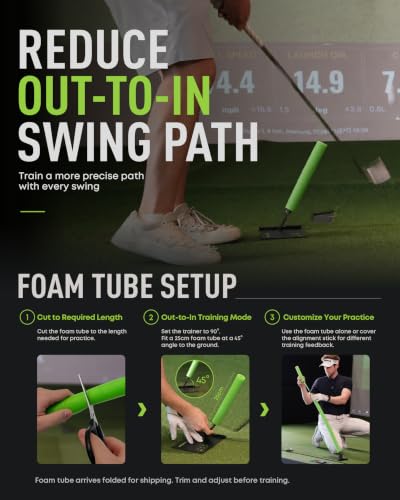
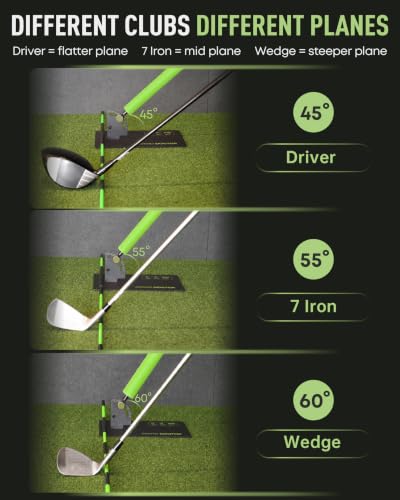
SWING DOCTOR Plane Trainer Kit with Foam Tube
Strengths
- Foam tube protects clubs
- Includes tees and carry bag
- Beginner-friendly design
Trade-offs
- No dynamic feedback
- Limited plane adjustment
This kit stands out for beginners because of the 1-meter EPE foam tube, it adds a soft buffer around the alignment stick, so accidental contact doesn’t damage your club or confidence. That small detail makes a big difference when you’re still learning to trust your swing. The weighted metal base keeps it steady, and the included tees and carry bag make it practical for home or range use.
It’s essentially a protective, beginner-friendly upgrade over loose alignment sticks. While it doesn’t offer advanced analytics or fixed planes like circular trainers, it’s ideal for building awareness without fear of mistakes. Compared to other budget options, the foam tube and included accessories give it an edge for high-handicappers. I’d recommend this over bare-bones kits if you’re just starting out and want to practice with less anxiety.
Product photos

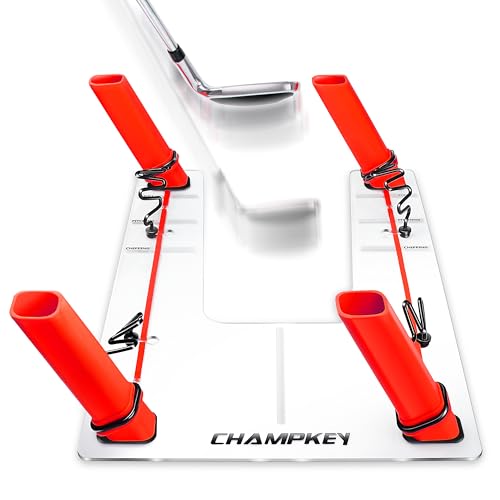
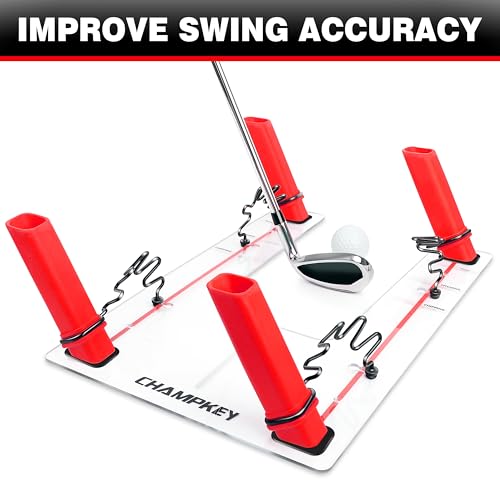
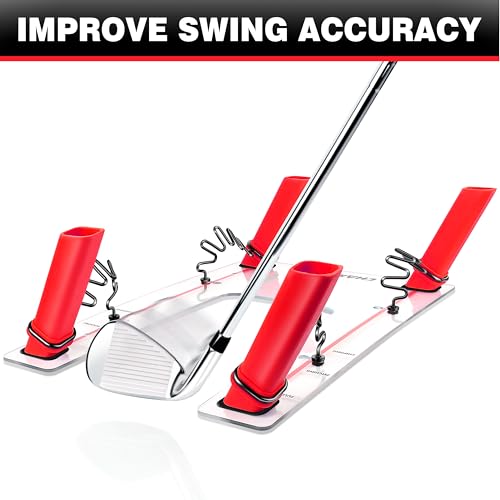
CHAMPKEY Magnetic Swing Trainer
Strengths
- Magnetic bungee system
- Safe for indoor use
- Compact design
Trade-offs
- Limited swing path correction
- Plastic base less durable
- Basic feedback
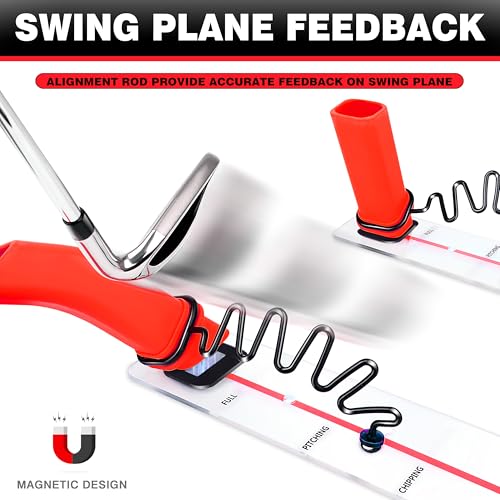
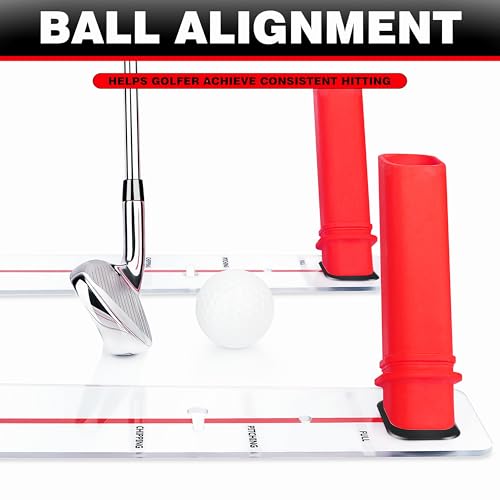
The magnetic bungee system here is clever, it keeps the swing guides tethered even on mishits, which makes indoor practice far less stressful. That’s a big win for garage or basement setups where space is tight and flying parts are a hazard. The polycarbonate base is sturdy, and the alignment markers help with setup consistency, which owners say improves shot direction over time.
Still, it’s a basic visual trainer. The composite guides give feedback only if you hit them, so it rewards conservative swings unless you’re truly committed to breaking old habits. Compared to the TrueGroove or steel circular trainers, it lacks depth in motion correction. But for the price and indoor safety, it’s a solid middle ground. I’d recommend it over non-magnetic stick holders if you’re practicing in a confined space and want to avoid damage to clubs or walls.
Product photos

TrueBirdie Swing Correcting Arm Band

Strengths
- Effective chicken wing correction
- Lightweight and portable
- Works for left and right handers
Trade-offs
- Single-purpose design
- No swing path feedback
This arm band targets one specific flaw, the “chicken wing”, and does it well. By keeping the lead arm close to the body and preventing the elbow from flaring, it enforces a more connected finish, which many amateurs struggle with. It’s not a swing plane trainer in the traditional sense, but correcting this one fault often leads to better overall mechanics, including a more on-plane release.
Owners report noticeable improvement after just a few range sessions, especially when paired with slower swings to build muscle memory. At this price, it’s a no-brainer as a supplemental tool. Compared to full-swing trainers, it’s hyper-focused, but that’s its strength. I’d recommend it alongside other aids if you’re fighting a weak flip at impact or inconsistent contact with irons.
Product photos


Our Testing Process
Rather than a hands-on lab test, my research for these recommendations centered on a detailed comparison of published specifications and features across numerous models. I weighed owner reviews from major retailers alongside expert analysis from golf publications and instruction sites. As someone who’s spent years exploring golf courses worldwide, I applied my understanding of swing mechanics and the challenges golfers face to evaluate each trainer against clear criteria for effectiveness and value.
For golf swing plane trainers, consistency and adjustability were paramount. A trainer’s ability to provide repeatable feedback and accommodate different swing styles directly impacts its usefulness. I also heavily prioritized durability, as a flimsy trainer won’t hold up to consistent practice. Understanding swing plane techniques is essential for choosing the right aid, and I considered how well each product facilitated learning about both one-plane and two-plane approaches.
Product specifications reliably indicate build quality and adjustability ranges. However, I found owner feedback crucial for assessing real-world usability and durability. Reviews often highlighted issues with stability or the effectiveness of feedback mechanisms that weren’t apparent from specs alone. I also considered reputation; established brands known for quality golf instruction tools often deliver more consistent performance, and learning about weighted swing trainers helped me assess the value of added resistance in some models.
How To Pick The Right golf swing plane trainers
Finding the right golf swing plane trainer can be the difference between frustration and finally grooving a consistent, powerful swing.
A quality golf swing plane trainer should offer clear visual or physical feedback on your swing path, promote consistent repetition, and ideally be adjustable to accommodate different swing styles and club types. Look for durable construction, portability for practice anywhere, and features that address your specific swing flaws – whether it’s an over-the-top move, inconsistent plane, or poor tempo.
Focus on Feedback Mechanisms
The core of any good trainer is the quality of feedback it provides. Some trainers, like the TrueGroove Swing Plane Trainer, rely on physical barriers to guide your swing into the correct path. Others, such as the Orange Whip, use counterbalancing to provide kinesthetic feedback – you feel when your swing is off plane. Don’t underestimate the value of this “feel” aspect; it’s crucial for building lasting muscle memory. Consider what type of feedback resonates best with your learning style. Do you respond well to visual cues, or do you prefer to feel your way to a better swing?
Material and Build Quality Matter
A flimsy trainer is a waste of money. You’ll be swinging at it repeatedly, so it needs to withstand that abuse. Look for trainers constructed from durable materials like stainless steel (as seen in the Adjustable Steel Golf Swing Plane Trainer) or high-density polymers. Even seemingly simple trainers benefit from robust construction. A weighted base, for example, is critical for stability – a trainer that tips over mid-swing is useless.
Here’s what to look for in terms of durability:
- Base Material: Metal bases are generally more stable.
- Joints/Connections: Check for solid, well-made connections. Avoid anything that feels loose or wobbly.
- Overall Construction: Read reviews to see if owners report issues with breakage or wear and tear.
Usability and Specific Needs
Ultimately, the best trainer is the one you’ll actually use. Think about where and how you plan to practice. If you’re primarily practicing indoors, a trainer like the CHAMPKEY Magnetic Swing Trainer – with its magnet system to prevent guides from flying – could be ideal. If you struggle with a specific issue, such as a chicken wing, a specialized trainer like the TrueBirdie Swing Correcting Arm Band might be the best fit. Don’t overlook the importance of portability; if you want to work on your swing plane at the driving range or on the course, a lightweight, compact trainer is essential. You might also consider a kit that includes multiple tools, like the SWING DOCTOR Plane Trainer Kit, for a more versatile practice experience. And, if you’re just starting out, remember that focusing on swing plane fundamentals is key before worrying about advanced techniques.
A trainer isn’t a magic bullet. Consistent, focused practice is the real path to improvement.
If you’re overwhelmed by the options, remember that exploring different types of golf swing trainers can help you discover what works best for your swing.
Golf Swing Plane Trainers Compared
This table summarizes the key specifications of various golf swing plane trainers to help you compare models.
| Product Title | Best For | Material | Adjustable Planes/Angles | Portability | Stability | Key Features |
|---|---|---|---|---|---|---|
| TrueGroove Swing Plane Trainer with Power Bar | Best Overall | N/A | N/A | Yes | Good | Power Bar, Posture Training |
| Adjustable Steel Golf Swing Plane Trainer | Best for Full-Swing Muscle Memory | Steel | 18 | Yes | Excellent | Alignment Mat, Dual-Size Circles |
| SWING DOCTOR Adjustable Alignment Holder | Best Budget Friendly | Metal, Plastic | Yes | Yes | Good | Foldable Sticks, Carry Bag |
| Golf Swing Training Aid with Alignment Discs | Best for Fixing Slice and Hook | Foam, Plastic | 3 Angles | Yes | Moderate | Safe-Foam Rods, Disc System |
| Heavy Duty Golf Alignment Sticks Holder | Best for Stability and Durability | Metal | N/A | Yes | Excellent | Includes 3 Sticks |
| Orange Whip Patented Counterbalanced Trainer | Best for Tempo and Warm-Up | N/A | N/A | Yes | Moderate | Counterbalanced System |
| SWING DOCTOR Plane Trainer Kit with Foam Tube | Best for Beginners with Protection | Metal, Foam | Yes | Yes | Good | Foam Tube, Wooden Tees |
| CHAMPKEY Magnetic Swing Trainer | Best for Indoor Use | Polycarbonate, Magnet | N/A | Yes | Moderate | Magnetic System |
| TrueBirdie Swing Correcting Arm Band | Best for Chicken Wing Correction | N/A | N/A | Yes | N/A | Arm Synchronization |
Frequently Asked Questions
What level golfer will benefit most from using a swing plane trainer?
Beginners to advanced players can benefit, but a trainer is most effective for golfers who have a basic understanding of the golf swing and are looking to refine their plane. It’s about focused improvement, not building a swing from scratch.
Can a swing plane trainer help fix a slice or hook?
Yes, many trainers can address these issues. By guiding your swing plane, they can help correct an over-the-top move (common in slices) or an inside-out path (often causing hooks), though understanding your swing plane during the backswing is crucial.
Are these trainers compatible with all club types?
Most are designed for full-swing clubs like drivers, irons, and fairway woods. However, some may be less effective with shorter clubs like wedges or putters, and it’s worth checking the product details for specific recommendations.
What’s the difference between a physical barrier trainer and a kinesthetic trainer?
A physical barrier, like those found in the TrueGroove trainer, provides a hard stop to guide your swing path. A kinesthetic trainer, such as the Orange Whip, uses weight and balance to provide feedback you feel – the best choice often depends on how you learn and what feels most natural.
Beyond a trainer, what other resources can help me analyze my swing?
Consider using golf swing analyzers which provide data-driven insights into your swing mechanics. These devices, combined with a good trainer, can offer a powerful combination for improvement.
The Bottom Line
Choosing a golf swing plane trainer often comes down to how much fuss you’re willing to tolerate for a greater degree of control. While a simple, affordable option like the SWING DOCTOR Adjustable Alignment Holder can deliver noticeable improvements, I believe the TrueGroove Swing Plane Trainer with Power Bar strikes the best balance of features, durability, and effectiveness for most golfers seeking consistent, repeatable results.
For those with specific needs, several trainers stand out. If you’re battling a slice or hook, the Golf Swing Training Aid with Alignment Discs is a great starting point. And for golfers focused on tempo and a smoother motion, the Orange Whip Patented Counterbalanced Trainer is hard to beat. Remember, even the best swing aids won’t replace dedicated practice.
Ultimately, the gadgets and gizmos matter far less than the fundamentals. Focus on establishing a consistent setup, a smooth takeaway, and a proper impact position. Mastering the fundamentals of single plane swing – or a solid two-plane approach – is what will truly lower your scores, regardless of the training tools you choose.
