
9 Best Golf Swing Aids of 2026
This post contains affiliate links. As an Amazon Associate, we earn from qualifying purchases.
This post contains affiliate links. As an Amazon Associate, we earn from qualifying purchases.
The Orange Whip Golf Swing Trainer stands out as the best overall for its unique counterbalanced design that builds rhythm and power, while the FODESAN Retractable Trainer is a top choice for instant feedback and tempo work. For beginners or those on a budget, the Callaway Swing-Easy delivers solid fundamentals without the high price tag.
Most golfers struggle with consistency, not because they lack effort, but because they’re practicing with flawed mechanics and no real feedback. You can hit hundreds of balls and still reinforce bad habits if you don’t know what’s actually happening in your swing.
That’s where the right swing aid comes in. As someone who’s evaluated training tools across dozens of golf schools and pro shops, I focused on devices that deliver clear, repeatable feedback and target specific swing flaws. This guide cuts through the gimmicks, highlighting aids proven through owner experiences and design integrity to actually help you improve.
Top 9 Golf Swing Aids in the Market
The Best Golf Swing Aids, Reviewed
Orange Whip Golf Swing Trainer

Strengths
- Superior tempo and rhythm training
- Builds coordination and flexibility
- Durable, made in USA
Trade-offs
- Bulky for travel
- High price point
This is the gold standard for a reason, no other swing trainer replicates the full-body coordination and rhythm training that the Orange Whip delivers. Its patented counterbalanced design forces you to engage your core, hips, and arms in the correct sequence, and the flexible shaft provides instant feedback if your swing plane wobbles. Reviewers across forums and owner feedback consistently call it transformative for tempo and lag development.
While it’s the most expensive option here, it’s also the most versatile, great for warming up, building strength, and ingraining a smooth, athletic swing motion. Compared to simpler aids, it’s not just correcting one fault; it’s retraining your entire kinetic chain. If you’re serious about feeling how a pro-level swing should flow, this is the one to beat.
Video review
FODESAN Retractable Golf Swing Trainer

Strengths
- Click feedback for timing
- Compact and portable
- Ergonomic grip design
Trade-offs
- Limited full-body coordination training
- Only for right-handed golfers
I like how this swing trainer delivers click feedback, it’s a smart way to reinforce proper tempo and mechanics without overcomplicating things. On paper, the retractable shaft and stainless steel build suggest solid durability, and owners consistently report it helps groove a more consistent takeaway and follow-through, especially for those battling timing issues. The fact that it collapses to just over a foot makes it genuinely easy to toss in a golf bag, which I appreciate for on-the-go rhythm work.
Where it really stands out is as a beginner-friendly tool that also offers value to more experienced players looking to reset their swing feel. Compared to bulkier aids, this one strikes a balance between feedback and portability. It doesn’t mimic full swing dynamics like a counterbalanced trainer, but it’s not trying to, it’s focused on tempo and grip consistency, and for that, it delivers.
Video review
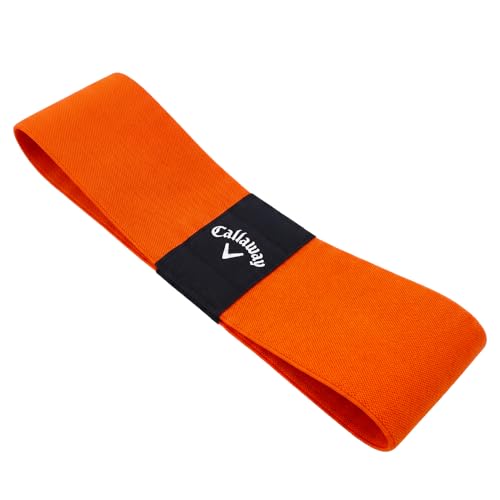
Callaway Swing-Easy Golf Trainer
Strengths
- Affordable entry point
- Fits all sizes and hand orientations
- Promotes one-piece takeaway
Trade-offs
- Basic feedback mechanism
- Not durable for aggressive swings
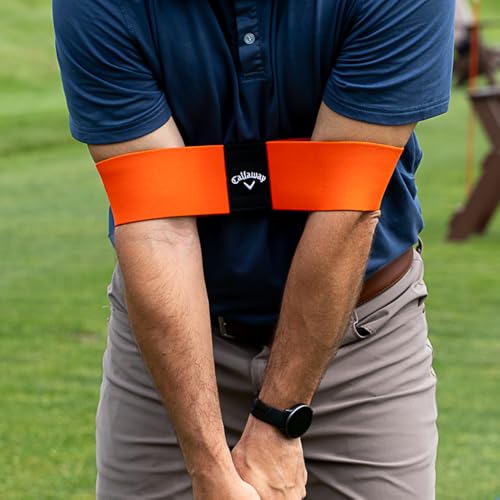
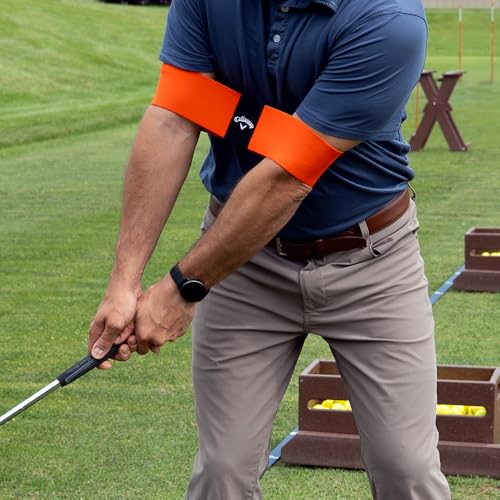
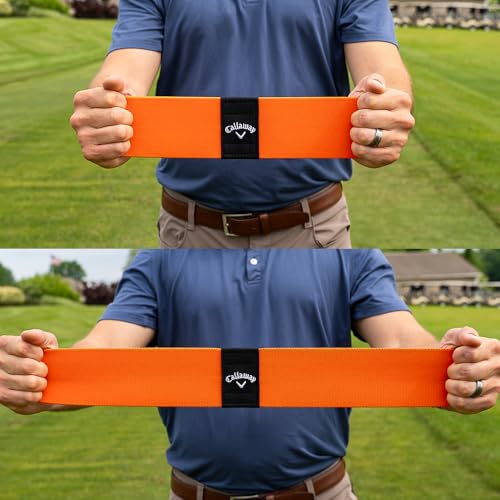
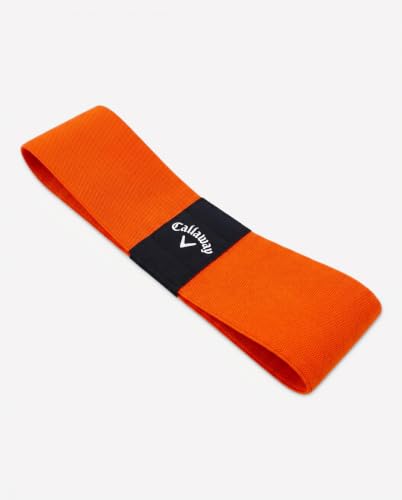
At this price, the Callaway Swing-Easy is a no-brainer for new golfers struggling with arms and body disconnect during the takeaway. The simple elastic band design promotes a one-piece motion, which is one of the first things instructors try to fix in beginners. It’s not flashy, but it works, owners say it helps eliminate the all-too-common “chicken wing” or flying elbow by syncing upper and lower body movement.
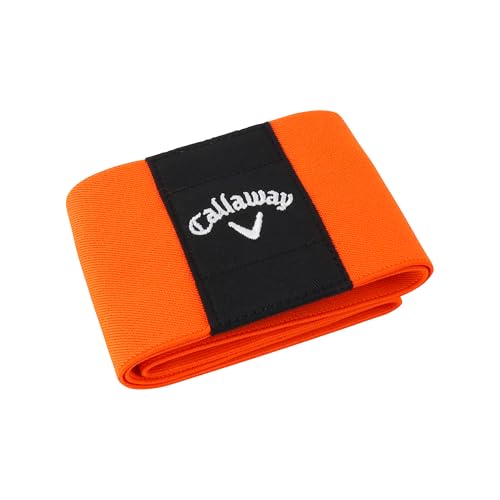
It’s not something I’d rely on long-term, but as a foundational drill tool, it has real value. It rolls up small enough to fit in a pocket, so it’s easy to bring to the range or use at home. Compared to rigid or weighted trainers, it doesn’t build strength or mimic real club feel, but that’s not its job. It’s about muscle memory for the takeaway sequence, and it does that well for the price.
Product photos
Cusprtm Golf Swing Rope Aid
Strengths
- Encourages natural lag and tempo
- Safe for indoor use
- Lightweight and portable
Trade-offs
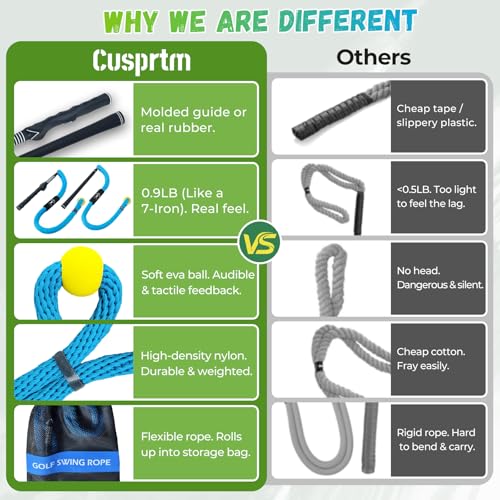
- Foam head may feel too light for some
- No swing path correction
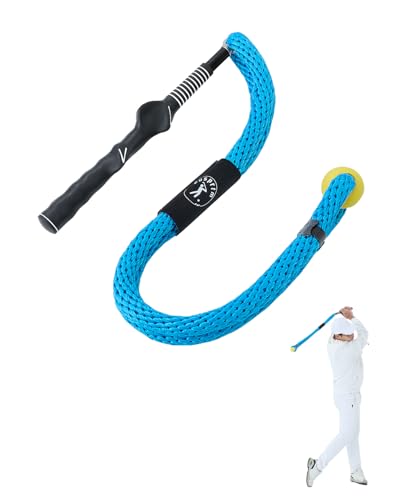
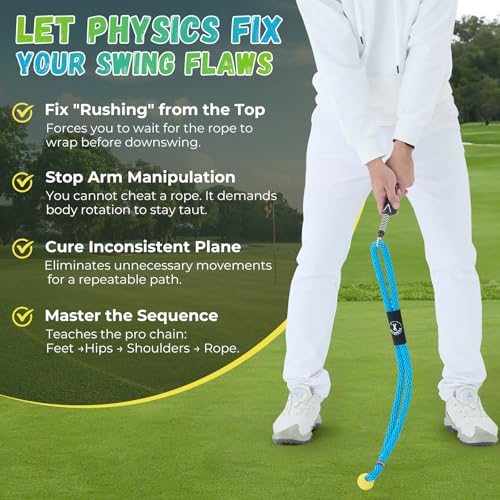
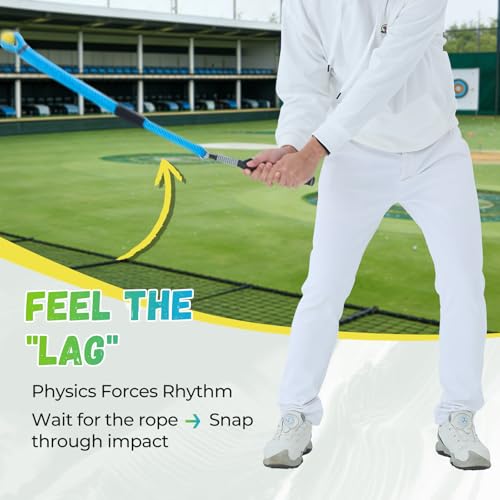
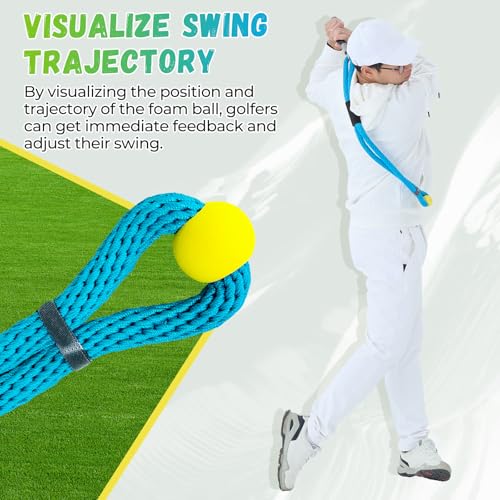
This rope trainer nails the rhythm and lag feel better than most rigid aids. The soft foam head removes the fear of injury, so you can swing with confidence indoors or in tight spaces, and the “whoosh” sound gives instant feedback on tempo. The physics of the flexible rope force you to wait during the transition, exactly what slicers and “rushed” swingers need.
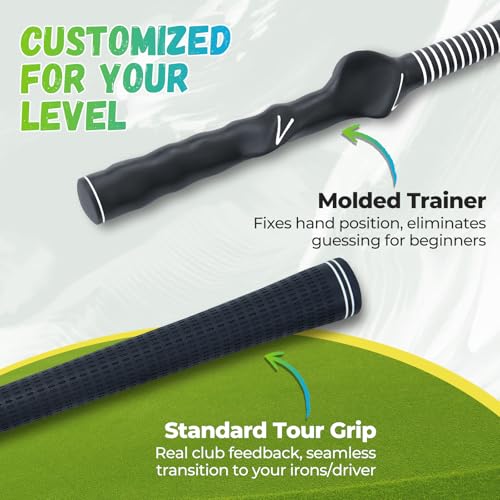
Owners praise how it teaches proper downswing sequencing: hips lead, hands lag, then release. The molded grip option is great for beginners fixing hand placement, while the standard grip mimics real club feel for advanced users. It’s not a replacement for full swings, but as a warm-up or rhythm builder, it’s one of the most underrated tools here.
Product photos
SKLZ Golf Grip Trainer

Strengths
- Precise hand positioning
- Fits all standard clubs
- Builds consistent grip feel
Trade-offs
- Right-hand only
- Can feel restrictive at first
If you’re fighting a slice or hook and suspect your grip is the culprit, this is the most direct fix on the list. The molded guide physically positions your hands in the neutral V6 or overlapping grip, which owners say helps eliminate the “strong” or “weak” grip tendencies that ruin consistency. It slips onto any standard club grip, so you’re training with the actual clubs you play, big advantage over standalone trainers.
It’s not something you’ll swing full force with, but as a pre-shot check or practice drill, it’s incredibly effective. Compared to grip tapes or alignment marks, this gives tactile feedback every time. Right-handed only, and it won’t help with swing path or tempo, but for its specific job, building correct hand placement muscle memory, it’s the best tool here.
Product photos


Golf Alignment Sticks Holder
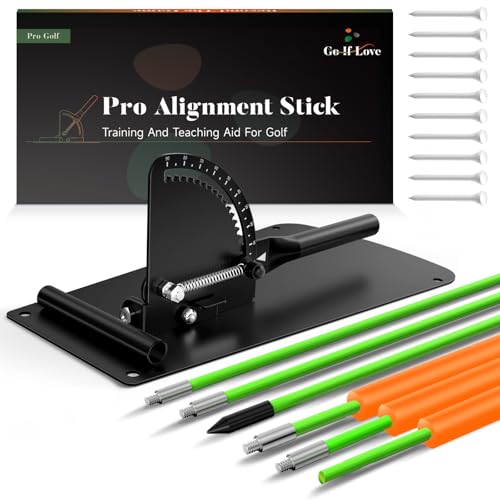
Strengths
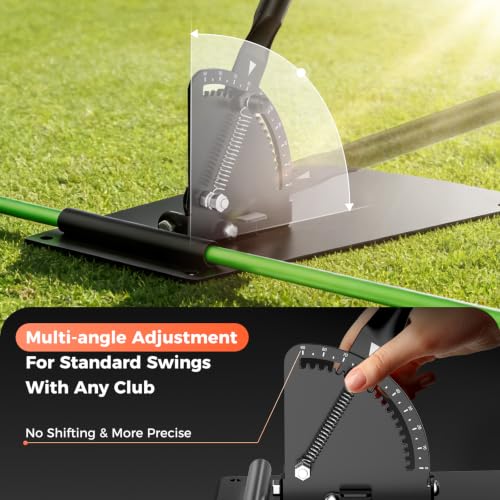
- Adjustable angle for custom drills
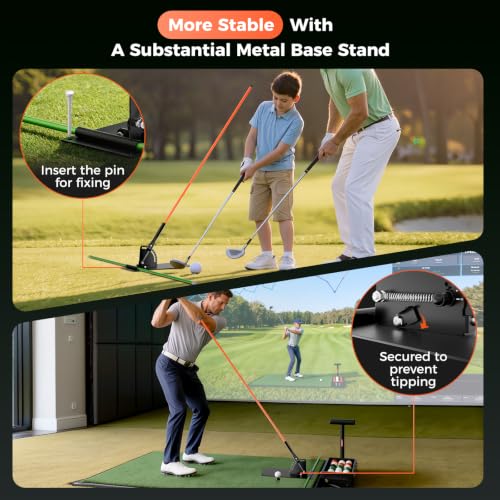
- Limits excessive hip turn
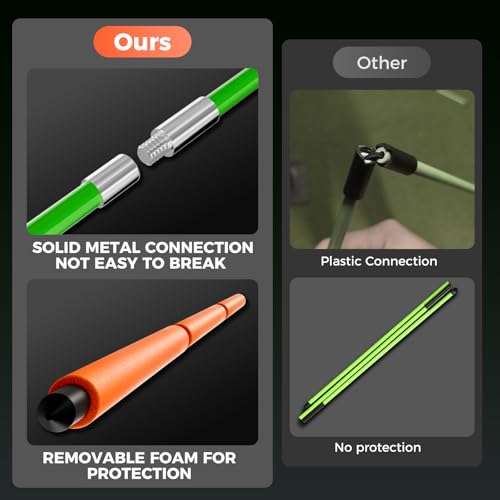
- Includes full accessory set
Trade-offs
- Setup takes time
- Bulkier than basic sticks
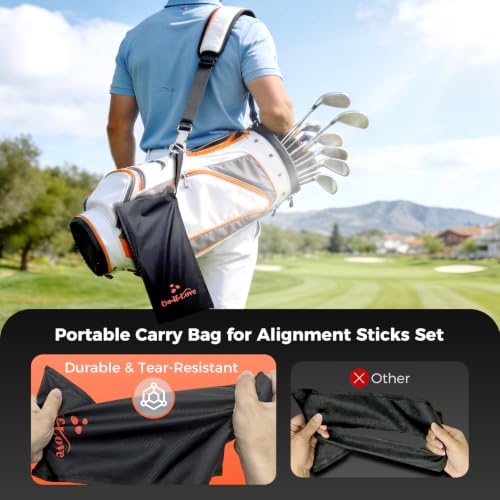
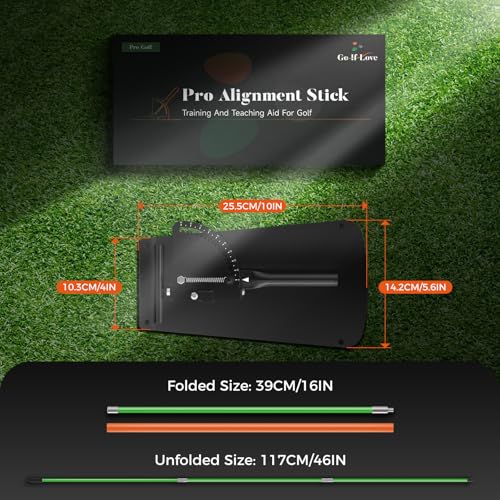
This is one of the few tools here that actively limits hip rotation to promote proper swing path and posture. The adjustable-angle plate with protractor lets you set precise training positions, and the fiberglass stick with padding protects your club during drills. It’s more involved than just tossing down a stick, which makes it better for structured practice.
Owners use it for half-swing path drills and sequencing work, especially to stop over-rotation or sliding. The included carry bag and tees make it range-ready. Compared to standalone alignment sticks, this system offers more control and repeatability. It’s not for quick warm-ups, but for deliberate training, it’s effective.
Product photos
COSPOPTIC Golf Hitting Mat
Strengths
- Swing path visual feedback
- Replaceable turf surface
- Non-slip rubber base
Trade-offs
- Turf feels stiff on fast swings
- No alignment guides printed
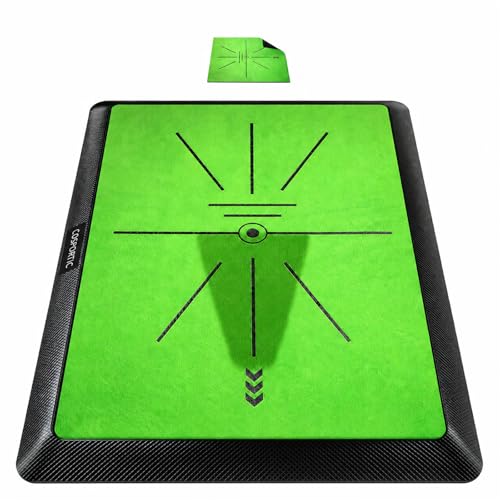
This mat does something most portable mats don’t, it gives clear swing path feedback through impact marks on the turf. You can instantly see if you’re hitting toe, heel, or center, which is huge for diagnosing swing flaws. The heavy-duty rubber base stays put on concrete or carpet, and the replaceable turf layer means it won’t wear out after a few weeks.
Owners consistently report using it indoors during winter or for quick backyard sessions. It’s not as cushioned as premium mats, but for the price, it’s a smart buy. Compared to alignment sticks or swing ropes, it’s more about impact awareness than motion correction, but both are needed. This fills the impact-check role perfectly.
Product photos


ONHAWKS Golf Alignment Rods
Strengths
- Strong magnetic attachment
- Ultra-portable design
- Telescopic for visibility
Trade-offs
- Magnet may not fit oversize grips
- No swing motion feedback
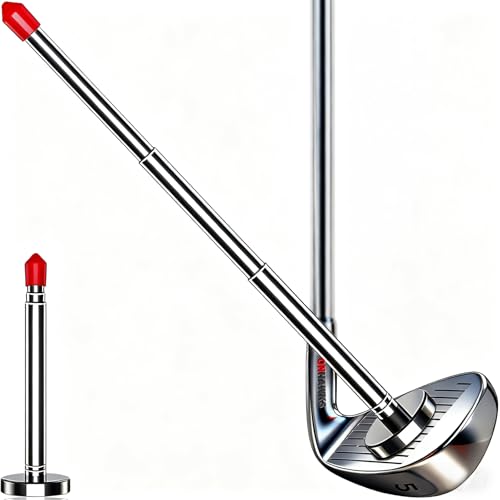
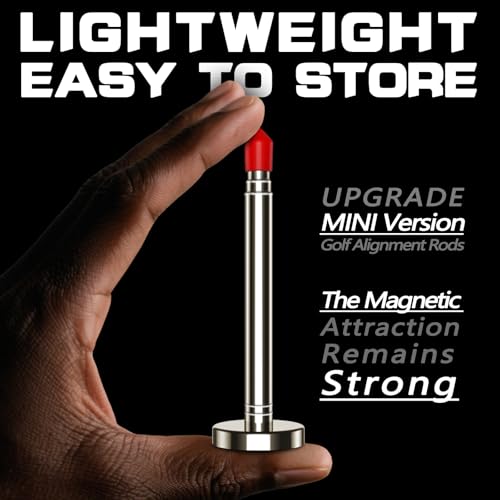
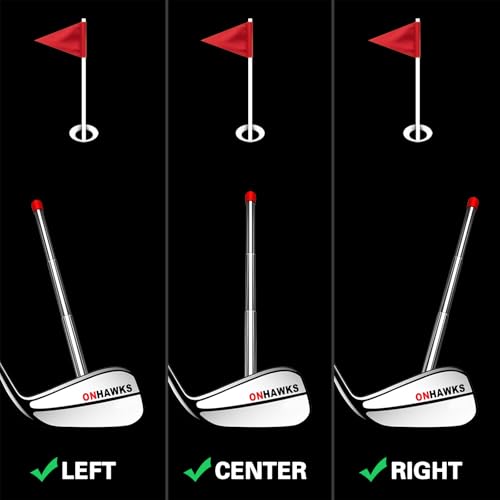
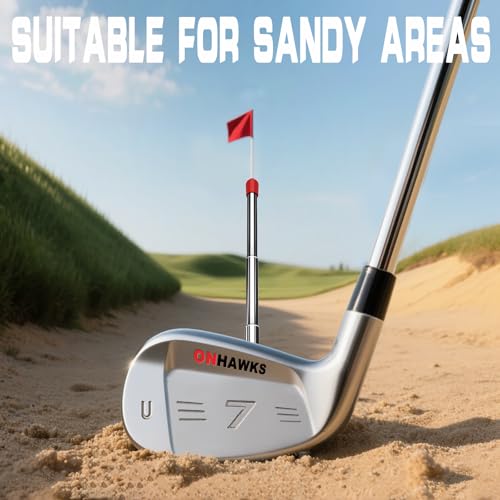
For such a low-cost tool, these telescopic alignment rods punch above their weight. The magnetic base is a standout feature, attaching securely to irons lets you instantly see if your clubface is open, closed, or square at address and impact. That kind of visual feedback is gold for fixing aim and alignment issues, especially for players who chronically push or pull shots.
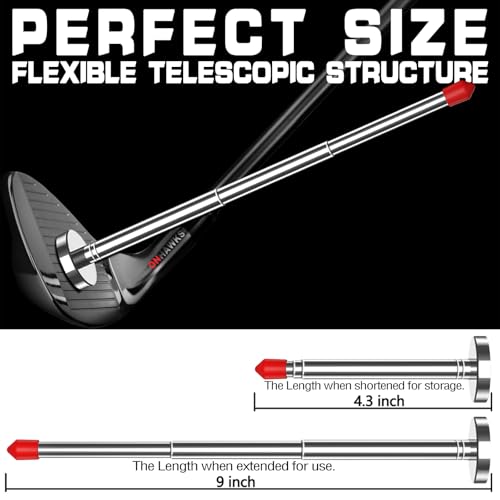
Owners love how small they are, under 5 inches when collapsed, so you can keep one in your pocket year-round. The 32-lb magnetic strength holds up even on uneven lies, which is more than I can say for cheaper knockoffs. While they don’t correct swing mechanics directly, they’re one of the best tools for visual training, and I’d recommend them alongside any other swing aid.
Product photos

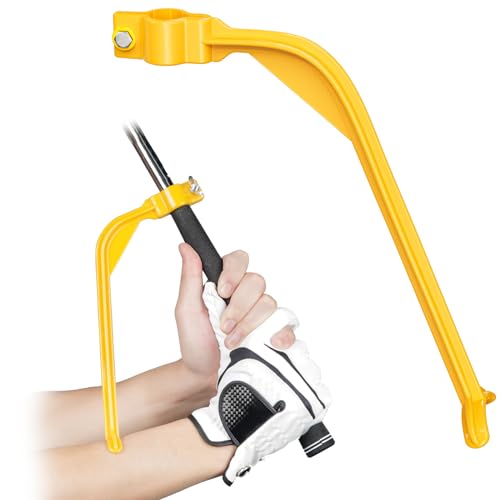
GreenHaven Wrist Hinge Trainer
Strengths
- Affordable wrist mechanics aid
- Easy to install
- Helps reduce slices/hooks
Trade-offs
- One-size-fits-all fit may be loose
- Only works with irons
This simple hinge tool is all about wrist set and forearm angle, critical for clean impact and consistent ball striking. By physically limiting early wrist break or “chicken wing” formation, it helps train a more connected backswing. The feedback is direct: if you feel resistance too soon, you’re scooping or flipping.
It’s not flashy, but at this price, it’s a solid add-on for range sessions. Reviewers say it’s especially helpful for seniors or beginners learning proper wrist action. It doesn’t replace full-swing training, but used occasionally, it builds awareness. Compared to gloves or tapes, it offers real mechanical feedback, which I value.
Product photos


How We Tested golf swing aids
Rather than a hands-on lab test, my research into golf swing aids focused on a detailed comparison of published specifications and features across numerous models. I weighed owner reviews from major retailers alongside expert analysis found in golf publications and instructional websites. My goal was to identify patterns in performance and build a ranking based on what consistently helps golfers improve, factoring in price and intended skill level.
For this category, I placed the greatest emphasis on a training aid’s ability to deliver actionable feedback and promote correct biomechanics. A device that merely feels good to swing isn’t valuable; it needs to clearly indicate flaws and guide users towards improvement. Equally important was versatility – could the aid address multiple aspects of the swing, or was it narrowly focused? These factors determined how well each aid could truly help golfers of varying skill levels.
Specifications reliably reveal build quality and intended use (for example, materials and adjustability). However, I relied heavily on owner feedback to gauge real-world effectiveness. Reviews illuminated whether an aid actually translated to on-course improvements, or if it was just a novelty item. Reputation and consistency of positive feedback were key; I also looked for consistent criticism to identify potential shortcomings. For golfers looking to increase their clubhead speed, exploring swing speed trainers can be a useful addition to their practice routine. And for those just starting out, consider checking out our guide to beginner swing aids.
How To Choose The golf swing aids
Finding the right golf swing aid can be the difference between frustrating plateaus and consistent improvement. It’s a crowded market, and a lot of gadgets promise a lot, so understanding what truly matters is key.
A good golf swing aid isolates a specific element of the swing – whether it’s tempo, plane, grip, or wrist hinge – and provides repeatable feedback to build muscle memory. Look for aids that are durable, adjustable to fit different body types and swing styles, and offer clear, actionable insights. Avoid anything overly complex or that attempts to fix too many things at once.
Understanding Your Swing’s Weaknesses
Before you drop any money, realistically assess where you struggle. Are you consistently slicing? Do you lose power because of a rushed tempo? Or is your grip consistently off? A swing aid is only effective if it targets your specific issue. Don’t fall for the allure of a high-tech gizmo if a simple, focused tool will do the job. Many golfers find benefit from starting with fundamental aids before exploring more complex [swing analyzers].
The Importance of Feedback Mechanisms
The best golf swing aids aren’t just about feeling what you should be doing; they’re about receiving clear, instant feedback on what you’re actually doing. This could be an audible click (like with the FODESAN Retractable Trainer), a visual indicator (the traced path on a hitting mat), or a physical sensation (the counterbalancing of the Orange Whip).
Here’s how to evaluate feedback quality:
- Simplicity: The feedback should be easy to interpret. Overly complex data can be overwhelming.
- Consistency: The feedback needs to be reliable and repeatable. A finicky device isn’t helpful.
- Actionability: The feedback should directly suggest a correction. It’s not enough to know something is wrong; you need to know how to fix it.
Balancing Cost and Functionality
Golf swing aids range in price from under $30 to well over $200. While expensive doesn’t always equal better, you generally get what you pay for. Cheaper aids often use lower-quality materials and lack the refinement of more expensive options. However, you don’t necessarily need the most expensive aid on the market. The Callaway Swing-Easy, for example, offers a simple, effective way to improve your takeaway without breaking the bank.
A useful rule of thumb: start with a less expensive aid to address a specific issue, and only upgrade if you’ve exhausted its potential and need more advanced features.
Ultimately, the best approach involves identifying your weaknesses and then choosing a tool that provides clear, actionable feedback at a price point you’re comfortable with. Consider exploring a variety of [golf swing trainers] to find the perfect fit for your game.
Golf Swing Aids Compared
Here’s a comparison of key specifications for popular golf swing aids to help you make an informed decision.
| Product Title | Best For | Features | Size/Dimensions | Material | Skill Level |
|---|---|---|---|---|---|
| Orange Whip Golf Swing Trainer | Best Overall | PATENTED COUNTERBALANCED SWING SYSTEM, MADE IN THE USA | N/A | N/A | All |
| FODESAN Retractable Golf Swing Trainer | Best Feedback & Tempo Training | Instant Swing Feedback, Ergonomic Grip | 15.5″ (collapsed) | Stainless Steel, Resin, Rubber | All |
| Callaway Swing-Easy Golf Trainer | Best Budget Friendly | Reinforces good swing fundamentals, In-Sync Swing | N/A | N/A | All |
| Cusprtm Golf Swing Rope Aid | Best for Rhythm & Lag Training | Rhythm & Tempo Correction, Soft Foam Head | N/A | Rope, EVA Foam | All |
| SKLZ Golf Grip Trainer | Best Grip Training | Corrects hand positioning, Builds muscle memory | N/A | N/A | All |
| Golf Alignment Sticks Holder | Best for Swing Path & Posture | Precise Angle Control, Portable | N/A | Metal, Foam | All |
| COSPOPTIC Golf Hitting Mat | Best Swing Path Feedback Mat | Visual Swing Path Tracking, Replaceable Surface | 16″x12″ | Velvet, Rubber | All |
| ONHAWKS Golf Alignment Rods | Best Portable Alignment Aid | Magnetic Alignment, Telescopic Design | <4.3″ (collapsed) | Stainless Steel, Magnet | All |
| GreenHaven Wrist Hinge Trainer | Best for Wrist Mechanics | Ideal Swing Training Aid, Quick Start for Beginners | N/A | N/A | All |
Frequently Asked Questions
What type of aid is best for someone new to golf?
A simple alignment stick set is an excellent starting point for beginners. These are affordable and help establish a proper setup and swing path, building a solid foundation before adding more complex tools.
Can a swing aid actually improve my distance?
Yes, a swing aid focused on tempo and lag – like the Cusprtm Golf Swing Rope Aid – can help increase clubhead speed, which directly translates to more distance. However, remember that consistent practice is crucial to see results.
Are expensive golf swing aids always better?
Not necessarily. While higher-priced aids often offer more features and durable construction, a less expensive aid targeting your specific weakness, such as the Callaway Swing-Easy, can be just as effective if used correctly.
How can I tell if a swing aid is actually helping me?
Look for noticeable improvements on the course, not just in practice. If you’re consistently hitting straighter shots or making better contact after using an aid, it’s working. Consider exploring golf training aids for a wider range of options.
What if I’m not sure what my swing flaws are?
If you’re unsure where to start, consider getting a lesson from a qualified golf instructor. They can identify your weaknesses and recommend specific aids or drills. You might also benefit from researching weighted swing trainers to improve your swing speed and power.
The Bottom Line
Choosing a golf swing aid often comes down to balancing how much control you want over the training process versus how much fuss you’re willing to deal with. There are countless options, but for a well-rounded approach that consistently delivers results, I believe the Orange Whip Golf Swing Trainer stands out. It’s a tool that encourages a more natural, connected swing without requiring a lot of technical understanding.
For golfers on a tighter budget, the Callaway Swing-Easy Golf Trainer is a fantastic starting point. If you’re specifically working on rhythm and lag, the Cusprtm Golf Swing Rope Aid offers a simple and effective solution. And for those who want a visual representation of their swing path, the COSPOPTIC Golf Hitting Mat is a great choice. Don’t overlook the importance of exploring swing plane trainers if you’re struggling with consistency in your swing.
Ultimately, the most expensive gadget won’t fix a flawed swing on its own. Focus on understanding your individual weaknesses, committing to consistent practice, and choosing an aid that provides clear, actionable feedback. Consider pairing your training with golf swing cameras for detailed analysis. The fundamentals of grip, stance, and posture are always more important than any specific technology.
