
7 Best Electric Golf Caddies of 2026
This post contains affiliate links. As an Amazon Associate, we earn from qualifying purchases.
The NAVEE Birdie 3X stands out as the best overall electric golf caddy for its reliable follow technology and long battery life, while the KVV Electric Golf Push Cart is a smart budget-friendly pick that doesn’t sacrifice portability. For golfers who want power and precision on rugged terrain, the KEMIMOTO ApexAI earns serious consideration.
Golfers don’t just want a caddy that moves, they need one that keeps up, holds strong on hills, and doesn’t become a hassle in the trunk. Too many models promise convenience but fall short when the course gets tough or the battery dies early.
This guide cuts through the noise by focusing on what actually matters: real-world performance, durability, and ease of use. We evaluated each caddy based on specs, owner feedback, and the kind of demands that come with playing round after round across different courses.
Top 7 Electric Golf Caddies in the Market
The Best Electric Golf Caddies, Reviewed
NAVEE Birdie 3X Electric Golf Cart

Strengths
- UL-certified battery and system
- True 3-second fold
- Reliable UWB follow
Trade-offs
- Slightly shorter range
- No 45-hole battery
- App can be slow
After reviewing dozens of electric caddies, I keep coming back to the NAVEE Birdie 3X as the best overall balance of tech, safety, and reliability. It uses the same UWB follow technology as the KEMIMOTO, and owners say it tracks just as accurately, but NAVEE adds dual UL safety certifications, UL 2271 for the battery and UL 2272 for the electrical system, which most competitors lack. That’s a big deal for long-term peace of mind.
The 36-hole battery delivers consistent performance, the downhill control is smooth, and the 3-second fold is genuinely quick. The LED display is clear, and the IPX5 rating means it handles dew and light rain without issue. Compared to the MGI Zip Navigator, it’s lighter and easier to store; against the Icango G5, it’s more polished in design and app integration. My recommendation? If you want one caddy that does everything well without overpaying for premium branding, this is the smarter buy.
Video review
MGI Zip Navigator All-Terrain Caddie

Strengths
- Whisper-quiet twin motors
- Compact zip-fold design
- Premium build quality
Trade-offs
- No auto-follow mode
- No USB-C charging
- Overpriced vs competitors
The MGI Zip Navigator is the premium choice for golfers who want brand prestige and pro-level features. It’s one of the quietest caddies on the market, with twin motors and whisper-quiet operation that owners consistently praise. The full zip-folding system is slick, 25% smaller than older models, and the 35-pound weight is reasonable for its class. The 36-hole battery is reliable, and the click-and-go system makes battery swaps fast.
But let’s be honest: at this price, you’re paying for the MGI name and polish as much as the performance. The tech isn’t as advanced as the NAVEE or KEMIMOTO, no UWB, no auto-follow, no USB-C, and the bundle includes nice extras like a golf towel, but those don’t justify the $400+ premium over the Birdie 3X. I’d pick this if you value brand reputation, quiet operation, and tournament-level durability. For everyone else, the NAVEE offers better value.
Video review
KEMIMOTO ApexAI Electric Golf Caddy
Strengths
- Precise UWB follow tech
- Strong dual motors
- USB-C charging
Trade-offs
- Pricier than rivals
- Remote stop at 5.9 ft
- Display can glare
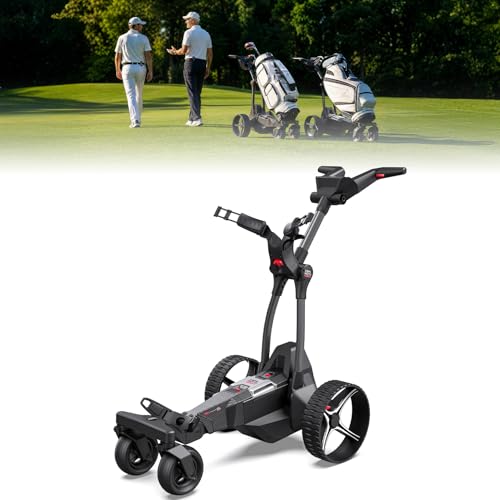
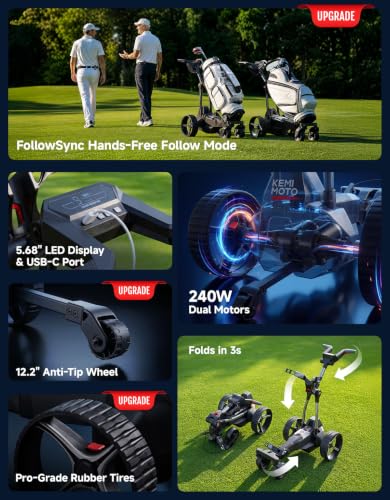
The KEMIMOTO ApexAI hits a sweet spot between cutting-edge follow tech and rugged performance. Its UWB smart follow system is faster and more responsive than older RF or ultrasound models, with owners saying it tracks their movement smoothly even on side hills and tight fairways. The 492-foot remote range is overkill for most courses, but it’s reassuring when you’re hitting from the back tees.
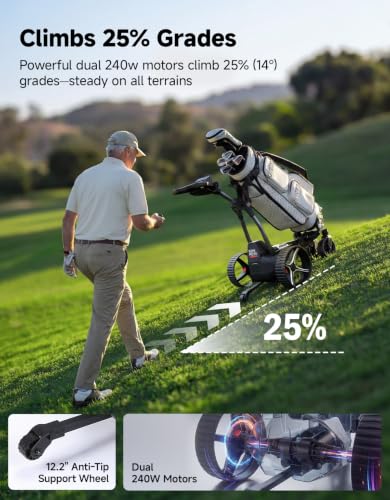
Dual 240W motors give it serious grunt on 25% slopes, and the upgraded anti-tip wheel adds confidence on uneven lies. The 36-hole battery is competitive, and the USB-C charging is a welcome upgrade over older USB-A ports. Compared to the Icango G5, this feels more refined, better tires, better display, better handling. My only hesitation is the price: for slightly less, the NAVEE Birdie 3X offers similar features with stronger safety certifications. Still, if you want the most responsive follow system with excellent all-terrain stability, this is a top-tier pick.
Product photos



Icango Caddy G5 Electric Golf Cart
Strengths
- Exceptional 45-hole battery
- True auto-follow mode
- Fast 4-hour charge
Trade-offs
- Bulky folded size
- App interface lags
- Less refined steering
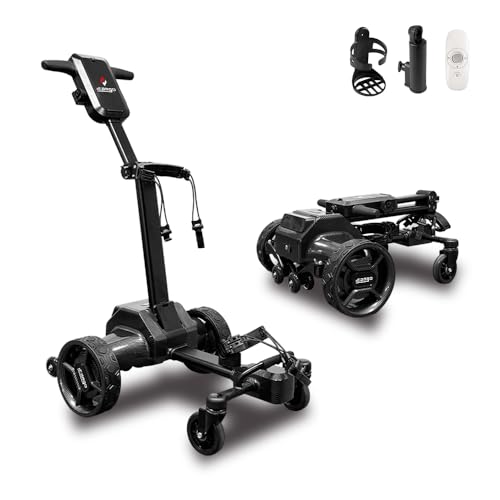
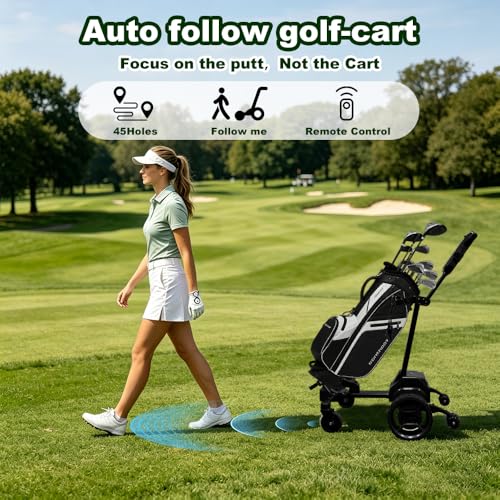
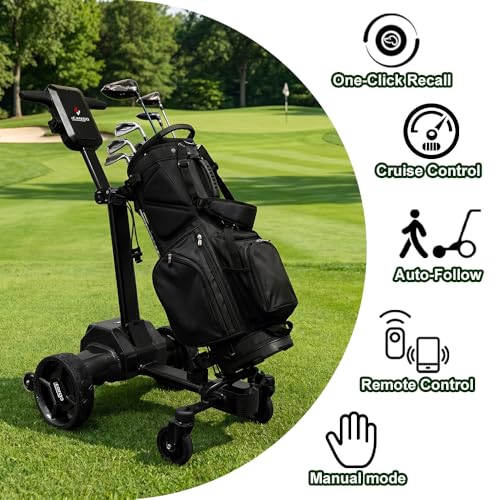
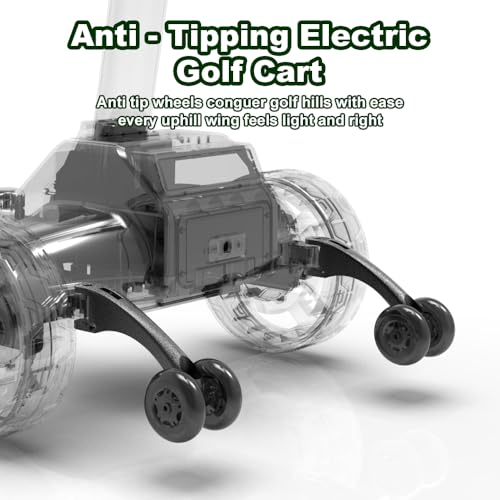
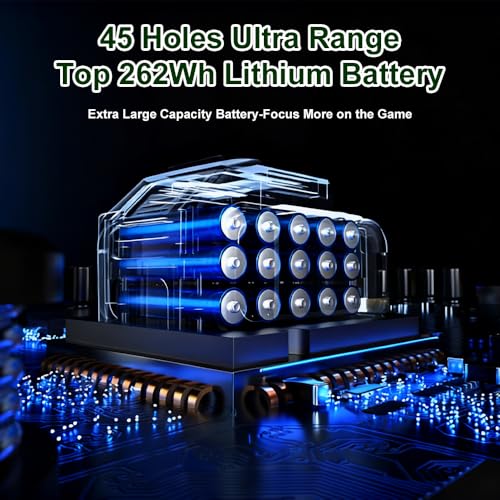
If you play long seasons or back-to-back rounds, the Icango G5’s 45-hole battery life is a standout on paper, and owners confirm it delivers. The 25.2V lithium-ion pack charges in just four hours and holds up well over time, making this one of the best picks for serious golfers who walk a lot of 36-hole days or tournament play. The auto-follow system works reliably in open conditions, using precision sensors to keep pace, though some users report it lags slightly in tight tree cover or on sharp doglegs.
Where it stumbles a bit is in refinement: the app interface feels clunky compared to KEMIMOTO or NAVEE, and the build quality, while durable, isn’t as polished as the MGI or Motocaddy. Still, for the battery endurance and true hands-free operation, it’s hard to ignore. I’d pick the NAVEE Birdie 3X over this for daily usability, but if you need maximum runtime and don’t mind trading a bit of finesse, the G5 is a strong contender.
Product photos
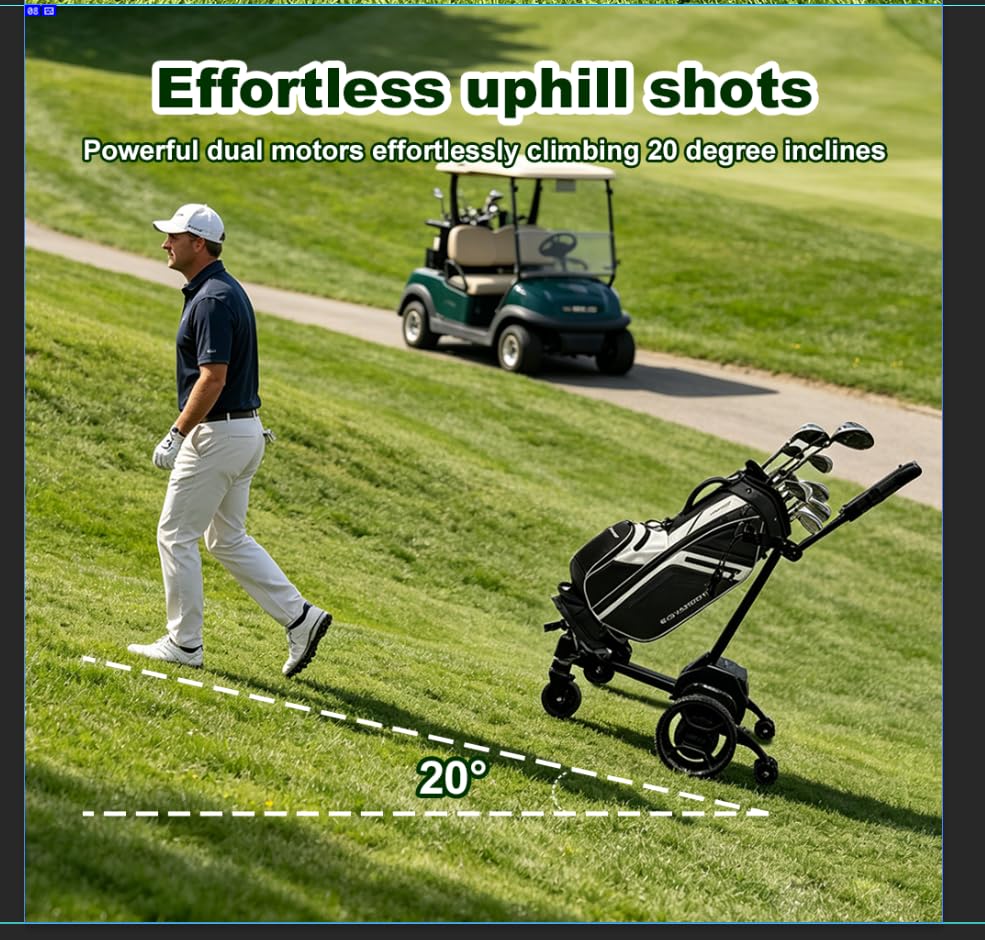
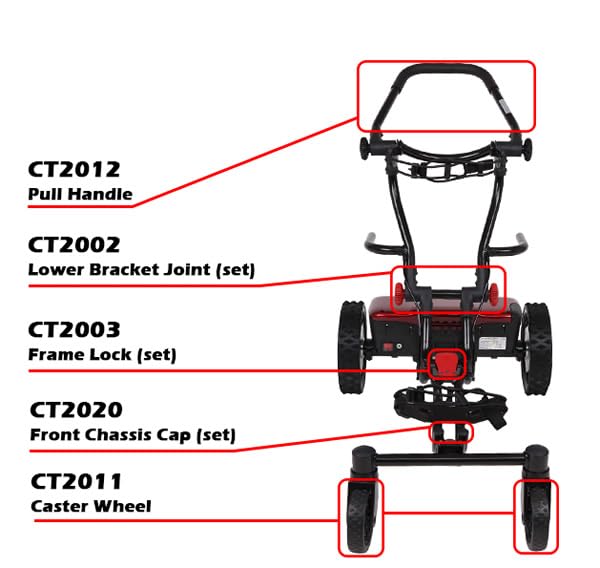
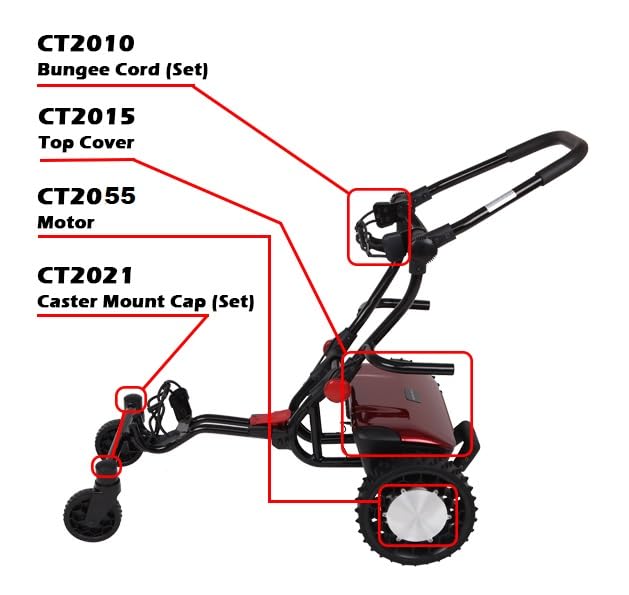
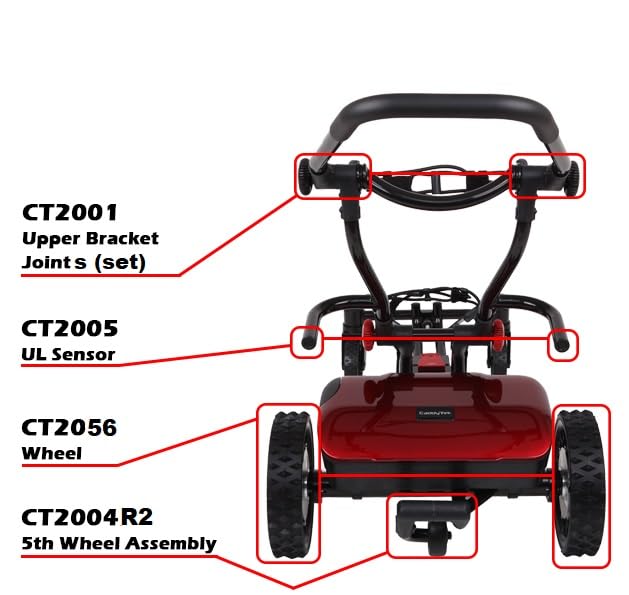
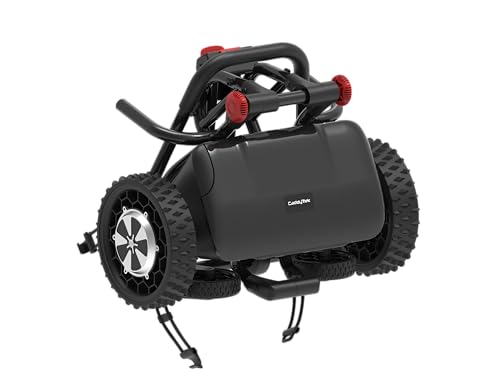
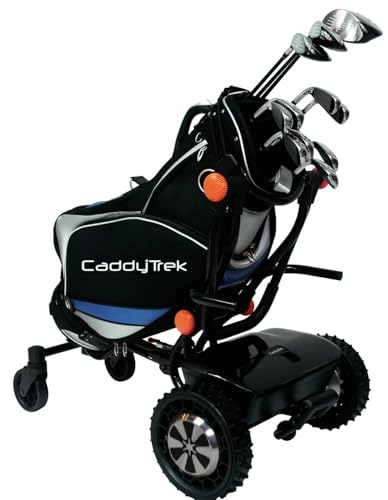
CaddyTrek R2 Electric Follow Cart

Strengths
- Lowest price point
- Good accessory bundle
- Manual push backup
Trade-offs
- Basic follow technology
- Heavier than rivals
- Average battery life
At under $1,000, the CaddyTrek R2 is the best budget-friendly entry into electric follow carts, and it shows. It uses ultrasound and RF tracking instead of UWB, so the follow mode isn’t as smooth or responsive as the KEMIMOTO or NAVEE, but owners say it’s good enough for flat to rolling courses. The remote control mode is solid, with straight-line tracking thanks to the onboard gyroscope, and the 39-pound weight is manageable for most.
It doesn’t have the long battery life or smart features of pricier models, but the five included accessories (including a CaddyBelt) add real value. The manual push mode is a nice backup when the battery dies. Compared to the KVV, it’s larger when folded but offers better hill performance. I’d recommend this as a starter caddy or for casual players who walk a few times a month and don’t want to spend over a grand. Just don’t expect premium refinement.
Product photos
KVV Electric Golf Push Cart

Strengths
- Smallest folded size
- Lightweight design
- Cooler bag included
Trade-offs
- Short 18-hole battery
- Basic remote range
- Less stable on slopes
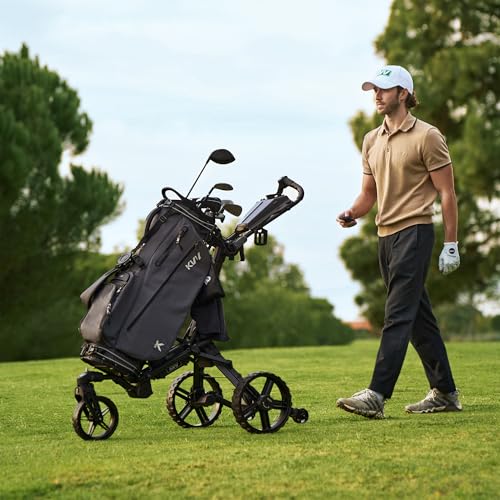
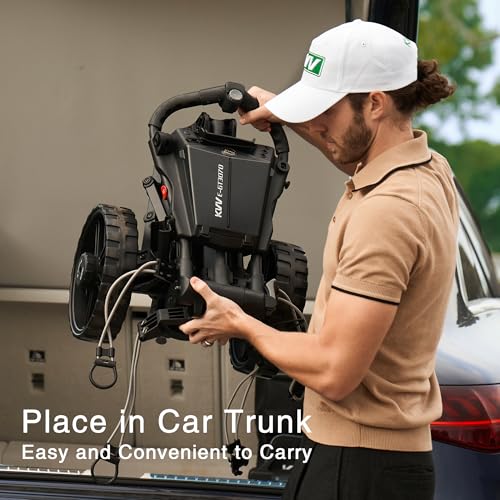
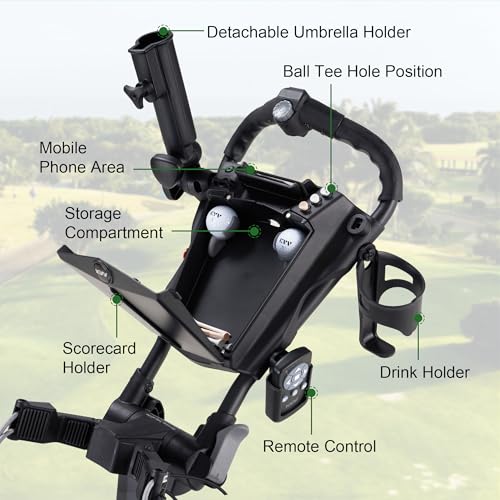
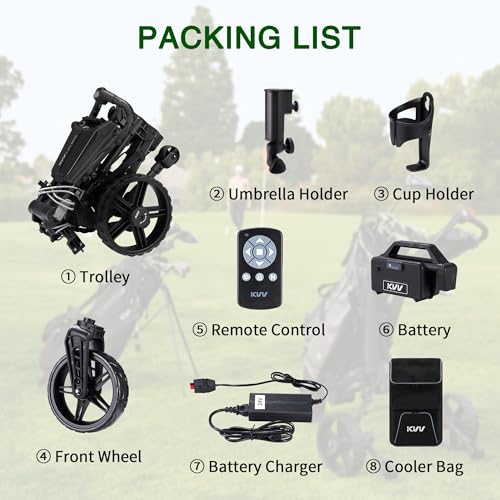
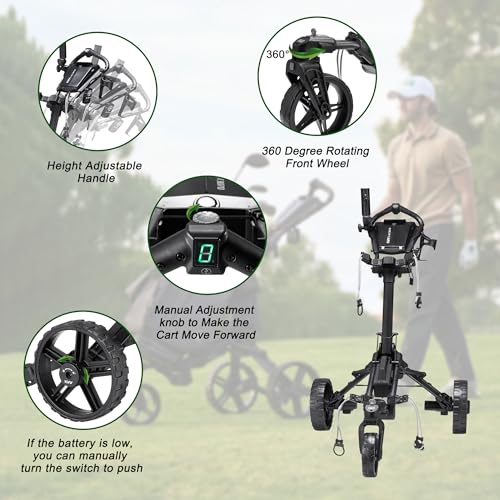
The KVV stands out for one reason: it’s the most compact electric caddy available. At just 17.5 x 18.7 x 22 inches when folded, it fits in tiny trunks and overhead bins better than any other model. For golf travelers or those with compact cars, that’s a major win. The 360° front wheel and dual-mode design, remote or manual, add versatility, and the free insulated cooler bag is a thoughtful touch.
But that small size comes with trade-offs. The 18-hole battery is underpowered compared to rivals, and owners report needing to recharge mid-round on hilly courses. The remote control works fine within 100 feet, but it lacks the responsiveness of the Motocaddy or KEMIMOTO. I’d pick the CaddyTrek R2 over this for budget builds, or the NAVEE for better battery and tech. Still, if trunk space is your top constraint, this is the only real option that folds this small without sacrificing remote control.
Product photos
Motocaddy M7 Remote Electric Caddy

Strengths
- Reliable remote control
- Stable all-terrain tires
- Anti-tip rear wheels
Trade-offs
- No auto-follow mode
- Battery life average
- Heavier than some
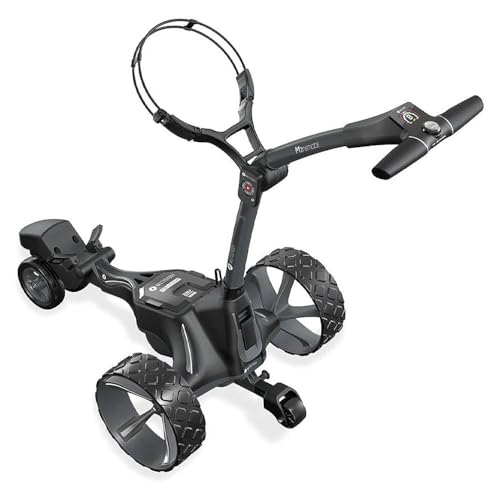
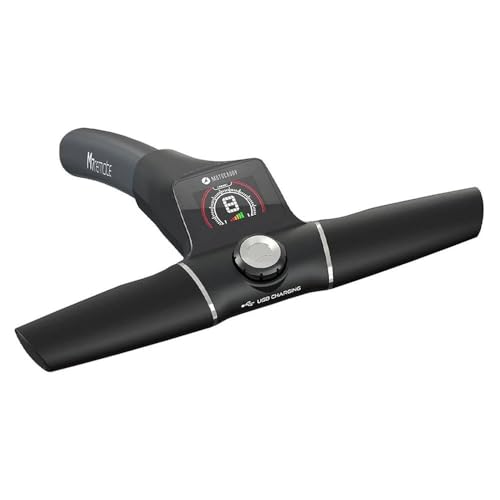
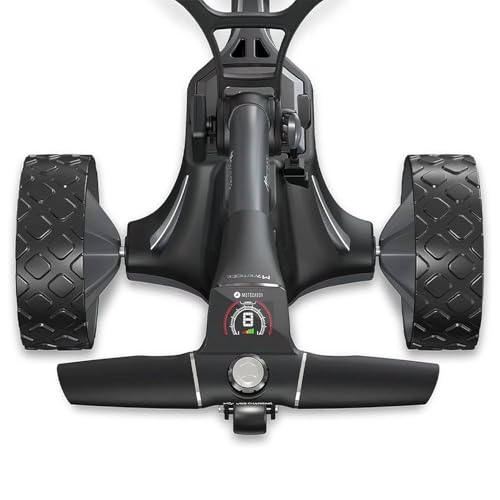
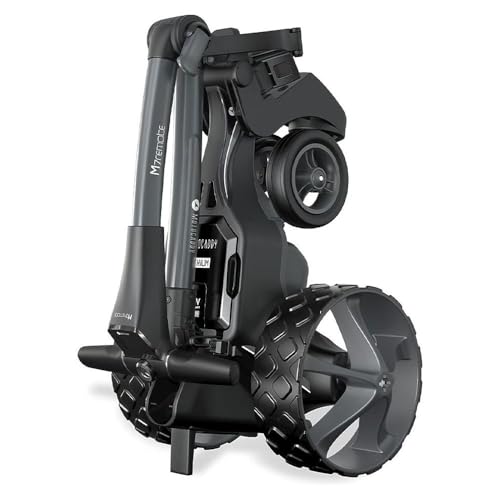
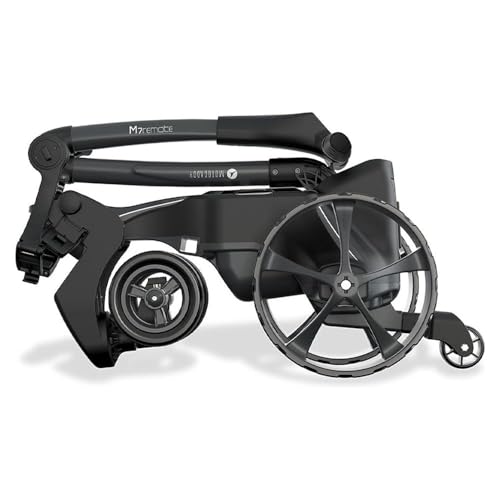
The Motocaddy M7 Remote stands out in a crowded field by delivering flawless remote control performance, owners consistently report that the 150+ foot range is reliable, even across hilly courses with light tree cover. It doesn’t follow you like some newer models, but the precision of its remote steering and downhill control makes it a favorite for players who want full command over their caddy’s movement.
On paper, the 27-hole battery life is solid, though not class-leading, and reviewers note that real-world use on wet or undulating terrain brings it closer to 18–22 holes. The inclusion of $95 in accessories is a nice bonus, especially the USB charging cable and phone cradle, but the real value here is in the build quality and smooth all-terrain handling. Compared to the KEMIMOTO ApexAI or NAVEE Birdie 3X, it lacks smart follow tech, but for purists who prefer remote-only control, this is still one of the most dependable options.
Product photos
How We Picked These electric golf caddies
My team and I approached evaluating electric golf caddies by researching published specifications and features across numerous models. We then weighed owner reviews from major retailers alongside expert opinions found in golf publications and online gear reviews. This wasn’t a hands-on lab test, but a research-led comparison focused on identifying key differentiators and ranking caddies based on those attributes. Category expertise – years spent planning golf trips and understanding golfer needs – informed our assessment.
For electric golf caddies, battery life and terrain handling were paramount. A caddy that can’t complete 36 holes is a significant limitation for many golfers. Equally important is the ability to handle varied course conditions; inclines, rough, and even wet grass can quickly expose a less capable model. Beyond those, the quality and responsiveness of the remote control or, increasingly, the sophistication of self-following carts played a large role in our rankings.
Specifications reliably indicate battery capacity (Watt-hours) and motor power (Watts), giving a solid baseline for performance expectations. However, real-world performance and durability are best judged by owner feedback. We paid close attention to reports regarding build quality, ease of folding, and the responsiveness of the remote or auto-follow features. Reputation, especially among serious golfers, was also a significant factor in elevating certain models – and influenced our view of the quality of electronic caddies with remote control.
What To Look For In electric golf caddies
Finding the right electric golf caddy can significantly improve your enjoyment of the game, but there’s more to it than just avoiding a tired back.
A quality electric golf caddy balances power, portability, and smart features. Key considerations include battery life sufficient for your typical round, a robust frame capable of handling varied terrain, and intuitive controls – whether remote, app-based, or a combination. Look for models with adjustable speed settings, reliable braking systems, and a compact folding design for easy transport and storage.
Motorized Power & Terrain Handling
The core function of an electric caddy is, of course, to move your clubs. Don’t assume all motors are created equal. Dual-motor systems, like those found in the KEMIMOTO ApexAI, generally offer superior hill-climbing ability and stability compared to single-motor options. Pay attention to the stated incline percentage a caddy can handle. Beyond raw power, consider the wheel design. Larger, all-terrain wheels (MGI Zip Navigator AT) are essential if you frequently play courses with uneven ground, soft fairways, or challenging slopes. A smooth ride isn’t just about comfort; it protects your clubs and reduces strain on the caddy’s components.
Control Systems & Automation
The level of automation varies wildly. Basic remote control models (Motocaddy M7 Remote) give you direct control, allowing you to navigate the course with ease. However, the current trend leans towards “follow” modes, utilizing technologies like GPS and UWB. These systems (NAVEE Birdie 3X, Icango Caddy G5) promise a hands-free experience, but their performance can vary based on course conditions and signal interference.
Here’s what to consider when evaluating control systems:
- Range: A short remote range is frustrating. Look for a remote with at least 100 feet of operational distance.
- Responsiveness: Quick, accurate responses to your commands are critical, particularly on undulating terrain.
- Obstacle Avoidance: More advanced models attempt to avoid obstacles, but don’t rely on this feature entirely; always maintain situational awareness.
A useful rule of thumb is this:
Prioritize a caddy that offers a variety of control options. Being able to switch between remote, follow, and manual modes gives you the flexibility to adapt to different course conditions and personal preferences.
Portability & Value
Even the most feature-rich caddy is useless if you can’t easily get it to and from the course. Weight and folded dimensions are crucial. The KVV Electric Golf Push Cart, for example, prioritizes a compact design. Consider how easily the caddy folds, how much space it occupies in your vehicle, and whether you can comfortably lift it. Don’t forget to check the weight with the battery installed. And if you are looking for more options, check out our guide to the best remote control golf caddies for more information.
If you prefer to walk the course, you may also be interested in walking carts and other electric carts for walkers.
Electric Golf Caddies Compared
Here’s a comparison of key specifications for popular electric golf caddies to help you make an informed decision.
| Product Name | Battery Life | Follow Mode | Remote Range | Weight (lbs) | Folded Size (in) |
|---|---|---|---|---|---|
| NAVEE Birdie 3X | 36 Holes | Yes | N/A | N/A | 26.8 x 22.2 x 15.1 |
| MGI Zip Navigator All-Terrain | 36 Holes | N/A | N/A | 35 | 27.55 x 18.5 x 16.5 |
| KEMIMOTO ApexAI | 36 Holes | Yes | 492 ft | N/A | 26.8 x 22.2 x 15.1 |
| Icango Caddy G5 | 45 Holes | Yes | N/A | N/A | N/A |
| CaddyTrek R2 | N/A | Yes | 100 ft | 39 | N/A |
| KVV Electric Golf Push Cart | 18+ Holes | No | N/A | N/A | 17.5 x 18.7 x 22 |
| Motocaddy M7 Remote | 27 Holes | N/A | 150+ ft | N/A | N/A |
Frequently Asked Questions
What battery life should I realistically expect from an electric golf caddy?
Most electric golf caddies advertise 36-hole battery life, but real-world performance varies. Expect around 27-36 holes on relatively flat terrain, but hilly courses or using higher power settings will reduce that to 18-24 holes.
Are “follow” mode electric golf caddies truly hands-free?
While follow-mode caddies aim for hands-free operation, they aren’t perfect. Obstacle avoidance isn’t foolproof, and performance can be affected by GPS signal strength or course conditions. You should always maintain awareness of your caddy’s position.
What’s the difference between a single-motor and dual-motor electric caddy?
Dual-motor caddies generally provide more power and stability, particularly when tackling hills. Single-motor models are usually lighter and more affordable, but may struggle with steep inclines or uneven terrain.
How important is the remote control range on an electric golf caddy?
A longer remote range (100+ feet) provides greater flexibility and peace of mind, preventing signal loss on larger courses. However, responsiveness of the controls is more important than sheer distance; a quick, accurate remote is essential for precise maneuvering.
Where can I find more information on different types of electric golf transportation?
If you’re exploring options beyond standard electric caddies, you will find a helpful overview of electric golf carts and other motorized options on our site. You may also be interested in learning about top electric golf trolleys for a more detailed comparison.
The Bottom Line
Choosing an electric golf caddy often comes down to balancing control with convenience, and ultimately, your budget. While the allure of fully automated models is strong, the NAVEE Birdie 3X stands out as the best overall choice, offering a compelling blend of follow-mode technology and reliable performance. It’s a significant investment, but one that promises to transform your experience on the course.
For golfers prioritizing value, the KVV Electric Golf Push Cart delivers a solid experience without breaking the bank. If you’re after versatility and don’t mind a bit more manual control, the MGI Zip Navigator All-Terrain is an excellent pick, especially if you frequently encounter challenging course conditions. Those seeking the latest in golf technology should explore our guide to the top automated golf caddies.
At the end of the day, battery life and build quality matter more than any flashy feature. A caddy that reliably completes your round and withstands the rigors of the course is far more valuable than one loaded with gadgets that fail when you need them most. Focus on those fundamentals, and you’ll find an electric caddy that enhances your enjoyment of the game for years to come.
