
8 Best Electric Golf Push Carts of 2026
This post contains affiliate links. As an Amazon Associate, we earn from qualifying purchases.
The NAVEE Birdie 3X stands out as the best overall electric golf push cart, delivering strong hill-climbing power and reliable 36-hole battery life. For golfers on a tighter budget, the KVV Electric Golf Push Cart offers impressive portability and solid performance. If you want maximum versatility, the Wingscaddy MAX-300 supports multiple modes including remote, trolley, and free-wheel operation.
Most golfers want a cart that keeps up with their pace, handles hilly courses without bogging down, and won’t fall apart after a few seasons. Too many models cut corners on motor reliability or folding mechanisms, leading to frustration on the course.
This guide cuts through the noise by focusing on real-world specs and owner experiences. I looked at battery performance, motor strength, ease of transport, and long-term durability to identify the carts that actually deliver where it matters most.
Top 8 Electric Golf Push Carts in the Market
The Best Electric Golf Push Carts, Reviewed
NAVEE Birdie 3X Electric Golf Cart

Strengths
- Reliable Follow Me mode
- UL safety certified
- One-step 3-second fold
Trade-offs
- Premium price
- Follow Me can lag in tight spaces
The NAVEE Birdie 3X makes a strong case as the most complete package in the electric push cart category. Its UWB-powered Follow Me mode actually works reliably, letting you walk freely without holding a remote, something few competitors pull off consistently. When you want control, the remote is responsive with 9 speed settings and a bright 5.5″ display. The 36-hole battery, downhill control, and 25% slope rating match top-tier specs, and the IPX5 rating adds peace of mind in wet conditions.
Owners highlight the three-second one-step fold as a standout for travel, and the UL safety certifications are a rare plus for battery and vehicle systems. It’s priced at the high end, but delivers where it counts. Compared to the Bag Boy Volt, it’s lighter, folds faster, and offers more automation. This is the cart I’d recommend to most golfers unless they have a specific need elsewhere.
Video review
KVV Electric Golf Push Cart

Strengths
- Smallest folded size
- Affordable price
- Good accessory bundle
Trade-offs
- Shorter battery life
- Less hill power
The KVV pushes hard on compactness and price, and for budget-conscious buyers, it delivers. With a folded size of just 17.5″ x 18.7″ x 22″, it’s the smallest in this group, ideal for tight trunks or apartment storage. The 360° front wheel and dual training wheels help it track well, and the remote offers 9 speeds with decent range. Owners note it handles fairways and mild slopes fine, though it’s not built for extreme terrain.
It lacks the motor power of the KEMIMOTO or NAVEE, and the battery only promises 18+ holes, which means mid-round charging on back-to-back days. But the included insulated cooler bag and accessory kit add real value. Compared to the Wingscaddy, it’s more compact but less versatile. If space and cost are your limits, this is a smart pick.
Video review
KEMIMOTO ApexR Electric Golf Cart
Strengths
- Long-range remote
- Dual 240W motors
- IPX5 water resistance
Trade-offs
- Fiddly wheel install
- Power Assist not as smooth as MGI
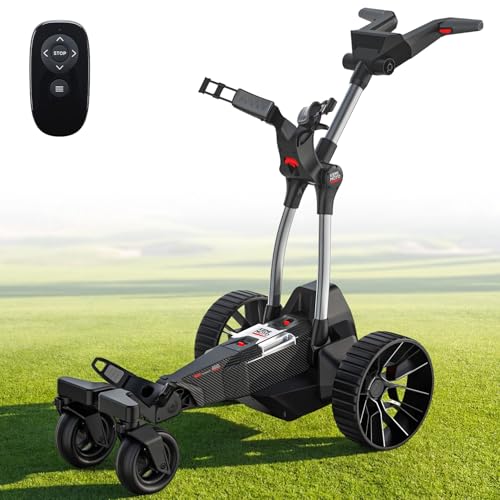
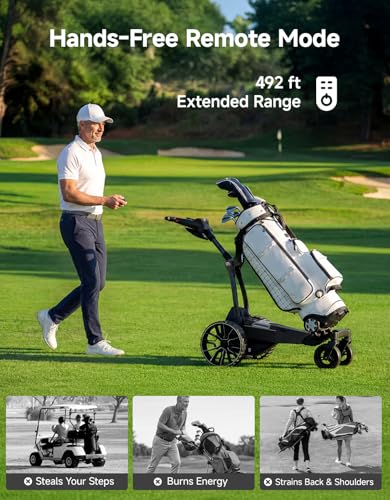
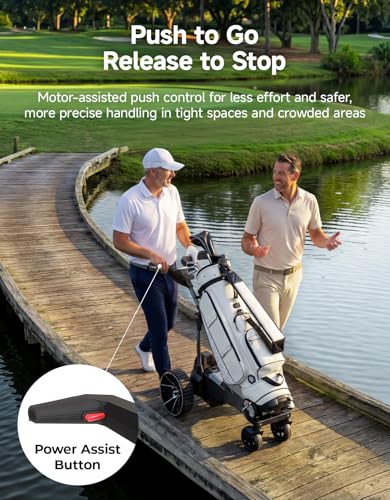
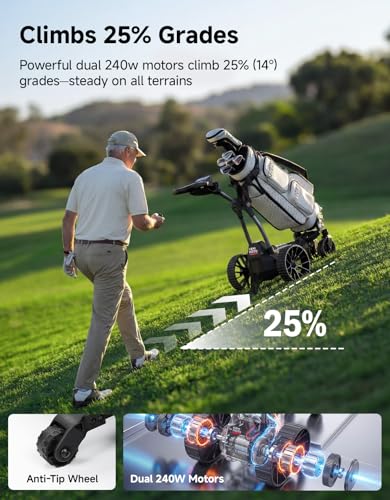
KEMIMOTO hits a sweet spot with the ApexR, offering strong performance at a price that undercuts many competitors without sacrificing core functionality. The dual 240W motors deliver real torque, and reviewers confirm it handles 25% slopes confidently, even in damp conditions. The 492 ft remote range is a standout, letting you send the cart ahead or call it back from a distance, which speeds up play. I appreciate the Power Assist mode too; it’s intuitive for walking golfers who want control without full remote dependency.
The IPX5 rating and one-step fold make it practical for daily use, and the large LED display is easy to read in sunlight. Compared to the Wingscaddy MAX-300, it offers better motor power and a more refined interface. My only hesitation is the wheel installation quirk noted in the manual, owners stress getting it right matters for tracking. But once set, feedback suggests it’s reliable.
Product photos

Bag Boy Volt Electric Golf Push Cart

Strengths
- TrueLine Tracking
- Ample storage
- 36-hole battery
Trade-offs
- Heavier than rivals
- Two-step fold
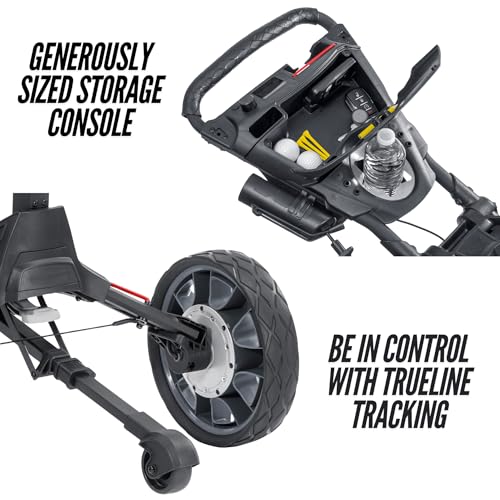
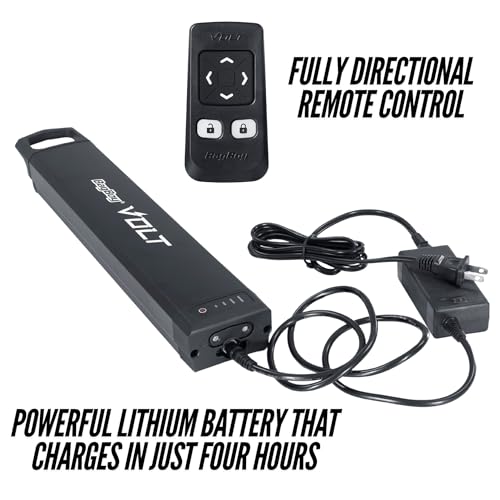
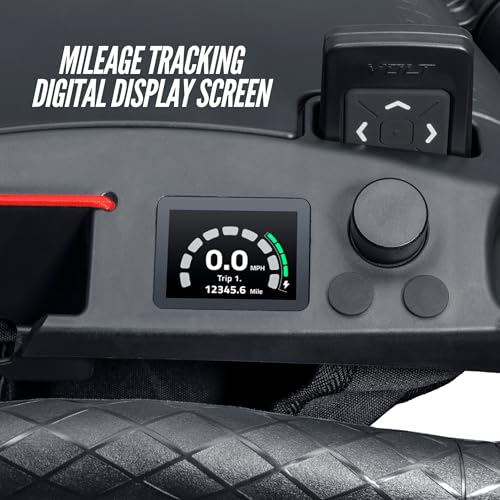
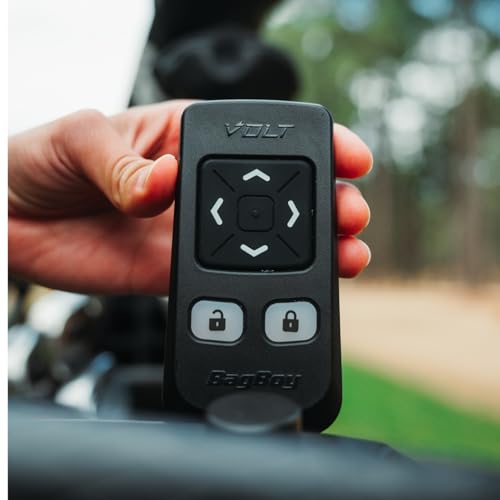
The Bag Boy Volt stands out in the premium electric push cart segment with a feature set that leans heavily into convenience and user experience. On paper, the nine-speed remote control, TrueLine Tracking, and 36-hole battery are solid, but what really separates it is the storage design. Owners consistently report that the oversized console and accessory bag make it feel like a full-service caddy, keeping everything from phones to umbrellas within easy reach. The digital display adds a polished touch, giving real-time feedback without feeling gimmicky.
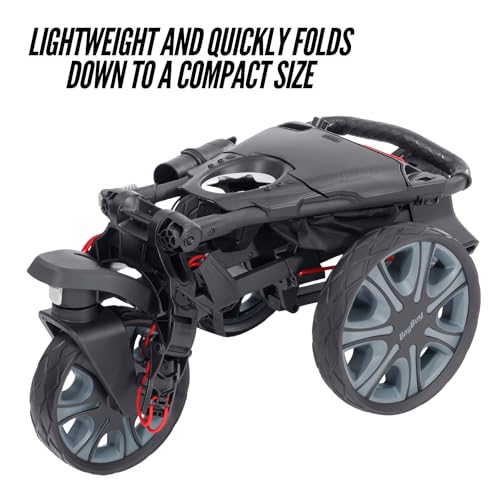
Where it falters slightly is in weight and fold complexity. At 28.6 lbs, it’s not the lightest, and while the two-step fold is manageable, it’s not as quick as some rivals. Still, for golfers who value organization and tech refinement over speed-of-setup, this is a strong contender. I’d rank it just behind the NAVEE Birdie 3X for overall polish, but ahead of most for daily usability.
Product photos
Wingscaddy MAX-300 Electric Push Cart

Strengths
- Three operating modes
- Good accessory bundle
- Anti-tip wheel
Trade-offs
- Mid-tier motor power
- Build quality inconsistent
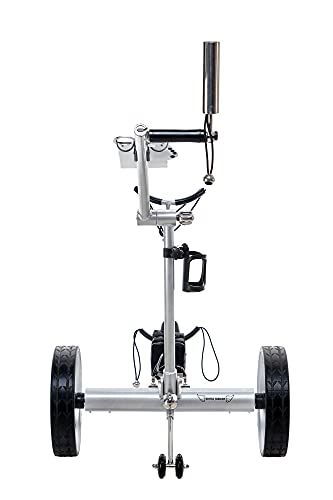
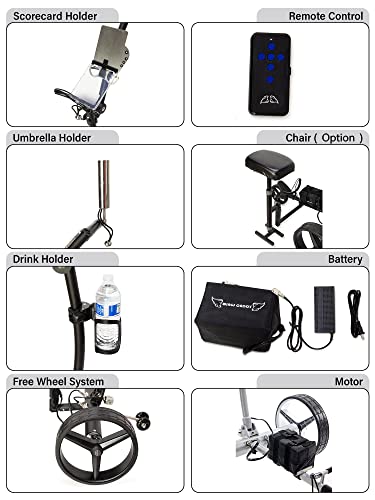
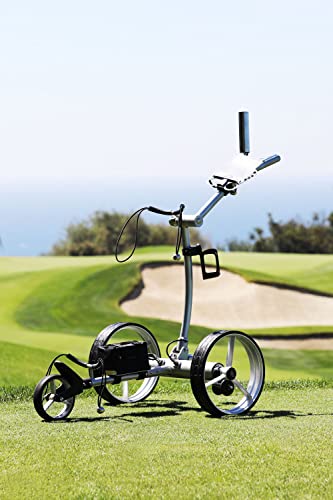
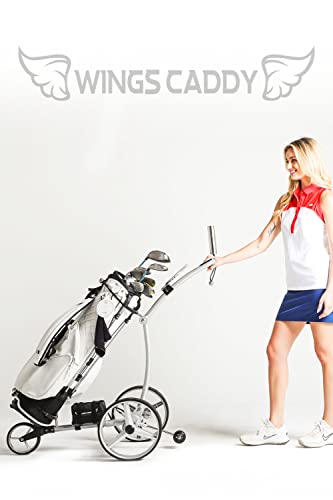
The Wingscaddy MAX-300 markets itself as three carts in one, remote, trolley, and freewheel modes, and that versatility is its strongest selling point. For golfers who want flexibility without switching hardware, this is compelling. The twin 200W motors aren’t the most powerful, but they’re sufficient for most courses, and the anti-tip wheel adds confidence on uneven ground. Owners appreciate the included accessories like the umbrella and drink holders, which boost usability right out of the box.
Where it falls short is refinement. The build quality doesn’t feel as premium as the NAVEE or Bag Boy, and the remote responsiveness gets mixed feedback. Still, for the price, the triple-mode system delivers real value. I’d compare it favorably to the KVV as a more feature-rich alternative, though not as compact. If you want one cart that can adapt, this deserves a look.
Product photos
Alphard Cybercart Electric Golf Cart

Strengths
- Excellent slope stability
- Auto parking brake
- Out-of-range stop
Trade-offs
- No Follow Me mode
- Heavier fold mechanism
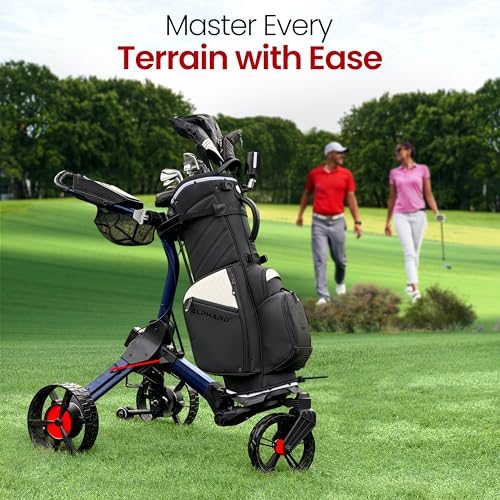
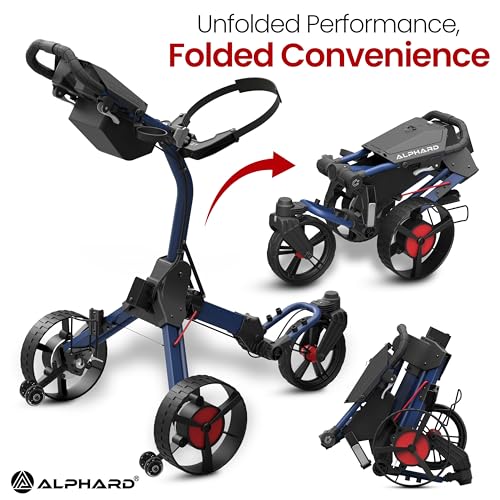
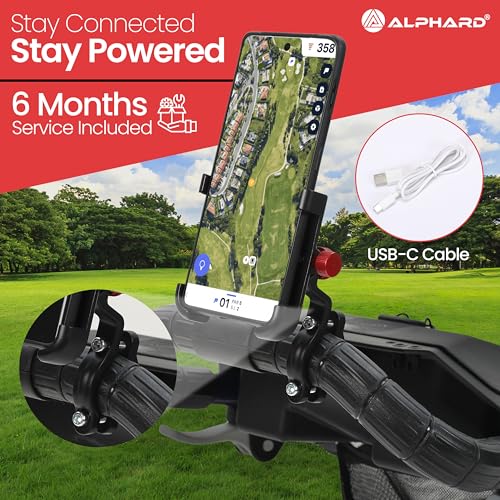
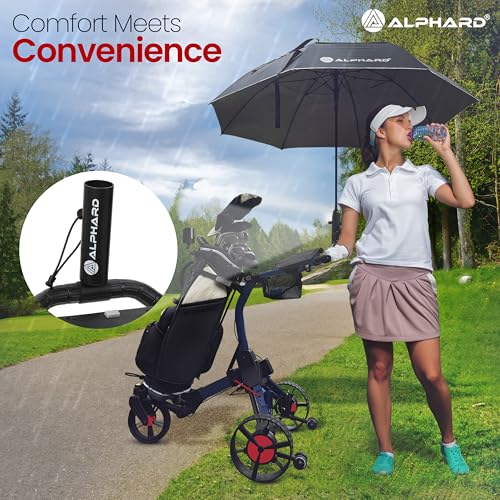
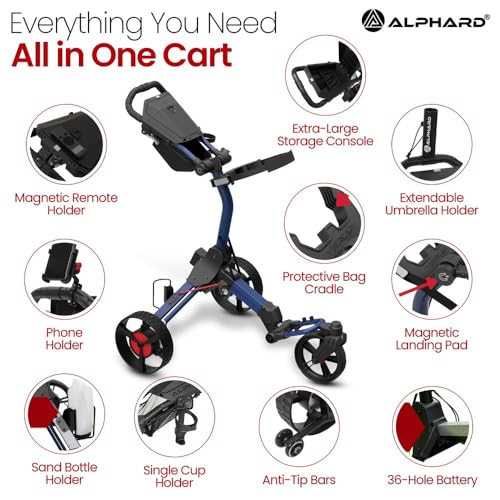
Stability and safety are the Alphard Cybercart’s core strengths, and it shows in the design. The low center of gravity and automatic parking brake make it feel planted, even on steep inclines, owners report it stays put without rolling, which is rare. The downhill speed control is smooth, and the out-of-range auto-stop on the remote adds a layer of safety often missing in rivals. It’s not the lightest or fastest-folding, but it inspires confidence in challenging terrain.
The large storage console is a nice touch, and the one-click fold is simple. But compared to the NAVEE Birdie 3X, it lacks modern features like Follow Me or USB-C charging. It’s a specialist’s tool: built for safety and reliability, not flash. I’d choose it over the Zip X5 if slope stability were my top concern, especially in mountainous regions.
Product photos
MGI Zip X5 Electric Golf Cart

Strengths
- No remote dependency
- 20 speed settings
- Electronic parking brake
Trade-offs
- Heavier than average
- No remote option
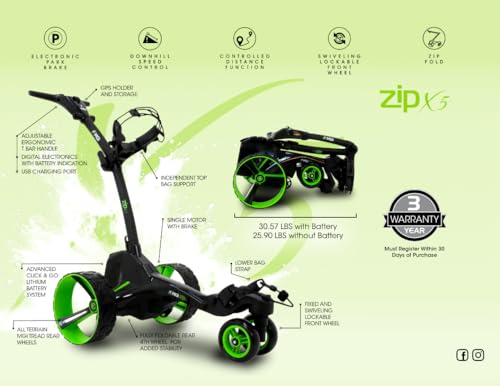
The Zip X5 is a bold choice in a market leaning toward remotes: it has none. Instead, you steer and control it directly from the handle, dialing in one of 20 speed settings. That hands-on approach appeals to golfers who want full engagement with their cart, no pairing issues, no signal dropouts. The downhill speed control and electronic parking brake add real safety, and the 36-hole battery keeps up with two-round weekends.
At 30.57 lbs, it’s on the heavier side, and the lack of remote means you’re always within arm’s reach. But for courses that restrict remote carts or players who distrust automation, this is a dependable workhorse. Compared to the Alphard Cybercart, it’s less stable on extreme slopes but more affordable and easier to service. I’d pick it over the E-Boost if you want more power but still value direct control.
Product photos

MGI E-Boost Electric Assist Push Cart
Strengths
- Ultra-lightweight
- Simple push-to-go
- Trusted MGI system
Trade-offs
- No remote control
- Limited automation
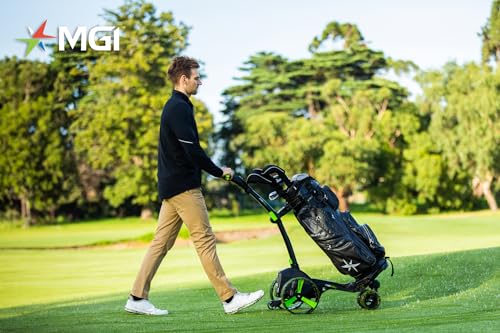
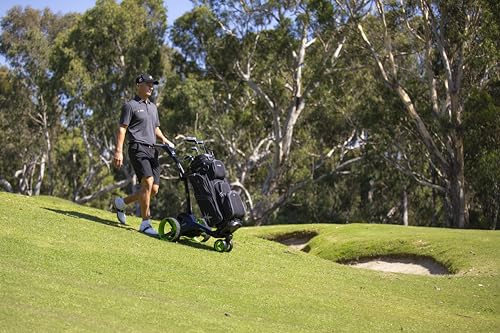
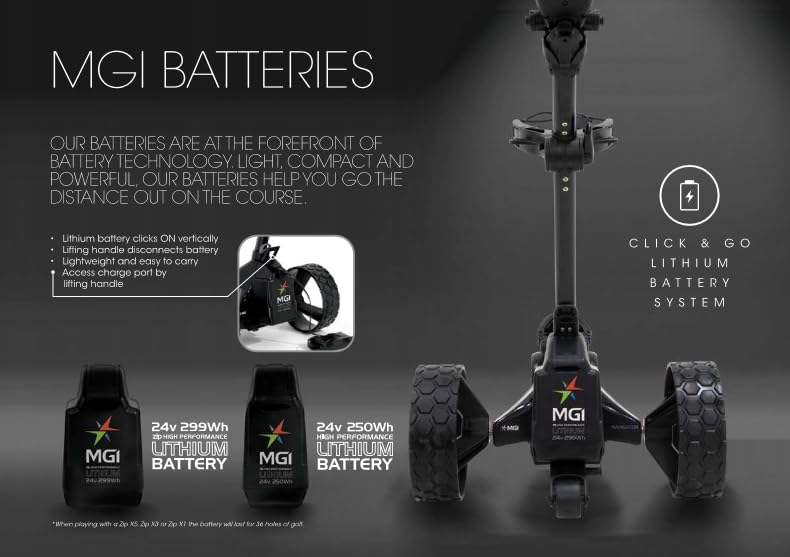
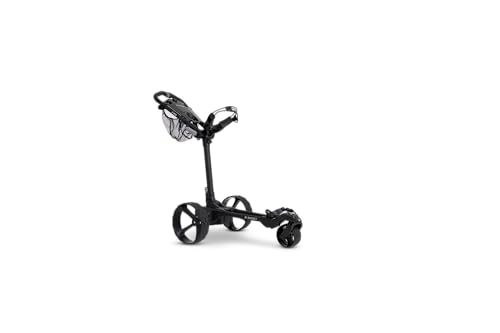
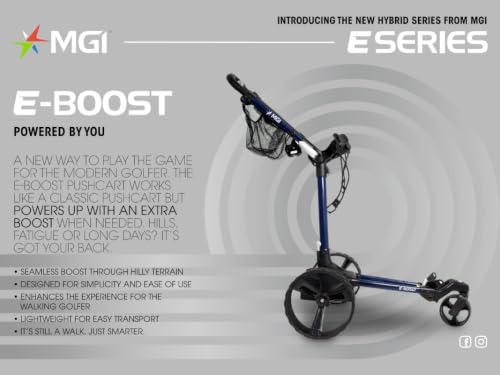
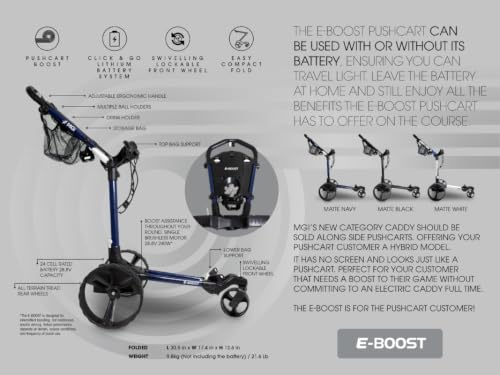
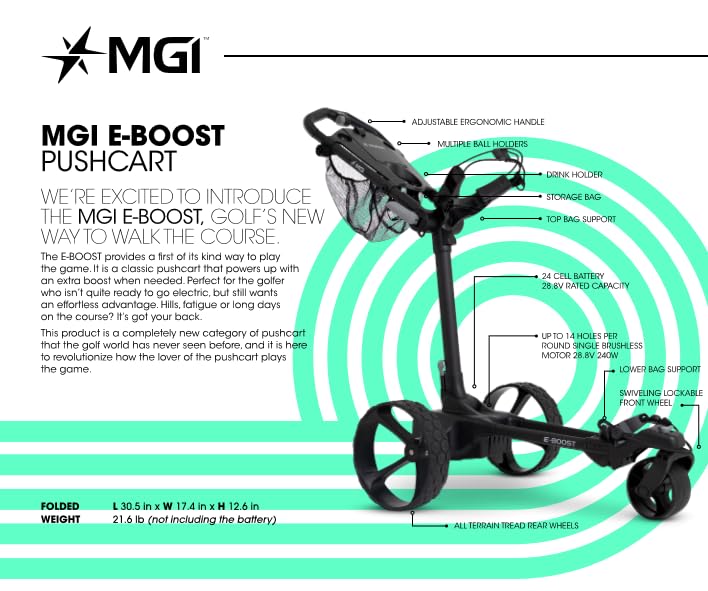
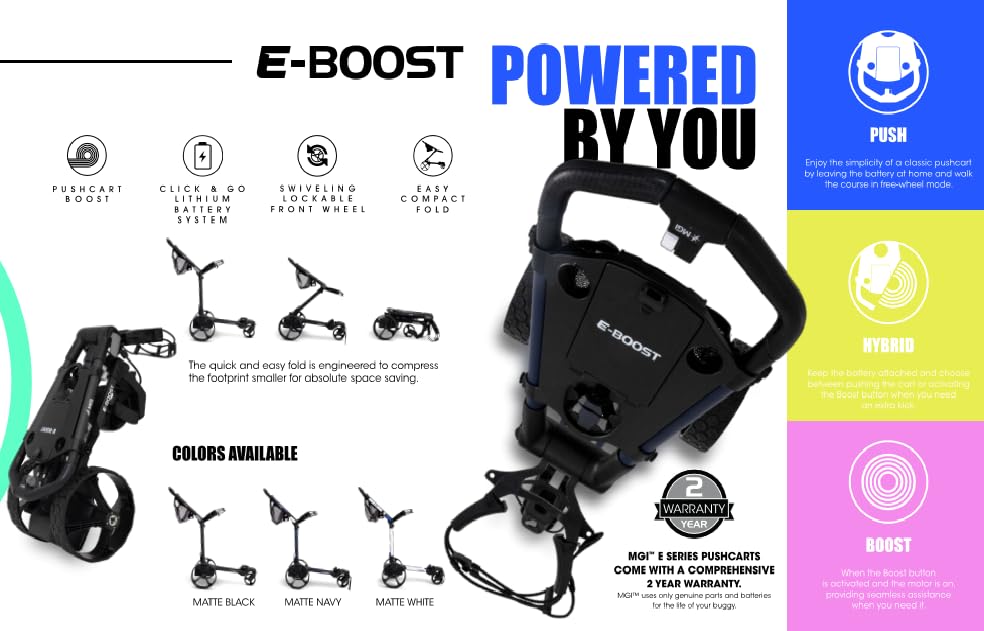
The MGI E-Boost isn’t a full electric cart, it’s an assist cart, and that distinction is key. It’s designed for purists who want to walk but need a little help on inclines or longer rounds. At just 25.1 lbs with battery, it’s one of the lightest motorized options, and the Click & Go battery system is proven across MGI’s lineup. This isn’t about hands-free convenience; it’s about reducing fatigue while keeping the walking experience intact.
Owners praise its simplicity: no remote, no complex menus, just push-to-go motor assist. That makes it ideal for traditionalists or those playing courses with push cart-only rules. But if you’re looking to let the cart do the work, this isn’t it. Compared to the Zip X5, it’s lighter but less feature-rich. I’d recommend it only to golfers committed to walking who want subtle, reliable assistance.
Product photos
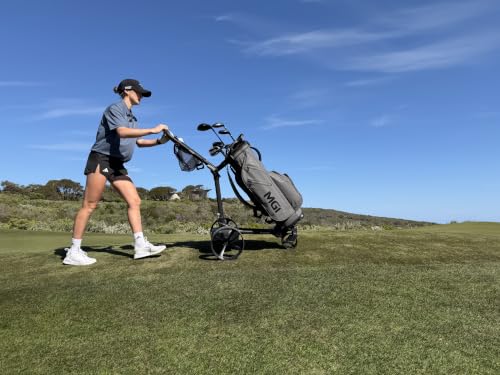
How We Picked These electric golf push carts
Rather than a hands-on lab test, my research focused on a detailed comparison of published specifications and features across numerous models. I weighed owner reviews from major retailers against expert opinions found in golf publications and online gear review sites. My assessment considered the broader landscape of electric golf trolleys to establish a benchmark for performance and value. Ultimately, I ranked carts against a set of criteria tailored to the needs of a typical golfer.
For electric golf push carts, battery life and terrain handling were the most significant factors. A cart that can reliably complete 36 holes on a single charge is obviously more practical, and the ability to navigate hills and varied course conditions without struggle is paramount. Beyond that, features like remote control responsiveness and ease of folding played a key role in determining which models provide the best overall experience, especially when considering models like those offering self-following push carts.
Specifications clearly indicate battery capacity, motor power, and weight, allowing for a direct comparison of core performance metrics. However, owner feedback provided crucial insight into real-world reliability, particularly regarding remote control connectivity and the durability of folding mechanisms. Reputation and long-term ownership experiences were heavily considered to identify carts that consistently deliver on their promises, rather than relying solely on manufacturer claims about features like carts that follow you.
What To Look For In electric golf push carts
Finding the right electric golf push cart can genuinely improve your enjoyment of the game.
A quality electric golf push cart prioritizes reliable motor performance, robust build materials, and user-friendly controls. Battery life exceeding 18 holes is desirable, alongside features like adjustable speed settings, effective braking systems, and compact folding capabilities for easy transport and storage. Look for models with thoughtful design elements like accessory mounting options and durable wheel construction.
Motor & Power Assist
The core of any electric golf cart is its motor(s) and how effectively they handle the course. Don’t assume more watts automatically equals better performance. Consider the terrain you typically play. For relatively flat courses, a single 200W motor, like those found in many budget-friendly models, may be sufficient. However, if you regularly encounter hills, look for dual-motor setups (240W or higher per motor) or models specifically advertising strong hill-climbing ability. The KEMIMOTO ApexR, for example, boasts dual 240W motors designed to tackle slopes up to 25%. Beyond raw power, pay attention to how the assist function works. Some carts offer a true “follow me” mode using technologies like UWB (ultraband), while others require you to maintain a firm grip and simply assist your push. If you are looking for more information on options, check out our guide to remote electric push carts.
Features & Control Systems
Beyond simply moving your clubs, a well-designed cart enhances usability. Remote control functionality is popular, but not essential. Evaluate how intuitive the remote is and its range. Some remotes offer features like automatic stop if they fall out of range, a nice safety feature. Digital displays providing speed, battery life, and distance traveled can be helpful, but aren’t always necessary. A critical feature often overlooked is the braking system. Downhill speed control, as seen on the Alphard Cybercart, prevents the cart from running away from you on descents.
Here’s what to consider when evaluating control systems: * Basic speed dial: Simple, reliable, but lacks precision. * Digital speed control: Offers more granular control, often with preset speeds. * Remote control with adjustable sensitivity: Provides the most convenience and control, but adds complexity and potential for interference.
Storage, Portability & Value
Let’s be realistic: you’ll be loading and unloading this cart from your vehicle. Weight and folded dimensions matter. A cart that folds into a compact size, like the KVV Electric Golf Push Cart (17.5″ x 18.7″ x 22″ when folded), is a huge plus. Weight is also important; aim for under 30 pounds if you’ll be lifting it frequently. Don’t overlook storage options. Many carts include dedicated spaces for your phone, rangefinder, balls, and beverages. If you’re seeking a versatile option, consider a cart with multiple modes, such as the Wingscaddy MAX-300, offering remote, trolley, and free-wheel operation. For a wider range of choices, exploring electric golf caddies can give you a better understanding of the market.
A cart’s stability is directly related to its wheelbase width. A wider stance translates to better balance, especially on uneven terrain or when carrying a heavy golf bag.
Electric Golf Push Carts Compared
Here is a comparison of key specifications for several electric golf push carts to help you make an informed decision.
| Product Name | Battery Life | Remote Control | Power Assist | Folded Size (in) | Weight (lbs) | Modes |
|---|---|---|---|---|---|---|
| NAVEE Birdie 3X | 36 Holes | Yes | Yes | 26.8 x 22.2 x 15.1 | N/A | N/A |
| KVV Electric Golf Cart | 18+ Holes | Yes | Yes | 17.5 x 18.7 x 22 | N/A | Dual |
| KEMIMOTO ApexR | 36 Holes | Yes | Yes | 26.8 x 22.2 x 15.1 | N/A | N/A |
| Bag Boy Volt | 36 Holes | Yes | No | 29 x 16.5 x 14.5 | 28.6 | N/A |
| Wingscaddy MAX-300 | N/A | Yes | Yes | N/A | N/A | 3 |
| Alphard Cybercart | N/A | Yes | Yes | N/A | N/A | N/A |
| MGI Zip X5 | 36 Holes | No | No | N/A | 30.57 | N/A |
| MGI E-Boost | N/A | No | Yes | N/A | 25.1 | N/A |
Frequently Asked Questions
What battery type is most common in electric golf push carts?
Lithium-ion batteries are now standard due to their lightweight design and longer lifespan compared to older lead-acid options. You’ll find most models, like those offering powered golf trolleys, use lithium-ion for better performance and convenience.
Can I use an electric golf push cart in wet conditions?
Many carts have weather-resistant components, but full waterproofing isn’t always guaranteed. Most manufacturers advise against prolonged exposure to heavy rain. Check the product specifications for specific water resistance ratings before using it in inclement weather.
How do I maintain the battery for optimal performance?
Store the battery fully charged during long periods of inactivity (like the off-season) and avoid completely draining it before recharging. Following these guidelines will maximize the life of the battery, even on battery-powered push carts, and keep it performing well.
Are all electric golf push carts compatible with any golf bag?
While most carts are fairly universal, some bags are specifically designed as push cart golf bags with features like a flat bottom and secure straps. Using a bag designed for a cart will offer the most stable and secure fit, preventing unwanted shifting during your round.
What is the typical warranty offered on these carts?
Most manufacturers offer a one- to two-year warranty covering defects in materials and workmanship. Battery warranties are often shorter, typically ranging from six months to one year. It’s always wise to review the warranty details before purchasing, especially when considering best motorized golf push cart models.
The Bottom Line
Choosing an electric golf push cart often comes down to balancing convenience with cost. While a premium model like the NAVEE Birdie 3X offers a long run time and remote control features, the KVV Electric Golf Cart delivers excellent value if you’re willing to trade some range for a lower price point. Ultimately, the best cart isn’t the most expensive, but the one that best suits your typical course conditions and personal preferences.
For those prioritizing specific needs, our recommendations become more focused. If budget is your primary concern, the KVV Electric Golf Cart is a fantastic entry point. If you want a cart with multiple operation modes, the Wingscaddy MAX-300 offers a lot of flexibility. And for golfers seeking a truly automated experience, exploring automatic push carts will highlight options with hands-free operation.
Don’t get too caught up in the specifications wars. Battery life is important, but a reliable motor and sturdy frame are even more crucial. Consider the terrain you play most often and prioritize a cart that can handle those conditions. A well-built cart, even a simpler one, will provide years of enjoyment, far outlasting a flashy model with questionable durability – it’s often better to start with quality golf push carts than chase the latest features.
