
Driving Range Practice Plan: Pro Strategies Most Golfers Miss
This post contains affiliate links. As an Amazon Associate, we earn from qualifying purchases.
This post contains affiliate links. As an Amazon Associate, we earn from qualifying purchases.
A real driving range practice plan follows three rules: dedicate over 55% of your balls to shots inside 190 yards, randomize your club selection to mimic course play, and cap any single technical focus at 45 minutes to prevent mental fatigue. This ratio comes from analyzing hundreds of thousands of tour pro range shots, not from tradition.
That 55% number changes everything. It means most of your bucket should never reach your driver. Amateurs reverse this, spending 70% of their time on the big stick and wondering why their scores don’t drop. The rest of your plan hinges on that redistribution.
What follows is the system: how to split your time between skill work and simulated play, the exact mistake that makes range skill vanish on the first tee, and how to structure a session whether you have 30 minutes or a full hour. This isn’t about hitting more balls. It’s about making the ones you hit count.
Key Takeaways
- Tour pros dedicate over 55% of their range time to wedges and short-to-mid irons (shots inside 190 yards). Your plan should mirror this “scoring club” priority.
- Never “go through the bag” in order. This block practice creates a false sense of competence. Switch to random practice by simulating holes and changing clubs every shot.
- GOLF Magazine Top 100 instructor Jim Murphy sets a 45-minute hard cap on working any single technical task. Beyond that, focus degrades and swing flaws creep back in.
- A proper warm-up is physical first, five minutes of dynamic stretches, not hitting balls. Practice and warm-up are different goals with different routines.
- Always end with your scoring clubs. Hit five to ten wedge shots to specific targets to leave with confidence, not frustration.
Why Your Current Range Routine Is Failing
You know the drill. Dump the bucket, start with the wedge, and methodically work up to the driver. You hit ten balls with each club. It feels structured. It feels productive.
It trains you to fail on the golf course.
This “going through the bag” approach is pure block practice. By the third swing with the same club, your body has subtly compensated for the mistakes of the first two. You find a rhythm and start striping it. The problem is that rhythm doesn’t exist on the course. You never hit the same club twice in a row with the same lie and target. The range routine builds a competence that vanishes the moment you need to reset your brain for a new shot.
Where this goes sideways: The sequential bucket. Hitting 7-iron after 7-iron teaches your brain to operate on autopilot. On the course, autopilot shanks the approach shot after a good drive because you didn’t fully recalibrate.
The tour data proves a better way. Analysis of professional practice shows they spend over 55% of their time on shots from 130 to 190 yards and inside 130 yards with wedges. The driver gets about 10% of their attention. They aren’t just grooving a swing; they’re rehearsing the shots that determine score.
The 3-Part Practice Blueprint (55% Rule)
Forget arbitrary time splits. Your plan should be shaped by the shots you actually face and the reality of diminishing mental returns. This blueprint works for a 30-minute session or a 90-minute deep dive, you just scale the segments.
Tour professionals dedicate over 55% of their driving range practice to short and mid-irons (130-190 yards) and wedges (inside 130 yards). This distribution prioritizes scoring shots over driving, with drivers typically comprising only 10% of total range balls hit. The first shots of a session are often short wedges, with the average tour pro opening with a shot carrying about 92 yards.
First, define your goal. Is this a pre-round warm-up or a skill-building practice session? They are different. A warm-up is like “brushing your teeth”, a quick, physical activation. Scottie Scheffler’s Masters warm-ups were as short as 33 balls in 20 minutes. A practice session is where you build new skills.
For a standard one-hour skill session, follow this framework:
| Segment | Focus | Time | Key Activity |
|---|---|---|---|
| Skill Acquisition | Technical Swing Change | 20 min | Drills, slow-motion reps, video feedback. Focus on one change only. |
| Skill Transfer | On-Course Simulation | 25 min | Random practice. Play “holes,” change clubs/targets each shot. Use full pre-shot routine. |
| Confidence Building | Scoring Shots | 15 min | Wedges inside 100 yards. Hit to exact yardages (40, 60, 80 yards). Finish with 5 perfect pitches. |
The 55% rule lands in the Skill Transfer and Confidence segments. That’s where you hit the majority of your mid-irons, short irons, and wedges. Your driver work happens briefly within the Skill Transfer block, only after you’re fully warmed up.
If you only have 30 minutes, use a 10/15/5 split. Ten minutes on a single drill, fifteen minutes of randomized shots, and a five-minute wedge finish. The ratio, and the priority on scoring clubs, stays constant.
How to Structure a 45-Minute Focused Session
Jim Murphy’s 45-minute rule is your guardrail. The human brain’s ability to maintain sharp, deliberate focus on a motor skill degrades rapidly after that point. Your session should have a countdown timer built in.
Start without a club. Spend five minutes on a dynamic warm-up: torso rotations, hip hinges, leg swings. You’re activating muscles, not searching for feel. This is non-negotiable for injury prevention and quality of movement.
Now, for the 40 minutes of ball-striking: 1. Pick ONE swing thought or drill (10 minutes). This is your skill acquisition window. Use alignment sticks, a launch monitor for immediate feedback, or slow-motion rehearsals. Hit only enough balls to confirm you understand the feel. 2. Integrate with random practice (25 minutes). This is the core of your effective practice. Simulate play. “Play” the first hole at your home course: visualize the tee shot, pick a target, and hit your driver. Then, immediately switch to a 7-iron for a second-shot approach. Then, hit a 30-yard pitch. Change clubs, targets, and shot shapes every single time. This is the random practice that bridges the gap to the course. 3. Finish with wedges (5 minutes). Hit ten shots total to specific, even yardages your driving range markers ignore, 40, 60, 80 yards. The last shot is your “golden shot.” Make it perfect.
This structure forces deliberate practice and prevents mindless beating of balls. The clock is your enemy and your friend.
What Most Amateurs Get Wrong: Warm-Up vs. Practice
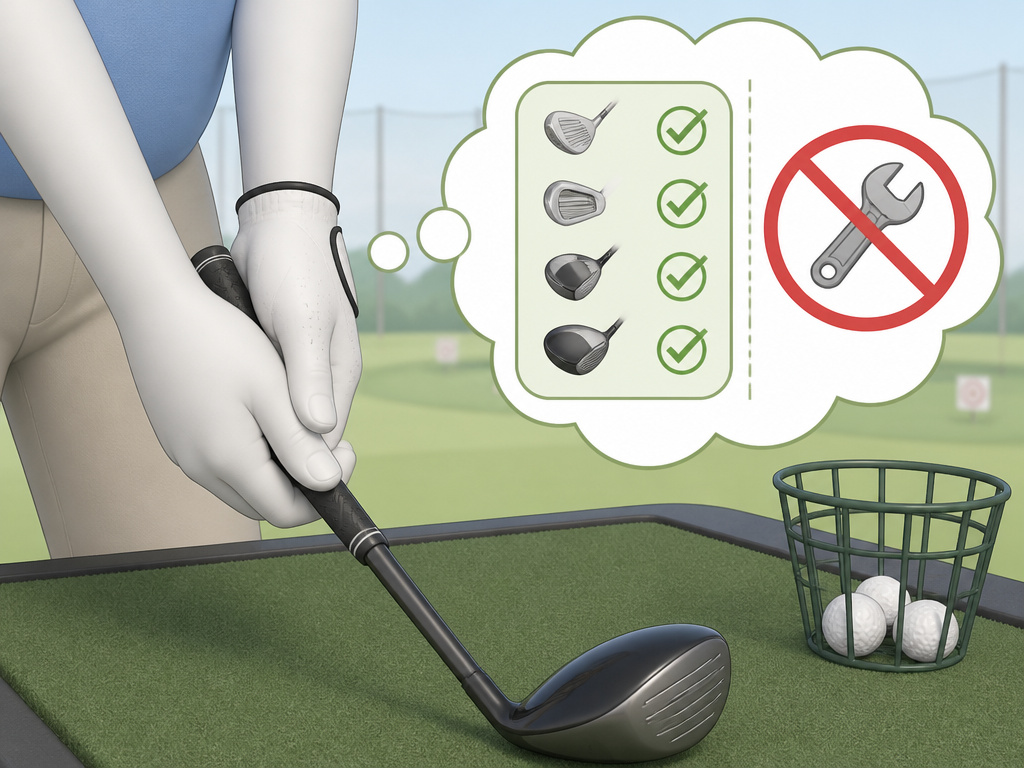
This confusion wastes more potential than any slice. A warm-up is not practice. A warm-up prepares the body and finds the day’s baseline swing. Practice changes the baseline.
A proper warm-up is short and systematic. Take a small bucket. Hit 4-6 shots with a wedge, then a short iron, a mid-iron, a hybrid, and finally a few drivers. That’s it. You’re checking ball flight, loosening muscles, and building tempo. You are not fixing your over-the-top move. That’s practice work.
Common mistake: Using a pre-round warm-up to rebuild your swing. You’ll ingrain panic, not change. If your swing is broken, you’re better off hitting 3-woods off the tee and saving the rebuild for a dedicated practice day.
Practice sessions are for construction. They require the 45-minute focused structure, a clear goal, and the tolerance for temporary failure. Mixing the two goals, trying to fix a flaw while you’re trying to calm nerves before a round, guarantees you accomplish neither.
Essential Tools to Make Your Plan Stick
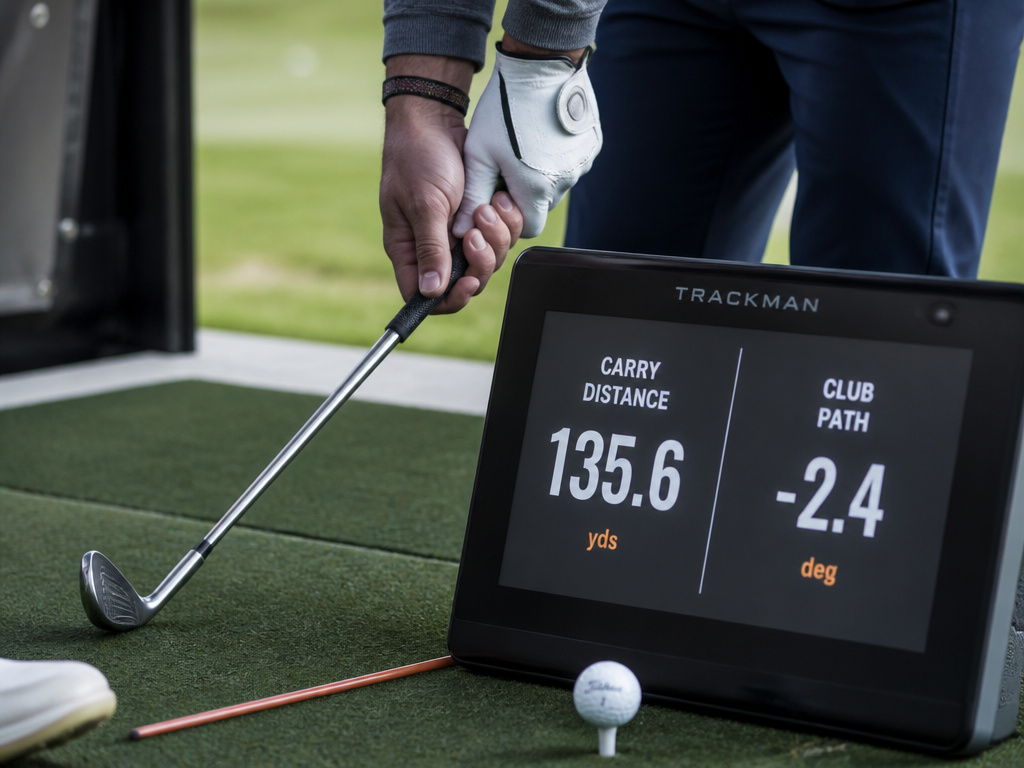
A plan is just an idea without the right feedback. These tools turn guesswork into measurable progress.
A quality practice mat is the foundation for any practice at home. It needs realistic turf interaction and enough thickness to protect your joints. Don’t cheap out here; a bad mat teaches you to hit it fat.
For data, a basic launch monitor like the Rapsodo MLM2PRO or FlightScope Mevo is transformative. It gives you instant feedback on club path, face angle, and carry distance, especially for those critical wedge yardages. You stop wondering why the ball went right and start knowing.
Finally, build a toolkit: alignment sticks, a putting mirror, a portable net. These practice tools allow for structured repetition in your garage, turning downtime into productive time. A consistent weekly routine that includes short game work is what actually lowers handicaps.
Frequently Asked Questions
How many balls should I hit at the driving range?
Quality brutally outweighs quantity. A focused, 45-minute session following the random practice method with 50-60 balls will do more for your game than mindlessly hitting 200 balls. For a pre-round warm-up, a small bucket (30-40 balls) is plenty.
What is the 20/20/20 practice system?
It’s a popular framework that splits a one-hour session into three 20-minute segments: chipping/putting, wedge play, and full swings. It’s a solid template for ensuring short game attention. The key is to apply random practice within each segment, not just hit the same shot repeatedly.
I don’t have a short game area at my range. What should I do?
Improvise. Use the last 15 minutes of your session to hit wedge shots to a specific yardage marker or a headcover placed on the range. Focus on trajectory control and landing spot. You can still practice chipping drills in a small area with limited flight balls.
How often should I practice at the range?
Frequency beats marathon sessions. Two or three 45-minute focused sessions per week will yield faster improvement than one four-hour slog on Saturday. Consistency allows your brain to consolidate motor learning between sessions.
The Bottom Line
Stop measuring your practice by the size of the bucket. Measure it by the percentage of shots you hit with your scoring clubs, get that number over 55. Measure it by how often you change clubs and targets. Most importantly, measure it by a clock: set a 45-minute timer for any technical work and walk away when it dings.
The plan isn’t complicated. Warm up your body, not your swing. Spend most of your time rehearsing the shots you’ll see on the course, in the random order you’ll see them. Finish with wedges. That’s the entire system. Everything else is just noise, and wasted balls.
