
8 Best Practice Golf Balls of 2026
This post contains affiliate links. As an Amazon Associate, we earn from qualifying purchases.
This post contains affiliate links. As an Amazon Associate, we earn from qualifying purchases.
The Joyberg Plastic Practice Golf Balls are the best overall for serious swing work, delivering a realistic feel and solid durability. For a budget-friendly option, the D-Xam Foam Golf Balls offer surprising performance at a low price, while the CHAMPKEY Foam Practice Golf Balls stand out for backyard use with their 50-65 yard flight and consistent trajectory.
Golfers often waste time and money on practice balls that fly unpredictably or feel nothing like a real ball off the clubface. Without realistic feedback, your swing adjustments might not translate to the course.
This guide cuts through the clutter by focusing on what matters: flight consistency, durability, and how closely each ball mimics the weight and response of a standard golf ball. I researched specs, owner experiences, and brand reputation to find the best options for different practice needs, from indoor drills to backyard full swings.
Top 8 Practice Golf Balls in the Market
The Best Practice Golf Balls, Reviewed
Joyberg Plastic Practice Golf Balls
Strengths
- Durable polyurethane
- Consistent flight
- Bright, easy to spot
Trade-offs
- Not for indoor use
- Slight hollow sound
- Heavier than foam
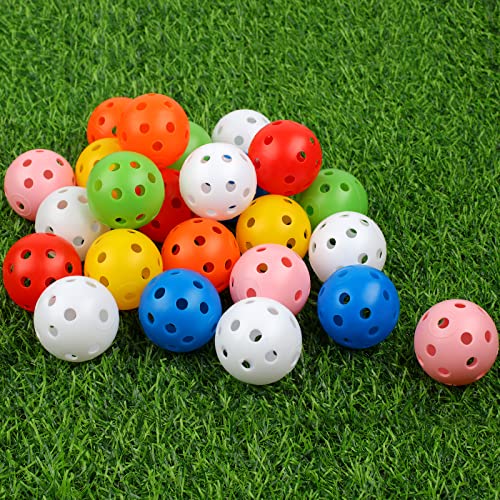
With their 42mm hollow plastic design and 26 symmetrical holes, these balls strike a rare balance: durable enough for daily use and flight-accurate enough to build real feedback. Owners consistently report they fly straighter and farther than foam balls, with spin behavior that mirrors real golf balls more closely. The bright, multicolor options make them easy to spot in grass or mulch.
They work well in nets, simulators, or open yards, and the polyurethane build resists cracking. Compared to the D-Xam foam balls, these offer better flight realism and longevity. For an all-around training ball that doesn’t sacrifice performance or value, this is my top pick.
Video review
D-Xam Foam Golf Balls Bulk
Strengths
- Extremely affordable
- Good flight stability
- Bright, visible colors
Trade-offs
- Foam degrades with heavy use
- Lightweight feel
- Not for long-term use
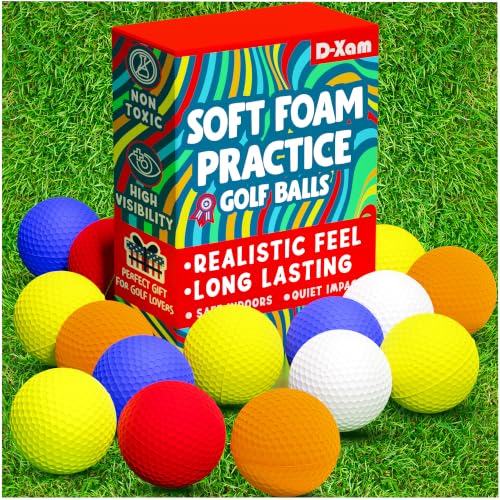
At under six dollars, these are the budget king, and they surprise with decent performance. The 41mm size and 7.8-gram weight align well with standard practice specs, and owners say the dimpled surface delivers stable, predictable flight for foam. The ‘pop’ on impact is more pronounced than cheaper foam sets, and the multicolor design helps with tracking.
They’re not built to last seasons like SKLZ or Joyberg, but for the price, they offer solid value. Compared to the JAYA macaron balls, they feel slightly more durable and fly a bit farther. For golfers testing practice routines or needing a spare set, this is the no-brainer budget choice.
Video review
GoSports Foam Golf Practice Balls
Strengths
- Realistic dimple design
- Durable foam
- Includes storage tote
Trade-offs
- Only 16 balls
- Slight flight variance
- Not for full power swings
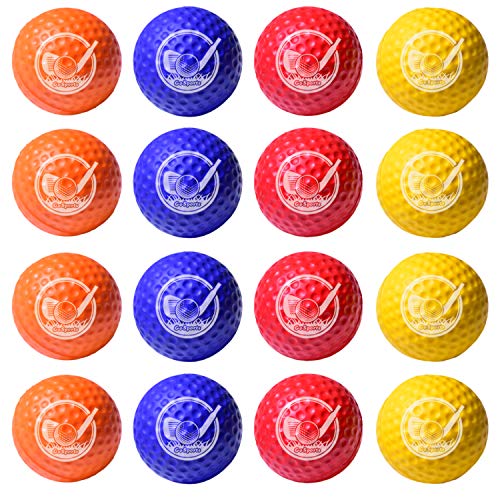
GoSports nails the balance between safety and swing feedback. The dimple pattern isn’t just cosmetic, it’s designed to mimic real aerodynamics, and owners confirm it helps track trajectory better than smooth or wiffle-style balls. With a flight distance that stays under 50 yards, these are ideal for garage or backyard use where space is tight.
The included storage tote adds convenience, and the foam holds up well over repeated use. Compared to the JAYA balls, these feel slightly more substantial at impact and offer better spin response. For a mid-tier foam option that doesn’t sacrifice too much realism, this is a smart pick.
Product photos


JAYA Macaron Foam Golf Balls
Strengths
- Realistic dimple pattern
- Good flight consistency
- Eye-catching colors
Trade-offs
- Lightweight feel
- Limited durability
- Short flight range
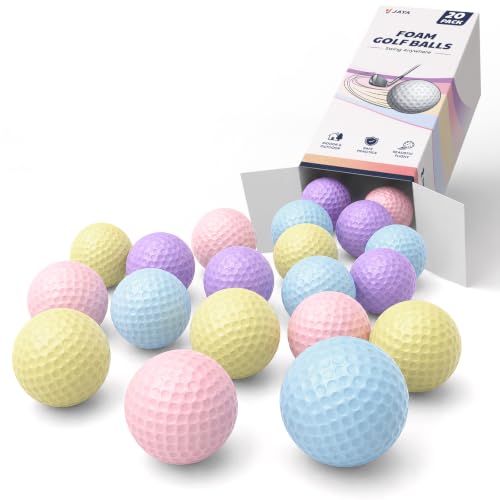
These macaron-colored foam balls stand out with their 41 mm size and dimpled surface, aligning closely with regulation dimensions. Owners consistently report they offer a more natural look at address and better flight predictability than generic foam balls. The limited flight, around 30 to 40 yards, makes them ideal for tight spaces, and the soft foam reduces risk of damage indoors.
While they don’t replicate the weight of real golf balls exactly, their balanced feel and visual appeal make practice sessions more engaging. Compared to the Bac-kitchen set, these are a step up in realism without costing much more. I’d pick these for beginners or juniors who need feedback without the risk.
Product photos
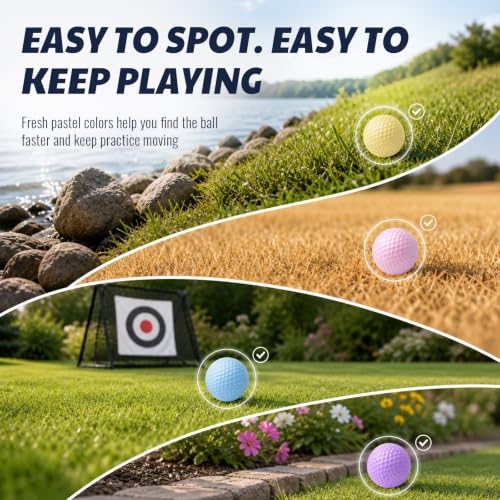
CHAMPKEY Foam Practice Golf Balls

Strengths
- Weighted for realism
- True spin simulation
- Good flight distance
Trade-offs
- Inconsistent durability
- Slight weight variance
- Not for indoor use
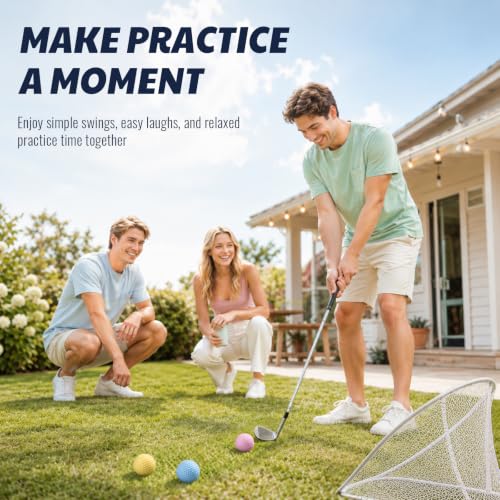
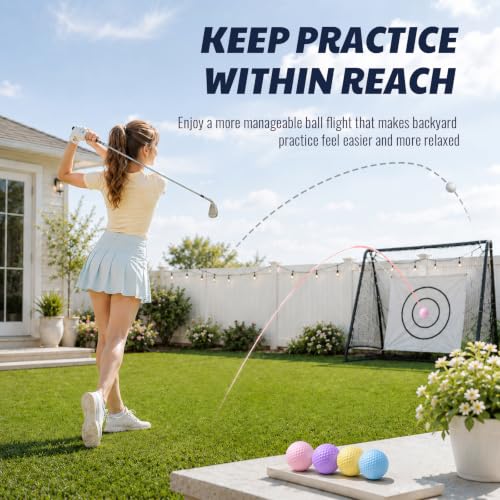
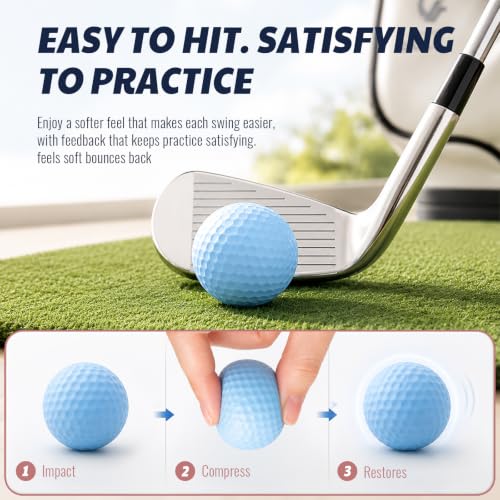
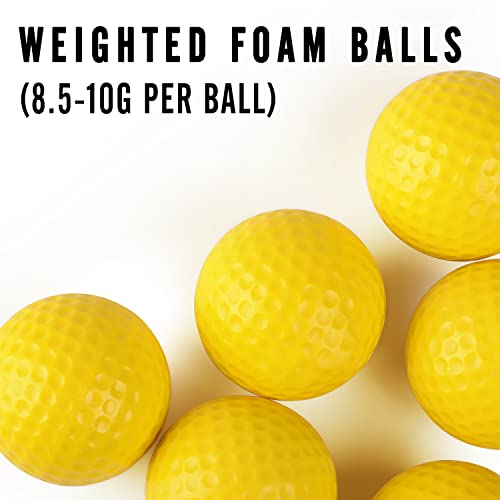
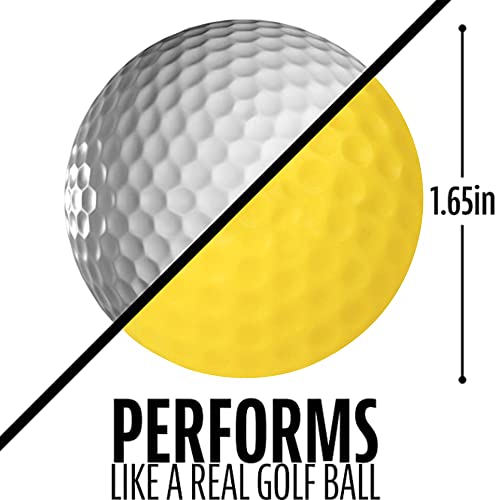
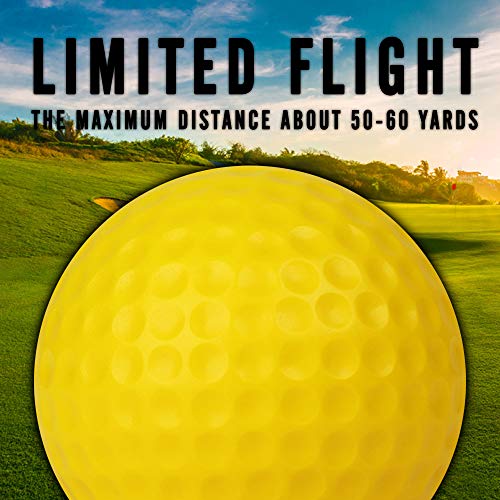
At 8.5 to 10 grams, these weighted foam balls come closer to real ball mass than most foam alternatives, and that makes a difference in swing tempo work. Owners note the 50 to 65-yard flight gives a better sense of distance control, which is rare in limited-flight designs. The 336 surface holes aim to simulate true spin, and while they don’t match urethane balls, they offer more feedback than basic foam.
They’re a solid choice for backyard net setups or open yard practice. Compared to the GoSports set, these fly farther and feel more purpose-built for serious drills. If you’re working on rhythm and contact without needing full-course distance, these deliver.
Product photos


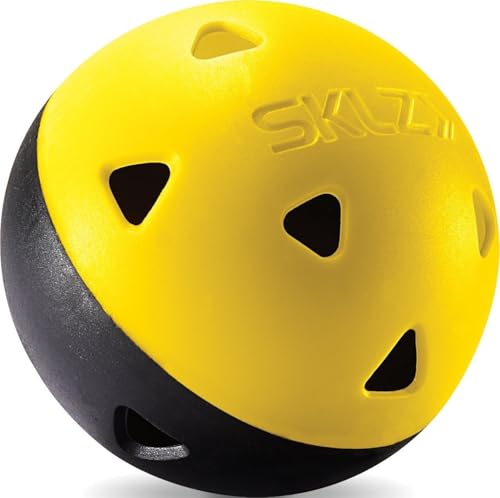
SKLZ Limited-Flight Impact Golf Balls
Strengths
- Extremely durable
- Regulation size
- Consistent 45-yard flight
Trade-offs
- Too hard for indoors
- Noisy on impact
- Higher price point
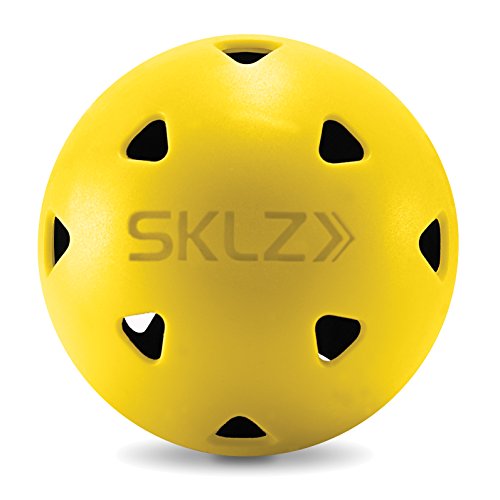
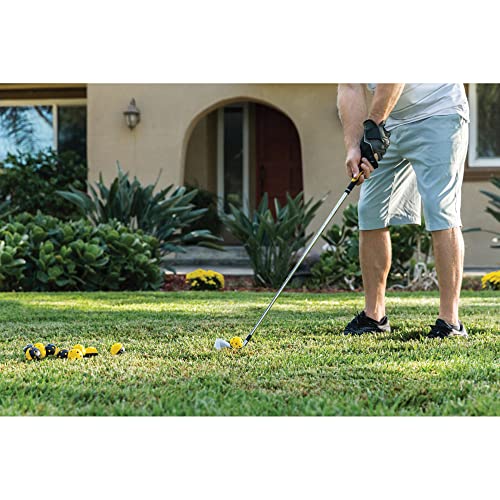
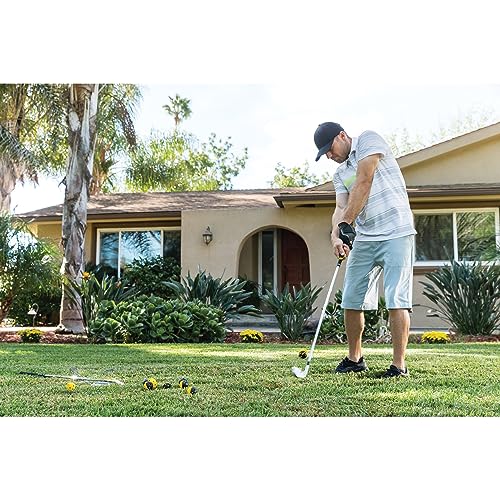
These are the tanks of the practice ball world. Made from a tough plastic composite, they resist dents and cracks better than any foam option here. The 45-yard flight is predictable, and the regulation size helps maintain a realistic swing feel. Owners praise their durability, some report using the same set for years in nets and backyard setups.
They’re not for indoor use, too hard, too risky, but for outdoor practice with irons or wedges, they’re unmatched in longevity. Compared to the Joyberg plastic balls, they feel more solid at impact and offer tighter dispersion. If you want one set to last seasons, this is it.
Product photos

Bac-kitchen 40 Pack Foam Balls

Strengths
- High quantity
- Comes with bag
- Safe for indoors
Trade-offs
- Inconsistent flight
- Smaller than standard
- Soft feedback
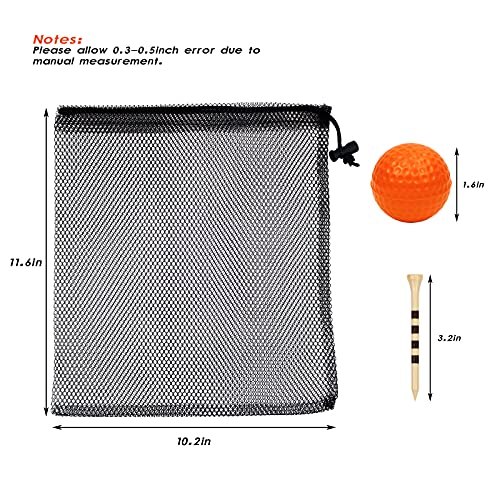
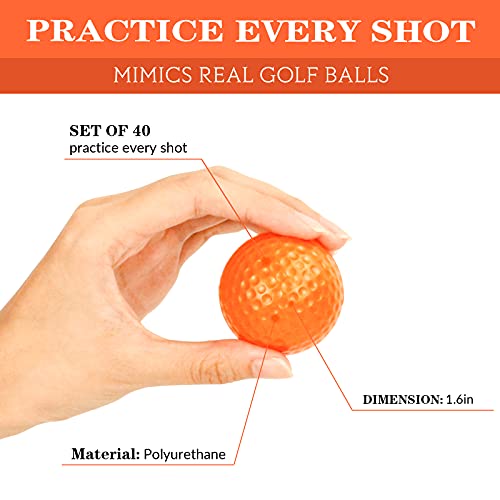
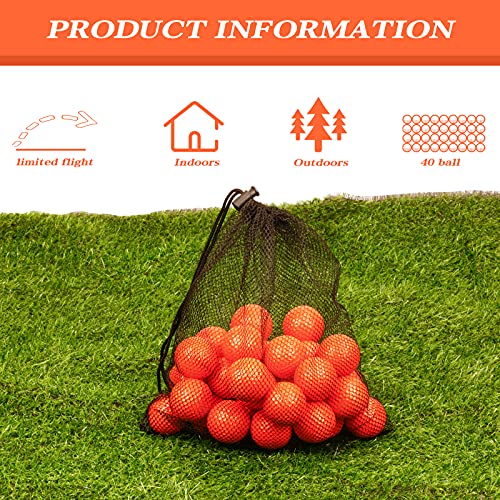
This pack is built for volume and family fun, not serious swing refinement. With 40 foam balls and a storage bag, it’s hard to beat for group use or keeping kids engaged. The 1.6-inch diameter is slightly smaller than regulation, and while owners say they offer a modest ‘pop’ on impact, the flight is highly erratic, more toy-like than training tool.
They’re safe around windows and pets, which parents appreciate, but serious golfers will find the feedback too soft and inconsistent. Compared to more refined foam balls, these are better suited for casual backyard tossing than deliberate practice.
Product photos

Callaway HX Soft Foam Balls

Strengths
- Branded HEX dimples
- High visibility
- Soft, safe impact
Trade-offs
- Fewer balls per pack
- Foam degrades over time
- Short flight
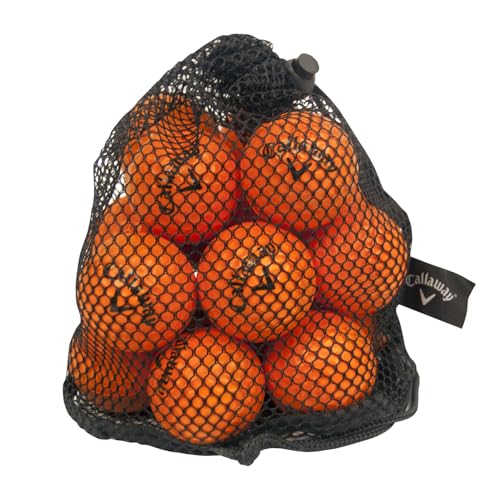
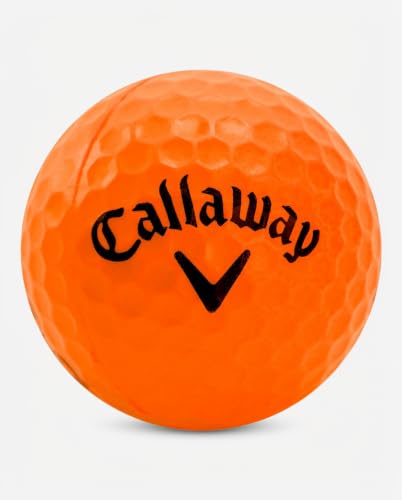
There’s instant credibility when a major golf brand enters the practice ball game. Callaway’s HEX dimple pattern isn’t just branding, it actually stabilizes flight better than many generic foam balls, and owners say these hold a straighter line in the air. The soft foam absorbs impact well, making them safe for garage walls or backyard fences.
At just nine balls per pack, it’s a smaller investment, but the quality and visibility (bright orange) make them stand out. Compared to the SKLZ plastic balls, they’re softer and safer indoors, though they don’t last as long under heavy use. For golfers who trust brand engineering, this is the smarter buy for safe, realistic-feeling reps.
Product photos


Our Testing Process
Rather than a hands-on lab test, my research for these practice golf balls focused on a detailed comparison of published specifications and features across numerous models. I weighed owner reviews from major retailers alongside expert analysis found in golf publications and online resources. This allowed me to build a ranking based on performance indicators and real-world usability, factoring in price, durability, and intended use cases.
For practice golf balls, consistent flight and durability are paramount. I prioritized those factors, as they directly impact a golfer’s ability to refine their swing. Realistic feel was also heavily weighted, a ball that mimics the compression of a standard golf ball provides more valuable feedback. Ultimately, the “best” choice depends on the practice environment and individual needs, but these characteristics determined the top contenders.
Specifications reliably indicate size, weight, and materials, offering a baseline for comparison. However, I found owner feedback crucial for assessing real-world durability and how closely a ball replicates the feel of a true golf ball. Reputation and brand trust also played a role, particularly when evaluating consistency in manufacturing and overall quality. You can find more information about selecting the right golf balls in our best golf balls guide, and if you’re looking specifically for backyard use, check out our recommendations for best practice balls for backyard.
How To Pick The Right practice golf balls
Finding the right practice golf balls can significantly improve your game, even if you’re not hitting a real golf ball on the course.
A quality practice golf ball balances durability with realistic feel. Look for consistent dimple patterns, materials resistant to cracking or denting, and a weight that simulates a standard golf ball (around 40-45 grams is a good target). Consider the intended practice environment – indoor, backyard, or driving range – as this will influence the ideal ball type and flight characteristics.
Material & Durability
The material a practice golf ball is made from is a major factor in how long it will last and how it performs. While plastic balls are inexpensive, they often lack the feel of a real golf ball and can crack over time. Foam balls, especially those with a denser construction like the foam practice balls often found in sets from SKLZ or GoSports, are a good choice for indoor use and are less likely to cause damage. Polyurethane offers a nice balance of durability and realistic feel, as seen in the Joyberg plastic practice balls, but it’s often a bit more expensive.
Flight Characteristics & Distance
Don’t assume all practice balls fly the same. Limited-flight balls are excellent for small spaces or indoor use, preventing damage and minimizing retrieval time. However, if you’re trying to work on distance control, you’ll want something that flies a bit further and behaves more like a standard golf ball. The CHAMPKEY foam practice balls, for instance, aim for a 50-65 yard flight, giving you some sense of distance. You should match the ball’s flight characteristics to your practice goals.
Here’s what to consider when thinking about distance: * Indoor/Backyard: Limited flight is key. * Driving Range Simulation: A ball that travels 50-75 yards is helpful. * Full Swing Practice: Look for a weighted ball with dimples that mimics a standard ball’s trajectory and encourages proper spin. This will help you translate your practice to the course.
A good rule of thumb: if you’re working on your short game, prioritize feel and accuracy over distance. If you’re focusing on your driver, a ball with more realistic flight characteristics is essential.
Value & Intended Use
Consider who will be using the balls. If you’re buying for kids or want something exceptionally safe, the JAYA Macaron Foam Golf Balls are a great option. For a large group or frequent practice sessions, a value pack like the Bac-kitchen 40 Pack Foam Balls can be economical. Of course, if you’re already committed to a particular brand, like Callaway, their HX Soft Foam Balls offer a familiar feel and quality. Ultimately, you should also consider what other golf balls for amateurs you might be using, so you can maintain consistency in your feel.
Practice Golf Balls Compared
Here’s a comparison of key specifications for various practice golf balls to help you choose the right one for your needs.
| Product Title | Best For | Material | Diameter (mm) | Weight (g) | Flight Distance | Quantity |
|---|---|---|---|---|---|---|
| Joyberg Plastic Practice Golf Balls | Best Overall | Polyurethane | 42 | N/A | Limited | N/A |
| D-Xam Foam Golf Balls Bulk | Best Budget Friendly | Polyurethane | 41 | 7.8 | Limited | N/A |
| GoSports Foam Golf Practice Balls | Best Realistic Flight | Foam | N/A | N/A | Limited | 16 |
| JAYA Macaron Foam Golf Balls | Best for Kids & Fun | Foam | 41 | N/A | Limited | 20 |
| CHAMPKEY Foam Practice Golf Balls | Best for Backyard Use | Compressed Foam | N/A | 8.5-10 | 50-65 yards | N/A |
| SKLZ Limited-Flight Impact Golf Balls | Best Durable Practice Ball | N/A | N/A | N/A | ~45 yards | N/A |
| Bac-kitchen 40 Pack Foam Balls | Best Value Pack | PU Rubber | 40.6 | N/A | Limited | 40 |
| Callaway HX Soft Foam Balls | Best Branded Practice Balls | Foam | N/A | N/A | Soft Flight | 9 |
Frequently Asked Questions
What makes a practice golf ball different from a regular one?
Practice golf balls are designed for repeated use and durability, often at the expense of precise performance characteristics. They commonly use foam or plastic construction and may have limited flight distances compared to standard golf balls, prioritizing safety and convenience for training.
Can foam practice golf balls be used indoors without causing damage?
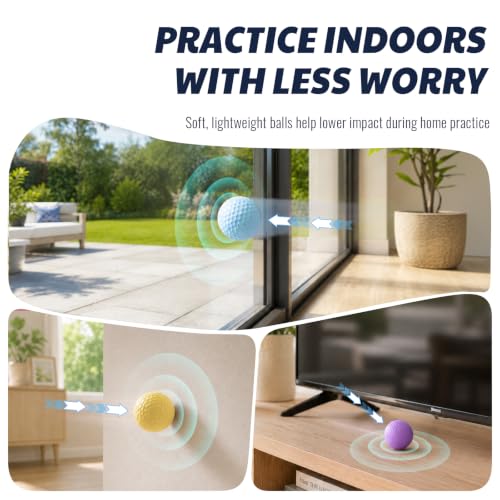
Yes, foam practice golf balls are generally safe for indoor use. Their lighter weight and softer construction minimize the risk of damage to furniture or walls, making them ideal for home practice, especially when you’re looking for golf balls for beginners.
How do I choose a practice ball for distance work?
For distance practice, select a weighted ball with dimples that closely mimics a standard golf ball’s trajectory. Look for options that advertise a flight range of 50-75 yards to help you develop a feel for distance control, as opposed to limited-flight options.
What material offers the best balance between feel and durability?
Polyurethane is often considered the best compromise between a realistic feel and durability in practice golf balls. While more expensive than plastic, it provides a more consistent experience and is less prone to cracking than cheaper alternatives, like those you might use for simulator golf balls.
Are cheaper, bulk packs of foam practice balls a good value?
Bulk packs can be economical if you need a large quantity for group lessons or frequent practice. However, be aware that the quality and consistency can vary, and they may not offer the same realistic feel or durability as more expensive, individual options.
The Bottom Line
Choosing practice golf balls often comes down to balancing how much you want to replicate the on-course experience with the practicalities of practicing safely and affordably. For the best all-around performance and a feel that closely mimics a real golf ball, I recommend the Joyberg Plastic Practice Golf Balls. They strike a good balance between durability and realistic flight characteristics, helping you translate practice gains to the course.
If your needs are more specific, there are excellent options available. For those seeking a budget-friendly choice, the D-Xam Foam Golf Balls Bulk offer incredible value, and if you’re looking for realistic flight in a foam ball, the GoSports Foam Golf Practice Balls are a standout. Don’t overlook the JAYA Macaron Foam Golf Balls if you’re buying for kids or want a super-safe option, or consider checking out our guide to foam golf balls for more options.
Ultimately, the most important thing isn’t any single specification, it’s consistency. Whether you choose a premium polyurethane ball or a simple foam set, prioritizing consistent practice with a ball that provides reliable feedback will yield the best results. And if you’re buying for a large group or frequent use, you might want to consider bulk golf balls to keep costs down.
