
7 Best Bulk Golf Balls of 2026
This post contains affiliate links. As an Amazon Associate, we earn from qualifying purchases.
This post contains affiliate links. As an Amazon Associate, we earn from qualifying purchases.
The Amazon Basics Core Soft is our top pick for the best bulk golf balls, delivering reliable performance at a low cost per ball. For a budget-friendly recycled option, the Callaway Assorted Recycled Golf Balls offer solid playability, while the Wilson 2024 Chaos stands out as a great choice for beginners seeking consistency.
Golfers buying in bulk face a real trade-off: how to get playable balls without overspending, especially when losing several a round or needing them for practice. It’s not just about quantity, condition, compression, and construction matter more than most realize.
Based on specs, owner feedback, and my experience helping golfers equip themselves for trips and range sessions, I focused on value, durability, and how well each option suits different player types. These picks balance cost with real-world performance, so you’re not wasting shots, or money.
Top 7 Bulk Golf Balls in the Market
The Best Bulk Golf Balls, Reviewed
Amazon Basics Core Soft Golf Balls

Strengths
- Soft feel and straight flight
- Alignment aid stamp
- USGA conforming
Trade-offs
- Minimal spin on wedges
- Less premium cover material
- Basic packaging
Don’t let the name fool you, Amazon Basics Core Soft balls punch above their price point. With a low-compression core and side-stamp alignment aid, they deliver straight flight, soft impact, and surprisingly good short-game response. Owners report they’re noticeably more consistent than other budget balls, especially off the tee and on putts.
The white finish stays clean longer than expected, and the USGA conformity means you can use them in any format. Compared to the Wilson Chaos or recycled mixes, these feel more like a complete package, decent distance, better control, and a clean look. For the average recreational golfer who wants a no-fuss, reliable ball without brand hype, this is the smarter buy.
Video review
Wilson 2024 Chaos Golf Balls

Strengths
- Bright color options
- Durable Surlyn cover
- Beginner-friendly flight
Trade-offs
- Basic two-piece design
- Limited spin control
- Not for advanced players
The Wilson Chaos is built for beginners who care more about fun and visibility than spin rates or compression tech. With a two-piece Surlyn cover, it’s durable and flies straight, ideal for high-handicappers still working on consistency. The multicolor options (yellow, orange, green) make these balls easy to track in flight and spot in rough, which owners consistently highlight as a major plus.
It’s not a distance leader or a short-game specialist, but it holds up well for the price. Compared to other entry-level balls, the Chaos feels a bit livelier off the clubface. I’d recommend it to new golfers or juniors who want a forgiving ball that doesn’t punish mishits. It’s not going to impress a scratch player, but it’s not trying to.
Video review
Callaway Assorted Recycled Golf Balls
Strengths
- High volume 72-ball pack
- Authentic Callaway models
- Stable flight patterns
Trade-offs
- Some visible wear
- No premium-grade guarantee
- Limited to Callaway only
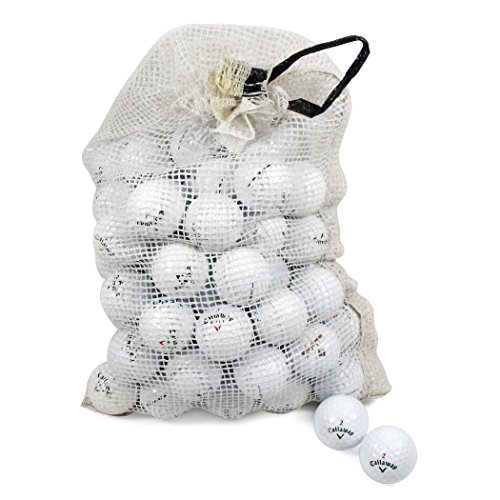
This 72-ball pack from Callaway delivers serious volume with a focus on recognizable models like Chrome Soft and ERC Soft. The B/C grading means no cuts, but light scuffs and smudges are common, owners say they play fine but don’t look pristine. The real appeal is getting access to Callaway’s HEX and Tour Aero dimple patterns, which help stabilize flight even in recycled form.
Compared to mixed-brand packs, this one offers more predictability in performance. You’re not guessing what tech is in each ball, everything here is authentic Callaway construction. For fans of the brand or players who trust Callaway’s flight dynamics, this pack balances cost, quantity, and reliability better than most.
Product photos
Kirkland Mix Used Golf Balls
Strengths
- Near mint condition
- Consistent Kirkland quality
- Soft feel and good spin
Trade-offs
- Limited brand variety
- Slight performance drop from new
- Higher price per ball than lower grades
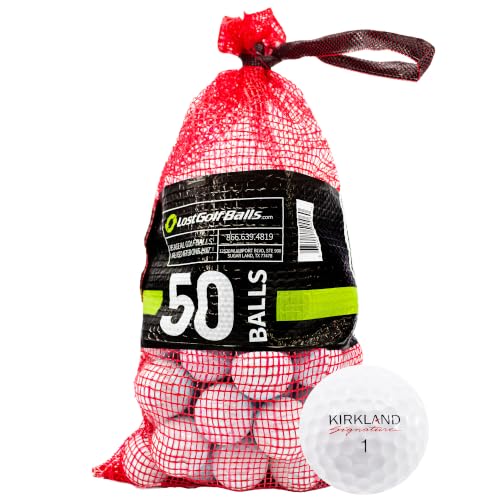
Kirkland Signature balls have developed a cult following for mimicking premium ball performance at a fraction of the price, and this 50-pack of near mint recycled ones hits a sweet spot between cost and quality. The grading here is reliable, owners note these balls look and feel like they’ve only been used for a few holes, with only minor luster loss or light blemishes. The multi-layer construction and urethane-like cover deliver solid greenside spin and a soft feel, traits usually reserved for much more expensive models.
Compared to other bulk options, this pack stands out for its consistency in both condition and brand. You’re not getting a mystery mix, just dependable Kirkland balls that perform like Pro V1s on approach shots. For mid to low handicappers who don’t want to compromise feel just to save money, this is one of the smarter buys in the used ball space.
Product photos
Clean Green 48 Recycled Golf Balls

Strengths
- Wide brand variety
- Good for testing preferences
- Eco-friendly option
Trade-offs
- Visible scuffs and marks
- Inconsistent ball models
- Not for competitive play
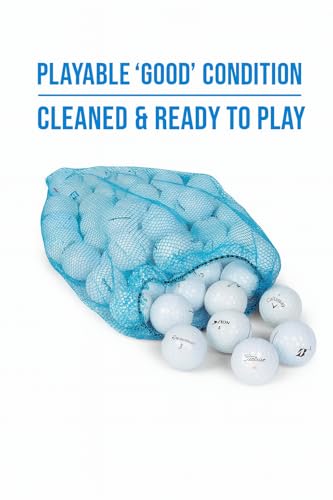
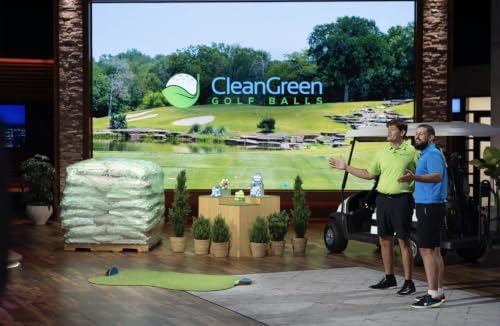
If you’re the kind of golfer who likes to sample different brands without draining your wallet, this 48-ball mixed pack offers a fun, low-pressure way to experiment. The variety is its strongest selling point, owners consistently report pulling out Titleist Pro V1s, Callaway Chromes, and Kirkland Signature balls, all in playable condition. On paper, that’s a solid lineup, and for casual rounds or range sessions, these balls perform as expected given their ‘good’ condition grade.
That said, don’t expect tournament-ready consistency. The ‘aesthetically challenged’ label means real scuffs, fading, and logo marks, which some picky players find distracting. Still, for weekend golfers who lose a few balls per round, this mix removes the sting of loss while delivering familiar brand performance. I’d lean into this more for practice or resort play than for serious scoring.
Product photos



50 Recycled Hit-Away Golf Balls
Strengths
- Very affordable
- Good for high-volume practice
- Eco-conscious choice
Trade-offs
- Heavy cosmetic wear
- Unreliable flight characteristics
- Not course-play ready
This 50-ball pack is clearly not meant for the course, and that’s fine. Marketed as ‘2A quality’, these balls show clear wear: discoloration, deep scuffs, and logo marks are common. But for range work or backyard chipping, they get the job done. Owners praise them as a cost-effective way to pound buckets without worrying about ball flight perfection.
The mixed variety means you’ll get a scatter of brands and models, but none in tournament-ready shape. If you’re a beginner building swing consistency or a coach stocking a practice basket, these make sense. But I wouldn’t recommend them for any on-course play, the cover damage can skew flight and spin. For pure range duty, though, they’re hard to beat on price.
Product photos


Golf Ball Planet 100 Used Balls

Strengths
- Large 100-ball count
- Convenient dual packaging
- Reliable 4A/3A grading
Trade-offs
- No premium ball guarantee
- Mixed brand inconsistency
- Bulkier to store
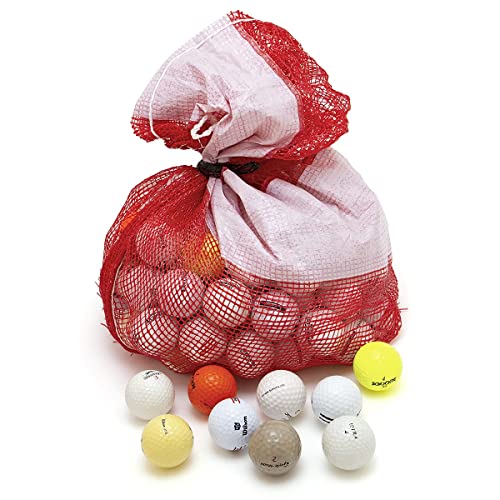
When you need sheer volume, this 100-ball pack from Golf Ball Planet is tough to overlook. Split into two mesh bags of 50, it’s ideal for range operators, golf camps, or anyone who goes through balls quickly. The 4A/3A grading means most balls are playable, expect light scuffs, pen marks, and minor discoloration, but no cuts or structural damage.
While the brand mix is random, owners report mostly mid-tier models in consistent condition. It’s not as premium as a Kirkland-only pack, but for the quantity, it delivers solid value. I’d pick this over smaller packs if you’re hosting group clinics or just want a deep stash for months of range work. Just don’t expect any Pro V1s in the pile, this is functional, not flashy.
Product photos


How We Picked These bulk golf balls
Rather than a hands-on lab test, my research focused on comparing published specifications and features across numerous bulk golf ball offerings. I weighed owner reviews from major retailers alongside expert opinions found in golf publications and forums. This allowed me to build a ranking based on reported performance, durability, and value. My experience planning golf trips and understanding golfer needs informed this process.
For bulk golf balls, consistent performance and value are paramount. I gave the most weight to the grade and condition of recycled balls, as this directly impacts playability. For new balls, compression and cover material were key – lower compression generally suits a wider range of swing speeds, while cover material influences feel and spin. Finding a pack that balances cost per ball with acceptable quality was also a priority; you can find excellent golf ball reviews on my site.
Specifications reliably indicate core construction (layers, materials) and cover type (Surlyn, Urethane). However, owner feedback proved crucial in judging the actual condition of recycled balls and the consistency of performance claims. Reputation matters; established brands like Callaway and Wilson generally receive more positive reports regarding quality control, even with used offerings. If you’re looking to maximize yardage, checking out balls for distance is a good idea.
Choosing The Right bulk golf balls
Finding the right golf balls can feel overwhelming, but understanding a few key characteristics will make the process much smoother.
A good golf ball delivers consistent flight, appropriate feel for your swing, and durability to withstand repeated use. Consider core construction (single, dual, or multi-layer), cover material (Surlyn, urethane, or blends), and dimple patterns for optimal aerodynamic performance. Evaluating compression – particularly if you’re seeking distance or feel – is also crucial, alongside USGA conformity for tournament play.
Compression & Your Swing Speed
I often tell people that compression is the most misunderstood aspect of golf ball selection. Lower compression balls (like the Amazon Basics Core Soft) are easier to compress, meaning they transfer more energy to slower swing speeds, resulting in greater distance. Higher compression balls require faster swing speeds to realize their potential; otherwise, you’ll lose out on that energy transfer. Don’t assume a “pro” ball is automatically better for your game. A lot of golfers, even experienced ones, benefit from a lower compression ball.
- For swing speeds under 80 mph, look for balls labeled “low compression” or “soft”.
- Swing speeds between 80-95 mph can handle mid-compression balls, offering a balance of feel and distance.
- Swinging 95+ mph? That’s where you can start exploring higher-compression tour-level balls (though feel preference still matters).
New vs. Recycled: Assessing Condition
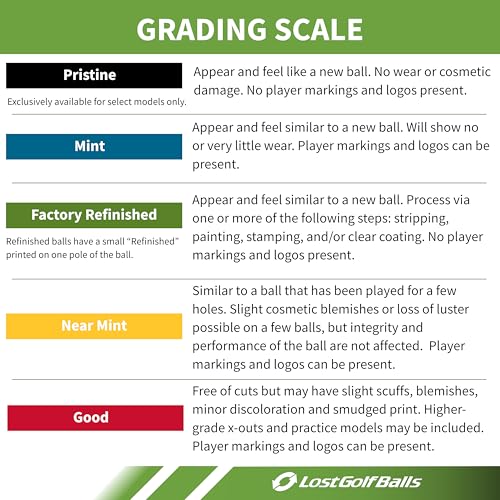
The market for recycled golf balls is huge, and for good reason. You can get a lot more golf balls for your money, as seen with options like the Callaway Assorted Recycled Golf Balls. However, “recycled” covers a wide spectrum of conditions. Be realistic about your expectations. Balls graded “Near Mint” will be very playable, while those listed as “Good” or “Practice” will show significant wear. If you’re looking for affordable golf balls for casual play or practice, a lower grade is perfectly acceptable. But for serious rounds, prioritize balls with minimal cosmetic damage.
A good rule of thumb: if you wouldn’t want to play a ball in a tournament, don’t expect it to perform like a new one on the course.
Brand Variety & Practice Use
Sometimes, you simply want a mix of different balls to see what you like, or a large quantity for dedicated practice. This is where brands like Clean Green and Hit-Away shine. Clean Green’s 48 Recycled Golf Balls offer exposure to various major brands, letting you experiment. Similarly, the 50 Recycled Hit-Away Golf Balls are explicitly designed for practice, accepting that cosmetic imperfections are part of the deal. If you’re new to the game and looking for beginner golf balls, a mixed pack can be a low-pressure way to find a feel you enjoy.
Bulk Golf Balls Compared
Here’s a comparison of key specifications for various bulk golf ball options.
| Product Name | Quantity | Condition | Layers | Cover | Best For |
|---|---|---|---|---|---|
| Amazon Basics Core Soft | 24 | New | N/A | Durable White | Best Overall |
| Wilson 2024 Chaos | 24 | New | 2 | Surlyn | Best for Beginners |
| Callaway Assorted Recycled | 72 | Used (Good) | N/A | Varies | Best Value |
| Kirkland Mix Used | 50 | Used (Near Mint) | N/A | Urethane | Best Budget Friendly |
| Clean Green 48 Recycled | 48 | Used (Good) | N/A | Varies | Best Brand Variety |
| 50 Recycled Hit-Away | 50 | Used (Practice) | N/A | N/A | Best for Practice |
| Golf Ball Planet 100 Used | 100 | Used (3A/4A) | N/A | N/A | Best Large Quantity |
Frequently Asked Questions
What grade of recycled golf ball should I buy for a serious golfer?
Prioritize balls graded “Near Mint” for serious rounds; these will have minimal cosmetic blemishes and retain much of their original performance. Avoid balls listed as “Practice” if you want consistent flight and feel.
How does the compression of a bulk golf ball affect its performance?
Lower compression balls are easier to compress, transferring more energy to slower swing speeds for greater distance, while higher compression balls require faster swings to realize their performance benefits. Consider golf balls for average golfers if you’re unsure.
Are there bulk golf balls suitable for use on the driving range?
Yes, the 50 Recycled Hit-Away Golf Balls are specifically designed for practice, accepting cosmetic imperfections in exchange for a lower price point. These are ideal for high-volume practice sessions where appearance isn’t a concern.
What type of cover material is best for spin and control?
Urethane covers generally offer more spin and control around the greens compared to Surlyn, but they also come at a higher cost. If you’re looking for performance 3-piece construction, urethane is often a key component.
Is it worth buying a large quantity of mixed recycled golf balls?
Buying a mixed pack like the Clean Green 48 Recycled Golf Balls can be a good way to experiment with different brands and find a feel you like, especially if you’re new to the game or just want variety.
The Bottom Line
Buying golf balls in bulk always involves a trade-off between cost and condition. If you want a consistent experience without sorting through used balls, I recommend the Amazon Basics Core Soft. They represent the best overall performance balls and deliver reliable quality in a new package.
For golfers on a tighter budget, or those who don’t mind a little wear for practice rounds, the Kirkland Mix Used offer outstanding value. If you’re looking for a variety of brands to test and see what suits your game, the Clean Green 48 Recycled provide a low-commitment way to experiment. Those seeking a durable 2-piece construction will also find good options in the bulk packs.
Ultimately, the best golf ball is the one that inspires confidence and helps you enjoy your time on the course. Don’t get too caught up in chasing the latest technology or highest compression; focus on finding a ball that feels comfortable and delivers consistent results for your swing.
