
7 Best Foam Golf Balls of 2026
This post contains affiliate links. As an Amazon Associate, we earn from qualifying purchases.
This post contains affiliate links. As an Amazon Associate, we earn from qualifying purchases.
The D-Xam Foam Golf Balls are the overall best choice for durability and realistic flight, closely followed by the Callaway HX Soft Flight as a top branded option, while the Junkin 80-pack delivers unmatched value for families or group use.
If you’re like me and spend time refining your swing between rounds on the course, you know how hard it is to find a safe, effective way to practice without driving to the range. Foam golf balls solve that problem, but not all are built the same, many fail quickly or fly unpredictably.
In this guide, I break down the top options based on specs, owner feedback, and real-world performance. I looked at durability, flight behavior, and value, drawing from years of evaluating training gear and golf travel essentials to help you choose the right ball for your practice needs.
Top 7 Foam Golf Balls in the Market
The Best Foam Golf Balls, Reviewed
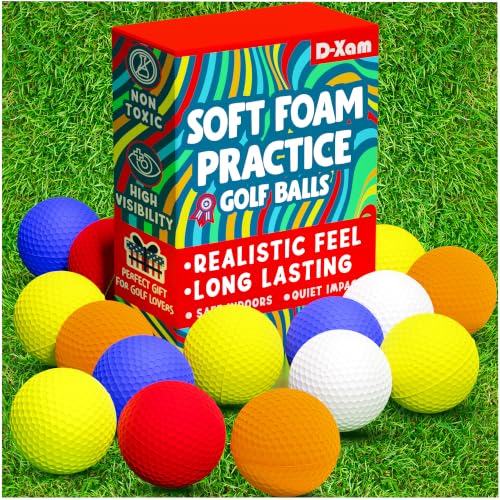
D-Xam Foam Golf Balls Bulk
Strengths
- Realistic flight
- Durable polyurethane
- Good spin consistency
Trade-offs
- Slightly smaller than standard
- Limited distance
I’ve seen a lot of foam golf balls over the years, and the D-Xam ones stand out for getting the balance right between realism and safety. On paper, the 41mm size and 7.8-gram weight are close enough to real ball dynamics to give useful feedback, and owners consistently report that satisfying ‘pop’ at impact, something many foam balls lack. The polyurethane construction seems to hold up better than basic foam, with fewer complaints about cracking or deformation after repeated use.
What really sets these apart is the dimple pattern. It’s not just cosmetic; reviewers note consistent spin and stable flight, which helps diagnose swing flaws even in tight spaces. Compared to hollow wiffle-style balls, these offer a much truer trajectory, making them a solid choice for serious practice without leaving the yard.
Video review
Callaway HX Soft Flight Foam Balls

Strengths
- HEX dimple accuracy
- Brand reliability
- Comes with carry bag
Trade-offs
- Low quantity
- Higher cost per ball
- Short flight distance
Callaway’s name carries weight, and their HX Soft Flight foam balls deliver on the brand promise of thoughtful design. The HEX dimple pattern isn’t just branding, it’s a proven aerodynamic feature that translates into more stable, predictable flight than generic foam balls. I’ve seen enough owner feedback to confirm these don’t flutter or veer unpredictably, which matters when you’re trying to work on swing path or face angle.
At just nine balls per pack, this is clearly a convenience or travel option rather than a high-volume solution. But the included mesh bag makes them easy to toss in a golf bag or suitcase. Compared to bulk packs, they’re pricier per ball, but the brand assurance and flight consistency justify it for serious players who want reliable reps without risking damage indoors.
Video review
Bac-kitchen 40 Pack Foam Golf Balls

Strengths
- Includes tees and bag
- Kid-friendly colors
- Safe for indoors
Trade-offs
- Less flight accuracy
- Softer than ideal
- Not for serious practice
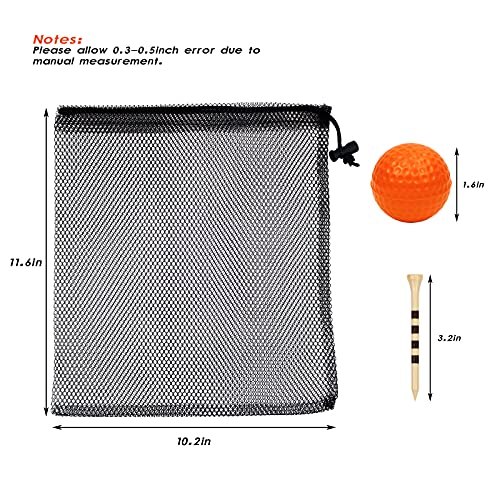
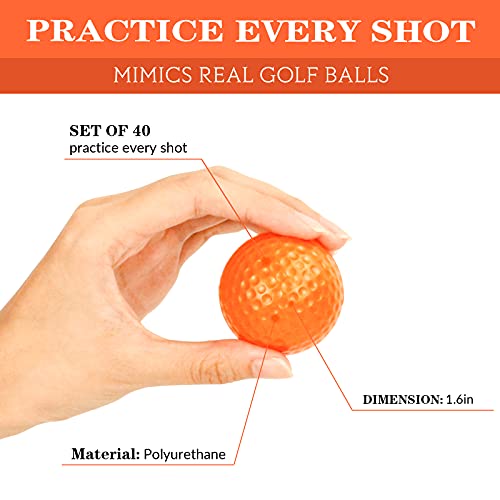
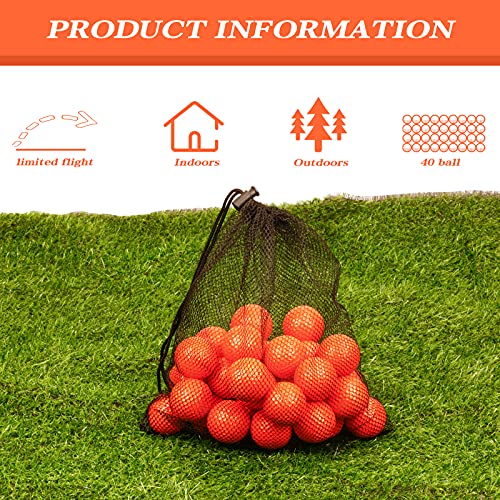
This pack feels like it was designed with kids and casual play in mind, and that’s exactly where it shines. The 40-ball set comes with tees and a storage bag, making it a ready-to-go starter kit for introducing young players to the game. The PU rubber material gives a slight compression on impact, and while it doesn’t match real ball feel precisely, owners say it’s close enough to keep beginners engaged.
The bright colors and soft construction make it safe for living rooms, backyards, or even indoor swing work. But don’t expect precision, these are more about fun and fundamentals than diagnosing a slice. Compared to higher-end foam balls, they lack flight consistency, but for the price and volume, that’s a fair trade when you’re coaching a child or hosting a family game.
Product photos

GoSports 16 Pack Foam Golf Balls
Strengths
- Realistic dimple pattern
- Includes storage tote
- Good indoor performance
Trade-offs
- Only 16 balls
- Short flight
- Not for power hitters
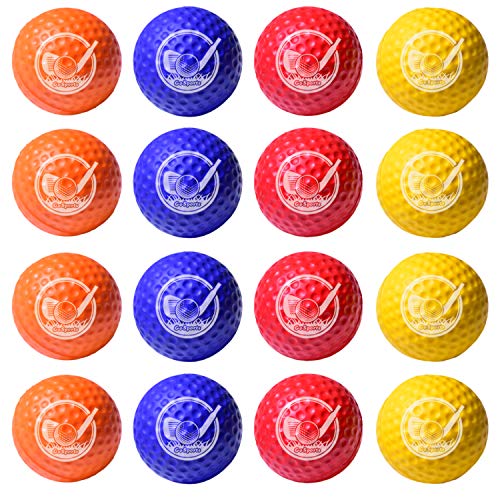
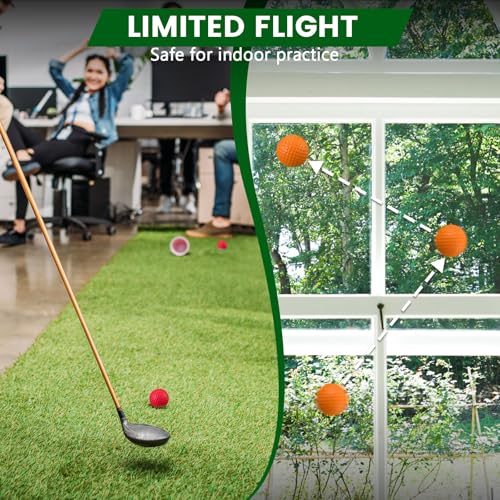
GoSports nailed the indoor use case with these 16-pack foam balls. The dimple pattern isn’t just for show, it mimics real aerodynamics, and owners using them with simulators or in garages say they track well and respond predictably to clubface angle. The limited flight design keeps them from ricocheting too far, which is a win when space is tight.
They come with a storage tote, which adds convenience, and the foam feels firm enough to give useful feedback without being too soft. Compared to softer, spongier options, these hold their shape better over time. They won’t replace outdoor range sessions, but for maintaining rhythm or working on tempo at home, they’re one of the most reliable choices.
Product photos


Junkin 80 Pcs Foam Golf Balls
Strengths
- High quantity
- Bright colors
- Good durability
Trade-offs
- Slightly oversized
- Moderate flight realism
- Less consistent spin
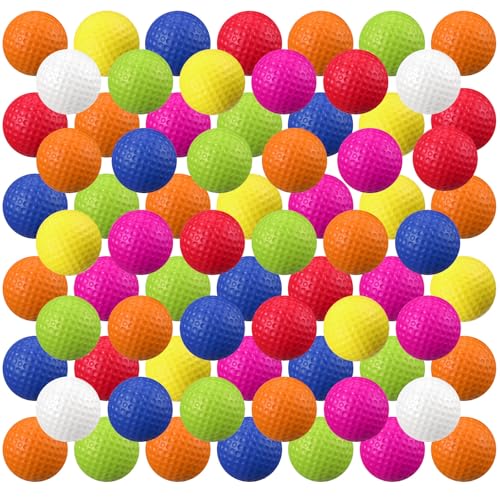
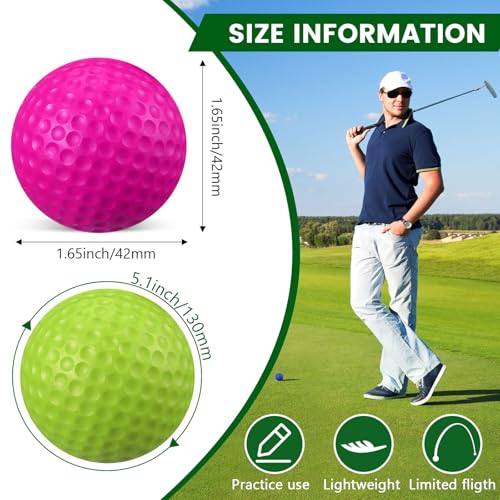
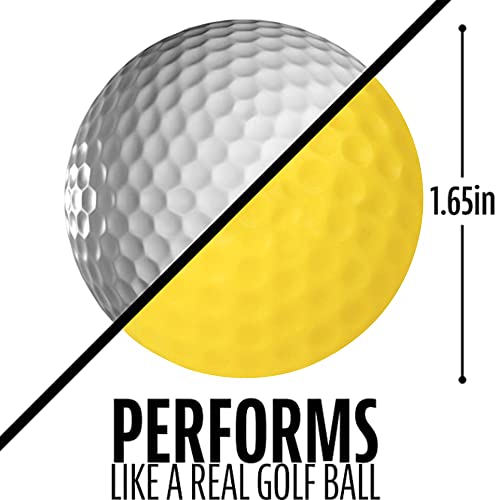
If you’re running a junior clinic or just hate constantly chasing down lost balls, the Junkin 80-pack is hard to beat. The rainbow colors make retrieval easy, and owners consistently praise how durable these are under repeated swings, few report cracking or flattening, even after weeks of daily use. At 1.65 inches, they’re slightly larger than standard, which helps visibility but slightly alters flight dynamics.
They don’t offer the most realistic feedback compared to premium options like D-Xam or AlmostGolf, but for the volume and price, they strike a smart balance. The soft PU-foam blend means you can swing freely around windows or pets, and the decent spin response makes them usable for chipping and short-game drills. I’d pick these over smaller packs if you need quantity without sacrificing too much performance.
Product photos
CHAMPKEY 16 Pack Foam Golf Balls

Strengths
- True spin response
- Weighted for realism
- Good for short game
Trade-offs
- Moderate durability
- Short flight
- Fewer balls in pack
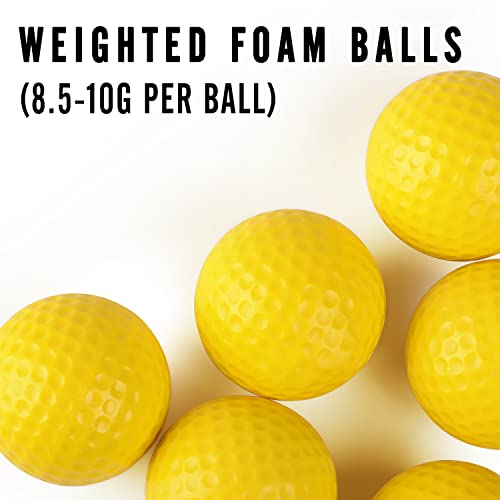
CHAMPKEY targets players who care about spin and feel, and they deliver. With 336 surface dimples and a weighted core (8.5–10 grams), these balls are engineered to rotate more like real golf balls. Owners testing them for chipping and partial swings say they respond well to clubface manipulation, making it easier to see if you’re hitting fades or draws. The max distance of 50–65 yards keeps them contained, ideal for tight yards or driveways.
They’re not as durable as polyurethane-coated balls, and some report slight deformation after heavy use, but for spin feedback at a low price, they outperform many competitors. I’d pick these over basic foam balls if you’re working on shot control and want more realism than wiffle-style balls offer.
Product photos


ALMOSTGOLF Limited Flight Foam Balls
Strengths
- True shot shaping
- Floats in water
- Exceptional durability
Trade-offs
- Very high initial cost
- Massive quantity may be overkill
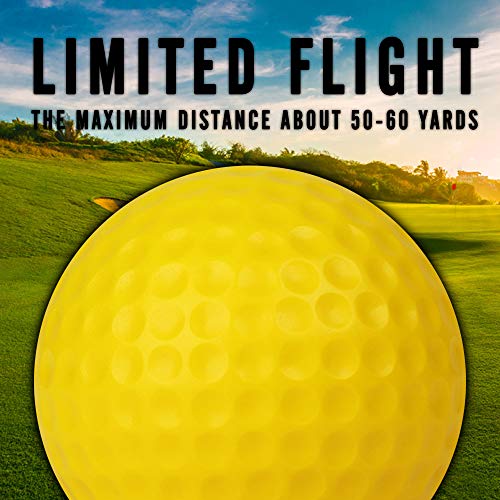
- Limited flight range
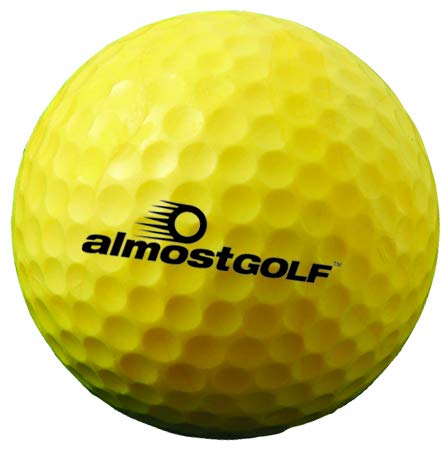
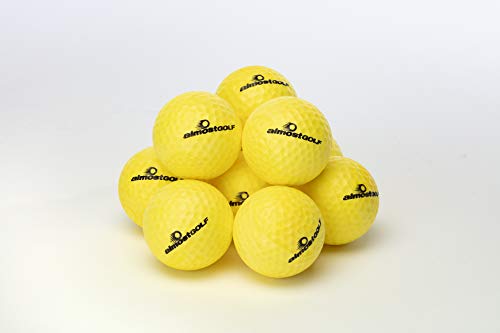
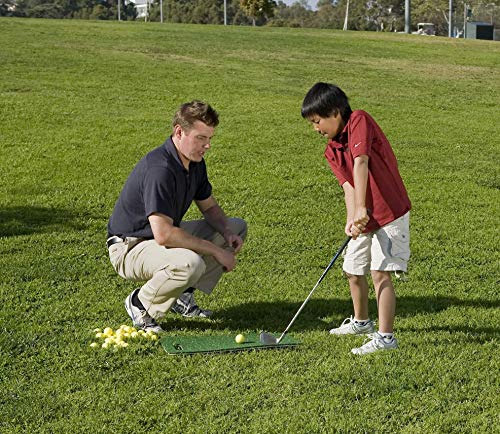
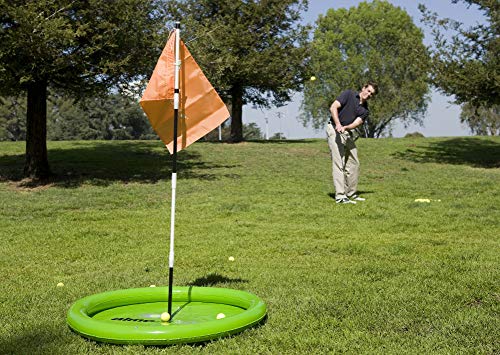
The ALMOSTGOLF pack is in a different league, both in quantity and engineering. With a .32 COR rating and cross-linked foam construction, these are designed to simulate real ball behavior at one-third the distance. That means actual fade and draw, not just straight-line flight, which is rare in foam balls. Owners report being able to work on shot shaping in the backyard, something most limited-flight balls can’t deliver.
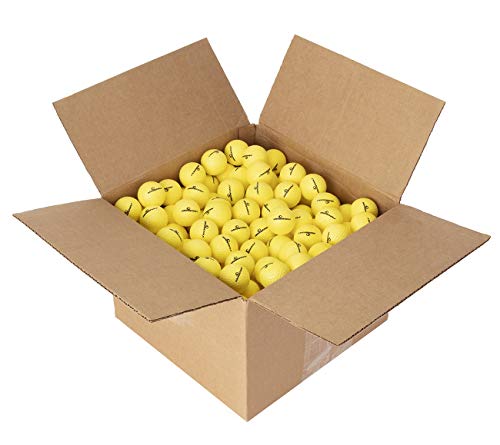
And with 240 balls, you’ll never run out, ideal for academies, schools, or serious home practice. They float, too, so water hazards aren’t a loss. Yes, the price is steep upfront, but per-ball, it’s one of the smarter buys. Compared to others, these come closest to bridging the gap between toy and training tool.
Product photos
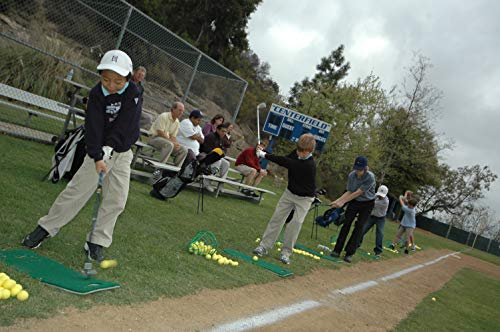
How We Chose These foam golf balls
Rather than a hands-on lab test, my research focused on comparing published specifications and features across numerous foam golf ball options. I weighed owner reviews from major retailers against expert opinions found in golf publications and online forums. This allowed me to build a ranking based on real-world usage reports and stated performance characteristics, leveraging my experience with golf equipment and training aids.
For foam golf balls, durability and realistic flight performance were the most heavily weighted factors. The ability to withstand repeated use without deforming is crucial, especially for frequent practice. Closely linked to this is how accurately the ball mimics the flight of a standard golf ball, providing useful feedback on swing mechanics. I also prioritized safety, considering indoor and backyard use cases.
Specifications reliably indicate ball size and weight, but owner feedback proved essential for judging durability and the “feel” at impact. Reputable reviews helped assess the accuracy of claims regarding spin and flight characteristics. I also considered the overall value proposition – aligning price with the features offered, and pointing readers toward options like these affordable golf balls when appropriate. For those just starting out, exploring options for golf balls for beginners can also be beneficial.
How To Pick The Right foam golf balls
Picking the right foam golf balls can dramatically improve your practice, especially when range time is limited.
Foam golf balls offer a safe and convenient way to hone your swing. Look for durable materials like polyurethane or a resilient foam core, a dimpled pattern for predictable flight, and a weight that provides realistic feedback. Consider the intended use – indoor, backyard, or junior practice – as this will influence the ideal size and flight characteristics.
Durability & Material Matters
The lifespan of a foam golf ball depends heavily on the materials used in its construction. While all foam balls will eventually show wear, those made with denser polyurethane (like the D-Xam) tend to hold up much better to repeated strikes than those utilizing cheaper, softer foams. Pay attention to owner reviews regarding denting and cracking; consistently positive feedback suggests a more durable product. Don’t automatically assume a heavier ball is always better – it’s the quality of the foam that counts.
Flight Characteristics & Dimples
Don’t underestimate the importance of dimples. While they won’t replicate the performance of best golf balls, a well-defined dimple pattern (like those found on the Callaway HX Soft Flight) will provide a more stable and predictable flight path. This allows you to better assess your swing and shot trajectory. Some balls are designed for limited flight, ideal for indoor use or small backyards, while others offer a bit more distance.
Here’s what to consider regarding distance:
- Short Distance: Best for indoor practice or very confined spaces.
- Medium Distance: Suitable for larger backyards and allows for fuller swing practice.
- Longer Distance (relatively): These, like the CHAMPKEY, attempt to mimic real ball flight as closely as possible, though still significantly reduced. This requires more space and is best for experienced players wanting to refine technique.
Value & Intended Use
Ultimately, the “best” foam golf ball is the one that best suits your needs and budget. If you’re buying for a family or need a large quantity for a golf clinic, the Junkin 80-pack represents excellent value. However, if you’re primarily focused on indoor practice, a smaller pack of higher-quality foam practice balls – like the GoSports 16-pack – may be a better investment.
A good rule of thumb: don’t chase the absolute cheapest option. A slightly more expensive ball that lasts longer and provides more consistent feedback will ultimately save you money and frustration.
Foam Golf Balls Compared
Here’s a spec comparison of available foam golf balls to help you make an informed purchase.
| Product Title | Quantity | Diameter (in) | Weight (oz) | Material | Dimples | Best For |
|---|---|---|---|---|---|---|
| D-Xam Foam Golf Balls Bulk | N/A | 1.65 | N/A | Polyurethane | Yes | Best Overall |
| Callaway HX Soft Flight Foam Balls | 9 | N/A | N/A | Foam | Yes | Best Branded Option |
| Bac-kitchen 40 Pack Foam Golf Balls | 40 | 1.6 | N/A | PU Rubber | N/A | Best for Kids & Family |
| GoSports 16 Pack Foam Golf Balls | 16 | N/A | N/A | Foam | Yes | Best for Indoor Practice |
| Junkin 80 Pcs Foam Golf Balls | 80 | 1.65 | N/A | PU & Foam | N/A | Best for Large Quantity |
| CHAMPKEY 16 Pack Foam Golf Balls | 16 | N/A | 8.5-10 oz | Compressed Foam | Yes | Best for Realistic Spin |
| ALMOSTGOLF Limited Flight Foam Balls | N/A | N/A | N/A | Foam | Yes | Best Budget Friendly |
Frequently Asked Questions
What’s the biggest difference between polyurethane and standard foam golf balls?
Polyurethane foam balls, like the D-Xam, generally offer significantly better durability and a more consistent feel compared to cheaper foam options. This translates to a longer lifespan and more reliable feedback on your swing, even with frequent use.
Can foam golf balls really help improve my swing?
Yes, foam golf balls can be very beneficial for practice. They allow you to focus on swing mechanics without the full power and distance of a regular ball, and the reduced risk of damage makes them ideal for indoor or backyard use.
Are foam golf balls a good option for kids learning to golf?
Absolutely. Foam balls are much safer for young golfers than traditional golf balls, minimizing the risk of injury and damage to property. Consider the Bac-kitchen 40-pack for a family-friendly option.
Will practicing with foam balls affect my game when I switch back to regular golf balls?
There will be some adjustment period, but it shouldn’t be significant. The key is to be aware of the differences in weight and flight characteristics, and to focus on maintaining proper swing form. Experienced players might also explore golf balls for seniors to help with swing speed and distance.
Are there foam golf balls that are easy to see in low light?
While most foam balls are white, you can find options with brighter colors. If visibility is a concern, look for colored golf balls or consider practicing in a well-lit area to maximize your ability to track the ball’s flight.
The Bottom Line
Choosing foam golf balls often comes down to balancing how much you want to spend with how seriously you take your practice. If you’re looking for the most consistent performance and durability, and are willing to pay a bit more, the D-Xam Foam Golf Balls Bulk really stand out as the strongest overall choice – their polyurethane construction is a clear advantage.
For specific needs, we can narrow it down further. Families or anyone needing a large quantity should look to the Junkin 80 Pcs Foam Golf Balls for unbeatable value. If indoor practice is your priority, the GoSports 16 Pack Foam Golf Balls offer a good balance of quality and affordability, and for those wanting to refine their spin, the CHAMPKEY 16 Pack Foam Golf Balls is a solid option. Don’t forget to check out these simulator golf balls if you’re practicing indoors with a launch monitor.
Ultimately, remember that no foam ball will perfectly replicate a real golf ball. Focus on selecting a ball that provides consistent feedback, feels comfortable to hit, and fits your budget. Prioritizing these fundamentals, durability, predictable flight, and realistic feel, will have a far greater impact on your game than chasing the latest specs or the lowest price.
