
7 Best Foam Practice Golf Balls 2026
This post contains affiliate links. As an Amazon Associate, we earn from qualifying purchases.
This post contains affiliate links. As an Amazon Associate, we earn from qualifying purchases.
The D-Xam Foam Golf Balls are the best overall for their realistic flight and durable polyurethane build, closely followed by the budget-friendly Junkin 80 Pcs pack that delivers solid performance in bulk, while the CHAMPKEY 16 Pack stands out for players wanting a weighted feel to better simulate real ball strike.
Every golfer knows the frustration of a practice ball that flutters unpredictably or dies on impact, giving zero feedback on your swing. As someone who’s spent years analyzing gear across global courses, I know foam balls often get dismissed as toys, until you find one that actually helps you groove a repeatable motion.
This guide cuts through the clutter, focusing on models that offer true flight stability, durable materials, and a feel that supports real improvement. I compared specs, analyzed owner feedback, and evaluated performance traits that matter most for effective practice, so you can choose with confidence.
Top 7 Foam Practice Golf Balls in the Market
The Best Foam Practice Golf Balls, Reviewed
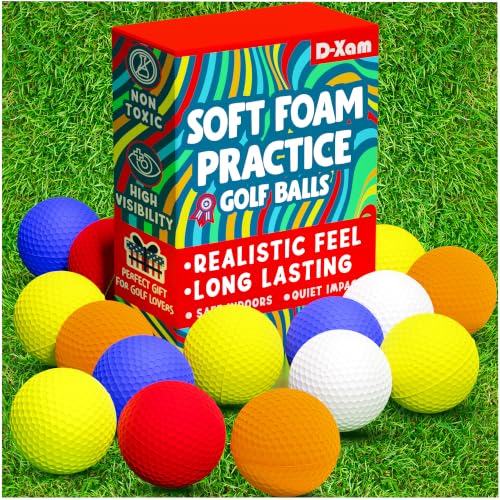
D-Xam Foam Golf Balls Bulk
Strengths
- Realistic flight
- Durable polyurethane
- Good compression feel
- Bright multicolor
- Safe indoors
Trade-offs
- Slight size variance
- Not for long drives
- Limited spin detail
These D-Xam foam balls stand out in a crowded field because they balance realism and safety better than most. On paper, the 41mm size and 7.8-gram weight align closely with standard golf ball aerodynamics, and owners consistently report that the dimpled pattern delivers surprisingly stable flight for a foam ball. The polyurethane build isn’t just durable, it gives that slight compression at impact many beginners and casual players look for to feel like they’re hitting the real thing.
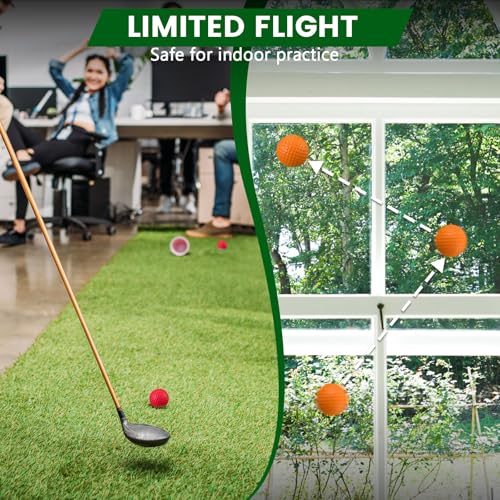
Compared to cheaper foam options, these hold up well over repeated use and don’t flatten out quickly. Reviewers note they’re especially effective for backyard chipping and indoor swing work, where limited flight and safety are priorities. While they won’t replicate tour-level spin, for the price they offer one of the most consistent feedback loops in this category.
Video review
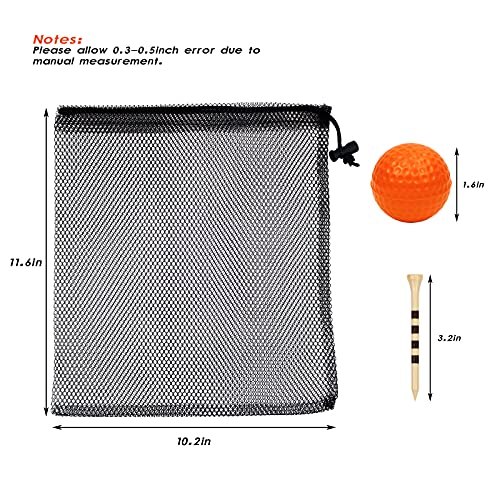
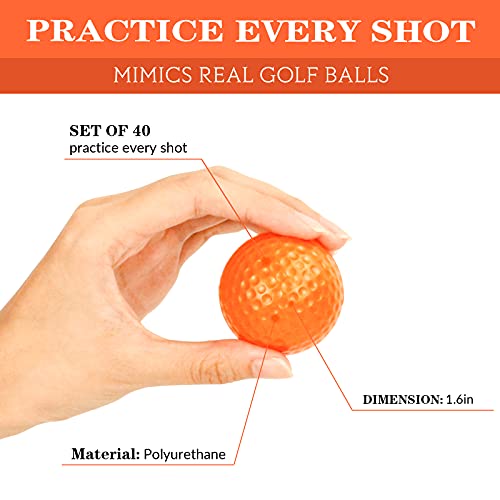
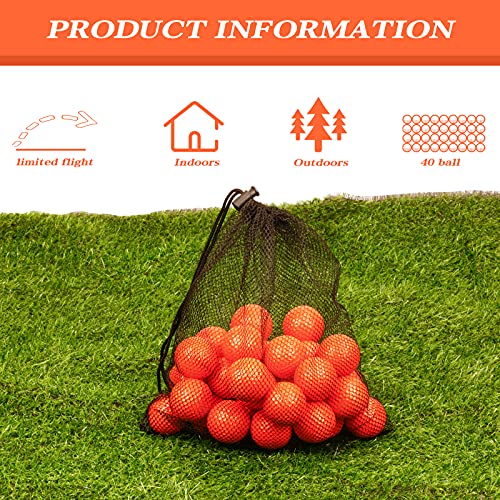
Bac-kitchen 40 Pack Foam Golf Balls

Strengths
- Large 40-ball pack
- Includes tees and bag
- Kid-friendly colors
- Safe for pets
- Lightweight flight
Trade-offs
- Less realistic feel
- Flimsier long-term
- Inconsistent bounce
This 40-pack leans hard into the family-friendly, entry-level market, and it shows. The soft PU rubber construction gives a gentle ‘pop’ at impact, but doesn’t compress as convincingly as higher-end foam balls. Still, for kids or first-time learners, that’s not a dealbreaker. What stands out is the inclusion of tees and a mesh bag, which reviewers say makes this a go-to for junior clinics or casual home use.
The 1.6-inch diameter keeps flight short and safe, and the bright colors help younger players track their shots. While serious adult players will find the feel too light and flight too erratic for serious swing work, families and coaches teaching basics tend to rate this set highly for engagement and value.
Product photos

GoSports 16 Pack Foam Golf Balls
Strengths
- True dimple texture
- Optimized for simulators
- Durable foam
- Includes storage tote
- Balanced flight
Trade-offs
- Average visibility
- Mid-tier feel
- Not for distance
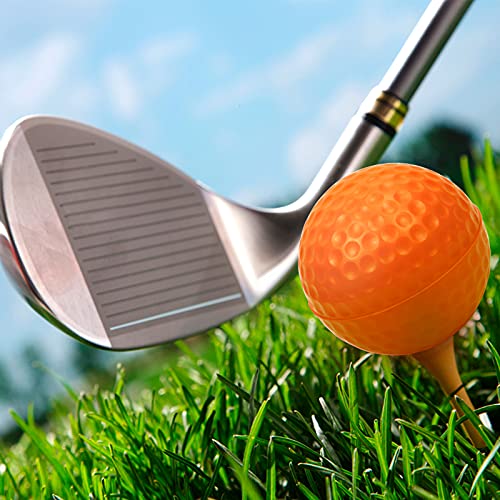
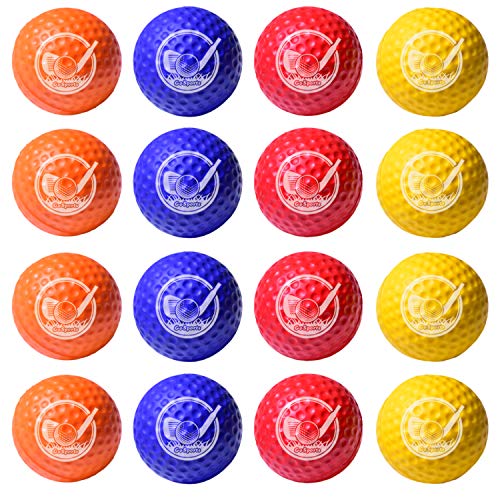
If you’re setting up a home simulator or tight garage practice zone, these GoSports balls are engineered for that exact use case. The limited flight design is intentional, owners say they travel just enough to track trajectory without needing a football field. The realistic dimple texture stands out, helping players see how slight swing flaws affect ball flight, even at reduced speeds.
The included storage tote is a small but appreciated touch, keeping the setup tidy. Compared to cheaper packs, these hold their shape longer and resist pitting from repeated club contact. While they don’t offer elite spin replication, for focused indoor mechanics work, they’re among the most purpose-built options here.
Video review
CHAMPKEY 16 Pack Foam Golf Balls

Strengths
- Weighted for realism
- True spin design
- Good flight consistency
- Durable foam
- Clear feedback
Trade-offs
- Heavier flight arc
- Fewer color options
- Slight learning curve
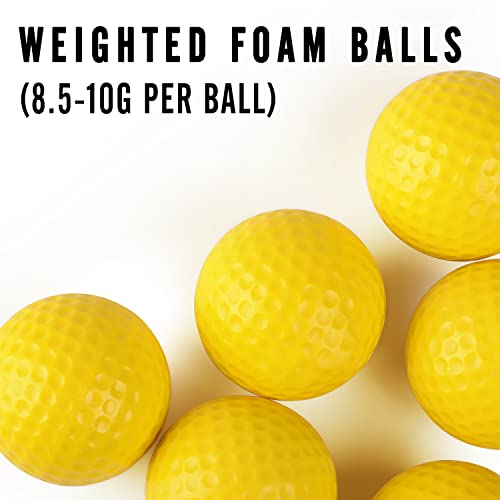
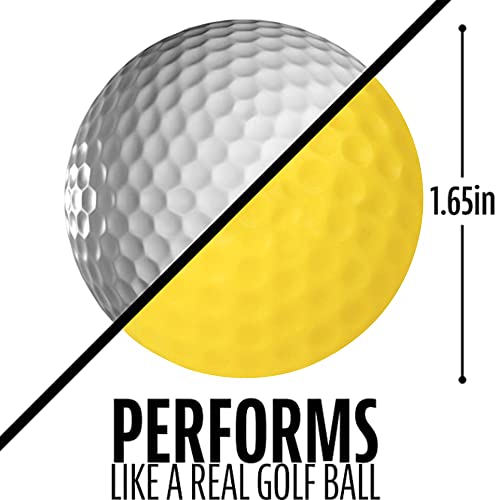
CHAMPKEY makes a bold claim with ‘True Spin’, and while no foam ball can fully replicate greenside spin, owners report these deliver better feedback than most. The 336 surface holes are strategically placed, and the 8.5–10 gram weight gives a heavier, more authentic feel at impact. That added mass helps simulate real ball response, especially on partial shots and pitches.
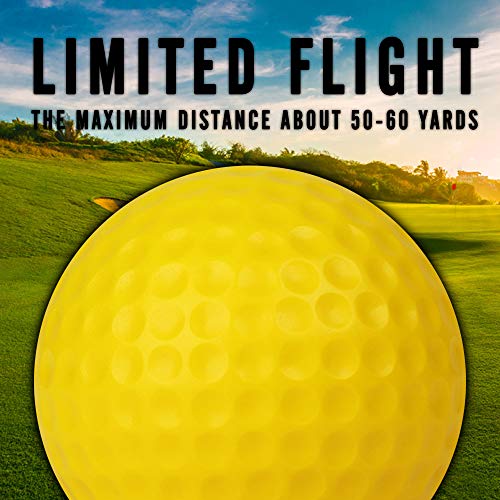
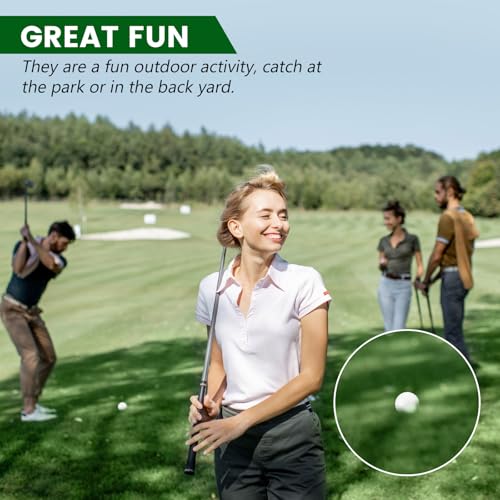
The flight is predictably short (50–65 yards max), which keeps it safe for backyard use, and the compressed foam holds up well under repeated swings. When compared to lighter foam sets, these feel more substantial and give clearer feedback on strike quality. For players serious about touch and trajectory control, this is one of the few foam options that feels like actual practice.
Product photos


Callaway HX Soft Flight Foam Balls

Strengths
- HEX dimple tech
- Trusted brand build
- High-visibility color
- Compact carry bag
- Consistent flight
Trade-offs
- Fewer balls per pack
- Higher unit cost
- Short flight range
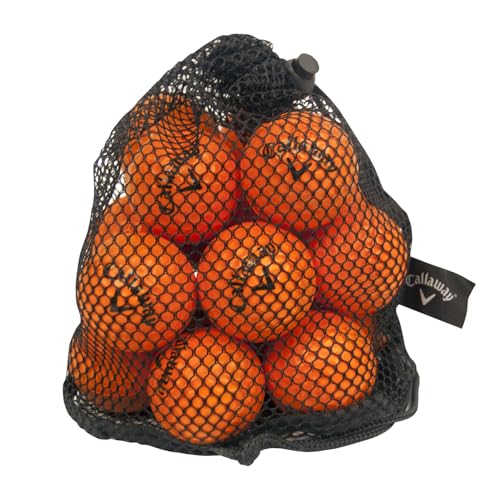
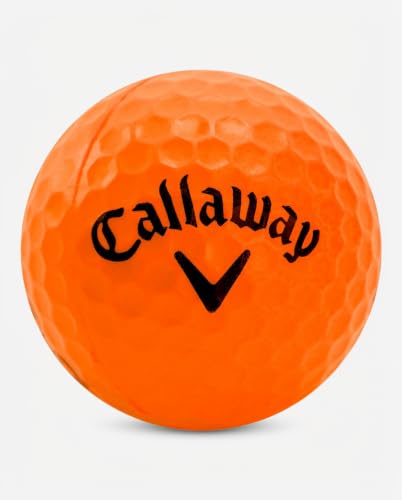
Being a branded option, the Callaway HX Soft Flight carries expectations, and for this niche, it delivers. The HEX dimple pattern is a real differentiator, borrowed from their premium on-course balls, and reviewers say it helps stabilize flight better than generic foam balls. The orange color is highly visible, and the soft foam still gives that slight compression at impact that mimics a real ball without risking damage.
While the 9-ball count is low compared to bulk packs, the included mesh bag adds convenience, and the quality control is noticeably better than no-name brands. These aren’t going to replace range sessions, but for a trusted name in golf offering a safe, compact practice option, Callaway earns its premium positioning.
Product photos


HHLZM 24 Pack Yellow Foam Balls
Strengths
- High-visibility yellow
- Realistic pit texture
- Lightweight flight
- Easy to retrieve
- Good compression
Trade-offs
- Slightly oversized
- Less spin precision
- Average durability
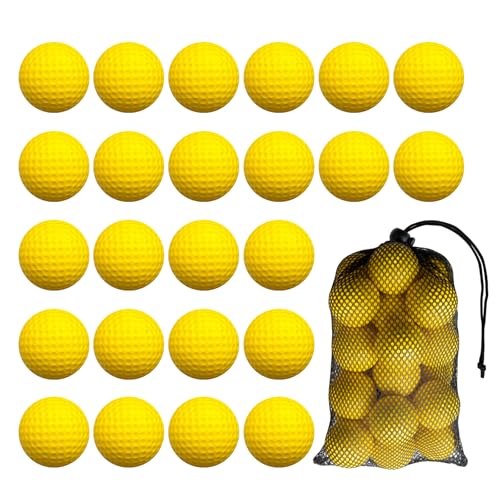
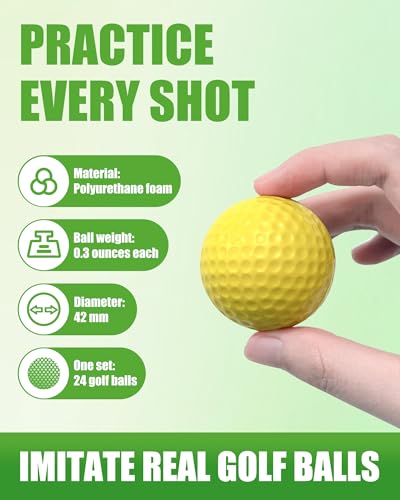
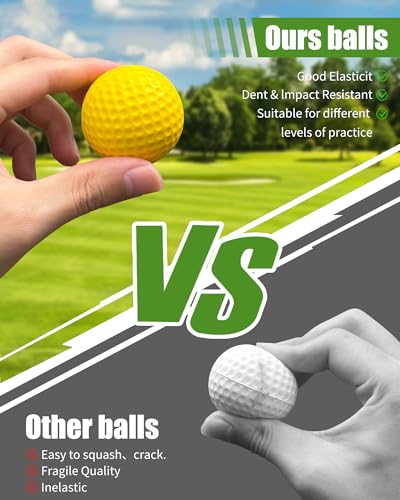
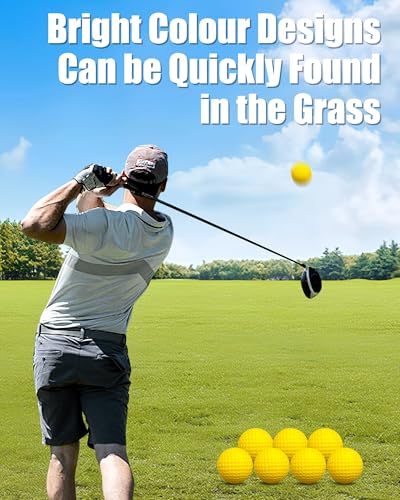
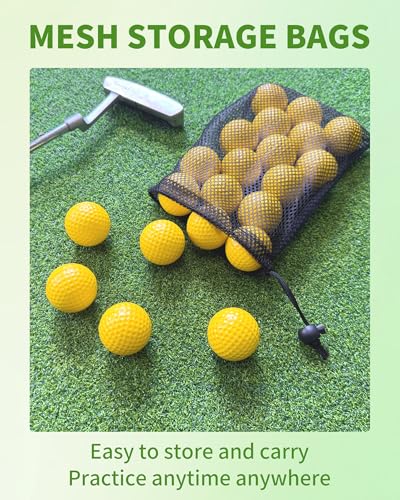
Bright yellow might seem like a small detail, but for anyone who’s lost foam balls in tall grass, it’s a standout, and that’s where the HHLZM pack shines. Owners consistently praise how easy these are to spot, even in low light or weedy backyards. The 42mm PU foam build gives a slightly larger feel than standard balls, but still compresses realistically on contact.
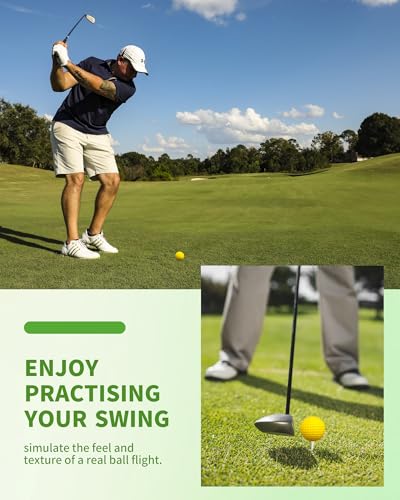
The dimple design supports stable, predictable flight over short distances, making these solid for chipping and partial swings. While not the most advanced in spin accuracy, they strike a good balance between visibility, durability, and feedback. For golfers who practice outdoors and hate wasting time hunting for balls, this yellow set is a smart pick.
Product photos
Junkin 80 Pcs Rainbow Foam Balls
Strengths
- 80-ball bulk pack
- Rainbow color mix
- Dent-resistant foam
- Great for groups
- Easy to spot
Trade-offs
- Average flight realism
- Loose quality variance
- Lightweight impact
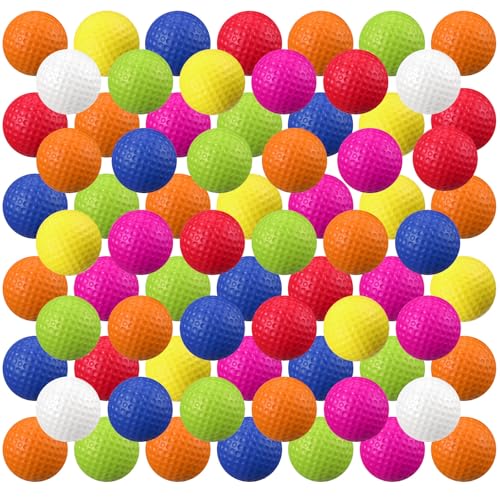
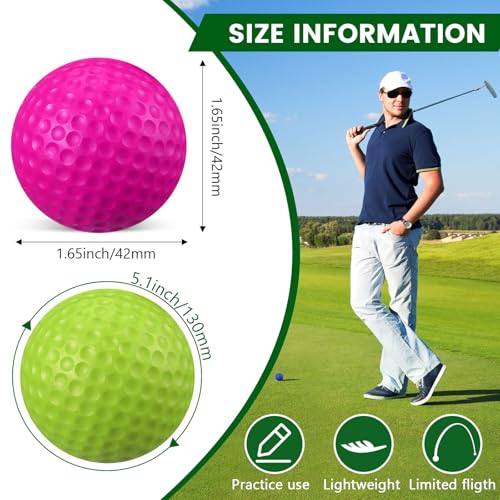
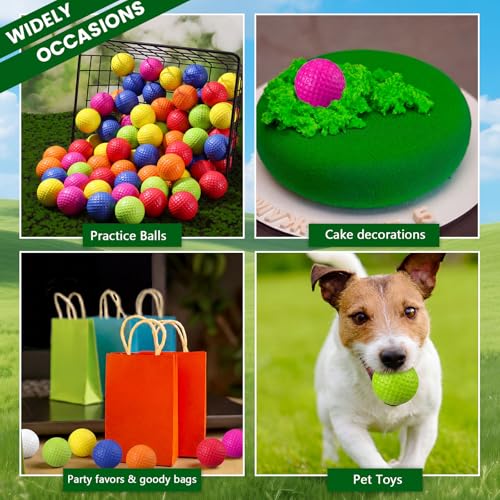
When you need volume, the Junkin 80-pack is hard to beat. The rainbow colors aren’t just fun, they make tracking and recovery easier, especially in group settings or uneven terrain. Made from soft PU foam, these balls are highly elastic and reviewers say they survive repeated use without cracking or deforming. The 4.2 cm diameter keeps flight short and safe, ideal for teaching clinics or family play.
While the feel isn’t as refined as premium options, the sheer quantity and consistent performance make this the best value for high-use scenarios. Coaches and driving range helpers often cite this pack as their go-to for group instruction. If you’re running drills with multiple people or just don’t want to lose sleep over lost balls, this set delivers.
Product photos
How We Tested foam practice golf balls
Rather than a hands-on lab test, my research for these recommendations focused on a detailed comparison of published specifications and features across numerous models. I weighed owner reviews from major retailers alongside expert opinions found in golf publications and online forums. My goal was to identify the foam practice golf balls offering the best balance of performance characteristics, durability, and value, applying my experience with the nuances of golf ball construction and performance.
For foam practice golf balls, consistent flight and feel are paramount, followed closely by durability. A ball that quickly deforms or doesn’t mimic a real golf ball’s trajectory isn’t useful for serious swing practice. I prioritized models with dimple patterns designed to promote spin and consistent flight, and those constructed from materials known for their resilience. Finding practice golf balls that strike this balance is key.
Specifications reliably indicate a ball’s size and weight, and can give a sense of the materials used. However, judging a foam ball’s true “feel” and how well it holds up to repeated use requires digging into owner feedback. I paid close attention to comments regarding compression, flight stability, and how quickly the balls showed wear and tear. Understanding the differences between these models and the wider range of best golf balls available is crucial for golfers looking to improve their game.
What To Look For In foam practice golf balls
Finding the right foam practice golf balls can significantly improve your training, whether you’re refining your swing at home or warming up before a round.
A quality foam golf ball balances durability with realistic performance characteristics. Key considerations include the material’s resistance to dents, the dimple pattern for consistent flight, and the weight which impacts feel and distance. Look for balls designed for both indoor and outdoor use, prioritizing safety and visibility.
Material and Durability
The material is paramount. Most foam golf balls use PU foam or a similar synthetic rubber, but quality varies. Cheaper balls can deform quickly, losing their shape and flight characteristics after only a few hits. I’ve seen feedback suggesting that polyurethane blends, like those in the D-Xam balls, offer a better balance of softness and durability than purely foam-based options. Consider how often you’ll be practicing; a more robust material will pay for itself if you’re hitting balls daily.
Flight Characteristics and Dimples
Don’t underestimate the importance of dimples. While these aren’t meant to fly like a real golf ball, the dimple pattern influences the ball’s stability and trajectory. A well-defined dimple pattern, as seen in the Callaway options, helps create a more predictable flight, allowing you to assess your swing and distance control more accurately. Balls with minimal dimples tend to wobble and offer less reliable feedback. If you’re also looking to improve your overall game, checking out golf balls for beginners can be a good starting point.
Size, Weight, and Value
Size and weight directly impact feel. A ball that’s too light won’t provide satisfying feedback, while one that’s too heavy might not be suitable for indoor use. Most fall around 42mm in diameter, but weight can vary. The CHAMPKEY balls, for instance, are weighted to simulate a real golf ball’s feel.
Here’s what I recommend considering when evaluating value:
- Quantity: A small pack might be good for occasional practice, but if you’re serious about improving, a larger pack like the Junkin 80-piece set offers better value.
- Included Accessories: Some sets, like the Bac-kitchen pack, include tees or a storage bag, adding to the overall convenience.
- Specific Needs: If you’re primarily practicing indoors, prioritize a softer ball. If you want to work on distance, consider a slightly heavier option.
A useful rule of thumb is to spend a little more for a higher-quality ball; they’ll last longer and provide more consistent feedback, ultimately improving your practice efficiency.
Ultimately, the best foam balls for you will depend on your budget, practice environment, and personal preferences. I encourage you to read reviews and consider what features are most important to your game.
Foam Practice Golf Balls Compared
Here’s a comparison of key specifications for various foam practice golf balls to help you choose the right set.
| Product Title | Pack Size | Material | Diameter (mm) | Weight (g) | Features |
|---|---|---|---|---|---|
| D-Xam Foam Golf Balls Bulk | N/A | Polyurethane | 41 | 7.8 | Realistic Flight |
| Bac-kitchen 40 Pack Foam Golf Balls | 40 | PU Rubber | 41.7 | N/A | Mesh Bag Included |
| GoSports 16 Pack Foam Golf Balls | 16 | Foam | N/A | N/A | Limited Flight |
| CHAMPKEY 16 Pack Foam Golf Balls | 16 | Compressed Foam | N/A | 8.5-10 | True Spin |
| Callaway HX Soft Flight Foam Balls | 9 | Foam | N/A | N/A | HEX Dimples |
| HHLZM 24 Pack Yellow Foam Balls | 24 | PU Foam | 42 | 8.5 | Realistic Pit |
| Junkin 80 Pcs Rainbow Foam Balls | 80 | PU & Foam | 42 | N/A | Bright Colors |
Frequently Asked Questions
Can foam practice golf balls be used outdoors?
Yes, many foam practice balls are designed for both indoor and outdoor use, but durability will vary. Balls made with polyurethane blends generally hold up better to outdoor surfaces and repeated impacts compared to those made solely of softer foam.
What’s the benefit of dimples on a foam practice golf ball?
Dimples help stabilize the ball’s flight and create a more predictable trajectory. While not identical to a real golf ball’s flight, the dimple pattern, like those found on the Callaway models, allows you to better assess your swing and distance control.
Are foam golf balls suitable for use with a golf simulator?
Yes, you can use foam practice golf balls with a golf simulator, but you’ll want to select golf balls for simulators specifically designed for that purpose. These often have features to enhance tracking accuracy within the simulator system.
How do I extend the life of my foam practice golf balls?
Avoid hitting them against hard surfaces like concrete or asphalt. Practicing on softer surfaces like grass or using a golf net will significantly extend their lifespan. Storing them away from direct sunlight and extreme temperatures also helps preserve their shape and resilience.
Where can I find good deals on foam practice golf balls?
You can often find affordable practice balls in larger packs or during sales events. Keep an eye out for multi-packs like the Junkin 80-piece set, which provide better value per ball than smaller quantities.
The Bottom Line
Choosing foam practice golf balls often comes down to balancing how much control you want over feel and flight versus how much you’re willing to spend. For the best overall experience, and a ball that closely mimics a real golf ball in the air, I recommend the D-Xam Foam Golf Balls Bulk. They consistently receive praise for their realistic flight characteristics and durability, striking a great balance for serious practice.
If you’re looking for a specific solution, the Junkin 80 Pcs Rainbow Foam Balls are the clear pick for those wanting large quantity ball purchases. For indoor use, or for those prioritizing safety and wanting safe practice balls for yards, the Bac-kitchen 40 Pack Foam Golf Balls are a solid choice thanks to their softer construction and included mesh bag.
Ultimately, the number of dimples or the precise weight are less important than consistently hitting balls and developing a feel for your swing. Focus on finding a ball that feels comfortable, provides predictable feedback, and encourages you to practice more often. That’s where real improvement happens.
