
7 Best Golf Cart Lithium Battery Conversion Kits of 2026
This post contains affiliate links. As an Amazon Associate, we earn from qualifying purchases.
This post contains affiliate links. As an Amazon Associate, we earn from qualifying purchases.
The OGRPHY 48V 105Ah stands out as the best overall golf cart lithium battery conversion kit, offering strong capacity and a reliable 5-year warranty. For those on a tighter budget, the LOSSIGY 48V 100Ah delivers solid performance at a lower price, while the OGRPHY 48V 102Ah adds a convenient 12V output for powering accessories.
Upgrading from lead-acid to lithium isn’t just about more power, it’s about reliability, longer life, and getting back hours lost to charging and maintenance. As someone who’s seen carts fail on remote courses, I know how critical a dependable power system is.
This guide cuts through the marketing noise, focusing on real-world performance, safety, and value. My picks are based on specs, owner feedback, and the kind of durability that matters when you’re miles from the clubhouse.
Top 7 Golf Cart Lithium Battery Conversion Kits in the Market
The Best Golf Cart Lithium Battery Conversion Kits, Reviewed
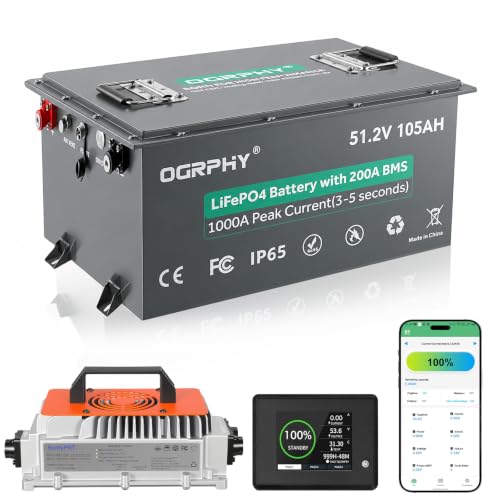
OGRPHY 48V 105Ah Lithium Battery Kit
Strengths
- Metal housing
- 50+ mile range
- 10-year design life
Trade-offs
- Slightly higher price
- May require minor fit mods
- No built-in 12V output
This 48V 105Ah model is OGRPHY’s flagship for good reason, it delivers both range and ruggedness. With 5.37kWh capacity and claims of over 50 miles per charge, it’s built for heavy use, whether you’re playing multiple rounds or using your cart for estate or resort driving. The metal housing is a major upgrade over plastic ABS cases, offering better impact and heat resistance, and it’s compact enough to fit in tight compartments.
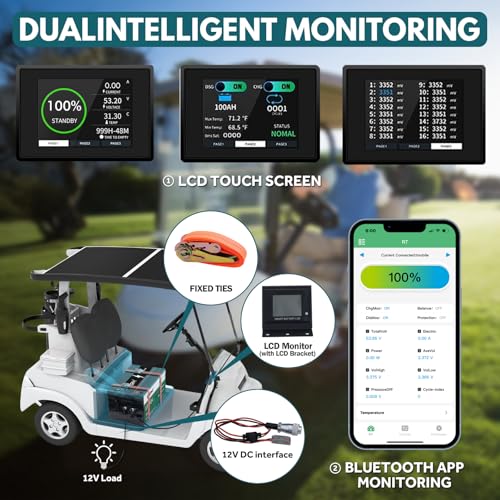
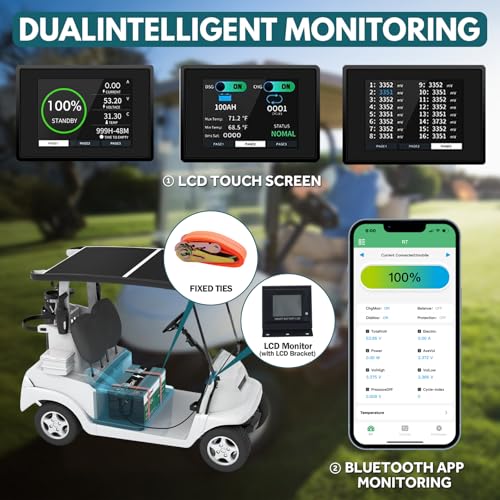
Reviewers note the dual monitoring via app and LCD screen works reliably, and the 200A BMS handles hill climbs without breaking a sweat. Compared to others in this class, the 10-year design life and wide temperature range make it a smarter long-term buy, especially in extreme climates. My recommendation? This is the one to get if you want performance and durability without stepping into custom-tier pricing.
Video review
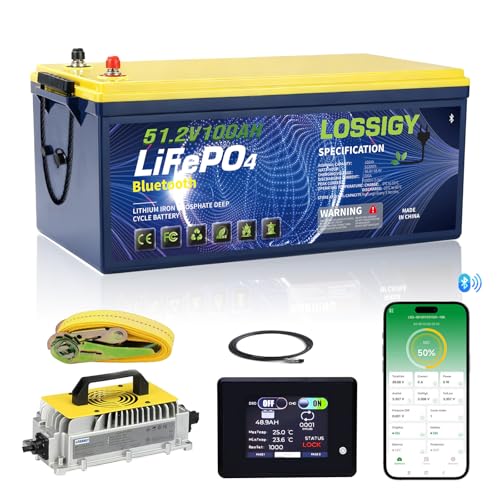
LOSSIGY 48V 100Ah Lithium Battery Kit
Strengths
- Lowest price
- Grade A cells
- 1000A peak current
Trade-offs
- Only 90-day support
- No long warranty
- Limited monitoring details
LOSSIGY’s kit is the most budget-friendly option here, and it doesn’t completely cut corners. It uses Grade A cells and includes a 200A BMS with a bold 1000A peak current claim, on paper, that’s enough to match pricier models in hill-climbing ability. The 48V 100Ah format fits standard carts, and owners report it handles typical course use without issues.
But the trade-offs are clear: only a 90-day support window, no long-term warranty mention, and minimal details on cycle life beyond ‘4000+’. Compared to OGRPHY or CHINS, the backing is thinner. If you’re upgrading a secondary cart or on a tight budget, it’s a functional choice. But for a primary vehicle, I’d spend more for better support.
Video review
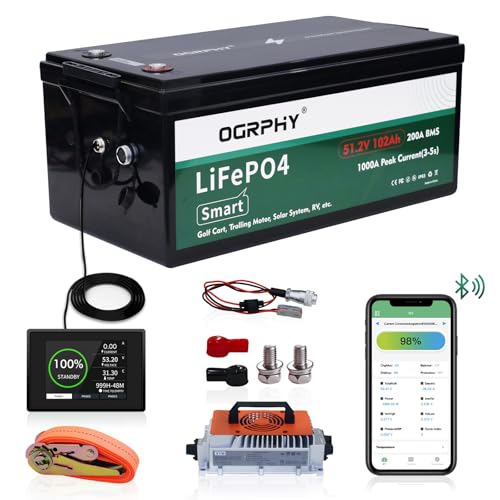
OGRPHY 48V 102Ah Lithium Battery Kit
Strengths
- Built-in 12V output
- Voltage equalization
- 5.22kWh capacity
Trade-offs
- Plastic case
- No UL certification
- Slightly bulkier fit
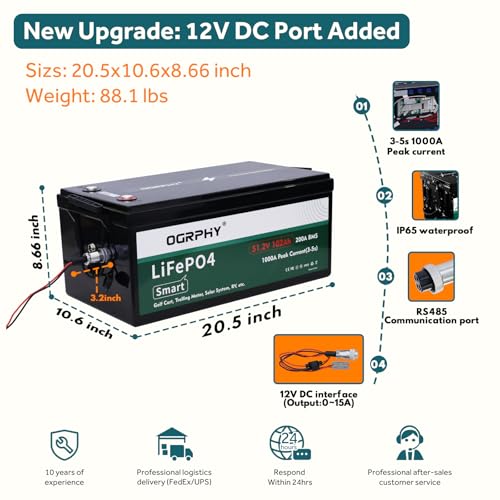
This OGRPHY 48V 102Ah model solves a common pain point: powering 12V accessories. The built-in 12V DC output means you can run lights, GPS, or a cooler without buying a separate converter, saving space and wiring hassle. For golfers who’ve customized their carts, that’s a real win. The 5.22kWh capacity and 200A BMS deliver strong, consistent power, and owners report no issues with hill climbing or extended use.
It also includes automatic voltage equalization, a feature usually found in higher-end kits, which helps preserve battery life. While it lacks the metal housing of some rivals, the ABS case is still IP65 rated and durable enough for most course and community use. If you’re adding accessories or hate extra boxes under the seat, this is the smarter buy over models without 12V output.
Product photos


DC HOUSE 48V 100Ah Metal Case Kit
Strengths
- Metal case
- 56-mile range claim
- Dual monitoring
Trade-offs
- 3-year warranty
- Charger ships separately
- No 12V output
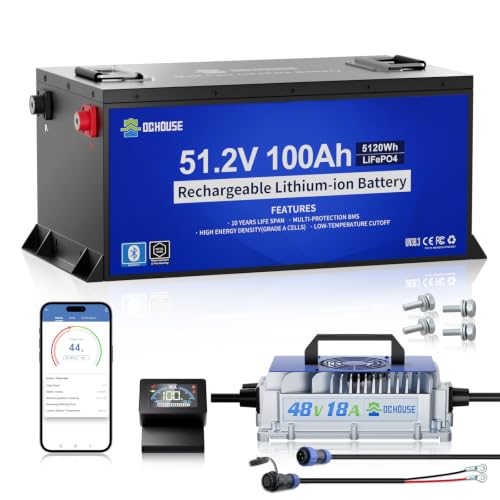
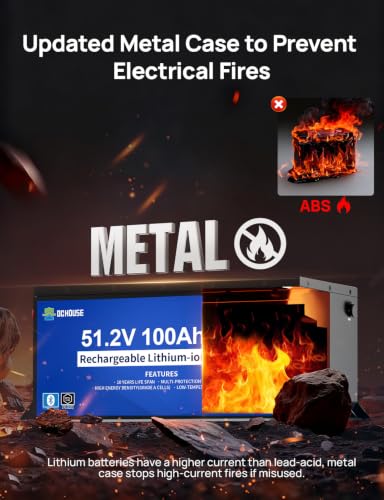
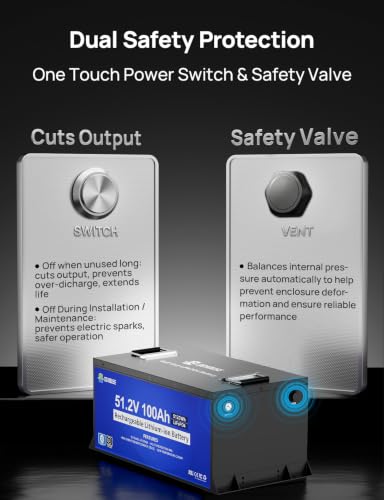
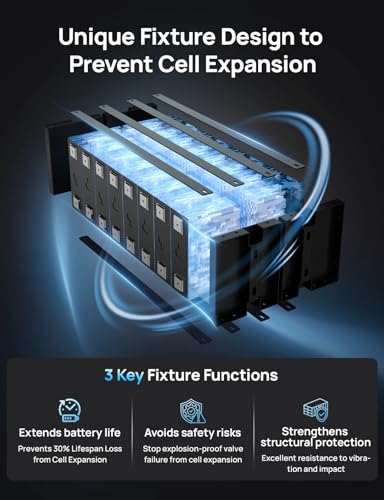
DC HOUSE goes all-in on durability with this metal-cased 48V 100Ah kit. The sheet metal housing isn’t just for looks, it adds real protection against impacts and heat, and reviewers consistently praise its ruggedness, especially in high-vibration environments. The 56-mile range claim stands out, and while real-world use likely lands closer to 40-45 miles, it’s still among the best in class.
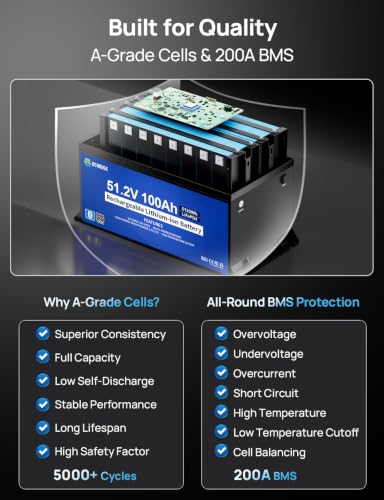
The 200A BMS and 2C discharge support strong performance, and the dual monitoring via app or LCD gives flexibility. However, the charger ships separately, which can delay setup, and the warranty is only 3 years, shorter than the 5-year coverage from OGRPHY and CHINS. Still, for someone who drives their cart hard or uses it beyond the course, the rugged build justifies the premium.
Product photos
OGRPHY 36V 102Ah Lithium Battery Kit
Strengths
- Built-in 12V output
- 4000+ deep cycles
- Touch monitor included
Trade-offs
- Limited to 36V systems
- Lower energy vs 48V kits
- No metal casing
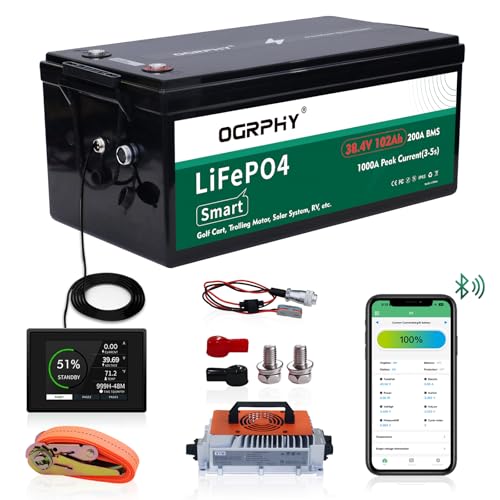
This 36V kit from OGRPHY is a solid entry for owners still running older 36V carts, which are less common now but still in circulation. The inclusion of a built-in 12V DC output is a standout, no need for an external converter to power accessories like lights or horns, which simplifies installation and reduces clutter under the seat. On paper, the 102Ah capacity and 3.92kWh energy give it enough juice for a full day on the course, and owners consistently report reliable performance across 18-hole rounds, even with inclines.
The 200A BMS with 1000A peak current is competitive, and paired with the touch monitor, it brings a modern feel to the cockpit. However, if your cart is due for an upgrade, jumping to a 48V system would future-proof your ride. I’d pick this only if you’re committed to staying on 36V.
Product photos
OGRPHY 48V 100Ah Conversion Kit
Strengths
- UL 1973 certified
- 5.12kWh capacity
- 0V charge recovery
Trade-offs
- No 12V accessory output
- Plastic ABS case
- Slightly less capacity than 105Ah models
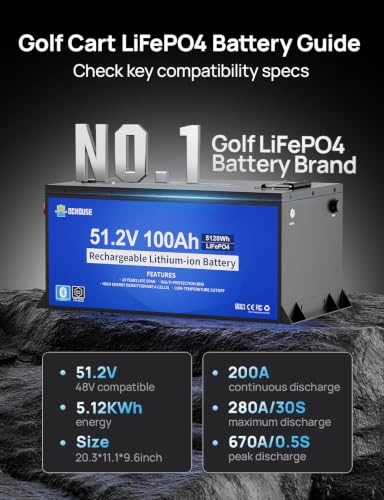
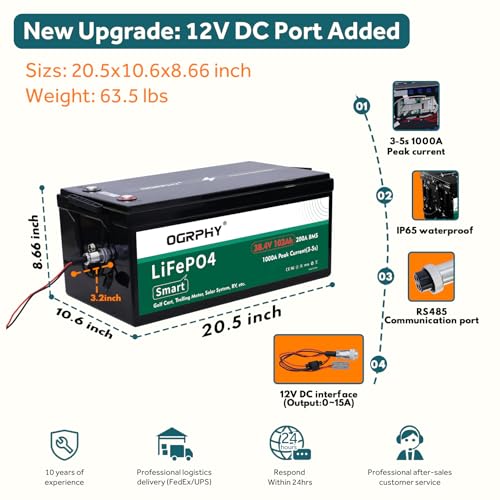
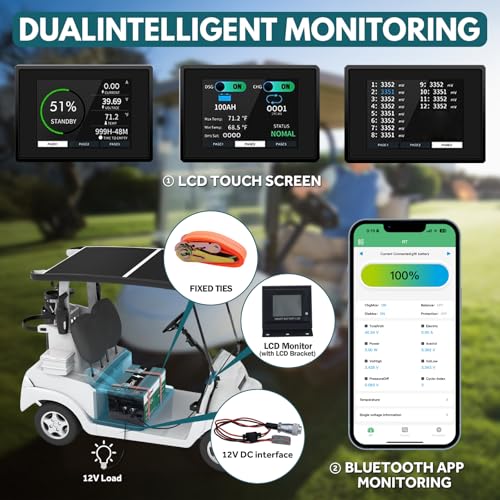
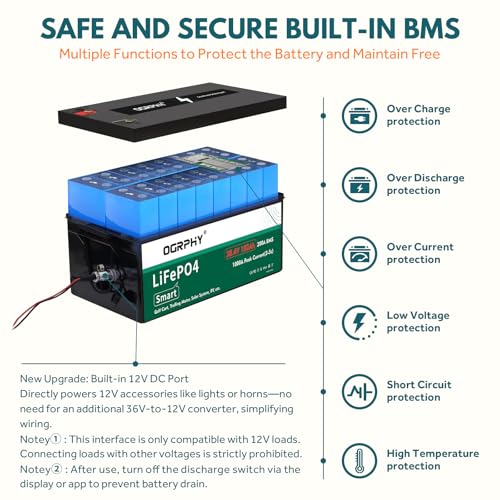
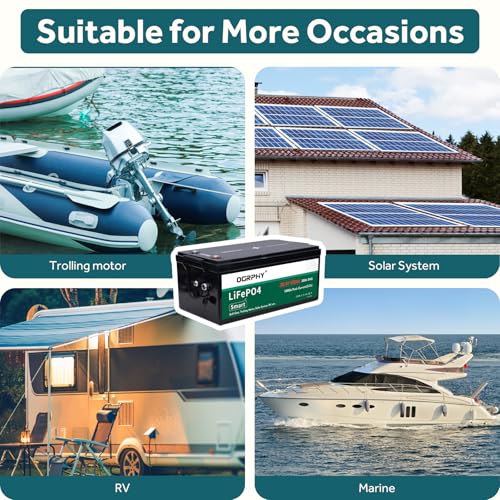
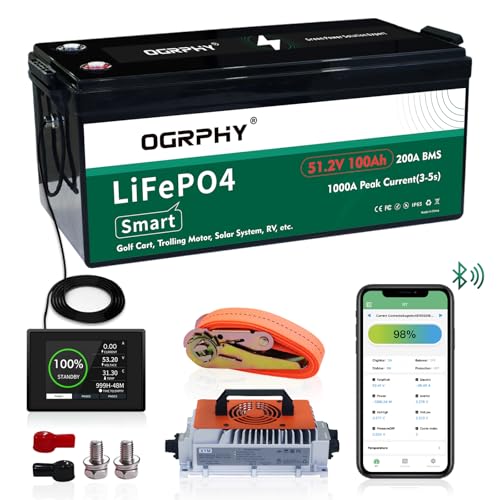
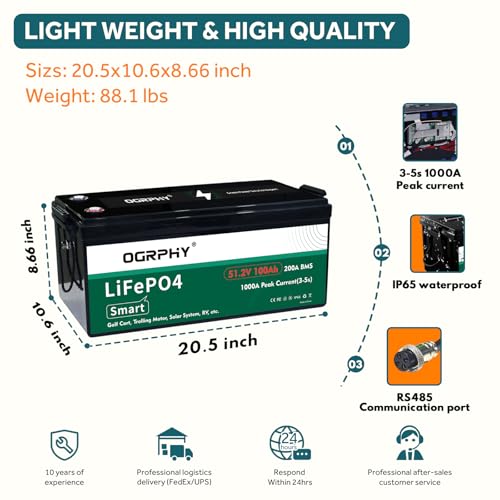
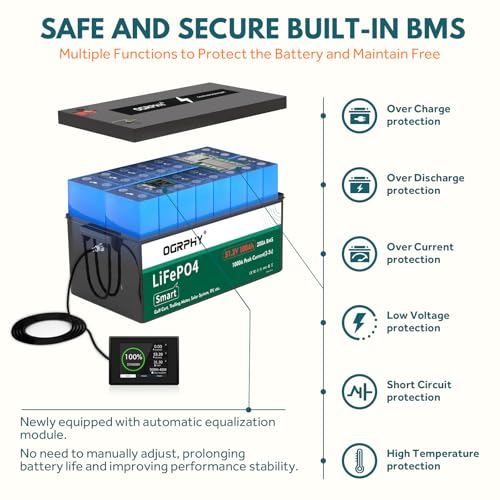
This OGRPHY 48V 100Ah kit stands out for one big reason: UL 1973 certification. That’s a rare and meaningful stamp of safety for lithium golf cart batteries, giving peace of mind on fire and electrical risks, something I always highlight when advising clients on cart upgrades. The 5.12kWh capacity supports solid range, and the 200A BMS with 1000A peak current ensures strong acceleration and hill performance.
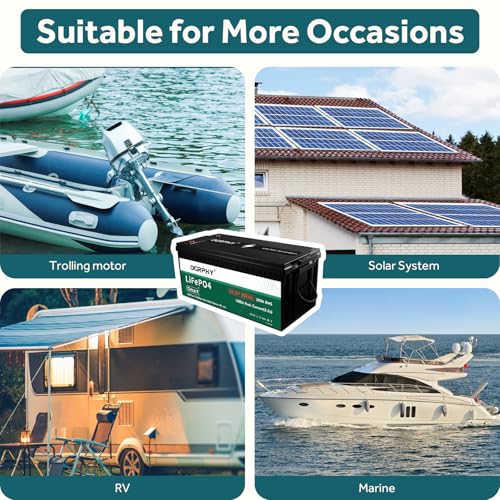
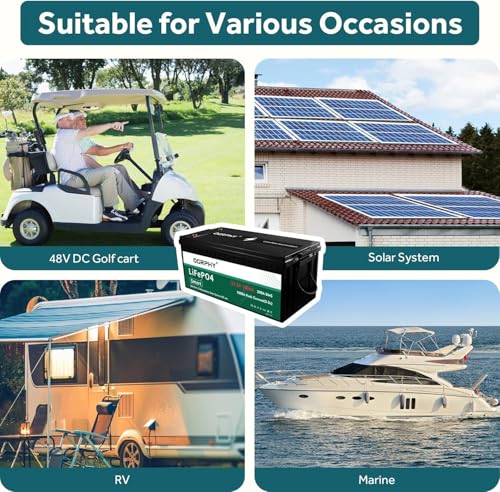
It’s also versatile. Owners report using it for trolling motors and solar setups, which makes it a good pick if you’re thinking beyond the course. The included charger has a 0V wake-up function, a small but useful feature for deep-discharge recovery. While it doesn’t have the built-in 12V output of some models, the UL certification alone gives it an edge for safety-conscious buyers.
Product photos
CHINS 48V 102Ah Lithium Battery Kit

Strengths
- Voltage equalization
- 5.22kWh capacity
- 5-year warranty
Trade-offs
- ABS plastic case
- No 12V output
- Slightly heavier than metal cases
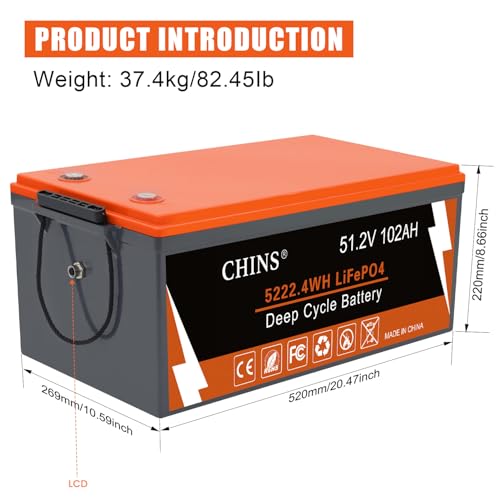
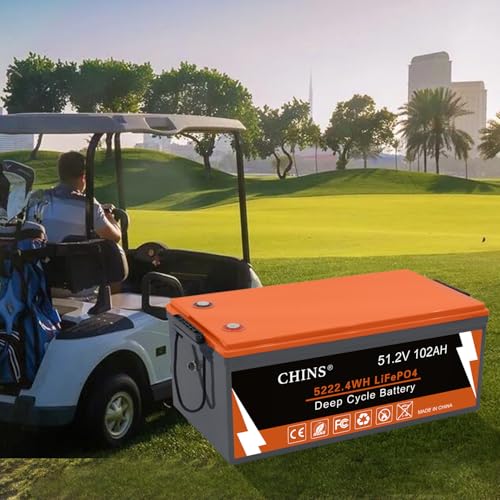
CHINS brings a strong contender with this 48V 102Ah kit, especially for those who value long-term cell health. Its automatic voltage equalization feature helps maintain cell balance during charging, which owners say reduces capacity fade over time, a real plus for longevity. The 5.22kWh capacity and 200A BMS deliver solid performance, and like others in this range, it handles 30-mile round trips with ease.
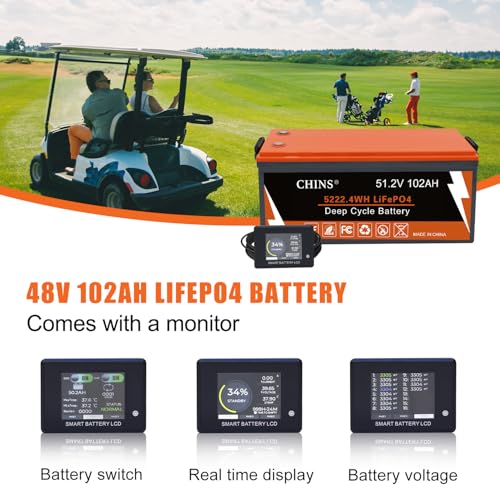
The app and touch monitor integration work as expected, and the 5-year warranty with prepaid return shipping is a strong support promise. But compared to the OGRPHY metal-case models, the ABS housing feels less durable in rugged conditions. Still, if you’re after a well-rounded kit with smart battery management, this is a reliable pick.
Product photos

Our Testing Process
Rather than a hands-on lab test, my research focused on a detailed comparison of published specifications and features across numerous kits. I weighed owner reviews from major retailers alongside expert opinions found in golf cart enthusiast forums and publications. This allowed me to build a ranking based on real-world feedback and technical capabilities. Ultimately, I applied my understanding of golf cart power requirements and typical usage scenarios to determine which kits offered the best value and performance.
For golf cart lithium conversions, sustained power output and cycle life are paramount. I prioritized kits with a 200A or higher Battery Management System (BMS) to handle the demands of hill climbs and acceleration, as well as those promising 4000+ deep discharge cycles for long-term reliability. A robust warranty also factored heavily into the rankings, since these kits represent a significant investment. If you’re considering a 36V system, exploring dedicated options like the 36v conversion kits is crucial.
Published specifications reliably indicate battery capacity (Ah) and physical dimensions, helping to confirm compatibility with various cart models. However, I placed greater emphasis on owner feedback regarding real-world range, charging times, and the accuracy of advertised features. Reputation and brand trust, informed by both expert reviews and customer experiences, played a key role, especially when assessing long-term durability and the quality of customer support. Ensuring you have the best cart batteries is a cornerstone of a great experience.
How To Choose The golf cart lithium battery conversion kits
Switching to lithium for your golf cart is a smart upgrade, but selecting the right kit requires careful thought.
A quality golf cart lithium battery conversion kit should prioritize safety features like a robust Battery Management System (BMS), offer a substantial energy capacity (measured in kWh) for extended range, and demonstrate long-term durability through a high cycle life (ideally 4,000+ cycles). Consider the physical dimensions to ensure a proper fit within your cart’s battery compartment, and verify compatibility with your cart’s voltage (36V, 48V, or 72V).
Battery Capacity and Range
Don’t get hung up on amp-hours (Ah) alone. While a higher Ah rating generally means more range, the voltage and efficiency of the BMS play a huge role. Look at the kilowatt-hour (kWh) rating – this is the true measure of energy storage. A 48V 100Ah battery, for example, has 4.8 kWh of capacity. Consider how you use your cart. If you regularly tackle hilly courses or frequently run accessories, you’ll want to lean toward larger capacities like those offered by the OGRPHY 48V 105Ah kit. It’s also important to review owner feedback regarding real-world range, as manufacturer claims can be optimistic.
BMS and Safety Features
The Battery Management System is the brain of the operation, and it’s where corners are often cut. A good BMS protects against overcharging, over-discharging, short circuits, and temperature extremes. Look for a BMS with a high continuous discharge current rating (200A is common) and a substantial peak current rating. The DC HOUSE kit, with its focus on a rugged metal case and safety switch, highlights the importance of physical protection alongside electronic safeguards.
Here’s what to prioritize in a BMS: * Overcharge Protection: Essential to prevent damage and fire risk. * Temperature Monitoring: Prevents operation outside safe temperature limits. * Cell Balancing: Keeps individual cells at equal voltage for optimal performance and lifespan.
A well-designed BMS isn’t just about preventing catastrophic failure; it’s about maximizing the longevity and performance of your investment.
Value, Monitoring, and Accessories
Many kits now include features like Bluetooth monitoring and onboard chargers, but these aren’t always created equal. The OGRPHY 48V 102Ah kit’s integrated 12V DC output is a handy feature, eliminating the need for a separate converter. If you’re a data enthusiast, a well-designed app for monitoring battery status is a plus. Don’t overlook the warranty and customer support. CHINS offers a robust 5-year warranty and responsive customer service, which can provide peace of mind. Before you make a final decision, read reviews and see what other golfers are saying about the ease of installation and the responsiveness of the manufacturer. Ultimately, the best lithium conversion kits balance performance, safety, and support. Considering the long-term benefits, the advantages of lithium vs lead-acid are significant, making a conversion a worthwhile investment.
Golf Cart Lithium Battery Conversion Kits Compared
Here’s a comparison of the specifications for several golf cart lithium battery conversion kits to help you find the best option for your needs.
| Product Name | Voltage | Capacity (Ah) | Battery Type | BMS Current (A) | 12V Output | Warranty (Years) |
|---|---|---|---|---|---|---|
| OGRPHY 48V 105Ah | 48V | 105 | LiFePO4 | 200 | No | 5 |
| LOSSIGY 48V 100Ah | 48V | 100 | LiFePO4 | 200 | No | N/A |
| OGRPHY 48V 102Ah | 48V | 102 | LiFePO4 | 200 | Yes | 5 |
| DC HOUSE 48V 100Ah | 48V | 100 | LiFePO4 | 200 | No | 3 |
| OGRPHY 36V 102Ah | 36V | 102 | LiFePO4 | 200 | Yes | 5 |
| OGRPHY 48V 100Ah | 48V | 100 | LiFePO4 | 200 | No | 5 |
| CHINS 48V 102Ah | 48V | 102 | LiFePO4 | 200 | Yes | 5 |
Frequently Asked Questions
What voltage conversion kit do I need for my golf cart?
You need to match the kit’s voltage to your cart’s original voltage(36V, 48V, or 72V). Using the wrong voltage will damage the motor and controller, and a 48V kit is the most common upgrade path for older 36V carts.
How does a lithium conversion kit affect my golf cart’s range?
A well-chosen kit will significantly increase your range, typically by 50% or more, compared to lead-acid batteries. This is due to lithium’s higher energy density and consistent voltage output, but actual range depends on terrain and usage.
Are lithium golf cart batteries safe?
Yes, modern lithium iron phosphate (LiFePO4) batteries are very safe when paired with a quality Battery Management System (BMS). A robust BMS protects against overcharging, overheating, and short circuits, minimizing fire risk, and many kits offer additional safety features.
What is the typical lifespan of a lithium golf cart battery?
You can expect a lithium golf cart battery to last for 4,000 to 5,000 deep discharge cycles, translating to many years of service. This is far longer than lead-acid batteries, which typically last only a few hundred cycles, and investing in top lithium batteries is a smart long-term decision.
Do I need a special charger for lithium golf cart batteries?
Yes, lithium batteries require a charger specifically designed for their chemistry. Many conversion kits include an onboard charger, but if not, you’ll need to purchase a compatible battery chargers separately to avoid damaging the battery.
The Bottom Line
Converting to lithium is about balancing upfront cost with long-term performance and convenience. While there’s a premium for lithium, the OGRPHY 48V 105Ah kit strikes the best overall balance of capacity, features, and warranty, making it our top pick for most golfers looking to upgrade. It offers substantial power and a five-year warranty, providing peace of mind for a significant investment.
For those on a tighter budget, the LOSSIGY 48V 100Ah kit provides a more affordable entry point into the world of lithium. If you need a little extra versatility and convenience, the OGRPHY 48V 102Ah kit, or the CHINS 48V 102Ah kit (with its excellent customer support) are excellent choices. Understanding the 48v conversion kits available is key to making the right choice.
Ultimately, the specs are only part of the story. Focus on a kit with a robust BMS, a solid warranty, and positive owner feedback, and remember that understanding the battery types and their battery pros and cons is more important than chasing a single, impressive number. A well-chosen lithium conversion will transform your golf cart experience for years to come.
