
4 Best Golf Cart Tires of 2026
This post contains affiliate links. As an Amazon Associate, we earn from qualifying purchases.
This post contains affiliate links. As an Amazon Associate, we earn from qualifying purchases.
The WANDA 205/50-10 is the best overall golf cart tire for its reliable grip and smooth ride on course surfaces, while the Wolf Pack 6-Ply All-Terrain is the top choice if you’re regularly tackling rougher ground. For budget-conscious buyers, the 2-Pack 18×8.50-8 delivers solid performance at a lower price.
As someone who’s spent years navigating carts across links, resorts, and backroads, I know how much tires affect your day. The wrong set can mean a bumpy ride, turf damage, or even getting stuck. Most buyers don’t realize how much terrain and load demands impact tire life and performance.
This guide cuts through the noise by focusing on real-world specs and owner feedback. I compared tread patterns, ply ratings, and fitment across top models to help you pick the right tire for your course conditions and driving habits.
Top 4 Golf Cart Tires in the Market
The Best Golf Cart Tires, Reviewed
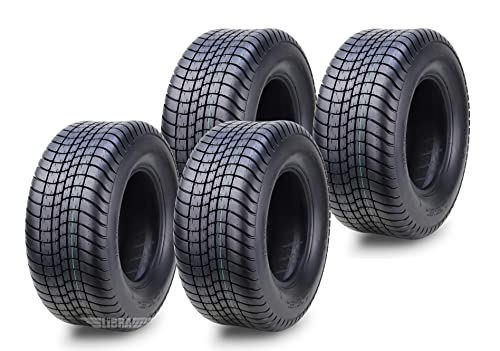
WANDA 205/50-10 4-Ply ATV Tires
Strengths
- DOT rated
- Excellent tread depth
- High load capacity
Trade-offs
- Slightly firmer ride
- Not for lifted carts
On specs alone, the WANDA 205/50-10 set makes a strong case as the most balanced choice in this lineup. With a DOT rating, 0.36-inch tread depth, and a 4-ply nylon construction, these tires are built for longevity and real-world versatility. The rubber compound is formulated for extended life, and owners report minimal cracking even after multiple seasons in sunny or humid climates.
They handle both turf and pavement well, and the 675-pound load rating per tire matches industry standards without cutting corners. Compared to narrower 8-inch tires, the 205mm width improves stability, especially when cornering. I’d call this the smarter buy for most golfers who want one set of tires that can handle course use, neighborhood cruising, and occasional utility runs without compromise.
Video review
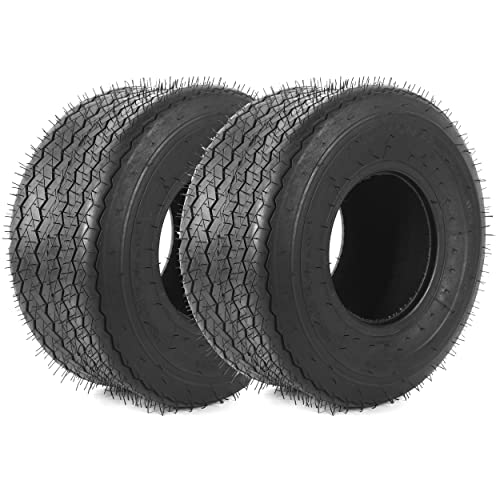
2-Pack 18×8.50-8 Tubeless Tires
Strengths
- Low cost per tire
- Turf-saver tread
- Wide compatibility
Trade-offs
- Sold in pairs only
- Lower load rating than 6-ply
At under $90 for two, this 2-pack is the clear value play, especially if you’re replacing worn tires in stages or maintaining a backup set. The turf-saver tread design is a standout, minimizing ground pressure to protect delicate grass, which aligns with what many course managers and homeowners prefer. Owners note these are a direct fit for many older golf carts and even some riding mowers, making them versatile beyond just cart use.
They’re 4-ply rated with an 815-pound load capacity, so they’re no slouches, though they don’t match the ruggedness of the 6-ply Wolf Pack set. The tubeless design simplifies maintenance, and the non-directional pattern means easier rotation. I’d recommend buying two sets at once to complete your cart, but only if you’re on a tight budget or need a quick fix.
Video review
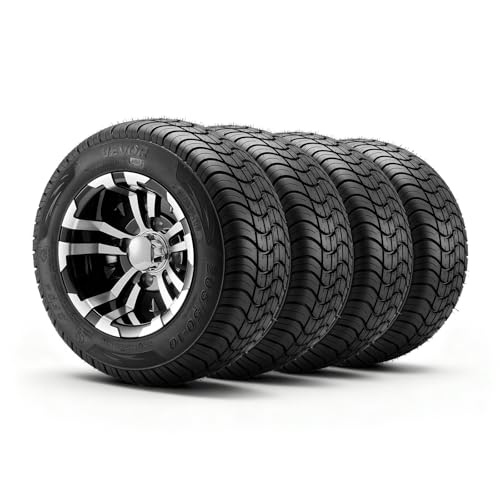
VEVOR 10″ Aluminum Alloy Tires
Strengths
- Aluminum alloy wheels
- Precise OEM fit
- All-terrain traction
Trade-offs
- Higher price point
- Limited to 675 lbs per tire
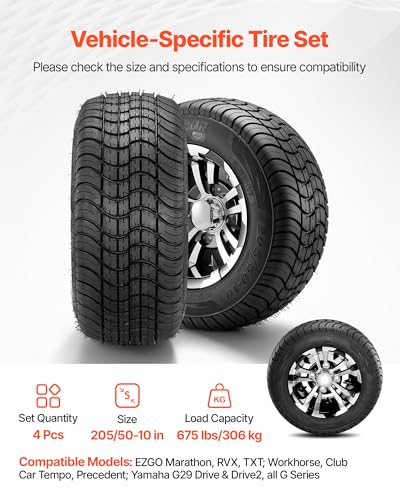
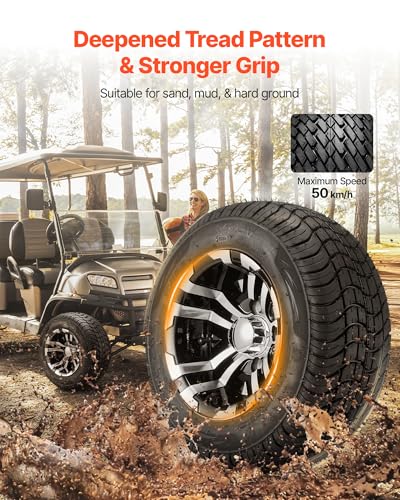
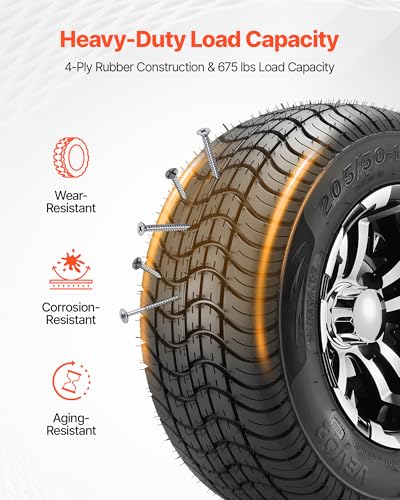
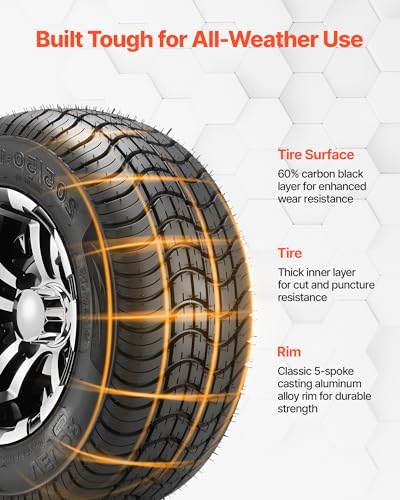
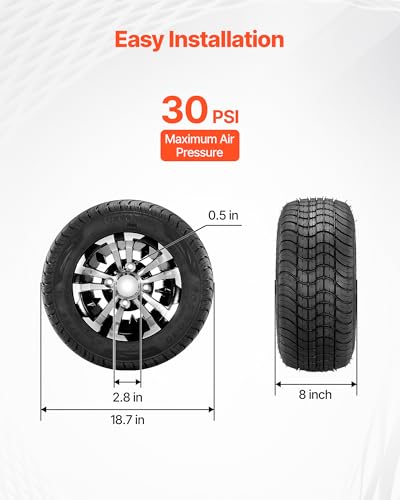
This combo delivers more than just tires, it’s a full upgrade in both form and function. The aluminum alloy wheels with a five-spoke design aren’t just sharp-looking; they’re lightweight and corrosion-resistant, which owners say helps reduce vibration. Paired with the 205/50-10 all-terrain rubber, the set offers a noticeably smoother ride than basic steel wheel setups, especially on cracked pavement or packed gravel.
The 4-ply rubber uses a 60% carbon black compound, which on paper means better UV and abrasion resistance, key for carts left outside in sun-heavy golf climates. Fitment guides are detailed, and reviewers confirm these work smoothly with Club Car, EZGO, and Yamaha models. While pricier than tire-only options, the ready-to-install nature saves labor costs. I’d recommend this set if you want to refresh both performance and curb appeal at once.
Product photos
Wolf Pack 6-Ply All-Terrain Tires

Strengths
- 6-ply rated
- Deep 5.5mm tread
- Non-directional mounting
Trade-offs
- Heavier than standard tires
- Not optimized for pavement
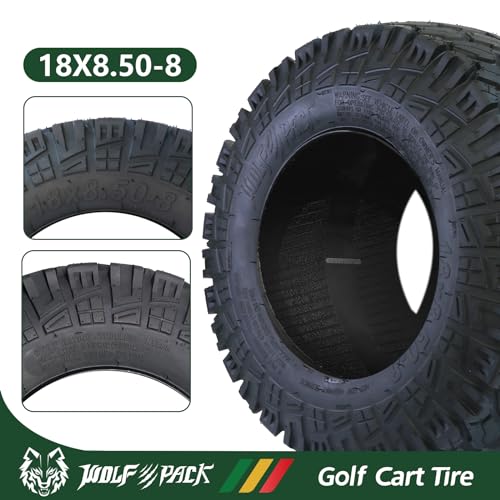
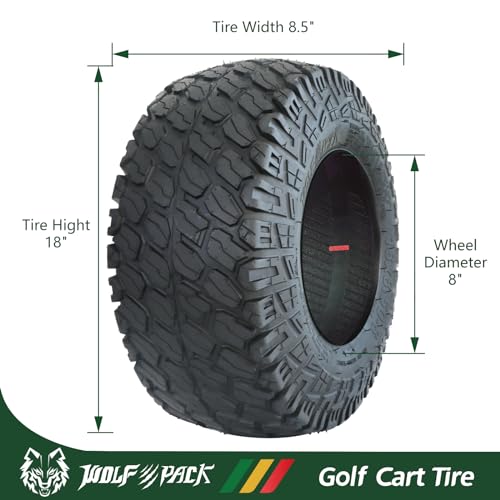
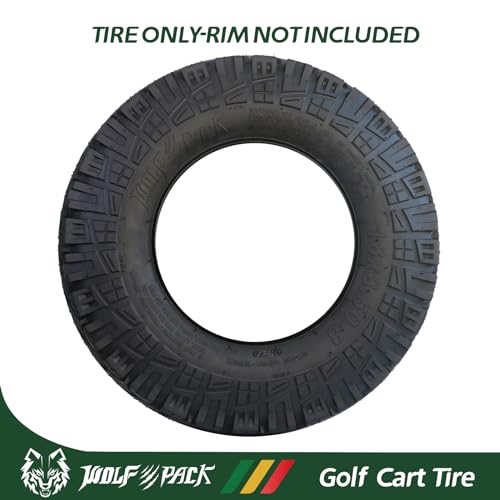
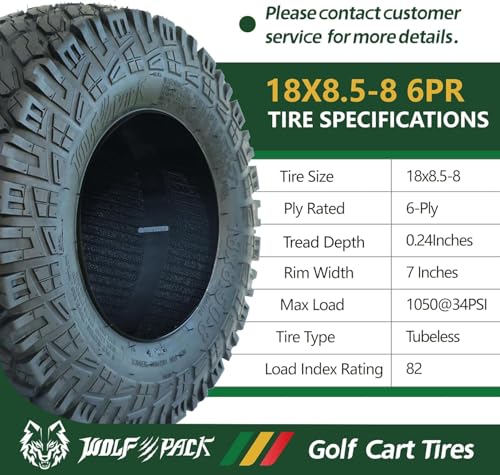
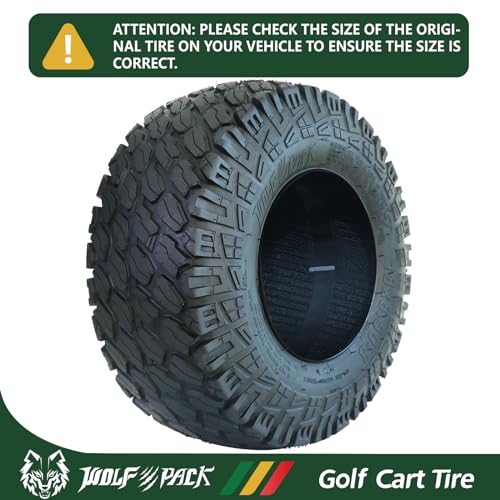
If you’re running your cart off the course and into rougher territory, these Wolf Pack tires stand out on paper for their 6-ply rating and non-directional tread with a solid 5.5mm depth. Owners consistently report they handle gravel, dirt trails, and wet grass without slipping, which makes sense given the multi-terrain tread design. They’re not the quietest on pavement, but that’s a fair trade for the durability boost.
The 10.8-pound weight per tire keeps rotational mass reasonable, and at just under 1,050 pounds of load capacity per tire, they’re overbuilt in a way that inspires confidence. For older carts or lifted models seeing trail duty, that extra strength matters. I’d pick these over lighter-duty 4-ply options if you’re regularly carrying gear or passengers over uneven ground.
Product photos
How We Evaluated golf cart tires
Rather than a hands-on lab test, my research focused on comparing published specifications and features across numerous models. I weighed owner reviews from major retailers alongside expert opinions found in golf cart enthusiast publications. Applying my experience with course conditions and vehicle performance, I ranked tires based on a combination of durability, intended use, and value. This approach offers a realistic assessment for those looking to upgrade their ride.
For golf cart tires, a few factors stand out as most important. Load capacity is critical – you need tires that can handle the weight of your cart, passengers, and any gear. Tread pattern directly impacts performance; aggressive treads are better for off-road use, while smoother patterns excel on pavement. Finally, ply rating significantly affects puncture resistance and overall tire lifespan, influencing long-term cost.
Specifications reliably indicate load capacity and tire size, essential for ensuring a proper fit and safe operation. However, I paid close attention to owner feedback regarding real-world durability and traction. Reputation matters here; brands consistently praised for quality and longevity, like those offering reliable pavement tires, generally deliver on their promises. Considering a full lithium conversion kits can also significantly impact performance.
How To Choose The golf cart tires
Choosing the right tires can dramatically improve your golf cart’s performance and your overall experience on the course.
A quality golf cart tire balances durability, tread for the intended terrain, load capacity for passengers and cargo, and proper fitment to the wheel. Buyers should verify tire size matches existing wheels, understand ply ratings for load-bearing ability, and consider tread patterns based on typical course conditions or desired off-road capability. Checking DOT ratings is also important for street legality in some areas.
Tire Size and Fitment
Getting the size right is the most critical step. It’s easy to get lost in the numbers (like 205/50-10 or 18×8.50-8), but understand that these represent tire width, aspect ratio, and wheel diameter. Incorrect sizing won’t just affect handling; it can create safety issues. Don’t assume a larger tire is always better – it can throw off your cart’s lift or suspension. I often advise checking your existing tires and matching the dimensions exactly, and if you’re upgrading, verifying clearance with the dealer or manufacturer.
Tread Pattern and Terrain
The tread pattern dictates where your golf cart will perform best. A shallow, smooth tread is ideal for well-maintained golf courses, offering minimal disruption to the turf. However, if you frequently venture onto rougher terrain, or even just need a bit more grip on damp grass, you’ll want to consider more aggressive options. For truly challenging conditions, explore off-road tires with deep lugs.
Here’s a quick guide to tread patterns: * Smooth: Best for pristine course conditions. * Ribbed: Offers a balance of on-road and light off-road capability. * Aggressive All-Terrain: Excels on grass, gravel, and uneven surfaces. These are ideal if you’re looking for top-rated all-terrain tires.
A simple rule of thumb: If you spend 90% of your time on manicured courses, prioritize a smooth or ribbed tread. If you’re planning adventures beyond the clubhouse, all-terrain tires are the way to go.
Ply Rating and Durability
Ply rating is a measure of a tire’s strength and load-carrying capacity. A higher ply rating means a more durable tire, able to withstand heavier loads and resist punctures. For most standard golf carts, a 4-ply tire is sufficient, but if you frequently haul passengers or equipment, or drive on rocky terrain, I recommend stepping up to a 6-ply tire. Remember to also consider how often you’re using your cart, as frequent use will require more robust tires. Don’t forget to check your battery chargers to keep your cart running smoothly too!
Golf Cart Tires Compared
Here’s a comparison of key specifications for the golf cart tires described.
| Product Name | Tire Size | Ply Rating | Max Load (lbs) | Tread Depth (in) | Tubeless |
|---|---|---|---|---|---|
| WANDA 205/50-10 | 205/50-10 | 4 | 675 | 0.36 | Yes |
| 2-Pack 18×8.50-8 | 18×8.50-8 | 4 | 815 | N/A | Yes |
| VEVOR 10″ Aluminum Alloy | 205/50-10 | 4 | 675 | N/A | N/A |
| Wolf Pack 6-Ply All-Terrain | 18×8.50-8 | 6 | 1050 | 5.5mm | Yes |
Frequently Asked Questions
What tire size should I choose for my golf cart?
Always match the existing tire size (e.g., 205/50-10 or 18×8.50-8) unless you’re intentionally modifying your cart’s lift or suspension. Using the wrong size can negatively impact handling and safety, and consulting your cart’s manual is always advised.
Are tubeless tires really better than those with tubes?
Yes, tubeless tires offer superior puncture resistance because they don’t have an inner tube to pinch and deflate. They also allow for lower tire pressures, improving ride comfort and traction, making them a worthwhile upgrade for many carts.
How does ply rating affect my golf cart’s performance?
A higher ply rating (4-ply vs 6-ply) indicates a stronger tire with greater load capacity and resistance to damage. If you frequently carry passengers or travel over rough terrain, a 6-ply tire provides a more durable and reliable option.
What’s the lifespan of a typical golf cart tire?
Generally, a golf cart tire lasts between 3 to 5 years, but this depends heavily on usage and storage. Regular checks for wear and tear, proper inflation, and storing your cart with golf cart covers can extend their lifespan considerably.
Will upgrading my tires affect my golf cart’s range?
Potentially, yes. Larger or more aggressive tires can create more rolling resistance, which may slightly reduce your range, particularly if you haven’t also upgraded your cart batteries. However, the impact is usually minimal for most recreational users.
The Bottom Line
Choosing golf cart tires always involves a trade-off between a comfortable ride and the demands of your typical terrain. While many options exist, the WANDA 205/50-10 strikes the best overall balance for most golfers, offering solid durability and a smooth ride at a reasonable price point. It’s a great starting point for those wanting a dependable upgrade without breaking the bank.
If you frequently tackle challenging conditions, the Wolf Pack 6-Ply All-Terrain is the clear choice. For a budget-conscious upgrade offering good load capacity, the 2-Pack 18×8.50-8 delivers excellent value, and those looking to enhance their entire cart experience should consider adding some essential cart upgrades. Finally, if you’re after a more rugged ride, don’t forget to look at cart shocks for improved handling.
Ultimately, specs like ply rating and tire size are important, but they’re secondary to understanding your needs. Prioritize load capacity to match your typical passenger and gear weight, and choose a tread pattern that suits the courses you play most often. A well-informed decision, focused on these fundamentals, will deliver a far better experience than chasing the highest numbers on a datasheet.
