
6 Best Golf GPS Devices of 2026
This post contains affiliate links. As an Amazon Associate, we earn from qualifying purchases.
This post contains affiliate links. As an Amazon Associate, we earn from qualifying purchases.
The MILESEEY GeneSonic Go is the best overall golf GPS, combining broad course coverage, a clear touchscreen, and reliable audio feedback without a subscription. For golfers on a budget, the GOLFBUDDY Voice 2S+ delivers solid performance in a no-frills package, while the Izzo Swami 7000i stands out for its intuitive interface and long battery life.
Golfers don’t just need distance, they need confidence in that number, especially when standing over a risky shot. Too many devices promise accuracy but fall short when you’re on an unfamiliar course or under time pressure.
This guide cuts through the noise, focusing on real-world reliability, ease of use, and value. I compared specs, analyzed owner feedback, and weighed what actually matters on the course, so you can pick a GPS that fits your game and forget about it.
Top 6 Golf Gps in the Market
The Best Golf Gps, Reviewed
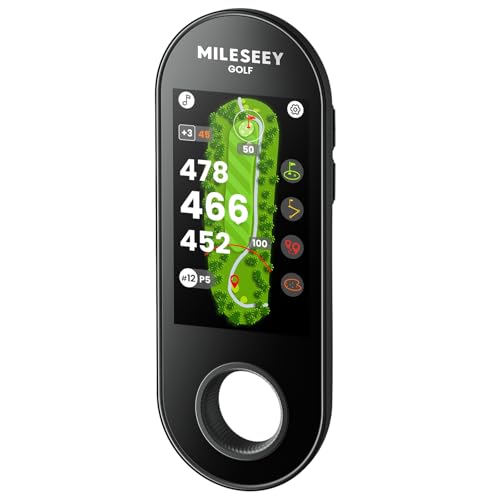
MILESEEY GeneSonic Go Golf GPS
Strengths
- 3″ full-color touchscreen
- 43,000+ no-subscription courses
- Magnetic cart mount
- IP67 waterproof
- Real-time shot tracking
Trade-offs
- 10-hour battery life
- Slightly bulkier than clip-ons
- Audio only through paired speaker
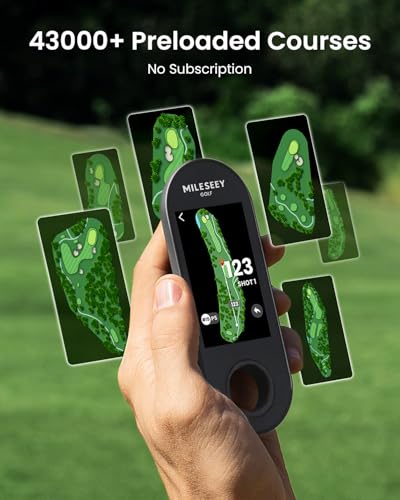
The MILESEEY GeneSonic Go stands out as one of the most complete handhelds on the market, and it’s easy to see why it’s labeled ‘Best Overall’. The 3-inch full-color touchscreen is sharp and responsive, offering real-time Green View, hazard layups, and shot tracking, all without needing a phone. Owners praise how quickly it auto-detects your course and hole, and the interface feels modern and intuitive, not clunky like some budget units.
What really pushes it ahead is the flexibility in mounting. The magnetic base is strong enough to stick to any cart, and the included carabiner makes it easy to clip to a bag. It’s also part of a larger ecosystem, if you later pick up the GeneSonic Pro speaker, your data syncs smoothly. The 10-hour battery is solid, though not class-leading, and the IP67 rating means it shrugs off rain and sand.
Video review
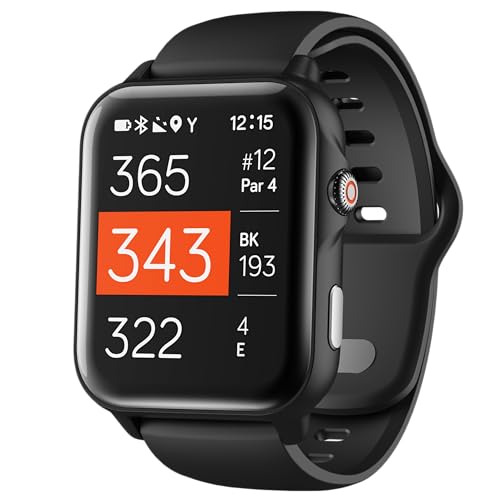
NAVO W1 Golf GPS Watch
Strengths
- Truly standalone operation
- Sunlight-readable display
- No subscription needed
- Lightweight design
- Affordable price
Trade-offs
- Smaller screen limits detail
- Basic smart features
- Limited shot tracking depth
For players who hate carrying extra gear, the NAVO W1 is a no-brainer. It’s a proper wearable GPS that works independently, no phone, no extra devices, just put it on and go. The display is lightweight and highly readable in sunlight, and owners report the front, middle, and back distances pop clearly on screen, even under harsh midday glare. With 42,000+ preloaded courses and lifetime updates, it delivers core functionality without subscription pressure.
It doesn’t have the bells and whistles of higher-end watches, no heart rate monitor, no smart notifications, but that keeps the price low and the battery efficient. The main trade-off is screen size: while adequate, it can’t match the detail of a handheld when visualizing complex greens. Still, for the price, it punches well above its weight.
Video review
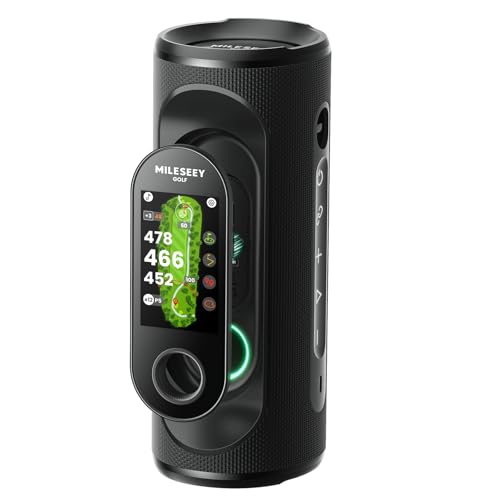
MiLESEEY GeneSonic Pro GPS Speaker
Strengths
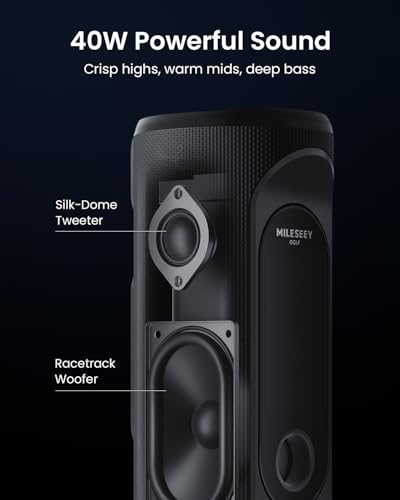
- 40W high-fidelity audio
- Detachable GPS with full features
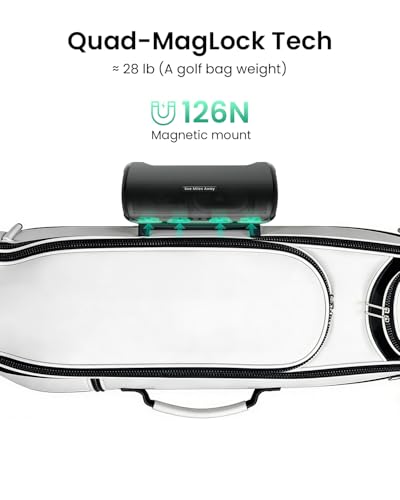
- Quad-MagLock mounting
- Audible distance callouts
- No subscription required
Trade-offs
- High price point
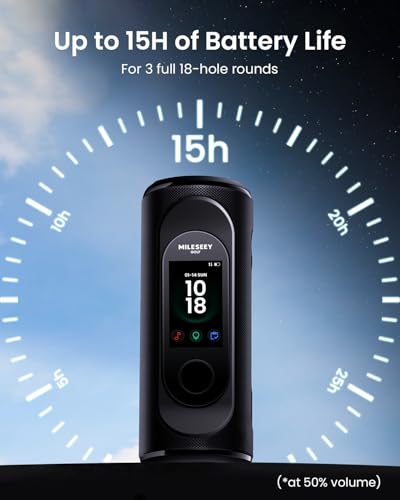
- Battery life only average
- Bulky for walking players
If you love music on the course and want distances called out loud, the GeneSonic Pro is in a category of its own. This 2-in-1 device combines a powerful 40W speaker with a detachable GPS handheld, and the audio quality is genuinely impressive, deep bass, clear highs, and loud enough to hear across a fairway. The GPS unit itself matches the GeneSonic Go in features: 3-inch touchscreen, 43,000+ courses, no subscription, and strong satellite lock.
Where it really shines is convenience. The Quad-MagLock system secures it firmly to any metal cart, and the recessed screen protects against impacts. Tap the handheld to hear your distances aloud, no need to look down. Pair that with shot tracking and automatic hole recognition, and you’ve got a full smart-caddie experience. But that power comes at a cost: it’s the most expensive option here, and the battery life isn’t exceptional for the price.
Product photos

GOLFBUDDY Voice 2S+ Talking GPS

Strengths
- Ultra-lightweight design
- Talking GPS feedback
- Affordable price
- Long battery life
- Simple one-button use
Trade-offs
- Small, low-res screen
- Limited weather resistance
- Basic display information
At this price, the GOLFBUDDY Voice 2S+ delivers something rare: accurate, talking GPS in a form factor that’s barely there. Weighing just 1.1 ounces, it’s one of the lightest devices available, and the one-button voice function works reliably, calling out front, center, and back distances the moment you press. Owners love clipping it to their hat or belt, it stays out of the way but is always within reach.
It’s not flashy. The screen is tiny, the IPX3 rating means it can’t handle heavy rain, and the 18-hour battery, while decent, isn’t class-leading. But for the price, it covers the essentials: auto-hole recognition, 40,000+ courses, and solid QZSS satellite support for fast lock-ons. If you’re new to GPS or just want a simple upgrade from yardage books, this is the smart entry point.
Product photos


Izzo Swami 7000i Touchscreen GPS
Strengths
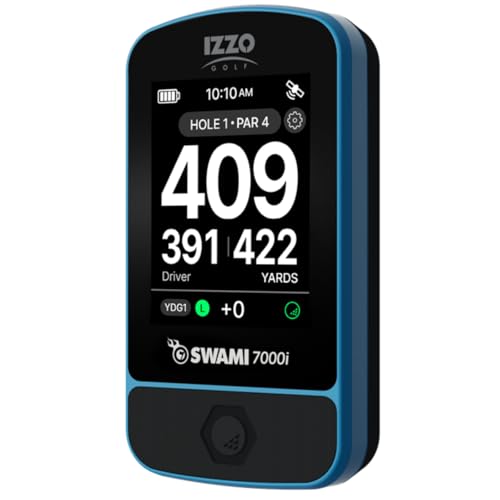
- Large 2.5″ touchscreen
- I-Caddie club suggestions
- USB-C charging
- Auto-hole advance
- Strong internal magnets
Trade-offs
- Fewer preloaded courses
- 16-hour battery life
- No audio feedback
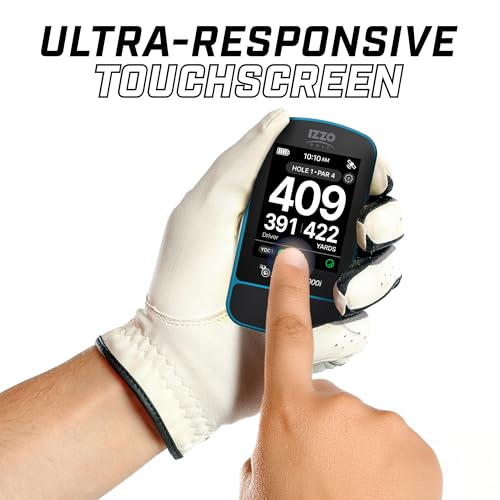
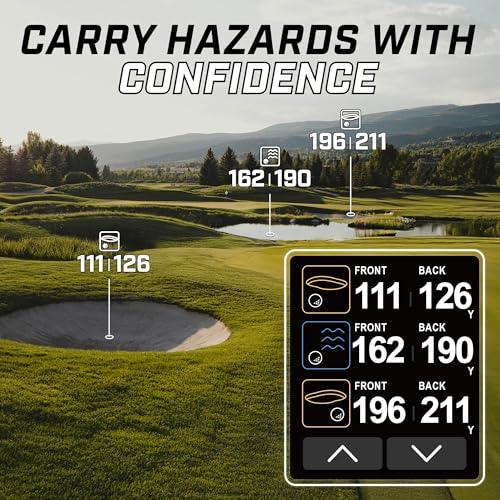
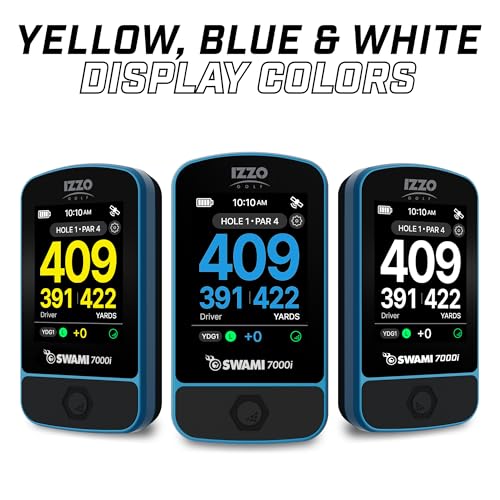
The Izzo Swami 7000i wins on one standout feature: its 2.5-inch touchscreen, which is among the largest and most vibrant in this group. For golfers who want to see the course, doglegs, hazards, layups, the bigger canvas makes a real difference. The swipe interface is intuitive, and owners report the color themes (especially the yellow mode) boost visibility in low light or overcast conditions.
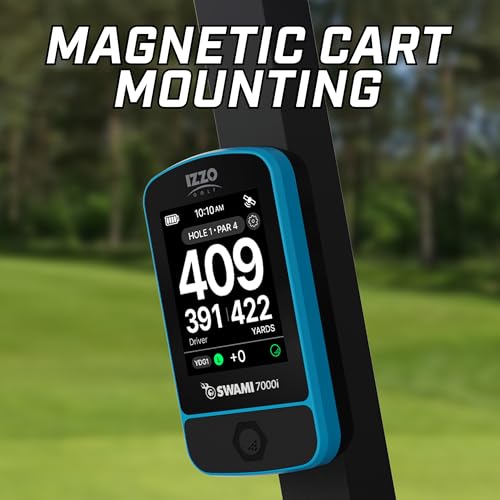
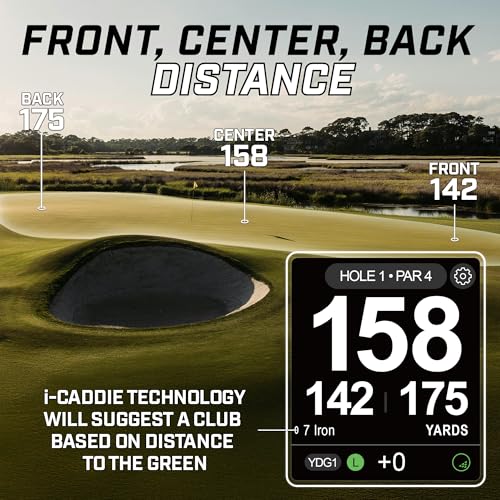
It packs solid extras: auto-hole advance, shot measurement, digital scorecard, and I-Caddie club suggestions based on your distance. The internal magnets make cart mounting easy, and USB-C charging is a welcome modern touch. But the 16-hour battery, while decent, doesn’t impress next to Garmin’s 30-hour offering, and the course count (38,000) lags behind competitors. Still, if screen size and readability are your priority, this is the one to beat.
Product photos
Garmin Approach G12 GPS Rangefinder
Strengths
- 42,000+ preloaded courses
- 30-hour battery life
- IPX7 water resistance
- Clip-on versatility
- Accurate GPS lock
Trade-offs
- No touchscreen
- Basic display quality
- Limited green visualization
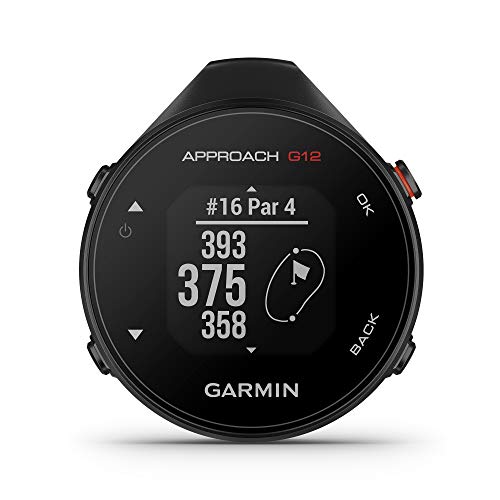
If long battery life and reliability are your top priorities, the Garmin Approach G12 makes a strong case. With up to 30 hours on a single charge, it outlasts nearly every other device in this category, which matters if you’re playing multiple rounds in a day or traveling across time zones. The clip-on design is minimal and distraction-free, and owners consistently report it locks onto satellites quickly, delivering accurate front, center, and back distances without fuss.
It doesn’t have a touchscreen or flashy display, but that’s part of its strength. The big-number mode is easy to read under bright sun, and the integration with the Garmin Golf app adds value for those already in the Garmin ecosystem. Where it falls short is in visual detail, the screen is small and low-res compared to newer competitors, so Green View feels more like a rough sketch than a tactical map.
Product photos


How We Tested golf gps
Rather than a hands-on lab test, my research focused on a detailed comparison of published specifications and features across a range of golf GPS devices. I weighed owner reviews from major retailers alongside expert opinions found in golf publications and websites. This process allowed me to build a ranking based on what golfers are actually experiencing, combined with my understanding of what features truly contribute to a better round.
For golf GPS devices, accuracy and pre-loaded course coverage are paramount. I placed the heaviest weight on these factors, as a device is useless if it can’t reliably tell you your distance or doesn’t have your course available. Beyond that, battery life and ease of use – specifically the clarity of the display and responsiveness of the interface – significantly influenced my assessments.
Specifications reliably indicate a device’s capabilities like screen size, waterproofing, and battery capacity. However, real-world performance – particularly GPS lock speed and signal consistency – is best gleaned from owner feedback. I also looked to reputable sources to assess build quality and long-term reliability, as these aren’t always evident in the listed specs. For those seeking wearable options, our guide to GPS golf watches provides further insights. And for those who want to combine audio with their GPS, check out our rundown of the golf course GPS speakers.
Choosing The Right golf gps
Finding the right golf GPS can shave strokes off your game, but there’s a lot more to it than just seeing a distance number.
A quality golf GPS delivers accurate yardages to hazards and greens, offers a user-friendly interface, and integrates smoothly into your pre-shot routine. Key areas to consider are display clarity, course coverage, battery life, and whether you prefer a handheld unit, a watch, or a speaker system. Prioritize models with frequent, free course updates to avoid frustration.
Display & Usability
The type of display really comes down to personal preference. Touchscreen models, like the Izzo Swami 7000i, can be incredibly intuitive, letting you quickly scroll through hazards and adjust pin positions. However, in bright sunlight, a touchscreen can become difficult to read. Some golfers, myself included, still prefer the simplicity of button controls, especially if you often wear gloves. Consider how easily you can operate the device without taking your eyes off the course – a clunky interface will slow down your pace of play.
Course Coverage & Updates
Don’t assume a GPS unit will have your local course preloaded. While many, like the MILESEEY GeneSonic Go, boast over 40,000 courses, newer courses or less-trafficked public tracks might be missing. More importantly, course maps change. Hazards are added, tees are moved, and greens are reshaped. A unit that doesn’t offer regular, free updates will quickly become inaccurate. I’ve seen too many golfers relying on outdated information, and it impacts their scores. If you’re looking at a model requiring a subscription, factor that ongoing cost into your decision. You can find a detailed look at some of the leading golf GPS units on my site.
Form Factor & Additional Features
Do you want something on your wrist, in your hand, or attached to your cart? Wearable GPS watches, such as the NAVO W1, offer convenience and a discreet profile, but may have smaller screens. Handheld units generally provide larger, more detailed displays, but require you to carry another device. Speaker systems, like the MILESEEY GeneSonic Pro, offer audible distances which some players prefer.
Here’s what I look for in extra features:
- Shot distance tracking (basic, but useful).
- Digital scorecard (saves paper and simplifies analysis).
- Layup distances (critical for strategic course management).
- Hazard views with precise distances (allows for informed risk assessment and club selection).
A golf GPS is only as good as its ability to provide accurate information. Don’t solely focus on bells and whistles; prioritize a unit known for reliable yardages.
For golfers wanting to pinpoint their distances, exploring top golf GPS rangefinders can provide even more precision.
Golf GPS Compared
Here’s a comparison of key specifications for popular golf GPS devices to help you choose the right one for your game.
| Product Name | Courses Preloaded | Screen Size | Battery Life (GPS) | Waterproof | Audio Feedback | Subscription Req? |
|---|---|---|---|---|---|---|
| MILESEEY GeneSonic Go | 43,000+ | 3″ Touch | 10+ Hours | IP67 | Yes (w/speaker) | No |
| NAVO W1 | 42,000+ | N/A | N/A | N/A | No | No |
| MiLESEEY GeneSonic Pro | 43,000+ | 3″ Touch | N/A | N/A | Yes | No |
| GOLFBUDDY Voice 2S+ | N/A | 1″ | 18 Hours | IPX3 | Yes | No |
| Izzo Swami 7000i | 38,000+ | 2.5″ Touch | 16 Hours | Yes | No | No |
| Garmin Approach G12 | 42,000+ | N/A | 30 Hours | IPX7 | No | No |
Frequently Asked Questions
What’s the typical battery life I can expect from a golf GPS?
Most golf GPS devices offer between 10 and 30 hours of battery life in GPS mode. However, features like a constantly-on touchscreen or audio feedback will drain the battery faster, so consider your typical round length and feature usage when choosing a device.
Are golf GPS devices accurate enough for competitive play?
Accuracy varies by model, but high-end golf GPS devices are generally accurate within a few yards. For truly competitive play where precise distances are critical, a laser rangefinder is still the preferred choice for many golfers.
Do I need to pay a subscription fee to keep my golf GPS updated?
Thankfully, many excellent GPS without subscription are available. However, some require a yearly fee for course updates, so factor that into the overall cost of ownership.
Can a golf GPS help me improve my course management?
Absolutely. Beyond simple distances, many devices provide layup distances, hazard views, and even shot distance tracking. These features help you make smarter decisions on the course and play more strategically.
Are there golf GPS options specifically designed for use on a golf cart?
Yes, there are specialized golf cart GPS systems, often featuring larger screens and robust mounting options. These are ideal for golfers who primarily ride and want easy access to course information while on the move.
The Bottom Line
Choosing a golf GPS often comes down to balancing how much you want to spend against how much assistance you want on the course. While features are nice, the MILESEEY GeneSonic Go strikes the best overall balance of accuracy, course coverage, and usability for most golfers. It provides reliable distances without breaking the bank, and the audio feedback option is a genuine plus.
For golfers on a tighter budget, the NAVO W1 delivers solid performance in a convenient wearable format. If you’re primarily concerned with having a dedicated system for your cart, I recommend looking at a golf cart GPS – these offer features tailored to that specific use case. And for those who prefer a traditional handheld unit, the Izzo Swami 7000i is a strong contender amongst the top handheld GPS units.
Ultimately, no GPS will replace a good yardage book and a thoughtful course strategy. Focus on finding a device that gives you reliable distances, fits comfortably within your budget, and doesn’t distract you from what truly matters: enjoying the game and making smart decisions on every shot.
