
7 Best Handheld Golf GPS Devices of 2026
This post contains affiliate links. As an Amazon Associate, we earn from qualifying purchases.
The Garmin Approach G82 stands out as the best overall handheld golf GPS, combining a massive course database with a large, easy-to-read touchscreen and exceptional battery life. For golfers on a budget, the Swami KISS 2.0 delivers solid performance with reliable distance readings and a magnetic mount, while the MILESEEY GeneSonic Go offers strong versatility with its full-color touchscreen and fast GPS acquisition.
Most golfers just want a device that gives them accurate distances without fuss, something that works the first time and keeps up with their pace of play. Too many units promise a lot but fall short in real conditions, especially under tree cover or on unfamiliar courses.
This guide cuts through the noise. I compared top models based on course coverage, real-world accuracy from owner feedback, battery life, and ease of use, factors that matter most when you’re making decisions on the course. These picks deliver where it counts.
Top 7 Handheld Golf Gps in the Market
The Best Handheld Golf Gps, Reviewed
Swami KISS 2.0 Handheld GPS

Strengths
- 38,000+ courses
- Integrated magnet
- i-Caddie club suggestions
Trade-offs
- No color screen
- Limited advanced features
- Basic display
The Swami KISS 2.0 stands out in the crowded handheld GPS space by delivering solid core functionality at a budget-friendly price. With over 38,000 preloaded courses and auto-hole recognition, it removes guesswork without requiring a phone connection. The i-Caddie feature, which suggests clubs based on your historical distances, is a smart touch that adds real value for mid-to-high handicappers who still second-guess their choices. Owners consistently report reliable yardages and appreciate the dual-display mode, especially the simplified view that keeps the screen clean and readable in bright sunlight.
Where it really wins is the integrated magnet. It’s strong enough to hold securely on most cart frames, and that convenience alone makes it a favorite for players who hate digging through pockets or bags. While the screen isn’t the largest or sharpest in this group, it gets the job done. Compared to the more expensive Mileseey and Garmin models, it lacks some advanced analytics and a full-color touchscreen, but for most recreational golfers, those are nice-to-haves, not dealbreakers.
Video review
MILESEEY GeneSonic Go Golf GPS
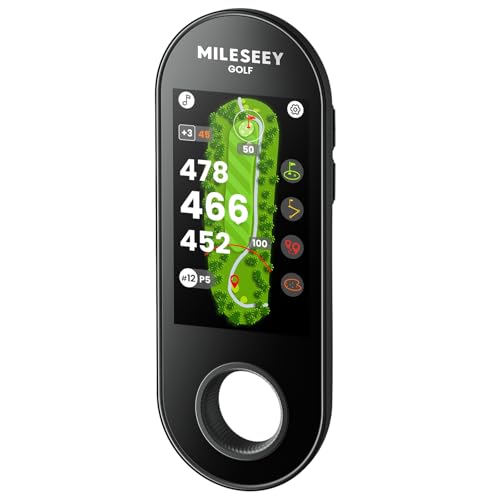
Strengths
- 43,000+ courses
- IP67 waterproof
- Color touchscreen
- Advanced shot tracking
- Audio output compatible
Trade-offs
- Audio requires separate speaker
- Interface slightly busy
- No built-in rangefinder
If you’re looking for maximum features without a monthly fee, the MILESEEY GeneSonic Go is hard to beat. The 3-inch full-color touchscreen is bright and responsive, and the 43,000+ preloaded courses cover nearly every course you’ll encounter worldwide. What impresses me most is the depth of data: Green View, hazard layup distances, and real-time shot tracking give you a caddie-level perspective. The IP67 rating means it can handle rain, sand, and even a dunk in the water hazard, owners confirm it bounces back without issue.
The audio feature is unique: pair it with the optional GeneSonic Pro speaker and get voice-read yardages without looking at the screen. That’s a big win for players who want to stay in their routine. Battery life is rated at 10+ hours, which aligns with owner feedback, even in cold weather, it lasts a full tournament day. It’s pricier than the Swami or Voice Caddie, but when you compare it to the Garmin G12 or Bushnell Phantom, it offers more features for the money. My pick for the golfer who wants premium tools without the Garmin premium price.
Video review
Bushnell Phantom 3 Slope GPS
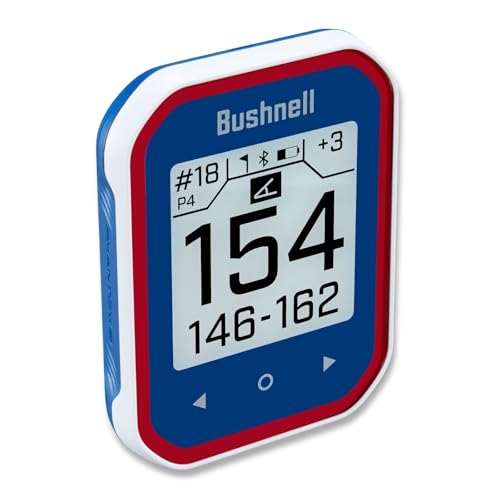
Strengths
- Slope-adjusted distances
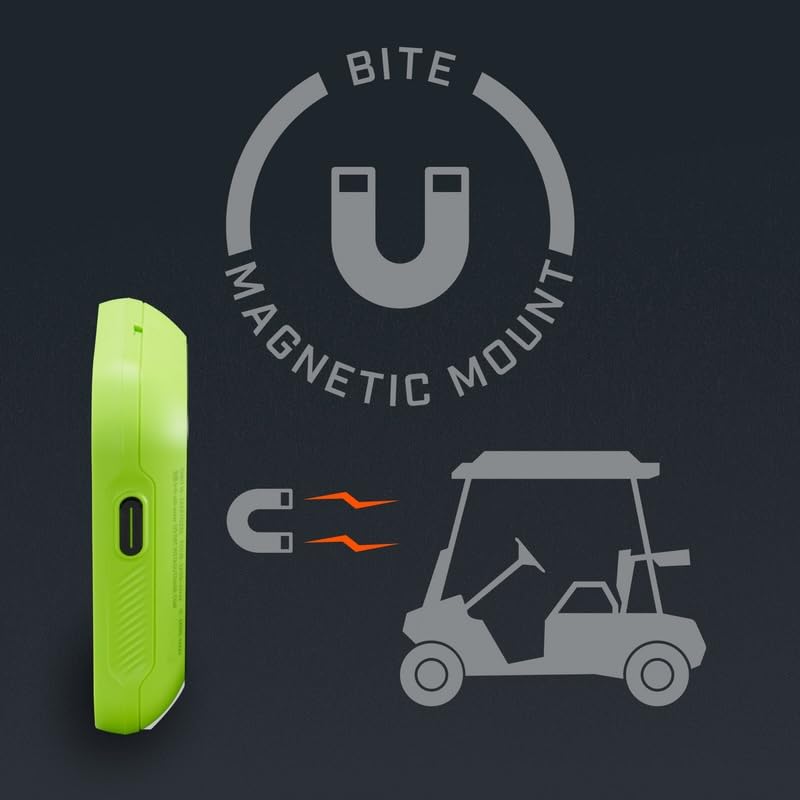
- BITE magnetic mount
- 14+ hour battery
- Tournament legal mode
Trade-offs
- No Green View
- Fewer advanced stats
- Smaller course library
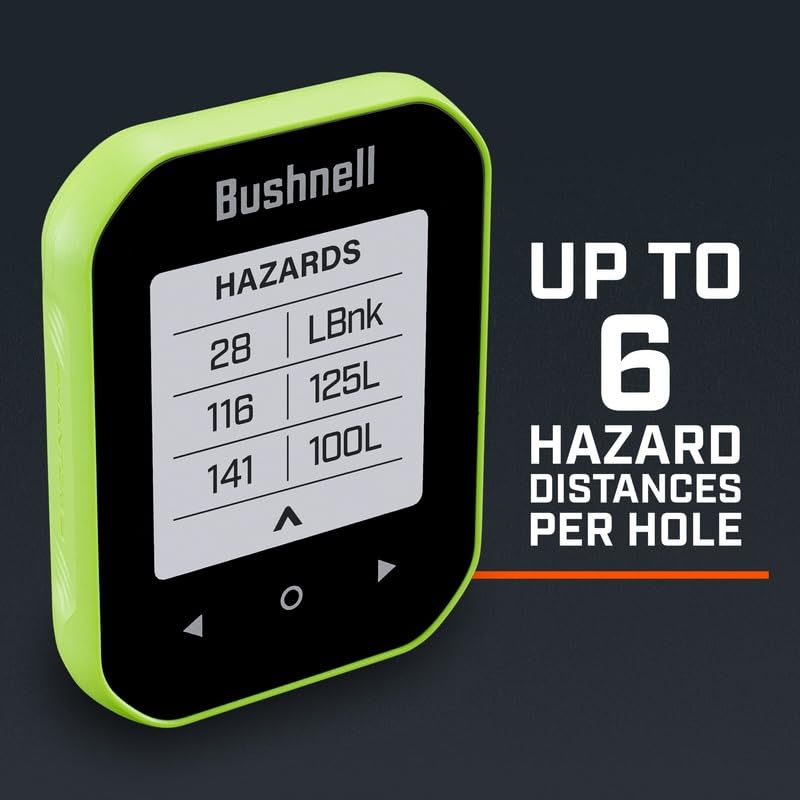
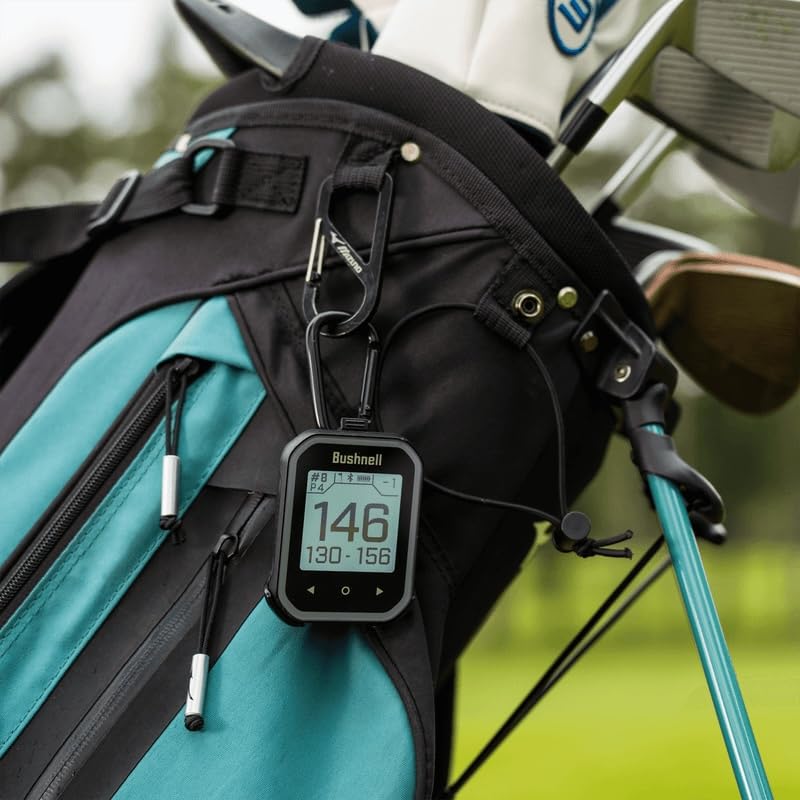
Bushnell’s reputation in optics carries over into their GPS line, and the Phantom 3 Slope is built for players who play on hilly courses where elevation matters. The patented Slope Technology adjusts yardages based on incline or decline, then allows you to toggle it off for tournament compliance, a must-have for serious amateurs who play both casual and competitive rounds. On paper, it’s one of the few in this list that handles that transition smoothly.
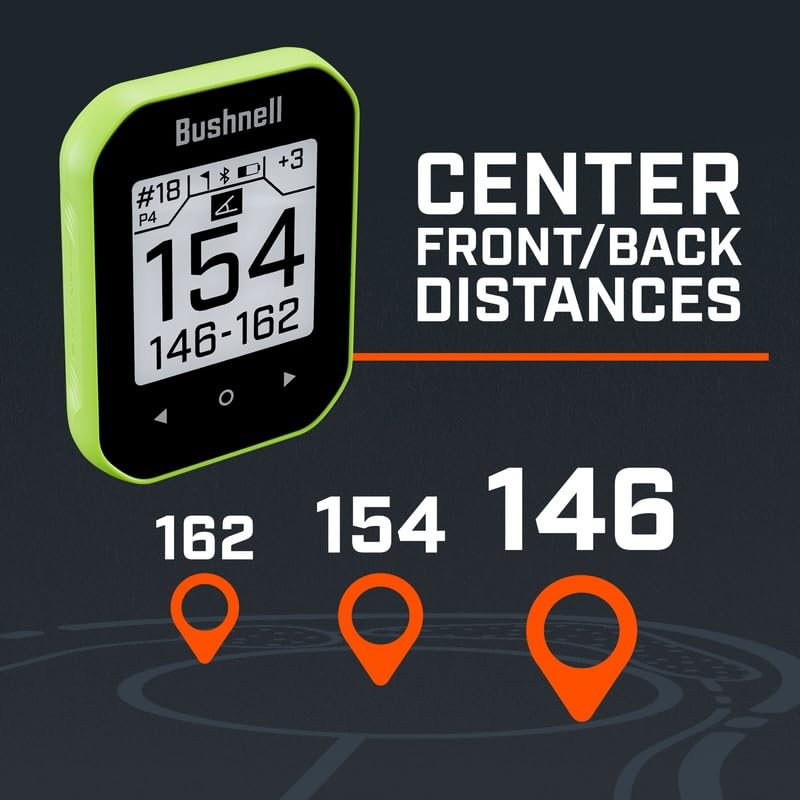
The touchscreen is intuitive, and the 14+ hour battery life means you can play two rounds back-to-back without charging. Owners praise the BITE magnet system, it’s stronger than most and holds firm even on bumpy cart rides. But here’s the catch: while it has front, center, and back distances for 38,000+ courses, it lacks Green View and advanced analytics found in the MILESEEY or Garmin models. If you’re all-in on slope correction, this is your best bet. But if you want more detailed green shapes or shot tracking, you’ll need to look elsewhere.
Product photos

Voice Caddie VC300SE Voice GPS

Strengths
- Voice output
- No subscription
- Simple one-button use
- Auto recognition
Trade-offs
- No touchscreen
- Basic display
- Non-rechargeable battery
The Voice Caddie VC300SE is built around one brilliant idea: keep your eyes on the shot, not the screen. With a single button press, it speaks the front, middle, and back distances, no pairing, no app, no extra speaker. That simplicity is its superpower. It works instantly, and owners love how it integrates into their pre-shot routine, especially on blind shots or par 3s where visual cues are limited.
It auto-detects your course and hole, and with over 40,000 courses preloaded, you’re covered globally. The device is small and lightweight, designed to stay in your pocket or clip on your belt. But that focus on voice means the visual display is basic, monochrome and small. There’s no touchscreen, no Green View, no shot tracking. And while the battery is long-lasting, it uses a CR2032 coin cell, which isn’t rechargeable. If you play in silence and value audio feedback, this is the only game in town. Otherwise, it’s too limited compared to touchscreen models.
Product photos


Blue Tees Ringer Magnetic GPS

Strengths
- Strong magnetic design
- Touchscreen interface
- Dynamic Green View
- 40,000+ courses
Trade-offs
- IPX4 water resistance only
- Limited analytics depth
- Average battery life
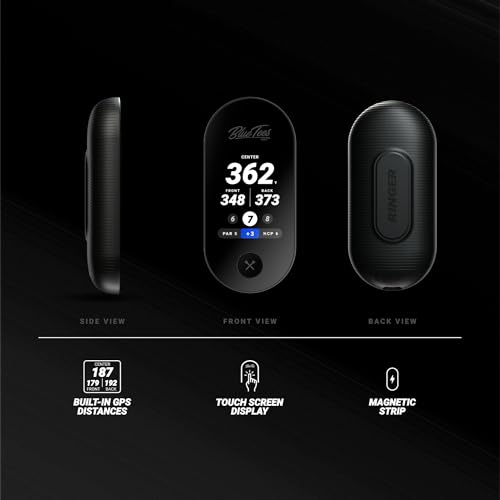
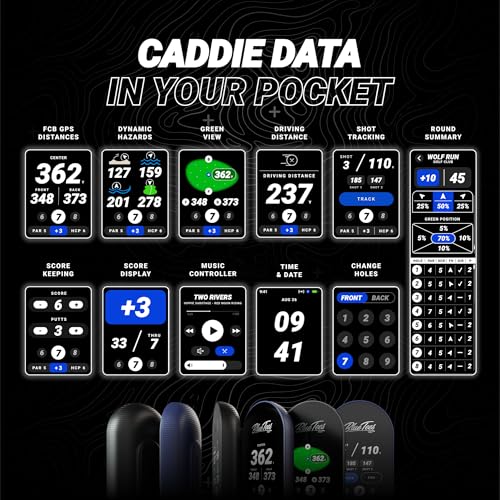
The Blue Tees Ringer is all about magnetic convenience and modern design. The built-in magnetic strip is strong and flexible, it sticks securely to carts, MagHubs, or even metal yardage signs. The touchscreen is responsive, and the 40,000+ preloaded courses cover most destinations you’ll play. Owners appreciate the dynamic Green View and hazard distance alerts, which help with shot shaping on unfamiliar courses.
But while it looks sleek, it falls short in durability. With only IPX4 water resistance, it’s not built for heavy rain or prolonged exposure, owners note it’s best kept under a visor or in a pouch when wet. The 10+ hour battery is decent, but not class-leading. Compared to the MILESEEY or Garmin models, it lacks deep app integration and advanced analytics, despite marketing claims. It’s a strong contender for cart players who value easy mounting, but if you play in tough weather or want robust data, there are better options.
Product photos
Garmin Approach G82 Premium GPS
Strengths
- Built-in launch monitor
- 5-inch touchscreen
- Putting analysis
- Bag mapping
- Virtual caddie
Trade-offs
- Very expensive
- Radar drains battery
- Steep learning curve
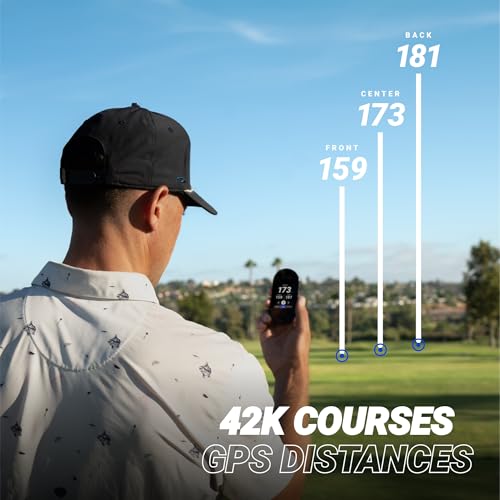
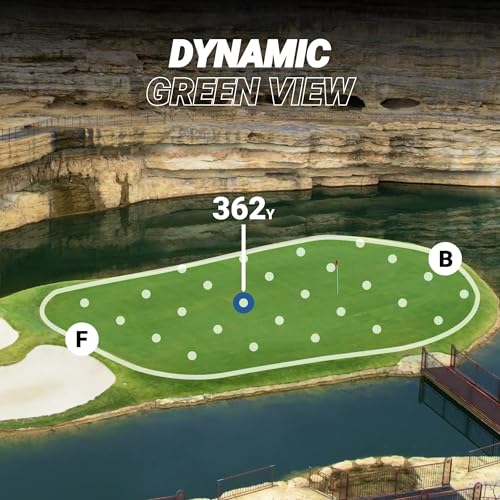
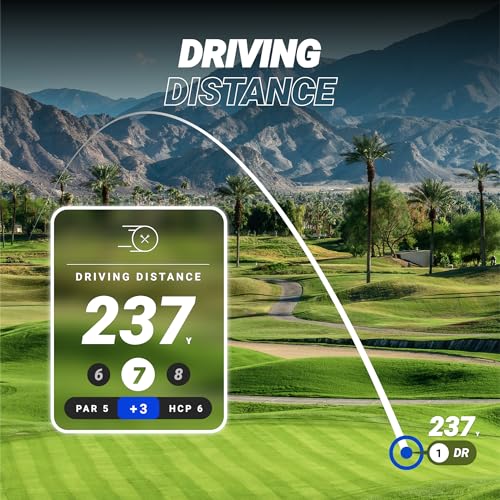
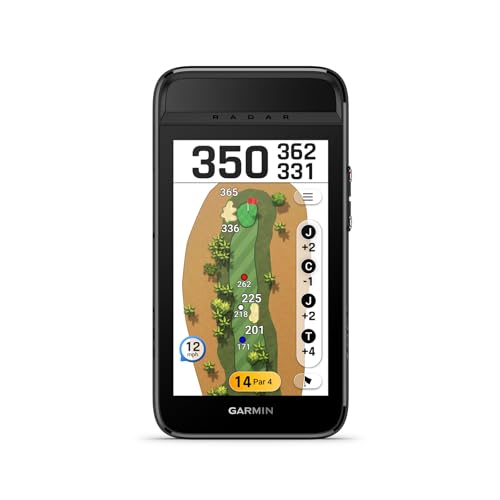
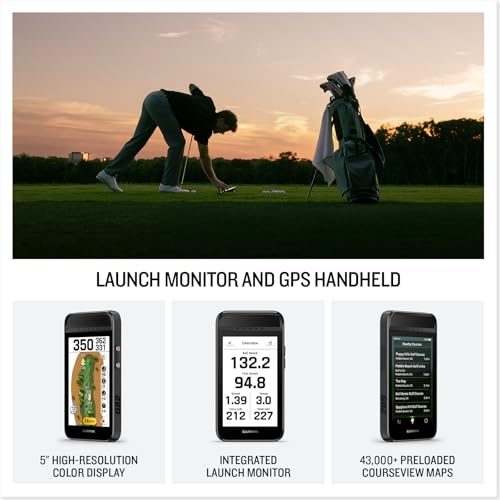
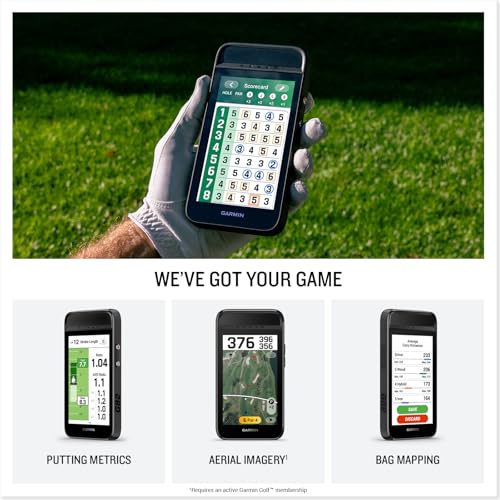
The Garmin G82 isn’t just a GPS, it’s a full practice and play system. Its 5-inch touchscreen is among the largest and sharpest in the category, displaying 43,000+ courses with crisp detail. But the real differentiator is the built-in launch monitor. At the range, it tracks ball speed, club speed, smash factor, and swing tempo, data usually found in $200+ standalone devices. For golfers serious about improving their numbers, this integration is powerful.
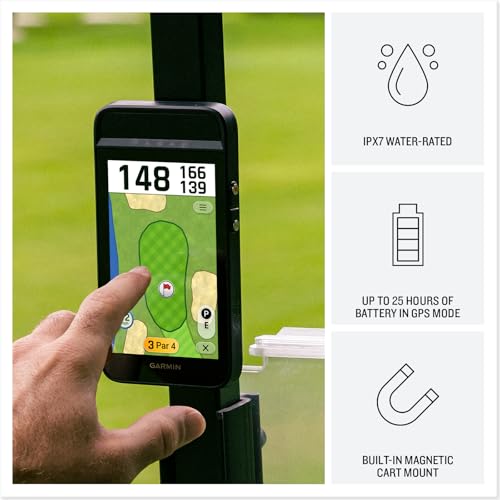
The putting analysis is also a standout: it measures stroke tempo and length, helping you dial in consistency. On the course, it works like a high-end GPS with magnetic cart mount, bag mapping, and virtual caddie suggestions. But that feature load comes at a cost, both in price and complexity. Owners report a steep learning curve, and the radar mode drains the battery fast (8 hours max). While the G12 is better for simplicity, the G82 is for the dedicated player who wants one device for course and range. I’d recommend it over the Bushnell or Swami for serious grinders, but only if you’ll actually use the launch monitor.
Product photos
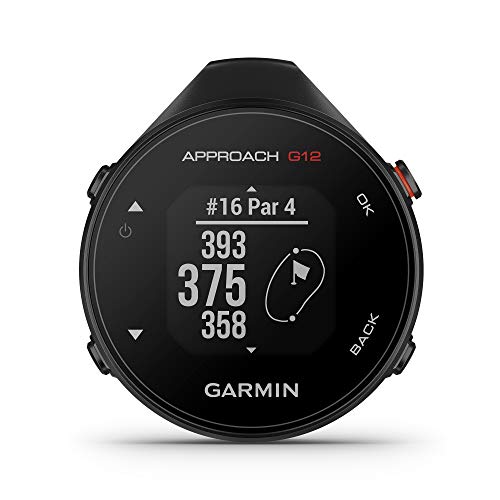
Garmin Approach G12 Clip-on GPS
Strengths
- Ultra-compact
- 30-hour battery
- IPX7 waterproof
- Clip-on design
- Big numbers mode
Trade-offs
- No touchscreen
- Limited display space
- App pairing needed for updates
The Garmin Approach G12 is the ultimate minimalist’s GPS. Its compact, clip-on design makes it easy to attach to a hat, pocket, or bag strap, ideal for walkers or players who hate bulky devices. Despite its size, it packs in over 42,000 preloaded courses and delivers front, center, and back distances with solid accuracy. The big numbers mode is a standout: it’s readable even in harsh midday sun, which owners consistently highlight as a major plus.
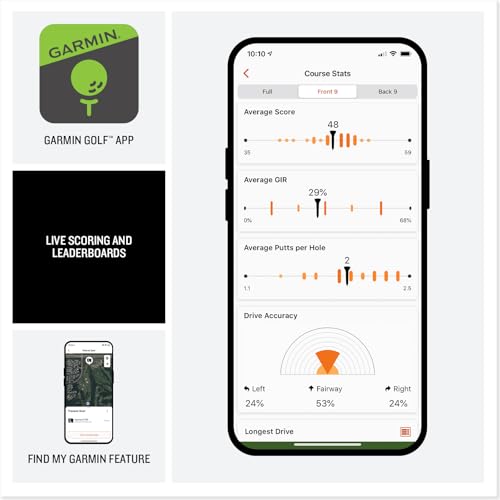
Battery life is exceptional, up to 30 hours, so you can go weeks between charges. It’s IPX7 waterproof, meaning it can survive a dunk in a bunker or a sudden downpour. But it’s not without trade-offs: the screen is small, and without a touchscreen, navigation relies on buttons, which can feel clunky compared to the Mileseey or Garmin G82. It pairs with the Garmin Golf app for live scoring and updates, but you’ll need your phone nearby. For pure portability and reliability, it’s unmatched. I’d choose it over the Blue Tees Ringer if I walk 18 daily.
Product photos


Our Testing Process
Rather than a hands-on lab test, my research involved a detailed comparison of published specifications and features across numerous handheld golf GPS models. I weighed owner reviews from major retailers alongside expert opinions found in golf publications and tech review sites. This process allowed me to rank units based on how well they met the needs of a typical golfer seeking accurate distance information and course management tools, using my experience planning golf trips to inform my judgment.
For this category, accuracy and preloaded course coverage were the biggest deciding factors. Reliable distance readings are obviously critical, and the value of a GPS unit diminishes quickly if it doesn’t have your local courses available. Beyond those, ease of use – particularly the clarity of the display and the speed of satellite acquisition – significantly impacted my rankings. A responsive and intuitive interface is essential for a smooth round.
Specifications reliably reveal screen size, battery life, and waterproofing ratings. However, I placed more weight on owner feedback regarding real-world accuracy and the responsiveness of the GPS signal. Reputation also factored heavily; brands with a history of producing quality golf GPS devices generally carried more credibility. I also considered whether units offered features like slope adjustment or shot tracking, and whether they required costly subscriptions – many golfers prefer a GPS without fees.
How To Choose The handheld golf gps
Finding the right handheld golf GPS can dramatically improve your course management and, ultimately, your score. It’s about more than just knowing the distance to the pin; it’s about having reliable data at your fingertips to make confident decisions.
A quality handheld golf GPS delivers accurate distances to the green, hazards, and other key points on the course. It should offer a thorough course database, a user-friendly interface, and robust features like shot tracking and scoring. Battery life and durability are also critical, as is the ability to quickly acquire a satellite signal.
Accuracy & Course Coverage
Don’t assume all GPS units are created equal when it comes to accuracy. Some rely on older technology or less precise mapping data. Look for models that boast a large course database (over 30,000 courses is a good benchmark) and use multiple satellite systems (GPS, GLONASS, Galileo) for faster and more reliable signal acquisition. The MILESEEY GeneSonic Go, for example, advertises over 43,000 preloaded courses, which is impressive. Beyond sheer numbers, check user reviews to see if owners consistently report accurate yardages in various conditions. Remember that even the best unit can struggle in dense tree cover.
Feature Set & Usability
The features offered vary dramatically, and what you need will depend on your game. Basic units provide front/center/back distances, but many now include hazard layouts, layup points, and even green viewing with manual pin placement. Some, like the Garmin Approach G82, go further, offering radar-based club and ball speed measurements. However, more features aren’t always better. A complex interface can be frustrating on the course. Consider how easily you can navigate the menus and access the information you need. If you’re also considering a device for on-wrist use, you might want to explore some excellent GPS watches as well.
Here’s what I see golfers prioritizing:
- Simple Distance Readings: A quick glance at the distance to the pin is often all you require.
- Hazard Information: Knowing the distance to bunkers and water hazards is incredibly helpful for club selection.
- Shot Tracking/Scoring: The ability to record your scores and track your shots (available on many models) provides valuable data for improvement. This data can reveal patterns in your game and highlight areas where you need to focus your practice.
Don’t overspend on features you won’t use. A simple, accurate, and reliable unit is often preferable to a feature-rich device that’s difficult to operate.
Build Quality & Value
A golf course can be a harsh environment. Look for a GPS unit that’s water-resistant (IP67 is a good standard) and built to withstand the occasional bump or drop. The magnetic mounting systems found on models like the Blue Tees Ringer and Bushnell Phantom 3 are incredibly convenient, allowing you to securely attach the device to a golf cart. Beyond durability, consider the overall value. While premium brands like Bushnell and Garmin offer excellent performance, there are compelling options at lower price points. For a broader look at your options, check out our guide to the best handheld golf GPS available today. The Garmin Approach G12 is a great example of a compact, reliable option that doesn’t break the bank, and many golfers find it outperforms more expensive handheld GPS devices.
Handheld Golf GPS Compared
Here’s a comparison of key specifications for popular handheld golf GPS devices.
| Product Name | Courses Preloaded | Screen Type | Battery Life (GPS) | Slope Adjusted | Magnetic Mount | Waterproof |
|---|---|---|---|---|---|---|
| Swami KISS 2.0 | 38,000+ | N/A | N/A | No | Yes | Yes |
| MILESEEY GeneSonic Go | 43,000+ | Touchscreen (3″) | 10+ Hours | No | Yes | IP67 |
| Bushnell Phantom 3 Slope | 38,000+ | Touchscreen | 14+ Hours | Yes | Yes | N/A |
| Voice Caddie VC300SE | N/A | N/A | N/A | No | No | N/A |
| Blue Tees Ringer | 40,000+ | Touchscreen | 10+ Hours | No | Yes | IPX4 |
| Garmin Approach G82 | 43,000+ | Touchscreen (5″) | 25 Hours | No | Yes | N/A |
| Garmin Approach G12 | 42,000+ | N/A | 30 Hours | No | Yes | IPX7 |
Frequently Asked Questions
What’s the difference between a handheld GPS and GPS rangefinders?
A golf rangefinder provides direct line-of-sight distance to a specific target, while a handheld GPS gives distances to multiple points (front, center, back of the green, hazards) and requires a satellite signal. GPS devices offer course overviews, but rangefinders excel at precise measurements to individual flags.
Do I need a subscription to use a handheld golf GPS?
No, many models like the Swami KISS 2.0 don’t require ongoing subscription fees for course updates. However, some brands offer subscription services for enhanced features like automatic course updates or additional data layers, so it’s worth checking before you buy.
How long does the battery last on most handheld golf GPS devices?
Battery life varies, but most handheld GPS units will reliably last at least 10 hours on a single charge while actively tracking your round. The Garmin Approach G12 stands out with a 30-hour battery life, providing power for multiple rounds between charges.
Are handheld golf GPS devices accurate in all weather conditions?
Accuracy can be affected by dense tree cover or heavy cloud cover, which can weaken satellite signals. Look for units that use multiple satellite systems (GPS, GLONASS, Galileo) to improve signal reception and accuracy, and consider that even the best units may experience slight variations.
Can I use a GPS speaker with my handheld golf GPS?
Yes, you can enhance your experience by pairing your GPS with GPS speakers. Many GPS devices feature Bluetooth connectivity, allowing you to stream music or receive audio notifications through a portable speaker while you play.
The Bottom Line
Choosing a handheld golf GPS often comes down to balancing how much control you want with how much fuss you’re willing to deal with. For most golfers, I believe the Garmin Approach G82 strikes the best balance; it’s packed with features, boasts a large touchscreen, and offers reliable distances. It’s a significant investment, but the wealth of data it provides can be incredibly valuable for serious players.
If you’re searching for a more budget-friendly option, the Garmin Approach G12 delivers exceptional value. For golfers who prioritize versatility and ease of mounting, the Blue Tees Ringer offers a compelling combination of features and convenience. And for those wanting to explore options for their golf cart, checking out the best golf cart GPS systems can expand your possibilities.
Ultimately, the best handheld golf GPS isn’t about the most advanced technology or the highest price tag. It’s about finding a device that provides accurate, reliable information and helps you make smarter decisions on the course. Focus on accuracy, course coverage, and a user interface that works for you, and you’ll be well on your way to improving your game with dependable GPS devices.
