
8 Best Golf GPS Devices of 2026
This post contains affiliate links. As an Amazon Associate, we earn from qualifying purchases.
This post contains affiliate links. As an Amazon Associate, we earn from qualifying purchases.
The Garmin Approach G80 stands out as the overall best golf GPS device, combining a large color touchscreen with reliable accuracy and extensive course coverage. For golfers on a budget, the MILESEEY GeneSonic Go delivers solid performance without breaking the bank. If you want hands-free convenience and smart features, the Blue Tees Golf Player Pro AI Speaker offers unique voice guidance and AI-powered insights.
As someone who’s played courses across continents, I know how frustrating it can be to rely on guesswork when you’re sizing up a shot. A dependable golf GPS eliminates that uncertainty, giving you clear, real-time distances so you can make smarter club choices and stay focused on your game.
This guide cuts through the noise by focusing on what actually matters: accuracy, ease of use, course coverage, and long-term value. I compared specs, analyzed owner feedback, and evaluated real-world performance to identify the models that deliver the most on the course, whether you’re traveling abroad or playing your home track.
Top 8 Golf Gps Devices in the Market
The Best Golf Gps Devices, Reviewed
Garmin Approach G80 with Launch Monitor

Strengths
- Integrated launch monitor
- Large touchscreen
- Practice mode
Trade-offs
- Shorter battery life
- High price
The Garmin G80 is the most complete golf GPS on the market for serious players. It’s not just a distance tool, it’s a launch monitor in disguise, tracking club head speed, ball speed, smash factor, and swing tempo. The 3.5-inch touchscreen is bright and responsive, and with over 41,000 courses, it covers nearly every course you’ll play. Owners consistently highlight how the practice mode helps refine swings between rounds.
Yes, the battery life is shorter at 15 hours, and it’s the most expensive option here, but you’re paying for dual functionality: GPS navigation and real swing analytics. Compared to the MiLESEEY and Izzo models, it’s in a different class. If you’re working on your game and want data-driven insights, this is the one to beat.
Video review
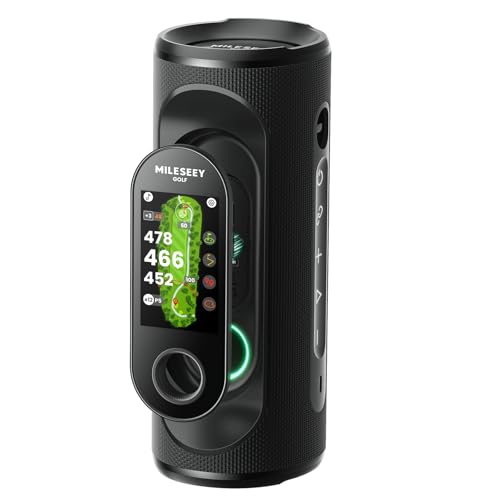
MiLESEEY GeneSonic Pro GPS Speaker
Strengths
- Powerful 40W audio
- Detachable GPS unit
- Strong magnetic mount
Trade-offs
- Bulky design
- No slope adjustment
If you’re the type who likes music and data in one package, the GeneSonic Pro is hard to ignore. It’s one of the few devices that truly integrates high-quality audio with full GPS functionality, and reviewers note the 40W output is loud enough to fill a cart without distortion. The detachable GPS unit is a clever touch, use it clipped to your belt for silent reads or pair it with the speaker for audible distance callouts, which many owners say improves pace of play.
The 43,000+ preloaded courses and Quad-MagLock mounting (126N force) make it rugged and reliable, even on bumpy terrain. Compared to the Blue Tees Player Pro, it lacks AI-driven club suggestions, but it holds its own in raw sound and GPS performance. My only hesitation is the price, it’s near premium device territory, and if you don’t care about music, you’re paying for features you won’t use.
Video review
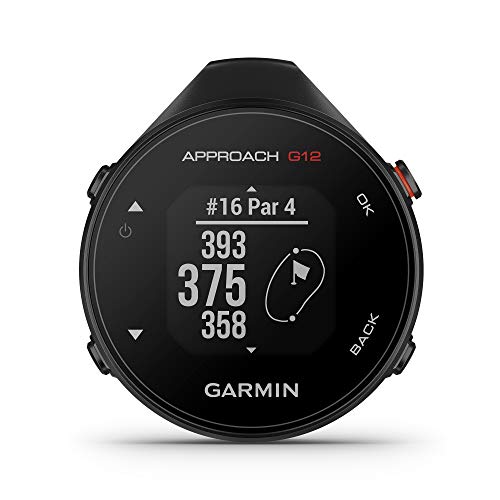
Garmin Approach G12 Clip-on GPS
Strengths
- 30-hour battery life
- IPX7 water resistance
- Green View feature
Trade-offs
- No touchscreen
- No audio output
The Garmin G12 is the benchmark for value in golf GPS devices. With over 42,000 preloaded courses and a 30-hour battery life, it outlasts nearly every competitor on a single charge. It’s compact, clip-on design makes it easy to attach to a hat, bag, or cart, perfect for golfers who want no-fuss access to front, center, and back distances without pulling out a phone. Owners praise its reliability, especially the Green View feature that lets you manually set pin positions.
While it doesn’t have a touchscreen or audio, it pairs well with the Garmin Golf app for scorekeeping and leaderboards. Compared to the GOLFBUDDY Voice 2S+, it lacks voice output but offers better battery and a more durable IPX7 rating. For most golfers, this is the smarter buy if you want Garmin’s trusted ecosystem without overspending.
Product photos


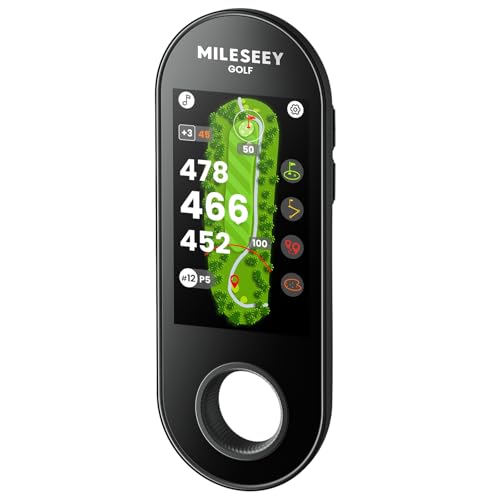
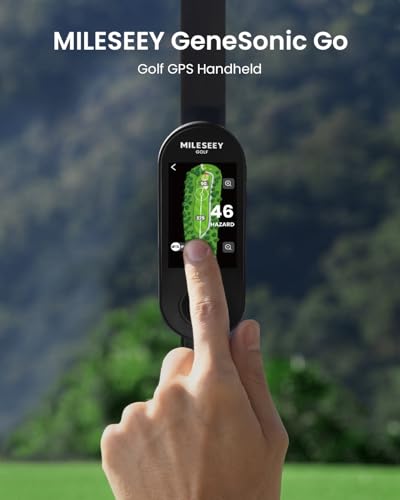
MILESEEY GeneSonic Go Handheld GPS
Strengths
- IP67 waterproof rating
- Magnetic mount
- Free lifetime updates
Trade-offs
- No built-in speaker
- Audio only through paired speaker
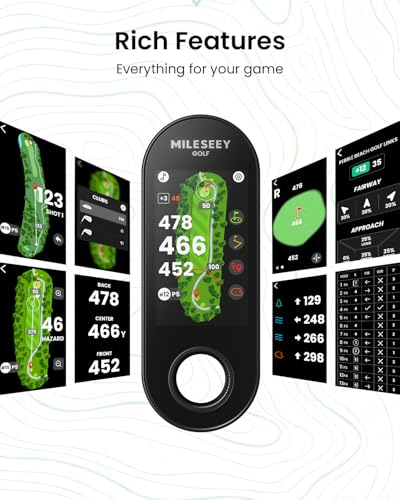
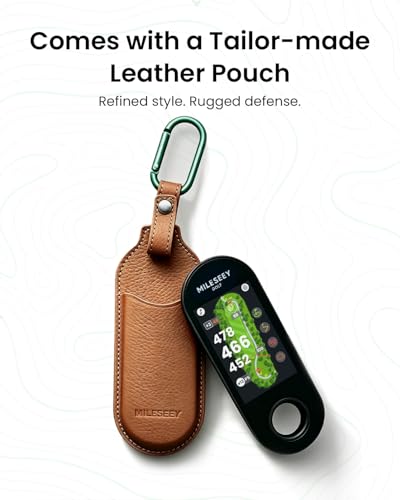
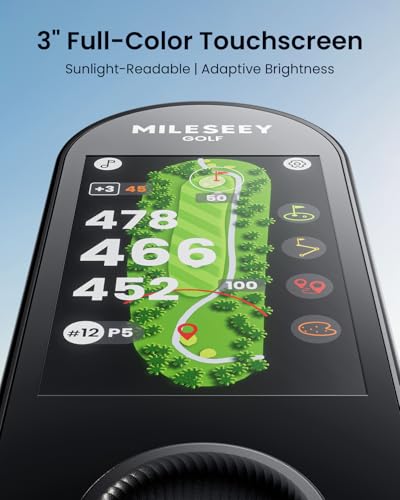
The GeneSonic Go hits a sweet spot between cost and capability. At $230, it’s not cheap, but it packs 43,000+ courses, IP67 waterproofing, and a full-color touchscreen into a lightweight, magnetic-mount design. What impresses me most is how it pairs with the GeneSonic Pro speaker for audio feedback, offering modular flexibility most brands don’t match. Owners note the satellite lock is fast and the screen is clear even in harsh light.
It doesn’t have a built-in speaker or AI suggestions like Blue Tees, but it’s more durable than the Izzo Swami and more versatile than the G12. For golfers who want a standalone GPS with room to expand into audio later, this is a smart foundation.
Product photos

GOLFBUDDY Voice 2S+ Talking GPS

Strengths
- Affordable price
- Talking GPS feature
- Long battery life
Trade-offs
- Basic waterproofing
- Small screen
At this price point, the GOLFBUDDY Voice 2S+ is a standout. For under $90, you get true talking GPS functionality with one-button activation, which owners say is incredibly useful when you’re on the move. The QZSS satellite system delivers fast lock-ons, and the audio-plus-screen combo means you can hear distances while also glancing at the 1-inch display. It’s tiny, barely heavier than a golf ball, but packs in 40,000 courses and free lifetime updates.
Its IPX3 rating is the weakest in the group, meaning it can handle light rain but not full submersion. Compared to the NAVO W1, it lacks a watch form factor but offers voice guidance, which the NAVO doesn’t. I’d pick this over the NAVO if you want audio and don’t mind carrying a small device. It’s the most capable budget option on the list.
Product photos


Blue Tees Golf Player Pro AI Speaker
Strengths
- AI club recommendations
- Heatmap green views
- Auracast speaker pairing
Trade-offs
- Expensive
- No launch monitor
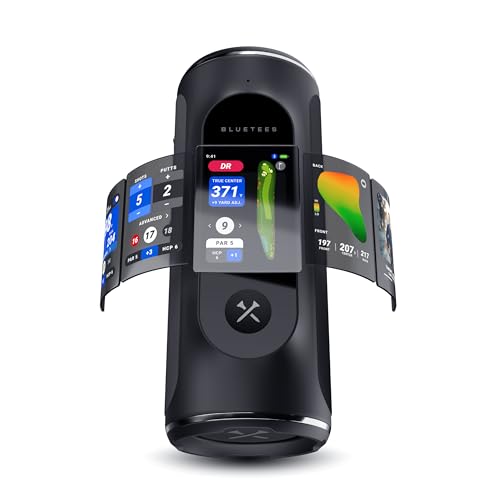
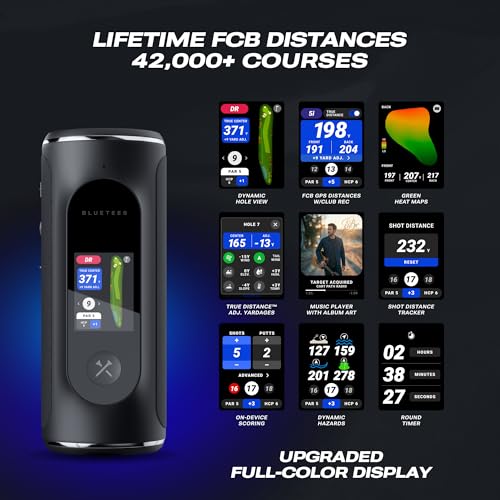
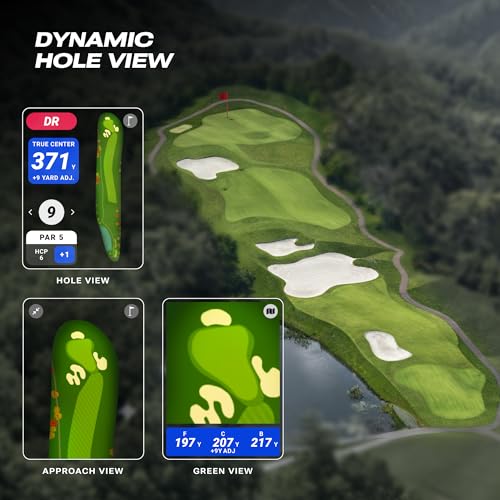
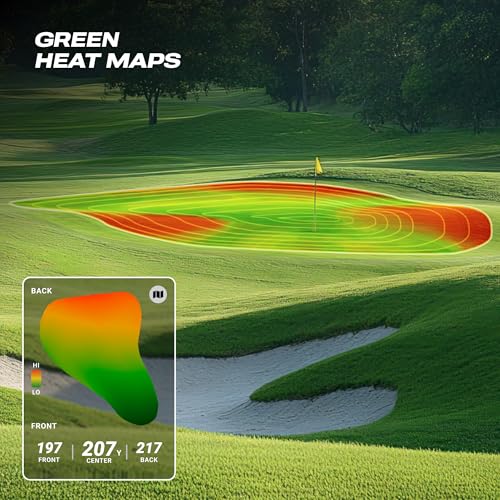
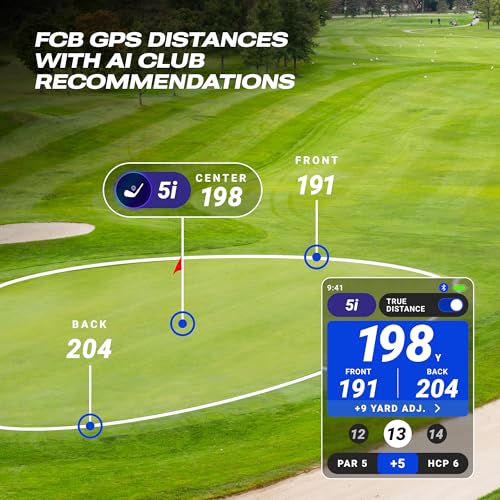
The Blue Tees Player Pro isn’t just a GPS or speaker, it’s positioning itself as an AI-powered digital caddie. With GAME AI club suggestions, heatmap overlays, and real playing condition adjustments, it’s the most advanced audio-GPS hybrid on the market. Owners are impressed by how it learns your tendencies and recommends clubs based on past shots, a feature no other device offers at this level.
The 360° audio and Auracast pairing for multi-speaker setups are bonuses for group play. It’s rugged (IP67), magnetic, and has a clean interface. While it costs more than the MiLESEEY GeneSonic Pro, the AI edge makes it worth considering if you want a smarter round. For tech-forward golfers, this is the future of on-course assistance.
Product photos
NAVO W1 Golf GPS Watch
Strengths
- Affordable wrist option
- No subscription
- Lightweight design
Trade-offs
- No touchscreen
- No audio
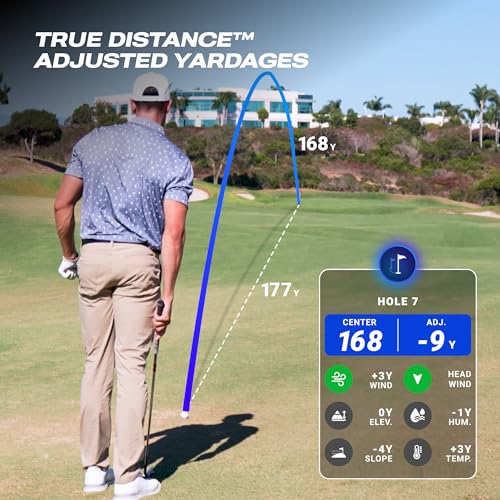
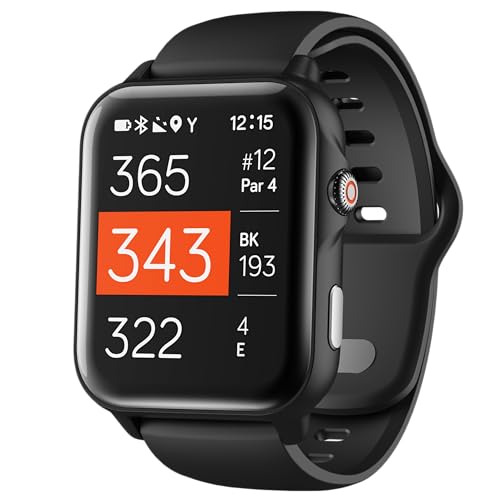
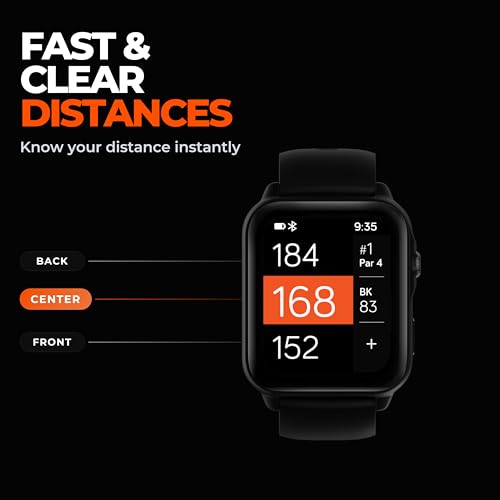
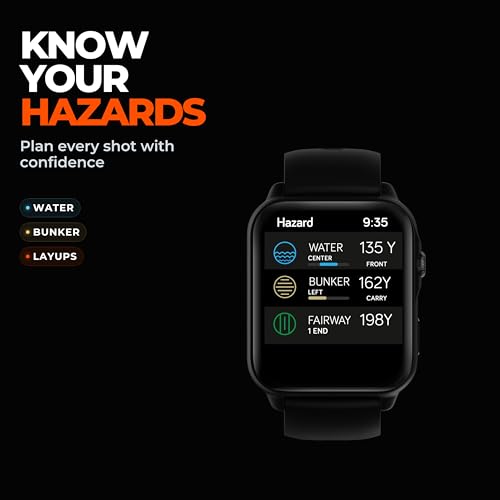
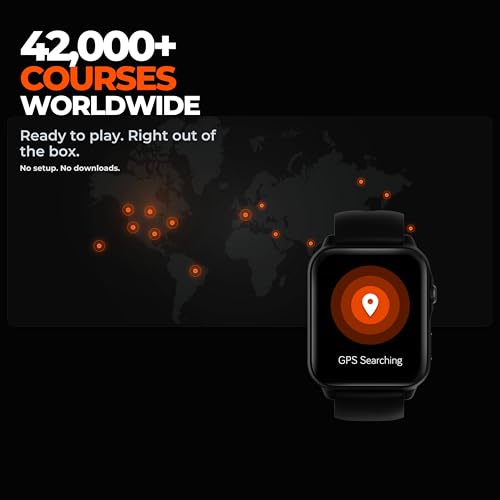
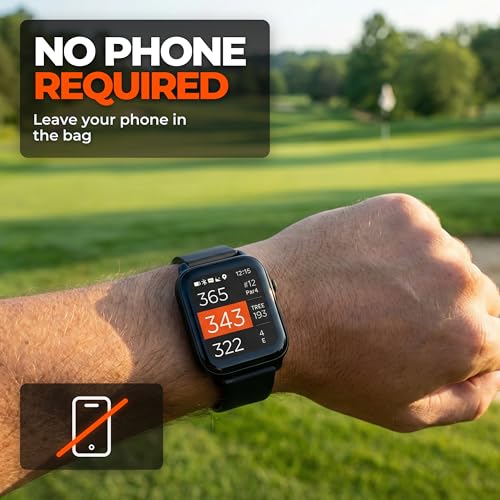
The NAVO W1 proves you don’t need to spend big for solid wrist-worn GPS performance. It delivers front, middle, and back distances with 42,000+ courses and zero subscription fees, rare at this price. The display is sunlight-readable, and owners appreciate that it works independently of a phone, which keeps your bag lighter. It’s also one of the lightest options, making it easy to forget you’re wearing it.
But it lacks voice, touchscreen, and advanced features like shot tracking. Compared to the Garmin G80 or even the G12, it’s basic. Still, for walkers or minimalist players who just want quick wrist glances, it does the job well.
Product photos

Izzo Swami 7000i Touchscreen GPS
Strengths
- Large touchscreen
- No subscription fees
- Strong magnet mount
Trade-offs
- No audio feedback
- Fewer courses than rivals
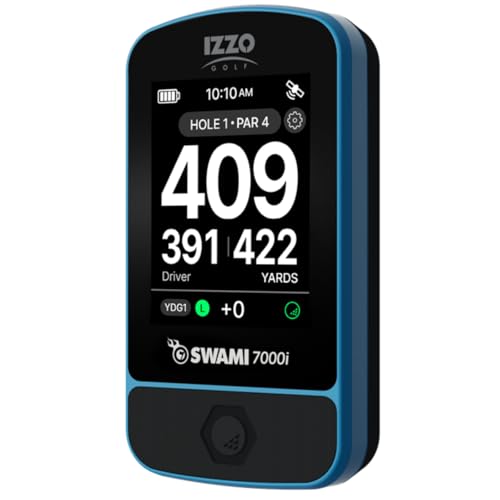
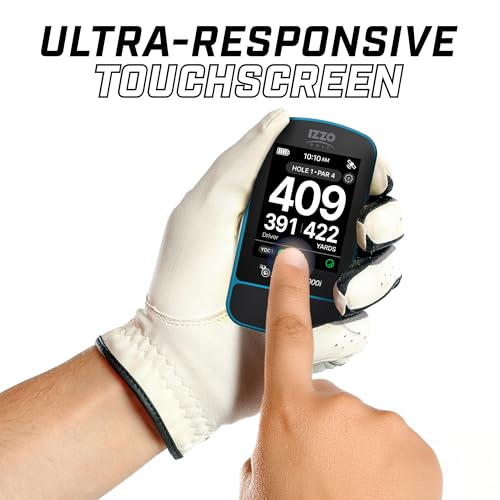
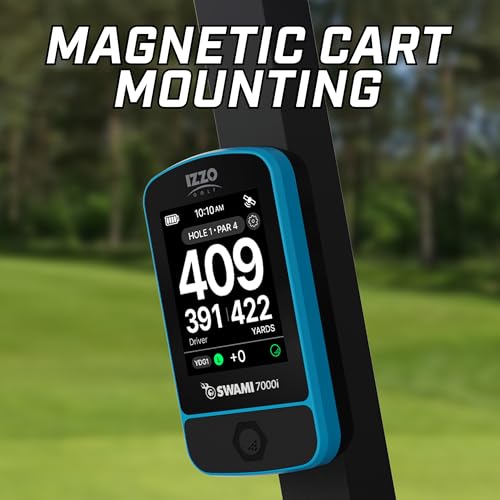
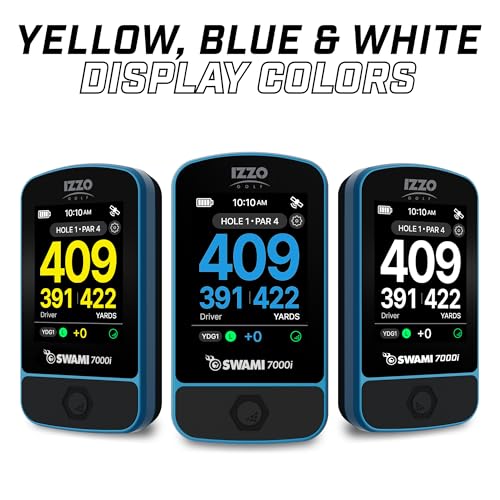
The Izzo Swami 7000i stands out in the crowded GPS field with its large 2.5-inch touchscreen, which is unusually generous for a dedicated handheld. On paper, that display gives it a clear edge over smaller competitors, especially in direct sunlight where color themes can be adjusted for maximum readability. Owners consistently report that the swipe-based interface feels intuitive, and the magnet-backed design makes cart mounting effortless, something I always look for when evaluating on-course convenience.
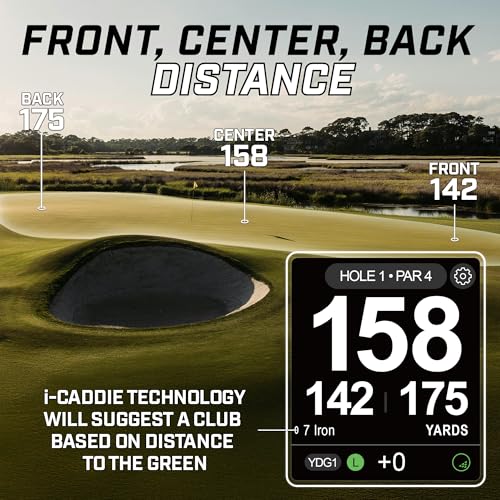
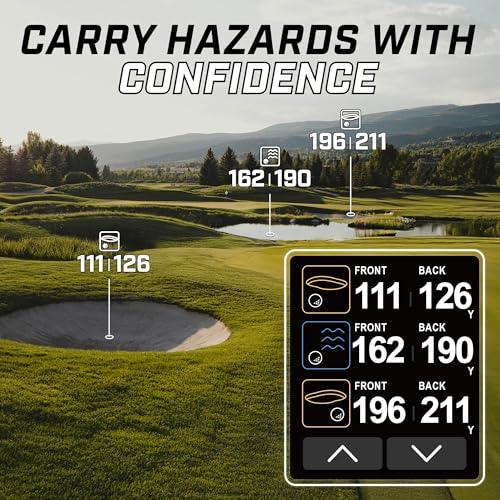
It doesn’t hurt that it comes with 38,000+ courses preloaded and no subscription fees, a major plus for golfers who hate recurring costs. While it lacks advanced analytics or audio features, the built-in I-Caddie club suggestion tool adds real decision-making value. Compared to the Garmin G12, it’s more feature-rich, but it doesn’t quite match the G80’s depth. Still, for players who prioritize screen clarity and straightforward functionality, this one delivers.
Product photos
How We Tested golf gps devices
Rather than a hands-on lab test, my research for these recommendations was a detailed comparison of published specifications and features across numerous models. I weighed owner reviews from major retailers against expert opinions found in golf publications and tech review sites. As someone who plans golf trips around the world, I focused on features that truly enhance the on-course experience and improve decision-making, applying my understanding of what golfers value. I then ranked devices against criteria including course coverage, accuracy, and ease of use.
For golf GPS devices, the most important factors are accurate distance readings and thorough course coverage. Without precise yardages, even the most advanced features are useless. Equally critical is a large, readable display – glancing quickly at your device shouldn’t require squinting or fumbling. I also prioritized devices offering automatic course recognition and updates, as constantly manually loading courses is a significant inconvenience.
Specifications clearly define hardware limitations like screen size, battery life, and water resistance. However, I heavily relied on owner feedback to assess real-world accuracy and reliability. Many golfers shared experiences with signal strength in different conditions, and the consistency of yardages. Reputation matters; established brands with a history of quality generally performed better in my assessment, and I considered how these devices stacked up against other options like golf GPS watches. I also looked at the broader landscape of golf tracking devices to understand how these GPS units fit into a golfer’s overall tech ecosystem.
How To Pick The Right golf gps devices
Picking the right golf GPS device can genuinely improve your game and enjoyment on the course.
A quality golf GPS provides accurate distances to hazards and the green, often with additional features like course maps, shot tracking, and even club recommendations. Look for a device with a clear display, reliable GPS signal acquisition, a comfortable form factor (watch, handheld, or speaker), and a substantial course database. Battery life is also crucial; aim for at least 10 hours of play on a full charge.
Display & Readability
The display is where you’ll be getting your critical information, so don’t skimp here. Touchscreen models, like the Blue Tees Golf Player Pro AI Speaker and the Izzo Swami 7000i, offer a lot of flexibility, but can be harder to use in direct sunlight or with wet fingers. Conversely, devices like the GOLFBUDDY Voice 2S+ rely on simple audio and a small screen, prioritizing ease of use over visual detail. I find that larger screens are generally easier to read at a glance, but battery life often takes a hit as a result.
Features & Functionality
Beyond basic distances, consider what else you want from your golf GPS. Some devices, such as the Garmin Approach G80 with Launch Monitor, offer advanced features like launch monitor data to help refine your swing. Others, like the MiLESEEY GeneSonic Pro GPS Speaker, integrate audio playback and even AI-powered club suggestions. Think about your skill level and what kind of data will actually help you improve. If you’re looking for simplicity and a straightforward experience, you might be better off with a device focused on core functionality. You can find more details about available options in our guide to the best golf GPS.
Cost & Ongoing Expenses
The initial price of a golf GPS device varies widely, but that’s not always the full story. Some devices require annual subscription fees to access course maps or software updates, while others, like the NAVO W1 Golf GPS Watch, offer lifetime updates with a one-time purchase. If you’re trying to save money, definitely consider checking out subscription-free GPS devices – the long-term savings can be significant.
A good rule of thumb is to prioritize accuracy over flashy features. A device that consistently provides reliable yardages is far more valuable than one packed with bells and whistles that don’t work as advertised.
Here’s a breakdown of what I look for when considering the value proposition:
- Basic functionality: A device that accurately measures distances to the green is essential.
- Course coverage: Ensure the device has preloaded maps for the courses you play most often.
- Long-term cost: Factor in potential subscription fees and the longevity of the device before making a purchase. A seemingly cheaper device with ongoing costs may end up being more expensive in the long run.
Golf GPS Devices Compared
Here’s a comparison of key specifications for popular golf GPS devices to help you choose the right one for your needs.
| Product Name | Screen Size | Battery Life (GPS) | Preloaded Courses | Waterproof | AI Features | Price |
|---|---|---|---|---|---|---|
| Garmin Approach G80 | 3.5” | Up to 15 hrs | 41,000+ | N/A | No | N/A |
| MiLESEEY GeneSonic Pro | 3” | N/A | 43,000+ | N/A | No | N/A |
| Garmin Approach G12 | N/A | Up to 30 hrs | 42,000+ | IPX7 | No | N/A |
| MILESEEY GeneSonic Go | 3” | 10+ hrs | 43,000+ | IP67 | No | N/A |
| GOLFBUDDY Voice 2S+ | 1” | Up to 18 hrs | N/A | IPX3 | No | N/A |
| Blue Tees Golf Player Pro AI | N/A | N/A | 42,000+ | IP67 | Yes | N/A |
| NAVO W1 | N/A | N/A | 42,000+ | N/A | No | N/A |
| Izzo Swami 7000i | 2.5” | Up to 16 hrs | 38,000+ | N/A | Yes | N/A |
Frequently Asked Questions
Will a golf GPS device work accurately in heavily wooded areas?
GPS accuracy can be reduced under dense tree cover, but most modern devices use multiple satellite networks (like GPS, GLONASS, and Galileo) to maintain a signal. Expect some potential yardage variation, but a quality device will still provide a reasonably accurate estimate.
How often are course maps updated on these devices?
Many brands offer free lifetime course map updates, which is a huge benefit; others require annual subscription fees. Checking the manufacturer’s website before purchasing will clarify the update policy, as consistently outdated maps render a handheld golf GPS less useful.
What’s the difference between a golf GPS watch and a handheld device?
A golf GPS watch is worn on the wrist, offering convenience and quick access to distances, while a handheld GPS provides a larger screen for easier viewing of course layouts. Handhelds often have more features, but watches are generally lighter and less distracting during your swing.
Are golf GPS devices legal for tournament play?
The USGA and R&A generally permit the use of golf GPS devices, provided they only measure distance. Devices offering slope adjustment or other decision-making assistance are often prohibited, so always verify tournament rules before use.
What are the advantages of a GPS speakers over a traditional handheld GPS?
GPS-enabled golf speakers offer the benefit of audible distances, allowing you to keep your eyes on the ball without looking down. They’re also a convenient option for groups, as everyone can easily hear the yardages, and many include Bluetooth connectivity for music, creating a more enjoyable round.
The Bottom Line
Ultimately, choosing a golf GPS device comes down to balancing how much control you want over your data with how much fuss you’re willing to tolerate. For the golfer who wants a device that simply works, providing reliable distances without a lot of complexity, the Garmin Approach G80 stands out as the strongest overall pick. It offers a large, clear display, extensive course coverage, and a reputation for accuracy that golfers consistently praise.
If you’re on a tighter budget, the NAVO W1 provides excellent value with lifetime course updates and a straightforward interface. For those seeking versatility and AI assistance, the Blue Tees Golf Player Pro AI Speaker is a compelling option, and for a compact and easy-to-use solution, I recommend considering the GOLFBUDDY Voice 2S+. Don’t forget to explore handheld golf GPS devices if you prefer a dedicated unit over a watch.
At the end of the day, the most advanced features won’t shave strokes if the device can’t provide accurate distances consistently. Prioritize a large course database, reliable signal acquisition, and a clear display – those fundamentals matter far more than whether it has AI-powered club suggestions or launch monitor capabilities. And always remember to consider whether a GPS rangefinder might be a better fit for your game.
