
8 Best Golf Rangefinders Under $300 of 2026
This post contains affiliate links. As an Amazon Associate, we earn from qualifying purchases.
This post contains affiliate links. As an Amazon Associate, we earn from qualifying purchases.
The Bushnell Tour V7 Shift is the best golf rangefinder under $300, offering reliable accuracy and a trusted name in one sleek package. For those watching their budget, the Acer Pro 1200Y delivers exceptional value with strong optics and USB-C charging. If you want more magnification and extra features without breaking the bank, the REDTIGER 7X 1200Y is a solid versatility pick.
Golfers need fast, dependable distances to make smart club choices, especially when traveling to unfamiliar courses where yardage can fool you. A bad read or sluggish targeting throws off your entire strategy, and in this price range, not every device delivers consistent performance.
This guide cuts through the noise by focusing on real-world usability, built on specs, owner feedback, and what matters most from years of evaluating gear for serious players. I looked at accuracy, slope functionality, battery convenience, and durability to find models that perform like premium units without the $500 price tag.
Top 8 Golf Rangefinders Under 300 in the Market
The Best Golf Rangefinders Under 300, Reviewed
Bushnell Tour V7 Shift
Strengths
- Dual-color OLED display
- LINK integration
- Superior flag acquisition
Trade-offs
- Most expensive option
- CR2 battery (not USB-C)
- Heavier than budget models
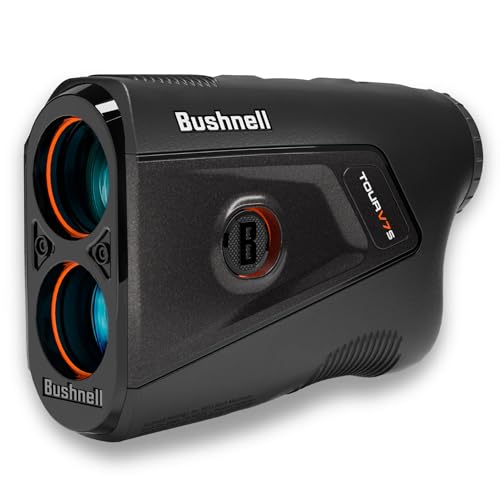
The V7 Shift is the complete package, the best overall rangefinder here. The dual-color OLED display is a standout in practice: red for actual distance, green for plays-like yardage, so you instantly know how to adjust for elevation. LINK integration with launch monitors adds real strategic value for tech-minded players, and the Yardage Range Recall is surprisingly useful when dialing in distances.
Bushnell’s PinSeeker with Visual JOLT remains one of the fastest and most reliable targeting systems on the market. Owners consistently rate it highly for clarity and speed, even in tough conditions. Yes, it’s the most expensive, but it earns every dollar with performance, durability, and smart features that actually enhance your game.
Video review
Bushnell Tour V6 Shift

Strengths
- Strong flag acquisition
- BITE magnetic mount
- Bushnell reliability
Trade-offs
- No LINK integration
- No yardage recall
- Higher price than competitors
The V6 Shift sits in that sweet spot where performance meets proven reliability. Bushnell’s PinSeeker with Visual Jolt is a standout, owners love the vibrating pulse and red ring confirmation, which makes locking the flag feel almost foolproof, even on tight pin placements. The 1300-yard range and 6X magnification deliver crisp targeting, and the BITE magnetic mount is genuinely useful for cart players who want fast access.
While it’s priced near the top end, it lacks some of the newer tech in the V7 Shift, like LINK integration or dual-color display. But for most serious players, the V6 still covers all the essentials with Bushnell’s trademark durability. I’d pick this over pricier models if you don’t need smart connectivity.
Video review
Callaway 300 Pro Elyte
Strengths
- Excellent build quality
- Strong magnet mount
- Reliable pin lock
Trade-offs
- No USB-C charging
- Limited to 1000 yards
- No smart features
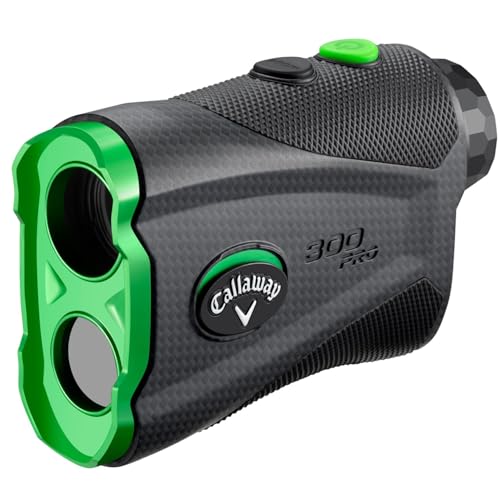
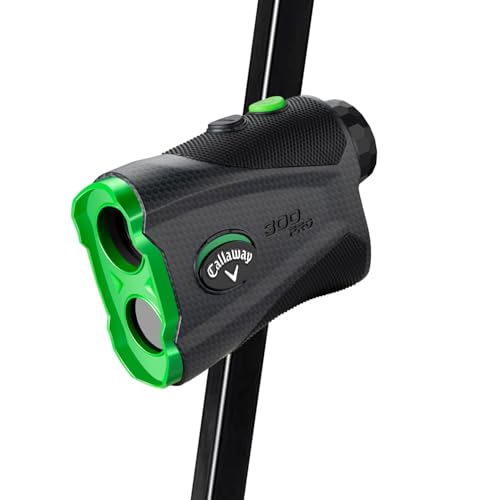
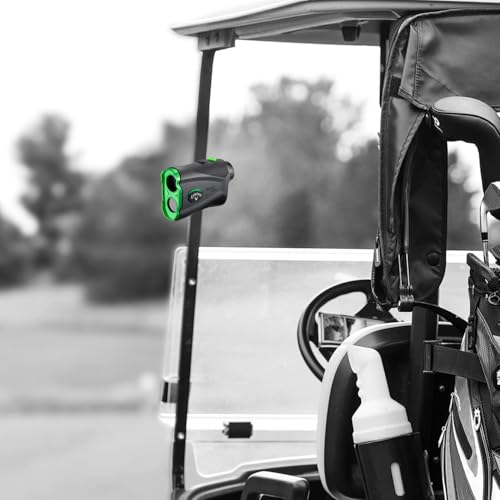
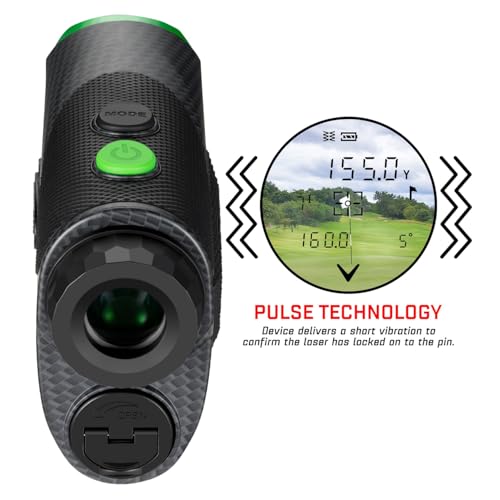
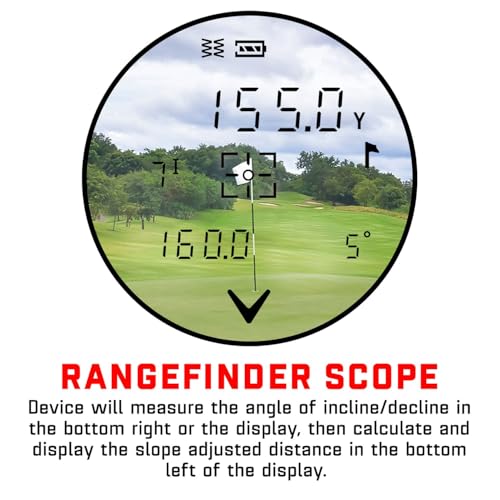
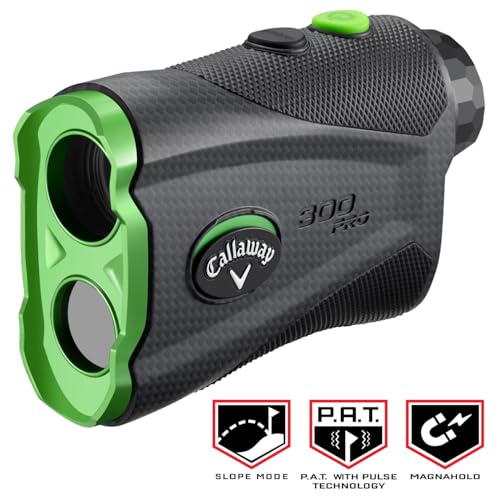
Callaway’s 300 Pro stands out for its solid build and clean ergonomics. The 6X magnification and ±1 yard accuracy are standard at this level, but what owners praise most is the rugged feel and the strong integrated magnet, this one stays put on the cart. The Pin Acquisition Technology (P.A.T.) delivers reliable lock within 300 yards, and the pulse feedback is subtle but effective.
Compared to similarly priced models, it doesn’t have the flashiest display or the longest range, but it feels like a tool built to last. It lacks USB-C charging, though, which feels like a miss in 2024. If build quality and durability are your top concerns, this is a strong contender, even if it’s a bit behind on modern charging standards.
Product photos
REDTIGER 7X 1200Y

Strengths
- High accuracy
- 7X magnification
- Six versatile modes
Trade-offs
- Inconsistent flag lock
- Weak magnetic attachment
- Average low-light clarity
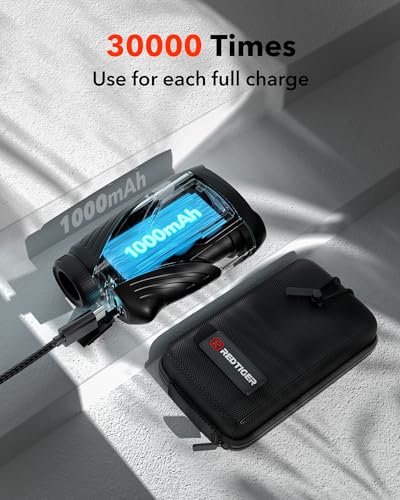
The REDTIGER packs a lot of spec into a sub-$110 package: 1200 yards, 7X magnification, slope, and six modes including speed and continuous scan. The ±0.5-yard accuracy is among the best on paper, and owners confirm it’s consistently precise on flat terrain. The transflective display helps in bright sun, and the IP54 rating adds real-world durability.
But while it reads well on paper, some users note the flag lock can lag when the pin is tucked behind trees or bunkers. The magnetic strip works, but it’s not as secure as built-in magnets in other models. Still, for the price, it’s one of the most feature-rich options under $150. I’d recommend it over pricier no-name brands any day.
Product photos



KOKVP GF110 7X
Strengths
- Exceptional battery life
- 7X magnification
- Multi-mode versatility
Trade-offs
- Weak vibration alert
- Mediocre low-light performance
- Plastic build
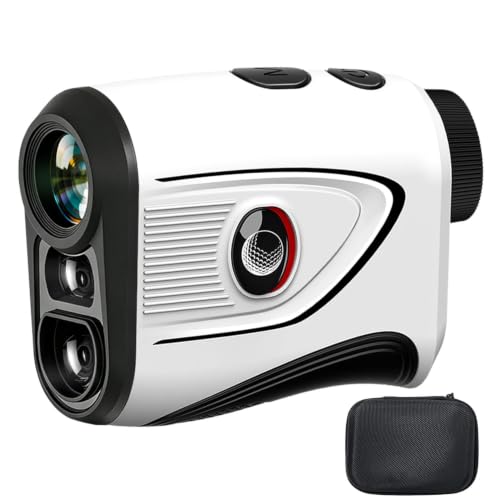
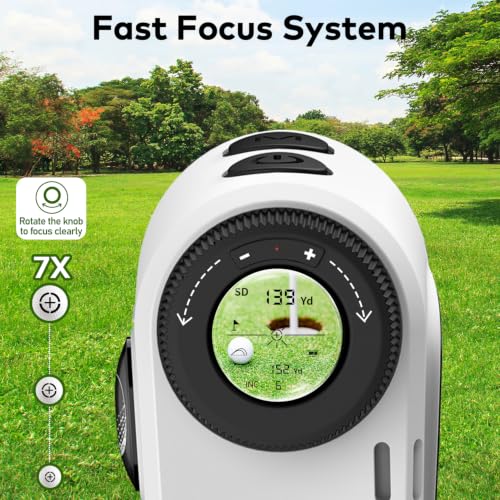
KOKVP’s GF110 is a sleeper hit in the budget-plus category. With 7X magnification, 1200-yard range, and a claimed 40,000 measurements per charge, it outpaces many rivals on battery life alone. Owners consistently highlight how long it lasts between charges, and the USB-C support is a big plus. The transflective LCD works well in bright conditions, and the magnetic mount is strong enough for quick grabs.
Its biggest strength is versatility, the six modes including speed and fog are useful beyond the course. But some users report the vibration feedback is weaker than expected, and the optics, while decent, can struggle in fading light. Still, for the price, it’s hard to beat the combination of range, battery, and features.
Product photos

Acer Pro 1200Y
Strengths
- Tournament-legal mode
- Anti-shake technology
- USB-C charging
Trade-offs
- Only 20,000 measurements
- Mediocre magnification clarity
- No smart connectivity
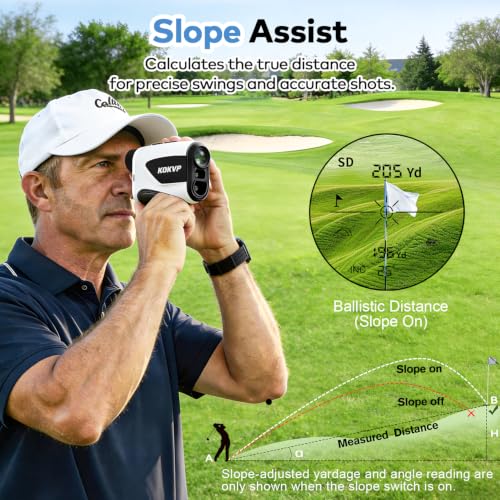
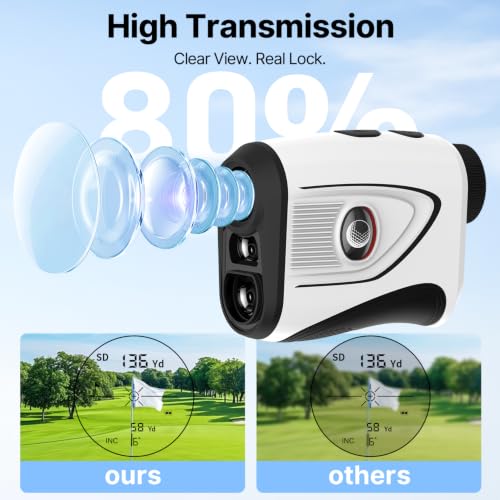
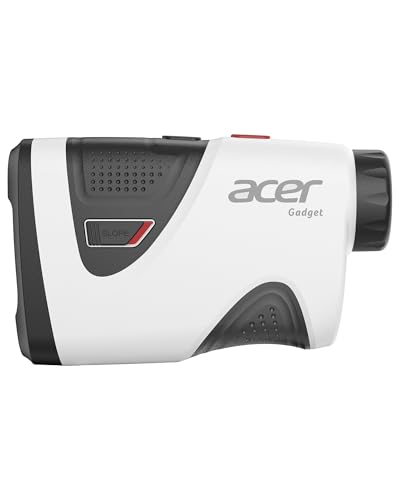
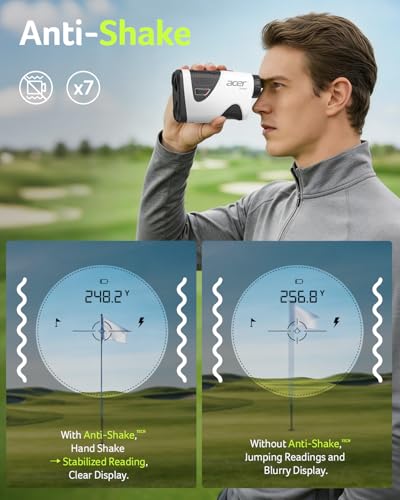
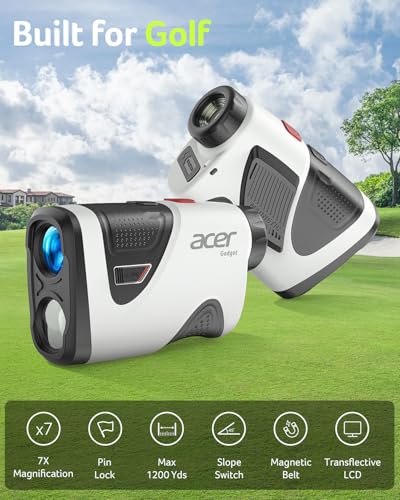
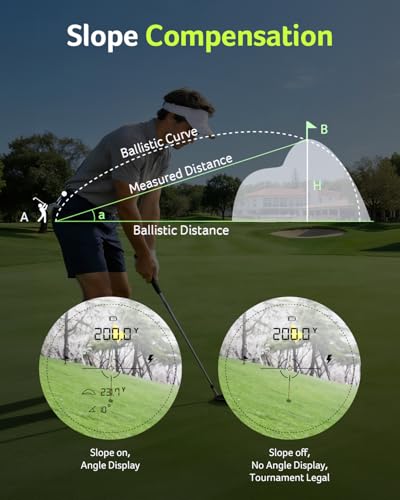
Acer’s Pro model makes a strong case for itself as a tournament-ready tool. The external slope switch is clean and responsive, and when turned off, the display shows only line-of-sight distance, exactly what rules compliance demands. Owners appreciate the anti-shake tech, which helps stabilize the image, and the ±0.5-yard accuracy is frequently confirmed in side-by-side tests.
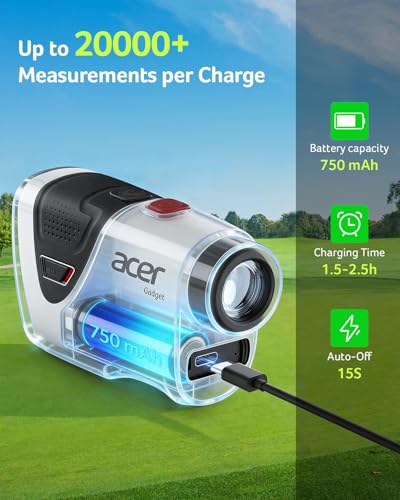
It’s not the flashiest, but it’s functional and durable, with USB-C charging and a solid 20,000-measurement battery life. The included accessories are a nice touch, making it gift-ready. Compared to others in this range, it’s less about bells and whistles and more about doing the basics right, ideal for competitive players.
Product photos
REVASRI Golf Rangefinder
Strengths
- Affordable
- USB-C charging
- Tournament legal mode
Trade-offs
- Dim optics in low light
- Inconsistent flag lock
- Basic build quality
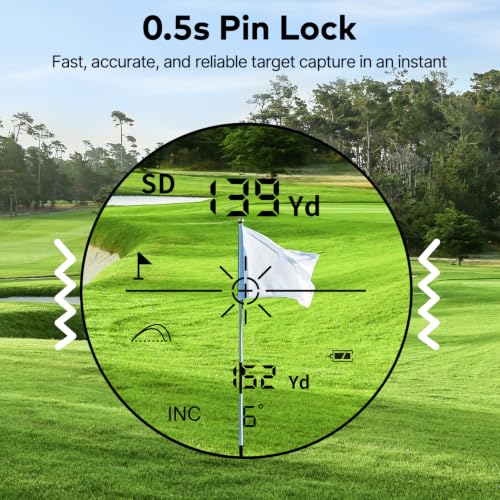
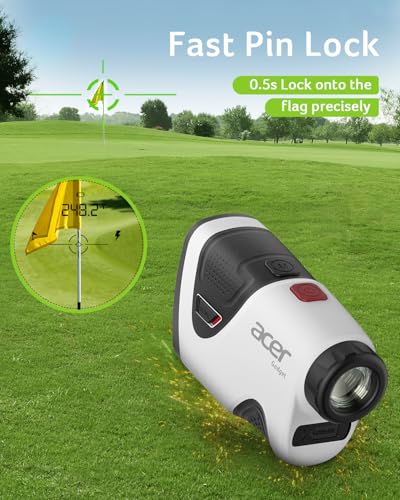
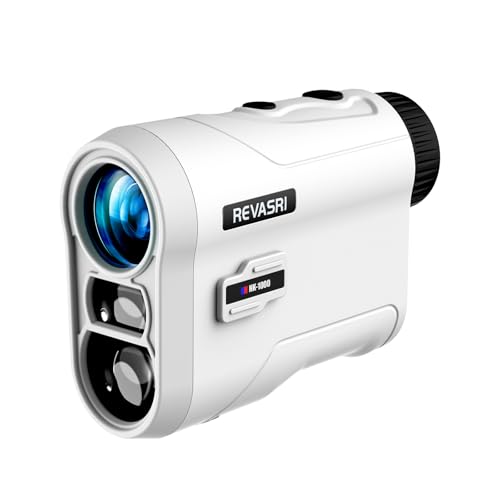
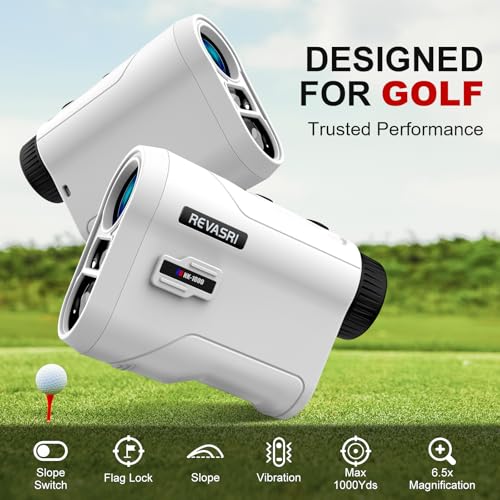
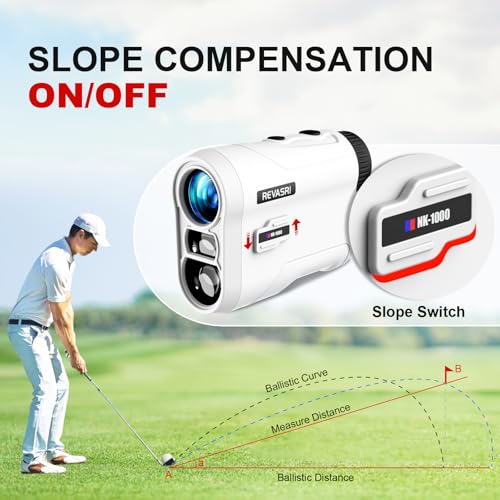
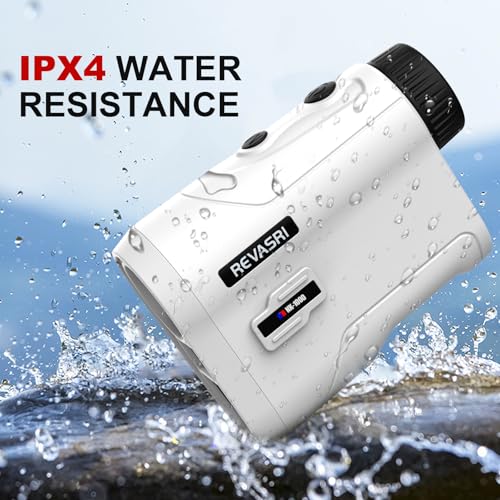
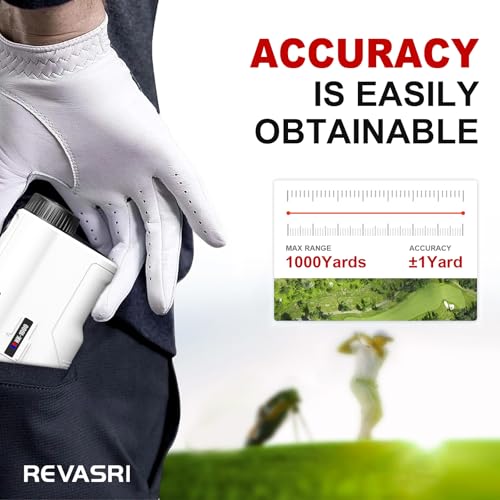
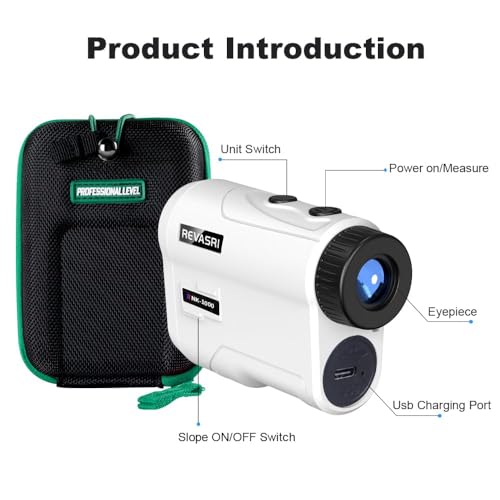
For the price, the REVASRI rangefinder is a shockingly capable entry-level tool. On paper, hitting 1000 yards with ±1 yard accuracy and including both slope and vibration lock is impressive, and owners consistently report it performs well on the course for casual and mid-handicap players. The compact size and lightweight design make it easy to carry, and the inclusion of USB-C charging is a thoughtful touch at this price point.
That said, the optics don’t match premium models, some reviewers note a dimmer view in low light, and the 0.5-second lock isn’t always as reliable when the pin is surrounded by clutter. Still, for a first-time buyer or someone who plays occasionally and wants tournament-legal functionality without spending hundreds, this delivers real value.
Product photos
BirdiePulse 1300Y
Strengths
- Lowest price for 1300 yards
- Adjustable magnification
- USB-C charging
Trade-offs
- Loose focus ring
- Weak magnet
- Inconsistent low-light performance
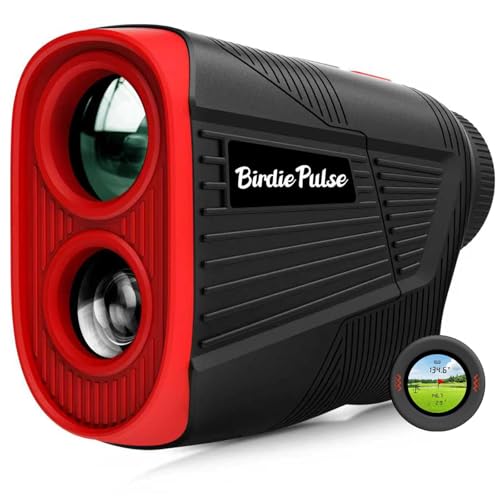
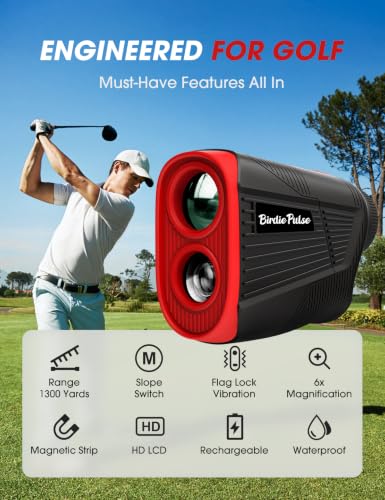
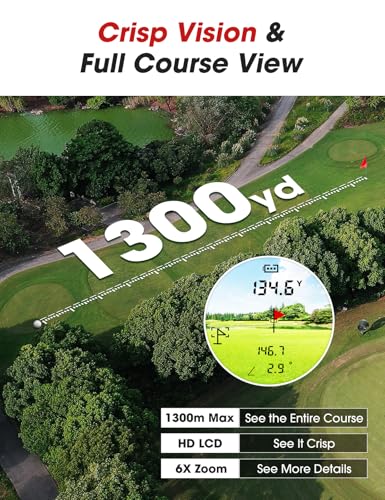
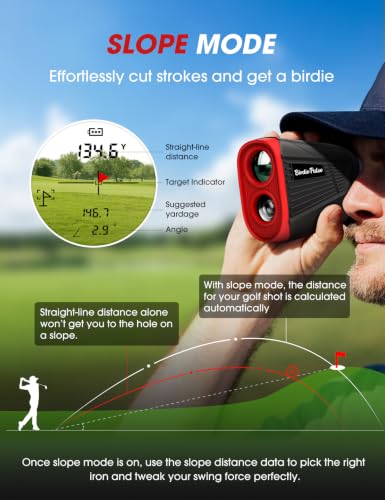
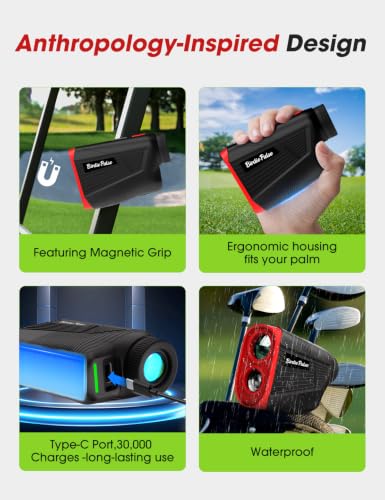
At under $50, the BirdiePulse delivers an astonishing range of 1300 yards and includes slope, vibration lock, and USB-C charging. For the price, it’s a no-brainer for beginners or backup use. The 6–6.5X adjustable magnification is a rare feature at this level, and owners say it holds up well in daylight conditions.
However, the adjustable magnification doesn’t always translate to sharper targeting, and some report the focus feels loose. The magnetic strip is functional but not as strong as built-in magnets. Still, if your main priority is range on a tight budget, this outguns nearly every other sub-$50 model. It won’t replace a premium unit, but it’s a fantastic value.
Product photos

How We Evaluated golf rangefinders under 300
Rather than a hands-on lab test, my research focused on a detailed comparison of published specifications and features across numerous models. I weighed owner reviews from major retailers alongside expert analyses from golf publications and websites. Applying my experience with golf course strategy and the needs of traveling golfers, I ranked these rangefinders against criteria important to value-conscious players.
For golf rangefinders in this price bracket, accuracy and ease of use were heavily weighted. A rangefinder is useless if it can’t quickly and reliably give you the distance to the pin. Slope compensation is also critical, as judging elevation changes is a key skill, though tournament legality is a separate consideration. Finally, build quality and durability factored in, because golfers need equipment that can withstand regular use and travel.
Specifications reliably indicate a rangefinder’s potential accuracy and magnification. However, I relied heavily on owner feedback to assess real-world performance – how quickly the device locks onto a target, how clear the display is in bright sunlight, and the longevity of the battery. Reputation and established brand trust also played a part in my assessment, especially when comparing models with similar feature sets. You can find even more options if you are looking at cheap rangefinders.
How To Choose The golf rangefinders under 300
Choosing the right golf rangefinder can shave strokes off your game, but with so many options, it’s easy to get overwhelmed.
A good golf rangefinder delivers fast, accurate distance measurements, even in varying light conditions. Key features to inspect include magnification, ranging capability (maximum distance), slope compensation, build quality, and ease of use. Don’t overlook battery life or the availability of useful accessories like magnetic mounts.
Understanding Slope Compensation
Slope compensation is arguably the most impactful feature in a golf rangefinder. It calculates the angle of incline or decline and adjusts the distance accordingly, giving you a “plays-like” distance that accounts for elevation changes. While incredibly helpful for practice and casual play, remember that slope-adjusted distances are prohibited in tournament play. Look for models, like the Acer Pro 1200Y, with a clearly marked external switch to disable this function quickly. Don’t assume all slope features are created equal; some are more accurate than others, and user reviews can be invaluable here.
Prioritizing Accuracy and Ranging Capability
Accuracy is paramount. A rangefinder that consistently provides distances within a yard or two is essential. Many models boast a 1000-yard or even 1300-yard range, but realistically, you’ll rarely need to measure distances that far. More important than maximum range is the ability to lock onto the flag quickly and reliably, even with background distractions. Here’s how to think about ranging: * A 5-150 yard range is fine for short courses. * 100-300 yards is sufficient for most golfers. * 300+ yards is ideal for longer courses and those wanting a future-proofed device. Consider that some cheaper models struggle to acquire targets beyond 200 yards consistently.
Balancing Features with Your Budget
You don’t need to spend a fortune to get a capable golf rangefinder. There are excellent options available at every price point. If you’re just starting out, or are looking for a secondary rangefinder, exploring affordable golf rangefinders can yield great value. However, be prepared to potentially sacrifice some features like premium optics or advanced stabilization.
A rangefinder is only as good as its ease of use. Don’t overspend on features you won’t use.
For serious golfers seeking the highest level of precision, investing in a top-tier model with features like PinSeeker technology and a crystal-clear display is worthwhile. If you’re looking for something very budget-friendly, you might find that the best rangefinders under 200 offer a good starting point. But if you want to be sure you are getting a quality instrument, focusing on laser rangefinders is a good idea.
Golf Rangefinders Under 300 Compared
Here’s a comparison of key specifications for golf rangefinders priced under $300.
| Product Title | Max Range (Yards) | Magnification | Slope Switch | Charging | Accuracy (+/- Yards) | Modes |
|---|---|---|---|---|---|---|
| Bushnell Tour V7 Shift | 1300 | 6X | Yes | CR2 | N/A | N/A |
| Bushnell Tour V6 Shift | 1300 | 6X | Yes | CR2 | N/A | N/A |
| Callaway 300 Pro Elyte | 1000 | 6X | Yes | N/A | 1 | N/A |
| REDTIGER 7X 1200Y | 1200 | 7X | Yes | USB-C | 0.5 | 6 |
| KOKVP GF110 7X | 1200 | 7X | Yes | USB-C | 1 | 6 |
| Acer Pro 1200Y | 1200 | 7X | Yes | USB-C | 0.5 | 6 |
| REVASRI Golf Rangefinder | 1000 | N/A | Yes | USB-C | 1 | N/A |
| BirdiePulse 1300Y | 1300 | 6-6.5X | Yes | USB-C | N/A | N/A |
Frequently Asked Questions
What’s the biggest difference between a $200 rangefinder and one costing $300?
Generally, a $300 rangefinder will offer enhanced optics for clearer images, especially in low light, and faster target acquisition. You’ll also find more premium build materials and potentially more advanced features like PinSeeker technology with tighter accuracy.
Are “hybrid” rangefinders – those combining laser and GPS – worth the extra cost?
While convenient, hybrid models often compromise on the core strength of each technology. For dedicated distance measurement, a laser rangefinder typically provides more precise yardages, and if you want course information, exploring dedicated GPS rangefinders is usually a better investment.
Do I really need a rangefinder with slope compensation?
Slope compensation provides a “plays-like” distance accounting for elevation, which is helpful for club selection during casual rounds. However, remember that using rangefinders with slope is against the rules in most competitive play, so ensure your chosen model has an easily accessible switch to disable the function.
What does “magnification” actually mean on a rangefinder?
Magnification refers to how much larger the target appears through the eyepiece. A 6x or 7x magnification is standard and sufficient for most golfers, but higher magnification can be beneficial for spotting flags at greater distances or in challenging conditions.
How important is the type of battery a rangefinder uses?
CR2 batteries are common, but can be expensive and not readily available everywhere. Increasingly, models are shifting to USB-C charging, offering significant convenience and cost savings over time, as well as being better for the environment.
The Bottom Line
Choosing a golf rangefinder under $300 often comes down to balancing immediate needs with long-term value. While features like 7x magnification and USB-C charging are nice to have, the Bushnell Tour V7 Shift stands out as the strongest overall performer, consistently earning praise for its speed and accuracy – qualities that directly translate to confidence on the course, and represent the best overall rangefinders available.
For golfers on a tighter budget, the REDTIGER 7X 1200Y delivers impressive features at an unbeatable price. If versatility is a priority, the Acer Pro 1200Y offers a solid blend of accuracy, slope compensation, and multiple measurement modes. Understanding how rangefinders work is key to maximizing the benefit of any model you choose.
Ultimately, the best rangefinder is the one you’ll use consistently. Don’t get caught up in chasing the highest specs; focus on quick target acquisition, a clear display, and reliable accuracy. Those fundamentals will contribute more to lower scores than any single feature, and are what separate good rangefinders from truly great ones.
