
7 Best Golf Simulator Tees of 2026
This post contains affiliate links. As an Amazon Associate, we earn from qualifying purchases.
This post contains affiliate links. As an Amazon Associate, we earn from qualifying purchases.
The Rubber Golf Tees 32-Piece Set stands out as the best overall golf simulator tee for its durability and consistent performance, closely followed by the BirTee PRO Speed+ for those who prioritize precise height control. If you’re watching your budget, the Rolitwils 24-Pack offers solid value without sacrificing too much in quality.
Most golfers don’t realize how much a poor tee can skew their data in a simulator session. Wobbly, inconsistent, or fragile tees introduce variables that mask your true swing performance, especially when you’re trying to fine-tune launch conditions or club delivery.
In this guide, I break down the top tees based on specs, owner feedback, and what matters most for simulator use, height variety, durability, and stability. These picks reflect what players are saying and what holds up over time on synthetic mats.
Top 7 Golf Simulator Tees in the Market
The Best Golf Simulator Tees, Reviewed
Rubber Golf Tees 32-Piece Set

Strengths
- Truly unbreakable rubber
- Multiple height combos
- Works on frozen ground
Trade-offs
- Inconsistent branding
- No color coding
- Bulkier than low-profile tees
This 32-piece rubber tee set earns its ‘Best Overall’ label by balancing durability, variety, and practical design better than most. The rubber construction is truly unbreakable under normal use, far more resilient than standard plastic, and the cup head reduces ball spin at address, which some owners say leads to more consistent strikes. You get six core heights (up to 3.25”) plus a bonus pack of short and tall tees, making this one of the most versatile options for both driver work and iron practice.
It’s also one of the few sets designed to work smoothly on frozen ground or outdoor mats, not just simulators. The universal fit means no fiddling with bases or tethers, just place and play. While the package is a bit scattered in presentation, the quality is consistent, and for the price, it outperforms many pricier single-material tees.
Video review
BirTee PRO Speed+ Golf Tees
Strengths
- Unbreakable flexibility
- Precise 1/4” height increments
- Camera-friendly base
Trade-offs
- High price
- Limited quantity
- Overkill for casual use
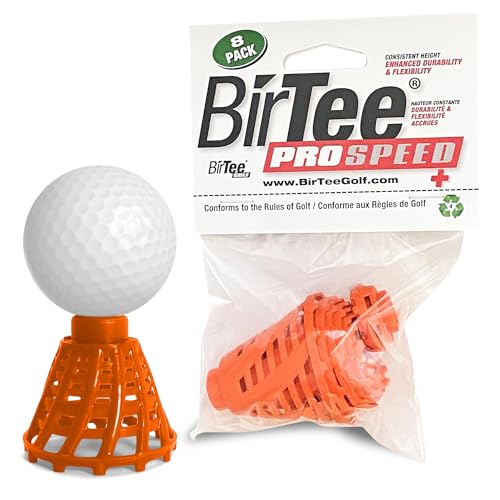
BirTee’s PRO Speed+ tees stand out for their rubber-like flexibility and near-unbreakable construction, thanks to their advanced polymer. Owners love how they flex on impact instead of snapping, a common pain point with cheaper plastic tees, and the 1/4-inch incremental height steps from 1/4″ to 2″ make dialing in exact ball positions effortless. The fact that the tallest tees have a smaller base to avoid interfering with overhead cameras is a thoughtful touch for simulator users with GCQuad or similar systems.
They’re also one of the few brands already approved under the Rules of Golf, which matters if you’re using them beyond just practice. While they’re the most expensive option here, their longevity and precision justify the cost for regular users. Compared to rigid plastic models, these feel more forgiving without sacrificing stability.
Video review
Foilswirl 8 Height Golf Tees
Strengths
- Eight fixed heights
- Good flexibility
- Clean setup
Trade-offs
- No tether
- Only one color
- Base can shift on hard swings
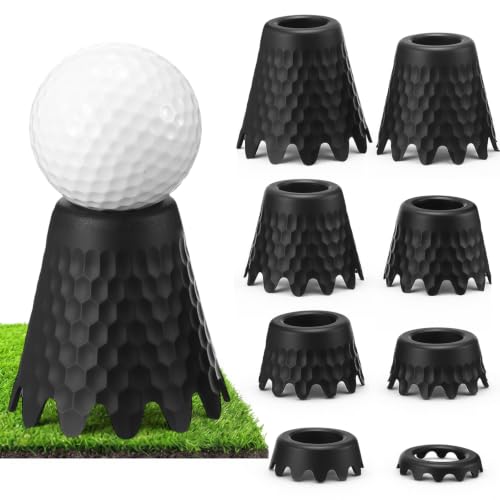
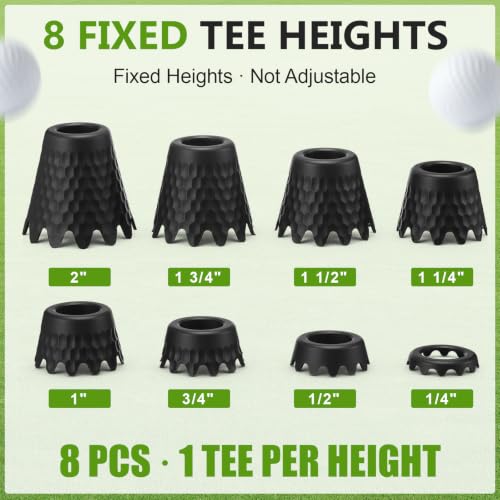
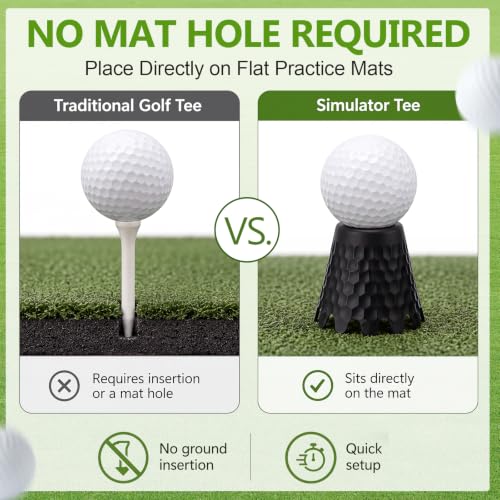
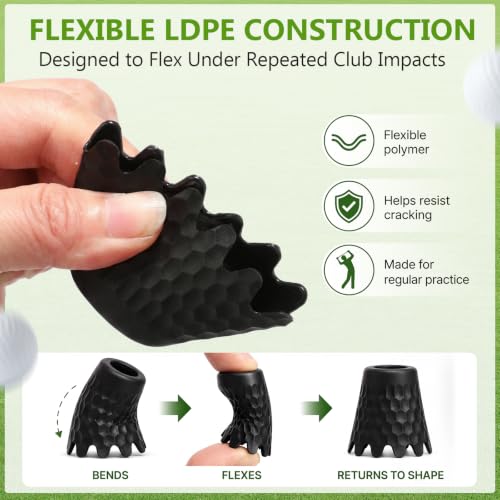
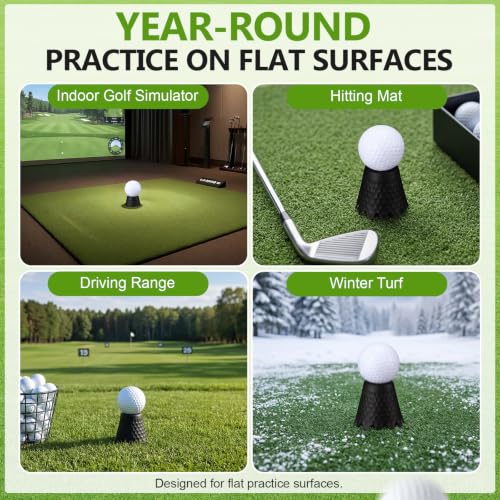
What Foilswirl lacks in branding, it makes up for in height variety, offering eight fixed sizes from 1/4″ to 2″, which is more than almost any other pack here. That range is a big win for players who switch between drivers, fairway woods, and even irons on their mat and want a perfectly matched tee for each club. The LDPE material is flexible enough to survive repeated hits without cracking, and the black color offers decent contrast on most mats.
These aren’t engineered for power transfer or tethered use, they’re pure utility tees. But for someone who values having the right height on hand without adjusting or trimming, that’s exactly the point. Compared to adjustable or minimal-height packs, Foilswirl gives you more control over setup consistency, which matters if you’re tracking swing changes over time.
Product photos

Rolitwils 24-Pack Golf Tees

Strengths
- Affordable
- Trim-to-fit option
- 24-piece value
Trade-offs
- Basic plastic feel
- No height markings
- Not ideal for high swing speeds
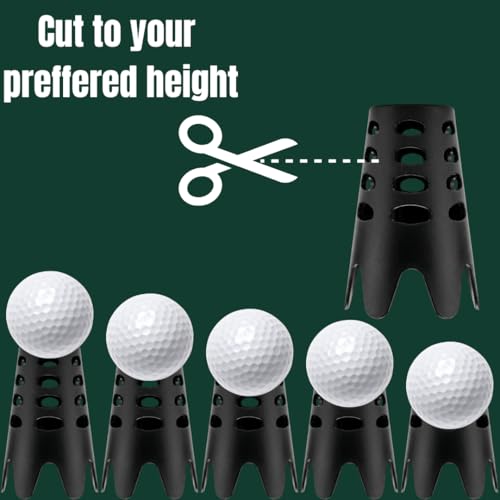
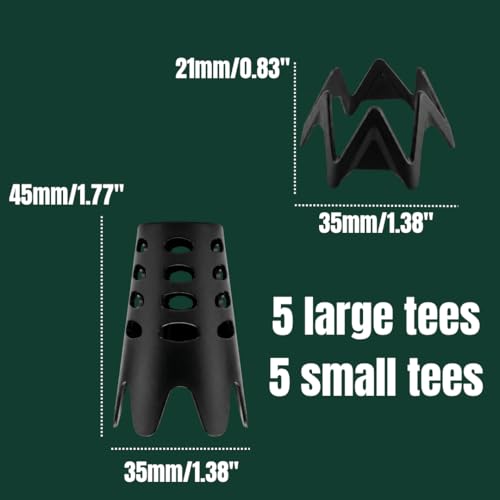
For the budget-conscious golfer who just wants a no-frills, functional tee setup for simulator sessions, the Rolitwils pack delivers where it counts. The inclusion of both tall and short tees gives you flexibility for different clubs, and the fact that the taller ones can be trimmed down is a small but smart touch for dialing in your preferred ball height. Owners consistently report these hold up fine over repeated use, though they won’t win any awards for precision or power transfer.
Compared to pricier options, these are clearly basic, no advanced materials or engineered bases, but for a beginner or casual user setting up a garage simulator, they’re a solid starting point. If you’re hitting a few buckets a week and don’t want to stress over broken tees, this 24-pack offers redundancy without regret.
Product photos


CHAMPKEY 49-Pack Golf Tees
Strengths
- 49-tea high count
- Color-coded heights
- Flexible, impact-resistant
Trade-offs
- Only four height options
- Colors may fade over time
- Not for camera-sensitive systems
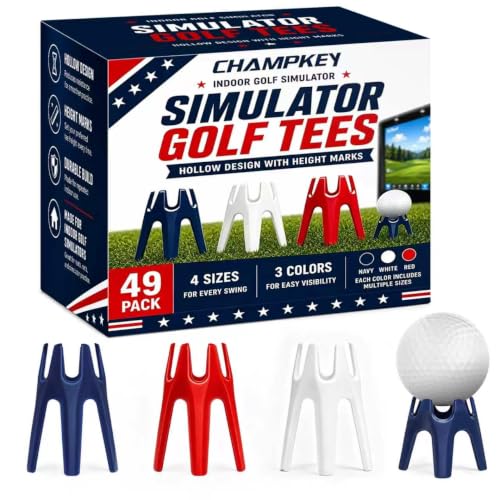
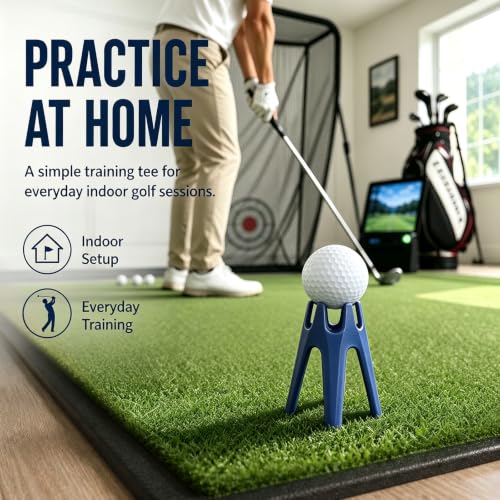
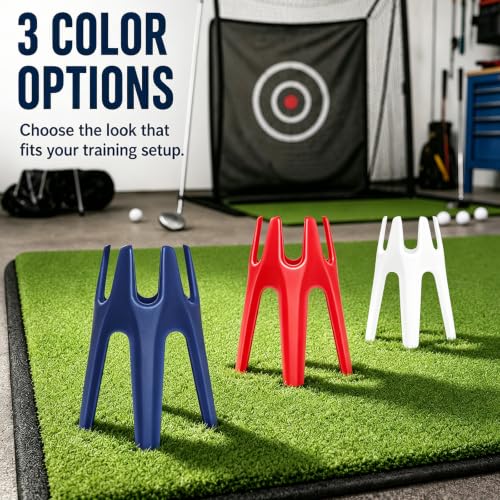
CHAMPKEY’s 49-pack is the king of volume and visibility, giving you more tees than you’ll likely ever need and a smart 3-color system (white, red, navy) to match your mat or turf. The four optimized heights are well-chosen, 0.8” for irons, up to 1.75” for drivers, and having 14 of the most-used sizes means you won’t run out mid-session. Owners praise how the colors make tees easy to spot after impact, which speeds up practice flow.
The plastic is flexible and holds up well, though not quite as tough as TPU models. It’s not the most high-tech option, but for group use, families, or golf coaches running simulator clinics, the quantity and visual system make this a no-brainer. Compared to smaller packs, it’s the smarter buy for shared environments.
Product photos

Power Pyramidz Nuclear Drive Tees
Strengths
- Enhances power transfer
- Six precise heights
- TPU durability
Trade-offs
- Limited color options
- Only 6-pack
- Slight learning curve on placement
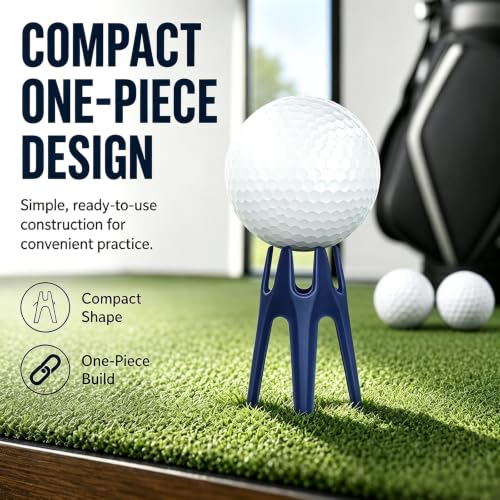
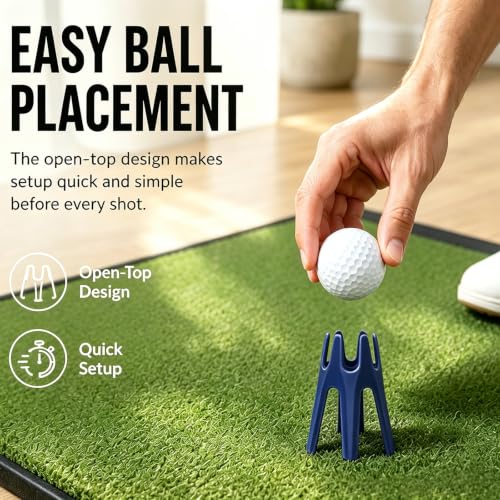
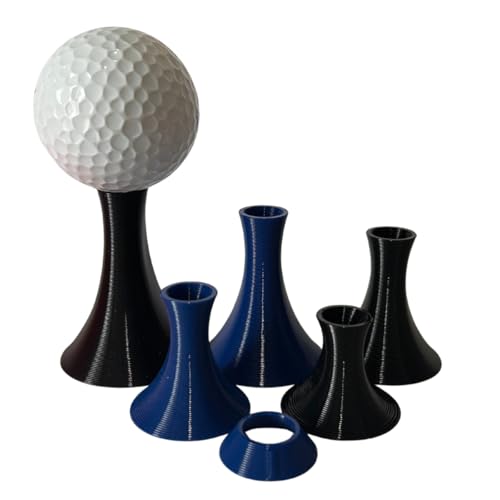
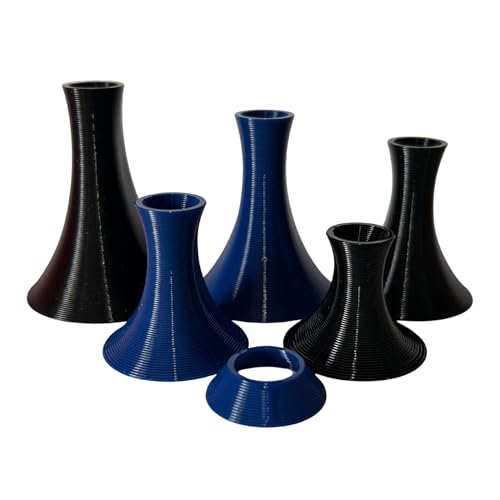
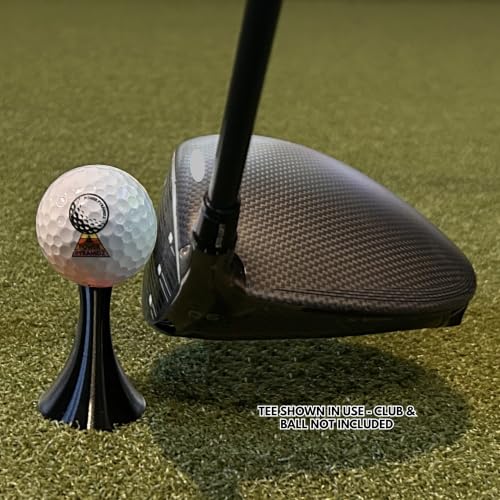
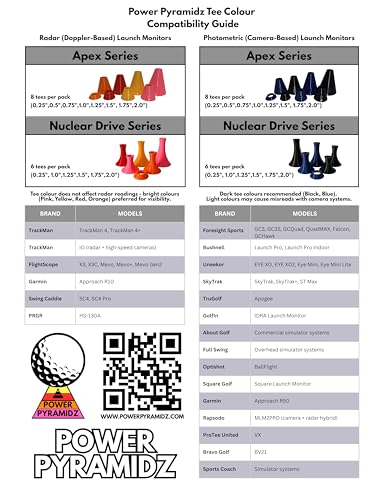
The Power Pyramidz tees are built with one thing in mind: maximizing power transfer. That negative curvature under the ball cradle is not just marketing, it’s a real design feature that reduces clubhead drag at impact, and owners using radar-based launch monitors like Trackman and Flightscope report measurably cleaner contact and slightly higher ball speeds. For serious simulator users chasing every yard, that’s a legit edge.
With six fixed heights and a wide, stable base, these tees offer both precision and repeatability. They’re made from TPU, which is tougher than standard plastic and holds up well over time. While not the cheapest, their cost-to-durability ratio is strong, especially compared to brittle alternatives that crack after a few weeks. If you treat your simulator like a performance lab, these are worth the upgrade.
Product photos
Against The Grain Tethered Tees
Strengths
- Tether prevents loss
- Stable base
- Durable plastic
Trade-offs
- Tether can snag
- No height variety
- Higher price for basic function
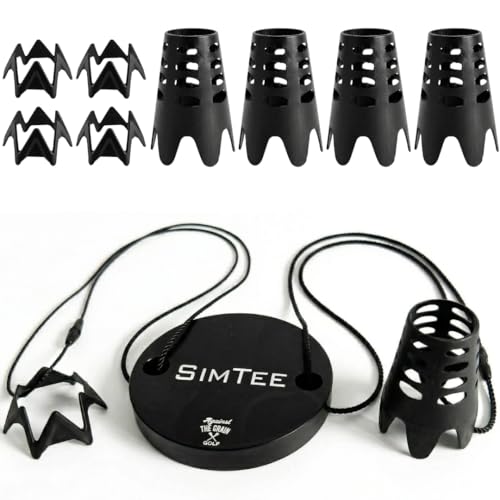
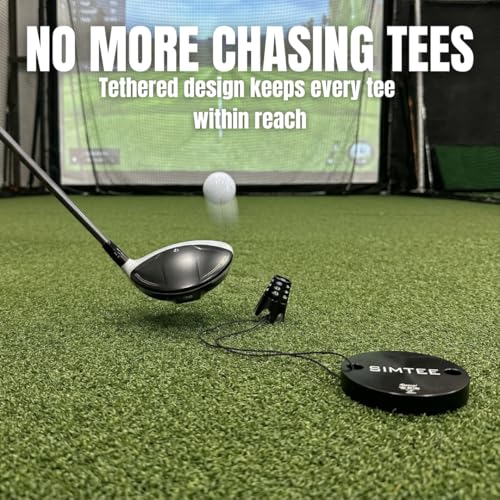
If you’ve ever lost a tee under your golf simulator screen or spent practice time chasing one across the room, the tethered design of the Against The Grain tees solves that annoyance head-on. These aren’t flashy, but their stability on mats is a standout, the base anchors firmly and the tether keeps the tee attached even on full driver swings. Reviewers note they stay put better than most free-standing models, which makes them a smart pick for high-frequency training setups.
They don’t offer multiple heights or advanced materials, but their durability and organizational benefit are clear. Compared to untethered tees, they trade a bit of convenience in initial placement for far less frustration over time. For families, shared sim rooms, or anyone tired of missing tees, this trade-off makes sense.
Product photos
Our Testing Process
Rather than a hands-on lab test, my research focused on comparing the published specifications and features of numerous golf simulator tees. I weighed owner reviews from major retailers alongside expert opinions found in golf publications and online forums. This allowed me to build a ranking based on what golfers are actually saying about performance and durability, combined with my knowledge of what makes a good practice setup.
For golf simulator tees, consistent height and durability are paramount. The ability to replicate a natural tee shot, and withstand repeated impacts, directly impacts practice effectiveness. I prioritized tees offering a variety of heights to accommodate different clubs and swings, and those constructed from materials designed for long-term use, even with frequent, forceful contact. A key consideration was how well each tee performs on common simulator mats.
Specifications reliably indicate the range of heights offered and the materials used in construction. However, owner feedback proved vital in assessing real-world durability and how well the tees perform with various club types. I also considered reputation; brands known for quality golf accessories generally deliver a superior product, and often offer options like tees for beginners to help new players improve their game. While many golfers still prefer traditional wooden tees, these rubber and plastic options offer benefits for simulator use.
How To Pick The Right golf simulator tees
Finding the right golf simulator tees can make a huge difference in your practice sessions. It’s not simply a matter of sticking something in the mat; consistent height, stability, and material properties all play a role in replicating a real tee shot and getting useful data from your simulator.
A quality golf simulator tee needs to offer repeatable height, minimal deflection on impact, and compatibility with simulator technology. Look for durable materials that can withstand repeated use without cracking or breaking, and designs that minimize interference with swing data capture. Consider the variety of heights offered to accommodate different clubs and swing preferences.
Height and Variety
The biggest advantage of using tees with a simulator is the ability to consistently replicate ball position. That’s why a single height isn’t enough. I’ve seen players struggle to dial in their launch numbers because they were constantly adjusting a single tee. Look for sets offering a range of heights, ideally in small increments. The BirTee PRO Speed+ tees, for instance, provide heights from 1/4″ up to 2″ in 1/4″ steps, allowing for fine-tuning.
Here’s what to consider when assessing height variety:
- A few heights are okay for casual use.
- A wider range (like the Foilswirl 8 Height Golf Tees) is better for dialing in different clubs.
- Multiple sets are ideal if you want to quickly switch between preferred heights for different shots and have backups when one set wears out.
Material and Durability
Rubber and plastic are the dominant materials, each with pros and cons. Plastic tees, like those from CHAMPKEY, offer a good balance of flexibility and durability. The flexibility is important because it reduces friction and the chance of damaging your clubface. However, cheaper plastic tees can snap easily. Rubber tees, such as the Rubber Golf Tees 32-Piece Set, are incredibly durable and feel a bit more like hitting off a real tee, but they don’t always provide the same level of consistent height as a well-made plastic tee.
A good rule of thumb: if you find yourself replacing tees frequently, you’re losing practice time and potentially compromising your data.
Simulator Compatibility and Stability
This is where things get specific. Some simulators use overhead cameras, and certain tee designs can interfere with their accuracy. The BirTee PRO tees address this with a smaller base diameter on their taller tees. Tethered tees, like the Against The Grain Tethered Tees, are a great solution if you’re tired of chasing tees across the room after every swing. Beyond that, stability is key. A wobbly tee introduces inconsistencies that undermine the purpose of simulation. If you’re looking for more information on the best options available, you can check out some golf tee reviews to help you decide. And if you’re specifically after options made to last, explore durable plastic tees.
Golf Simulator Tees Compared
Here’s a comparison of key specifications for various golf simulator tees to help you choose the right option.
| Product Title | Height Variety | Material | Tethered | Quantity | Best For |
|---|---|---|---|---|---|
| Rubber Golf Tees 32-Piece Set | 6 | Rubber | No | 32 | Best Overall |
| BirTee PRO Speed+ Golf Tees | 8 | Polymer | No | 8 | Best Rubber Material |
| Foilswirl 8 Height Golf Tees | 8 | LDPE | No | N/A | Best for Height Variety |
| Rolitwils 24-Pack Golf Tees | 2 | Plastic | No | 24 | Best Budget Multi-Pack |
| CHAMPKEY 49-Pack Golf Tees | 4 | Plastic | No | 49 | Best Value Pack |
| Power Pyramidz Nuclear Drive Tees | 6 | Plastic | No | N/A | Best for Power Transfer |
| Against The Grain Tethered Tees | 1 | Plastic | Yes | N/A | Best for Tethered Stability |
Frequently Asked Questions
What height of golf simulator tee should I start with?
Begin with a tee height that matches your typical driver tee height on the course. This provides a familiar feel and ensures consistent data. Once you’re comfortable, experiment with slightly different heights to see how they affect your launch angle and spin rate.
Are tethered tees really necessary for simulator use?
Tethered tees are helpful if you have limited space or find yourself constantly retrieving tees. While not essential, they eliminate distractions and keep your practice session flowing smoothly, and can be especially useful if you’re looking for more simulator accessories.
Can I use wooden tees with my golf simulator?
While possible, wooden tees aren’t ideal. They’re prone to breaking, offer inconsistent height, and can sometimes interfere with simulator readings. Rubber or plastic tees provide greater durability and consistency, leading to more reliable practice data.
What material is best for golf simulator tees, rubber or plastic?
Plastic tees offer a good balance of flexibility and durability, reducing the risk of club damage. Rubber tees are very durable, but may not provide the precise height adjustments possible with high-quality plastic options.
Will certain tees work better if I have a high handicapper?
Yes, some tees are more forgiving and can help with consistency. Look for tees with a wider base or those designed to reduce wobble, as these can be especially beneficial for players seeking tees for high handicappers.
The Bottom Line
Choosing golf simulator tees often comes down to balancing control with convenience. You can spend more to get a wider range of height options and superior durability, or you can opt for a budget-friendly pack that gets the job done for casual practice. For the golfer who wants the most consistent and reliable performance, I recommend the Rubber Golf Tees 32-Piece Set; they consistently receive high marks for durability and feel, offering a solid base for accurate simulation.
If you’re particularly focused on dialing in your club distances, or need options to suit tees for distance, the BirTee PRO Speed+ Golf Tees are an excellent choice. For those wanting a versatile set without breaking the bank, the Foilswirl 8 Height Golf Tees deliver a great range of heights. And if you’re tired of chasing tees across the room, the Against The Grain Tethered Tees eliminate that frustration entirely.
Ultimately, the best golf simulator tee is the one that helps you practice effectively. Don’t get too caught up in minor spec differences. Focus on finding a set that provides consistent height, feels good off your clubface, and allows you to replicate your on-course setup as closely as possible, understanding the different kinds of tees can help with that.
