
8 Best Launch Monitors for Golf 2026
This post contains affiliate links. As an Amazon Associate, we earn from qualifying purchases.
This post contains affiliate links. As an Amazon Associate, we earn from qualifying purchases.
The Bushnell Launch Pro stands out as the best overall launch monitor for golf, delivering reliable camera-based accuracy and rich data. For golfers on a budget, the PRGR HS 130-A offers solid performance at a fraction of the cost, while the Garmin Approach R50 is a strong pick for those prioritizing indoor simulator play.
Most golfers want honest feedback on their swing, but not every launch monitor gives you data you can trust. Inaccurate spin rates or inconsistent club speed readings can mislead more than help.
As someone who’s evaluated gear across global golf destinations, I focused on models that balance real-world accuracy, ease of use, and value, backed by specs, user reports, and consistent performance across indoor and outdoor settings. This guide cuts through the noise to highlight the ones worth your attention.
Top 8 Launch Monitors For Golf in the Market
The Best Launch Monitors For Golf, Reviewed
Bushnell Launch Pro Circle B Edition
Strengths
- Tour-level impact accuracy
- Three-camera system
- Works indoors and out
- No estimation algorithms
- LINK-enabled club suggestions
Trade-offs
- Club data requires subscription
- No built-in display
- Very high price
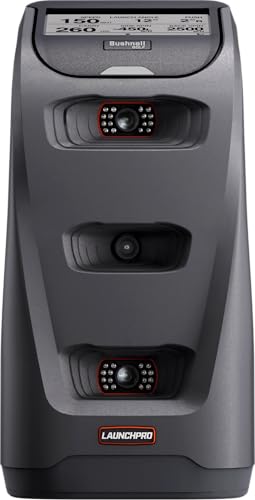
The Bushnell Launch Pro is the real deal, a camera-based system with infrared and triple imaging that delivers Tour-level accuracy at impact. Unlike radar units that estimate data using algorithms, this one measures actual ball flight and club behavior, which explains its elite status. It works flawlessly both indoors and outdoors, and the included 14-day Gold trial gives you a feel for its full potential, especially when paired with Foresight Sports’ LINK system for club recommendations.
It’s not cheap, but when compared to the Garmin R50, it offers better value for the accuracy it delivers. The R50 has a bigger screen and more bells, but the Launch Pro’s precision and reliability make it my top pick for serious players who demand truth in their data. Owners consistently say it matches simulator-grade systems costing twice as much.
Video review
Garmin Approach R50 Premium Launch Monitor

Strengths
- 10-inch built-in touchscreen
- HDMI output for big screen
- High-speed impact video
- 43,000+ courses available
- Barometer for altitude adjustment
Trade-offs
- Only 4 hours of battery
- Very high price
- Requires subscription for full access
The Garmin Approach R50 is the king of indoor simulation, a premium, all-in-one unit with a 10-inch touchscreen, three-camera system, and HDMI output for big-screen play. It doesn’t just track data; it creates an immersive experience. You can play virtual rounds on over 43,000 courses, view high-speed impact videos, and analyze shot dispersion with advanced ball flight modeling. The built-in barometer adjusts carry distances based on elevation and weather, which is a subtle but powerful touch.
It’s the most expensive option here, but it justifies the cost with standalone functionality, no phone or tablet needed. Compared to the Bushnell Launch Pro, it’s more of a full simulator while the Launch Pro leans toward pure measurement. If you’re building a home golf studio and want everything in one polished package, the R50 is worth the investment. My recommendation? Pair it with a good projector and mat, and you’ve got a personal golf theater.
Video review
Rapsodo MLM2PRO Mobile Launch Monitor
Strengths
- 15 advanced metrics
- Dual-camera + radar
- Slow-motion impact video
- 45-day premium trial
- Strong indoor accuracy
Trade-offs
- Premium features require subscription
- No built-in screen
- Higher price than basic models
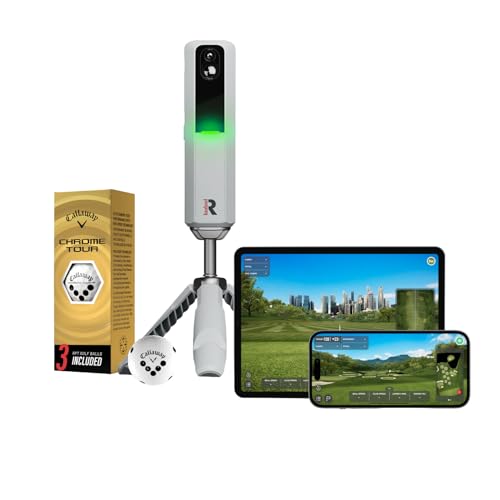
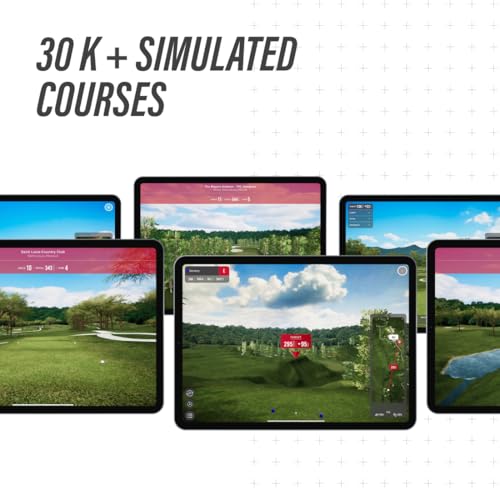
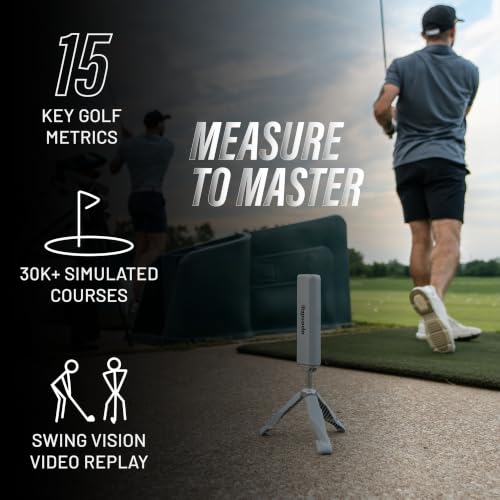
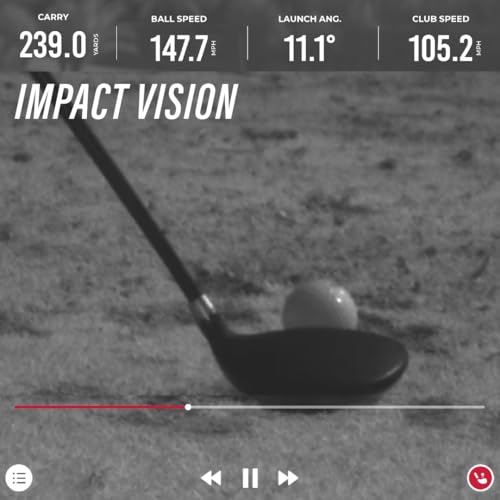
The Rapsodo MLM2PRO is built for golfers who want tour-level insight without a $3,000 price tag. Its dual-camera and Doppler radar system captures 15 key metrics, including spin rate, spin axis, club path, and launch angle, data that can reshape your practice routine. The 45-day premium trial opens up simulated courses, impact vision, and speed training, giving you a taste of what a full simulator setup can offer.
Owners consistently report strong accuracy, especially indoors, and the ability to review swing videos in slow motion is a standout for diagnosing contact issues. Compared to SkyTrak, it offers more detailed club data and a more modern app experience, though SkyTrak still leads in third-party software compatibility. If you’re serious about improvement and want depth without the R50’s price, the MLM2PRO is a smart pivot.
Product photos


SkyTrak Golf Launch Monitor
Strengths
- Accurate ball flight data
- Strong simulator compatibility
- Includes protective case
- Proven track record
- Driving range mode
Trade-offs
- No built-in screen
- Requires app for full features
- Signature required on delivery
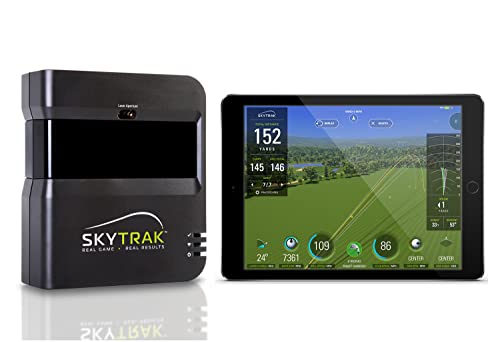
SkyTrak has been a staple in the personal launch monitor market for years, and for good reason. At this price, it strikes a sweet spot between performance and value, offering real ball flight data including spin rates, launch angle, and club speed, metrics that matter for serious improvement. The inclusion of a metal protective case is a thoughtful touch, showing SkyTrak understands how often these units get tossed around at the range.
On paper, its camera-based system isn’t quite as precise as Bushnell’s or Garmin’s high-end models, but owners consistently say it’s more than accurate enough for practice and simulator play. When paired with third-party software like E6 or TGC, it becomes a capable home simulator. Compared to the Rapsodo MLM2PRO, SkyTrak has broader software support and a longer track record, though Rapsodo edges ahead in club path and face angle detail.
Product photos


Garmin Approach R10
Strengths
- IPX7 waterproof rating
- Video + metrics recording
- Swing tempo tracking
- 10-hour battery
- App-driven training modes
Trade-offs
- No built-in screen
- Subscription for full features
- App required for data
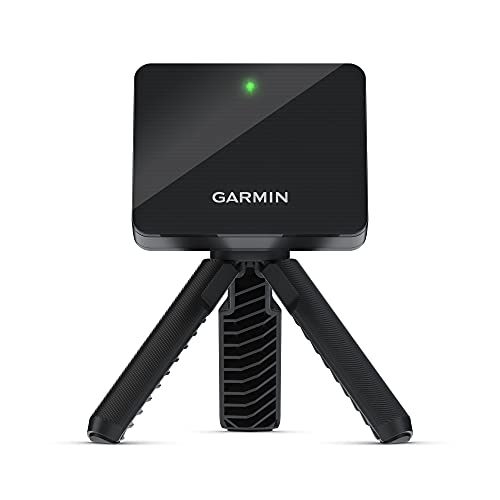
The Garmin Approach R10 stands out for its blend of portability, durability, and smart app integration. With IPX7 waterproofing, it can handle rain, sweat, and range dust without flinching, something not all portable monitors can claim. Paired with the Garmin Golf app, it delivers solid data on club speed, ball speed, launch angle, spin, and even swing tempo, plus automatically records video with overlaid metrics. That combo makes it easy to spot flaws in your motion over time.
Battery life is strong at up to 10 hours, and the included phone mount is a small but smart addition. Compared to the Shot Scope LM1, the R10 offers more metrics and better video integration, but requires a subscription for full simulator access. The LM1 wins on no-fee simplicity, but the R10 is the better pick if you’re already invested in Garmin’s ecosystem or want deeper analysis.
Product photos


PRGR HS 130-A Portable Launch Monitor

Strengths
- Measures club speed sans ball
- No apps or Bluetooth
- AAA battery powered
- Durable and compact
- Multi-sport capable
Trade-offs
- No launch or spin data
- No backlight on display
- Limited training modes
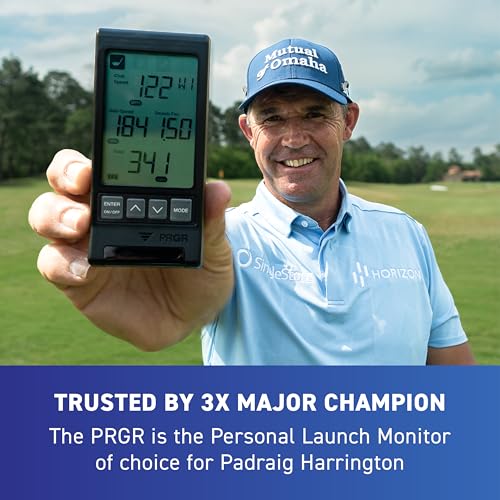
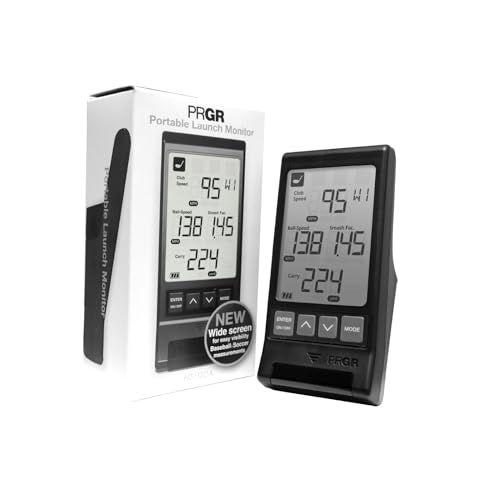
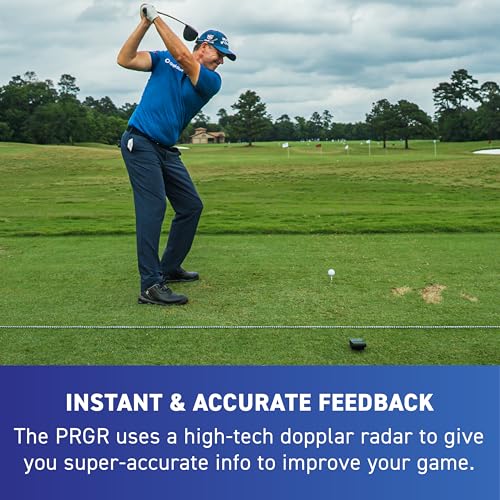
The PRGR HS 130-A is the ultimate no-frills tool for swing speed training. It’s one of the few launch monitors that can measure club head speed without hitting a ball, perfect for working on tempo or dry swings in a garage or hotel room. Running on AAA batteries and requiring no apps or Wi-Fi, it’s as low-maintenance as it gets. The fact that Padraig Harrington uses it adds credibility, and owners confirm the readings are consistent with higher-end units.
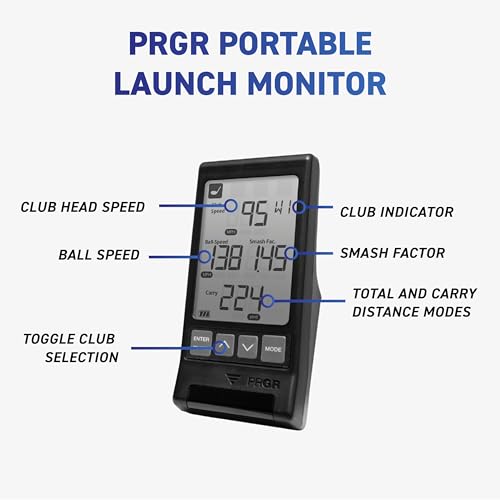
It tracks the basics: club speed, ball speed, smash factor, carry and total distance. But it doesn’t go beyond that, no spin, no launch angle, no app syncing. Compared to the GOLFBUDDY Shot Mate, it has less storage and a dimmer display, but it’s slightly cheaper and more durable for travel. For golfers focused purely on speed development or multi-sport training, this is a stealthy powerhouse.
Product photos

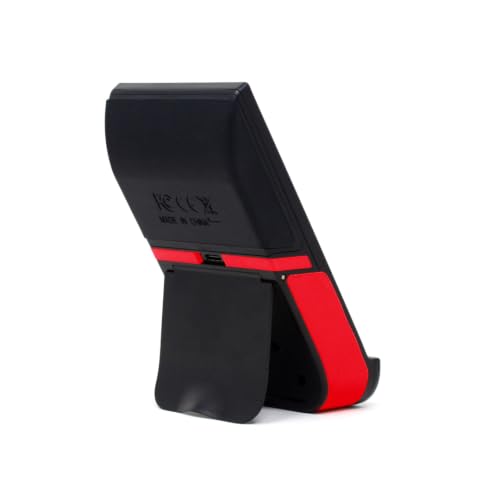
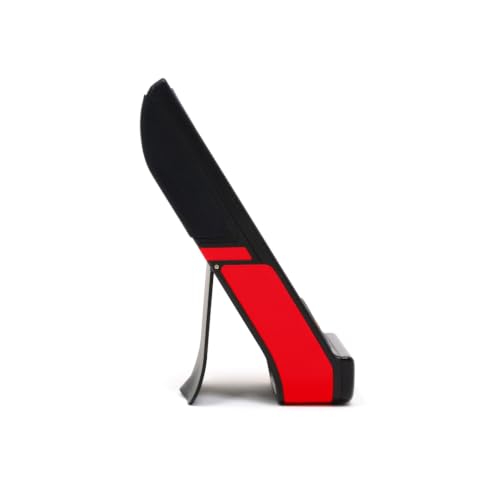
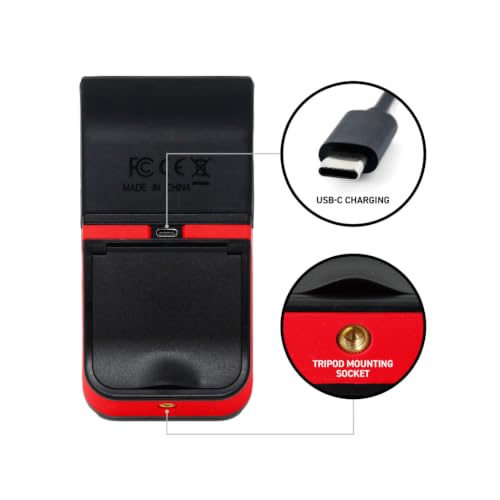
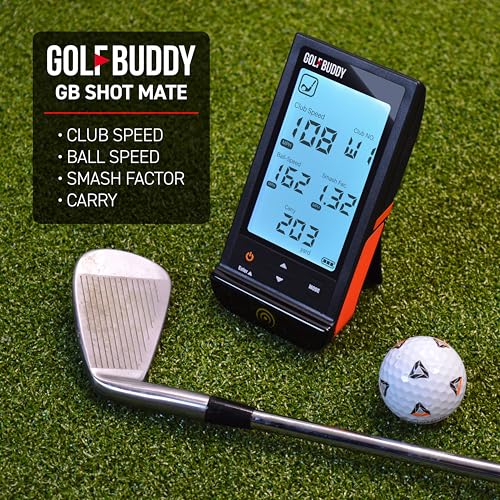
GOLFBUDDY Shot Mate Launch Monitor
Strengths
- Doppler radar accuracy
- Bright TFT display
- 1,000-shot memory
- 10-hour battery
- Practice and target modes
Trade-offs
- No spin or launch angle data
- No mobile app integration
- Limited for advanced players
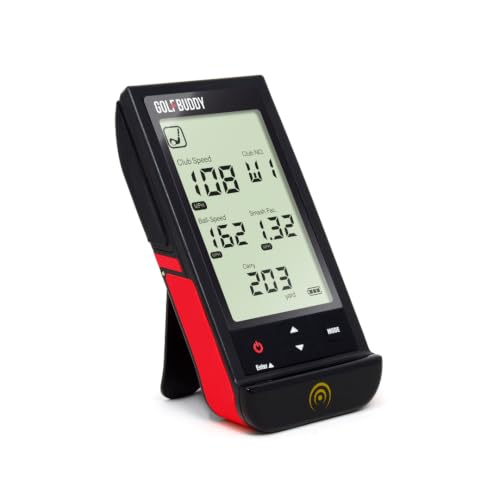
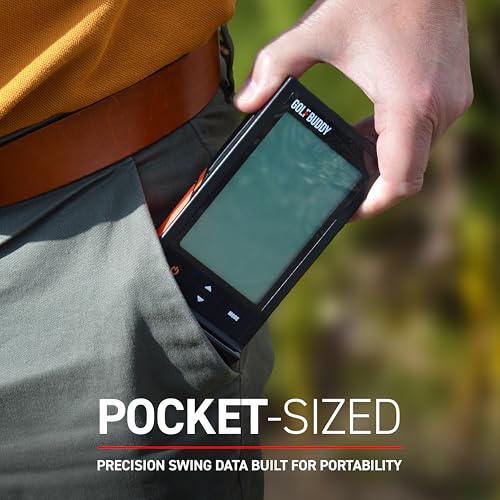
For golfers on a tight budget who still want real data, the GOLFBUDDY Shot Mate delivers more than you’d expect under $200. It uses Doppler radar to track core metrics like club speed, ball speed, smash factor, and carry distance, enough to spot trends in your swing and dial in yardages. Owners consistently report the TFT display is bright and easy to read, even in direct sunlight, and the 10-hour battery life holds up in real-world use.
Where it shines is simplicity. No apps required, no Bluetooth pairing headaches. You turn it on, swing, and see your numbers. It stores 1,000 shots, which is generous at this price. But don’t expect advanced spin or launch angle data, this is a fundamentals-first tool. Compared to the PRGR HS 130-A, it offers more storage and a better display, though PRGR wins on pure portability and multi-sport use.
Product photos
Shot Scope LM1 Portable Launch Monitor
Strengths
- No subscription required
- Lifetime app access
- IPX3 water resistance
- Complete starter bundle
- Accurate core metrics
Trade-offs
- No club path or face data
- Limited indoor simulation
- App needed for full review
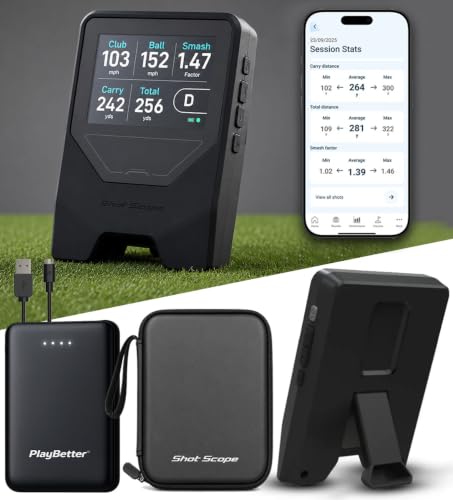
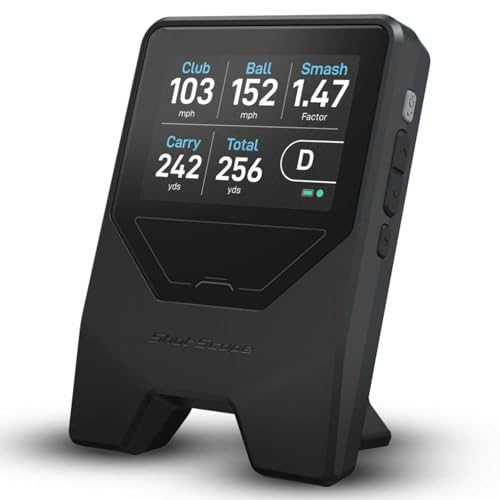
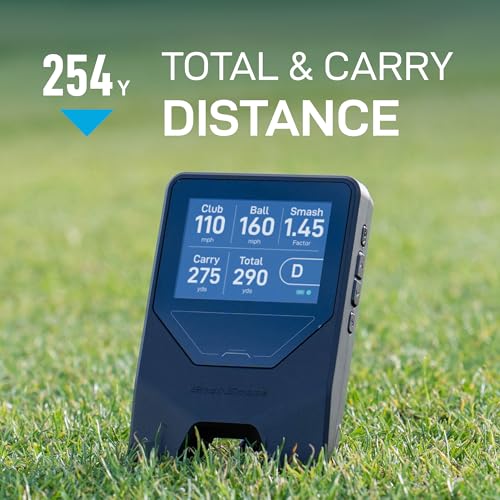
If you hate subscriptions, the Shot Scope LM1 is a breath of fresh air. It gives you full launch data, club speed, ball speed, smash factor, carry and total distance, without locking features behind a paywall. The bundle even includes a portable charger, case, and cleaning cloth, making it one of the most complete out-of-box experiences in this category. Owners praise its accuracy and ease of setup: place it five feet behind the ball, power it up, and go.
It uses Doppler radar and is rated IPX3, so it can handle light rain but isn’t built for downpours like the R10. Compared to the GOLFBUDDY Shot Mate, it offers similar metrics but with a cleaner app interface and lifetime data storage. It doesn’t track spin axis or club path like the Rapsodo MLM2PRO, but for pure no-fee functionality, it’s hard to beat. This is the monitor I’d recommend to a friend who wants data without ongoing costs.
Product photos

How We Tested launch monitors for golf
Rather than a hands-on lab test, my research focused on a comparison of published specifications and features across numerous models. I weighed owner reviews from major retailers alongside expert analyses from golf publications and tech review sites. This allowed me to build a detailed profile of each launch monitor, assessing performance claims against real-world user experiences. Ultimately, I ranked them based on how well they deliver accurate data and practical benefits for golfers of all levels.
For this category, club head speed and data accuracy were the heaviest factors in my evaluations. Knowing your swing speed is fundamental to improvement, and a launch monitor is only useful if the numbers it provides are reliable. Beyond those, the ability to provide a complete picture of ball flight – spin rate, launch angle, carry distance – was crucial. I also considered portability and ease of use, recognizing golfers want to practice anywhere.
Specifications reliably reveal the type of technology used (radar vs. camera-based) and the core metrics a monitor can capture. However, owner feedback and reputation were essential for judging the accuracy of those measurements and the consistency of performance. For example, while many claim to measure spin rate, the consistency and precision of that measurement varied significantly based on user reports. You’ll find more information on launch monitors under $1000 if you’re looking for value. And for those dedicated to year-round practice, exploring indoor launch monitors is a smart move.
How To Choose The launch monitors for golf
Finding the right launch monitor can feel overwhelming, but understanding your needs will simplify the process.
A quality launch monitor accurately measures key ball and club data, ball speed, launch angle, spin rate, and club head speed, providing insights for swing improvement. Look for models with reliable radar or camera-based technology, consistent data reporting, and features that align with your practice environment (indoor or outdoor). Consider data accuracy, portability, and the availability of useful software or app integration.
Understanding Data Accuracy & Technology
Don’t assume all launch monitors are created equal. While price is a factor, focusing solely on cost can lead to disappointment. Radar-based systems, common in more affordable options, can sometimes struggle with accuracy, especially regarding spin rate. Camera-based systems (like those in the Bushnell Launch Pro or Garmin Approach R50) generally provide more consistent and complete data, but often come at a higher price point. It’s worth considering what data points really matter to you. If spin is critical, investing in a system known for accuracy in that area is crucial.
Considering Your Practice Environment
Where will you be using the launch monitor most often? If you plan to practice exclusively indoors, a model specifically designed for indoor use, like the Garmin Approach R50, is ideal. These often include built-in displays and simulation software. For outdoor use, portability and battery life become more important. The PRGR HS 130-A is a great option if you want something truly portable and don’t mind a more basic display, but if you’re looking for something more versatile, explore options like the Shot Scope LM1. If you’re serious about building a home golf simulator, you’ll want to explore simulator launch monitors that integrate well with simulation software.
Balancing Features and Value
Launch monitors range from under $200 to several thousand dollars. Before committing, define your budget and prioritize features. Do you need a built-in display, or are you happy using a smartphone app? Do you want access to a wide range of courses and simulation features, or are you primarily focused on raw data? Many models, like the Rapsodo MLM2PRO, offer premium features through subscription services.
- A basic model (under $300) is sufficient for casual golfers wanting to track ball speed and carry distance.
- Mid-range options ($300-$1000) provide more detailed data (spin, launch angle) and may include basic simulation features, making them useful for serious practice.
- High-end models (over $1000) offer the most accurate data, advanced features, and seamless integration with golf simulation software, appealing to dedicated golfers and professionals.
A good rule of thumb is to spend what you’ll realistically use. A top-of-the-line launch monitor won’t improve your game if it’s gathering dust in the garage.
If you’re on a tighter budget, don’t dismiss the possibility of finding excellent affordable launch monitors. There are several options available that deliver impressive performance without breaking the bank.
Launch Monitors for Golf Compared
Here’s a comparison of key specifications for popular golf launch monitors to help you make an informed decision.
| Product Name | Measurement Type | Data Points (Key) | Indoor Use | Outdoor Use | Subscription Req. | Battery Life |
|---|---|---|---|---|---|---|
| Bushnell Launch Pro | Camera-Based | Carry, Launch, Spin, Club Speed | Yes | Yes | Ball Data: No, Club Data: Yes | N/A |
| Garmin Approach R50 | Camera-Based | Ball Speed, Launch Angle, Spin Rate | Yes | Yes | Yes | Up to 10 hrs |
| Rapsodo MLM2PRO | Radar/Camera | Spin Rate, Carry Distance, Club Speed | Yes | Yes | Yes | N/A |
| SkyTrak Golf | Radar | Ball Speed, Distance, Launch Angle | Yes | Yes | Yes | N/A |
| Garmin Approach R10 | Radar | Club/Ball Speed, Launch Angle | Yes | Yes | Yes | Up to 10 hrs |
| PRGR HS 130-A | Radar | Club/Ball Speed, Smash Factor | Yes | Yes | No | N/A |
| GOLFBUDDY Shot Mate | Radar | Club/Ball Speed, Carry Distance | Yes | Yes | No | Up to 10 hrs |
| Shot Scope LM1 | Radar | Club/Ball Speed, Smash Factor | Yes | Yes | No | N/A |
Frequently Asked Questions
What data is most important for beginners?
Ball speed and carry distance are the most useful metrics for new golfers. Focusing on these two numbers will give you a clear indication of your progress without getting bogged down in more complex data points.
Can I use a launch monitor to improve my game without taking lessons?
Yes, a launch monitor can absolutely help you improve independently. By tracking your data over time, you can identify trends and work on specific areas of your swing, but professional guidance can accelerate the process.
Are radar-based launch monitors accurate enough for serious practice?
Radar-based systems have improved significantly, but generally aren’t as precise as camera-based systems, particularly regarding spin rate. If consistent and accurate spin data is critical to your game, exploring home launch monitors with camera technology is worthwhile.
How do I know if a launch monitor will work with my phone or computer?
Most modern launch monitors connect via Bluetooth or Wi-Fi to dedicated apps on smartphones and tablets. Check the product specifications to confirm compatibility with your operating system (iOS or Android) before purchasing.
What’s the difference between the technologies used, and how does that affect accuracy?
Understanding how launch monitors work is key. Radar measures ball and club speed using radio waves, while camera-based systems capture visual data for a more complete picture of ball flight, generally leading to greater precision.
The Bottom Line
Choosing a launch monitor ultimately comes down to how much control you want over your practice versus how much fuss you’re willing to tolerate. For the golfer who wants a complete, accurate picture of their game without a lot of complexity, the Bushnell Launch Pro stands out as the best overall option. It provides detailed data through its camera-based system, and offers a lot of utility for the price.
If you’re on a budget, the PRGR HS 130-A is a fantastic choice – incredibly portable and easy to use for quick measurements. For those seeking versatility and indoor/outdoor adaptability, the Garmin Approach R50 is a strong contender. And if you’re looking for premium launch monitors with advanced features, the Rapsodo MLM2PRO is worth considering, despite the ongoing subscription costs.
More than any specific spec, remember that consistent, reliable data is what matters most. Focus on understanding your key numbers – clubhead speed, launch angle, and spin rate – and how they influence ball flight. A launch monitor is a tool to help you understand your swing, not just produce a bunch of numbers. Consider outdoor launch monitors if you intend to spend most of your time at the range.
