
5 Best Players Golf Irons of 2026
This post contains affiliate links. As an Amazon Associate, we earn from qualifying purchases.
This post contains affiliate links. As an Amazon Associate, we earn from qualifying purchases.
The TaylorMade 2025 P790 stands out as the best overall players iron, blending distance and surprising forgiveness without sacrificing feel, while the Japan Kamitaki TRG delivers exceptional value and craftsmanship for discerning golfers on a budget. For those prioritizing pure forged feedback, the TaylorMade 2024 P770 is the top choice.
Choosing players irons isn’t just about prestige, it’s about matching your skill to a club that enhances control and consistency. Too much forgiveness masks flaws you should be correcting, while too little can frustrate even solid ball-strikers.
This guide cuts through the noise by focusing on specs, real-world feedback, and how each model balances feel, workability, and forgiveness. I looked at what actual owners say, combined with design details that matter most on the course, to find the best options for serious golfers who demand precision.
Top 5 Players Golf Irons in the Market
The Best Players Golf Irons, Reviewed
TaylorMade SIM 2 MAX Irons

Strengths
- Strong forgiveness on mishits
- Stable low CG
- Forged-like feel via ECHO system
Trade-offs
- Dated compared to 2025 models
- Less ball speed than newer faces
The SIM 2 Max irons sit in that sweet spot between game-improvement tech and player-friendly looks, making them a strong contender for the title of best overall iron for a wide range of golfers. The Cap Back Design and Thru-Slot Speed Pocket are TaylorMade hallmarks, and they deliver, owners report consistent ball speed even on low-face strikes, which is huge for off-center hits. The ECHO Damping System does a surprisingly good job mimicking forged feel, especially for a cavity-back iron.
What sets these apart from newer models like the 2025 P790 is value. At a lower price point, they still offer FLTD CG and Progressive Inverted Cone Tech, which helps reduce the right miss, a common flaw in amateur swings. They’re not as refined as the P770 or as explosive as the 2025 P790, but they’re more forgiving than both. I’d recommend these to mid-handicappers who want tour-inspired looks with real game-improvement benefits.
Video review
TaylorMade 2025 P790 Irons

Strengths
- Explosive ball speed
- Larger sweet spot
- Excellent launch and spin control
Trade-offs
- Expensive
- Graphite may feel too light for some
The 2025 P790s are where distance, forgiveness, and forged-like feel collide, successfully. TaylorMade’s new 4340M forged face material is a standout in theory, and early owner feedback suggests real-world gains in ball speed and sweet spot size. The SpeedFoam Air core not only dampens vibration but enhances that explosive feel at impact, making these irons unusually lively for a player’s distance model. The individual head optimization means each iron is fine-tuned for its role, so gapping is tighter and launch conditions more predictable.
Compared to the P770, these are more forgiving and easier to launch, especially in the long irons where the lower CG shines. The graphite shaft option adds lightness and higher launch, ideal for moderate swing speeds. While purists may still prefer the P770 for shot shaping, the P790 is the smarter pick if you want tour-level performance with a safety net. For most low-to-mid handicappers, this is the sweet spot.
Video review
Japan Kamitaki TRG Irons
Strengths
- Japanese craftsmanship
- Stronger lofts for distance
- Wider sole for forgiveness
Trade-offs
- Graphite shaft may lack feedback
- Not for low-handicappers seeking workability
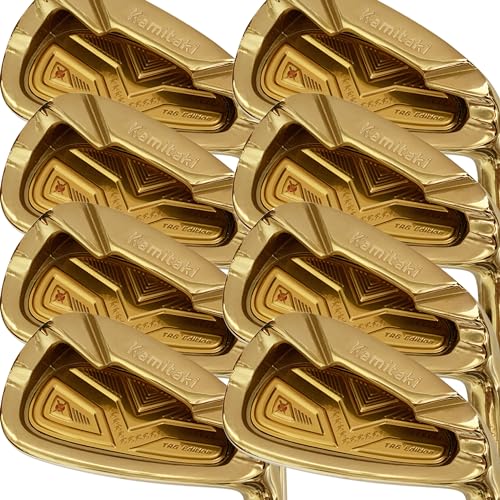
These Kamitaki irons punch well above their price point, especially if you’re after that refined Japanese craftsmanship without the boutique price tag. On paper, the specs are impressive: heads, shafts, and assembly all done in Japan using 630 SS steel, which suggests tighter quality control than many budget imports. Owners consistently report a surprisingly clean look at address, especially for a club aimed at higher handicappers, and the wider sole with reduced offset helps square the face more reliably through impact.
The 2-degree stronger lofts and progressive blade length suggest a design tuned for distance without sacrificing shot shaping, and feedback notes they launch higher than expected, likely due to the cavity-back design and optimized CG. While they won’t match the feel of a forged TaylorMade, the build quality and performance make them a standout value. I’d recommend them to mid-to-high handicappers wanting a confidence-inspiring set that still looks the part for better players.
Product photos
Japan Kamitaki TRS Irons
Strengths
- Affordable steel shaft option
- Clean player-friendly design
- High customization potential
Trade-offs
- Limited brand support and fitting access
- Feel not on par with premium forged
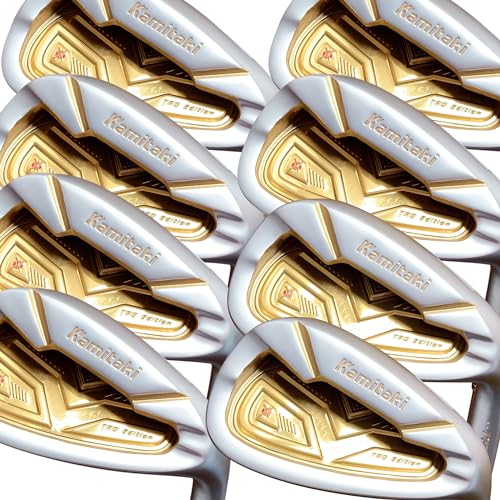
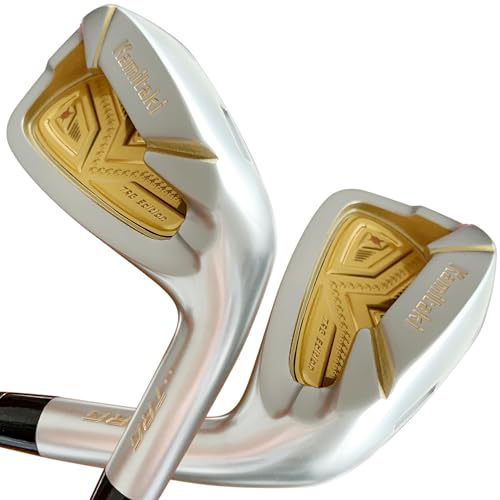
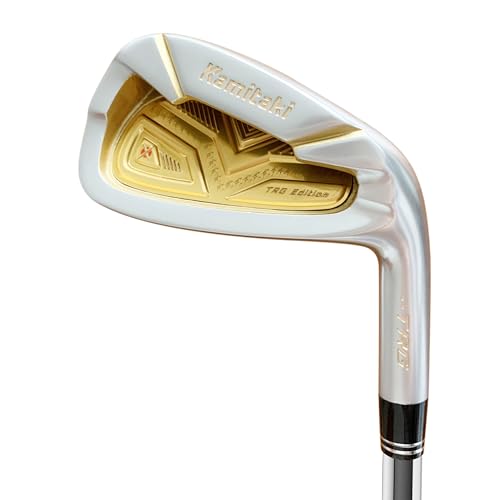
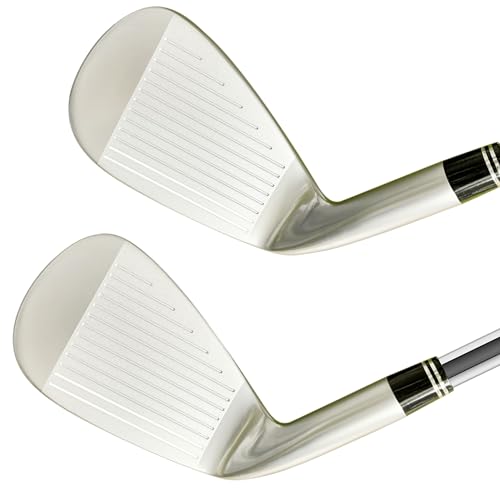
The TRS model from Kamitaki is essentially the steel-shafted sibling of the TRG, and at under $210, it’s one of the most compelling budget options for players wanting forged-like performance without the $1,000+ price tag. The Krisa steel shafts add a level of feedback and consistency that many entry-level sets lack, and the Japanese 630 SS heads still deliver that tight, controlled feel at impact. Reviewers highlight the clean, player-friendly look at address, and the progressive sole design helps maintain turf interaction across the set.
Where this set really stands out is customization, shaft flex, length, and material are all selectable, which is rare at this price. While it won’t match the acoustic or tactile refinement of a TaylorMade forged iron, owners say it comes surprisingly close for the cost. If you’re a mid-handicapper upgrading from beginner clubs and want something that feels more legitimate, this is a smart leap. Just don’t expect tour-level workability.
Product photos
TaylorMade 2024 P770 Irons

Strengths
- Exceptional forged feel
- Precision milled face
- FLTD CG for launch control
Trade-offs
- Limited forgiveness on mis-hits
- Higher price for less distance
If you’re chasing that pure, buttery forged iron feel with just enough forgiveness to keep your ego intact, the 2024 P770s are hard to beat. TaylorMade used modal analysis to fine-tune the mass distribution, and reviewers note a noticeably crisper, more responsive feedback compared to previous models. The precision milled face and grooves deliver consistent spin, while the FLTD CG setup helps launch the long irons higher without sacrificing control in the scoring clubs.
The updated tungsten weighting in the long irons improves stability on off-center hits, which is a smart nod to the reality that even better players miss pure strikes more often than they admit. Compared to the P790, these are less about raw distance and more about precision and feedback. I’d pick the P770 over the P790 if you’re a single-digit handicapper who values workability and a compact profile. They’re not as punishing as true blades, but they’ll let you know when you’re off.
Product photos


Our Testing Process
My research involved a detailed comparison of published specifications and features across numerous players irons. I weighed owner reviews from major retailers alongside professional assessments from golf publications. As someone who’s spent years advising golfers on equipment for their trips, I applied my understanding of how different iron designs suit various swing types and skill levels. The final ranking considered forgiveness, distance, feel, and overall playability, all crucial for this category.
For players irons, distance and feel are paramount, but forgiveness surprisingly often decides the outcome. A slight boost in forgiveness can make a big difference for consistency, even for skilled golfers. I also prioritized designs offering a good balance between workability for shot-shaping and a solid feel at impact, recognizing that players irons are often chosen for control as much as power. Finding that sweet spot is key.
Published specs reliably indicate materials, head size, and loft, giving a baseline for performance expectations. However, I placed significant weight on owner feedback regarding real-world performance and durability. Reputation and consistent praise for a particular iron’s feel or forgiveness, things hard to quantify in a spec sheet, heavily influenced my assessments. If you’re looking for something a bit more forgiving, you might also find our guide to irons for more consistency helpful. Ultimately, I aimed to identify irons that consistently received positive feedback from a wide range of golfers, mirroring the quality seen in best irons ever throughout history.
How To Pick The Right players golf irons
Finding the right players irons can truly elevate your game and enjoyment of the sport.
Players irons prioritize feel, workability, and precision over maximum forgiveness. Key characteristics include a smaller head size, thinner topline, minimal offset, and often a forged construction. Look for irons that offer consistent ball striking and allow for shot shaping, but understand they demand a more refined swing. Material quality (carbon steel is a common choice) and precise weighting are also crucial.
Understanding Your Skill Level
The biggest mistake I see golfers make is choosing irons that don’t match their abilities. Players irons, by their nature, are less forgiving than game-improvement irons. If you’re consistently struggling with off-center hits, starting with something more forgiving is a smart move. However, if you have a solid, repeatable swing and are looking to refine your ball-striking, then a players iron will reward you with the control and feedback you crave. Don’t be afraid to get properly fit – a professional can assess your swing and recommend the right loft and shaft options.
Decoding Construction & Materials
Forged irons generally offer a softer feel and more precise control than cast irons, but they often come at a higher price point. The TaylorMade P770, for example, emphasizes a player’s forged construction for enhanced feel. Materials matter too. Carbon steel is a popular choice for its soft feel, while stainless steel provides more durability. Look closely at the face technology; advancements like TaylorMade’s milled faces are designed to optimize launch and spin.
Here’s what I tell golfers considering material: * Forged: Softer feel, more workability, often more expensive. * Cast: More durable, more forgiving (generally), often less expensive. * Multi-Material: Combines the benefits of both, often using denser materials in specific areas to optimize performance.
Balancing Forgiveness & Distance
Even within the “players” category, there’s a spectrum of forgiveness. Irons like the TaylorMade P790 attempt to bridge the gap, offering a more forgiving experience while still maintaining a players-iron aesthetic. Consider how much emphasis you place on distance versus control. Some irons, like the Japan Kamitaki TRG, use stronger lofts to boost distance, while others prioritize precise gapping and control. Remember this simple rule of thumb:
A slightly more forgiving players iron is always preferable to a blade if you’re not consistently hitting the sweet spot.
For those seeking a balance, exploring top irons that incorporate modern technologies is a great starting point. If you’re looking for more options, you can find even more information about best iron sets on our site. And if you’re new to the game, review our guide to golf club irons to learn more.
Players Golf Irons Compared
Here’s a comparison of key specs for several players golf irons to help you make an informed decision.
| Product Title | Best For | Material | Face Tech | CG Position | Loft Strength |
|---|---|---|---|---|---|
| TaylorMade SIM 2 MAX | Best Overall | Stainless | Fast Forgiving | Low | N/A |
| TaylorMade 2025 P790 | Forgiveness & Distance | 4340M | Ultra High Strength | FLTD | N/A |
| Japan Kamitaki TRG | Best Value Craftsmanship | 630 SS | Progressive Sole | N/A | 2 degrees |
| Japan Kamitaki TRS | Best Budget Forged-Like | 630 SS | Progressive Sole | N/A | 2 degrees |
| TaylorMade 2024 P770 | Best Forged Players Iron Feel | Forged | Precision Milled | FLTD | N/A |
Frequently Asked Questions
What loft range should I expect in a typical players iron set?
Most players irons begin around 3-iron or 4-iron with a loft of 21-24 degrees, extending to a 9-iron around 42-46 degrees. This traditional loft structure prioritizes precise distance control and consistent gapping between clubs.
Are forged irons truly worth the extra cost?
Forged irons generally offer a softer feel and improved workability, which many experienced golfers appreciate. However, the difference is subtle and not all golfers will notice it, especially those who don’t consistently strike the ball on the sweet spot.
How do I know if I really need players irons?
If you have a consistent swing and a desire for more control over your shots, then players irons are a good fit. If you frequently mishit the ball, blade irons designed for advanced players will likely frustrate you more than help your score.
What’s the difference between a low and FLTD center of gravity (CG)?
A low CG promotes a higher launch angle and increased forgiveness, while FLTD (Fast Launch Technology Design) positions the CG to maximize ball speed and launch for greater distance. For players irons, manufacturers often manipulate CG to find a balance between these two qualities.
Where can I find more information about irons specifically designed for female golfers?
I often recommend women explore irons for women as they are often designed with lighter shafts and adjusted swing weights to better suit female golfers. These sets can provide a more comfortable and effective experience on the course.
The Bottom Line
Choosing players irons always involves a trade-off between ultimate control and a bit of assistance. If you’re confident in your swing and prioritize feel and precision, the TaylorMade P770 stands out as delivering a truly exceptional forged experience. It’s a premium choice, but for golfers at that level, the feedback and workability are worth the investment.
For those wanting a little more help without sacrificing too much control, the TaylorMade 2025 P790 is a fantastic option. If budget is a primary concern, the Japan Kamitaki TRS provides a surprisingly forged-like feel and performance at a significantly lower price point. And for golfers seeking a bit more forgiveness while still wanting to explore irons for men, the TaylorMade SIM 2 MAX is worth considering.
Ultimately, specs and technology only tell part of the story. Consistent ball-striking, a proper fit, and a solid understanding of your own swing are far more important than any single feature. Focus on developing those fundamentals, and the right players irons will simply be a tool to help you express your potential – and perhaps plan an incredible golf trip along the way.
